Custom Orthotics for Metatarsalgia: Benefits, Treatment, and Foot Pain Relief
Introduction
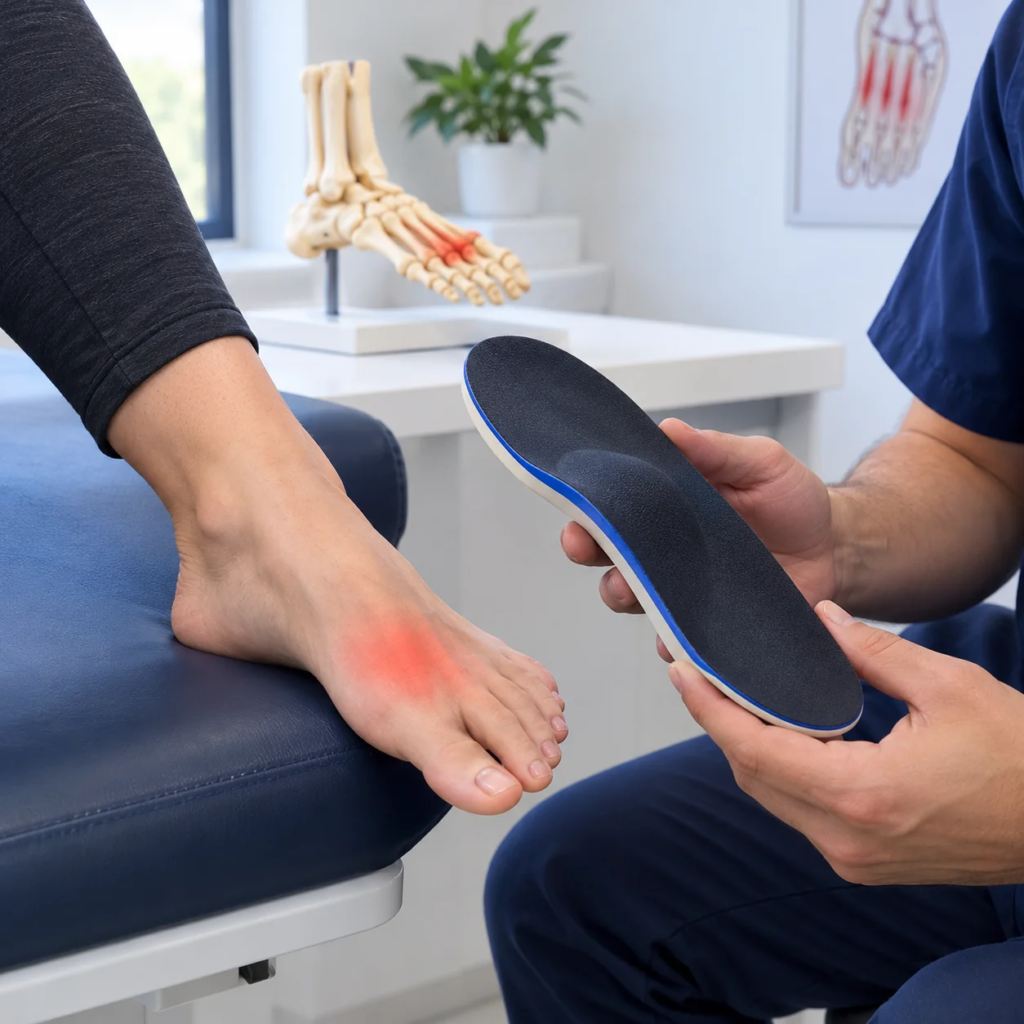
Pain in the ball of the foot can make walking, standing, running, and everyday activities uncomfortable. For some people, the discomfort feels like a burning sensation beneath the toes. Others describe a sharp ache, tenderness, or the feeling of walking on a small stone. When pain develops around the metatarsal heads—the bones and joints near the front of the foot—it may be associated with a condition known as metatarsalgia. Custom orthotics for metatarsalgia are specially designed shoe inserts intended to improve pressure distribution across the foot and support more comfortable movement. Depending on the individual’s foot structure, symptoms, footwear, and underlying diagnosis, orthotics may help reduce pressure on painful areas and make weight-bearing activities easier.
However, metatarsalgia is a description of pain rather than a single diagnosis. Several conditions can cause similar symptoms, including overuse injuries, forefoot joint problems, Morton’s neuroma, arthritis, and stress fractures. The most appropriate treatment depends on identifying the cause rather than simply choosing an insole.
At Ritz Clinic, patients interested in foot pain management can explore the clinic’s services and discuss appropriate options with a qualified healthcare professional. This guide explains how custom orthotics work, who may benefit from them, what the assessment process involves, and how footwear and other conservative treatments can support recovery.
What Is Metatarsalgia?
Metatarsalgia refers to pain in the ball of the foot, commonly around the area beneath the metatarsal heads. The metatarsals are five long bones connecting the middle of the foot to the toes. Their heads form part of the forefoot and help distribute body weight during standing, walking, and running.
During a normal step, the foot absorbs force when it contacts the ground and transfers weight toward the toes as the heel rises. The metatarsal heads experience considerable pressure during this process. When pressure becomes excessive or the surrounding tissues are irritated, pain may develop.
Metatarsalgia can affect one foot or both. Symptoms may appear gradually after repeated activity or begin following a change in exercise, footwear, or daily routine.
Common symptoms include:
- Pain beneath the ball of the foot.
- Tenderness when pressing on the forefoot.
- Discomfort during prolonged standing or walking.
- Burning or aching near the base of the toes.
- Pain that becomes more noticeable during exercise.
- A sensation of pressure beneath one or more metatarsal heads.
- Discomfort when wearing shoes with narrow toe boxes or high heels.
Symptoms vary according to the underlying cause. For example, burning or shooting pain that travels into the toes may suggest nerve irritation rather than uncomplicated mechanical metatarsalgia.
The NHS guide to pain in the ball of the foot explains common causes and when further assessment may be necessary.
What Are Custom Orthotics?
Custom orthotics are individualized inserts designed to fit a person’s feet and footwear. They may be manufactured using measurements, foot impressions, digital scans, or other assessment methods, depending on the provider and the design required.
Their purpose is to influence how pressure is distributed across the foot while standing, walking, or performing other activities.
A custom orthotic may include different materials, cushioning zones, arch contours, or metatarsal modifications. The design depends on the clinical findings and the intended use. Some devices prioritize cushioning, while others provide more structured support.
Custom orthotics are different from standard, off-the-shelf insoles, which are manufactured in common sizes and designs. However, custom-made does not automatically mean better. A suitable prefabricated insole may provide meaningful relief for some people, while others may need an individualized device because of their foot structure, symptoms, or specific clinical needs.
The most appropriate option depends on the assessment, comfort, footwear compatibility, cost, and response to treatment.
How Can Custom Orthotics Help Metatarsalgia?
The main goal of orthotic treatment for mechanical metatarsalgia is to reduce excessive pressure on painful parts of the forefoot and improve comfort during weight-bearing activities.
Custom orthotics may support this goal in several ways.
1. Redistributing Pressure Across the Forefoot
When a particular metatarsal head experiences excessive pressure, the tissues beneath it may become irritated. An orthotic can be designed to redistribute some of that pressure across a broader area of the foot.
The precise design matters. A device that reduces pressure in one location may increase it elsewhere if the shape, materials, or placement are unsuitable.
An assessment helps determine whether pressure redistribution is an appropriate treatment objective and which design features may be useful.
2. Supporting Foot Mechanics
Foot structure influences how weight moves through the foot during walking. Some people have structural characteristics that contribute to increased loading beneath particular metatarsal heads.
Depending on the findings, an orthotic may provide support intended to influence load distribution and improve comfort during movement.
The aim is not necessarily to create a single ideal foot position. Foot shapes and movement patterns vary naturally, and the device should be selected according to the person’s symptoms and functional needs.
3. Providing Cushioning
Some orthotics use soft or resilient materials to help reduce the discomfort associated with repeated contact between the forefoot and the ground.
Cushioning can be particularly useful when symptoms are aggravated by hard surfaces or prolonged standing. Nevertheless, thicker or softer is not always better. An excessively bulky device may make shoes uncomfortable or reduce the space available for the toes.
A suitable design balances cushioning, support, stability, and fit.
4. Incorporating Metatarsal Pads or Bars
A metatarsal pad or bar is a feature that can be incorporated into an insole to influence pressure around the metatarsal heads.
These features are generally positioned just behind the painful metatarsal heads rather than directly beneath the most sensitive spot. Correct placement is important because an incorrectly positioned pad may increase discomfort.
A clinician may recommend a particular location and height based on the foot assessment. Patients should not assume that a higher or firmer pad will provide greater relief.
5. Supporting Everyday Activities
When the forefoot is painful, a person may reduce walking, avoid exercise, or change the way they stand. If an appropriate orthotic reduces symptoms, it may make daily activities more manageable.
Potential benefits include greater comfort during walking, improved tolerance for standing, and a more comfortable return to selected activities.
Results vary. Orthotics are not a guaranteed cure, and they do not eliminate the need to investigate conditions that require different treatment.
What Does Research Say About Custom Orthotics for Metatarsalgia?
Research suggests that orthotic interventions can improve some measures of pressure distribution in people with mechanical metatarsalgia. However, the evidence does not establish that custom devices are always superior to standard insoles or other conservative treatments.
A systematic review and meta-analysis published in the Journal of Orthopaedics examined customized orthotic treatment for central metatarsalgia. The review included five studies with 158 participants and found improvements in plantar pressure beneath the second to fourth metatarsal heads. However, customized orthotics did not demonstrate clear superiority over several alternatives, including standardized footwear, standard foot orthoses, and isolated metatarsal domes.
The study is available through PubMed Central.
These findings have practical implications. A custom orthotic may be useful when an individualized design is clinically appropriate, but a well-fitted standard insole and suitable footwear may also help. Treatment should be based on the person’s needs rather than the assumption that the most expensive device will produce the best outcome.
Researchers have also highlighted differences between orthotic materials, designs, and placement methods. This variation makes it difficult to recommend one universal orthotic design for everyone with forefoot pain.
Common Causes of Metatarsalgia
Identifying the cause of forefoot pain is essential because orthotics may be helpful for some conditions but insufficient for others.
1. Excessive or Repetitive Loading
Walking long distances, standing for extended periods, running, or increasing exercise intensity too quickly can place additional stress on the forefoot.
Symptoms may develop gradually and become more noticeable near the end of a busy day or after exercise. People who work on their feet may find that discomfort affects their ability to complete normal shifts.
Treatment may involve temporary activity modification, suitable footwear, and a gradual return to loading. Orthotics may be considered if the assessment identifies a mechanical problem that could benefit from pressure redistribution.
2. Foot Structure and Pressure Distribution
Certain foot shapes can influence how weight is distributed across the metatarsal heads. A relatively long metatarsal, differences in toe alignment, or other structural features may contribute to localized pressure.
However, foot shape alone does not establish the cause of pain. Many people have similar structural features without symptoms.
An assessment should consider the relationship between foot structure, tenderness, activity, footwear, and functional limitations before recommending a particular device.
3. High Heels and Narrow Shoes
High-heeled shoes shift more body weight toward the front of the foot. Shoes with narrow toe boxes may also compress the toes and reduce available space for natural foot movement.
These features can aggravate symptoms in some people, particularly during prolonged standing or walking.
Switching to footwear with a comfortable fit, adequate toe space, and suitable cushioning may reduce pressure on the forefoot. Custom orthotics can be considered when additional support is appropriate and the shoes have enough internal space to accommodate them.
4. Morton’s Neuroma
Morton’s neuroma involves irritation and thickening of tissue surrounding a nerve, commonly between the third and fourth toes. It may cause burning, shooting pain, tingling, or numbness that travels into the toes.
Some people describe the sensation as standing on a pebble. Symptoms may become worse in tight shoes or during activities that compress the forefoot.
A metatarsal pad or other orthotic modification may help some people by changing pressure around the affected area. However, nerve symptoms need appropriate assessment because not all forefoot pain is metatarsalgia.
5. Arthritis and Joint Problems
Arthritis affecting the forefoot can cause pain, swelling, stiffness, and reduced movement. Symptoms may be more noticeable during walking or when the toes bend.
Orthotics may help modify loading in selected cases, but the design depends on the affected joints and the individual’s functional needs. Medical treatment or additional rehabilitation may also be required.
6. Stress Fractures
A stress fracture is a small crack in a bone that can develop after repetitive loading. It may occur following a sudden increase in running, jumping, or other weight-bearing activity.
Symptoms can include localized pain, tenderness, and swelling that worsen with activity. A stress fracture requires appropriate medical assessment and should not be treated by simply inserting an orthotic and continuing normal exercise.
If a stress fracture is suspected, stop activities that provoke pain and seek medical advice.
Who May Benefit from Custom Orthotics?
Custom orthotics may be worth considering when a person has persistent mechanical forefoot pain and an assessment indicates that individualized pressure redistribution or support could be helpful.
They may be considered for people who:
- Experience recurring pain beneath specific metatarsal heads.
- Have difficulty finding standard insoles that fit comfortably.
- Need an orthotic design tailored to a particular foot structure.
- Have persistent symptoms despite appropriate footwear changes.
- Need a device designed around specific activity or footwear requirements.
- Have a diagnosed condition for which an individualized orthotic is appropriate.
Not everyone with metatarsalgia needs custom orthotics. Some people improve with footwear changes, temporary activity modification, cushioning, or standard insoles.
The decision should account for the severity and duration of symptoms, clinical findings, other health conditions, and the patient’s goals.
What Happens During a Custom Orthotics Assessment?
A suitable assessment helps determine whether orthotics are likely to be useful and what type of device may be appropriate.
1. Medical and Activity History
The clinician may ask when the pain started, where it is located, what activities aggravate it, and whether symptoms began after an injury or change in exercise.
They may also ask about previous foot problems, existing medical conditions, current footwear, and any orthotics already used.
This information helps distinguish mechanical forefoot pain from conditions that require additional investigation.
2. Foot Examination
The assessment may include examining the skin, toes, foot shape, areas of tenderness, joint movement, and walking pattern.
The clinician may also check for swelling, changes in sensation, and signs suggesting a condition other than uncomplicated metatarsalgia.
Further testing or referral may be recommended when the diagnosis is uncertain.
3. Gait and Pressure Assessment
Depending on the clinical setting, the provider may observe walking or assess how the foot functions during weight-bearing activities.
Some clinics use digital scanning, pressure measurement, or other tools. These methods can provide useful information, but no single scan or measurement determines the ideal treatment for every patient.
The results should be interpreted alongside the clinical examination and reported symptoms.
4. Selecting the Orthotic Design
If orthotics are appropriate, the clinician may recommend a prefabricated device, a customized insert, or a custom-made orthotic.
The choice may involve decisions about cushioning, arch support, metatarsal modifications, material thickness, and compatibility with the person’s shoes.
A well-designed device should fit comfortably and address a clear treatment goal.
5. Fitting and Follow-Up
After receiving the orthotics, the patient may need time to adjust to the new device. Follow-up allows the clinician to check comfort, fit, and symptom response.
If the orthotic causes persistent pain, pressure, rubbing, or new symptoms, the fit and design should be reviewed rather than forcing continued use.
How to Choose the Right Shoes for Metatarsalgia
Footwear is an important part of conservative treatment. Even a carefully designed orthotic may be uncomfortable if it is placed inside a shoe that is too narrow, too shallow, or poorly suited to the activity.
Choose a Wide Toe Box
The front of the shoe should provide enough room for the toes to sit comfortably without being squeezed together.
A wider toe box may reduce compression around the forefoot, particularly for people with bunions, toe deformities, or nerve-related symptoms.
Look for Suitable Cushioning
Shoes with appropriate cushioning may help make walking more comfortable, especially on hard surfaces.
The ideal level of cushioning varies. A shoe should feel stable and comfortable rather than excessively soft or difficult to control.
Consider the Heel Height
High heels shift additional load toward the forefoot and may aggravate symptoms. Lower-heeled footwear may help reduce this loading.
A gradual transition to different footwear may be more comfortable than changing suddenly, particularly if the person has been wearing high heels regularly.
Ensure Enough Space for the Orthotic
Custom orthotics can take up additional space inside a shoe. Footwear with removable insoles or sufficient internal depth may accommodate the device more comfortably.
If an orthotic causes the toes to feel crowded or the heel to slip, the combination may not be suitable.
Match Footwear to Your Activities
Walking shoes, work shoes, and sports footwear have different design requirements. The best choice depends on how the foot is loaded during the activity and how much time is spent standing or moving.
A clinician can help identify suitable footwear characteristics based on the person’s needs.
Other Treatments That May Help Metatarsalgia
Custom orthotics are only one possible part of treatment. Many people benefit from combining several conservative approaches.
Activity Modification (Custom Orthotics for Metatarsalgia)
Temporarily reducing activities that consistently aggravate symptoms may allow irritated tissues to settle.
This does not necessarily mean avoiding all movement. The goal is to find a manageable activity level and increase it gradually as symptoms improve.
Metatarsal Pads
Metatarsal pads can help change pressure distribution beneath the forefoot. They may be used in some prefabricated insoles or incorporated into customized devices.
Placement is important. A pad that sits directly beneath a painful metatarsal head may increase pressure rather than relieve it.
Foot and Calf Exercises
A healthcare professional may recommend exercises that address foot mobility, calf flexibility, or muscle function when appropriate.
The right exercises depend on the underlying diagnosis. Painful loading should not be forced, especially if a fracture or significant joint injury has not been excluded.
Physiotherapy
Physiotherapy may help address movement limitations, strength, activity tolerance, and return-to-exercise goals.
A physiotherapist can tailor a rehabilitation plan according to the condition and may coordinate recommendations with the clinician providing the orthotics.
Medical Treatment
Depending on the cause, a healthcare professional may recommend medication, imaging, injections, or specialist assessment. These options are not necessary for every person but may be appropriate for selected conditions.
Persistent pain should be reassessed rather than managed indefinitely with insoles alone.
How Long Does It Take for Custom Orthotics to Work?
There is no single timeline for improvement. Some people notice a difference soon after wearing a suitable device, while others need adjustments or additional treatment.
The time required depends on the underlying cause, the severity of symptoms, the orthotic design, footwear, and the amount of pressure placed on the forefoot during daily activities.
It is often sensible to follow the fitting clinician’s instructions for gradually increasing wear time. Do not force yourself to wear an uncomfortable device for a prolonged period.
During the adjustment period, monitor:
- Whether walking becomes more comfortable.
- Whether pain decreases during usual activities.
- Whether the orthotic causes rubbing or pressure points.
- Whether new symptoms develop elsewhere in the foot or leg.
- Whether the device fits securely inside the shoes.
If symptoms worsen, the device should be reviewed. A custom orthotic may require modification, or the original diagnosis and treatment plan may need reconsideration.
Are Custom Orthotics Better Than Store-Bought Insoles?
Not necessarily. The best option depends on the condition, the foot’s needs, and how the device performs during daily activities.
Standard insoles are often less expensive and may provide adequate cushioning or support for mild symptoms. Custom orthotics can offer more individualized design features when a specific clinical need has been identified.
Evidence from research on central mechanical metatarsalgia suggests that customized orthotics can improve pressure distribution, but they have not consistently outperformed all standard alternatives.
Consider the following factors:
- Comfort: Does the device reduce symptoms without creating new pressure?
- Fit: Does it sit securely in the shoe and leave enough room for the toes?
- Clinical need: Is there a specific reason an individualized design is recommended?
- Durability: Is the device suitable for the frequency and type of use?
- Cost: Is the expected benefit worth the additional expense?
- Follow-up: Can the fit be reviewed and adjusted if necessary?
The goal is an effective and comfortable treatment, not simply the most expensive product.
When Should You Seek Medical Advice?
Although many cases of metatarsalgia can be managed conservatively, some symptoms require prompt assessment.
Seek medical advice if the pain is severe, persistent, worsening, or interfering significantly with walking. You should also arrange an assessment if symptoms develop without an obvious explanation or fail to improve with appropriate self-care.
Seek urgent assessment after a significant injury, particularly if there is substantial swelling, bruising, or difficulty bearing weight.
People with diabetes, reduced foot sensation, circulation problems, or a history of foot ulcers should be especially careful with new foot pain or pressure from an orthotic. Skin damage can develop without being noticed, so professional guidance may be important before using a new device.
Redness, warmth, an open wound, spreading swelling, or signs of infection also require medical attention. Do not continue using an orthotic that causes a skin injury or persistent pressure damage.
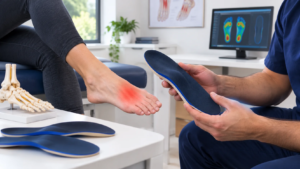
Custom Orthotics at Ritz Clinic
Finding the right approach to metatarsalgia begins with understanding why the forefoot hurts. A suitable assessment can help determine whether footwear changes, standard insoles, custom orthotics, rehabilitation, or further medical investigation is appropriate.
For patients considering custom orthotics, important questions include:
- What is the likely cause of the forefoot pain?
- Is an orthotic likely to address the specific problem?
- Would a standard insole be a reasonable first option?
- Which footwear characteristics may help?
- How should the device be introduced and reviewed?
- What should happen if symptoms do not improve?
At Ritz Clinic, patients can explore available services and ask about appropriate options for managing foot discomfort. Learn more through the clinic’s website. The suitability and availability of a particular orthotic service should be confirmed directly with the clinic.
Frequently Asked Questions
1. What are custom orthotics for metatarsalgia?
Custom orthotics are individualized shoe inserts designed to address a person’s foot structure, symptoms, and functional needs. For metatarsalgia, they may aim to redistribute pressure beneath the forefoot and improve comfort during standing or walking. The design depends on the clinical assessment, and not everyone needs a custom-made device.
2. Can custom orthotics cure metatarsalgia?
Custom orthotics are not a guaranteed cure. They may help reduce symptoms in selected cases of mechanical metatarsalgia by modifying pressure distribution. However, the underlying cause must also be considered. Some conditions require changes to footwear or activity, rehabilitation, medical treatment, or additional investigation.
3. How do orthotics reduce pain in the ball of the foot?
An appropriately designed orthotic may change how weight is distributed across the forefoot. It may incorporate cushioning, arch contours, or metatarsal modifications. The effect depends on the design and the person’s condition. An incorrectly fitted device may increase discomfort, so fitting and follow-up are important.
4. Are custom orthotics better than regular insoles?
Not in every case. Standard insoles may be sufficient for some people, while others may benefit from an individualized device. Research suggests that custom orthotics can improve pressure distribution in central mechanical metatarsalgia, but they have not consistently shown greater benefits than all standard alternatives. The appropriate choice depends on clinical need and comfort.
5. Can orthotics help with Morton’s neuroma?
Some orthotic designs and metatarsal pads may reduce pressure around the forefoot and help selected people with Morton’s neuroma. However, the condition involves nerve irritation and may require specific assessment and treatment. Burning, tingling, or shooting pain into the toes should not automatically be assumed to be ordinary metatarsalgia.
6. How long should I wear my custom orthotics each day?
Follow the instructions provided by the clinician who fits the device. Some people need a gradual adjustment period, while others may tolerate the orthotic more quickly. Increase wear time according to the recommended plan and monitor for rubbing, skin changes, or worsening pain. Seek a review if the device remains uncomfortable.
7. Can I wear custom orthotics in any shoes?
Not always. The shoe needs enough room for the orthotic and the toes, and the device must sit securely without making the heel slip. Shoes with removable insoles or sufficient depth may be easier to use. Ask the fitting clinician whether your work shoes and activity-specific footwear are compatible with the device.
8. What exercises help metatarsalgia?
Suitable exercises depend on the cause of the pain. A clinician may recommend calf stretches, foot mobility exercises, or strengthening activities when appropriate. However, exercises should not be used to push through significant pain, and a suspected stress fracture requires medical assessment rather than routine exercise.
9. Can footwear alone improve metatarsalgia?
Yes, some people experience improvement after changing to shoes with adequate toe room, appropriate cushioning, and a comfortable heel height. Avoiding footwear that compresses the forefoot may also help. If symptoms persist despite appropriate footwear changes, a healthcare professional can assess whether other treatments are needed.
10. When should I replace custom orthotics?
Replacement depends on the device’s materials, condition, fit, and your changing needs. Signs that a review may be useful include damaged materials, loss of cushioning, changes in foot shape, a new medical condition, or returning symptoms. A clinician can determine whether the device needs adjustment, repair, or replacement.
Conclusion (Custom Orthotics for Metatarsalgia)
Custom orthotics for metatarsalgia may help reduce pressure on painful areas of the forefoot and improve comfort during walking and standing. Depending on the individual, an appropriate device may use cushioning, supportive contours, or metatarsal modifications to change pressure distribution.
However, custom orthotics are not always necessary or superior to standard insoles. Footwear changes, activity modification, exercises, and other treatments may also play important roles in recovery.
The most important step is to identify the cause of the pain and choose a treatment that addresses the person’s needs. Persistent, severe, or worsening symptoms should be assessed by a qualified healthcare professional, particularly when an injury, stress fracture, nerve problem, or other medical condition is possible. (Custom Orthotics for Metatarsalgia)
With an appropriate assessment, suitable footwear, and a personalized treatment plan, many people can work toward more comfortable walking and a gradual return to everyday activities.
Systematic Review – Customized Orthotics for Central Metatarsalgia