Why Does My Lower Back Hurt When I Stand Up After Sitting?
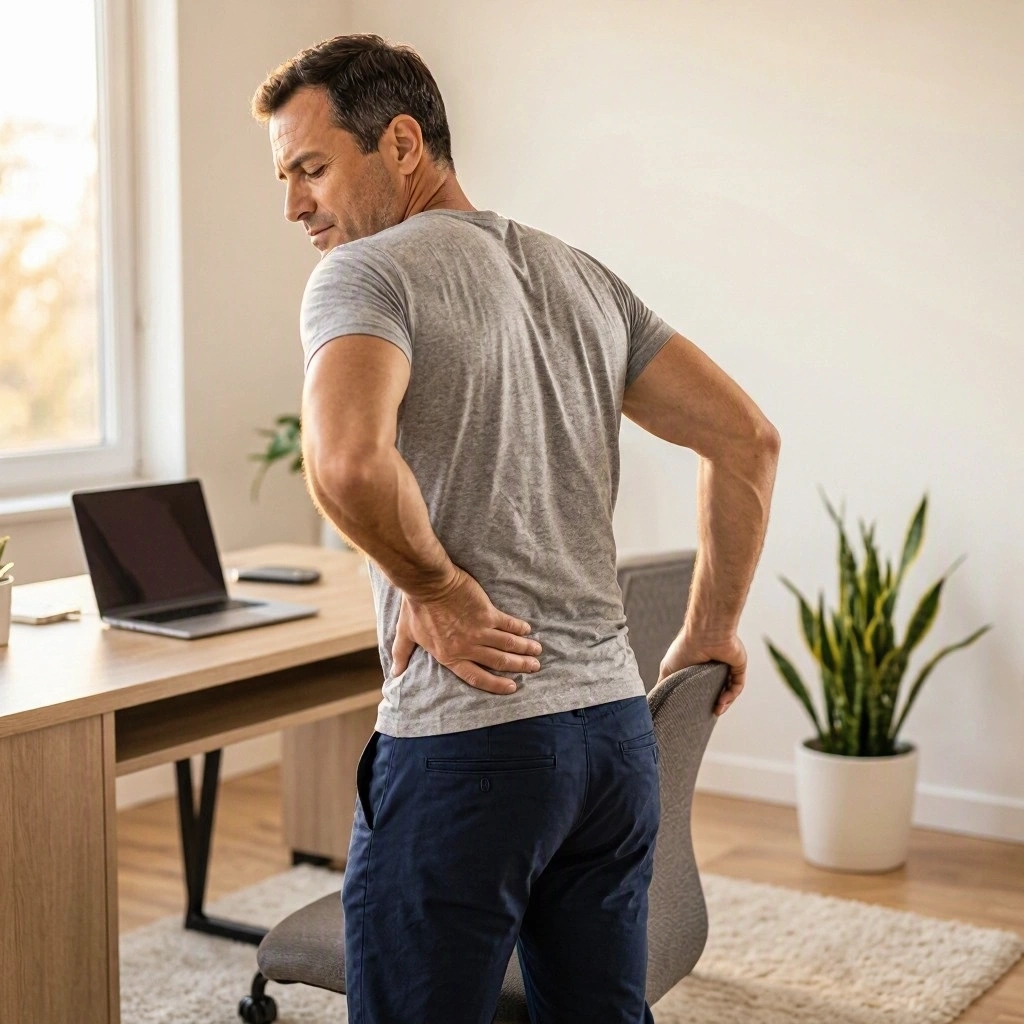
Have you ever sat at your desk, relaxed on the sofa, or driven for a long time, only to feel pain or stiffness in your lower back when you stand up? If so, you are not alone. Lower back pain after sitting is a common problem that can affect people who work at a desk, spend hours driving, or remain in one position for extended periods.
The discomfort may feel like a dull ache, a sharp pain, tight muscles, or stiffness that makes it difficult to straighten your back. For some people, the pain disappears after walking for a few minutes. For others, it returns every time they stand up after sitting.
Lower back pain when standing up after sitting is often related to muscle stiffness, irritation of the joints or discs in the spine, or sensitivity to prolonged sitting. However, the exact cause varies from person to person, and the pain does not automatically mean that your spine is damaged.
Understanding why the pain occurs is the first step toward finding the right treatment. In this guide, you will learn about the common causes, practical home remedies, helpful exercises, and signs that indicate when you should seek professional care.
Why Does My Lower Back Hurt When I Stand Up After Sitting?
Several factors can explain why your lower back hurts when you move from a seated position to standing. The transition requires your hips, back muscles, abdominal muscles, and spinal joints to work together. If one of these structures is irritated or sensitive, the movement may trigger discomfort. (lower back pain when standing up after sitting)
1. Muscle Stiffness After Prolonged Sitting
One of the most common explanations is stiffness in the muscles surrounding the lower back and hips. When you sit for a long time without changing positions, your muscles remain in relatively similar positions for an extended period.
As you stand, these muscles must adjust to support your body and control movement. If they are already tense or sensitive, the sudden change can produce pain.
You may notice this problem after working at a computer, watching television, or taking a long car journey. The discomfort often improves with gentle movement, although persistent or severe pain deserves further assessment.
2. Tight Hip Flexors
Your hip flexors are muscles at the front of your hips that help you lift your knees and bend at the hips. Spending much of the day sitting keeps these muscles in a shortened position.
For some people, limited hip mobility can make standing and walking feel uncomfortable. Your lower back may compensate when your hips do not move comfortably through their available range.
However, tight hip flexors are not the cause of every case of lower back pain. A proper assessment can help determine whether hip mobility is contributing to your symptoms.
3. Irritation of the Spinal Joints
The small joints at the back of your spine help guide movement and maintain stability. These joints can become irritated because of age-related changes, previous injuries, or other musculoskeletal conditions.
Depending on the underlying problem, you may experience pain when straightening your back after sitting, leaning backward, or standing for an extended period.
Joint-related pain cannot be diagnosed from this symptom alone. A healthcare professional will consider your medical history, pain pattern, and physical examination findings.
4. A Herniated or Irritated Spinal Disc
Spinal discs sit between the vertebrae and help distribute loads through the spine. A disc can become irritated or herniated, sometimes affecting nearby nerves.
Disc-related problems may cause lower back pain that becomes worse with certain sitting positions, bending, or transitions between sitting and standing. If a nerve is affected, you may also experience pain that travels into the buttock or leg, tingling, numbness, or weakness.
Importantly, not every painful back has a herniated disc. Disc changes can also appear on scans in people who have no symptoms, so imaging findings must be interpreted alongside your symptoms and examination.
5. Weakness or Reduced Endurance in Supporting Muscles
Your abdominal, back, and hip muscles help control movement and support your trunk during everyday activities. If these muscles have limited endurance, repeated movements or prolonged positions may become uncomfortable.
That does not mean a weak core is necessarily the cause of your pain. Lower back pain is complex, and muscle strength is only one possible factor.
When appropriate, a gradual exercise programme can improve strength, movement confidence, and tolerance for everyday activities.
6. Sciatica or Nerve Irritation
Sciatica refers to pain associated with irritation of the sciatic nerve or its nerve roots. The pain often travels from the lower back or buttock into one leg and may extend below the knee.
You might notice burning, shooting, tingling, or numb sensations rather than pain confined to the lower back.
If your symptoms spread into your leg, particularly with numbness or weakness, arrange a clinical assessment. New or progressive weakness requires urgent medical attention.
7. Age-Related Changes and Other Medical Conditions (lower back pain when standing up after sitting)
Conditions such as osteoarthritis, spinal stenosis, and other degenerative changes can contribute to lower back discomfort. Some people experience stiffness after rest, while others develop pain or leg symptoms during prolonged standing or walking.
Less commonly, back pain may be associated with a fracture, infection, inflammatory condition, or another medical problem.
Do not assume that persistent pain is simply part of getting older. A healthcare professional can help identify the most likely explanation and determine whether further investigation is necessary.

Is Lower Back Pain After Sitting Serious?
In many cases, lower back pain improves with time, gentle activity, and appropriate self-care. A brief period of stiffness that eases as you move is not necessarily a sign of serious injury.
Nevertheless, pay attention to how long the pain lasts, whether it is getting worse, and whether other symptoms appear.
Consider arranging a medical assessment if:
- Your pain persists for several weeks without meaningful improvement.
- The discomfort repeatedly returns and interferes with work, sleep, or daily activities.
- Pain travels down your leg or is accompanied by persistent tingling.
- You have unexplained weight loss, a history of cancer, or significant night pain.
- You have fever, feel generally unwell, or experience severe pain that starts suddenly.
- Your symptoms began after a significant fall or accident.
Seek emergency medical care if back pain is accompanied by new difficulty controlling or emptying your bladder or bowels, numbness around the groin or anus, or significant or worsening weakness in both legs. These symptoms can indicate a serious spinal condition that requires immediate assessment.
How to Relieve Lower Back Pain When Standing Up After Sitting
The best treatment depends on what is causing your symptoms. If your pain is mild and there are no warning signs, several practical steps may help you move more comfortably.
1. Change Your Sitting Habits
Avoid remaining in one position for long periods. Instead, make regular movement part of your routine.
For example, you could:
- Stand up and walk briefly every 30 to 60 minutes, adjusting the interval to your comfort.
- Change your sitting position throughout the day.
- Alternate between sitting and standing when possible.
- Take short walking breaks during long journeys, when it is safe to stop.
- Keep frequently used items within easy reach to reduce repeated twisting.
There is no single perfect sitting posture for everyone. The goal is to find comfortable positions and vary them regularly rather than trying to hold your back rigidly all day. (lower back pain when standing up after sitting)
2. Stand Up Slowly and Use a Comfortable Technique
If standing triggers pain, try changing the way you get out of a chair.
Follow these steps:
- Move towards the front of the chair.
- Place both feet flat on the floor, approximately hip-width apart.
- Lean your trunk forward comfortably from the hips.
- Push through your feet and use the armrests if needed.
- Straighten your hips and knees gradually rather than forcing your back upright.
- Take a few gentle steps once you feel stable.
You do not need to keep your back perfectly straight throughout the movement. Choose a natural, comfortable motion that does not sharply increase your pain.
If standing becomes extremely painful or you cannot move safely, seek medical advice rather than repeatedly forcing the movement.
3. Apply Heat or Cold
Heat may help relieve muscle tension and stiffness. Try a warm pack wrapped in a towel for approximately 15 to 20 minutes, making sure it is not hot enough to burn your skin.
Cold packs may help some people, particularly after a recent strain. Wrap the pack in a towel and apply it for a short period rather than placing ice directly on your skin.
You can choose the option that feels most comfortable. Neither heat nor cold identifies the underlying cause, and you should not use them as a substitute for assessment when warning signs are present.
4. Keep Moving Instead of Staying in Bed
When your back hurts, resting may feel like the easiest option. However, prolonged bed rest can increase stiffness and make it harder to return to everyday activities.
If your symptoms allow, continue gentle activities such as walking around your home or taking short, easy walks outdoors.
Start with a manageable amount and increase gradually. You may need to reduce activities that significantly aggravate your symptoms temporarily, but complete inactivity is usually not the best long-term strategy.
5. Review Your Workstation
If you spend most of your day sitting, small changes to your workstation may improve comfort.
Keep your feet supported, position your screen at a comfortable height, and use a chair that allows you to change positions easily. A small cushion behind your lower back may help if you find it comfortable.
Remember that an expensive chair or a particular posture is not a guaranteed cure. Regular movement and an appropriate exercise routine are often more useful than trying to maintain one rigid position.
6. Ask a Pharmacist or Doctor About Pain Relief (lower back pain when standing up after sitting)
Some over-the-counter anti-inflammatory medicines may help certain types of back pain. However, medicines such as ibuprofen are not suitable for everyone, including some people with kidney problems, stomach ulcers, cardiovascular conditions, or those taking particular medications.
Ask a pharmacist or doctor which option is appropriate for you. Do not exceed the recommended dose or combine medicines without checking whether it is safe.
Pain relief can make movement easier, but it does not necessarily address the underlying reason for your symptoms.
Best Exercises for Lower Back Pain After Sitting
Gentle movement may help reduce stiffness and improve your tolerance for everyday activities. However, the right exercise depends on your symptoms and the cause of your pain.
Start slowly and avoid forcing any movement. Stop if an exercise causes sharp or increasing pain, spreads symptoms further down your leg, or produces new numbness or weakness.
Exercise 1: Gentle Walking
Walking is a practical starting point for many people with uncomplicated lower back pain.
How to do it:
- Begin with a comfortable, flat walking route.
- Walk slowly for five to ten minutes, or less if needed.
- Keep your steps relaxed and avoid forcing a particular posture.
- Increase the duration gradually if your symptoms remain manageable.
Short walks spread throughout the day may be easier to tolerate than one long walk.
Exercise 2: Pelvic Tilts
Pelvic tilts encourage gentle movement of the lower back and pelvis.
How to do it:
- Lie on your back with your knees bent and feet flat on the floor.
- Gently tighten your abdominal muscles.
- Tilt your pelvis so your lower back moves slightly towards the floor.
- Hold briefly while breathing normally.
- Relax and return to your starting position.
Try five to ten slow repetitions if comfortable. Avoid pushing through pain or holding your breath.
Exercise 3: Knee Rolls
This exercise introduces gentle rotational movement through the lower back.
How to do it:
- Lie on your back with your knees bent and feet flat.
- Keep your shoulders resting comfortably on the floor.
- Slowly move both knees a small distance to one side.
- Return to the centre and repeat towards the other side.
- Keep the movement within a comfortable range.
Begin with five repetitions in each direction. If twisting increases your symptoms, skip this exercise and seek guidance.
Exercise 4: Cat-Cow Movement
The cat-cow movement gently takes your spine through bending and extending positions.
How to do it:
- Start on your hands and knees, with your hands under your shoulders and knees under your hips.
- Slowly round your back upwards.
- Return towards a neutral position.
- If comfortable, gently lower your abdomen and lift your chest slightly.
- Repeat slowly without forcing either position.
Try five to eight repetitions. This exercise is not suitable for every presentation of back pain, so modify or stop it if your symptoms worsen.
Exercise 5: Gentle Glute Bridges
Glute bridges work the muscles around your hips and buttocks.
How to do it:
- Lie on your back with your knees bent and feet flat.
- Tighten your buttock muscles gently.
- Lift your hips a small distance while keeping the movement comfortable.
- Pause briefly, then lower your hips slowly.
- Repeat five to ten times if tolerated.
You do not need to lift your hips as high as possible. Begin with a small movement and avoid arching your lower back excessively.
How Often Should You Exercise? (lower back pain when standing up after sitting)
There is no universal exercise prescription for everyone with lower back pain. Start with movements you can perform comfortably, and increase the amount gradually.
If your pain repeatedly worsens, spreads into your leg, or prevents you from exercising normally, consult a qualified healthcare professional before continuing. A physiotherapist can help select exercises based on your symptoms, mobility, strength, and functional goals.
Can Physiotherapy Help Lower Back Pain After Sitting?
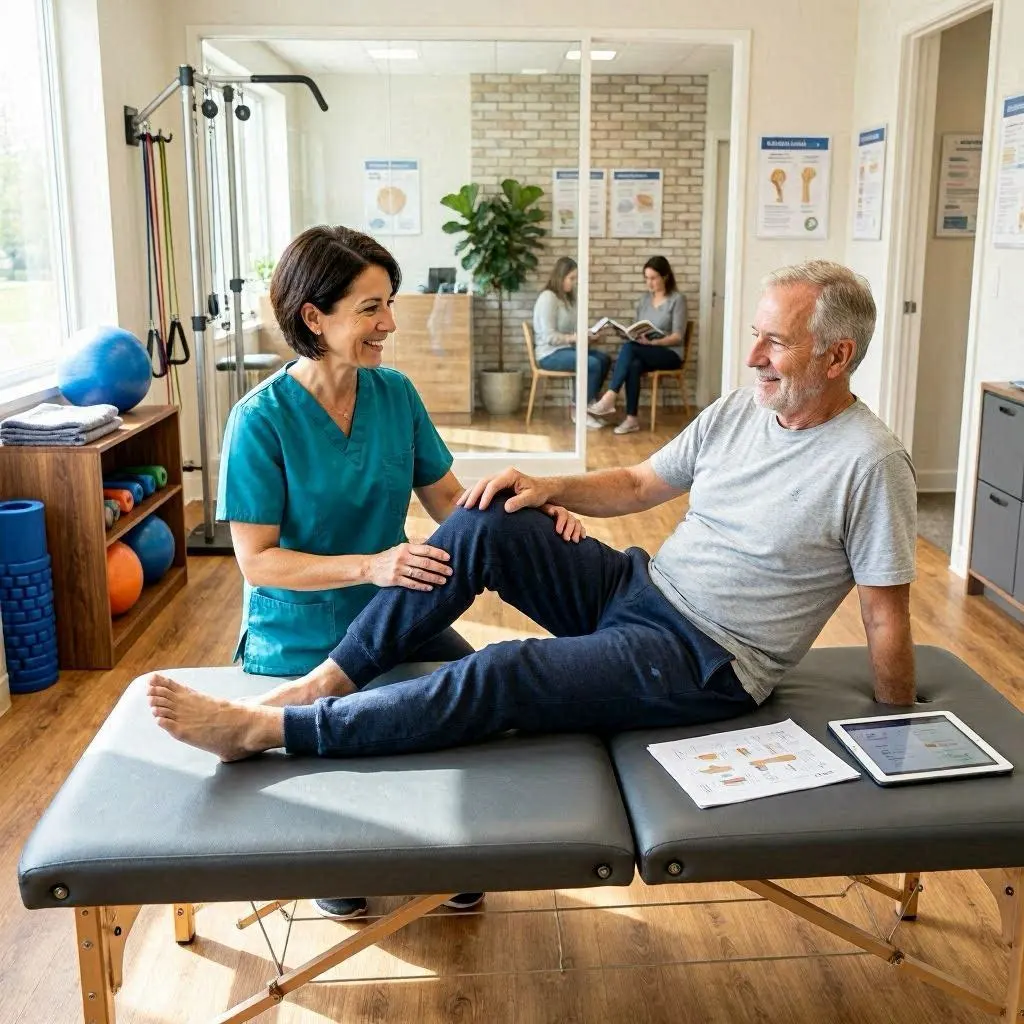
Yes. Physiotherapy can be helpful when lower back pain keeps returning, makes it difficult to stand comfortably, or interferes with daily activities.
Rather than focusing only on the painful area, a physiotherapist can assess how your back, hips, and surrounding muscles work together.
Depending on your needs, a treatment programme may include the following.
Individual Assessment
A physiotherapist may ask when the pain started, how long you sit each day, which movements aggravate it, and whether symptoms travel into your legs.
They may also assess your mobility, strength, walking pattern, and ability to move from sitting to standing.
This information helps guide treatment. No single physical test can identify every possible cause, and additional medical assessment may be appropriate when warning signs are present.
Targeted Strengthening and Mobility Exercises
Your programme may include exercises for the hips, trunk, and back, alongside movements that improve flexibility and movement control.
The aim is not simply to stretch every tight muscle or strengthen every weak muscle. Instead, treatment should address the limitations identified during your assessment and help you return to your normal activities.
Manual Therapy When Appropriate
Some physiotherapy programmes include hands-on techniques to help manage pain and improve movement. These may be used alongside exercise and education rather than as the only treatment.
Manual therapy is not necessary for everyone, and its suitability depends on your condition and preferences.
Advice for Work and Everyday Activities (lower back pain when standing up after sitting)
A physiotherapist can help you adjust your routine, manage long periods of sitting, and gradually return to activities you have been avoiding.
If you are experiencing recurring lower back discomfort, learn more about physiotherapy services at Ritz Clinic to understand how a personalised approach may support your recovery.
The goal is to improve your ability to move comfortably and manage your symptoms over time, rather than relying only on temporary pain relief.
How Can You Prevent Lower Back Pain When Standing Up?
Although not every episode of back pain can be prevented, a few habits may help reduce recurring discomfort.
- Move regularly: Break up long periods of sitting with brief walking or standing breaks.
- Build activity gradually: Avoid suddenly increasing the intensity of exercise or heavy physical work.
- Strengthen your body: Follow an appropriate programme for your trunk, hips, and legs.
- Change positions: Alternate between sitting, standing, and walking according to your comfort.
- Lift thoughtfully: Keep loads close to your body and avoid sudden twisting under heavy loads.
- Get enough sleep: Poor sleep can make pain harder to manage.
- Address recurring symptoms: Seek professional guidance if your pain repeatedly returns or affects your normal activities.
You do not need to follow a perfect routine every day. Consistency, gradual progress, and finding movements that work for your body are more useful than trying to avoid every movement that might feel uncomfortable.
When Should You See a Physiotherapist or Doctor?
Consider booking an assessment if your lower back pain keeps returning after sitting, limits your ability to stand or walk, or has not improved after a few weeks of self-care.
A physiotherapist may be appropriate for assessing movement-related symptoms and planning rehabilitation. A doctor should assess symptoms that suggest an underlying medical condition, and urgent or emergency care is necessary for the warning signs described earlier.
You may not need an X-ray or MRI. Many episodes of uncomplicated lower back pain can be assessed clinically, and imaging is generally reserved for situations in which the findings are likely to change management.
The most appropriate next step depends on your symptoms, medical history, and examination.
Frequently Asked Questions
Why does my lower back hurt after sitting for only 10 minutes?
Pain can occur even after a short period of sitting if your back is already sensitive or if a particular position aggravates your symptoms. Muscle irritation, joint problems, and disc-related conditions are possible explanations. If this happens regularly, consider an assessment rather than assuming that poor posture is the only cause.
Why is my lower back stiff when I first stand up but better after walking?
Gentle movement may reduce stiffness and help your muscles and joints move more comfortably. This pattern can occur with several types of back pain and does not establish a specific diagnosis. If the stiffness persists, worsens, or comes with other concerning symptoms, seek medical advice.
Can sitting too long cause a herniated disc?
Prolonged sitting can aggravate symptoms in some people, but it does not automatically cause a herniated disc. Disc problems can develop for several reasons, including age-related changes and mechanical stresses. A clinician can help determine whether a disc-related condition is likely.
Should I stretch my lower back every morning?
Gentle mobility exercises may help some people, but not everyone benefits from the same stretches. Choose movements that feel comfortable and do not worsen your symptoms. If you experience persistent morning stiffness or pain that regularly interferes with your activities, arrange an assessment.
Is walking good for lower back pain?
Walking can help many people with uncomplicated lower back pain maintain movement and gradually rebuild activity tolerance. Start with short, comfortable walks and increase gradually. If walking causes significant worsening, new leg weakness, or other concerning symptoms, seek professional advice.
Can a bad mattress cause lower back pain when standing up?
A mattress that leaves you uncomfortable or disrupts your sleep may contribute to how you feel in the morning. However, mattress firmness alone does not explain every case of back pain. Choose a sleeping surface that feels comfortable and supportive, and seek an assessment if your symptoms persist.
How long does lower back pain after sitting last?
Mild episodes may settle within days, while other cases take several weeks or longer. The duration depends on the underlying cause, symptom severity, and individual circumstances. Seek medical advice if the pain is worsening, significantly limiting daily activities, or not improving over a few weeks.
Is lower back pain when standing up a sign of sciatica?
Not necessarily. Sciatica usually involves pain travelling from the lower back or buttock into the leg, sometimes accompanied by tingling, numbness, or weakness. Pain confined to the lower back is not enough to diagnose sciatica.
Do I need an MRI for lower back pain after sitting?
Most people with uncomplicated lower back pain do not immediately need an MRI. Imaging may be considered when symptoms, examination findings, or warning signs suggest that it could change treatment decisions. A healthcare professional can determine whether imaging is appropriate.
Conclusion
Lower back pain when standing up after sitting is often associated with stiffness, muscle irritation, or sensitivity to prolonged positions. However, disc problems, joint conditions, nerve irritation, and other medical issues can produce similar symptoms.
The most useful starting points are to change positions regularly, stay gently active, use comfortable movements when standing, and try appropriate exercises without forcing painful motions. If your symptoms keep returning or interfere with daily life, a professional assessment can help identify the next steps.
Most importantly, do not ignore warning signs such as new bladder or bowel problems, numbness around the groin, or significant leg weakness. These require urgent medical attention.
With the right assessment and an appropriate plan, many people can improve their movement, manage their symptoms, and return to everyday activities with greater confidence.
Medical disclaimer: This article is for educational purposes and is not a substitute for individual medical advice, diagnosis, or treatment.