Why Do My Toes Hurt When I Walk? Causes, Treatment, and When to Seek Help
Toe pain when walking can make even a short trip feel uncomfortable. You might notice a sharp sensation under your big toe, soreness around the smaller toes, burning in the ball of your foot, or stiffness that becomes worse with every step. Sometimes the discomfort disappears when you sit down, while in other cases it continues even when your feet are resting.
The reason your toes hurt when you walk is not always obvious. Your shoes, walking habits, foot structure, joint health, nerves, and even the way your body distributes weight can all contribute to the problem.
Understanding the location and type of pain is an important first step. Pain beneath the toes may have a different cause from pain around a toe joint or discomfort accompanied by numbness and tingling.
This guide explains the most common reasons your toes may hurt while walking, how to recognize possible causes, what you can do at home, and when professional assessment may help.
1. Common Causes of Toe Pain When Walking
Several conditions can cause toe pain during walking. The location of the discomfort, how it starts, and whether other symptoms appear can help a healthcare professional narrow down the possibilities.
1.1 Metatarsalgia: Pain Under the Toes
Metatarsalgia refers to pain around the ball of the foot, just behind the toes. Although the discomfort is not always located directly inside the toes, it can feel as though the toes themselves hurt when you walk.
People often describe this pain as:
A burning or aching sensation beneath the forefoot.
Sharp discomfort when pushing off the ground.
Feeling as though a small stone is inside the shoe.
Pain that increases after standing, running, or walking for a long time.
Metatarsalgia can develop when excessive pressure is placed on the metatarsal bones. Running, jumping, tight footwear, high heels, foot structure, and certain toe deformities can contribute.
The pain may improve with rest but return when you resume weight-bearing activities. Appropriate footwear, activity modification, and sometimes shoe inserts or orthotics may help, depending on the cause.
1.2 Bunions
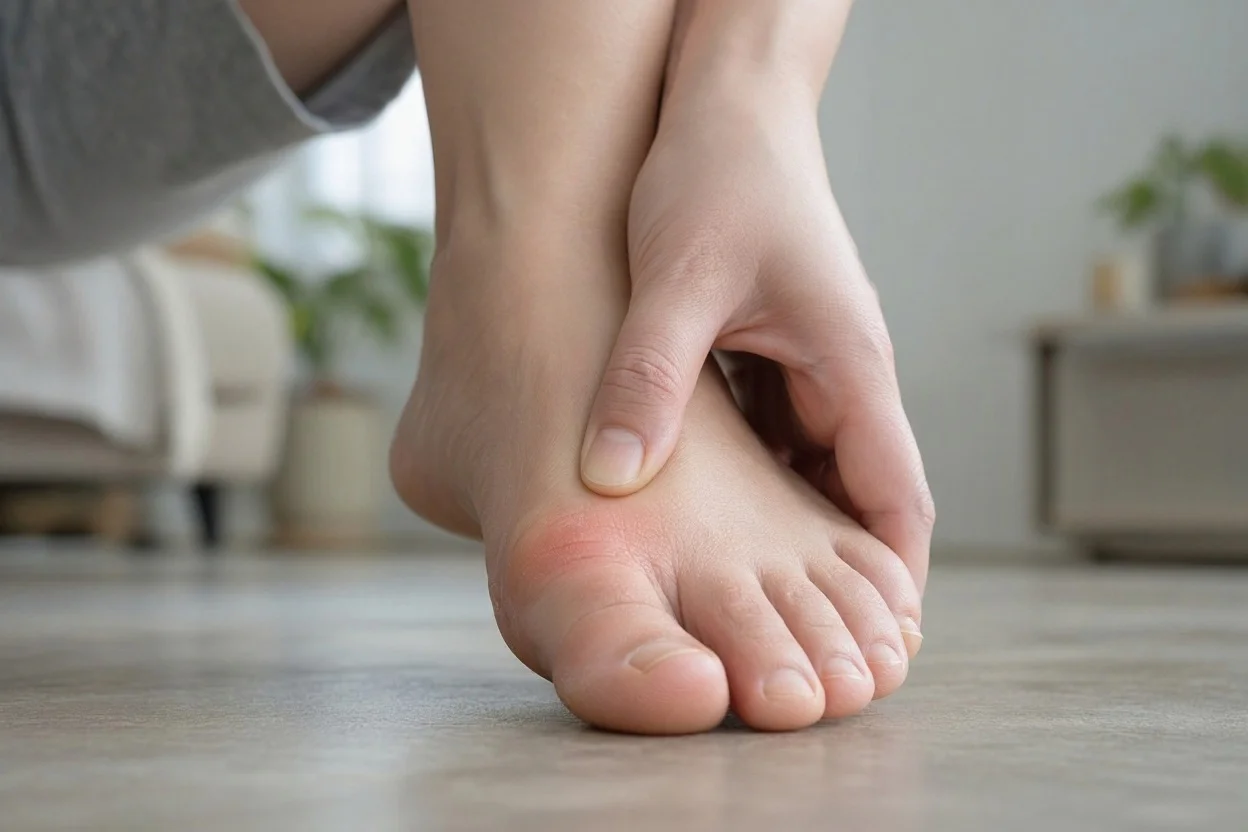
A bunion is a bony prominence that develops near the base of the big toe. It often causes the big toe to gradually move toward the smaller toes.
You may notice:
A visible bump on the side of the big toe joint.
Redness or irritation where the shoe rubs.
Pain when walking or wearing narrow shoes.
Stiffness or reduced movement in the big toe.
Difficulty finding comfortable footwear.
Bunions can change how pressure is distributed across the front of the foot. As a result, discomfort may develop around the big toe or beneath the neighbouring toes.
Wearing shoes with a wider toe box can reduce friction and pressure. If pain continues or affects your walking, a professional assessment can help determine suitable treatment options.
1.3 Hammertoes and Other Toe Deformities
Hammertoe occurs when a toe bends abnormally at one of its middle joints. The toe may look curled rather than lying flat.
This position can create pressure against the top or front of a shoe. Over time, friction may lead to corns, calluses, swelling, and pain.
Common symptoms include:
Pain around the middle joint of a toe.
Discomfort when wearing closed shoes.
Corns or thickened skin.
Stiffness when trying to straighten the toe.
Pain during walking or standing.
Tight footwear, previous injuries, and imbalances in the muscles and tendons that control toe movement may contribute to hammertoe. Treatment depends on whether the toe remains flexible or has become rigid.
1.4 Morton’s Neuroma
Morton’s neuroma involves irritation and thickening of tissue around a nerve in the forefoot. It commonly affects the area between the third and fourth toes.
Although the condition is associated with a nerve between the toes, the pain is often felt in the ball of the foot.
You might experience:
Burning or shooting pain toward the toes.
Tingling or numbness.
A sensation similar to having a pebble in your shoe.
Discomfort that becomes worse in narrow shoes.
Symptoms that increase while walking or standing.
Shoes that compress the front of the foot may aggravate the symptoms. Wider footwear and activity adjustments can sometimes help. Persistent burning, tingling, or numbness should be assessed rather than automatically attributed to Morton’s neuroma.
1.5 Arthritis in the Toe Joints
Arthritis can affect the small joints of the toes, including the joint at the base of the big toe.
When the joint becomes irritated or its cartilage changes, movement may become uncomfortable. You may notice stiffness after resting, swelling, tenderness, or pain when bending the toe.
Big toe arthritis can be particularly noticeable during the push-off phase of walking, when the big toe helps move the body forward.
Some people experience discomfort mainly when walking uphill, climbing stairs, or wearing shoes that bend the toe joint.
Treatment depends on the type and severity of arthritis. Footwear changes, activity modification, appropriate exercises, and medical guidance may help manage symptoms.
1.6 Toe Sprains and Fractures
A toe can become injured when it is stubbed against furniture, twisted during sport, or struck by a heavy object.
A sprain affects the ligaments surrounding a joint, while a fracture involves a break in the bone. Both can cause pain during walking.
Possible symptoms include:
Sudden pain after an injury.
Swelling or bruising.
Tenderness when touching the toe.
Difficulty putting weight on the foot.
Reduced movement.
It can be difficult to distinguish a sprain from a fracture based on symptoms alone. If you suspect a broken toe, particularly the big toe, seek medical advice for an appropriate assessment.
1.7 Gout
Gout is a form of inflammatory arthritis associated with uric acid crystal deposits in joints. It commonly affects the big toe, although other joints can also be involved.
A gout flare may cause:
Sudden and intense joint pain.
Redness and swelling.
Heat around the affected joint.
Significant tenderness, even with light contact.
Difficulty walking or wearing shoes.
Unlike pain that gradually develops after a long walk, gout can begin suddenly, sometimes overnight. A hot, swollen joint should be assessed promptly because infection and other conditions can cause similar symptoms.
1.8 Stress Fractures
A stress fracture is a small crack in a bone that can develop through repeated loading. It may affect the metatarsal bones in the forefoot.
It is more likely to occur when someone suddenly increases walking, running, jumping, or training intensity without allowing enough time for recovery.
Symptoms may include:
Pain that develops gradually.
Localized tenderness over a bone.
Discomfort that increases with weight-bearing.
Swelling around the affected area.
Pain that initially improves with rest but returns during activity.
Continuing high-impact exercise despite increasing pain can make the injury worse. A healthcare professional may recommend an examination and imaging when a stress fracture is suspected.
2. Why Do My Toes Hurt More When I Walk Than When I Rest?
Walking places repeated pressure on the feet. Each step involves several movements: the heel contacts the ground, the body moves forward, and the toes help push the foot away from the surface.
The forefoot and toes therefore experience changing loads throughout the walking cycle.
If a joint is inflamed, a nerve is irritated, or the tissues beneath the toes are overloaded, these repeated movements can trigger discomfort.
Several factors may explain why symptoms become more noticeable during walking:
Increased pressure: Your body weight is transferred through different parts of the foot as you move. Sensitive areas may become painful when pressure increases.
Repeated movement: Toe joints bend and straighten during normal walking. Stiff or irritated joints may become uncomfortable with repeated movement.
Footwear compression: Shoes that are too narrow can squeeze the toes and irritate joints, skin, and nerves.
Reduced cushioning: Thin or worn-out soles may provide less protection against repeated impact.
Muscle fatigue: The muscles that support the foot can become tired during prolonged standing or walking, potentially changing how pressure is distributed.
If your pain appears consistently after a particular distance, activity, or type of footwear, this pattern is useful information to share during an assessment.
3. What Does the Location of Toe Pain Tell You?
The location of your discomfort can offer clues about what may be happening, although it cannot confirm a diagnosis.
| Location of pain | Possible contributing conditions |
|---|---|
| Big toe joint | Bunion, arthritis, gout, or injury |
| Under the smaller toes | Metatarsalgia or forefoot overload |
| Between the third and fourth toes | Morton’s neuroma |
| Middle joint of a toe | Hammertoe or joint irritation |
| One toe after an injury | Sprain or fracture |
| Several toes with burning or tingling | Nerve-related problems or other medical conditions |
Pain location should always be considered alongside other symptoms, your medical history, and the circumstances in which the discomfort started.
4. Can Your Shoes Cause Toe Pain?
Yes. Footwear is one of the factors worth checking when your toes hurt during walking.
Shoes that are too tight can compress the toes and increase friction around the joints. High heels can also shift more pressure toward the front of the foot.
On the other hand, shoes that are too loose may allow the foot to slide forward, causing repeated rubbing.
Consider these footwear features:
Wide toe box: Your toes should have enough room to spread naturally.
Appropriate cushioning: The sole should provide suitable comfort for your walking activities.
Stable fit: Your heel should feel secure without excessive slipping.
Suitable flexibility: The shoe should allow comfortable movement without forcing painful joints to bend excessively.
Correct size: Check both foot length and width, preferably later in the day when feet may be slightly larger.
If you frequently experience forefoot discomfort, an assessment of your footwear and walking mechanics may help identify contributing factors.
For people with specific foot mechanics or pressure-distribution concerns, custom orthotics at Ritz Clinics may be worth discussing with a qualified professional. Orthotics are not necessary for everyone, and their suitability depends on the individual assessment.
5. How Can You Relieve Toe Pain at Home?
The right approach depends on the underlying cause. However, several general measures may help reduce mild discomfort while you monitor your symptoms.
Reduce Activities That Trigger Pain
Temporarily reduce activities that make your symptoms worse, particularly running, jumping, and prolonged walking.
This does not necessarily mean avoiding all movement. Gentle activity that does not aggravate your symptoms may be appropriate, depending on the cause.
If pain increases as you walk, do not force yourself to continue.
Choose Comfortable Footwear
Try shoes with a wide toe box, a comfortable fit, and suitable cushioning.
Avoid narrow shoes and high heels if they increase pressure around the toes.
You may also want to check whether your current walking or running shoes have worn-out soles or insufficient support.
Apply a Wrapped Cold Pack
For mild pain associated with recent irritation or swelling, a cold pack wrapped in a towel may help.
Apply it for up to 15–20 minutes at a time. Never place ice directly against your skin.
Avoid applying cold without professional guidance if you have reduced sensation or a circulation condition that makes temperature exposure unsafe.
Elevate Your Foot
If your foot is swollen, resting with it elevated may help reduce discomfort.
Avoid activities that repeatedly increase swelling or pain until the problem has been assessed or has improved.
Avoid Aggressive Stretching
Gentle movement may help maintain comfortable mobility, but stretching should not cause sharp pain.
If you have a suspected fracture, significant swelling, or a recent injury, seek medical advice before starting exercises.
Consider Pain Relief Carefully
A pharmacist or healthcare professional can advise whether an appropriate over-the-counter pain relief option is suitable for you.
This is particularly important if you have other medical conditions, take regular medication, or have been advised to avoid certain painkillers.
6. Exercises That May Help With Toe and Forefoot Discomfort
Some people benefit from gentle exercises that improve foot mobility, muscle control, and balance. However, exercises are not a substitute for diagnosing an injury or treating an inflammatory condition.
Only try these movements if they are comfortable and you have no suspected fracture or other reason to avoid exercise.
6.1 Toe Spreading
This exercise encourages gentle movement of the small muscles that help control your toes.
Sit comfortably with both feet on the floor.
Keep your heels resting on the ground.
Gently spread your toes apart.
Hold the position for a few seconds.
Relax and repeat several times.
Do not force your toes into a painful position.
6.2 Towel Scrunches
Towel scrunches can help activate the small muscles in the foot.
Place a small towel on the floor.
Sit in a chair with your foot resting on the towel.
Use your toes to gently pull the towel toward you.
Relax your toes and repeat.
Start with a small number of repetitions. Stop if the exercise increases your pain.
6.3 Gentle Calf Stretching
Tight calf muscles can affect ankle movement and the way pressure travels through the foot.
To perform a gentle calf stretch:
Stand facing a wall.
Place both hands against the wall.
Move one foot behind the other.
Keep the back heel on the floor.
Gently bend your front knee until you feel a stretch in the back calf.
Hold for approximately 15–20 seconds if comfortable.
Avoid bouncing or pushing into pain.
6.4 Gentle Ankle Circles
Ankle mobility exercises can help maintain comfortable movement around the foot and ankle.
Sit with your foot slightly raised.
Slowly move your ankle in a circular direction.
Complete a few comfortable circles.
Reverse the direction.
These exercises may support general foot mobility, but the best exercise program depends on the reason your toes hurt.
A physiotherapist can assess your movement, strength, flexibility, and walking pattern before recommending exercises. You can learn more about the approach at Ritz Clinics Physiotherapy.
7. When Should You See a Healthcare Professional?
Occasional foot discomfort after an unusually long walk may improve with rest and suitable footwear. However, persistent or worsening toe pain should not be ignored.
Consider arranging a professional assessment if:
Your pain keeps returning.
Walking or standing has become difficult.
Your toe is increasingly swollen or stiff.
You notice a change in the shape of your toe.
You experience burning, tingling, or numbness.
Your symptoms do not improve after around two weeks of appropriate self-care.
You have diabetes and develop new foot pain.
Seek urgent medical attention if you have severe pain, an obvious deformity after an injury, an open wound, a toe that becomes unusually pale or blue, a suddenly hot and swollen joint, fever, or an inability to walk. A foot that is red, hot, and swollen may require prompt assessment to rule out infection or another serious condition.
People with diabetes, reduced circulation, or reduced sensation should be particularly cautious. Even a small foot injury can require early attention.
The NHS also recommends medical assessment when toe pain interferes with normal activities, gets worse, or does not improve with home treatment.
8. How Is the Cause of Toe Pain Diagnosed?
A healthcare professional will usually begin by understanding your symptoms and examining your foot.
The assessment may include several steps.
Medical and Activity History
You may be asked:
When did the pain begin?
Did it start suddenly or gradually?
Which toe or part of the foot hurts?
Does walking make it worse?
Have you recently increased your exercise?
Have you experienced a previous foot injury?
What type of shoes do you normally wear?
Do you have diabetes, arthritis, or another relevant medical condition?
These details can help identify possible causes.
Physical Examination
The healthcare professional may examine your toes, joints, skin, and the ball of your foot.
They may also assess tenderness, swelling, joint movement, muscle strength, and foot flexibility.
Walking and Movement Assessment
Your walking pattern may be observed to understand how your foot contacts the ground and distributes pressure.
The assessment may also consider ankle mobility, balance, and lower-limb movement.
Imaging and Other Tests
Not everyone needs imaging. However, an X-ray may be recommended if a fracture, joint abnormality, or other bone-related problem is suspected.
Ultrasound or MRI may be considered in selected cases, depending on the symptoms and examination findings.
Blood tests may be useful when gout, inflammatory arthritis, or infection is being investigated.
The goal is to identify the underlying problem rather than treating every type of toe pain in the same way.
9. How Physiotherapy May Help With Toe Pain When Walking
Physiotherapy may help people whose toe or forefoot discomfort is related to movement restrictions, muscle weakness, certain overuse problems, or difficulties with walking mechanics.
The first step is a proper assessment. A physiotherapist can examine how your feet and lower limbs work together during everyday activities.
Depending on the findings, a treatment plan may include:
Foot and ankle strengthening: Exercises can help improve muscle control and support comfortable movement.
Mobility exercises: Appropriate exercises may address limitations in ankle or foot movement.
Balance training: Balance exercises can help improve control during standing and walking.
Gait assessment: Reviewing your walking pattern may help identify movements or loading patterns that contribute to discomfort.
Activity modification: Adjusting the duration and intensity of walking or exercise may help avoid repeatedly aggravating sensitive tissues.
Manual therapy: Selected hands-on techniques may be used when appropriate to address certain movement restrictions or joint and soft-tissue symptoms.
Physiotherapy is not a treatment for every cause of toe pain. A suspected fracture, infection, acute gout flare, or another medical condition may require medical assessment and condition-specific care first.
At Ritz Clinics, physiotherapy can be part of a broader approach to improving mobility and physical function. Learn more about the clinic’s physiotherapy services.
10. Can Custom Orthotics Help With Toe Pain?
Custom orthotics are devices placed inside shoes to provide individualized foot support. Depending on their design, they may help modify pressure distribution and support certain foot mechanics.
They may be considered when an assessment identifies problems such as:
Excessive pressure beneath the forefoot.
Certain structural or biomechanical foot issues.
Recurrent discomfort associated with standing or walking.
Selected cases of metatarsalgia.
Specific lower-limb movement problems.
However, custom orthotics are not automatically the best option for everyone.
Some people may benefit from changing their shoes or using an appropriate standard insole. Others may need exercises, medical treatment, or a combination of approaches.
A professional should determine whether an orthotic is appropriate for your symptoms and footwear.
If your pain is concentrated beneath the toes, you may also find our guide to custom orthotics for metatarsal pain useful.
11. How Can You Prevent Toe Pain While Walking?
Although not every foot condition can be prevented, a few practical habits may reduce unnecessary pressure and irritation.
Wear Shoes That Fit Properly
Choose shoes with enough room for your toes. Avoid footwear that forces your toes together or creates pressure around the joints.
Increase Walking Distance Gradually
If you are starting a walking routine, increase your distance and duration gradually.
Suddenly increasing your daily steps or exercise intensity can place more stress on the tissues of the foot.
Replace Worn-Out Shoes
Shoes that have lost their cushioning or become unevenly worn may no longer provide suitable support for your activities.
Check your footwear regularly, particularly if you walk or run frequently.
Take Breaks During Long Periods of Standing
If your work involves standing for several hours, take appropriate movement breaks when possible.
Changing positions and allowing your feet to recover may help reduce fatigue.
Maintain General Foot Strength
Comfortable, appropriate foot and ankle exercises can support muscle function and movement.
However, exercise selection should depend on your symptoms, especially if you already have pain.
Pay Attention to Early Symptoms
Do not ignore recurring discomfort, swelling, or changes in toe movement.
Addressing a problem early may help prevent unnecessary aggravation and make it easier to return to normal activities.
12. Frequently Asked Questions
Why do my toes hurt when I walk but not when I rest?
Walking places repeated pressure on your toe joints and the front of your foot. Conditions such as metatarsalgia, bunions, joint irritation, and Morton’s neuroma may cause discomfort during movement that improves when pressure is removed.
Why do the bottoms of my toes hurt when walking?
Pain underneath the toes may be related to metatarsalgia, forefoot overload, a stress injury, or irritation of the tissues supporting the toe joints. Footwear and changes in activity levels can also contribute.
Why does my big toe hurt when I push off while walking?
The big toe plays an important role in moving your body forward. Arthritis, bunions, joint irritation, and previous injuries can make this movement painful.
Can tight shoes cause pain in my toes?
Yes. Tight shoes can compress the toes, increase friction, and place pressure on nerves and joints. Shoes with a wider toe box may help reduce these problems.
Why do my toes burn when I walk?
Burning sensations can be associated with nerve irritation, Morton’s neuroma, metatarsalgia, or peripheral neuropathy. Persistent burning, especially when accompanied by numbness or tingling, should be assessed.
Should I keep walking if my toes hurt?
You should avoid pushing through pain that becomes worse during walking. Temporarily reduce activities that aggravate your symptoms and seek professional advice if the discomfort persists or affects your normal activities.
Can physiotherapy help toe pain?
Physiotherapy may help when symptoms are associated with muscle weakness, mobility restrictions, certain overuse problems, or movement patterns. The appropriate treatment depends on the underlying cause.
Are custom orthotics useful for toe pain?
They may help some people by modifying foot support and pressure distribution. However, they are not necessary for everyone. A professional assessment can determine whether custom or standard insoles are appropriate.
How long does toe pain take to go away?
Recovery time varies depending on the cause. Mild irritation may improve after changing footwear and reducing aggravating activities, while fractures, arthritis, and nerve-related conditions may require more specific treatment.
When is toe pain a medical emergency?
Severe pain, a visibly deformed toe after an injury, inability to walk, a suddenly hot and swollen joint with fever, or a toe that becomes unusually pale or blue requires urgent medical assessment.
Conclusion
If your toes hurt when you walk, the problem may involve more than simple foot fatigue. Conditions such as metatarsalgia, bunions, hammertoes, Morton’s neuroma, arthritis, gout, and stress fractures can all affect comfortable walking.
The most useful starting point is to understand where the pain occurs, when it develops, and what makes it worse. Wearing appropriate footwear, temporarily modifying painful activities, and avoiding excessive pressure may help with some mild symptoms.
However, recurring pain, swelling, numbness, or difficulty walking deserves professional attention. An appropriate assessment can help identify the underlying cause and determine whether medical treatment, physiotherapy, footwear changes, or custom orthotics may be beneficial.
At Ritz Clinics, an individualized physiotherapy assessment can help evaluate movement-related problems and explore suitable rehabilitation options based on your needs.
Mayo Clinic – Metatarsalgia: Symptoms and Causes
Summary Table: Causes of Toe Pain When Walking
| Condition | Common Symptoms | Possible Management |
|---|---|---|
| Metatarsalgia | Pain beneath the toes and ball of the foot | Footwear changes, activity modification, orthotics when appropriate |
| Bunions | Pain and swelling near the big toe joint | Wider shoes, pressure reduction, professional assessment |
| Hammertoes | Bent toes, stiffness, friction, and discomfort | Suitable footwear, toe support, assessment |
| Morton’s Neuroma | Burning, tingling, or shooting pain | Wider footwear, activity modification, medical assessment |
| Arthritis | Joint stiffness, swelling, and pain during movement | Medical guidance, appropriate exercises, footwear changes |
| Gout | Sudden, severe pain with redness and swelling | Prompt medical assessment and condition-specific treatment |
| Stress Fracture | Localized bone pain and tenderness during activity | Medical assessment and appropriate load reduction |
| Sprain or Fracture | Pain and swelling following an injury | Assessment and injury-specific treatment |