Dry Needling: Benefits, Uses, Risks & What to Expect
Summary: Dry needling is a physiotherapy technique that uses thin, sterile needles to stimulate selected muscles and soft tissues, particularly areas associated with myofascial pain and muscle sensitivity. It may help some people manage pain, improve movement, reduce muscle-related symptoms, and participate more comfortably in rehabilitation exercises. However, it should not be considered a universal cure or a replacement for exercise-based physiotherapy. Current research suggests that its effectiveness varies depending on the condition and treatment approach, while combining the technique with active rehabilitation may be useful for selected patients. Safety is also important because minor effects such as soreness, bleeding, and bruising can occur, while serious complications are uncommon but possible.
What Is Dry Needling?
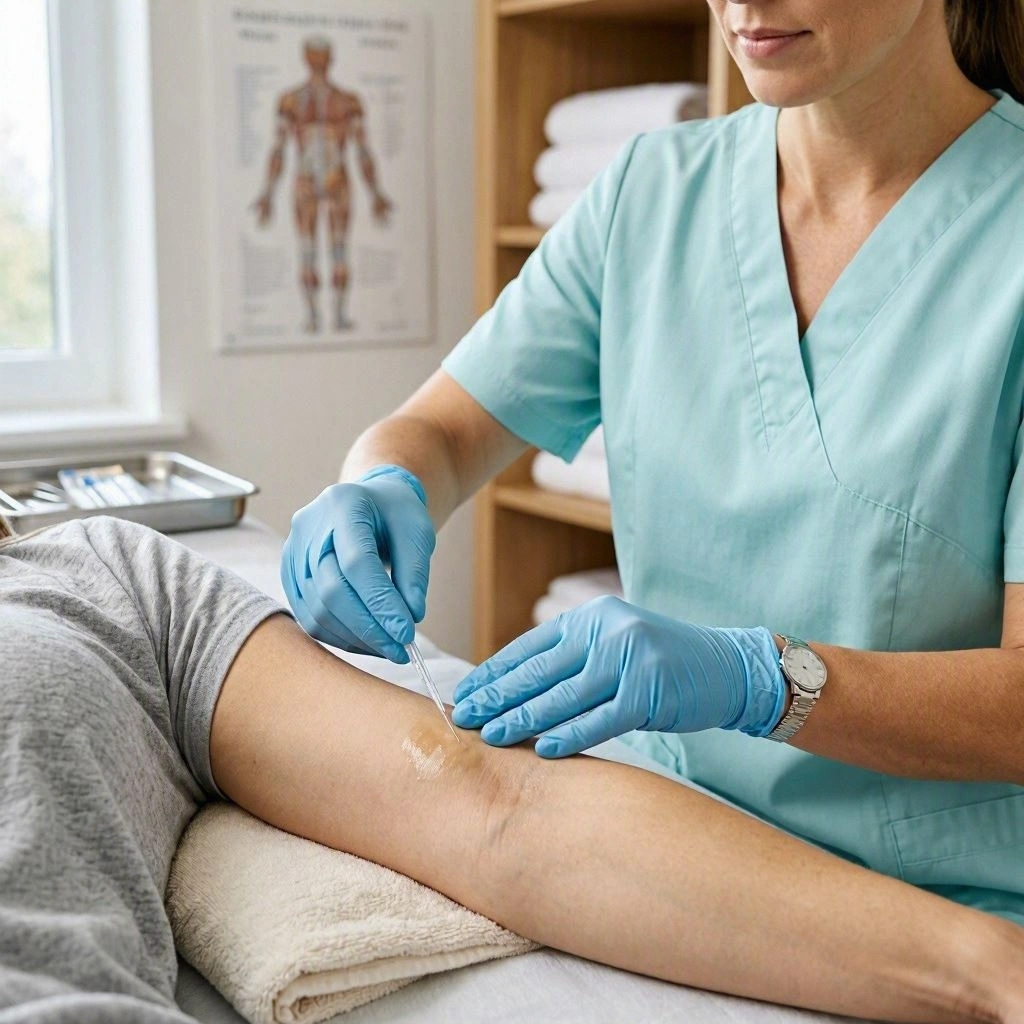
Dry needling is a minimally invasive treatment technique commonly used within musculoskeletal physiotherapy. It involves inserting a very thin, sterile, solid needle into selected muscles or soft-tissue structures.
Unlike an injection, the needle does not deliver medication into the body. That is why the procedure is described as “dry.”
The technique is frequently associated with myofascial pain syndrome, trigger points, muscle tightness, and other musculoskeletal problems. A physiotherapist may use it when an assessment suggests that muscular sensitivity or restricted tissue function is contributing to a patient’s symptoms.
However, the purpose is not simply to place a needle into the area that hurts.
A thorough assessment should identify the likely source of symptoms, examine movement and function, and determine whether this intervention is appropriate.
This distinction is important because pain can have many causes. A painful shoulder, for example, may involve muscles, tendons, joints, nerves, movement patterns, training load, or several factors at the same time.
Therefore, needling is generally best viewed as one tool within a broader rehabilitation program.
Current research supports this more balanced perspective. A 2026 systematic review examining needling and exercise for musculoskeletal pain found that most included studies did not demonstrate additional pain benefits compared with exercise alone, although some studies reported better outcomes when both approaches were combined for specific conditions.
How Does the Technique Work? (Dry Needling)
The biological effects of this intervention are complex.
Earlier explanations often focused on mechanical stimulation of a trigger point and the production of a local twitch response. Modern research suggests that several neurological and physiological processes may contribute to changes in pain and muscle sensitivity.
Possible effects include changes in:
Pain sensitivity
Muscle activity
Local tissue response
Pressure pain thresholds
Neuromuscular function
Pain-processing mechanisms
Perceived muscle stiffness
A recent systematic review investigated the neurophysiological effects of the technique and found evidence that treatment can influence several pain-related physiological measures. However, the results did not support a single simple mechanism that explains every clinical effect.
This is why it is better to avoid claims such as “the needle releases all muscle tension” or “the treatment removes toxins from the muscle.”
The human pain system is much more complicated.
For patients, the practical objective is usually to reduce symptoms sufficiently to improve movement and participation in rehabilitation.
For example, someone with painful neck muscles may struggle to rotate the head or perform strengthening exercises. If treatment temporarily reduces sensitivity, the person may be able to move more comfortably and complete their exercise program.
That is where the technique can become useful.
What Are Trigger Points? (Dry Needling)
Trigger points are commonly discussed in relation to myofascial pain and needling therapy.
A trigger point can be described as a sensitive area within muscle tissue that may reproduce familiar pain when stimulated.
People with muscular trigger points may report:
Local tenderness
Muscle tightness
Pain during movement
Sensitivity when pressure is applied
Reduced movement
Referred discomfort in some cases
However, trigger points should not automatically be considered the explanation for every musculoskeletal symptom.
Pain is influenced by multiple factors, including physical activity, previous injuries, sleep, stress, nervous-system sensitivity, workload, and general health.
Consequently, a good physiotherapist should assess the whole clinical picture instead of focusing exclusively on a painful spot.
What Conditions Can This Treatment Help?
Needling has been investigated for numerous musculoskeletal conditions.
The quality of evidence varies between diagnoses, so treatment should always be individualized.
Neck Pain
Neck pain is one of the most frequently discussed applications.
People with chronic nonspecific neck pain may experience muscle tenderness, restricted movement, headaches, or discomfort related to prolonged sitting and repetitive activities.
A physiotherapist may assess muscles around the neck and shoulder region and determine whether a trigger-point approach is appropriate.
Research published in 2026 found that the technique may improve certain functional outcomes in people with chronic nonspecific neck pain, although pooled results did not consistently show superiority over comparison treatments.
This suggests that it may be useful for some patients but should not automatically replace exercise, education, or other rehabilitation strategies.
Shoulder Pain
Shoulder pain can originate from many structures.
Muscular sensitivity may contribute to symptoms in some patients, particularly around the upper back and shoulder complex.
Treatment may therefore be considered when the clinical assessment identifies relevant muscular components.
However, a patient with shoulder pain should receive an appropriate assessment before treatment.
Conditions such as rotator cuff disorders, tendinopathy, instability, joint problems, and referred symptoms may require different approaches.
The important question is not simply:
“Can needling treat shoulder pain?”
Instead, the better question is:
“Is this technique appropriate for this person’s particular shoulder problem?”
Lower Back Pain
Lower back pain is another area where myofascial treatment has been investigated.
A systematic review focusing on myofascial pain associated with lumbar symptoms found that treatment could reduce post-intervention pain intensity and disability in some studies.
Nevertheless, persistent back pain is rarely caused by one isolated muscle.
A comprehensive rehabilitation program may include:
Progressive strengthening
Mobility exercises
Education
Functional training
Gradual activity progression
Movement retraining
Needling can potentially complement these interventions when clinically appropriate.
Knee Pain
Knee pain has also been investigated extensively.
Recent research has examined whether adding this treatment to exercise can improve outcomes for people with knee osteoarthritis.
A 2026 systematic review and meta-analysis specifically investigated the combination of needling and exercise compared with exercise alone for knee osteoarthritis. The findings contribute to growing evidence that combined treatment may be useful for selected patients, although clinical decisions should still be individualized.
For knee rehabilitation, strengthening remains particularly important.
Improving the capacity of the quadriceps, hips, and surrounding muscles can help patients return to daily activities and physical exercise.
Sports Injuries
Athletes may experience muscle tightness, localized pain, overload, and movement restrictions during training or rehabilitation.
Some physiotherapists incorporate needling into sports rehabilitation when muscular symptoms are present.
Potential goals may include:
Reducing perceived muscle discomfort
Improving movement tolerance
Supporting rehabilitation
Helping an athlete perform prescribed exercises
Addressing localized muscular sensitivity
However, it should not be promoted as a guaranteed method for improving athletic performance.
Successful sports rehabilitation also requires appropriate loading, strength development, conditioning, recovery, and sport-specific progression.
What Are the Potential Benefits? (Dry Needling)
The benefits vary considerably between individuals.
1. Temporary Pain Relief
Pain reduction is one of the primary reasons people consider this intervention.
Evidence suggests that treatment can reduce pain in some musculoskeletal conditions, although the magnitude and duration of improvement vary.
Importantly, short-term symptom relief can have practical value.
If someone can move more comfortably after treatment, they may be better able to participate in rehabilitation.
2. Reduced Muscle Sensitivity
Some patients report that previously sensitive areas feel less painful following treatment.
This may make activities such as stretching, strengthening, walking, lifting, or sport-specific movement easier.
3. Improved Movement
Pain can cause people to restrict movement.
Reducing sensitivity may allow a patient to explore movement with less discomfort.
However, lasting improvements generally require more than symptom modification.
Strength, mobility, coordination, and confidence also need to develop.
4. Better Exercise Tolerance
This may be one of the most useful roles of the technique.
Suppose a patient has difficulty performing a strengthening exercise because a particular muscle is highly sensitive.
If treatment reduces that sensitivity temporarily, the patient may be able to complete the exercise more comfortably.
The exercise then provides the longer-term stimulus needed for physical adaptation.
5. Support During Rehabilitation
A physiotherapist may use this approach as part of a broader plan that includes:
Therapeutic exercise
Manual therapy
Mobility work
Strength training
Education
Functional rehabilitation
Movement retraining
The goal is not simply to make a patient feel better for a few hours.
The larger goal is improved function.
Is Dry Needling Better Than Exercise?
Not necessarily.
This is one of the most important points to understand.
Exercise is a fundamental component of rehabilitation for many musculoskeletal conditions because it can improve strength, endurance, movement capacity, coordination, and physical confidence.
A 2026 systematic review compared needling and exercise approaches across musculoskeletal conditions. Seventeen of the 22 included studies found no additional pain benefit from adding the needling intervention compared with exercise alone. A smaller number of studies did report greater improvement when both treatments were combined for particular conditions.
Therefore, the evidence does not support replacing exercise with passive treatment.
Instead, clinicians can consider whether the technique provides an additional benefit for a particular patient.
For one person, exercise may be all that is necessary.
For another, temporary symptom reduction may make exercise easier.
That is why individualized clinical reasoning matters.
What Happens During a Session? (Dry Needling)
The exact experience varies depending on the treatment area and the patient’s condition.
Step 1: Assessment
The appointment generally begins with an assessment.
The physiotherapist may ask about:
Your current symptoms
Previous injuries
Medical history
Physical activity
Work requirements
Exercise habits
Previous treatments
Factors that make symptoms better or worse
Movement and physical tests may then be performed.
Step 2: Identifying the Treatment Area (Dry Needling)
The clinician determines whether muscular or soft-tissue factors are relevant to the patient’s symptoms.
The chosen area should be based on clinical reasoning rather than simply selecting the most painful location.
Step 3: Needle Application
A sterile, single-use needle is inserted into the selected tissue.
The patient may notice:
A brief prick
Pressure
A twitching sensation
A dull ache
Temporary discomfort
Some people barely notice the procedure, while others are more sensitive.
Step 4: Removal and Reassessment
After treatment, the needle is removed.
The clinician may then reassess:
Pain
Range of motion
Muscle sensitivity
Functional movement
Exercise tolerance
This reassessment can help determine whether the intervention produced a meaningful change.
Step 5: Active Rehabilitation (Dry Needling)
Exercise may follow the treatment.
Depending on the condition, this could include strengthening, mobility exercises, balance training, or functional movements.
This step is important because symptom reduction alone does not necessarily create long-term physical adaptation.
Does It Hurt?
Some discomfort is possible.
The initial insertion can feel like a small prick. Depending on the muscle and technique, you may also feel pressure, aching, or a brief twitch.
Individual responses differ.
A trained clinician should explain what sensations are expected and should communicate with the patient throughout treatment.
There is no requirement for a treatment to be excessively painful to be effective.
If the procedure causes significant discomfort or anxiety, the patient should communicate this immediately.
What Happens After Treatment?
Some people feel better immediately.
Others experience temporary soreness before noticing improvement.
Possible short-term responses include:
Local tenderness
Mild soreness
Small areas of bruising
Minor bleeding
Temporary fatigue
Increased sensitivity around the treatment area
These effects are generally considered minor when they resolve appropriately.
A large 2026 systematic review examining adverse events found that minor reactions were relatively common, while major adverse events per treatment were uncommon. However, the authors emphasized that rare but serious complications can occur.
For this reason, proper training, anatomical knowledge, screening, hygiene, and risk management are essential.
Is Dry Needling Safe?
When performed by an appropriately trained professional using suitable procedures, serious complications are uncommon.
However, no invasive treatment should be described as completely risk-free.
A previous prospective survey covering more than 20,000 treatment sessions reported minor events such as bleeding, bruising, and pain, while major events were rare.
More recent research has continued to emphasize the difference between common minor responses and rare serious complications.
Safety depends on several factors, including:
Appropriate patient screening
Professional training
Anatomical knowledge
Sterile equipment
Correct technique
Appropriate treatment selection
Recognition of complications
Patients should therefore choose an appropriately qualified practitioner and provide accurate medical information before treatment.
Who Should Discuss the Treatment With a Healthcare Professional First?
Not every person is an appropriate candidate.
Before treatment, tell your clinician about relevant medical conditions, medications, allergies, pregnancy, bleeding problems, immune-system issues, or other factors that could affect safety.
Particular caution may be required for people taking medications that influence blood clotting.
The exact precautions can differ according to the individual, treatment location, professional scope of practice, and local regulations.
Therefore, a personal assessment is more useful than relying on a generic online checklist.
Dry Needling vs Acupuncture (Dry Needling)
The two treatments are often confused because both use needles.
However, they are not necessarily the same treatment.
Musculoskeletal Needling
This approach is commonly integrated into physiotherapy and musculoskeletal rehabilitation.
The clinician generally selects treatment areas based on physical examination, symptoms, anatomy, movement, and functional findings.
Acupuncture
Acupuncture is traditionally associated with Traditional Chinese Medicine and has its own diagnostic and therapeutic framework.
Although both approaches use needles, their theoretical foundations, training pathways, treatment goals, and regulations can differ.
Patients should ask their practitioner which method is being used and what professional training they have completed.
How Long Does It Take to Work?
There is no universal timeline.
Some patients notice changes during or immediately after treatment.
Others may experience temporary soreness before improvement.
The duration of benefit also varies.
Research suggests that improvements in pain and function can occur across different follow-up periods, but results are inconsistent across conditions and study designs.
Therefore, it would be inappropriate for a clinician to guarantee that one session will eliminate pain.
A better approach is to monitor the patient’s response and determine whether the treatment is contributing meaningfully to rehabilitation.
How Many Sessions Are Needed? (Dry Needling)
There is no standard number of sessions that applies to everyone.
Treatment frequency depends on:
Diagnosis
Severity
Duration of symptoms
Rehabilitation goals
Response to previous sessions
Exercise tolerance
Overall treatment strategy
The treatment plan should be reassessed regularly.
If repeated sessions are not producing meaningful improvement, the clinician should reconsider the diagnosis and treatment strategy rather than simply continuing indefinitely.
Research has also highlighted a lack of standardization in treatment dosage and reporting, making it difficult to establish one universally optimal protocol.
Can It Help Chronic Pain?
Chronic pain is often more complicated than a simple muscle problem.
Long-lasting symptoms may involve changes in pain processing, movement behavior, physical capacity, sleep, stress, previous injury, and other factors.
Needling may help selected patients who have a meaningful muscular component to their symptoms.
However, it should not be presented as a cure for chronic pain.
A comprehensive program may include:
Education
Progressive exercise
Strength training
Mobility work
Gradual exposure to activities
Functional rehabilitation
Recovery strategies
The goal should be to improve a person’s ability to live and move rather than focusing exclusively on eliminating every sensation of pain.
Can Athletes Benefit?
Athletes sometimes use needling as part of recovery or rehabilitation.
The potential benefits may include reduced perceived muscle discomfort and improved tolerance to movement.
However, evidence for direct improvements in athletic performance is less certain.
An athlete should not rely on the technique instead of:
Strength training
Conditioning
Adequate recovery
Progressive loading
Nutrition
Sleep
Sport-specific training
It should be considered a supporting intervention rather than a shortcut to performance.
How to Choose a Qualified Practitioner
Choosing an appropriately trained professional is essential.
Before treatment, consider asking:
What professional qualification do you hold?
What specific training have you completed?
Is this procedure within your professional scope of practice?
How will you determine whether I am suitable?
What are the possible risks?
What alternatives are available?
How will you measure whether treatment is working?
Will treatment include an exercise or rehabilitation program?
A responsible practitioner should be comfortable answering these questions.
They should also explain that outcomes vary and should never guarantee a permanent cure.
What Does an Evidence-Based Approach Look Like?
An evidence-based rehabilitation program combines three major elements.
Clinical Expertise (Dry Needling)
The practitioner needs appropriate knowledge of anatomy, assessment, treatment selection, and safety.
Scientific Evidence
Treatment decisions should reflect current research rather than exaggerated marketing claims.
Recent research demonstrates that the evidence is promising in some areas but remains mixed across musculoskeletal conditions.
Patient Preferences
The patient’s goals, expectations, comfort level, and preferences also matter.
For example, someone who strongly dislikes needles may reasonably prefer another treatment option if similar benefits can be achieved.
Good physiotherapy is not about applying one technique to every patient.
It is about finding an appropriate strategy for the individual.
Common Myths
Myth 1: It Cures Every Type of Pain
It does not.
Different pain conditions require different assessments and treatment strategies.
Myth 2: More Needles Mean Better Results
There is no simple rule stating that a greater number of needles produces better outcomes.
Treatment should be individualized.
Myth 3: It Replaces Exercise
It should not automatically replace active rehabilitation.
Exercise remains a major component of treatment for many musculoskeletal problems.
Myth 4: It Is Completely Risk-Free
It is not.
Minor reactions are relatively common, while serious complications are uncommon but possible.
Myth 5: It Is Exactly the Same as Acupuncture
Although both use needles, their clinical frameworks and treatment philosophies may differ.
How to Get Better Results From Treatment (Dry Needling)
Patients can play an important role in their recovery.
Follow Your Rehabilitation Program
If exercises are prescribed, completing them consistently can be more important for long-term progress than relying solely on passive treatment.
Communicate With Your Therapist
Tell your clinician about:
Changes in symptoms
Unexpected reactions
Excessive soreness
New symptoms
Changes in movement
Your response to previous sessions
Focus on Function
Instead of measuring progress only by pain intensity, consider functional goals.
These might include:
Walking longer
Returning to sport
Lifting comfortably
Sitting at work
Sleeping better
Moving the shoulder more freely
Returning to normal daily activities
Track Progress (Dry Needling)
Your physiotherapist can monitor progress using pain scales, movement tests, strength measurements, functional tests, and activity-based goals.
This makes it easier to determine whether treatment is actually helping.
Frequently Asked Questions (Dry Needling)
What is dry needling?
It is a physiotherapy technique involving the insertion of thin, sterile needles into selected muscles or soft tissues. It is commonly used as part of treatment for myofascial pain and other musculoskeletal problems.
Is dry needling painful?
You may feel a brief prick, pressure, twitching, or aching. The experience varies between individuals and treatment areas.
What is dry needling used for?
It may be used for selected musculoskeletal problems involving muscle pain, sensitivity, stiffness, and movement limitations.
How long does a session take?
The duration varies depending on the assessment, treatment area, and whether exercise or other rehabilitation techniques are included.
How many treatments will I need?
There is no universal number. Your physiotherapist should determine frequency based on your symptoms, goals, and response to treatment.
Can dry needling help back pain?
Research suggests that it may reduce pain and disability for some people with myofascial low back pain, although results vary.
Can it help neck pain?
It may improve certain symptoms and functional outcomes in selected people with chronic nonspecific neck pain, but current evidence does not consistently demonstrate superiority over other treatments.
Can it help knee pain?
Research has investigated its use alongside exercise for knee osteoarthritis, with recent evidence suggesting potential benefits for selected patients.
Is soreness normal afterward?
Mild soreness, tenderness, bruising, or minor bleeding can occur. These are among the commonly reported minor responses.
Can I exercise afterward?
Exercise is often an important part of rehabilitation, but the appropriate intensity and timing depend on your condition and the advice of your physiotherapist.
Is this treatment good for athletes?
It may be useful as an adjunct for athletes experiencing muscular pain or stiffness, but it should not replace strength training, conditioning, recovery, or sport-specific rehabilitation.
Is dry needling safe?
When performed appropriately by a trained professional, major complications are uncommon. Nevertheless, minor adverse events are relatively common and rare serious complications can occur.
Can it permanently eliminate pain?
Not necessarily. Some people experience substantial improvement, while others experience temporary or limited benefits. Long-term recovery usually requires addressing the broader factors contributing to the condition.
Should it be combined with exercise?
Often, yes. Current evidence suggests that exercise remains important, and selected patients may benefit from combining active rehabilitation with this treatment.
Is it better than other physiotherapy treatments?
Not universally. Research varies by condition, and there is no evidence that one technique is always the best option for every patient.
Conclusion (Dry Needling)
Dry needling can be a useful component of modern musculoskeletal physiotherapy when it is applied to the right patient, for the right reason, and within an appropriate rehabilitation program.
Research suggests that it may help reduce pain and improve certain functional outcomes for selected conditions. At the same time, current evidence does not support treating it as a universal solution or assuming that it is always superior to exercise. A 2026 systematic review found that most studies comparing the intervention with exercise did not show additional pain benefits, although combined treatment produced better results in some specific conditions.
The most effective approach is therefore individualized.
A qualified physiotherapist should first assess the underlying problem, explain the potential benefits and risks, and determine whether the technique fits your rehabilitation goals.
When appropriate, it can be combined with strengthening, mobility exercises, education, progressive loading, and functional rehabilitation.
The ultimate goal is not simply to use a needle.
The goal is to help you move better, manage pain more effectively, restore physical capacity, and return to the activities that matter to you.
For that reason, the technique is best understood as a potential tool within physiotherapy rather than a standalone cure.
Have questions or need personalized guidance? Contact our physiotherapy team today and let us help you take the next step toward better movement and less pain.