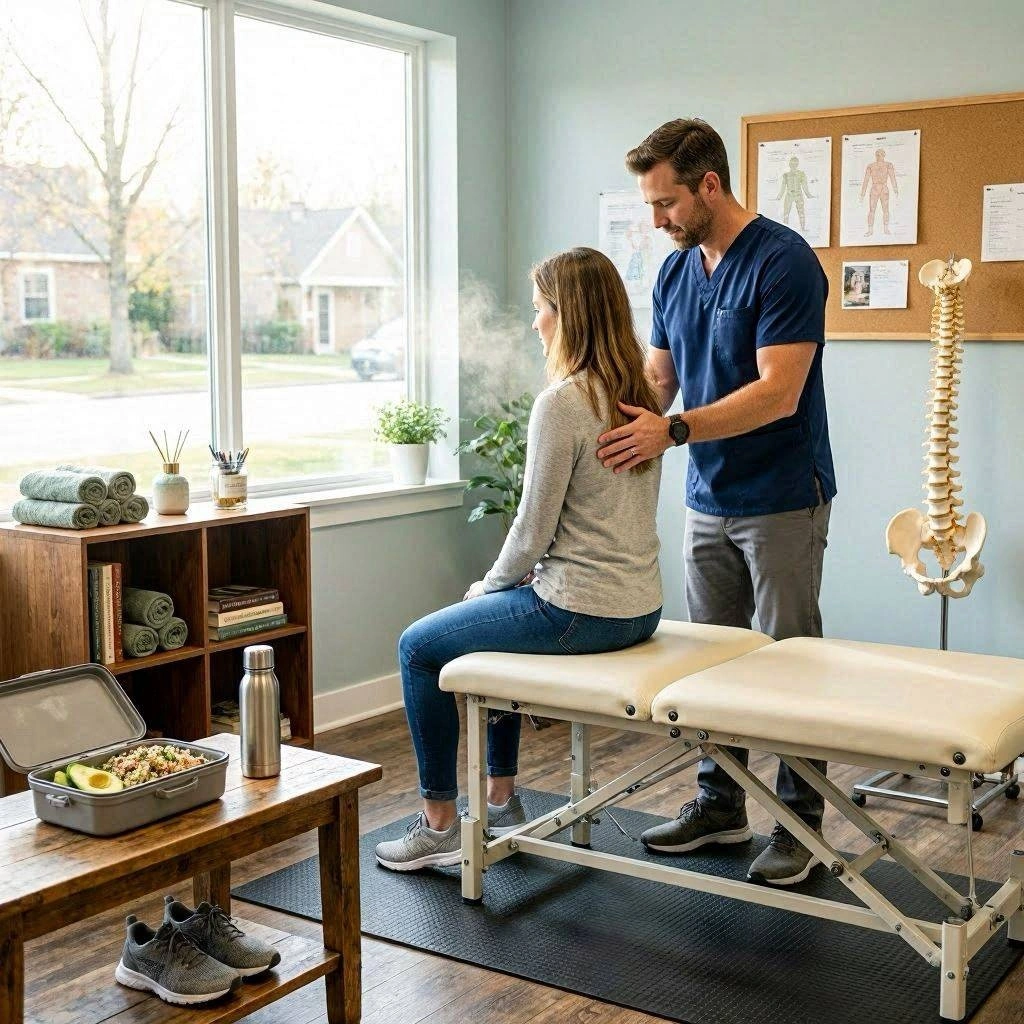

Why Does My Neck Hurt? Causes, Symptoms, Treatment, and Relief
If you have ever wondered, “Why does my neck hurt?”, you are not alone. Neck pain is a common problem that can affect people of all ages. Sometimes the cause is obvious, such as sleeping in an awkward position or spending an entire day at a computer. In other cases, neck pain can develop gradually without a clear trigger.
Neck discomfort can range from mild stiffness to significant pain that makes it difficult to turn your head. Some people experience pain around the neck and shoulders, while others may notice headaches, muscle tension, or symptoms extending into the arm.
The good news is that many common causes of neck pain can improve with appropriate movement, exercise, activity modification, and professional treatment when necessary.
However, neck pain can have many different causes. Understanding the possible source of your symptoms can help you choose an appropriate approach to recovery.
This guide explores the most common reasons your neck may hurt, what symptoms can occur alongside neck pain, what you can do at home, and when professional assessment may be necessary.
What Causes Neck Pain?
The neck, also known as the cervical region, contains vertebrae, discs, joints, muscles, ligaments, nerves, and other tissues.
Because these structures work together, discomfort can develop for many different reasons.
Common causes include:
Muscle strain
Poor or prolonged positioning
Computer use
Smartphone use
Sleeping position
Repetitive movements
Stress
Sports activities
Whiplash
Joint irritation
Nerve irritation
Age-related changes
Physical inactivity
In many cases, there is not one single cause.
For example, spending eight hours at a computer may not automatically cause neck pain. However, prolonged sitting combined with limited movement, poor workstation positioning, stress, and low muscular endurance may increase the likelihood of developing symptoms.
1. Muscle Strain
One of the most common reasons your neck may hurt is muscle strain.
The muscles around your neck and shoulders work continuously to support and move your head. Repetitive activity or prolonged positioning can cause these muscles to become tired or irritated.
Muscle strain may occur after:
Lifting
Exercise
Repetitive work
Long periods of sitting
Sleeping awkwardly
Sudden movements
Symptoms can include soreness, stiffness, tenderness, and discomfort when moving the head.
Mild muscle-related neck pain often improves with gradual movement and appropriate activity modification.
2. Sleeping in an Uncomfortable Position
If your neck hurts when you wake up, your sleeping position may be one possible contributor.
Sleeping with your head positioned awkwardly for several hours can leave the muscles around the neck feeling stiff or sore.
You may notice:
Morning stiffness
Reduced neck rotation
Muscle tightness
Shoulder discomfort
Consider whether your pillow and sleeping position allow your neck to remain comfortable.
There is no universally perfect pillow for everyone. The best setup is one that supports comfortable sleep without consistently aggravating symptoms.
3. Computer Use
Long periods of computer use are another common contributor to neck discomfort.
When you sit at a desk for several hours, you may remain in one position for an extended period. Over time, this can contribute to muscular fatigue and stiffness.
Computer-related neck pain may be associated with:
Prolonged sitting
Limited movement
Screen positioning
Repetitive work
Poor workstation setup
The solution is not necessarily to stop using a computer.
Instead, consider changing positions regularly and taking short movement breaks throughout the day.
4. Smartphone Use (Why Does My Neck Hurt)
Smartphones can also contribute to neck discomfort.
When looking downward at a phone for extended periods, the head and neck remain in a relatively fixed position.
This may contribute to discomfort around the:
Neck
Upper shoulders
Upper back
Try holding your device closer to eye level when practical.
More importantly, avoid spending long periods in one position without moving.
5. Stress and Muscle Tension
Stress can influence how your muscles behave.
During stressful situations, people may unconsciously tighten their shoulders and neck.
Over time, this can contribute to muscle tension and discomfort.
Stress-related neck tension may be accompanied by:
Shoulder tightness
Headaches
Jaw tension
Difficulty relaxing
Upper-back discomfort
Regular physical activity, adequate sleep, relaxation techniques, and movement breaks may help reduce overall muscle tension.
6. Poor Movement Habits
The way you move throughout the day can influence your neck.
Repeatedly performing the same movement or staying in one position for a long period can place additional demands on certain tissues.
Examples include:
Looking down while working
Repeated overhead activity
Prolonged driving
Carrying objects on one side
Long periods of reading
Movement variety can help reduce prolonged loading of the same tissues.
7. Neck Stiffness From Inactivity
Physical inactivity can contribute to reduced strength and mobility.
If you spend most of the day sitting and rarely exercise, your neck and upper-body muscles may have less opportunity to develop strength and endurance.
Regular activity can help maintain:
Mobility
Strength
Endurance
General physical capacity
You do not necessarily need intense exercise.
Walking, resistance training, mobility exercises, and regular movement throughout the day can all contribute to a healthier physical routine.
8. Sports and Exercise
Exercise is beneficial for overall health, but certain activities can temporarily irritate the neck.
Neck pain may occur after:
Weightlifting
Contact sports
Running
Cycling
Swimming
Gym workouts
Repetitive overhead activities
Sometimes symptoms occur because training intensity increased too quickly.
If you recently changed your exercise program, consider whether you increased your:
Weight
Repetitions
Training volume
Training frequency
Exercise difficulty
A gradual progression can help your body adapt.
9. Whiplash (Why Does My Neck Hurt)
Whiplash is associated with rapid movement of the neck, commonly following vehicle collisions.
Symptoms may include:
Neck pain
Stiffness
Headaches
Reduced range of motion
Shoulder discomfort
Following significant trauma, appropriate medical assessment is important.
Rehabilitation may later involve gradual mobility, strengthening, and functional exercises.
10. Nerve Irritation
Sometimes neck pain is associated with irritation of a nerve.
This may cause symptoms extending beyond the neck.
Possible symptoms include:
Pain traveling into the shoulder or arm
Tingling
Numbness
Burning sensations
Weakness
These symptoms should not simply be assumed to be muscle tension.
Persistent or worsening neurological symptoms should be assessed by a qualified healthcare professional.
11. Cervical Disc Problems
The cervical spine contains discs between many of its vertebrae.
These discs help distribute forces and contribute to movement.
Changes affecting a cervical disc may sometimes contribute to neck pain or symptoms involving the arm.
Symptoms vary considerably depending on the condition.
If neck pain is persistent or accompanied by neurological symptoms, professional assessment can help determine the appropriate treatment approach.
12. Age-Related Changes
As people get older, normal changes can occur within the spine.
These may involve:
Discs
Joints
Bones
Soft tissues
Imaging may show age-related changes even in people who do not experience pain.
Therefore, imaging findings do not always explain symptoms by themselves.
A healthcare professional should consider symptoms, physical examination, and functional limitations together.
13. Headaches and Neck Pain (Why Does My Neck Hurt)
Some headaches can occur alongside neck pain.
Neck-related musculoskeletal factors may contribute to certain headache patterns.
A physiotherapist may assess:
Neck mobility
Muscle function
Upper-back movement
Shoulder function
Postural endurance
However, headaches can have many causes.
A new, severe, sudden, or unusual headache should receive appropriate medical assessment, particularly if accompanied by neurological symptoms.
14. Shoulder Problems (Why Does My Neck Hurt)
Sometimes neck and shoulder symptoms occur together.
The neck, shoulder blades, upper back, and arms work as a connected movement system.
Shoulder problems can influence how you move your upper body and may contribute to discomfort around the neck.
A comprehensive assessment may therefore look beyond the neck itself.
15. Jaw Tension
Jaw clenching and tension can sometimes occur alongside neck and shoulder tension.
People who frequently clench their teeth may notice discomfort around:
The jaw
Face
Temples
Neck
Shoulders
If jaw symptoms are persistent, dental or medical assessment may be appropriate.
How Can I Reduce Neck Pain?
If your symptoms are mild and there are no warning signs, several strategies may help.
Keep Moving (Why Does My Neck Hurt)
Gentle movement is often preferable to remaining completely still.
Try comfortable movements such as:
Neck rotation
Gentle side bending
Shoulder movements
Walking
Avoid forcing painful movements.
Take Movement Breaks (Why Does My Neck Hurt)
If you work at a computer, stand up regularly.
Walk around.
Change your sitting position.
Move your shoulders.
Even short breaks can help reduce the amount of time spent in one position.
Try Gentle Neck Exercises
Exercises can help improve mobility and strength.
Common examples include:
Chin tucks
Neck rotation
Isometric strengthening
Shoulder blade squeezes
Resistance-band rows
Thoracic mobility exercises
The right exercises depend on the cause of your symptoms.
Strengthen the Upper Back
Upper-back strengthening can complement neck rehabilitation.
Resistance-band rows are one example.
Focus on controlled movement rather than using excessive resistance.
Improve General Fitness
Walking and other forms of regular physical activity can help maintain overall physical capacity.
Exercise may also help people manage stress and improve sleep.
Should I Stretch My Neck?
Gentle stretching may help some people with muscle tightness.
Examples include gentle:
Side bending
Rotation
Upper trapezius stretching
However, stretching is not appropriate for every neck condition.
Do not aggressively pull on your head or force the neck into extreme positions.
If stretching consistently worsens your symptoms, stop and seek professional guidance.
Should I Use Heat?
Heat may provide temporary relief for some types of muscular stiffness.
A warm shower or comfortably warm heating pad may help relax tense muscles.
However, heat is primarily a comfort strategy.
If neck pain repeatedly returns, it is important to consider why the symptoms are occurring.
Should I Use Ice?
Cold may sometimes provide temporary relief after certain acute injuries.
However, it is not necessary for every type of neck pain.
If your symptoms follow significant trauma, professional assessment is more important than relying exclusively on home treatment.
How Physiotherapy Can Help (Why Does My Neck Hurt)
If you keep asking yourself, “Why does my neck hurt?”, a physiotherapy assessment may help identify contributing factors.
A physiotherapist can evaluate:
Neck mobility
Strength
Muscle endurance
Shoulder function
Upper-back mobility
Movement patterns
Work activities
Exercise technique
Treatment may include:
Therapeutic exercise
Strengthening
Mobility training
Manual therapy
Ergonomic education
Movement retraining
Functional rehabilitation
The treatment plan should be adjusted according to your symptoms and progress.
Neck Pain From Sitting (Why Does My Neck Hurt)
Sitting itself is not necessarily harmful.
The bigger issue may be spending too much time in one position without moving.
If sitting contributes to your symptoms:
Change position regularly
Stand periodically
Walk during breaks
Adjust your workstation
Strengthen your upper body
Maintain general physical activity
The goal is to make sitting more sustainable rather than trying to avoid it completely.
Neck Pain From Driving
Driving can involve prolonged static positioning.
Long journeys may therefore contribute to stiffness.
During longer trips:
Adjust your seat comfortably
Avoid excessive reaching
Take breaks when appropriate
Move your shoulders and neck gently
Avoid remaining in one position for unnecessarily long periods
Neck Pain From Exercise (Why Does My Neck Hurt)
If you experience neck pain after exercise, review your training program.
Consider whether you recently:
Increased resistance
Changed exercises
Increased training frequency
Added new movements
Reduced recovery time
Temporarily modifying aggravating activities may be useful.
However, avoiding all exercise is generally not necessary for uncomplicated symptoms.
Neck Pain When Turning the Head
Pain when turning the head can occur with muscle strain, stiffness, joint irritation, or other conditions.
If your neck suddenly becomes stiff after sleeping awkwardly, gentle movement may help.
However, severe restriction following trauma should be assessed professionally.
Neck Pain When Looking Down
Pain when looking down may be associated with prolonged device use, reading, computer work, or other activities.
Try changing positions regularly.
Avoid remaining in a downward-looking position for long periods without a break.
If the symptom is persistent or severe, consider professional assessment.
Neck Pain When Looking Up (Why Does My Neck Hurt)
Pain during extension can have several possible causes.
Do not repeatedly force the movement to determine whether it improves.
Instead, modify activities that clearly aggravate symptoms and consider an assessment if the problem persists.
Neck Pain and Sleep
Neck pain can interfere with sleep, while poor sleep may make pain more difficult to manage.
If you regularly wake with neck discomfort, review your sleeping position and pillow.
Try to create a comfortable sleeping environment.
Persistent sleep disruption caused by neck pain may be a reason to seek professional advice.
Chronic Neck Pain
If your neck has hurt for months or repeatedly returns, the problem may require a more comprehensive approach.
Chronic neck pain management may involve:
Progressive exercise
Strength training
Mobility
General physical activity
Ergonomic improvements
Sleep management
Stress management
Education
The objective is to improve physical capacity and function rather than simply avoiding activities.
When Should You See a Physiotherapist?
Consider seeing a physiotherapist if your neck pain:
Does not improve
Keeps returning
Limits your movement
Interferes with work
Affects exercise
Disturbs sleep
Makes everyday activities difficult
A physiotherapist can assess your symptoms and create an individualized treatment plan.
When Should You See a Doctor?
Medical evaluation may be appropriate if neck pain occurs with:
Significant weakness
Persistent numbness
Major trauma
Severe unexplained pain
Loss of coordination
Difficulty walking
Other neurological symptoms
These symptoms may require investigation beyond routine exercise-based care.
Neck Pain Red Flags (Why Does My Neck Hurt)
Some symptoms require urgent medical attention.
Seek urgent care if neck pain occurs with:
Severe pain following major trauma
Sudden weakness
Significant loss of sensation
Difficulty walking
Loss of coordination
Loss of bladder or bowel control
Severe headache with neurological symptoms
Difficulty speaking
Sudden vision changes
Loss of consciousness
Do not assume these symptoms are simply caused by muscle tension.
How to Prevent Neck Pain
Preventing every episode of neck pain is not always possible, but several habits may reduce risk.
Maintain regular physical activity.
Strengthen your neck, shoulders, and upper back.
Take movement breaks during computer work.
Avoid prolonged static positions.
Use a comfortable workstation.
Progress exercise gradually.
Get adequate sleep.
Manage stress.
The objective is to build a body that can tolerate everyday physical demands.
A Simple Daily Neck Health Routine (Why Does My Neck Hurt)
A simple routine may include:
Morning (Why Does My Neck Hurt)
Perform gentle neck and shoulder mobility.
During Work
Change position frequently and take movement breaks.
During Exercise
Use a gradual warm-up and avoid sudden increases in training load.
Evening
Perform comfortable mobility exercises if they help your symptoms.
Throughout the Day
Walk regularly and avoid sitting for prolonged periods without movement.
Common Mistakes When Treating Neck Pain (Why Does My Neck Hurt)
Ignoring Persistent Symptoms
If symptoms repeatedly return, simply treating them with temporary relief may not address contributing factors.
Staying Completely Still (Why Does My Neck Hurt)
Too much inactivity can contribute to stiffness and reduced strength.
Stretching Aggressively
More stretching does not necessarily mean faster recovery.
Focusing Only on Posture
Movement variety, strength, and endurance are also important.
Ignoring Exercise Technique
Poor technique can place unnecessary demands on the neck.
Returning to Exercise Too Quickly
Gradual progression is usually more sustainable.
Final Thoughts (Why Does My Neck Hurt)
If you are asking “Why does my neck hurt?”, there may be several possible explanations. Muscle strain, prolonged computer use, smartphone use, sleeping position, stress, repetitive activity, exercise, and reduced physical activity are common contributors. Other problems involving the cervical spine, discs, joints, or nerves can also cause symptoms.
For mild and uncomplicated neck pain, maintaining comfortable movement, taking regular breaks, improving your workstation, staying physically active, and performing appropriate strengthening and mobility exercises may help.
However, treatment should be based on the individual rather than assuming that every episode of neck pain has the same cause.
If symptoms persist, repeatedly return, or interfere with work, sleep, exercise, or everyday activities, a physiotherapist can assess your neck, shoulders, upper back, strength, mobility, and movement patterns. This can help create a more targeted rehabilitation plan.
It is also important to recognize warning signs. Severe pain after significant trauma, sudden weakness, persistent numbness, difficulty walking, loss of coordination, or other neurological symptoms require appropriate medical attention.
The neck is a complex part of the body, and pain does not always mean that something is seriously damaged. With appropriate assessment, gradual exercise, healthy movement habits, and attention to contributing factors, many people can improve their neck function and return to normal activities.