Osteopathy Therapy: Complete Guide to Pain Relief, Mobility, and Recovery
Osteopathy Therapy is a hands-on approach commonly used to assess and manage musculoskeletal problems involving muscles, joints, connective tissues, and movement. People often consider osteopathy when they experience back pain, neck pain, joint stiffness, sports injuries, muscle tension, or difficulty moving comfortably.
An osteopathic approach usually looks beyond the exact location of pain. Instead, the practitioner may examine how different parts of the body work together. For example, a person with lower back pain may also have reduced hip mobility, muscle weakness, movement restrictions, or activity-related factors that contribute to symptoms.
Treatment can involve several techniques, including soft-tissue work, massage, stretching, joint mobilization, and movement advice. However, Osteopathy Therapy should not be considered a universal solution for every health problem. Current guidance and evidence focus primarily on musculoskeletal conditions, and the effectiveness of manual therapy can vary depending on the condition and the individual. NHS guidance describes osteopathy as using techniques such as massage and stretching to treat injuries, improve movement, and relieve pain.
For many people, the most useful approach combines appropriate hands-on care with exercise, physical activity, education, and self-management.
What Is Osteopathy Therapy?
Osteopathy Therapy is a form of hands-on musculoskeletal care that aims to improve movement and help manage pain and physical limitations.
An osteopath may assess the body’s movement patterns, joint mobility, muscle tension, posture, and functional limitations. Based on that assessment, the practitioner can create an individualized treatment plan.
The treatment itself can vary considerably. Some people may receive gentle soft-tissue techniques, while others may receive joint mobilization, stretching, or specific movement exercises.
The goal should not simply involve treating a painful area for a few minutes. Instead, the practitioner should consider why the person has difficulty moving, what activities they want to return to, and what strategies can help them manage symptoms independently.
For example, someone with recurring lower back pain may receive hands-on treatment to address stiffness or discomfort. The practitioner may then recommend walking, strengthening exercises, activity modification, and strategies for gradually returning to normal activities.
This broader approach can make treatment more practical because it gives the patient an active role in recovery.
How Does Osteopathy Therapy Work?
The effects of manual therapy are not limited to physically moving a joint.
Pain involves many systems within the body. Tissue sensitivity, muscle activity, nervous-system responses, previous injuries, stress, sleep, physical activity, and expectations can all influence how someone experiences pain.
Hands-on treatment may temporarily change how movement feels. It may reduce the sensation of stiffness, improve comfortable movement, or reduce muscle tension.
That change can then make it easier for someone to participate in exercise or everyday activities.
For example, a person with back pain may feel uncomfortable bending forward. After an appropriate assessment and treatment, the movement may feel easier. The person can then gradually practice bending, strengthening, and functional movements rather than avoiding them completely.
Therefore, Osteopathy Therapy does not need to rely on the idea that a practitioner simply “puts the body back into place.” Modern musculoskeletal care recognizes that pain and movement problems can involve multiple factors.
The purpose of treatment should be to improve function and support recovery rather than create dependence on repeated passive treatment.
What Conditions Can Osteopathy Therapy Help?
Osteopathy is primarily associated with musculoskeletal problems.
Depending on the person’s symptoms and clinical assessment, Osteopathy Therapy may be considered for:
- Lower back pain
- Neck pain
- Shoulder pain
- Hip pain
- Knee pain
- Muscle tension
- Joint stiffness
- Sports injuries
- Work-related musculoskeletal discomfort
- Repetitive strain problems
- Some headaches associated with musculoskeletal problems
- Mobility restrictions
- Some pregnancy-related musculoskeletal discomfort
- Recovery following certain injuries
NHS information notes that osteopathy is commonly used for conditions involving muscles, joints, arthritis, sports injuries, and problems affecting the pelvis, hips, and legs. It also notes that evidence remains limited or absent for many conditions outside the musculoskeletal system.
That distinction matters.
Osteopathy should not be advertised as a treatment for every internal or systemic condition. A person with unexplained symptoms should receive an appropriate medical assessment before assuming that a musculoskeletal therapy is suitable.
Osteopathy Therapy for Back Pain
Back pain remains one of the most common reasons people seek hands-on treatment.
Lower back pain can develop after lifting, repetitive activity, inactivity, sports, prolonged sitting, or other factors. In many cases, several factors contribute to symptoms rather than one isolated problem.
During an Osteopathy Therapy assessment, the practitioner may examine:
- Spinal movement
- Hip mobility
- Muscle tension
- Lower-limb movement
- Functional activities
- Previous injuries
- Work demands
- Exercise habits
Treatment may include soft-tissue techniques, mobilization, stretching, and movement advice.
However, exercise and physical activity remain important components of many back-pain management plans.
Evidence on spinal manipulation suggests that it may produce small improvements in pain and function for some people with acute or chronic low back pain, although evidence strength varies. NCCIH also notes that mild, temporary side effects such as increased discomfort, stiffness, or headache can occur after spinal manipulation.
For that reason, Osteopathy Therapy should ideally fit into a broader rehabilitation strategy.
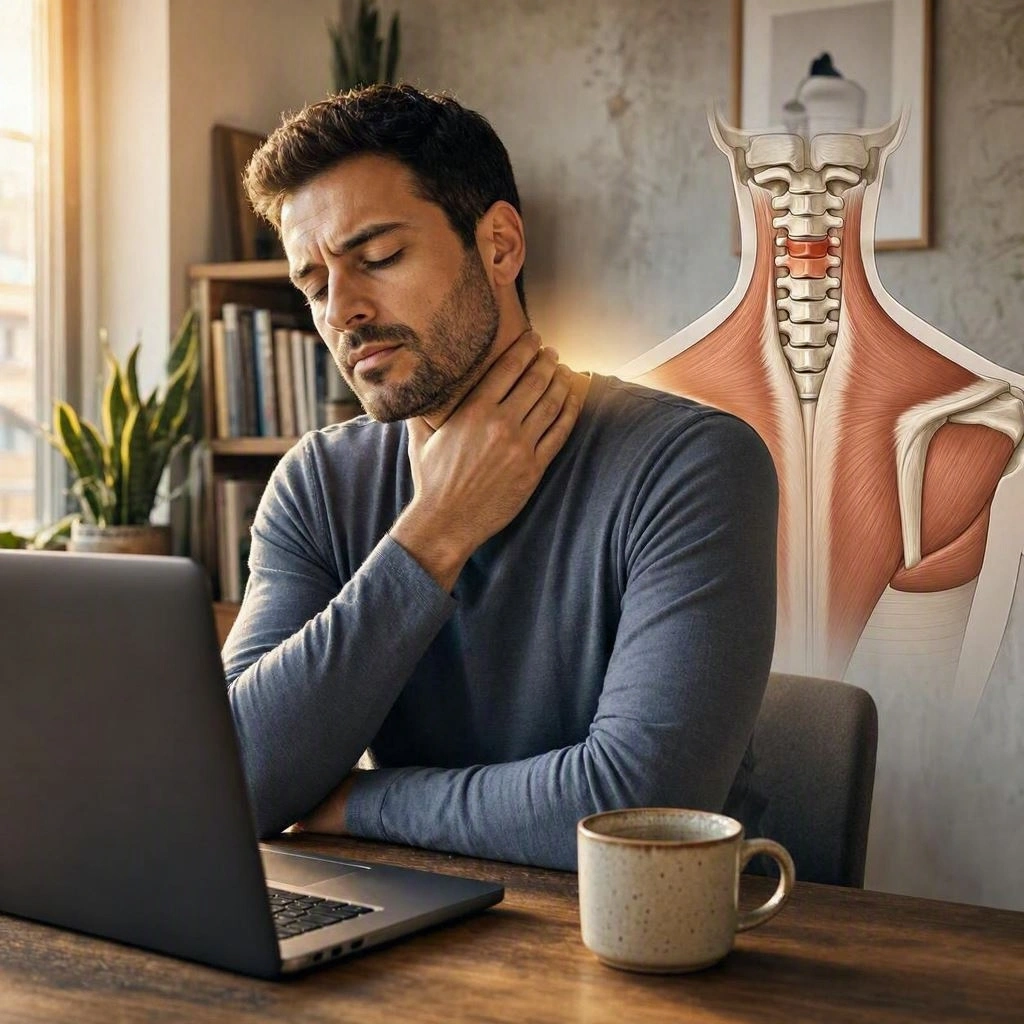
Osteopathy Therapy for Neck Pain
Neck pain can affect concentration, sleep, driving, exercise, and work.
Common contributing factors can include prolonged static positions, repetitive activities, awkward sleeping positions, previous injuries, and changes in physical activity.
An osteopath may assess the neck together with the upper back, shoulders, and surrounding muscles.
Treatment can include gentle manual techniques, soft-tissue work, mobility exercises, and advice about daily movement.
However, neck symptoms require appropriate screening.
Not every neck problem represents ordinary muscle tension. Severe or unusual symptoms, significant trauma, progressive weakness, major numbness, coordination problems, or other neurological symptoms may require medical evaluation.
When the problem appears mechanical and appropriate for musculoskeletal care, treatment can focus on improving comfortable movement and gradually rebuilding strength and confidence.
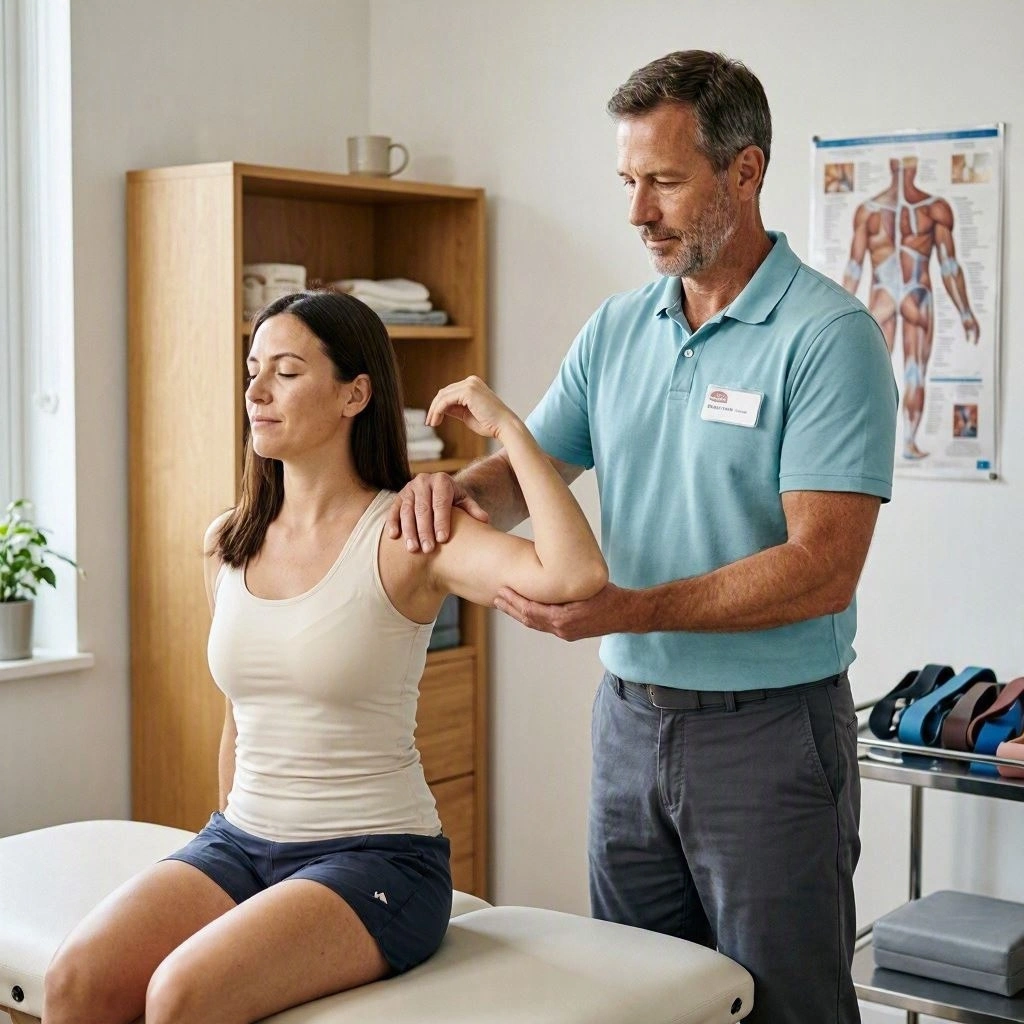
Osteopathy Therapy for Shoulder Pain
Shoulder pain can interfere with reaching, lifting, dressing, sleeping, sports, and work.
Several different conditions can cause shoulder symptoms. These include tendon problems, joint irritation, muscle weakness, stiffness, and injuries.
Therefore, an osteopathic assessment should not focus only on the painful shoulder.
The practitioner may also examine:
- Shoulder-blade movement
- Upper-back mobility
- Neck movement
- Shoulder strength
- Arm movement
- Work activities
- Sporting activities
Manual techniques may help improve comfortable movement or reduce muscular discomfort.
Nevertheless, strengthening often plays an important role in shoulder rehabilitation.
For example, a person may gradually perform exercises that develop rotator-cuff strength, shoulder-blade control, endurance, and functional movement.
This approach can help translate short-term improvements into better long-term physical capacity.
Osteopathy Therapy for Hip Pain
Hip pain can develop because of injuries, osteoarthritis, muscle problems, movement restrictions, or other conditions.
A practitioner may examine the hip together with the pelvis, lower back, knee, and surrounding muscles.
Treatment may include gentle joint mobilization, soft-tissue techniques, stretching, and movement recommendations.
However, persistent hip pain deserves appropriate assessment because different causes require different treatments.
If the pain affects walking, sleep, or daily activities, a healthcare professional should evaluate the symptoms rather than relying exclusively on manual therapy.
When appropriate, exercise can help improve strength and function around the hip.
A gradual program may include walking, strengthening, mobility exercises, and functional movements.
Osteopathy Therapy for Knee Pain
Knee pain can affect walking, stairs, running, squatting, and recreational activities.
Osteopathy Therapy may address mobility restrictions and muscular tension around the knee, hip, and lower leg.
However, knee rehabilitation often requires active exercise.
For people with osteoarthritis, NHS guidance identifies exercise as one of the most important treatments. Regular physical activity and strengthening can improve symptoms and support joint function.
Therefore, manual therapy should not replace strengthening and general physical activity when those interventions are appropriate.
A comprehensive approach may combine:
- Strength exercises
- Walking
- Mobility work
- Weight management when appropriate
- Activity modification
- Education
- Manual therapy when indicated
The specific plan should depend on the person’s symptoms and physical capacity.
Osteopathy Therapy for Sports Injuries
Sports injuries can affect muscles, tendons, joints, ligaments, and other tissues.
An athlete may seek Osteopathy Therapy during different stages of recovery.
Early rehabilitation may focus on protecting the injured area and controlling symptoms. Later stages can focus on restoring mobility, strength, coordination, endurance, and sport-specific performance.
Manual therapy may help address stiffness or discomfort during this process.
However, athletes should not use hands-on therapy as a substitute for appropriate diagnosis.
A suspected fracture, dislocation, major ligament injury, or severe muscle tear may require medical assessment.
Once the injury has been properly evaluated, rehabilitation can gradually increase physical demands.
For example, a runner recovering from a lower-limb injury may progress from walking to light jogging and eventually return to full training.
The progression should match tissue tolerance and functional recovery.
What Happens During an Osteopathy Therapy Appointment?
The first appointment often starts with a detailed discussion.
The osteopath may ask about:
- Your main symptoms
- When the symptoms started
- Previous injuries
- Medical conditions
- Medications
- Work activities
- Exercise
- Sleep
- Daily activities
- Previous treatment
- Factors that increase symptoms
- Factors that reduce symptoms
The practitioner may then conduct a physical examination.
This can include observing posture and movement, assessing joint mobility, checking muscle function, and evaluating activities related to your symptoms.
The practitioner should also consider whether you need medical referral.
After the assessment, the osteopath should explain the findings and discuss treatment options.
You may receive hands-on treatment during the first appointment if the practitioner considers it appropriate.
You may also receive exercises or advice to follow between sessions.
Common Techniques Used in Osteopathy Therapy
Osteopathy Therapy can involve several techniques.
Soft-Tissue Therapy
Soft-tissue techniques focus on muscles and surrounding tissues.
The practitioner may use pressure, massage, stretching, or other manual methods.
These techniques can sometimes reduce the sensation of muscular tightness and make movement feel more comfortable.
However, the response varies between individuals.
Joint Mobilization
Joint mobilization involves controlled movement of a joint.
The practitioner chooses the direction and intensity according to the person’s symptoms and physical findings.
The purpose may include improving comfortable movement or reducing stiffness.
Stretching
Stretching may help when restricted flexibility contributes to a movement limitation.
However, not every painful condition benefits from aggressive stretching.
The practitioner should select appropriate movements and explain how much intensity is suitable.
Massage
Massage can reduce perceived muscle tension and provide temporary comfort for some people.
Within osteopathic care, massage may form one part of a larger assessment and treatment plan.
Exercise Therapy
Exercise can provide a more active component of recovery.
Depending on the condition, an osteopath may recommend mobility exercises, strengthening, walking, balance activities, or gradual return-to-sport exercises.
Benefits of Osteopathy Therapy
People seek Osteopathy Therapy for different reasons.
Potential benefits can include:
- Reduced musculoskeletal discomfort
- Improved mobility
- Reduced stiffness
- Improved confidence with movement
- Better tolerance for daily activities
- Support during injury rehabilitation
- Temporary reduction in muscle tension
- Improved understanding of movement-related symptoms
- Guidance on self-management
- Support for returning to exercise
However, these benefits are not guaranteed.
The evidence for osteopathic and manual therapy varies according to the condition and treatment technique.
For example, evidence exists for some manual approaches used for low back pain, while evidence remains limited for many non-musculoskeletal conditions.
Therefore, treatment should begin with realistic expectations.
Is Osteopathy Therapy Safe?
Osteopathy is generally considered safe for many people when an appropriately trained practitioner selects suitable techniques.
Nevertheless, every treatment has potential risks.
After manual treatment, some people may experience:
- Temporary soreness
- Mild stiffness
- Headache
- Fatigue
- Temporary discomfort
NHS guidance notes that mild to moderate soreness, headache, or fatigue can occur after osteopathy and that these effects commonly settle within a short period. It also notes that rare serious complications have been associated with spinal manipulation.
Certain people may require additional caution.
NHS guidance specifically highlights potential safety concerns for people taking blood-thinning medication, people at increased risk of bleeding or stroke, people with very weak or seriously damaged bones or joints, and people with certain nerve conditions.
Always tell the practitioner about your medical history and medications before treatment.
Who Should Speak With a Doctor Before Osteopathy Therapy?
Some people should obtain medical advice before starting manual treatment.
This includes people with:
- Recent major trauma
- Severe unexplained pain
- Significant osteoporosis
- Serious bone or joint disease
- Certain neurological conditions
- Increased bleeding risk
- Blood-thinning medication use
- Serious infection
- Unexplained weight loss
- Progressive weakness
- Significant numbness
Pregnancy also requires appropriate consideration.
NHS Wales recommends that pregnant people seek advice from a GP or midwife before seeing an osteopath and choose someone experienced in treating pregnancy-related muscle and joint problems.
Osteopathy Therapy During Pregnancy
Pregnancy can change the body’s movement patterns and place different demands on the back, pelvis, hips, and other areas.
Some people experience musculoskeletal discomfort during pregnancy.
An appropriately trained practitioner may provide modified manual treatment when appropriate.
However, pregnancy requires additional screening.
The practitioner should understand the individual’s stage of pregnancy, medical history, symptoms, and physical needs.
Treatment positions and techniques may also require modification.
Most importantly, unexplained or severe symptoms should not automatically be attributed to normal pregnancy-related discomfort.
Medical evaluation may be necessary when symptoms appear unusual or concerning.
Osteopathy Therapy and Exercise
Exercise plays an important role in many musculoskeletal rehabilitation programs.
Manual treatment can sometimes make movement feel easier. Exercise can then help build the strength and capacity needed for everyday activities.
For example, someone with back pain might gradually work on:
- Walking
- Core endurance
- Hip strength
- General fitness
- Functional lifting
- Mobility
- Balance
Someone with knee pain might work on:
- Quadriceps strength
- Hip strength
- Calf strength
- Walking tolerance
- Balance
- Functional squatting
Someone with shoulder pain might work on:
- Rotator-cuff strength
- Shoulder-blade control
- Range of motion
- Arm endurance
- Functional reaching
The appropriate exercises depend on the individual.
Exercise should usually progress gradually rather than pushing through severe pain.
Osteopathy Therapy and Chronic Pain
Persistent pain can become more complicated than a simple tissue injury.
When symptoms continue for months, factors such as sleep, stress, physical activity, fear of movement, work demands, and previous experiences may influence recovery.
Osteopathy may form one part of a broader management plan.
For example, someone with persistent back pain may benefit from a combination of:
- Education
- Gradual exercise
- Strength training
- Physical activity
- Manual therapy
- Sleep management
- Stress management
- Appropriate medical care
A 2014 research project investigated an integrated program combining osteopathy with mindfulness and acceptance-based approaches for persistent musculoskeletal pain, reflecting the broader idea that chronic pain management may require more than hands-on treatment alone.
The important point is that persistent pain deserves a comprehensive approach.
Osteopathy Therapy for Office Workers
Office workers often spend many hours sitting, using computers, and performing repetitive tasks.
This pattern can contribute to neck, shoulder, wrist, and back discomfort.
An osteopath may assess how the person works and provide advice about movement and physical activity.
Useful strategies may include:
- Taking regular movement breaks
- Changing sitting positions
- Adjusting the monitor
- Improving desk organization
- Strengthening the upper back
- Improving general fitness
- Limiting long uninterrupted periods of sitting
- Gradually increasing physical activity
There is no need to search for one perfect posture that must remain unchanged all day.
Instead, regular movement and adequate physical capacity can make prolonged desk work easier to tolerate.
Osteopathy Therapy for Older Adults
Older adults may experience joint stiffness, osteoarthritis, reduced muscle strength, and mobility limitations.
An osteopathic assessment can consider these factors while taking existing health conditions into account.
Safety becomes particularly important when bone density is reduced or when a person takes medications that affect bleeding risk.
Exercise also remains important.
Strength and balance exercises can support independence and help older adults maintain physical function.
Therefore, treatment should focus on practical goals such as walking, climbing stairs, getting up from a chair, maintaining balance, and completing everyday activities.
Osteopathy Therapy for Joint Stiffness
Joint stiffness can occur after injury, periods of inactivity, osteoarthritis, or other conditions.
Manual techniques may temporarily improve how a stiff joint feels or moves.
However, regular movement remains important.
NHS guidance for joint pain recommends maintaining appropriate movement rather than completely stopping activity.
A treatment plan can therefore combine:
- Gentle mobility exercises
- Strengthening
- Walking
- Activity modification
- Manual therapy when appropriate
The objective is not simply to make the joint feel better for a few hours.
Instead, the long-term goal should involve improving function and helping the person remain active.
Osteopathy Therapy vs Physiotherapy
Osteopathy and physiotherapy are different professions, although they can overlap significantly in musculoskeletal care.
Physiotherapy commonly places substantial emphasis on exercise, functional rehabilitation, strength, mobility, education, and return to activity.
Osteopathy commonly incorporates hands-on assessment and treatment, although many osteopaths also use exercise and self-management strategies.
The most useful choice depends on the person’s condition and goals.
For example, someone recovering from a sports injury may need progressive strength and sport-specific rehabilitation. Someone with muscular stiffness may initially value hands-on treatment alongside an active program.
Rather than choosing a profession based only on its name, consider the practitioner’s qualifications, experience, assessment process, treatment approach, and willingness to use active rehabilitation.
Osteopathy Therapy vs Massage Therapy
Massage therapy primarily focuses on soft tissues.
Osteopathy can include massage, but it may also involve joint assessment, mobility testing, movement analysis, and rehabilitation advice.
Someone looking for relaxation or temporary relief from general muscle tension may choose massage.
Someone experiencing persistent musculoskeletal symptoms may benefit from a more comprehensive clinical assessment.
Neither treatment should automatically replace appropriate medical care.
The right option depends on the reason for treatment.
How Many Osteopathy Therapy Sessions Do You Need?
There is no standard number of sessions.
Some people may notice improvement after a small number of appointments.
Others with persistent or recurrent problems may need longer-term rehabilitation.
The number of sessions can depend on:
- The condition
- Symptom duration
- Severity
- Previous injuries
- General health
- Physical activity
- Work requirements
- Response to treatment
- Home-exercise participation
A good treatment plan should include reassessment.
If symptoms do not improve, the practitioner should reconsider the diagnosis or treatment strategy.
Repeated treatment without measurable progress does not automatically make sense.
Sometimes the better next step involves physiotherapy, medical assessment, imaging, exercise rehabilitation, or another healthcare service.
What Should You Do Between Osteopathy Therapy Sessions?
Your activities between appointments can influence recovery significantly.
Follow the recommendations provided by your practitioner.
If you receive exercises, perform them consistently and within the recommended limits.
Keep moving unless a healthcare professional has specifically advised you to restrict activity.
Avoid suddenly increasing exercise volume.
If you spend long periods sitting, take regular movement breaks.
Also consider sleep, general fitness, nutrition, stress, and daily activity levels.
Recovery rarely depends on one appointment.
Instead, progress usually comes from repeating appropriate movements and gradually increasing physical capacity.
How to Choose an Osteopathy Therapist
Choosing a qualified practitioner is important.
Before booking treatment, consider:
- Qualifications
- Professional registration
- Experience with your condition
- Treatment philosophy
- Safety screening
- Communication
- Exercise recommendations
- Willingness to refer when necessary
In the UK, osteopaths must register with the General Osteopathic Council to practise as osteopaths.
If you live in another country, check the local regulatory requirements.
Registration does not guarantee that a treatment will work for every person, but it provides an important professional and safety framework.
Questions to Ask Before Starting Osteopathy Therapy
Before beginning treatment, consider asking:
- What could be causing my symptoms?
- Have you treated people with similar problems?
- What will the initial assessment involve?
- Which techniques might you use?
- Are there any risks for someone with my medical history?
- Should I speak with my doctor first?
- Will I receive exercises?
- How will we measure improvement?
- What should I do between appointments?
- When should I seek additional medical care?
These questions can help you understand what to expect.
Signs That You May Need Medical Assessment
Osteopathy should not delay medical care when symptoms suggest a potentially serious condition.
Seek appropriate medical advice if pain is:
- Severe
- Unexplained
- Progressively worsening
- Associated with significant weakness
- Associated with major numbness
- Following major trauma
- Accompanied by fever
- Associated with unexplained weight loss
- Preventing normal movement
- Persisting despite appropriate self-care
For joint pain, NHS guidance recommends medical assessment when symptoms interfere with normal activities or sleep, continue without improvement, repeatedly return, or become worse.
Urgent assessment may be necessary after a serious injury, especially when a person cannot bear weight, experiences loss of sensation, or has an obvious deformity.
Common Misconceptions About Osteopathy Therapy
Osteopathy Can Treat Every Health Condition
Osteopathy mainly addresses musculoskeletal problems.
Evidence does not support treating every medical condition with osteopathic therapy.
Pain Always Means Something Is Misaligned
Pain does not necessarily mean that a joint has moved out of position.
Pain can involve many biological and psychological factors.
Stronger Treatment Is Always Better
More force does not automatically produce better results.
Treatment should match the person’s condition and tolerance.
You Need Continuous Treatment
The goal should be to improve function and self-management.
Some people may benefit from occasional treatment, while others may need a short rehabilitation program.
Manual Treatment Is Enough
Many musculoskeletal conditions also require exercise, strengthening, physical activity, education, and lifestyle changes.
Hands-on treatment should support the overall plan rather than replace active rehabilitation.
How to Get Better Results From Osteopathy Therapy
Patients can take several practical steps to make treatment more useful.
Communicate Clearly
Tell your practitioner what activities cause problems.
For example, explain whether pain affects walking, lifting, sleeping, running, working, or driving.
Set Functional Goals
Instead of focusing only on pain scores, create practical goals.
You may want to:
- Walk for 30 minutes
- Return to running
- Sleep comfortably
- Lift objects at work
- Sit through a workday
- Return to the gym
- Climb stairs more easily
Functional goals can make progress easier to measure.
Follow the Home Program
If your practitioner recommends exercises, consistency matters.
Performing exercises once immediately after treatment rarely produces lasting changes.
Progress Gradually
Avoid doing too much too quickly.
Your body needs time to adapt to increasing physical demands.
Review Progress
If treatment does not improve your symptoms, discuss the situation with your practitioner.
The plan may need modification.
What Does a Successful Osteopathy Therapy Plan Look Like?
A successful treatment plan does not necessarily mean that every symptom disappears immediately.
Instead, progress may appear in several ways.
You might notice that:
- You can walk farther.
- You can sleep better.
- You can sit longer.
- Your movement feels easier.
- You can exercise again.
- You need fewer modifications during daily activities.
- Your strength improves.
- You feel more confident about movement.
Pain reduction can matter, but function often provides an equally important measure of recovery.
For example, reducing pain from 7/10 to 5/10 is useful, but being able to return to work, walk independently, or resume exercise may represent a more meaningful functional improvement.
When Should Osteopathy Therapy Be Combined With Other Care?
A multidisciplinary approach may help when symptoms are persistent or complicated.
Depending on the condition, your healthcare team might include:
- Osteopath
- Physiotherapist
- Doctor
- Orthopedic specialist
- Sports medicine professional
- Occupational therapist
- Pain specialist
- Other appropriate healthcare professionals
NHS community musculoskeletal services, for example, can provide assessment and treatments such as physiotherapy, pain management, and occupational therapy for problems involving the back, joints, muscles, and ligaments.
Combining appropriate services can help address different aspects of recovery.
Frequently Asked Questions About Osteopathy Therapy
What is Osteopathy Therapy?
Osteopathy Therapy is a hands-on approach mainly used for musculoskeletal problems. It can involve soft-tissue techniques, massage, stretching, joint mobilization, movement advice, and exercise.
Does Osteopathy Therapy help back pain?
It may help some people with back pain. Evidence for manual therapy suggests possible small improvements in pain and function, particularly when treatment forms part of a broader management plan.
Is Osteopathy Therapy painful?
Treatment should generally remain within a tolerable range. Temporary soreness or discomfort can occur after treatment.
How long does an Osteopathy Therapy session take?
The duration varies by practitioner and clinic. Initial appointments may take longer because they include a detailed history and physical assessment.
Can Osteopathy Therapy help neck pain?
Osteopathy may help some musculoskeletal types of neck pain. However, unusual neurological symptoms or significant trauma require appropriate medical evaluation.
Can osteopathy help sciatica?
Osteopathy may form part of a musculoskeletal treatment plan for some people with sciatica. However, significant weakness, severe numbness, or other neurological warning signs require medical assessment.
Is Osteopathy Therapy safe?
It can be safe for many people when provided by an appropriately qualified practitioner. However, some medical conditions and medications can increase risk.
Can I exercise after Osteopathy Therapy?
In many cases, exercise and physical activity form an important part of recovery. The appropriate amount depends on your condition and the advice provided by your healthcare professional.
Is osteopathy the same as physiotherapy?
No. They are different professions, although both may use manual therapy, exercise, movement assessment, and rehabilitation.
Can Osteopathy Therapy treat arthritis?
Osteopathy may help some people manage musculoskeletal symptoms, but it should not replace evidence-based arthritis management. Exercise remains one of the most important treatments for osteoarthritis.
How many Osteopathy Therapy sessions will I need?
There is no fixed number. Your treatment needs depend on the condition, severity, duration, goals, and response to treatment.
Can I receive osteopathy during pregnancy?
Some pregnant people may receive osteopathic care, but appropriate precautions are necessary. Speak with your GP or midwife and choose an osteopath experienced with pregnancy-related musculoskeletal problems.
Should I see an osteopath for persistent pain?
Persistent pain deserves appropriate assessment. Osteopathy may form part of your care, but you should not rely exclusively on manual treatment when symptoms persist or worsen.
Final Thoughts on Osteopathy Therapy
Osteopathy Therapy can be a useful option for some people dealing with musculoskeletal pain, stiffness, movement restrictions, and certain injuries.
Its approach commonly involves assessing how muscles, joints, and movement patterns interact before selecting appropriate hands-on techniques.
Treatment may include soft-tissue work, massage, stretching, joint mobilization, and movement advice. However, the most useful approach often extends beyond the treatment table.
Exercise, physical activity, education, gradual strengthening, and self-management can play important roles in long-term recovery.
The evidence also varies. Research and clinical guidance provide support for some manual therapy approaches in conditions such as low back pain, while evidence remains limited for many other conditions.
Therefore, Osteopathy Therapy should be approached with realistic expectations.
If you are considering treatment, choose an appropriately qualified practitioner, provide a complete medical history, and discuss your goals clearly. If symptoms are severe, unusual, persistent, or associated with neurological or other warning signs, seek appropriate medical assessment rather than relying solely on manual therapy.
Ultimately, the strongest treatment plan is one that helps you understand your symptoms, move more confidently, improve physical capacity, and become increasingly independent in managing your health.