Physiotherapy Pain Relief: Complete Guide to Managing Pain and Improving Movement
Pain can affect almost every part of daily life. It can make walking uncomfortable, reduce your ability to exercise, disturb your sleep, and make simple activities such as working, driving, or climbing stairs more difficult. While pain can have many different causes, Physiotherapy Pain Relief can be an important part of managing many musculoskeletal conditions and improving physical function.
Physiotherapy focuses on movement, strength, mobility, physical function, and self-management. Depending on the cause of pain, a physiotherapist may use exercise therapy, manual therapy, education, movement advice, and other appropriate techniques. The goal is not simply to make pain disappear temporarily. Instead, treatment often aims to help you understand your symptoms, improve physical capacity, return to meaningful activities, and manage future flare-ups.
According to the NHS, physiotherapy can help ease pain and improve movement for people with injuries, illnesses, or disabilities. Physiotherapy may include exercises, manual therapy, symptom-management advice, and other treatments depending on the individual’s condition.
However, physiotherapy is not a universal solution for every type of pain. A proper assessment helps determine whether physiotherapy is appropriate and whether another healthcare professional or further investigation is needed.
This comprehensive guide explains how physiotherapy can support pain relief, which conditions may benefit, what happens during treatment, how exercise contributes to recovery, and how you can choose an appropriate physiotherapy service.
What Is Physiotherapy Pain Relief?
Physiotherapy Pain Relief refers to the use of physiotherapy assessment, exercise, movement strategies, manual therapy, education, and other appropriate interventions to help people manage pain and improve physical function.
Pain can develop because of many different factors.
These may include:
- Muscle strains
- Joint problems
- Sports injuries
- Back pain
- Neck pain
- Arthritis
- Nerve-related symptoms
- Repetitive strain
- Post-surgical recovery
- Reduced physical activity
- Movement limitations
- Long-term musculoskeletal conditions
Physiotherapy does not simply focus on the painful area.
Instead, a physiotherapist may look at how you move, how strong you are, what activities increase your symptoms, how pain affects your daily life, and what factors may be preventing recovery.
For example, someone experiencing knee pain may also have weakness around the hip or reduced mobility elsewhere in the leg. Similarly, a person with back pain may have reduced activity because they are worried that movement will make the problem worse.
A physiotherapist can assess these factors and develop a treatment strategy around the individual’s needs.
How Does Physiotherapy Help With Pain?
Physiotherapy can support pain management in several ways.
Improving Movement
Pain often causes people to move differently.
You may avoid certain movements because they hurt or because you are worried about making the injury worse. Over time, avoiding movement can contribute to stiffness, weakness, and reduced confidence.
A physiotherapist can help you gradually restore comfortable movement.
Improving Strength
Weak muscles can make everyday activities more difficult.
Strengthening exercises can help improve physical capacity and make activities such as walking, climbing stairs, lifting, or exercising easier.
Increasing Physical Capacity
When pain causes you to reduce your activity, your overall physical capacity can decline.
Gradually increasing activity can help rebuild tolerance.
Providing Education
Understanding pain can reduce fear and uncertainty.
A physiotherapist can explain your condition, discuss appropriate activity, and help you understand how to respond to symptoms.
Supporting Self-Management
Long-term improvement often requires strategies that you can use outside the clinic.
These may include:
- Home exercises
- Activity planning
- Pacing
- Movement breaks
- Strength training
- Flare-up strategies
- Workplace adjustments
The NHS also describes physiotherapy as a treatment that can improve movement and help ease pain through exercise, manual therapy, and advice about managing symptoms.
[INTERNAL LINK PLACEHOLDER: Physiotherapy Services]
What Happens During a Physiotherapy Assessment?
Your first physiotherapy appointment usually begins with a detailed discussion.
The physiotherapist may ask about:
- Where you feel pain
- When your symptoms started
- What caused the problem
- What makes symptoms worse
- What makes symptoms better
- Your medical history
- Previous injuries
- Previous treatments
- Your work
- Your exercise routine
- Your daily activities
- Your recovery goals
The physiotherapist may then perform a physical assessment.
This may involve checking:
- Strength
- Flexibility
- Joint movement
- Balance
- Coordination
- Posture
- Walking
- Functional movement
The exact assessment depends on the problem.
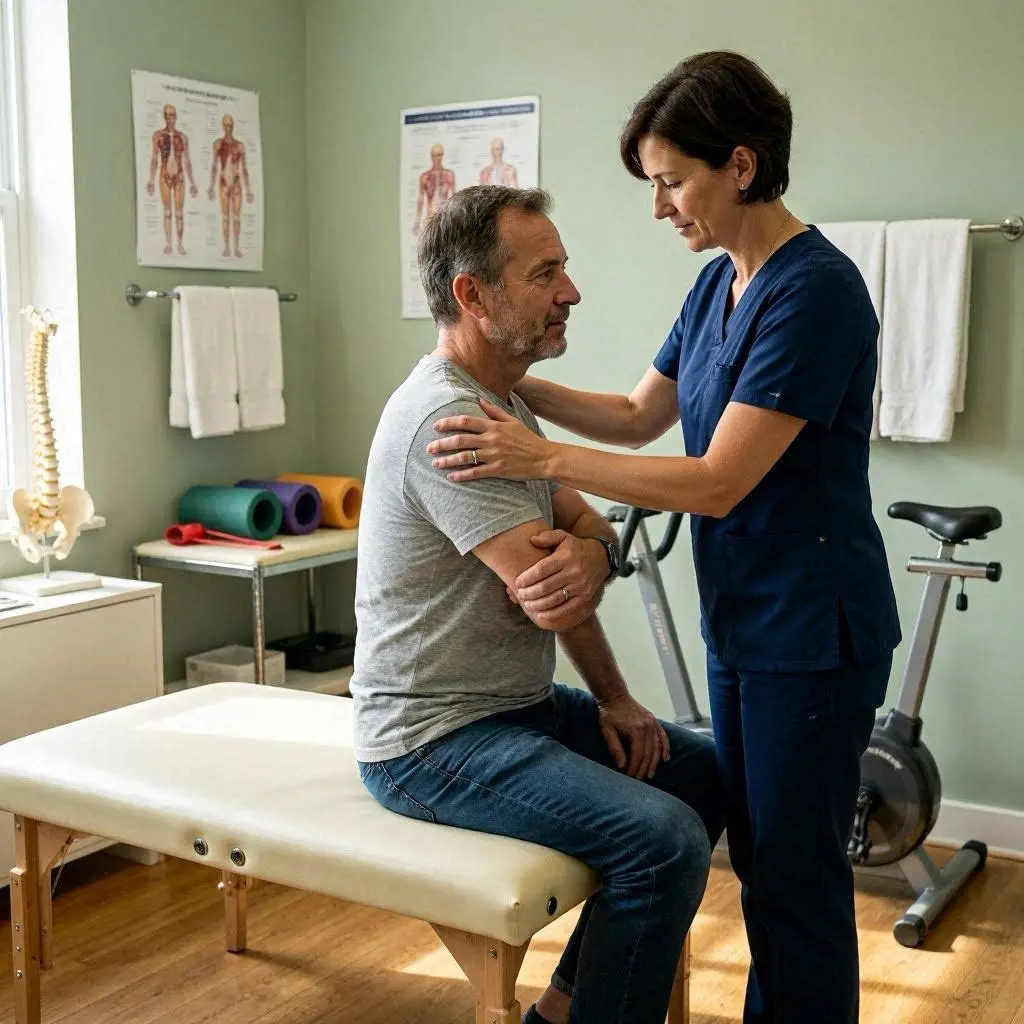
For example, a person with shoulder pain may perform reaching and lifting movements, while someone with knee pain may perform walking, squatting, or step movements.
The NHS explains that a first physiotherapy appointment can include questions about symptoms, medical history, and lifestyle, followed by physical assessment of factors such as strength and balance.
The physiotherapist can then discuss treatment options and explain what you can do to support recovery.
Physiotherapy Pain Relief for Back Pain
Back pain is one of the most common reasons people seek physiotherapy.
Back pain can develop after lifting, repetitive activity, prolonged inactivity, sports, or without a clear trigger.
Symptoms can include:
- Lower back pain
- Muscle stiffness
- Difficulty bending
- Pain while sitting
- Pain while standing
- Reduced mobility
- Pain during exercise
- Pain that spreads toward the legs
Physiotherapy may include exercise, movement education, manual therapy, and advice about remaining active.
The NHS recommends avoiding prolonged bed rest for back pain and identifies exercise, physiotherapy, and manual therapy among possible treatment options when appropriate.
A physiotherapist may create an exercise program that includes:
- Core strengthening
- Hip strengthening
- Mobility exercises
- Walking
- Stretching
- Functional exercises
- Progressive resistance training
The goal is usually to improve your ability to perform everyday activities while gradually increasing physical capacity.
Physiotherapy Pain Relief for Neck Pain
Neck pain can interfere with work, driving, sleeping, and exercise.
Common symptoms include:
- Neck stiffness
- Head and neck discomfort
- Reduced range of motion
- Upper-back tension
- Shoulder discomfort
- Pain during computer work
- Difficulty turning the head
A physiotherapist may assess the neck, upper back, shoulders, and movement patterns.
Treatment may include:
- Mobility exercises
- Strengthening exercises
- Postural advice
- Manual therapy
- Activity modification
- Workplace advice
However, neck pain should receive appropriate medical assessment when it follows significant trauma or occurs with concerning neurological or systemic symptoms.
[INTERNAL LINK PLACEHOLDER: Neck Pain Treatment]
Physiotherapy Pain Relief for Knee Pain
Knee pain can affect walking, running, climbing stairs, and exercise.
Common causes include:
- Sports injuries
- Osteoarthritis
- Muscle weakness
- Tendon problems
- Ligament injuries
- Overuse
- Previous surgery
A physiotherapist may assess how the knee moves and how surrounding muscles contribute to movement.
Treatment may include:
- Quadriceps strengthening
- Hip strengthening
- Balance exercises
- Mobility exercises
- Functional training
- Walking advice
- Gradual return to sport
For arthritis, physiotherapy can help improve strength and mobility. The NHS lists physiotherapy among treatments used to help people with arthritis manage symptoms and improve physical function.
Physiotherapy Pain Relief for Shoulder Pain
Shoulder pain can make reaching, lifting, dressing, sleeping, and exercising difficult.
A physiotherapist may assess:
- Shoulder mobility
- Strength
- Shoulder blade movement
- Upper-back mobility
- Neck movement
- Functional activities
Treatment may include progressive strengthening and mobility exercises.
For example, a patient may begin with gentle range-of-motion exercises and gradually progress to resistance exercises as tolerance improves.
The treatment should reflect the specific cause of shoulder pain rather than relying on a single exercise routine.
Physiotherapy Pain Relief for Sciatica
Sciatica can cause pain that travels from the lower back or buttock into the leg.
Symptoms may include:
- Leg pain
- Tingling
- Numbness
- Burning sensations
- Weakness
- Lower back discomfort
Physiotherapy can form part of treatment for appropriate cases.
The NHS lists physiotherapy, exercise advice, and manual therapy among treatment options for sciatica. It also recommends remaining as active as possible and avoiding prolonged sitting or lying down.
A physiotherapist may recommend:
- Gentle movement
- Walking
- Strengthening exercises
- Mobility work
- Activity modification
- Gradual return to normal activities
However, certain neurological symptoms require urgent medical attention.
Physiotherapy Pain Relief for Sports Injuries
Sports injuries can happen during running, football, basketball, tennis, weight training, or other physical activities.
Common injuries include:
- Sprains
- Muscle strains
- Tendon problems
- Joint injuries
- Overuse injuries
- Post-surgical sports injuries
Physiotherapy can help guide the recovery process.
A treatment plan may include:
- Reducing aggravating activity initially
- Restoring movement
- Improving strength
- Developing balance
- Rebuilding endurance
- Returning to sport gradually
The final stage is especially important.
Returning to sport too quickly can increase the risk of aggravating an injury.
Therefore, a physiotherapist may use progressive exercises that become increasingly similar to the demands of your sport.
[INTERNAL LINK PLACEHOLDER: Sports Injury Physiotherapy]
Physiotherapy Pain Relief After an Injury
After an injury, people often become hesitant to move.
That response is understandable. However, prolonged inactivity can lead to stiffness and reduced strength.
Physiotherapy can help you understand when movement is appropriate and how to gradually increase activity.
For example, following a sprain or strain, early protection may be appropriate, followed by gradual movement as symptoms allow.
The NHS notes that physiotherapy can help when a sprain or strain is taking longer than expected to recover.
The exact rehabilitation plan depends on the severity and type of injury.
The Role of Exercise in Physiotherapy Pain Relief
Exercise is one of the most important parts of physiotherapy.
A physiotherapist may prescribe exercises based on:
- Your current strength
- Mobility
- Pain levels
- Functional goals
- Injury stage
- Physical activity
- Medical history
Exercises may include:
Mobility Exercises
These exercises aim to improve movement.
Examples can include controlled joint movements and gentle stretching.
Strength Exercises
Strengthening can improve your ability to perform physical tasks.
Exercises may use:
- Body weight
- Resistance bands
- Dumbbells
- Machines
- Functional movements
Balance Exercises
Balance training can help people who have reduced stability.
Endurance Exercises
Walking, cycling, swimming, and other aerobic activities may form part of a rehabilitation program.
Functional Exercises
These exercises replicate movements you need for work, sport, or everyday life.
The NHS recommends regular exercise as part of managing several musculoskeletal conditions, and its pain guidance encourages gradual physical activity where appropriate.
Can Exercise Hurt During Physiotherapy?
Some exercises can feel uncomfortable, especially when you first begin rehabilitation.
However, pain during exercise does not automatically mean that damage is occurring.
The appropriate response depends on the condition and the individual’s symptoms.
A physiotherapist can help determine:
- Which sensations are expected
- How much exercise is appropriate
- When to reduce intensity
- When to progress
- When symptoms require reassessment
Do not assume that “more pain means more progress.”
Instead, rehabilitation should use a gradual and controlled approach.
Physiotherapy Pain Relief and Chronic Pain
Persistent pain can be different from a short-term injury.
When pain continues for months, it can affect:
- Sleep
- Mood
- Work
- Exercise
- Social activities
- Confidence
- Physical activity
Therefore, chronic pain management often requires a broader strategy.
Physiotherapy can help through:
- Exercise
- Education
- Pacing
- Activity management
- Goal setting
- Flare-up management
- Movement strategies
Pain-management physiotherapy services may use a holistic approach that considers how pain affects a person’s entire life rather than focusing only on pain intensity.
For example, treatment may focus on helping someone walk for ten minutes, return to work, or sleep more consistently rather than promising complete pain elimination.
Physiotherapy Pain Relief and Manual Therapy
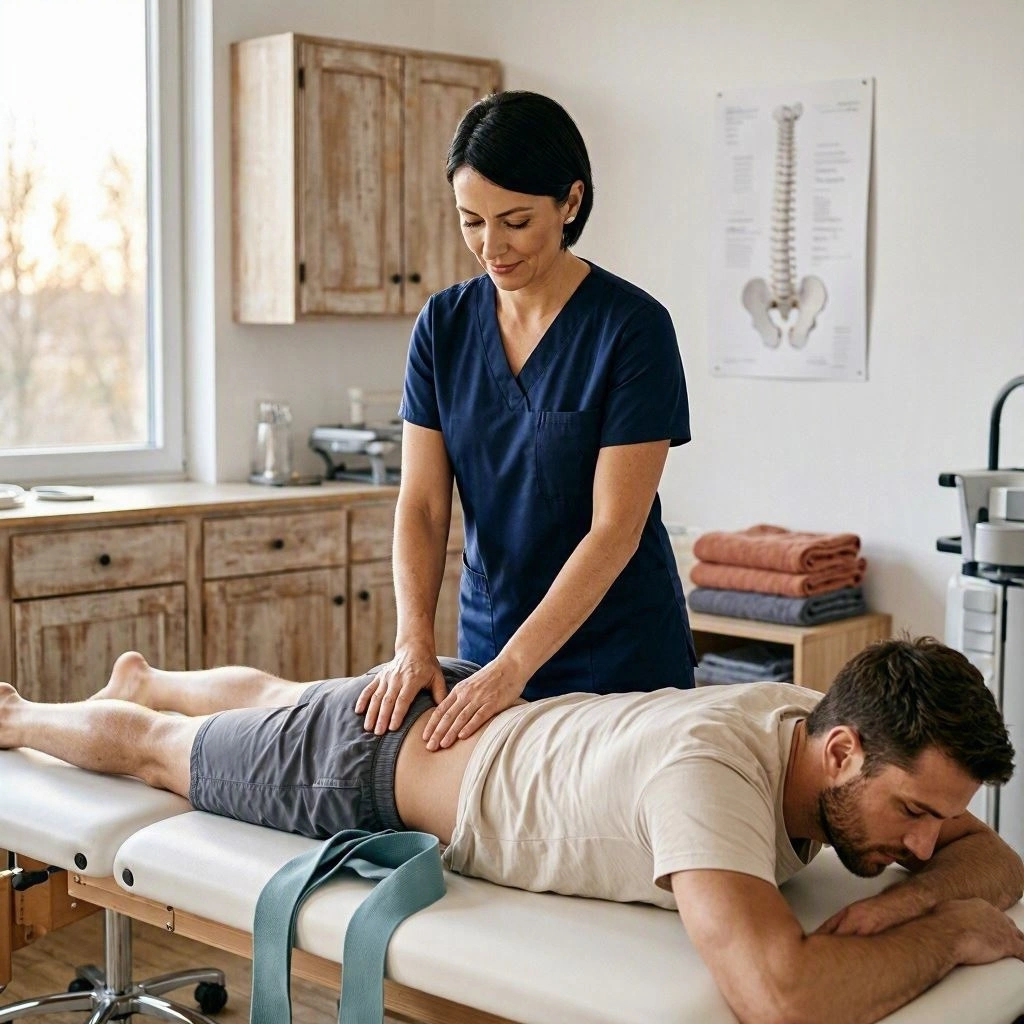
Manual therapy involves using the hands to assess or treat tissues and joints.
It may include:
- Massage
- Joint mobilization
- Soft tissue techniques
- Manipulation
- Assisted movement
Manual therapy may provide short-term symptom relief for some people.
However, it should not necessarily be the entire treatment plan.
Evidence reviewed by NICE indicates that manual therapies for chronic primary pain have a mixed and limited evidence base, with uncertainty around the benefits of specific manual techniques.
Consequently, physiotherapists often combine manual treatment with exercise and education.
This approach can give patients both short-term symptom-management strategies and longer-term tools for improving function.
Physiotherapy Pain Relief and Movement Education
Pain can change the way people move.
For example, someone with back pain may avoid bending completely because they fear injury.
A physiotherapist can help the patient understand:
- Which movements are appropriate
- How to move gradually
- How to modify activities
- How to rebuild confidence
- How to increase physical capacity
Movement education can be particularly useful for people who have developed fear around activity.
Instead of avoiding movement indefinitely, patients can gradually expose themselves to appropriate movements while building strength and confidence.
Physiotherapy Pain Relief for Arthritis
Arthritis can cause:
- Pain
- Stiffness
- Reduced mobility
- Muscle weakness
- Difficulty with daily activities
Physiotherapy can help people maintain movement and strength.
Depending on the condition, treatment may include:
- Strength training
- Low-impact aerobic exercise
- Mobility exercises
- Balance training
- Functional exercises
- Advice about activity modification
The NHS identifies physiotherapy as one treatment that can improve strength and mobility for people with arthritis.
Regular exercise can also help people maintain physical capacity.
Physiotherapy Pain Relief for Repetitive Strain Injuries
Repetitive strain injuries can affect areas such as:
- Hands
- Wrists
- Forearms
- Elbows
- Shoulders
- Neck
Symptoms can develop gradually.
A physiotherapist may assess your movement patterns and work activities.
Treatment can include:
- Strengthening
- Mobility exercises
- Activity modification
- Workplace advice
- Manual therapy
The NHS notes that physiotherapy may help people whose repetitive strain symptoms do not improve, with treatment potentially including massage and exercises designed to improve strength and movement.
Physiotherapy Pain Relief After Surgery
Physiotherapy often plays an important role in rehabilitation following surgery.
Depending on the procedure, rehabilitation may focus on:
- Restoring movement
- Reducing stiffness
- Improving strength
- Regaining balance
- Returning to walking
- Returning to normal activities
For example, someone recovering from knee replacement surgery may gradually progress from basic movement exercises to strengthening and functional activities.
The exact rehabilitation program should follow the surgical team’s recommendations and the individual’s recovery stage.
Physiotherapy Pain Relief for Older Adults
Older adults can experience pain related to arthritis, falls, joint problems, muscle weakness, or previous injuries.
Physiotherapy can help improve:
- Strength
- Balance
- Mobility
- Walking ability
- Confidence
- Functional independence
A physiotherapist can also adapt exercises according to a person’s ability.
For example, an exercise may begin while seated and gradually progress to standing as strength improves.
Physiotherapy Pain Relief for Desk Workers
Long periods of sitting can contribute to discomfort in the:
- Neck
- Shoulders
- Upper back
- Lower back
- Wrists
Physiotherapy can provide advice about:
- Workstation setup
- Movement breaks
- Exercise
- Strength
- Mobility
- Activity levels
However, there is no need to maintain one rigid “perfect posture” all day.
Instead, regularly changing positions and moving throughout the day may be more practical.
[INTERNAL LINK PLACEHOLDER: Physiotherapy for Office Workers]
How Long Does Physiotherapy Pain Relief Take?
Recovery time varies significantly.
Factors that influence recovery include:
- The cause of pain
- Severity
- Duration
- Age
- General health
- Physical activity
- Previous injuries
- Sleep
- Stress
- Consistency with rehabilitation
Some acute problems improve within a relatively short period.
Other conditions may require several weeks or months of rehabilitation.
A physiotherapist should monitor progress and adjust the plan accordingly.
Importantly, progress does not always mean complete elimination of pain.
You may notice improvements such as:
- Walking farther
- Sleeping better
- Lifting more comfortably
- Returning to exercise
- Sitting longer
- Climbing stairs more easily
These functional improvements can represent meaningful recovery.
How Many Physiotherapy Sessions Do You Need?
There is no universal number of sessions.
The number depends on:
- Your condition
- Your goals
- Your progress
- Your home exercise program
- Your access to care
- The complexity of the problem
Some patients may need only a few appointments.
Others may need longer rehabilitation.
Your physiotherapist should reassess your progress rather than automatically scheduling an unlimited number of treatments.
How to Get Better Results From Physiotherapy
Your participation matters.
Follow Your Exercise Program
Home exercises help continue rehabilitation between appointments.
Stay Active
Appropriate physical activity can support recovery.
Communicate
Tell your physiotherapist if an exercise is too difficult or increases symptoms significantly.
Ask Questions
Understanding your treatment can improve confidence.
Set Functional Goals
Instead of focusing only on pain, establish goals such as:
- Returning to running
- Walking for 30 minutes
- Returning to work
- Playing with children
- Climbing stairs
- Sleeping more comfortably
Be Consistent
Small amounts of regular activity can often be more useful than occasional intense sessions.
Pain-management physiotherapy services may also use pacing and gradual activity increases to help people living with persistent pain.
Physiotherapy Pain Relief and Flare-Ups
A flare-up does not necessarily mean that you have caused new damage.
Some chronic conditions naturally fluctuate.
A physiotherapist can help you develop a flare-up plan.
This might include:
- Temporarily reducing demanding activities
- Continuing gentle movement
- Adjusting exercise intensity
- Prioritizing sleep
- Using appropriate symptom-management strategies
- Gradually returning to normal activity
The goal is to avoid the cycle of doing too much during good days and becoming completely inactive during difficult days.
When Should You See a Physiotherapist?
You may consider physiotherapy if pain or movement problems are affecting:
- Work
- Exercise
- Walking
- Sleep
- Household tasks
- Sports
- Daily activities
Community musculoskeletal services commonly provide support for back, knee, shoulder, and neck pain, arthritis, sciatica, sports injuries, strains, and recovery after surgery.
However, not every symptom should go directly to physiotherapy.
When Pain Requires Medical Attention
Some symptoms require prompt medical assessment.
Seek appropriate medical care if you experience:
- Severe or rapidly worsening pain
- Major trauma
- Significant swelling or deformity
- Fever with severe pain
- Unexplained weight loss
- Progressive weakness
- Severe neurological symptoms
- Loss of bladder control
- Loss of bowel control
- Numbness around the genital or anal area
- Chest pain
- Difficulty breathing
For example, NHS guidance recommends emergency assessment for back pain accompanied by symptoms such as weakness or numbness in both legs, numbness around the genitals or anus, or bladder and bowel changes.
These symptoms should not be managed through routine physiotherapy alone.
Choosing a Physiotherapist for Pain Relief
When choosing a physiotherapist, consider several factors.
Professional Registration
Check that the practitioner is appropriately qualified and registered according to the rules in your country.
For example, NHS guidance advises people using private physiotherapy in the UK to check that the physiotherapist is chartered and registered with the Health and Care Professions Council.
Relevant Experience
Look for experience with your specific problem.
For example:
- Back pain
- Neck pain
- Sports injuries
- Arthritis
- Post-surgical rehabilitation
- Chronic pain
- Shoulder problems
Assessment Process
A good physiotherapy appointment should involve an appropriate assessment rather than immediately applying treatment.
Exercise-Based Approach
Ask whether the clinic provides rehabilitation exercises and self-management strategies.
Communication
Your physiotherapist should explain the treatment plan clearly and answer your questions.
Physiotherapy Pain Relief vs Pain Medication
Physiotherapy and medication serve different purposes.
Medication may help reduce symptoms for some people, while physiotherapy can address movement, strength, physical function, and self-management.
For persistent pain, medication alone may not address all factors affecting quality of life.
The NHS notes that long-term pain can require a broader approach involving physical activity, self-management, and specialist pain services when appropriate.
You should discuss medication choices with an appropriate healthcare professional.
Physiotherapy Pain Relief vs Massage Therapy
Massage can help some people manage short-term muscle discomfort.
Physiotherapy may also use massage, but treatment usually involves broader assessment and rehabilitation.
A physiotherapist may combine:
- Massage
- Exercise
- Strengthening
- Mobility
- Education
- Activity modification
Therefore, physiotherapy can provide a more comprehensive rehabilitation approach when pain involves movement or physical-function limitations.
Physiotherapy Pain Relief vs Chiropractic Care
Physiotherapy and chiropractic care can overlap in some areas, particularly for musculoskeletal problems.
However, treatment approaches vary between practitioners.
Physiotherapy commonly emphasizes exercise, rehabilitation, physical function, and movement education, although physiotherapists can also use manual techniques.
The appropriate option depends on the patient’s condition, clinical assessment, preferences, and access to qualified care.
The Importance of Evidence-Informed Physiotherapy
Modern physiotherapy should use evidence alongside clinical experience and patient preferences.
This means that treatment should not rely on exaggerated promises.
For example, one treatment may work well for one patient but provide limited benefit for another.
Exercise is widely used in physiotherapy, but the exact type, intensity, and progression should match the individual.
Similarly, manual therapy may help some patients, but evidence does not support treating one manual technique as a universal answer for chronic pain. NICE’s evidence review found limitations and uncertainty across studies of specific manual therapies.
Therefore, good physiotherapy should remain flexible.
Frequently Asked Questions About Physiotherapy Pain Relief
What is Physiotherapy Pain Relief?
Physiotherapy Pain Relief involves using physiotherapy approaches such as exercise, movement education, manual therapy, and self-management strategies to help reduce pain and improve physical function.
Can physiotherapy completely remove pain?
Not always. Physiotherapy can help many people manage pain and improve movement, but results depend on the cause, severity, duration, and individual factors.
Is physiotherapy good for back pain?
Physiotherapy can help people with many forms of back pain. Treatment may include exercise, movement advice, and manual therapy when appropriate.
Can physiotherapy help chronic pain?
Yes. Physiotherapy can form part of a broader chronic pain management plan involving exercise, pacing, education, activity management, and other forms of support.
How long does physiotherapy pain relief take?
Recovery varies. Some problems improve quickly, while chronic or complex conditions may require longer rehabilitation.
Does physiotherapy hurt?
Some exercises or manual techniques may cause temporary discomfort. However, treatment should be appropriate for your condition and adjusted if symptoms become significantly worse.
Does physiotherapy include massage?
It can. Manual therapy may include massage or other hands-on techniques. However, physiotherapy commonly combines these approaches with exercise and rehabilitation.
Do I need physiotherapy for every injury?
No. Many minor injuries improve with appropriate self-care. Physiotherapy may become useful when symptoms persist, movement remains limited, or recovery is not progressing as expected.
Can physiotherapy help arthritis pain?
Physiotherapy can help people with arthritis improve strength, mobility, and physical function.
Can physiotherapy help sciatica?
Physiotherapy may help appropriate cases of sciatica through exercise advice, movement strategies, and other techniques.
How often should I see a physiotherapist?
The frequency depends on your condition and treatment plan. Some people need only a few appointments, while others require longer rehabilitation.
Are home exercises important?
Yes. Home exercises allow you to continue rehabilitation between appointments and can support improvements in strength, mobility, and function.
Can I exercise if I have pain?
Often, appropriate gradual exercise can form an important part of pain management. However, the type and intensity should match your condition.
Is physiotherapy better than massage?
They serve different purposes. Massage may help with short-term muscle discomfort, while physiotherapy can combine manual treatment with exercise, assessment, and rehabilitation.
Is physiotherapy better than medication?
They address different aspects of pain. Medication may help symptoms, while physiotherapy can address movement, strength, function, and self-management.
When should I stop exercising because of pain?
If an exercise causes severe or rapidly increasing pain, new neurological symptoms, significant swelling, or other concerning symptoms, stop and seek appropriate professional advice.
Can physiotherapy prevent future injuries?
Physiotherapy may help improve strength, movement, balance, physical capacity, and technique, which can support injury prevention. However, no treatment can guarantee that an injury will never occur.
Final Thoughts
Physiotherapy Pain Relief is not simply about treating pain for a few minutes during an appointment. Effective physiotherapy often focuses on helping people understand their symptoms, restore movement, improve strength, increase physical capacity, and return to the activities that matter to them.
Exercise plays an important role in many physiotherapy programs. Depending on the condition, treatment may also include manual therapy, mobility exercises, education, activity modification, and self-management strategies.
For people with back pain, neck pain, knee problems, shoulder pain, sports injuries, arthritis, sciatica, or persistent musculoskeletal symptoms, physiotherapy can provide a structured approach to recovery. However, the right treatment depends on the underlying problem and individual circumstances.
A successful treatment plan should also evolve.
Most importantly, pain should not always be viewed as a reason to stop moving completely. For many conditions, carefully managed activity can help restore confidence and physical capacity. NHS guidance similarly encourages appropriate gradual activity for several common pain conditions.
The goal of physiotherapy is therefore broader than simply reducing a number on a pain scale. It can involve helping you walk farther, sleep better, return to work, exercise again, manage flare-ups, or perform everyday activities with greater confidence.
When combined with appropriate assessment, realistic goals, regular exercise, and good communication between patient and practitioner, physiotherapy can become an important part of a comprehensive pain-management and rehabilitation plan.
For more information about treatment options, visit our Physiotherapy Services page to learn how physiotherapy can support pain management, mobility, and recovery.
According to the NHS physiotherapy guidance, physiotherapy can help improve movement and ease pain through approaches such as exercise, manual therapy, and advice about managing symptoms.