Sports Nutrition Counseling: Complete Guide to Nutrition for Training, Performance, and Recovery
Sports Nutrition Counseling helps athletes and physically active people understand how food, fluids, meal timing, and everyday nutrition can support training, recovery, performance, and long-term health. Whether you are a recreational gym user, competitive athlete, runner, cyclist, team-sport player, or simply someone who exercises regularly, your nutritional needs can change depending on your activity level and goals.
Training places demands on the body. Muscles need adequate energy and nutrients to support activity and recovery. At the same time, hydration, meal timing, sleep, and overall eating habits can influence how consistently a person trains and recovers.
However, sports nutrition is not about following one perfect diet.
A marathon runner does not necessarily need the same nutrition strategy as a powerlifter. Likewise, a recreational athlete who trains three times per week may have very different requirements from someone preparing for a competition.
This is why individualized guidance can be useful.
At Ritz Clinics Nutritional Counseling, sports and performance nutrition is included within personalized nutritional counseling. Recommendations can consider an individual’s lifestyle, activity level, dietary preferences, nutritional needs, and personal objectives.
This guide explains what Sports Nutrition Counseling involves, how nutrition can support training, the roles of carbohydrates and protein, hydration, pre- and post-workout nutrition, recovery, weight management, supplements, meal planning, and when personalized professional guidance may be helpful.
What Is Sports Nutrition Counseling?
Sports Nutrition Counseling is personalized nutrition guidance designed to help active individuals match their eating and hydration habits with their physical activity and performance goals.
Instead of providing a generic meal plan, counseling can consider several factors, including:
- Type of sport or exercise
- Training frequency
- Training intensity
- Training duration
- Competition schedule
- Recovery needs
- Dietary preferences
- Food allergies or restrictions
- Lifestyle
- Work schedule
- Sleep
- Body-composition goals
- Overall health
- Personal objectives
For example, a soccer player may need strategies for fueling before matches and recovering afterward. A distance runner may have different carbohydrate and hydration considerations. Meanwhile, someone who primarily performs resistance training may focus more heavily on adequate protein, overall energy intake, meal consistency, and recovery.
Therefore, effective sports nutrition should be individualized.
The American College of Sports Medicine lists nutrition and athletic performance and exercise fluid replacement among its sports-related position stands, highlighting the importance of nutrition and hydration within athletic preparation and performance.
Why Is Sports Nutrition Important?
Exercise increases the body’s demand for energy and nutrients.
When someone trains regularly, nutrition can support several areas of the training process.
These include:
- Providing energy for exercise
- Supporting muscle function
- Supporting recovery
- Maintaining adequate hydration
- Supporting normal physiological processes
- Helping maintain training consistency
- Supporting overall health
However, nutrition is only one part of athletic performance.
Training quality, sleep, genetics, technique, stress, recovery, and experience also matter.
Therefore, Sports Nutrition Counseling should not promise that changing your diet will automatically make you a better athlete. Instead, the purpose is to create nutritional habits that support the work you are already doing.
Sports Nutrition Counseling and Individual Needs
There is no single sports diet that works for everyone.
A person’s nutritional requirements can change according to:
- Age
- Body size
- Training load
- Sport
- Exercise intensity
- Exercise duration
- Competition schedule
- Health status
- Dietary pattern
- Personal goals
For example, someone completing a long endurance session may need more carbohydrate-focused fueling than someone performing a short strength workout.
Similarly, nutritional priorities may change throughout a training cycle.
An athlete may have different needs during:
- Normal training
- High-volume training
- Competition
- Recovery periods
- Rest days
- Off-season
- Injury rehabilitation
- Weight-management phases
Consequently, a flexible approach is often more practical than following identical meals every day.
The Role of Carbohydrates in Sports Nutrition
Carbohydrates are an important source of energy for physical activity.
The body stores carbohydrate primarily as glycogen in muscles and the liver. During exercise, these stores can contribute to energy production.
Carbohydrate needs can vary significantly.
Someone performing short, low-intensity exercise may not require the same carbohydrate strategy as an endurance athlete completing prolonged training.
Foods containing carbohydrates include:
- Oats
- Rice
- Potatoes
- Whole-grain bread
- Pasta
- Fruit
- Beans
- Lentils
- Cereals
- Milk and yogurt
The quality and timing of carbohydrate intake can depend on the person’s goals.
For example, an athlete may choose an easily digested carbohydrate source before training when a large meal would feel uncomfortable.
Meanwhile, meals consumed away from training can include a wider variety of carbohydrate-rich foods, including higher-fibre options.
Sports Nutrition Counseling can help athletes understand how carbohydrate choices fit their specific training demands rather than simply labeling carbohydrates as “good” or “bad.”
Protein and Athletic Nutrition
Protein plays an important role in maintaining and repairing body tissues.
For people who exercise regularly, adequate protein intake can support training adaptation and recovery.
Protein-rich foods include:
- Eggs
- Fish
- Chicken
- Lean meat
- Greek yogurt
- Milk
- Cottage cheese
- Beans
- Lentils
- Tofu
- Tempeh
- Other soy foods
- Nuts and seeds
However, consuming more protein is not automatically better.
The appropriate amount depends on the individual, including body size, training demands, dietary pattern, and overall energy intake.
Protein can also be distributed across meals rather than consumed almost entirely at one time.
For athletes who struggle to meet their nutritional needs through regular meals, a qualified professional can help identify practical options.
Sports Nutrition Counseling for Pre-Workout Meals
What you eat before exercise can influence how comfortable and energized you feel during training.
However, there is no universal pre-workout meal.
The best choice depends on:
- Time before exercise
- Exercise duration
- Exercise intensity
- Digestive tolerance
- Personal preferences
- Training goals
For some people, a balanced meal several hours before training may work well.
For others, a smaller snack closer to exercise may be more comfortable.
Potential pre-workout foods can include:
- Oatmeal with fruit
- Yogurt with fruit
- Rice with a lean protein source
- Toast with a suitable topping
- A banana
- Cereal with milk
- A simple sandwich
Large amounts of fat or fibre immediately before intense exercise may cause digestive discomfort for some people. However, individual tolerance varies.
This is why Sports Nutrition Counseling can help athletes experiment with different options during training rather than trying something unfamiliar immediately before competition.
Nutrition During Exercise
Not every workout requires food during exercise.
For shorter or less demanding sessions, normal meals before and after training may be sufficient.
However, longer-duration or high-intensity exercise can create different nutritional considerations.
Depending on the activity, athletes may use:
- Sports drinks
- Gels
- Fruit
- Easily digested carbohydrate foods
- Water
- Electrolyte-containing beverages
The appropriate strategy depends on the duration and intensity of exercise, environmental conditions, sweat losses, and individual tolerance.
Athletes should ideally test their competition nutrition strategy during training.
Trying a completely new product on competition day can create unnecessary digestive problems.
Hydration and Sports Nutrition Counseling
Hydration is an important part of sports nutrition.
Fluids help support normal physiological functions, and fluid requirements can increase during exercise, particularly when someone is sweating heavily or exercising in hot conditions.
However, hydration requirements vary.
Factors include:
- Exercise duration
- Exercise intensity
- Temperature
- Humidity
- Clothing
- Individual sweat rate
- Body size
- Access to fluids
Water may be sufficient for many shorter exercise sessions.
Longer or more demanding activities may require more detailed hydration planning, particularly when substantial sweat and electrolyte losses occur.
Sports Nutrition Counseling can help athletes develop a practical hydration strategy based on their activity rather than simply recommending the same amount of water to everyone.
Electrolytes and Athletic Performance
Electrolytes such as sodium play important roles in normal fluid balance and physiological function.
Sweat contains electrolytes, although the amount varies significantly between individuals.
This means not every athlete needs an electrolyte supplement for every workout.
Electrolyte products may be more relevant during prolonged exercise, heavy sweating, hot environments, or specific endurance situations.
The appropriate strategy depends on the athlete and activity.
Using large amounts of electrolyte products without understanding the need is not necessarily beneficial.
A personalized assessment can help determine whether electrolyte supplementation has a practical role in an athlete’s routine.
Post-Workout Nutrition
Recovery nutrition is an important part of training.
After exercise, the body needs to recover from the physical demands of training.
A post-workout meal or snack can provide:
- Protein
- Carbohydrates
- Fluids
- Micronutrients
- Energy
For example, a meal containing rice, vegetables, and chicken can provide carbohydrates, protein, and other nutrients.
Other options might include:
- Greek yogurt with fruit
- Eggs with toast
- Milk with cereal
- A smoothie containing suitable ingredients
- Beans with rice
- A sandwich with a protein source
The best option depends on the person’s dietary preferences and the timing of their next training session.
If another demanding workout is scheduled soon, recovery nutrition may have greater importance than if the person has several days before their next session.
Sports Nutrition Counseling for Recovery
Recovery is not simply about what happens immediately after a workout.
Athletes recover over hours and days.
Important factors include:
- Overall energy intake
- Protein intake
- Carbohydrate intake
- Hydration
- Sleep
- Rest
- Training load
- Stress management
A person who eats well immediately after training but consistently under-eats throughout the week may still struggle with recovery.
Therefore, Sports Nutrition Counseling should consider the entire eating pattern rather than focusing only on one post-workout meal.
At Ritz Clinics, sports and performance nutrition is included within nutritional counseling, which can also consider lifestyle, activity level, dietary preferences, and individual goals.
Nutrition for Strength Training
Strength training places different demands on the body compared with prolonged endurance exercise.
People who perform resistance training often focus on:
- Adequate total energy intake
- Protein
- Carbohydrates
- Hydration
- Consistent meals
- Recovery
Protein is particularly relevant because resistance training stimulates processes involved in muscle adaptation.
However, strength athletes still need carbohydrates, fats, vitamins, minerals, and adequate overall energy.
A diet that focuses almost entirely on protein can become unbalanced.
A well-planned eating pattern should provide a broad range of nutrients.
Nutrition for Endurance Athletes
Endurance sports can create significant energy demands.
Examples include:
- Running
- Cycling
- Swimming
- Triathlon
- Rowing
- Long-distance hiking
Endurance athletes may need to pay particular attention to carbohydrate availability and hydration.
During long sessions, athletes may need planned carbohydrate intake to maintain exercise capacity.
However, strategies vary according to the duration and intensity of the activity.
For this reason, endurance nutrition should be practiced during training.
Athletes can test:
- Pre-exercise meals
- Sports drinks
- Energy gels
- Solid foods
- Fluid timing
- Electrolyte strategies
The objective is to develop a routine that supports performance without causing gastrointestinal problems.
Sports Nutrition Counseling for Team Sports
Team-sport athletes often have unique nutritional demands.
Sports such as:
- Soccer
- Basketball
- Hockey
- Rugby
- Volleyball
- Tennis
can involve repeated high-intensity efforts combined with lower-intensity periods.
Nutrition needs may also change according to the competition schedule.
For example, a player may have different needs on:
- Training days
- Match days
- Recovery days
- Travel days
- Tournament days
Meal timing can therefore become particularly useful.
A sports nutrition professional can help create practical strategies that fit the athlete’s schedule.
Nutrition Before Competition
Competition nutrition should ideally be familiar.
An athlete should avoid making major dietary changes immediately before an important event.
Instead, competition-day nutrition can be practiced during training.
Planning may include:
- Pre-event meal
- Pre-event snack
- Hydration
- During-event fueling
- Recovery nutrition
The exact strategy depends on the sport.
For a short event, the primary focus may be arriving adequately fueled and hydrated.
For a long endurance event, nutrition during the event may become much more important.
Sports Nutrition Counseling can help athletes organize these elements into a practical plan.
Nutrition During Training
Training nutrition should support the work being performed.
A common mistake is eating exactly the same way every day regardless of training demands.
An athlete may benefit from adjusting nutrition according to:
- Training volume
- Intensity
- Duration
- Recovery requirements
For example, a high-volume training day may require more food than a rest day.
That does not mean rest days should involve extreme restriction.
Recovery continues even when there is no workout.
Therefore, the overall weekly pattern matters more than one individual day.
Sports Nutrition Counseling and Weight Management
Some athletes want to change body weight or body composition.
This can be a complex area because aggressive calorie restriction may affect:
- Training quality
- Recovery
- Energy
- Mood
- Hormonal function
- Performance
- Nutrient intake
Therefore, weight-management goals should be approached carefully.
The objective should not simply be to lose weight as quickly as possible.
Instead, the athlete’s overall health and performance should be considered.
A personalized plan can evaluate whether the goal is appropriate and how it can be approached without unnecessarily compromising training and recovery.
For athletes who are still growing, additional caution is particularly important.
Sports Nutrition Counseling for Young Athletes
Young athletes have nutritional needs related not only to exercise but also to growth and development.
This makes restrictive dieting particularly concerning.
Young athletes generally need sufficient energy and nutrients to support:
- Growth
- Bone development
- Muscle development
- Physical activity
- Learning
- Recovery
- General health
Parents and young athletes should be cautious about copying restrictive diets from adult fitness influencers.
When a young athlete has significant nutritional concerns, specialized professional guidance should be considered.
Sports Nutrition During Injury Recovery
Nutrition can be relevant during injury rehabilitation.
However, nutrition alone does not repair an injury.
Recovery may involve:
- Medical assessment
- Physiotherapy
- Rehabilitation exercises
- Strength training
- Mobility work
- Activity modification
- Gradual return to sport
Adequate energy and nutrient intake can support normal physiological processes during recovery.
This is one reason athletes should avoid unnecessary restrictive diets while injured.
At Ritz Clinics, nutritional counseling can complement services such as physiotherapy and rehabilitation when appropriate. The clinic’s nutritional counseling service specifically notes that sports and performance nutrition can be integrated with other physical-health services when suitable.
Vitamins and Minerals in Sports Nutrition
Athletes need vitamins and minerals just as other people do.
Important nutrients include:
- Iron
- Calcium
- Vitamin D
- Magnesium
- Zinc
- B vitamins
- Vitamin C
- Vitamin E
However, taking supplements does not automatically improve performance.
The first priority should generally be a balanced dietary pattern that provides a wide range of nutrients.
Supplementation may be appropriate in specific circumstances, particularly when a deficiency or increased requirement has been identified.
Athletes should avoid assuming that more is better.
High doses of some nutrients can cause adverse effects.
Sports Supplements
The sports supplement market is enormous.
Products may claim to improve:
- Strength
- Muscle growth
- Energy
- Fat loss
- Endurance
- Recovery
- Focus
However, evidence varies significantly between supplements.
Some products may have useful applications in specific circumstances, while others have limited evidence.
There are also concerns about contamination, inaccurate labeling, interactions, and excessive dosing.
Therefore, athletes should approach supplements carefully.
A nutrition professional can help evaluate whether a supplement has a meaningful role in an individual’s routine.
Caffeine and Sports Performance
Caffeine is commonly used by athletes and active adults.
Some evidence suggests caffeine can influence alertness and exercise performance in certain circumstances.
However, response varies.
Factors include:
- Dose
- Timing
- Body size
- Tolerance
- Sleep
- Individual sensitivity
Using caffeine too late in the day may interfere with sleep.
Since sleep is essential for recovery, the potential performance benefit should be considered alongside possible effects on sleep.
A personalized nutrition consultation can help an athlete decide whether caffeine fits their routine.
Nutrition and Sleep for Athletes
Sleep is not a food, but nutrition and sleep are closely connected to recovery.
Athletes who consistently sleep poorly may experience difficulties with:
- Recovery
- Energy
- Concentration
- Training quality
- Mood
Nutrition strategies should therefore not distract from basic recovery habits.
A strong sports nutrition plan should work alongside:
- Adequate sleep
- Rest days
- Appropriate training
- Stress management
- Recovery practices
No supplement can fully compensate for chronically inadequate sleep.
Creating a Sports Nutrition Meal Plan
A sports nutrition meal plan should be practical.
It should consider:
- Training times
- Work schedule
- Cooking ability
- Budget
- Food preferences
- Dietary restrictions
- Travel
- Competition schedule
A plan that looks perfect on paper but cannot be followed consistently is not particularly useful.
For example, an athlete who works full-time may need simple meals that can be prepared in advance.
A student athlete may need portable snacks.
A traveling athlete may need restaurant and convenience-store strategies.
Personalization makes the plan more realistic.
Meal Timing for Athletes
Meal timing can be useful, but it should not become unnecessarily complicated.
A consistent eating pattern can help athletes organize nutrition around training.
Depending on the schedule, an athlete may plan:
- Breakfast
- Lunch
- Dinner
- Pre-workout snack
- Post-workout meal
- Additional snacks
The exact number of meals is not universal.
Some people prefer three larger meals, while others prefer smaller meals and snacks.
The overall nutritional pattern matters more than following a rigid schedule.
Eating Before Early-Morning Training
Early-morning training creates a practical challenge for many athletes.
Some people prefer training with a relatively empty stomach.
Others feel better after eating something small.
Possible options may include:
- Banana
- Toast
- Yogurt
- Small smoothie
- Cereal
- Other easily tolerated carbohydrate foods
The appropriate choice depends on the workout and the person’s digestive tolerance.
If the session is long or demanding, more detailed fueling may be appropriate.
However, athletes should test these strategies during normal training before using them in competition.
Nutrition for Evening Training
Evening athletes may need to plan food around both exercise and sleep.
A large meal immediately before intense exercise may cause discomfort.
Instead, an athlete may have a meal several hours before training and a smaller snack closer to exercise.
After training, a balanced meal can support recovery.
However, the strategy should also consider bedtime.
A very large or stimulating meal late at night may interfere with sleep for some people.
Sports Nutrition Counseling for Vegetarians and Vegans
Athletes can follow vegetarian or vegan diets successfully when nutrition is planned appropriately.
However, attention may be needed for nutrients such as:
- Protein
- Iron
- Vitamin B12
- Calcium
- Vitamin D
- Zinc
- Omega-3 fatty acids
Plant-based athletes can obtain protein from foods such as:
- Beans
- Lentils
- Chickpeas
- Tofu
- Tempeh
- Soy milk
- Nuts
- Seeds
- Whole grains
The overall diet should provide adequate energy and a variety of foods.
Athletes with specialized diets may benefit from individualized professional guidance.
Sports Nutrition Counseling for Busy Athletes
One of the biggest challenges for active adults is time.
Training may occur before or after work, while meals need to fit around commuting, family responsibilities, and other commitments.
A nutrition plan should account for these realities.
Practical strategies may include:
- Batch cooking
- Preparing snacks in advance
- Keeping portable foods available
- Planning meals around training
- Using simple recipes
- Building a repeatable grocery list
- Preparing recovery meals ahead of time
The goal is not perfection.
The goal is consistency.
Nutrition for Rest Days
Rest days are still recovery days.
Even when an athlete does not train, the body continues to recover from previous sessions.
Therefore, completely eliminating carbohydrates or dramatically restricting food on rest days is not automatically necessary.
Nutrition can be adjusted according to activity, but athletes still need:
- Protein
- Nutrients
- Fluids
- Adequate energy
- Balanced meals
The appropriate amount depends on the individual.
Common Sports Nutrition Mistakes
Several nutrition mistakes are common among athletes.
Eating Too Little
Insufficient energy can affect training, recovery, and health.
Focusing Only on Protein
Protein is important, but athletes also need carbohydrates, fats, vitamins, minerals, and fluids.
Ignoring Hydration
Poor hydration can affect physical function and training comfort.
Trying New Foods on Competition Day
A strategy that has never been tested may cause unexpected digestive problems.
Overusing Supplements
Supplements should not replace a balanced diet.
Following Social Media Diets
Popular diets are not necessarily appropriate for individual athletes.
Ignoring Sleep
Nutrition cannot compensate for consistently poor sleep.
Changing Nutrition Too Quickly
Gradual changes are often easier to maintain than extreme dietary restrictions.
How Sports Nutrition Counseling Works at Ritz Clinics
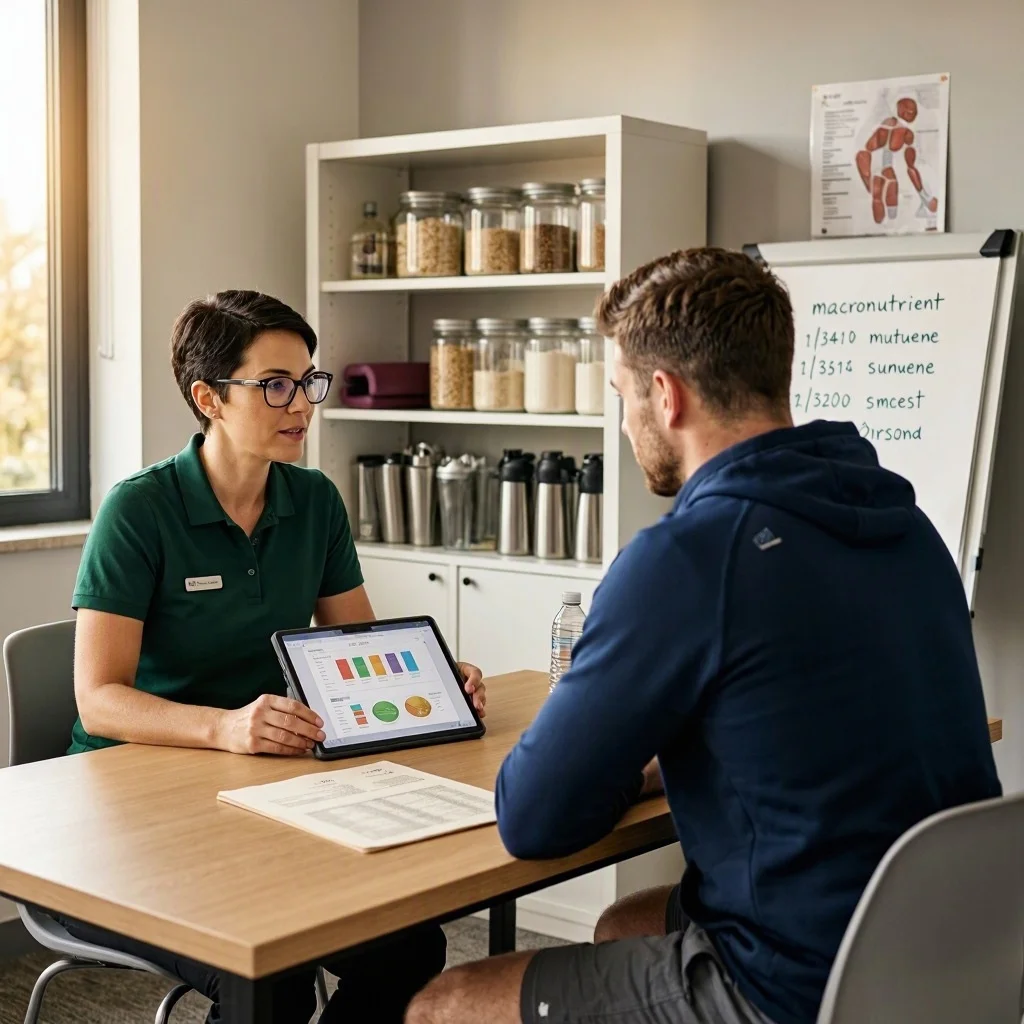
At Ritz Clinics, nutritional counseling is personalized around lifestyle, activity level, dietary preferences, nutritional needs, and individual objectives. The service includes sports and performance nutrition alongside personalized nutrition planning and healthy eating education.
During a consultation, an athlete can discuss:
- Current eating habits
- Training routine
- Exercise schedule
- Performance goals
- Recovery
- Hydration
- Meal timing
- Food preferences
- Dietary restrictions
- Lifestyle challenges
The purpose is to create practical strategies rather than an unnecessarily restrictive diet.
For example, an athlete may need help organizing meals around early-morning workouts. Another may need competition-day fueling strategies. Someone else may simply want to improve the quality and consistency of their daily nutrition.
Because each situation is different, the recommendations should be individualized.
When Should You Consider Sports Nutrition Counseling?
Sports Nutrition Counseling may be useful if you:
- Exercise regularly
- Participate in competitive sports
- Train for endurance events
- Perform resistance training
- Want to improve recovery
- Struggle with energy during training
- Need help with meal timing
- Are unsure about hydration
- Want to change body composition
- Follow a vegetarian or vegan diet
- Have a busy training and work schedule
- Feel overwhelmed by sports nutrition information
- Want a more structured approach to nutrition
You do not need to be a professional athlete to benefit from sports nutrition guidance.
Recreationally active people can also have nutrition questions.

When Is Specialized Nutrition Care Needed?
General sports nutrition guidance is not a substitute for medical nutrition therapy.
Some situations require specialized care from an appropriately qualified healthcare professional or registered dietitian.
This may include:
- Eating disorders
- Significant nutritional deficiencies
- Diabetes
- Kidney disease
- Complex gastrointestinal conditions
- Food allergies
- Pregnancy
- Significant unintended weight loss
- Complex medical conditions
- Other conditions requiring therapeutic diets
If you have a diagnosed medical condition, discuss your nutritional needs with an appropriately qualified healthcare professional.
Frequently Asked Questions About Sports Nutrition Counseling
What is Sports Nutrition Counseling?
Sports Nutrition Counseling provides personalized nutrition guidance for athletes and active individuals. It can address fueling, hydration, meal timing, recovery, dietary habits, performance goals, and overall nutrition.
Is Sports Nutrition Counseling only for professional athletes?
No. Recreational athletes, gym users, runners, team-sport players, and other active individuals can also benefit from personalized nutrition guidance.
What should I eat before a workout?
It depends on the timing and type of workout. A meal or snack containing easily tolerated carbohydrates can be useful for some people. The appropriate choice should consider exercise duration, intensity, digestion, and personal preference.
How important is protein for athletes?
Protein supports normal tissue maintenance and recovery. Active individuals need adequate protein, but the exact amount varies according to body size, training, dietary pattern, and goals.
Do athletes need carbohydrates?
Carbohydrates can provide an important source of energy for exercise. The amount required varies according to training volume, intensity, duration, and the individual’s overall nutrition plan.
How important is hydration for athletes?
Hydration supports normal physiological function and becomes particularly important when exercise involves substantial sweating, long duration, or hot conditions. Individual fluid requirements vary.
Do I need electrolytes during every workout?
No. Many shorter workouts do not require specialized electrolyte products. Their usefulness depends on exercise duration, sweat losses, environment, and individual circumstances.
Can Sports Nutrition Counseling help with athletic performance?
It can help athletes develop practical nutrition strategies that support training, fueling, hydration, and recovery. However, performance also depends on training, sleep, recovery, technique, and other factors.
Can Sports Nutrition Counseling help with weight loss?
It may help active individuals approach weight-management goals more carefully. However, aggressive restriction can negatively affect training and recovery, so goals should be individualized.
Should I take protein supplements?
Not necessarily. Many athletes can obtain adequate protein from regular foods. Supplements may be convenient in some situations, but they should not automatically replace balanced meals.
Are sports supplements necessary?
No. Some supplements may have specific evidence-based applications, but many are unnecessary. Athletes should evaluate supplements carefully because product quality and evidence vary.
Can athletes follow vegetarian or vegan diets?
Yes. Vegetarian and vegan athletes can meet their nutritional needs with appropriate planning. Attention may be required for protein, iron, vitamin B12, calcium, vitamin D, zinc, and other nutrients.
What should I eat after training?
A balanced meal or snack containing appropriate protein, carbohydrates, fluids, and other nutrients can support recovery. The best choice depends on the workout and when the next training session occurs.
Do I need a different diet on rest days?
Nutrition can be adjusted according to activity, but rest days are still part of recovery. Athletes generally continue to need adequate protein, nutrients, fluids, and energy.
Can Sports Nutrition Counseling help young athletes?
It can, but young athletes have additional nutritional needs because they are still growing. Restrictive diets should be avoided unless appropriately supervised by qualified professionals.
How often should I meet with a sports nutrition professional?
There is no universal schedule. The frequency depends on your goals, training cycle, nutrition challenges, and progress.
Can nutrition support injury recovery?
Adequate nutrition supports normal physiological processes during recovery. However, nutrition does not replace medical assessment or rehabilitation. Athletes may benefit from combining nutrition guidance with appropriate injury management.
Conclusion
Sports Nutrition Counseling can help athletes and active individuals develop practical nutrition strategies that support training, recovery, hydration, and overall health.
The most effective approach is rarely a rigid diet that everyone follows in exactly the same way. Instead, sports nutrition should reflect the athlete’s sport, training schedule, physical demands, food preferences, lifestyle, health needs, and personal goals.
Carbohydrates can provide important fuel for exercise, while protein supports normal tissue maintenance and recovery. Hydration also matters, particularly during prolonged exercise, heavy sweating, and hot conditions. However, these elements need to work together within an overall balanced eating pattern.
Timing can also be useful. Meals and snacks can be planned around training, while competition nutrition should ideally be practiced beforehand. At the same time, athletes should avoid becoming overly focused on individual meals or supplements while ignoring sleep, recovery, training quality, and overall eating habits.
Sports nutrition also changes over time.
Training days may differ from rest days. Competition periods may require different strategies from the off-season. Injury rehabilitation may create different nutritional considerations from normal training. Consequently, a flexible approach is often more sustainable than following the same plan throughout the year.
At Ritz Clinics, sports and performance nutrition is part of personalized Nutritional Counseling, with guidance based on individual lifestyle, activity level, dietary preferences, nutritional needs, and personal objectives.
If you are an athlete or active individual who wants to improve your nutrition, understand meal timing, support recovery, or develop a more practical approach to fueling your training, personalized Sports Nutrition Counseling can provide a useful starting point.