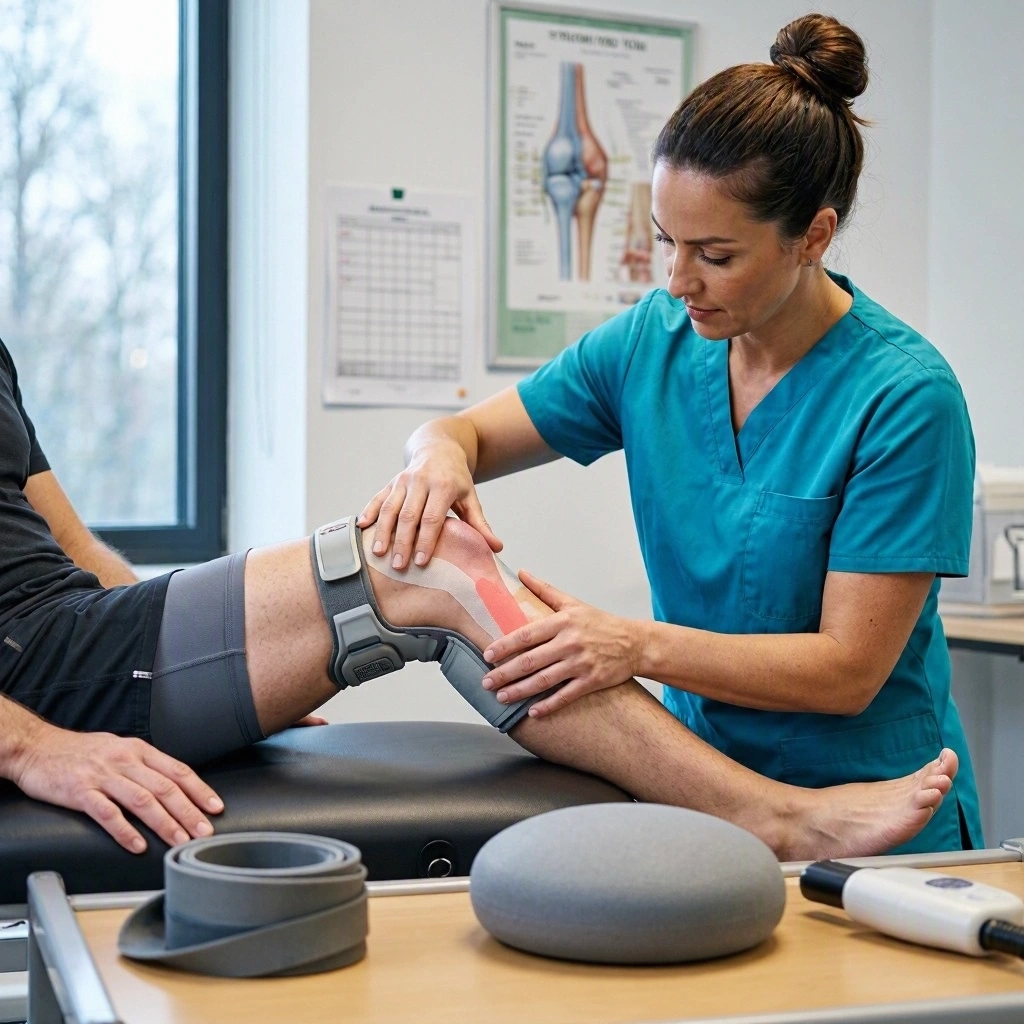
Physiotherapy for MCL Injuries: Treatment, Rehabilitation, and Recovery
A medial collateral ligament (MCL) injury is a common knee injury that can affect walking, running, climbing stairs, and participating in sports. The MCL is an important ligament that helps stabilize the inner side of the knee. When it becomes stretched or torn, everyday movements may become painful, and the knee may feel weak or unstable. Physiotherapy for MCL injuries plays an important role in recovery by helping reduce symptoms, restore knee mobility, rebuild muscle strength, and improve stability. With an appropriate rehabilitation program, many people with isolated MCL injuries can recover without surgery. However, the treatment plan depends on the severity of the injury and whether other structures inside the knee have also been damaged.
At Ritz Clinic, patients can explore available rehabilitation and physiotherapy services to learn more about musculoskeletal care and recovery options.
In this comprehensive guide, we explain how MCL injuries occur, how physiotherapy supports healing, which exercises may be included in rehabilitation, and what patients should know before returning to normal activities.
What Is the Medial Collateral Ligament (MCL)?
The medial collateral ligament is a strong band of connective tissue located along the inner side of the knee. It connects the femur, or thighbone, to the tibia, or shinbone.
Its primary function is to resist excessive inward movement of the knee joint and help maintain stability during walking, running, jumping, and changes of direction.
The MCL works alongside other knee structures, including the anterior cruciate ligament (ACL), posterior cruciate ligament (PCL), lateral collateral ligament (LCL), muscles, tendons, and cartilage. These structures work together to support controlled movement and distribute forces across the joint.
When excessive force stretches the MCL beyond its normal capacity, the ligament can become injured. Depending on the amount of damage, the injury may involve mild stretching, a partial tear, or a complete tear.
MCL injuries frequently occur in sports that involve sudden changes of direction, twisting, or direct contact with the knee. Football, basketball, skiing, and hockey are examples of activities in which these injuries may occur.
According to the American Academy of Orthopaedic Surgeons (AAOS), treatment depends on injury severity and whether other knee structures are involved. Many isolated MCL injuries can be managed without surgery, with rehabilitation playing an important role in recovery.
What Causes an MCL Injury? (Physiotherapy for MCL Injuries)
Understanding how an MCL injury occurs can help patients and healthcare professionals determine the appropriate treatment and rehabilitation strategy.
1. Direct Impact to the Outer Knee
A direct blow to the outside of the knee can force the joint inward, placing excessive stress on the MCL.
This mechanism can occur during contact sports when one athlete collides with another. The severity of the injury depends on the force of the impact, the position of the knee, and whether other structures are affected.
2. Sudden Changes of Direction
Sports that involve rapid cutting, pivoting, or changing direction can place substantial demands on the knee.
If the foot remains planted while the body moves in another direction, the knee may experience forces that exceed the ligament’s tolerance. Poor movement control, fatigue, or an unexpected change in direction may contribute to the risk.
3. Twisting Injuries
A sudden twisting movement can strain the knee ligaments, particularly when the foot is fixed against the ground.
These injuries may occur while turning during recreational activities, playing sports, or recovering balance after a slip.
4. Falls and Accidents
Slipping, falling, skiing accidents, and other traumatic events may cause an MCL injury.
In these situations, the knee may be forced into an abnormal position or experience a combination of twisting and direct impact. A medical assessment is important when pain is severe or the knee cannot support body weight.
5. Combined Knee Injuries
An MCL injury does not always occur in isolation. Other structures, including the ACL, meniscus, or additional ligaments, may also be damaged.
Combined injuries can cause greater instability and may require a different rehabilitation strategy. This is one reason why an accurate diagnosis is essential before beginning a structured physiotherapy program.
What Are the Different Grades of MCL Injuries?
MCL injuries are commonly classified into three grades based on the extent of ligament damage and the degree of knee instability.
Grade 1: Mild MCL Injury
A Grade 1 injury generally involves stretching and minor damage to the ligament fibers without significant instability.
Common symptoms include:
- Mild tenderness along the inner knee.
- Slight swelling or discomfort.
- Pain when pressing on the ligament.
- Mild discomfort during walking or bending.
People with mild injuries often regain normal function relatively quickly, although the recovery period varies. Physiotherapy may focus on maintaining comfortable movement, restoring strength, and gradually returning to regular activities.
Grade 2: Moderate MCL Injury (Physiotherapy for MCL Injuries)
A Grade 2 injury generally involves a partial tear of the ligament.
Symptoms may include more noticeable pain, swelling, tenderness, and difficulty walking. The knee may also feel less stable during turning or other movements.
Rehabilitation may require a longer period of activity modification, progressive strengthening, balance training, and, when indicated, a hinged knee brace.
The treatment plan should reflect the extent of the injury and the person’s functional limitations.
Grade 3: Severe MCL Injury
A Grade 3 injury involves a complete tear of the ligament. The knee may feel unstable, particularly during side-to-side movements.
Pain and swelling can vary. A complete tear does not necessarily produce more pain than a partial tear, so symptom intensity alone cannot determine injury severity.
Some isolated Grade 3 MCL injuries can heal with nonsurgical treatment and structured rehabilitation. Surgery may be considered in selected cases, especially when the ligament injury is associated with other damaged structures, significant instability, or particular patterns of ligament detachment.
A qualified healthcare professional should determine the most appropriate approach.
Common Symptoms of an MCL Injury (Physiotherapy for MCL Injuries)
Symptoms depend on the severity of the injury and whether additional knee structures are affected.
Common signs include:
- Pain along the inner side of the knee.
- Swelling around the injured area.
- Tenderness when touching the MCL.
- Difficulty bending or fully straightening the knee.
- Discomfort when walking, climbing stairs, or changing direction.
- A feeling that the knee may give way.
- Reduced confidence when standing on the affected leg.
- Stiffness after periods of inactivity.
Some people notice a popping sensation at the time of injury, although this symptom is not specific to an MCL tear.
Severe swelling, inability to bear weight, obvious deformity, or significant instability warrants prompt medical assessment. Numbness, a cold or pale foot, or other signs of impaired circulation require urgent evaluation.
How Is an MCL Injury Diagnosed?
An accurate diagnosis helps ensure that rehabilitation exercises are appropriate and that more serious injuries are not overlooked.
Medical History (Physiotherapy for MCL Injuries)
A clinician will usually ask how the injury occurred, where the pain is located, whether swelling developed, and how much weight the person can place on the affected leg.
Information about previous knee injuries, sports participation, and other symptoms can also help guide the assessment.
Physical Examination
The examination may include checking swelling, tenderness, knee movement, walking ability, and the stability of the joint.
A healthcare professional may perform specific ligament tests to assess the MCL and examine other structures when appropriate. These tests should be performed by a trained clinician rather than attempted forcefully at home.
Imaging Tests
Imaging is not necessary for every mild MCL injury. However, an X-ray may be recommended when a fracture is suspected, while an MRI may be useful when a significant ligament tear or associated meniscal or cruciate ligament injury is suspected.
MRI can provide detailed information about the soft tissues around the knee.
For further information, visit the AAOS guide to collateral ligament injuries.
Why Is Physiotherapy Important for MCL Injuries?
Physiotherapy supports the recovery process by addressing the problems that can develop after a ligament injury.
Pain and swelling may limit movement, while reduced activity can cause the muscles surrounding the knee to weaken. Changes in walking patterns and reduced balance may also affect normal function.
A physiotherapist can develop a progressive rehabilitation program that addresses these issues while respecting the healing ligament.
Reducing Pain and Swelling (Physiotherapy for MCL Injuries)
During the early stages of recovery, physiotherapy may focus on helping patients manage discomfort and avoid unnecessary stress on the injured knee.
Depending on the injury, recommendations may include temporary activity modification, appropriate icing, compression, elevation, and guidance about weight-bearing.
These strategies are intended to support comfort and function rather than force the knee to recover faster than the tissues can tolerate.
Restoring Knee Mobility
An injured knee may become stiff because of swelling, discomfort, or reduced activity.
Gentle range-of-motion exercises can help restore bending and straightening when they are appropriate for the injury.
Regaining knee extension is particularly important because difficulty fully straightening the knee can affect walking and other daily activities.
Rebuilding Muscle Strength (Physiotherapy for MCL Injuries)
The quadriceps, hamstrings, gluteal muscles, and calf muscles contribute to lower-limb movement and control.
After an MCL injury, strengthening these muscles can help improve the ability to stand, walk, climb stairs, and perform more demanding tasks.
Exercises should progress gradually according to symptoms, strength, and knee stability.
Improving Balance and Coordination
A knee injury can affect balance and confidence when standing on one leg.
Physiotherapy may incorporate balance exercises and controlled weight-bearing activities to improve coordination and help the patient regain confidence in everyday movement.
Preparing for Return to Sport
Athletes often need more than pain relief before returning to training.
A rehabilitation program may include progressively demanding strength exercises, running, jumping, landing, acceleration, and direction-change drills.
Return to sport should be based on functional recovery and clinical assessment rather than a calendar date alone.
The Main Stages of Physiotherapy for MCL Injuries (Physiotherapy for MCL Injuries)
MCL rehabilitation usually progresses through several stages. These stages are not fixed timelines. Progress depends on the injury grade, associated damage, symptoms, and the recommendations of the treating healthcare professional.
Stage 1: Protect the Knee and Manage Early Symptoms
Immediately after an injury, the priority is to protect the knee and avoid activities that increase pain or instability.
A clinician may recommend temporary restrictions on sport, running, jumping, or twisting. Crutches may be useful if walking is painful, and a hinged knee brace may be prescribed when additional support is needed.
Early management may include:
- Short periods of icing with a protective cloth between the ice pack and skin.
- Elevation when practical to help manage swelling.
- Gentle movement within the permitted range.
- Appropriate weight-bearing as advised by the treating professional.
- Avoidance of forceful side-to-side movements.
Complete immobilization is not necessary for every MCL injury. The appropriate balance between protection and movement depends on injury severity and stability.
Stage 2: Restore Comfortable Range of Motion (Physiotherapy for MCL Injuries)
As pain and swelling improve, rehabilitation may focus more directly on restoring knee mobility.
A physiotherapist may introduce heel slides, gentle knee extension exercises, and other controlled movements.
The objective is to regain useful movement without placing excessive stress on the healing ligament.
Patients should not force the knee into painful bending or straightening. If swelling increases substantially after exercise, the activity level may need to be adjusted.
Stage 3: Rebuild Strength (Physiotherapy for MCL Injuries)
Once the knee tolerates basic movement and weight-bearing, strengthening exercises can be progressed.
Depending on the individual’s condition, a program may include quadriceps contractions, straight-leg raises, sit-to-stand movements, bridges, and controlled squats.
The physiotherapist will consider movement quality, pain response, swelling, and knee stability when deciding whether to increase the difficulty.
Stage 4: Improve Balance and Functional Control
As strength improves, rehabilitation can incorporate more challenging weight-bearing activities.
Examples include supported single-leg standing, controlled step-ups, and exercises that challenge balance without causing instability.
These movements help develop coordination between the muscles and joints of the lower limb.
Progression should be gradual, particularly for people recovering from a moderate or severe injury.
Stage 5: Return to Running and Sport-Specific Activities
The final stages of rehabilitation focus on restoring the physical abilities required for work, exercise, or sport.
Depending on the activity, training may include jogging, acceleration, deceleration, jumping, landing, and controlled changes of direction.
A physiotherapist may assess strength, balance, movement quality, and the knee’s response to progressively demanding tasks.
Athletes should not return to unrestricted competition simply because the knee feels better. They should meet appropriate functional criteria and receive clearance when required.
Exercises Commonly Used in MCL Rehabilitation (Physiotherapy for MCL Injuries)
The following exercises are examples that may be included in a rehabilitation program. They are not a universal prescription, and some may be unsuitable during the early stages of a more severe injury.
Follow the advice of your treating healthcare professional, especially if you have been prescribed a brace or restrictions on knee movement.
1. Quadriceps Sets
Quadriceps sets activate the muscles at the front of the thigh without requiring substantial knee movement.
How to perform the exercise:
- Sit or lie with the injured leg supported in a comfortable, relatively straight position.
- Tighten the thigh muscles gently.
- Press the back of the knee toward the supporting surface if comfortable.
- Hold the contraction for several seconds.
- Relax and repeat as advised.
This exercise may help maintain quadriceps activation when more demanding movements are not yet appropriate.
2. Heel Slides
Heel slides can help restore comfortable knee bending.
How to perform the exercise:
- Lie on your back with both legs extended.
- Slowly slide the heel of the injured leg toward your body.
- Bend the knee only as far as comfortable and permitted.
- Slide the heel back to the starting position.
- Repeat with smooth, controlled movement.
Avoid forcing the knee or pushing through sharp pain.
3. Straight-Leg Raises
Straight-leg raises may help strengthen the quadriceps while limiting knee movement.
How to perform the exercise:
- Lie on your back with one knee bent and the injured leg straight, provided this position is permitted.
- Tighten the thigh muscles of the injured leg.
- Lift the straight leg a short distance from the surface.
- Lower it slowly and with control.
- Repeat as directed by your physiotherapist.
If you cannot keep the knee straight during the movement, the exercise may need to be modified.
4. Glute Bridges
Bridges strengthen the gluteal muscles and help develop hip control.
How to perform the exercise:
- Lie on your back with your knees bent and feet supported.
- Tighten your abdominal and gluteal muscles gently.
- Lift your hips while keeping the movement controlled.
- Pause briefly if comfortable.
- Lower your hips slowly.
The position of the feet and the amount of knee bending should be adjusted to avoid discomfort.
5. Sit-to-Stand Exercises
Sit-to-stand exercises help rebuild the strength required for everyday activities.
How to perform the exercise:
- Sit on a stable chair at an appropriate height.
- Position your feet comfortably on the floor.
- Lean forward slightly and stand up using controlled movement.
- Keep your knees aligned with your feet.
- Sit down slowly.
Begin with support or a higher chair if needed. This exercise should only be introduced when weight-bearing is permitted and the knee is sufficiently stable.
6. Step-Ups
Step-ups can help improve lower-limb strength and functional control.
How to perform the exercise:
- Stand in front of a low, stable step.
- Place the affected leg on the step if your physiotherapist has cleared the exercise.
- Step up slowly while maintaining knee alignment.
- Step down with control.
- Repeat as prescribed.
Start with a low step and avoid rushing the movement. Higher steps or added resistance should only be introduced when appropriate.
7. Balance Exercises
Balance exercises can help improve control during standing and walking.
A simple starting option may involve standing with both feet on the floor and gradually shifting weight between the legs.
When the knee is ready, a physiotherapist may progress the exercise to supported single-leg standing.
Avoid challenging balance activities if the knee feels unstable or if there is a risk of falling.
How Long Does Recovery From an MCL Injury Take?
Recovery time varies according to the severity of the injury, whether other structures are damaged, and how the knee responds to rehabilitation.
As a general guide, uncomplicated Grade 1 injuries may recover within approximately one to three weeks, Grade 2 injuries may require around four to six weeks, and Grade 3 injuries can take six weeks or longer. These are broad estimates rather than guaranteed timelines. More complex injuries may take substantially longer.
Several factors influence recovery:
- The extent of ligament damage.
- Whether the ACL, meniscus, or other structures are injured.
- The amount of pain and swelling.
- The ability to walk and bear weight.
- Muscle strength and balance.
- The physical demands of work and sport.
- Adherence to the rehabilitation plan.
- Any previous knee injuries or relevant medical conditions.
The knee may feel comfortable during ordinary walking before it is ready for sprinting, jumping, or sudden direction changes.
A physiotherapist can monitor progress and adjust the rehabilitation program as functional ability improves.
Do MCL Injuries Require Surgery?
Many isolated MCL injuries can be managed without surgery. Conservative treatment may include appropriate protection, a brace when indicated, progressive physiotherapy, and a gradual return to activity.
However, surgery may be considered in selected cases, particularly when there is significant associated ligament damage, persistent instability, or a specific injury pattern that is unlikely to heal adequately with nonsurgical management.
For combined ACL and MCL injuries, treatment decisions require careful consideration of both ligaments and the overall stability of the knee.
The AAOS explains that nonsurgical treatment of the MCL can produce good outcomes in many patients with combined ACL and MCL tears, although surgery may be appropriate in selected cases. See the AAOS clinical guidance on ACL injuries.
A healthcare professional should discuss the expected benefits, risks, and rehabilitation requirements of the available options.
Common Mistakes to Avoid During MCL Rehabilitation
Certain mistakes can delay progress or increase the risk of aggravating the injured knee.
Returning to Sport Too Early
Pain reduction does not necessarily mean the ligament has recovered sufficiently for high-demand activity.
Returning too early can expose the knee to forces it cannot yet tolerate. Progress should be guided by strength, stability, movement quality, and the demands of the sport.
Ignoring Swelling (Physiotherapy for MCL Injuries)
An increase in swelling after exercise may indicate that the current workload is excessive.
The response should be to review the exercise intensity and seek advice when symptoms persist or worsen, rather than continuing to increase the training load.
Avoiding All Movement for Too Long
While protecting the injured ligament is important, prolonged inactivity may contribute to stiffness and muscle weakness.
Appropriate movement and strengthening should be introduced when the injury permits. The correct approach depends on the severity of the tear and any prescribed restrictions.
Skipping Strength and Balance Training
A knee that feels better during walking may still lack the strength and coordination required for sport.
Rehabilitation should address these physical demands progressively rather than focusing exclusively on pain relief.
Forcing Painful Exercises
Aggressive stretching or twisting can aggravate symptoms.
Exercises should be performed within the range and intensity recommended for the stage of recovery. Sharp pain, giving way, or a marked increase in swelling should not be ignored.
How Can You Prevent Future MCL Injuries?
Although not every knee injury can be prevented, several strategies may help improve movement control and physical preparedness.
Strengthen the Lower-Limb Muscles
Strengthening the quadriceps, hamstrings, gluteal muscles, and calf muscles can support lower-limb function.
Exercises should be appropriate for your activity level and progressed gradually.
Improve Balance and Coordination
Balance exercises and controlled single-leg movements may help develop coordination during everyday activities and sports.
Athletes may benefit from structured neuromuscular training programs that include balance, landing mechanics, and changes of direction.
Warm Up Before Sports
A suitable warm-up prepares the body for activity. It may include light aerobic movement, dynamic mobility, and progressive sport-specific drills.
The intensity should increase gradually rather than starting with sudden, high-force movements.
Progress Training Gradually
Sudden increases in training volume or intensity may exceed the body’s current capacity.
Build up running, jumping, and cutting activities progressively, particularly after time away from sport or following a previous injury.
Use Appropriate Equipment
Suitable footwear and properly fitted protective equipment may help support safe participation in certain sports.
A knee brace may be appropriate in selected clinical situations, but it should not be assumed to prevent every ligament injury.
Physiotherapy for MCL Injuries at Ritz Clinic
Recovering from an MCL injury involves more than waiting for pain to disappear. A structured rehabilitation approach can help restore movement, rebuild strength, and prepare the knee for the physical demands of everyday life.
Ritz Clinic provides musculoskeletal care and offers information about its available services through the official clinic website.
If you are considering physiotherapy for an MCL injury, discuss your symptoms and diagnosis with a qualified healthcare professional. An individualized plan may address knee mobility, muscle strength, balance, movement control, and gradual return to activity.
The appropriate treatment depends on whether the injury is mild, moderate, or severe and whether additional structures have been damaged.
To learn more about the clinic’s available options, visit Ritz Clinic Services and contact the clinic directly to confirm service availability and appointment details.
Frequently Asked Questions About Physiotherapy for MCL Injuries
1. Can physiotherapy help an MCL tear heal?
Physiotherapy supports recovery by helping maintain appropriate mobility, rebuild strength, improve balance, and restore function. The ligament’s healing depends on injury severity and other individual factors. Physiotherapy does not guarantee healing or replace medical assessment when necessary.
2. Can I walk with an MCL injury?
Some people with mild injuries can walk with manageable discomfort, while more severe injuries may make weight-bearing difficult. Follow the guidance of your healthcare professional and seek assessment if you cannot bear weight or the knee feels significantly unstable.
3. Do all MCL tears require a knee brace?
No. The need for a brace depends on the severity and stability of the injury. A hinged knee brace may be recommended for some moderate or severe injuries, while others may not require one.
4. When can I return to running after an MCL injury?
Running should resume only when the knee can tolerate the required movement and loading. Appropriate strength, range of motion, walking ability, and knee stability should be assessed first. More demanding activities require additional progression.
5. Can I exercise if my knee is still swollen?
The appropriate activity level depends on the degree of swelling, the injury, and the prescribed rehabilitation plan. Gentle exercises may be suitable in some cases, but significant or increasing swelling should be assessed before progressing exercise.
6. What is the difference between an MCL and an ACL injury?
The MCL is located on the inner side of the knee and helps resist excessive side-to-side movement. The ACL is located inside the knee and plays an important role in controlling forward movement of the tibia and rotational stability. Both can be injured during sports or accidents, and combined injuries require careful assessment.
7. Can an MCL injury heal without surgery?
Many isolated MCL injuries heal with nonsurgical management and appropriate rehabilitation. Surgery may be considered for selected severe or combined injuries, depending on stability and the specific pattern of damage.
8. How often should I attend physiotherapy?
The frequency of appointments depends on injury severity, functional limitations, progress, and individual rehabilitation goals. Your physiotherapist can recommend a schedule and adjust it as your recovery progresses.
9. What happens if an MCL injury is not treated properly?
Inadequate management may contribute to persistent pain, stiffness, weakness, or instability. An accurate diagnosis and appropriate rehabilitation help reduce the risk of ongoing functional problems.
10. When should I seek medical attention?
Seek prompt medical assessment if you have severe pain, substantial swelling, difficulty bearing weight, or a knee that repeatedly gives way. A cold or pale foot, new numbness, or a visible deformity requires urgent evaluation.
Conclusion (Physiotherapy for MCL Injuries)
Physiotherapy for MCL injuries is an important part of recovering from damage to the inner ligament of the knee. With appropriate assessment and a progressive rehabilitation plan, many people can restore knee movement, rebuild strength, improve stability, and return to their normal activities.
Recovery may involve early symptom management, gentle range-of-motion exercises, progressive strengthening, balance training, and sport-specific rehabilitation. The appropriate sequence and timeline depend on the injury grade and whether other knee structures are affected.
Avoid rushing back into demanding activities simply because pain has decreased. A safe return should be based on functional progress and appropriate clinical guidance.
If you are experiencing knee pain or recovering from an MCL injury, visit Ritz Clinic to explore available rehabilitation services and learn more about your care options.
Medical disclaimer: This article is intended for educational purposes only and does not replace professional medical advice, diagnosis, or treatment. Consult a qualified healthcare professional for an individualized assessment and rehabilitation plan.