Massage Therapy for Forearm Tension: Causes, Benefits, Techniques, and Relief
Forearm tension is a common problem that can affect people who spend long hours typing, use handheld devices frequently, perform repetitive tasks, or participate in sports that require repeated gripping. The forearm contains muscles and tendons that help control wrist movement, finger movement, and grip strength. When these tissues become overworked or irritated, the result may be tightness, aching, stiffness, tenderness, or discomfort during everyday activities. Massage Therapy for Forearm Tension is one approach people may consider when muscle tightness or repetitive activity contributes to their discomfort. Appropriate massage techniques may help some individuals experience temporary relief, relax tense muscles, and move more comfortably. However, forearm tension can also be associated with tendon injuries, nerve compression, or other medical conditions that require a different treatment approach.
At Ritz Clinic, massage therapy and soft tissue therapy are available as part of the clinic’s broader range of musculoskeletal services. An individualized approach can help determine whether hands-on treatment may be appropriate for your symptoms and whether additional assessment or rehabilitation may be needed.
In this guide, we explore the causes of forearm tension, the potential benefits of massage therapy, commonly used techniques, helpful exercises, prevention strategies, and signs that indicate when professional assessment is important.
What Is Forearm Tension?
Forearm tension refers to a feeling of tightness, stiffness, fatigue, or discomfort in the muscles and surrounding tissues between the elbow and the wrist.
The forearm contains two main muscle groups. The flexor muscles, located primarily on the palm side, help bend the wrist and fingers. The extensor muscles, located primarily on the back of the forearm, help straighten the wrist and fingers.
These muscle groups work together whenever you type, write, lift objects, open jars, carry shopping bags, play musical instruments, or use tools. They also contribute to grip control and help stabilize the wrist during more demanding activities.
When the same movements are repeated for long periods without sufficient variation or recovery, the muscles may become fatigued or uncomfortable. Some people notice tightness after a long day at work, while others experience symptoms during exercise or manual tasks.
Forearm tension is not a diagnosis by itself. It describes a symptom that can have several different causes.
For example, mild muscular fatigue after an unfamiliar workout may improve with rest and gentle movement. Persistent pain associated with gripping, however, may indicate tendon irritation or another condition that requires a more specific treatment plan.
Understanding the difference between temporary muscular tightness and an underlying injury is important before beginning massage therapy.
Common Causes of Forearm Tension
Forearm tension can develop gradually or appear after a specific activity. In many cases, several factors contribute to the problem.
1. Prolonged Computer Use
People who work at computers often perform repeated movements involving the fingers, wrists, and forearms.
Typing, using a mouse, scrolling, and maintaining a fixed hand position can place sustained demands on these tissues. The workload may become more noticeable when the workstation is poorly adjusted or when long periods pass without movement breaks.
Computer use does not automatically cause an injury. However, repetitive activity combined with insufficient recovery can contribute to discomfort in some individuals.
Practical changes may include keeping the mouse close to the body, positioning the keyboard comfortably, relaxing the grip on the mouse, and varying hand positions throughout the day.
Massage therapy may help some people manage muscular tightness, but workstation adjustments and activity changes are important when symptoms are related to repetitive work.
2. Repetitive Gripping and Manual Work
Jobs involving tools, lifting, assembly, cleaning, or repeated gripping can place substantial demands on the forearm muscles.
When the same grip is maintained for extended periods, the muscles may become fatigued. Repeated wrist bending or forceful gripping may also irritate the tendons around the elbow and wrist.
In these situations, treatment should consider both the symptoms and the tasks that contribute to them.
A combination of appropriate soft tissue treatment, gradual strengthening, improved work technique, and adequate recovery may be more useful than relying on massage alone.
3. Sports and Exercise
Many sports require strong, repeated forearm contractions.
Tennis, badminton, climbing, weightlifting, rowing, golf, and racket sports can all place demands on the wrist and forearm muscles. Increasing training volume too quickly or using unfamiliar equipment may increase discomfort.
Athletes may notice forearm tightness after a demanding session, particularly when grip-intensive exercises are involved.
Mild post-exercise muscle fatigue may settle with recovery. However, persistent pain, significant weakness, bruising, or swelling should not automatically be treated as ordinary muscle soreness.
4. Poor Wrist Positioning
Holding the wrist in an uncomfortable position for extended periods may increase muscular workload.
Examples include using a mouse with the wrist bent, gripping a phone tightly, or performing manual tasks with repeated extreme wrist movements.
The best position varies depending on the task, but regularly changing position and avoiding unnecessary sustained strain can help reduce discomfort.
5. Inadequate Recovery
Muscles need time to recover after demanding physical activity.
If a person repeatedly performs strenuous gripping exercises or manual work without enough recovery, fatigue and discomfort may accumulate.
Poor sleep, sudden increases in workload, and insufficient variation in activity may also affect recovery.
Adjusting training volume, alternating tasks, and allowing appropriate rest periods can help address these factors.
6. Stress and Muscle Guarding
Stress can influence how people hold their bodies and respond to discomfort.
Some individuals unconsciously tighten their hands, wrists, or forearms during stressful work. This sustained tension may contribute to a feeling of muscular fatigue.
Massage may support relaxation for some people, but managing the underlying workload, stressors, and movement habits can also be important.
7. Tendon Irritation Around the Elbow
Not every forearm problem originates in the muscle tissue itself.
Conditions such as tennis elbow, also called lateral epicondylitis, can cause pain around the outer elbow that may extend into the forearm. Golfer’s elbow, or medial epicondylitis, affects the inner elbow and may also produce forearm discomfort.
These conditions commonly involve tendons that attach forearm muscles near the elbow.
Pain may increase with gripping, lifting, wrist movement, or specific resisted activities. In such cases, a suitable rehabilitation plan may include load modification and progressive strengthening rather than massage alone.
Learn more about tennis elbow from the NHS.
8. Nerve Irritation or Compression
Nerve-related conditions can sometimes feel like tightness, aching, burning, or discomfort in the forearm.
Depending on the affected nerve, symptoms may also include tingling, numbness, altered sensation, or weakness in the hand.
These symptoms should not automatically be attributed to muscle tension. Nerve irritation may require a clinical assessment to identify the source and determine the appropriate management.
Massage should not be used as a substitute for evaluating persistent neurological symptoms.
Signs and Symptoms of Forearm Tension
The symptoms of forearm tension vary according to the cause and the tissues involved.
Common symptoms may include:
- A tight or tired feeling between the elbow and wrist.
- Aching after repetitive hand movements.
- Muscle tenderness when the forearm is touched.
- Stiffness after prolonged computer work.
- Discomfort when gripping or carrying objects.
- Reduced tolerance for repetitive wrist movements.
- Temporary fatigue during exercise.
- A feeling of restricted movement around the wrist or elbow.
Some people experience symptoms primarily on the palm side of the forearm, while others notice discomfort along the back or outer edge.
The location of the discomfort can provide useful information, but it does not establish a diagnosis by itself.
Severe pain, substantial swelling, significant weakness, persistent numbness, or symptoms that follow a traumatic injury require appropriate assessment.
How Can Massage Therapy Help With Forearm Tension?
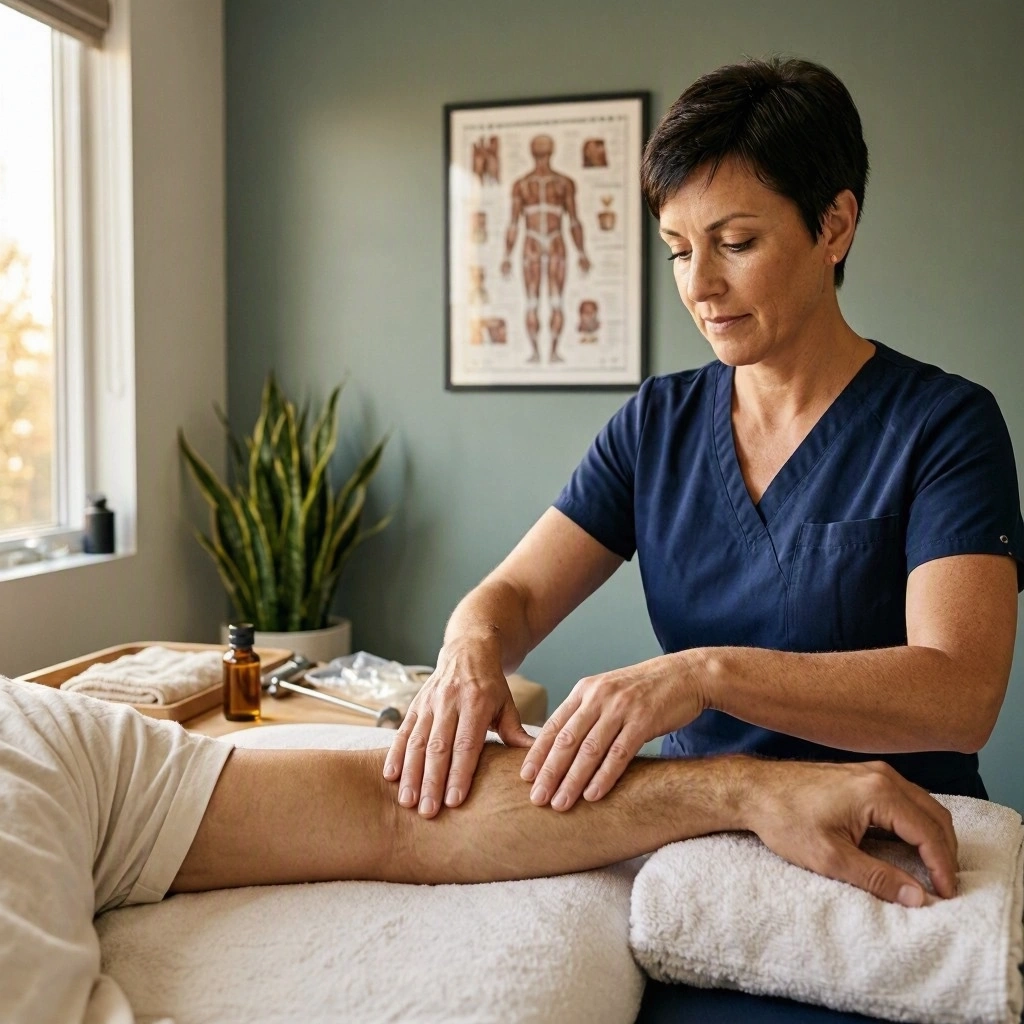
Massage therapy involves hands-on techniques applied to muscles and other soft tissues. Depending on the individual and the treatment approach, massage may help reduce the perception of muscular tightness, promote relaxation, and provide temporary relief from some forms of discomfort.
For forearm tension, treatment may focus on the flexor muscles, extensor muscles, and surrounding soft tissues.
The objective is not to force the tissues to relax through excessive pressure. Instead, the therapist should select techniques that suit the person’s symptoms, health history, and tolerance.
1. Helping Reduce Perceived Muscle Tightness
Gentle or moderate massage may help some people feel less tightness in overworked forearm muscles.
The therapist may use controlled gliding movements, gentle kneading, or other suitable techniques across the affected area.
The response varies between individuals, and the benefits may be temporary. Massage should be combined with appropriate activity changes when repetitive loading is contributing to symptoms.
2. Supporting Relaxation
Hands-on treatment can provide an opportunity to relax and reduce the stress associated with ongoing muscular discomfort.
Relaxation may be particularly relevant for people who maintain a tense grip during work or exercise.
However, massage is not a guaranteed treatment for stress-related symptoms, and individual responses differ.
3. Improving Comfort During Movement
When muscular discomfort is a major contributor to restricted movement, massage may help some people move more comfortably for a period after treatment.
This can create an opportunity to perform gentle mobility exercises or resume suitable activities.
Persistent movement limitations may require further assessment, particularly when pain occurs during gripping or resisted wrist movement.
4. Complementing Rehabilitation
Massage therapy may be incorporated into a broader rehabilitation program when appropriate.
For example, someone with forearm discomfort related to repetitive work may benefit from a combination of hands-on treatment, ergonomic adjustments, gradual strengthening, and movement education.
A person with tendon-related pain may need a more structured exercise program to improve the capacity of the affected tissues.
Massage alone does not reliably resolve every cause of forearm pain.
5. Supporting General Physical Comfort
Forearm tension can interfere with everyday activities, from typing and cooking to lifting objects and exercising.
Some individuals use massage as part of a broader approach to physical comfort and recovery.
The most appropriate plan depends on the underlying problem, the person’s goals, and the response to treatment.

Common Massage Therapy Techniques for Forearm Tension
A trained massage therapist can select techniques according to the symptoms, treatment goals, and relevant medical history.
Not every technique is appropriate for every forearm problem.
Gentle Effleurage
Effleurage involves smooth, gliding movements across the soft tissues.
For forearm tension, gentle strokes may be used to introduce treatment and help the person become comfortable with the pressure.
The therapist may work along the forearm muscles while avoiding excessive pressure over sensitive areas.
Petrissage
Petrissage includes techniques such as gentle kneading and lifting of soft tissues.
These movements may be used on suitable muscle areas when tension or fatigue is present.
The intensity should remain appropriate for the person’s condition. Tender muscles do not need aggressive manipulation to receive treatment.
Targeted Soft Tissue Massage
Targeted soft tissue massage focuses on specific areas of muscular discomfort.
For example, a therapist may work carefully with the forearm flexors or extensors depending on the location of the symptoms.
The therapist should avoid treating unexplained sharp pain as a simple muscle knot and should adjust the approach when symptoms suggest tendon or nerve involvement.
Myofascial Techniques
Myofascial techniques focus on muscles and surrounding connective tissues.
Depending on the practitioner, these techniques may involve sustained, controlled pressure or gentle movement of the soft tissues.
They may be considered when muscular tension or restricted comfortable movement is part of the person’s presentation. Evidence for specific techniques varies, and no single approach is guaranteed to provide lasting relief.
Deep Tissue Massage
Deep tissue massage uses more focused pressure than many relaxation-oriented approaches.
It may be appropriate for some people with muscular discomfort, but stronger pressure is not automatically more effective.
Deep pressure may aggravate irritated tissues, especially when an injury is recent or the cause of the pain is unclear.
If symptoms increase, the therapist should reduce the pressure or stop the technique.
Gentle Assisted Stretching
A therapist may incorporate gentle stretching when restricted flexibility contributes to discomfort.
For forearm tension, stretching may involve carefully lengthening the wrist flexor or extensor muscles.
Stretching should not be forced, and it may be unsuitable for certain acute injuries or painful tendon conditions.
When symptoms persist, a physiotherapist or other qualified professional can help determine which movements are appropriate.
What Happens During a Forearm Massage Therapy Appointment?
A professional appointment should begin with a discussion about your symptoms and goals.
The therapist may ask:
- When did the tension begin?
- Is the discomfort related to work, sport, or exercise?
- Which activities make the symptoms worse?
- Have you experienced an injury?
- Do you notice numbness, tingling, or weakness?
- Have you been diagnosed with any relevant medical conditions?
- Are you taking medication that may affect bruising or bleeding?
- What level of pressure feels comfortable for you?
This information helps the therapist determine whether massage is suitable and whether referral for further assessment is necessary.
If massage is appropriate, the therapist can select techniques and pressure levels according to your preferences and physical condition.
Communication remains important throughout the session. You should tell the therapist if you experience sharp pain, unusual tingling, numbness, or pressure that feels excessive.
After treatment, the therapist may discuss ways to manage repetitive activity and support recovery. Depending on the situation, additional advice may include gentle movement, activity modification, or referral for rehabilitation.
Simple Exercises That May Help With Forearm Tension
Appropriate movement may help maintain wrist mobility and support the gradual return to normal activity. The following exercises are general examples for mild tension, not a personalized rehabilitation program.
Do not perform them through sharp pain. If symptoms are persistent, injury-related, or accompanied by numbness or weakness, obtain professional guidance first.
1. Gentle Wrist Flexor Stretch
The wrist flexors help bend the wrist and fingers.
To perform a gentle stretch:
- Extend one arm in front of you with the elbow comfortably straight.
- Turn the palm upward.
- With the opposite hand, gently guide the fingers downward and backward until a mild stretch is felt along the forearm.
- Hold briefly while breathing normally.
- Release and repeat only if comfortable.
Avoid pulling forcefully on the fingers. Stop if the stretch causes tingling or increases pain.
2. Gentle Wrist Extensor Stretch
The wrist extensor muscles help straighten the wrist and fingers.
To perform the stretch:
- Extend one arm in front of you.
- Keep the elbow comfortably straight and turn the palm downward.
- Gently bend the wrist so the fingers point toward the floor.
- Use the opposite hand to provide light assistance if needed.
- Stop when a mild stretch is felt along the back of the forearm.
Do not force the wrist into its end range, particularly if you have elbow or tendon pain.
3. Wrist Range-of-Motion Exercise
Gentle wrist movement may help maintain comfortable mobility.
- Sit with the forearm supported.
- Slowly bend the wrist forward.
- Return to the starting position.
- Slowly bend the wrist backward.
- Repeat with a small, comfortable range of motion.
Keep the movement smooth and avoid adding resistance until you know that the exercise is suitable for your condition.
4. Gentle Grip Relaxation
People who repeatedly grip tools, weights, or a computer mouse may benefit from becoming more aware of unnecessary hand tension.
- Rest your hand comfortably.
- Gently open your fingers.
- Relax the palm and thumb.
- Close your hand loosely without squeezing tightly.
- Repeat several times.
This exercise is intended to encourage relaxed movement, not to strengthen a painful grip.
5. Gradual Return to Strengthening
When symptoms have improved and a healthcare professional considers strengthening appropriate, exercises using light resistance may help rebuild forearm capacity.
Examples may include light wrist curls, wrist extensions, or controlled grip exercises.
The appropriate resistance, repetitions, and progression depend on the cause of the symptoms. Tendon-related pain often requires a more specific loading program than ordinary muscle fatigue.

Preventing Forearm Tension at Work
Prevention is especially important for people who spend much of the day typing, using a mouse, or performing repetitive manual tasks.
Adjust Your Workstation
Position your keyboard and mouse so that they are easy to reach without excessive shoulder movement or sustained wrist bending.
Try to keep your wrists in a comfortable, relatively neutral position during typing and mouse use. Avoid gripping the mouse more tightly than necessary.
There is no single workstation setup that suits everyone, so adjust the arrangement according to your body, work tasks, and comfort.
Take Regular Movement Breaks
Remaining in the same position for long periods can increase fatigue.
Short breaks can provide opportunities to relax your hands, change position, walk, and perform gentle wrist movements.
The exact schedule depends on your workload, but regular variation is often more practical than trying to maintain one rigid posture throughout the day.
Alternate Repetitive Tasks
When possible, alternate between tasks that use different movements or muscle groups.
For example, a person who performs repeated gripping tasks may benefit from changing activities periodically and reducing unnecessary sustained force.
Workplace modifications may be particularly useful when symptoms repeatedly return during the same task.
Reduce Excessive Grip Force
Many everyday activities require less grip force than people naturally apply.
Try to hold tools, phones, and other objects securely without squeezing harder than necessary.
For strength training, choose a load that allows you to maintain good technique without unnecessary gripping strain.
Build Exercise Volume Gradually
If forearm tension develops during exercise, review whether training intensity, volume, or frequency increased too quickly.
Gradually progressing your training and allowing adequate recovery may help reduce excessive workload.
Persistent pain should be assessed rather than repeatedly pushed through.
Massage Therapy and Physiotherapy: Which Is Better for Forearm Tension?
Massage therapy and physiotherapy can serve different purposes, and the most appropriate choice depends on the underlying cause of the symptoms.
Massage therapy primarily uses hands-on techniques to work with soft tissues. Some people find it helpful for temporary relief from muscular tension and general discomfort.
Physiotherapy may involve assessment, exercise prescription, progressive strengthening, movement retraining, and rehabilitation for specific injuries.
For example, a person with mild forearm tightness after repetitive work may find massage helpful alongside changes to their daily activity.
Someone with persistent pain during gripping may require an assessment for tendon-related conditions and a structured exercise program.
A combined approach may be appropriate in some cases, but massage should not replace medical evaluation when symptoms suggest nerve involvement, significant injury, or another underlying condition.
At Ritz Clinic, you can explore massage therapy and soft tissue therapy to learn about the clinic’s available hands-on treatment services.
You can also review the clinic’s physiotherapy and rehabilitation services when considering options for persistent movement-related symptoms.
Is Massage Therapy Safe for Forearm Tension?
Massage therapy is generally well tolerated by many people, but it is not appropriate in every situation.
Treatment may need to be modified or avoided if you have:
- A recent fracture or significant forearm injury.
- Suspected tendon rupture or severe muscle injury.
- An open wound, skin infection, or significant inflammation in the treatment area.
- Unexplained swelling or bruising.
- A known or suspected blood clot.
- A medical condition that increases bleeding risk.
- Significant loss of sensation in the affected area.
- Severe or unexplained pain that has not been assessed.
If you take anticoagulant medication or have a bleeding disorder, tell your healthcare professional before receiving massage, particularly when considering deep pressure.
Mild temporary soreness can occur after treatment, but severe pain or unusual symptoms should not be considered a normal requirement for recovery.
Seek urgent medical attention if forearm discomfort follows a significant injury and is accompanied by rapidly increasing swelling, severe pain, marked weakness, or changes in hand colour, temperature, or sensation.
Persistent tingling, numbness, or weakness should also be evaluated because these symptoms may indicate nerve involvement.
How Often Should You Receive Massage Therapy for Forearm Tension?
There is no universal treatment schedule for forearm tension.
Some people seek occasional massage for general relaxation, while others consider it as one part of a broader plan for recurring muscular discomfort.
The appropriate frequency depends on the underlying cause, symptom severity, response to treatment, budget, and overall goals.
If the tension is associated with repetitive work, it is important to address the activity contributing to the symptoms. Repeated massage without changes to the workload may provide only temporary relief.
For persistent symptoms, a healthcare professional can help determine whether massage alone is reasonable or whether further assessment and rehabilitation are needed.
Why Choose Ritz Clinic for Massage Therapy?
Ritz Clinic offers massage therapy and soft tissue therapy alongside other services related to musculoskeletal health and physical function.
For individuals experiencing forearm tension, an individualized discussion can help clarify the symptoms, identify relevant activity patterns, and determine whether hands-on treatment may be appropriate.
The clinic’s massage therapy information describes an approach that considers personal needs, symptoms, comfort preferences, and treatment goals.
You can learn more about the available services through these internal pages:
- Massage Therapy at Ritz Clinic
- Soft Tissue Therapy
- Physiotherapy and Other Services
- Contact Ritz Clinic
Ritz Clinic is located at 7191 Yonge Street, Unit 806, Thornhill, Ontario, L3T 0C4. The clinic lists its telephone number as (905) 597-7978. Contact the clinic directly to confirm current availability and discuss whether massage therapy is suitable for your symptoms.
Frequently Asked Questions About Massage Therapy for Forearm Tension
1. Can massage therapy help with forearm tension?
Massage therapy may provide temporary relief from perceived muscular tightness and discomfort for some people. Results depend on the underlying cause. Persistent symptoms associated with tendon or nerve conditions may require a different treatment approach.
2. What causes forearm muscles to feel tight?
Common contributors include repetitive gripping, computer work, sports, unfamiliar exercise, sustained wrist positions, and inadequate recovery. Forearm discomfort can also be associated with tendon irritation or nerve problems.
3. Is deep tissue massage good for forearm tension?
Deep tissue massage may be appropriate for selected muscular concerns, but stronger pressure is not necessarily more effective. If the forearm is injured, highly sensitive, swollen, or affected by nerve symptoms, deep pressure may be unsuitable.
4. Can typing cause forearm tension?
Typing and mouse use can contribute to forearm discomfort in some people, particularly when the activity is prolonged or combined with repetitive gripping and limited recovery. Workstation adjustments, task variation, and regular movement breaks may help.
5. Should I massage forearm pain every day?
Daily massage is not necessary for everyone and may aggravate some conditions if pressure is excessive. The appropriate approach depends on the cause of the pain and the person’s response to treatment.
6. Can stretching help forearm tightness?
Gentle stretching may help some people maintain comfortable movement. However, stretching is not appropriate for every injury, and it should not cause sharp pain or tingling. Persistent symptoms may require professional assessment.
7. How can I tell whether forearm tension is serious?
Mild tension that improves with rest may be related to temporary muscular fatigue. Severe pain, significant swelling, persistent numbness, weakness, or symptoms following a traumatic injury warrant medical evaluation.
8. Is massage therapy enough for repetitive strain injuries?
Not always. Repetitive strain problems may require activity modification, ergonomic changes, progressive strengthening, or treatment for an underlying tendon or nerve condition. Massage may be one component of care when appropriate.
9. Can athletes benefit from forearm massage?
Some athletes use massage as part of their recovery routine. It may help manage perceived muscular tightness, but it should not replace appropriate training, rest, strengthening, or assessment of persistent sports-related pain.
10. When should I see a physiotherapist or doctor?
Consider professional assessment if symptoms persist, interfere with daily activities, repeatedly return, or worsen despite changes to your routine. Seek urgent care for severe symptoms following trauma, rapidly increasing swelling, significant weakness, or changes in hand circulation or sensation.
Conclusion
Forearm tension can affect typing, gripping, exercise, manual work, and other everyday activities. Although it may result from temporary muscular fatigue or repetitive movements, persistent forearm discomfort can also be associated with tendon irritation, nerve involvement, or other conditions that require appropriate assessment.
Massage Therapy for Forearm Tension may help some individuals manage perceived muscle tightness, promote relaxation, and improve comfort. The best results are more likely to come from an approach that also considers workload, recovery, movement habits, and the underlying cause of the symptoms.
Gentle movement, appropriate activity modification, ergonomic adjustments, and gradual strengthening may all play a role in maintaining forearm function.
If forearm tension is affecting your daily activities, visit Ritz Clinic to learn more about massage therapy and soft tissue treatment options. A suitable assessment can help you understand your choices and determine whether hands-on treatment is appropriate for your needs.
Medical disclaimer: This article is intended for educational purposes only and is not a substitute for professional medical advice, diagnosis, or treatment. Seek assessment for persistent symptoms and urgent medical care for severe pain, significant swelling, progressive weakness, or changes in sensation or circulation.