Sciatica Treatment for Leg Pain: Complete Guide to Relief and Recovery
Sciatica can cause some of the most uncomfortable types of leg pain. Instead of staying in one small area, the pain may travel from the lower back into the buttock, thigh, calf, or foot. Some people also experience burning, tingling, numbness, or weakness. Because leg pain can interfere with walking, sleeping, working, exercising, and everyday activities, finding the right Sciatica Treatment for Leg Pain can become an important part of recovery.
Sciatica develops when the sciatic nerve or one of its nerve roots becomes irritated or compressed. A herniated disc represents one common cause, although spinal stenosis, spondylolisthesis, injuries, and other spinal conditions can also contribute. Symptoms can vary considerably from one person to another, so treatment should match the individual’s symptoms and underlying cause.
Fortunately, many cases of sciatica improve over several weeks to a few months. During this period, appropriate activity, exercise, physiotherapy, symptom management, and gradual rehabilitation can help people return to normal function. However, severe or worsening neurological symptoms require medical assessment rather than continued self-treatment.
This guide explains the main approaches to Sciatica Treatment for Leg Pain, including home care, exercise, physiotherapy, medication, activity modification, and specialist treatments.
What Is Sciatica Leg Pain?
Sciatica describes symptoms associated with irritation or compression of the sciatic nerve or its contributing nerve roots.
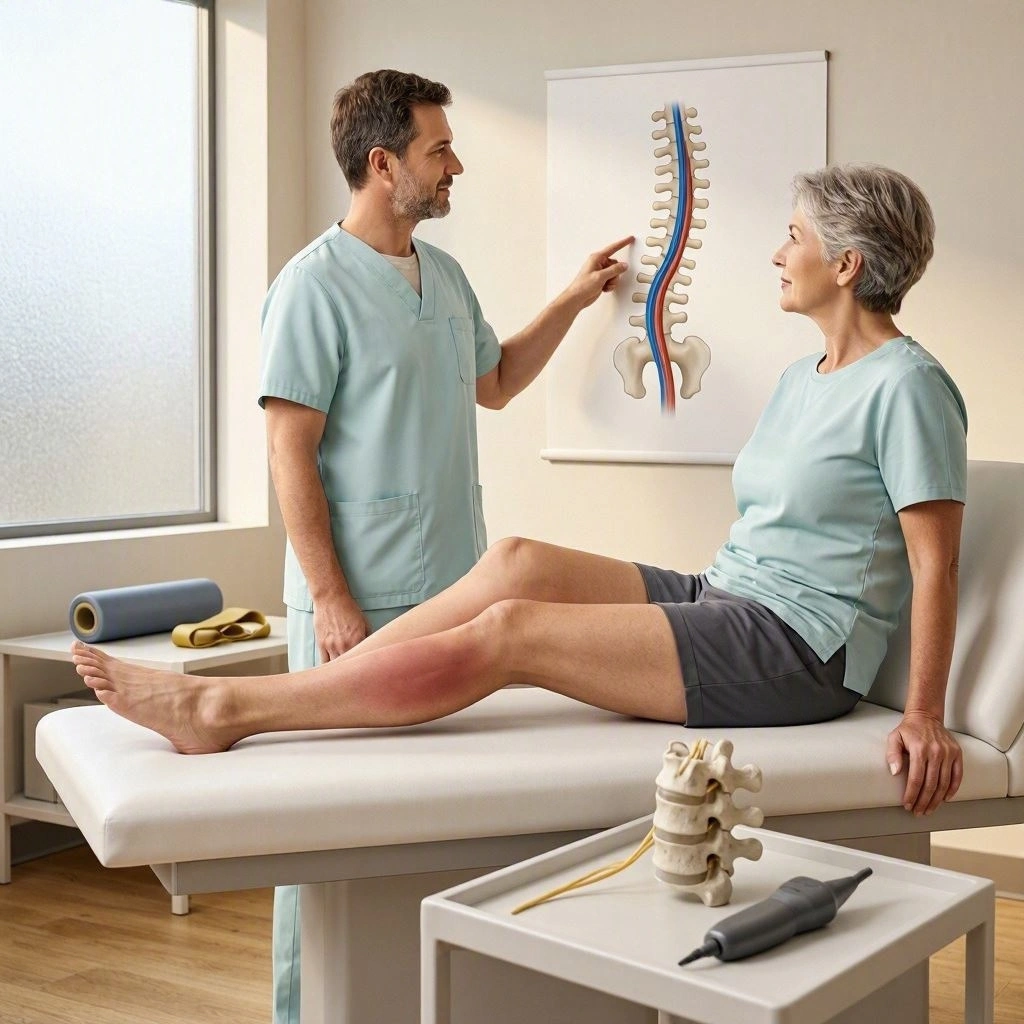
The sciatic nerve travels from the lower back through the buttocks and down the leg. Therefore, irritation near the spine can produce symptoms much farther away from the original source.
Typical symptoms include:
-
Sharp or shooting leg pain
-
Burning pain
-
Pain in the buttock
-
Pain traveling down the back or side of the leg
-
Tingling or pins and needles
-
Numbness
-
Muscle weakness
-
Foot discomfort
-
Lower back pain alongside leg symptoms
Sciatica commonly affects one side of the body. The NHS notes that symptoms often affect the buttock and back of one leg and may extend into the foot and toes.
This pattern helps distinguish sciatica from many other causes of general leg pain.
Why Does Sciatica Cause Leg Pain?
The sciatic nerve contains fibers that carry sensory and motor information between the lower limb and the nervous system.
When a nerve root becomes irritated or compressed, the resulting symptoms can travel along the nerve’s distribution.
For example, someone may experience:
Lower back → buttock → thigh → calf → foot
The exact location depends on which nerve structures are involved.
A person may therefore feel severe pain in the leg even when the original problem comes from the lower spine.
This can seem confusing because the painful area may not be the actual source of the problem.
Common Causes of Sciatica Leg Pain
Several conditions can contribute to sciatica.
Herniated Disc (Sciatica Treatment for Leg Pain)
A herniated or slipped disc occurs when material from a spinal disc pushes outward and may irritate a nearby nerve root.
Disc-related sciatica represents one of the most common causes.
Spinal Stenosis
Spinal stenosis involves narrowing around the spaces through which spinal nerves travel.
This narrowing can place pressure on nerve structures and contribute to leg symptoms.
Spondylolisthesis
Spondylolisthesis occurs when one spinal bone shifts relative to another.
Depending on the situation, this movement can contribute to nerve irritation.
Back Injury
Certain injuries can irritate structures around the spine and contribute to sciatic symptoms.
Because several conditions can produce similar symptoms, persistent or severe leg pain should receive appropriate assessment.
Sciatica Treatment for Leg Pain: Why Assessment Matters
Before choosing a treatment, it helps to understand the nature of your symptoms.
A healthcare professional may ask:
-
Where does the pain begin?
-
How far does it travel?
-
Is the pain sharp, burning, or aching?
-
Do you have numbness?
-
Do you have tingling?
-
Do you notice weakness?
-
What movements increase your symptoms?
-
How long have you had the problem?
-
Does walking help or worsen the pain?
-
Does sitting affect your symptoms?
-
Have you experienced similar symptoms before?
A physical assessment may also evaluate strength, sensation, movement, reflexes, walking, and functional limitations.
This information helps determine whether conservative treatment is appropriate or whether further investigation is necessary.
Staying Active With Sciatica Leg Pain
One of the most important principles of Sciatica Treatment for Leg Pain involves maintaining appropriate activity.
When leg pain becomes severe, you may naturally want to remain in bed or sit for long periods. However, prolonged inactivity can contribute to stiffness, reduced conditioning, and difficulty returning to normal activities.
The NHS recommends continuing normal activities as much as possible and avoiding long periods of sitting or lying down. It also recommends regular exercise and gentle activity during recovery.
This does not mean ignoring severe symptoms.
Instead, choose activities that you can tolerate and increase them gradually.
For example, you may begin with short walks around your home. As your symptoms become more manageable, you can gradually increase walking duration.
Walking for Sciatica Leg Pain
Walking provides a simple way to remain active during recovery.
You do not need to walk quickly or cover a long distance.
Start with a comfortable amount.
For example:
-
Walk for five minutes.
-
Rest if needed.
-
Repeat later in the day.
-
Gradually increase the duration.
If walking for 20 minutes increases your symptoms significantly, shorter walks may work better initially.
The goal is gradual progression rather than pushing through severe pain.
Exercise as a Sciatica Treatment (Sciatica Treatment for Leg Pain)
Exercise represents an important part of many rehabilitation programs.
NICE recommends considering exercise programs for people experiencing low back pain with or without sciatica. The guideline states that exercise selection should take an individual’s needs, preferences, and capabilities into account.
Exercise may include:
-
Aerobic activity
-
Mobility exercises
-
Strengthening
-
Stretching
-
Motor-control exercises
-
Mixed exercise programs
There is no single exercise that works for every person with sciatica.
Therefore, your exercise program should evolve as your symptoms change.
Gentle Mobility Exercises
Gentle mobility exercises can help you maintain movement during recovery.
Possible movements include:
-
Pelvic tilts
-
Gentle knee movements
-
Controlled hip movements
-
Comfortable spinal mobility
-
Gentle walking
The purpose is not to force your spine or nerve into an extreme position.
Instead, focus on controlled movement.
If an exercise causes a substantial increase in leg pain, numbness, or weakness, stop and seek professional guidance.
The NHS also advises stopping its general sciatica exercises if pain develops or you become unwell.
Stretching for Sciatica Leg Pain (Sciatica Treatment for Leg Pain)
Many people assume that stretching the painful leg will automatically improve sciatica.
However, aggressive stretching does not suit everyone.
Because sciatica involves nerve irritation, repeatedly forcing an irritated leg into a strong stretch may increase symptoms.
If you stretch:
-
Move slowly.
-
Avoid bouncing.
-
Stay within a comfortable range.
-
Do not force the painful leg.
-
Stop if symptoms become significantly worse.
A physiotherapist can determine whether particular stretches are appropriate for your symptoms.
Hamstring Stretching
The hamstrings run along the back of the thigh.
A gentle hamstring stretch may help maintain flexibility for some people. However, you should distinguish muscle tightness from nerve sensitivity.
If straightening the leg produces strong shooting pain, tingling, or increased numbness, do not force the stretch.
Instead, ask a physiotherapist about alternative mobility exercises.
Hip Mobility and Sciatica
The hips play an important role in walking, sitting, standing, bending, and lifting.
Maintaining comfortable hip mobility can therefore support general movement.
Simple exercises may include:
-
Hip rotations
-
Gentle hip flexor stretches
-
Controlled leg movements
-
Glute activation
-
Sit-to-stand exercises
The correct choice depends on your symptoms.
Core Strengthening
Core strengthening may become useful as symptoms settle.
The purpose is not to create extreme abdominal strength. Instead, strengthening can help you regain control during everyday movements.
Possible exercises include:
Abdominal Bracing (Sciatica Treatment for Leg Pain)
Lie on your back with your knees bent.
Gently tighten your abdominal muscles without holding your breath.
Hold for a few seconds, then relax.
Repeat several times.
Glute Bridge
Lie on your back with your knees bent.
Place your feet on the floor and gently tighten your abdominal and gluteal muscles.
Raise your hips gradually and then lower them with control.
Begin with a small number of repetitions.
If the exercise increases your leg symptoms, stop and ask a professional for a modification.
Strengthening the Legs (Sciatica Treatment for Leg Pain)
Leg strengthening can become important when pain has caused you to reduce activity.
Exercises may include:
-
Sit-to-stands
-
Supported squats
-
Step-ups
-
Glute bridges
-
Hip strengthening
-
Calf raises
Start with bodyweight exercises before adding resistance.
As your symptoms improve, gradually increase repetitions, resistance, or exercise difficulty.
Physiotherapy for Sciatica Leg Pain
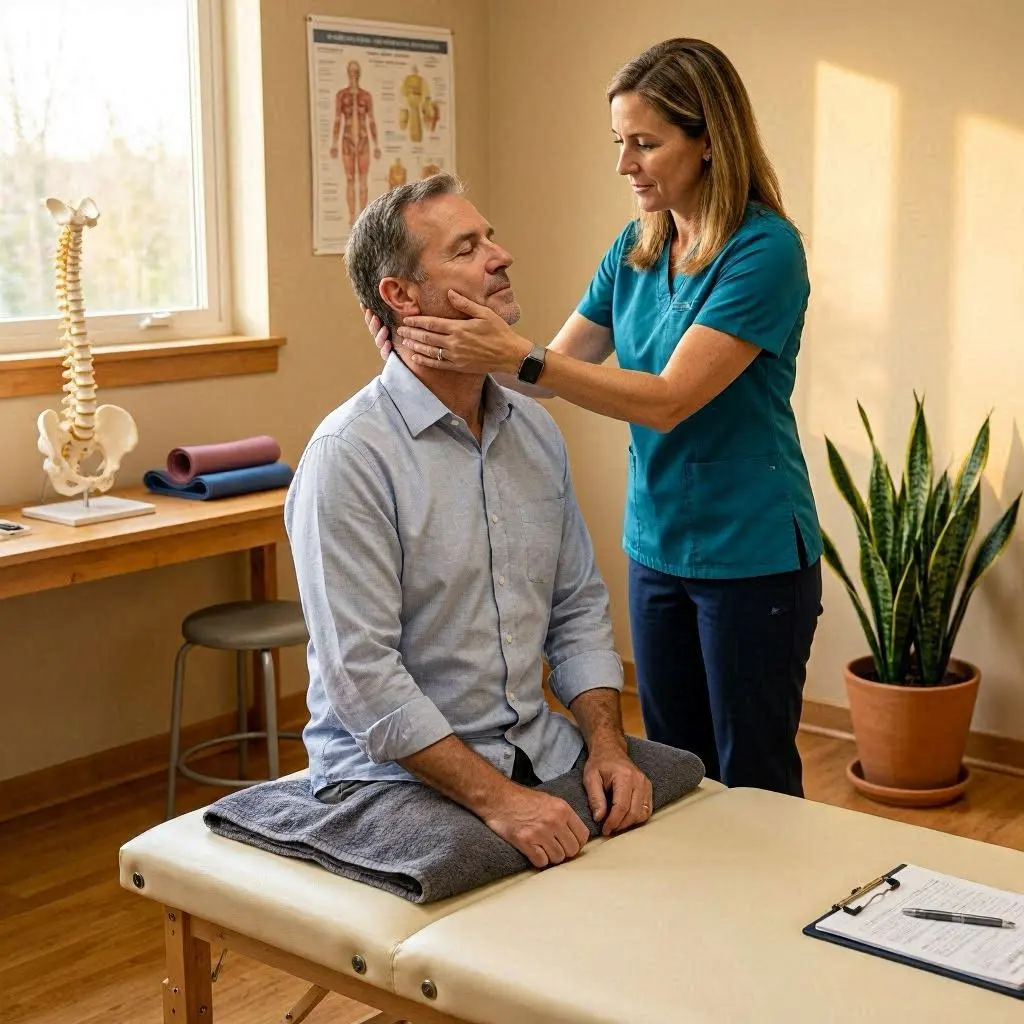
Physiotherapy can provide an individualized approach to Sciatica Treatment for Leg Pain.
A physiotherapist can evaluate movement, strength, symptoms, and functional limitations.
Treatment may include:
-
Exercise therapy
-
Education
-
Activity advice
-
Movement retraining
-
Strengthening
-
Mobility exercises
-
Manual therapy
The NHS lists physiotherapy, including exercise advice and techniques such as massage, among treatment options for sciatica.
NICE also recommends manual therapy only as part of a treatment package that includes exercise, rather than relying on manual treatment alone.
Manual Therapy and Massage
Manual therapy may include:
-
Soft-tissue techniques
-
Massage
-
Mobilization
-
Other hands-on techniques
These approaches may help some people manage discomfort and improve movement.
However, passive treatment should not necessarily become the entire rehabilitation plan.
A more complete approach often combines appropriate hands-on treatment with exercise and education.
Heat and Cold for Leg Pain (Sciatica Treatment for Leg Pain)
Heat can provide temporary relief for some people.
A heat pack may help relax tense muscles and make movement more comfortable.
Some people prefer cold packs when an area feels irritated.
If you use either option:
-
Protect your skin.
-
Avoid extreme temperatures.
-
Limit exposure.
-
Take additional care if the painful area feels numb.
The NHS specifically lists heat packs as one self-care option for sciatica.
Heat and cold can help manage symptoms, but they do not address every underlying cause of sciatica.
Medication for Sciatica Leg Pain
Medication may help some people manage pain while continuing normal activities.
However, medication choices depend on your health and individual risk factors.
The NHS notes that paracetamol is unlikely to help sciatica and that the effectiveness of NSAIDs such as ibuprofen remains unclear for sciatica.
NICE recommends considering oral NSAIDs for low back pain while taking gastrointestinal, liver, cardiovascular, kidney, age, and other risk factors into account. It also recommends using the lowest effective dose for the shortest possible period.
Therefore, speak with a pharmacist or healthcare professional before taking medication, particularly if you have other medical conditions or take other medicines.
Improving Your Sitting Position (Sciatica Treatment for Leg Pain)
Sitting can aggravate symptoms for some people.
Rather than trying to maintain one perfect posture all day, focus on changing position regularly.
You can:
-
Use a comfortable chair.
-
Keep your feet supported.
-
Avoid prolonged slouching if it worsens symptoms.
-
Stand regularly.
-
Walk between tasks.
-
Alternate between sitting and standing when possible.
Cambridge University Hospitals recommends maintaining comfortable posture and changing positions regularly as part of sciatica management.
Sleeping With Sciatica Leg Pain
Night-time pain can make recovery frustrating.
Try to find a sleeping position that feels comfortable.
Some people prefer lying on their side with a pillow between the knees. Others prefer lying on their back with support beneath the knees.
There is no single sleeping position that works for everyone.
The main objective is to reduce unnecessary discomfort and allow your body to rest.
If severe pain repeatedly prevents sleep, speak with a healthcare professional.
Activity Pacing (Sciatica Treatment for Leg Pain)
Pacing can help prevent repeated flare-ups.
For example, you may feel better one morning and decide to complete several hours of housework. Later, your symptoms may become significantly worse.
Instead, divide demanding tasks into smaller periods.
You can apply pacing to:
-
Cleaning
-
Gardening
-
Shopping
-
Driving
-
Exercise
-
Work
-
Household lifting
Gradually increase your activity as your tolerance improves.
Returning to Work
Your return to work depends on your occupation and symptoms.
Office workers may benefit from:
-
Regular movement breaks
-
Adjustable workstations
-
Alternating sitting and standing
-
Short walking breaks
People who perform physical work may need temporary modifications involving:
-
Heavy lifting
-
Repetitive bending
-
Twisting
-
Long periods of standing
-
Carrying heavy loads
The goal should usually involve restoring your capacity rather than permanently avoiding normal activities.
Sciatica Treatment for Leg Pain During Exercise (Sciatica Treatment for Leg Pain)
You may notice some discomfort when you begin exercising again.
However, significant worsening of leg pain, new numbness, or weakness requires attention.
A useful approach involves monitoring symptoms during and after exercise.
If symptoms remain stable or gradually improve, you may continue progressing.
If an exercise repeatedly produces significantly worse symptoms, reduce the intensity or seek professional advice.
The NHS recommends stopping general sciatica exercises if they cause pain or make you unwell.
What Exercises Should You Avoid?
There is no universal list of exercises that everyone with sciatica must permanently avoid.
Instead, temporarily reduce movements that consistently aggravate your symptoms.
These may include:
-
Heavy lifting
-
High-impact jumping
-
Sprinting
-
Heavy squats
-
Heavy deadlifts
-
Aggressive stretching
-
Repetitive bending
-
Exercises that significantly increase leg symptoms
Once your symptoms improve, you can often rebuild your tolerance gradually.
Managing Persistent Leg Pain (Sciatica Treatment for Leg Pain)
Some people experience symptoms for longer than expected.
If pain continues despite appropriate self-care, you may need a more structured rehabilitation program.
A healthcare professional may reassess:
-
Your diagnosis
-
Strength
-
Sensation
-
Movement
-
Functional limitations
-
Treatment response
If necessary, they may recommend additional investigations or specialist referral.
The NHS recommends medical assessment when sciatica has not improved after several weeks of home treatment, becomes worse, or interferes with normal activities.
When Is Imaging Necessary?
Not everyone with sciatica needs an MRI.
Imaging becomes more useful when the results could change management, particularly when symptoms are severe or persistent and a specialist is considering an intervention.
An MRI can show structural changes around the spine, but scan findings must be interpreted alongside symptoms and clinical examination.
A disc abnormality on an MRI does not automatically mean that surgery is necessary.
Epidural Injections
For selected people with severe sciatica, a specialist may consider an epidural injection.
NICE guidance allows consideration of epidural injections containing local anaesthetic and steroid for acute and severe sciatica.
These treatments require professional assessment because they are not appropriate for every person.
An injection may form part of a broader treatment plan rather than replace rehabilitation.
Surgery for Sciatica Leg Pain (Sciatica Treatment for Leg Pain)
Most people with sciatica do not require surgery.
However, surgery may become an option when symptoms remain severe despite appropriate non-surgical treatment and imaging demonstrates a problem that matches the symptoms.
One possible procedure involves decompression surgery to relieve pressure on a nerve.
The decision requires specialist assessment and consideration of potential benefits, risks, recovery time, and alternative options.
How Long Does Sciatica Leg Pain Last?
Recovery varies.
The NHS states that sciatica usually improves within several weeks to a few months, although symptoms can last longer.
Several factors may influence recovery:
-
Cause of the nerve irritation
-
Severity of symptoms
-
Duration of symptoms
-
Physical activity
-
General health
-
Response to treatment
-
Presence of neurological changes
Rather than focusing only on pain intensity, consider changes in function.
For example, you may gradually notice that you can walk farther, sleep better, sit more comfortably, or perform daily activities more easily.
These improvements can represent meaningful recovery.
How to Build a Sciatica Recovery Plan
A practical rehabilitation plan may include several stages.
Stage 1: Reduce Irritation (Sciatica Treatment for Leg Pain)
Focus on comfortable positions, gentle movement, walking, and appropriate symptom management.
Stage 2: Restore Mobility
Introduce gentle mobility exercises that your symptoms tolerate.
Stage 3: Build Strength
Progress toward core, hip, and leg strengthening.
Stage 4: Improve Endurance
Increase walking duration or other suitable aerobic activities.
Stage 5: Return to Normal Activities
Gradually reintroduce work, lifting, sports, and other demanding activities.
This progression can help you rebuild physical confidence without rushing recovery.
When Should You Seek Professional Help?
You should seek professional assessment if:
-
Leg pain continues for several weeks
-
Symptoms become progressively worse
-
Pain prevents normal activities
-
You develop persistent numbness
-
You notice weakness
-
Walking becomes difficult
-
Symptoms repeatedly return
-
Home treatment does not provide improvement
A physiotherapist can provide a detailed assessment and individualized rehabilitation program.
Depending on the healthcare system, you may also be able to access community musculoskeletal services for sciatica and physiotherapy.
Emergency Symptoms of Sciatica (Sciatica Treatment for Leg Pain)
Certain symptoms require urgent medical attention.
Seek emergency care if you experience:
-
Sciatica affecting both legs
-
Severe or worsening weakness in both legs
-
Significant numbness in both legs
-
Numbness around the genitals
-
Numbness around the anus or buttocks
-
Difficulty starting urination
-
Inability to urinate
-
Loss of bladder control
-
Loss of bowel control
These symptoms can indicate a serious spinal condition requiring urgent assessment.
Do not attempt to manage these symptoms with home exercise or massage.
Frequently Asked Questions About Sciatica Treatment for Leg Pain
What is the best Sciatica Treatment for Leg Pain?
There is no single treatment that works for everyone. Appropriate exercise, staying active, physiotherapy, activity modification, symptom management, and medication when appropriate can all have a role.
Why does sciatica hurt more in the leg than the back?
Sciatica involves irritation of nerve structures that contribute to the sciatic nerve. As a result, symptoms can become more intense along the leg than in the lower back.
Can walking reduce sciatic leg pain?
Walking can help many people remain active during recovery. Start with a comfortable duration and gradually increase your walking time.
Should I rest my leg when I have sciatica?
Prolonged inactivity is generally not recommended. Short periods of rest may provide comfort, but gradual movement usually plays an important role in recovery.
Can physiotherapy help sciatica leg pain?
Yes. Physiotherapy can include individualized exercise, movement advice, education, and selected manual therapy techniques.
Can stretching cure sciatica?
Stretching may help mobility for some people, but it does not guarantee recovery. Aggressive stretching can also aggravate symptoms in some cases.
Can heat help sciatic leg pain?
Heat can provide temporary symptom relief for some people. Use it carefully, especially if you have numbness.
When should I get an MRI for sciatica?
An MRI is not automatically necessary for every case. A healthcare professional may consider imaging when symptoms are severe or persistent and the result could influence specialist treatment.
Is surgery necessary for sciatica?
No. Most people do not need surgery. Surgery may become appropriate for selected cases that do not improve with non-surgical treatment and have findings that match the symptoms.
When is sciatic leg pain an emergency?
Severe or worsening weakness or numbness in both legs, numbness around the genital or anal area, and new bladder or bowel problems require urgent medical attention.
Final Thoughts (Sciatica Treatment for Leg Pain)
Sciatica Treatment for Leg Pain should focus on restoring function while addressing the factors contributing to nerve irritation.
For many people, recovery begins with conservative treatment. Staying appropriately active, walking regularly, performing suitable exercises, improving movement habits, managing daily activities, and working with a physiotherapist can all support recovery.
Exercise should progress gradually. Start with movements that your body can tolerate, then build strength, endurance, and functional capacity over time. NICE recommends exercise programs that take individual needs, preferences, and capabilities into account rather than relying on one universal exercise approach.
At the same time, persistent or worsening symptoms deserve professional attention. If leg pain does not improve after several weeks, interferes with normal activities, or comes with numbness or weakness, a healthcare professional can reassess your condition and determine the next step.
Most importantly, do not ignore emergency symptoms. Changes in bladder or bowel control, numbness around the genitals or anus, or severe and worsening neurological symptoms require urgent assessment.
With appropriate management and gradual rehabilitation, many people with sciatica can progressively return to walking, working, exercising, and participating in their normal daily activities.