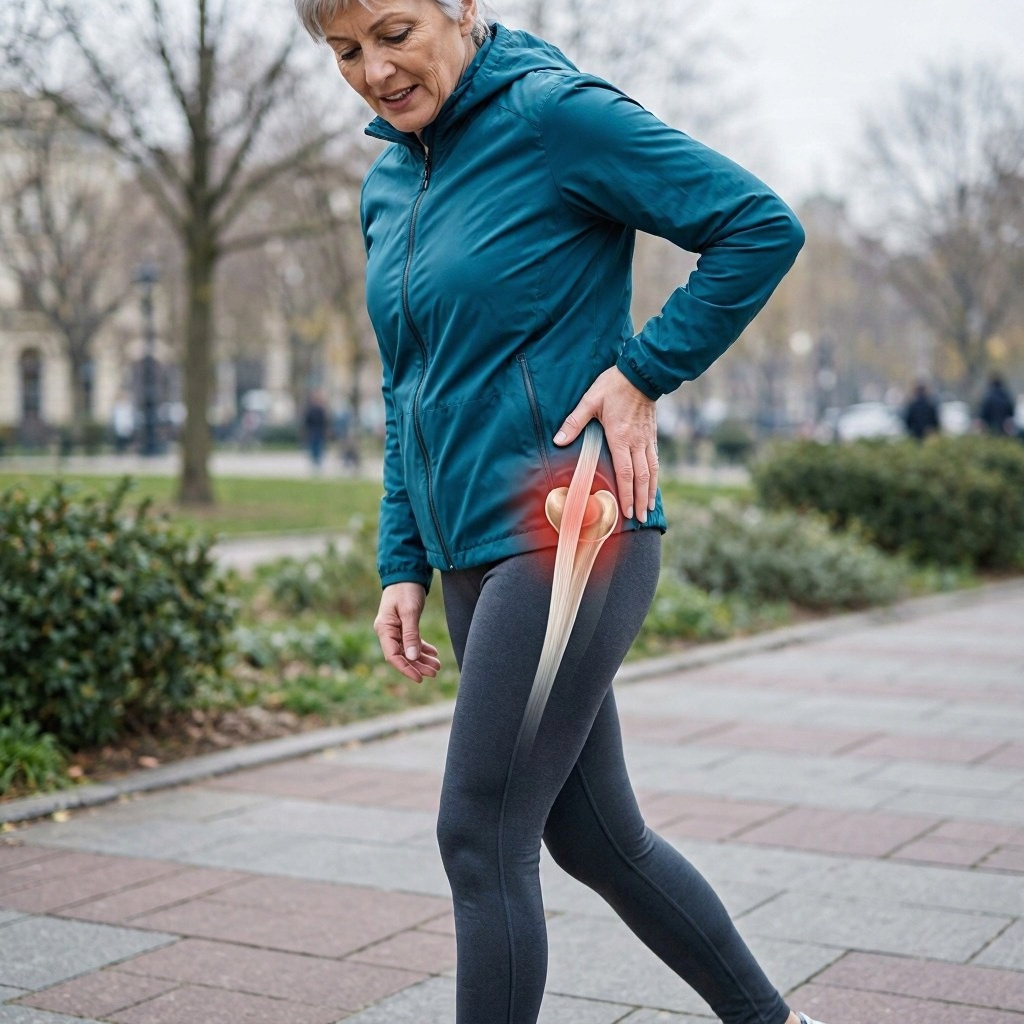
What Causes Pain in the Outside of My Hip When Walking?
Pain on the outside of your hip when walking can make everyday activities surprisingly difficult. You may notice discomfort after taking a few steps, feel pain when walking uphill, or experience tenderness around the bony area on the side of your hip. Sometimes, the pain improves when you rest but returns as soon as you start moving again.
This type of discomfort can have several causes. One of the most common is Greater Trochanteric Pain Syndrome (GTPS), a condition involving the tendons and other soft tissues around the outer hip. However, muscle injuries, hip osteoarthritis, lower back problems, and other conditions can also contribute to pain in this area.
Understanding what triggers your symptoms is an important first step toward finding the right treatment. In this guide, we explore the common causes of outer hip pain when walking, the symptoms to look out for, practical ways to manage discomfort, and when to seek professional help.
1. What Causes Pain on the Outside of the Hip When Walking?
The outside of your hip contains several structures that work together to support your body. These include the gluteal muscles, their tendons, bursae, ligaments, and parts of the hip joint.
When you walk, these structures help stabilize your pelvis and control the movement of your legs. If one becomes irritated, injured, or overloaded, you may experience pain with each step.
Here are some of the most common causes.
Greater Trochanteric Pain Syndrome (GTPS)
Greater Trochanteric Pain Syndrome is one of the leading causes of pain around the outside of the hip.
The greater trochanter is the bony prominence you can feel on the outer side of your upper thigh. Several important tendons and soft tissues attach around this area.
GTPS is an umbrella term for conditions that cause pain around the greater trochanter. It is commonly associated with irritation or degeneration of the gluteal tendons. In some people, inflammation or irritation of nearby bursae may also contribute.
People with GTPS may experience:
Pain on the outside of the hip when walking.
Tenderness when pressing the bony side of the hip.
Discomfort when climbing stairs or walking uphill.
Pain when standing on one leg.
Difficulty lying on the affected side.
Discomfort after sitting for a long time.
The pain may begin gradually and become more noticeable as walking distance increases. Some people initially experience discomfort only after exercise, while others develop symptoms during ordinary daily activities.
Gluteal Tendinopathy
The gluteal muscles, particularly the gluteus medius and gluteus minimus, play an important role in controlling your pelvis while walking.
Their tendons connect these muscles to the outer part of the hip. They help prevent your pelvis from dropping excessively when you stand on one leg during each step.
Gluteal tendinopathy develops when these tendons become irritated or undergo changes associated with repeated loading.
You may notice:
Aching pain around the outer hip.
Discomfort during longer walks.
Pain when climbing stairs.
Increased symptoms when standing on the affected leg.
Tenderness when lying on the painful side.
Gluteal tendinopathy is particularly relevant when pain occurs during walking because the tendons work repeatedly to stabilize your pelvis with every step.
Hip Bursitis
Bursae are small, fluid-filled sacs that help reduce friction between bones and surrounding soft tissues.
The bursa near the greater trochanter helps structures move smoothly around the outside of your hip. If it becomes irritated, it may contribute to localized pain and tenderness.
Symptoms can include:
Pain on the outside of the hip.
Tenderness when touching the affected area.
Discomfort when walking or climbing stairs.
Pain when lying directly on that hip.
Symptoms that worsen after prolonged activity.
However, it is important not to assume that every case of outer hip pain is bursitis. Many cases previously described as trochanteric bursitis are more closely associated with gluteal tendon problems. A proper assessment can help identify the likely source.
Hip Osteoarthritis
Hip osteoarthritis is a condition involving gradual changes to the structures within the hip joint. It can affect cartilage, bone, and other joint tissues.
Although osteoarthritis often causes pain in the groin or front of the thigh, some people experience discomfort around the outer hip.
Common symptoms include:
Pain during walking or prolonged standing.
Stiffness after sitting or resting.
Reduced hip movement.
Difficulty climbing stairs.
Discomfort when putting on shoes or socks.
People with hip osteoarthritis may initially feel pain after longer walks. As the condition progresses, discomfort may occur during shorter periods of activity.
If your outer hip pain is accompanied by groin pain or significant stiffness, the hip joint itself may need to be assessed.

Hip Muscle Strain
A muscle strain occurs when muscle fibers are overstretched or damaged. Around the hip, this may involve the gluteal muscles or other muscles responsible for moving and stabilizing the leg.
A strain can develop after:
Increasing your walking distance suddenly.
Starting a new exercise routine.
Running or hiking without adequate preparation.
Making an awkward movement.
Lifting or carrying something heavy.
Muscle-related pain may feel sharp during certain movements or like a persistent ache after activity. You might also notice tenderness, weakness, or discomfort when moving your leg against resistance.
Unlike some long-standing tendon problems, a muscle strain may have a more obvious starting point, particularly if symptoms began after a specific activity.
Iliotibial Band Syndrome
The iliotibial band (IT band) is a strong strip of connective tissue that runs along the outside of your thigh, from the hip towards the knee.
When this tissue becomes irritated or excessively tight, it may contribute to discomfort around the outer thigh. IT band-related pain is often associated with repetitive activities such as running, cycling, and walking longer distances.
You may notice:
Discomfort along the outside of your thigh.
Pain that increases with repetitive movement.
Symptoms after increasing your walking or running distance.
Tenderness around the outer thigh or near the knee.
IT band problems can sometimes overlap with other causes of lateral hip pain, so the exact source should be assessed rather than assumed.
Lower Back Problems and Referred Pain
Sometimes, pain around the outside of your hip originates in your lower back rather than the hip itself.
The nerves and structures of the lumbar spine can contribute to pain that spreads into the buttock, outer thigh, or leg. This is known as referred or radiating pain, depending on the underlying mechanism.
Possible symptoms include:
Pain that travels from your lower back into your hip.
Burning, shooting, or electric-like sensations.
Tingling or numbness in the leg.
Discomfort that changes with sitting, bending, or spinal movement.
If your hip pain extends below the knee or comes with numbness or tingling, an assessment should consider your lower back and nervous system as well as your hip.
2. Why Does My Outer Hip Hurt More When I Walk?
Walking requires your hip muscles and tendons to support your body weight and control your pelvis. Each time one foot leaves the ground, the muscles on the opposite side of your hip help keep your pelvis stable.
If these muscles or tendons are irritated or not tolerating the amount of activity you are doing, walking can reproduce your symptoms.
Several situations may make the pain worse.
Walking Uphill or Climbing Stairs
Walking uphill and climbing stairs require greater effort from the muscles around your hips. If your gluteal tendons are sensitive, these activities may increase discomfort.
You might notice that walking on flat ground feels manageable, but climbing stairs quickly brings the pain back.
Walking for Long Periods
A sudden increase in walking distance can place more demand on tissues that are not accustomed to that level of activity.
For example, if you usually walk for 15 minutes but suddenly begin taking 60-minute walks, your hip muscles and tendons may struggle to adapt.
Gradually increasing activity is generally more appropriate than making large changes in a short period.
Standing on One Leg
During walking, your body repeatedly transfers weight from one leg to the other. This means the hip muscles must work to stabilize your pelvis.
If standing on the painful leg reproduces your symptoms, the gluteal tendons may be involved. However, this finding alone cannot confirm a diagnosis.
Taking Long Steps
Some people find that taking very long strides increases discomfort. Shortening your stride slightly and walking at a comfortable pace may help reduce symptoms while you recover.
The goal is to find a walking pattern that allows you to remain active without repeatedly aggravating the painful area.
3. What Are the Risk Factors for Outer Hip Pain?
Outer hip pain does not always have one identifiable cause. It can develop gradually due to a combination of activity changes, physical factors, and existing health conditions.
Some common contributing factors include:
Sudden activity changes: Increasing walking distance, running frequency, or stair climbing too quickly.
Reduced hip strength: Weakness or reduced endurance in the muscles that stabilize your pelvis.
Prolonged standing: Frequently placing most of your body weight on one leg.
Long periods of inactivity: Reduced physical conditioning may affect how well your muscles tolerate activity.
Previous injuries: A fall or direct impact around the hip can irritate nearby tissues.
Body weight changes: Additional loading may affect the demands placed on the hip during movement.
Other musculoskeletal conditions: Problems involving the lower back, knees, or feet may influence movement and loading patterns.
GTPS is particularly associated with changes in activity and repeated compression or loading of the tissues around the outer hip.
NHS inform+2
4. How Can You Tell What Is Causing Your Hip Pain?
The location and behavior of your pain can provide useful clues, but symptoms often overlap. A physical examination is usually needed to identify the most likely cause.
| Symptom | Possible Cause |
|---|---|
| Tenderness directly over the outer hip bone | GTPS or gluteal tendinopathy |
| Pain when walking uphill or climbing stairs | Gluteal tendon irritation or other hip conditions |
| Groin pain with stiffness | Hip osteoarthritis or another joint problem |
| Pain spreading from the lower back into the leg | Lumbar spine or nerve-related condition |
| Pain after a sudden increase in exercise | Muscle strain or tendon overload |
| Pain around the outer thigh after repetitive running | IT band-related irritation or another overuse problem |
For example, someone who experiences outer hip tenderness, pain when standing on one leg, and discomfort when lying on the affected side may have symptoms consistent with GTPS.
However, these signs are not enough to diagnose the condition. Hip joint problems and lower back disorders can produce similar symptoms.
Oxford Academic+1
5. How Can You Relieve Pain on the Outside of Your Hip When Walking?
Treatment depends on the cause of your symptoms. If the pain is related to tendon irritation or muscle overload, adjusting your activities and gradually rebuilding strength may help.
Temporarily Modify Your Walking Routine
You do not necessarily need to stop walking completely. However, continuing to walk through significant pain may make some conditions harder to manage.
Try the following adjustments:
Reduce your walking distance temporarily.
Choose flat surfaces instead of steep hills.
Walk at a comfortable pace.
Take short breaks when necessary.
Avoid increasing your distance too quickly.
If your pain becomes noticeably worse during the walk or remains aggravated afterward, reduce the activity and seek professional guidance.
Avoid Positions That Compress the Outer Hip
Certain positions can increase pressure around the gluteal tendons.
For example, standing with your weight shifted onto one hip, sitting with your legs crossed, or lying directly on the painful side may aggravate symptoms.
Try to keep your weight distributed more evenly when standing. If side sleeping is uncomfortable, sleep on your back or use a pillow between your knees when lying on the opposite side.
Apply an Ice Pack
A cold pack may provide temporary relief after an activity that aggravates your hip.
Wrap the pack in a towel and apply it to the painful area for up to 20 minutes. Avoid placing ice directly against your skin.
Stop if you experience excessive discomfort, irritation, or changes in skin sensation.
Wear Comfortable Shoes
Footwear with suitable cushioning and support may make walking more comfortable.
If your shoes are worn out or uncomfortable, consider replacing them. However, shoes alone will not resolve every cause of hip pain.
Avoid Complete Inactivity
Although reducing aggravating activities can be helpful, prolonged inactivity may contribute to muscle weakness and reduced physical conditioning.
Try to maintain comfortable daily movement within your tolerance. If ordinary walking is difficult, a healthcare professional can help you identify suitable alternatives.
6. Which Exercises May Help With Outer Hip Pain?
Exercises can help improve the strength and control of the muscles around your hip. They are often an important part of managing gluteal tendinopathy and other causes of lateral hip pain.
However, the right exercises depend on your diagnosis and current symptoms. Exercises that place too much pressure on sensitive tendons may increase discomfort.
Here are a few gentle options to discuss with a physiotherapist.
Gentle Gluteal Muscle Contractions
Lie on your back with your knees bent and feet flat on the floor.
Gently tighten your buttock muscles.
Hold the contraction for a few seconds.
Relax and repeat comfortably.
This exercise activates the gluteal muscles without requiring significant hip movement.
Supported Standing Hip Abduction
Stand beside a stable chair or countertop.
Hold the surface for balance.
Slowly move one leg slightly out to the side.
Keep your upper body upright and avoid rotating your pelvis.
Return to the starting position.
Perform the movement only if it feels comfortable. Stop if it produces sharp or increasing pain.
Sit-to-Stand Exercise
Sit on a stable chair with your feet positioned comfortably.
Lean slightly forward.
Push through your feet to stand up.
Slowly return to sitting.
This movement helps develop strength for everyday activities such as getting out of a chair and walking.
Gentle Walking
Short walks on flat ground may help maintain mobility and activity levels.
Start with a distance that does not significantly aggravate your symptoms. Gradually increase your walking time as your hip becomes more tolerant.
Important: Avoid forcing stretches or exercises through pain. If you have significant weakness, recent trauma, or difficulty putting weight on your leg, seek medical assessment before starting an exercise program.
7. Can Physiotherapy Help With Pain on the Outside of the Hip?
Yes. Physiotherapy can be helpful when outer hip pain is related to gluteal tendinopathy, GTPS, muscle weakness, movement difficulties, or other musculoskeletal conditions.
A physiotherapist can assess your symptoms and identify which activities or movements may be contributing to the problem.
An assessment may include:
Checking hip range of motion.
Evaluating gluteal muscle strength.
Assessing balance and pelvic control.
Observing your walking pattern.
Checking movements that reproduce your pain.
Considering whether your lower back or hip joint may be involved.
Based on the findings, treatment may include:
Progressive strengthening: Exercises that gradually improve the strength and endurance of your gluteal muscles.
Movement education: Guidance on walking, standing, climbing stairs, and performing daily activities with less discomfort.
Activity modification: Adjusting your exercise routine to avoid excessive loading while maintaining appropriate movement.
Mobility exercises: Selected exercises to improve comfortable hip movement when stiffness is contributing to your symptoms.
If walking has become uncomfortable or outer hip pain is affecting your daily routine, you can learn more about Physiotherapy at Ritz Clinic.
The treatment plan should match the underlying problem. For example, gluteal tendinopathy often requires carefully progressed strengthening and changes to activities that repeatedly compress the affected tendons.
You can also explore Soft Tissue Therapy at Ritz Clinic to learn about treatment options that may be considered for certain muscle-related problems. Soft tissue treatment should be selected carefully, especially when the outer hip is particularly sensitive.
Physiotherapy guidance and progressive exercise are supported in clinical recommendations for GTPS.
Oxford Academic+2
8. How Is Outer Hip Pain Diagnosed?
A healthcare professional will usually begin by reviewing your medical history and asking about your symptoms.
They may want to know:
When did the pain first begin?
Does it happen immediately when you start walking?
Does it become worse after longer walks?
Is climbing stairs painful?
Does lying on the affected side cause discomfort?
Have you recently increased your exercise?
Do you also have lower back pain, numbness, or tingling?
The physical examination may involve checking your hip movement, muscle strength, tenderness, balance, and ability to stand on one leg.
Imaging is not always required. However, an X-ray may be recommended if osteoarthritis, a fracture, or another bone-related problem is suspected. Ultrasound or MRI may be considered when a tendon injury or other soft tissue problem requires further investigation.
The purpose of assessment is to distinguish between conditions that can cause similar symptoms and select appropriate treatment.
9. When Should You See a Healthcare Professional?
You should arrange an assessment if:
Your hip pain is getting worse.
Walking or climbing stairs has become difficult.
The pain repeatedly returns after activity.
Symptoms interfere with your sleep.
You have persistent tenderness or stiffness.
Your symptoms have not improved after approximately two weeks of self-care.
Some symptoms require more urgent attention.
Seek urgent medical care if you develop sudden, severe hip pain without an obvious injury, or if your hip becomes hot or swollen, particularly when accompanied by fever or feeling unwell.
If you experience severe pain after a fall or injury, cannot walk or put weight on your leg, or develop numbness or loss of feeling following an injury, seek immediate medical attention. These symptoms can indicate a serious condition.
Frequently Asked Questions
Why does the outside of my hip hurt when I start walking?
Outer hip pain when starting to walk may be related to gluteal tendinopathy, GTPS, muscle irritation, or hip joint problems. Some people experience discomfort during their first few steps after sitting for a long time. Persistent or worsening symptoms should be assessed.
Can walking too much cause outer hip pain?
Yes. A sudden increase in walking distance, speed, or frequency can overload the muscles and tendons around your hip. Gradually increasing activity may help reduce this risk.
Is pain on the outside of my hip a sign of bursitis?
It can be, but bursitis is not the only explanation. Gluteal tendinopathy is also a common cause of outer hip pain. A professional assessment can help distinguish between these conditions.
Should I keep walking if my hip hurts?
You may be able to continue with shorter, comfortable walks if symptoms remain mild. However, reduce the distance or intensity if walking significantly increases your pain. Severe pain or difficulty bearing weight requires medical assessment.
Why does my hip hurt when walking uphill?
Walking uphill increases the demands on the muscles that stabilize and move your hip. If your gluteal tendons or surrounding muscles are irritated, the additional loading may increase discomfort.
Can weak glute muscles cause pain on the outside of the hip?
Reduced strength or endurance in the gluteal muscles may affect pelvic stability and how your hip tolerates activity. Strengthening exercises may help when muscle weakness contributes to your symptoms, although weakness is not the only possible cause.
How long does outer hip pain take to improve?
Recovery depends on the underlying condition, symptom severity, and treatment approach. Mild muscle irritation may improve relatively quickly, while persistent tendon-related pain may require a longer period of activity modification and progressive rehabilitation.
Conclusion
Pain on the outside of your hip when walking can result from several conditions, including Greater Trochanteric Pain Syndrome, gluteal tendinopathy, bursitis, muscle strain, hip osteoarthritis, and lower back problems.
One of the most common explanations is irritation of the gluteal tendons around the greater trochanter. This can make walking, climbing stairs, standing on one leg, and lying on the affected side uncomfortable.
Reducing aggravating activities, adjusting your walking routine, wearing comfortable footwear, and following appropriate strengthening exercises may help manage symptoms.
However, persistent pain should not be ignored. A professional assessment can identify the likely cause and help you choose a treatment plan that improves hip function and makes everyday movement more comfortable.
NHS – Greater Trochanteric Pain Syndrome
Article Summary Table
| Topic | Summary |
|---|---|
| Main Causes | GTPS, gluteal tendinopathy, bursitis, muscle strain, osteoarthritis, and lower back problems |
| Most Common Cause | Greater Trochanteric Pain Syndrome |
| Typical Pain Location | Outer hip, sometimes spreading down the outer thigh |
| Common Triggers | Walking uphill, climbing stairs, prolonged walking, and standing on one leg |
| Risk Factors | Sudden activity increases, reduced hip strength, previous injuries, and prolonged pressure |
| Pain Relief | Activity modification, comfortable walking, ice packs, and suitable footwear |
| Helpful Exercises | Gluteal contractions, supported hip abduction, sit-to-stand, and gentle walking |
| Physiotherapy | Strengthening, movement assessment, activity modification, and rehabilitation |
| When to Seek Help | Persistent pain, worsening symptoms, difficulty walking, or sleep disruption |
| Urgent Symptoms | Severe pain after injury, inability to bear weight, fever, or a hot and swollen hip |