Why Does My Hip Hurt When Getting Out of a Car?
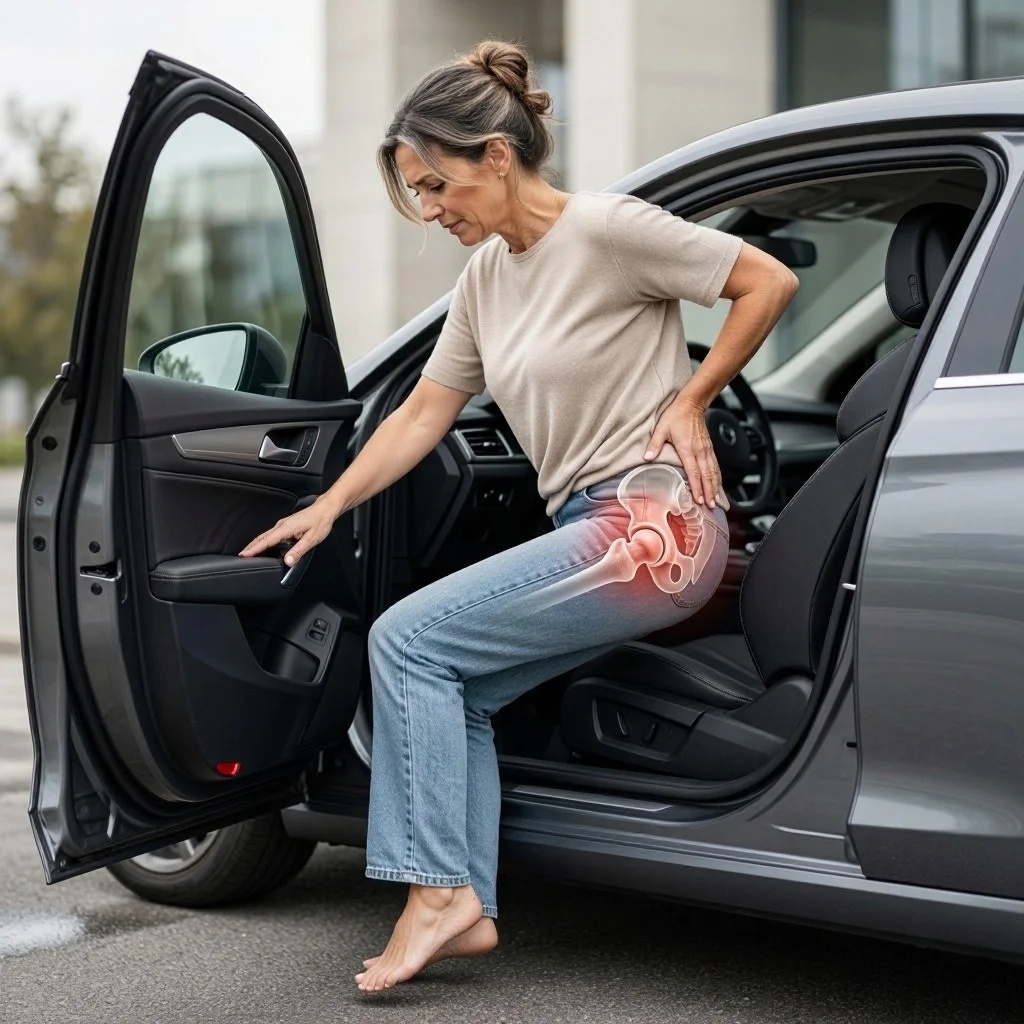
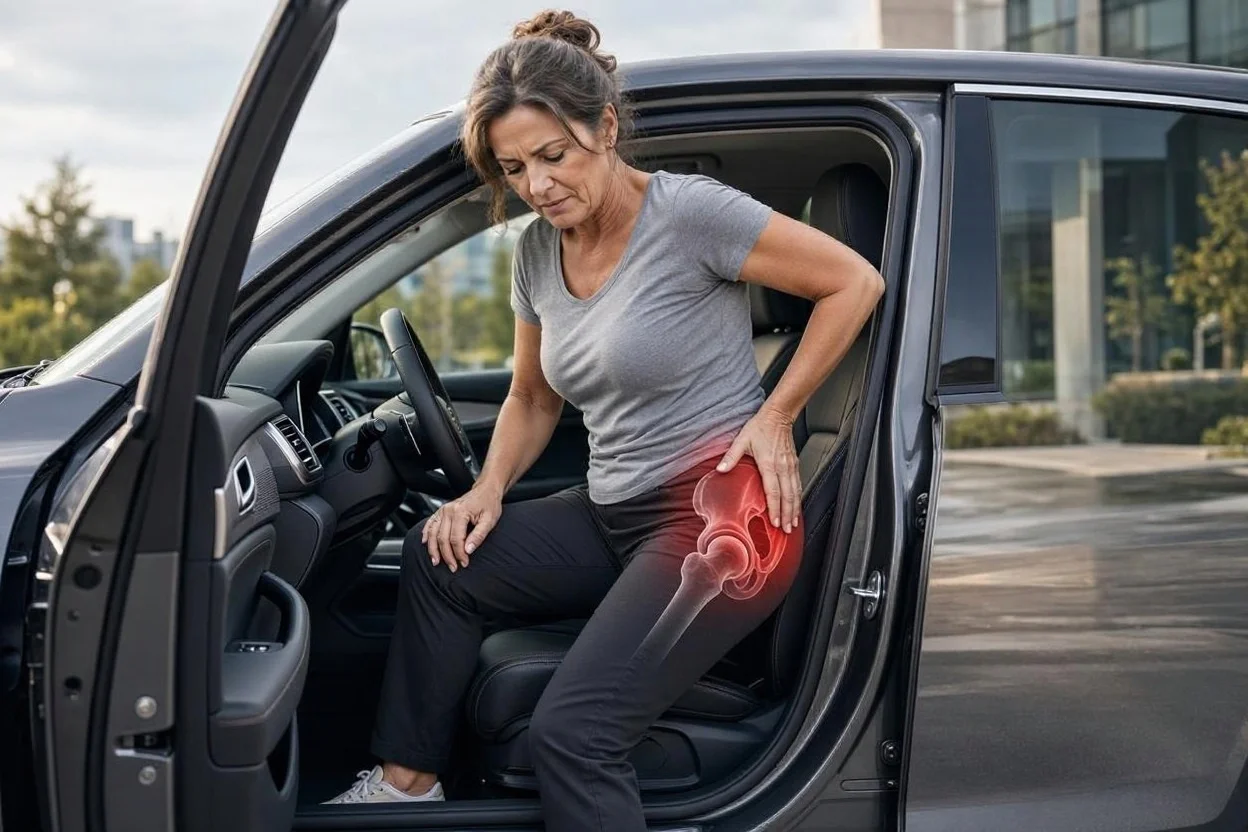
Hip pain when getting out of a car can make a simple everyday activity surprisingly uncomfortable. You may notice a sharp pain when swinging your legs out, stiffness when standing up, or a deep ache around the outside of your hip after sitting during a long drive.
This type of discomfort is relatively common because getting out of a car involves several movements at once. Your hip needs to bend, rotate, and support your body weight as you move from a seated position to standing. If the surrounding muscles, tendons, joints, or other structures are irritated, this movement may trigger pain.
If you are wondering, “Why does my hip hurt when getting out of a car?”, several possible explanations include hip bursitis, tight hip flexors, gluteal tendon problems, osteoarthritis, and irritation around the lower back or pelvis.
The location of your pain, how long it lasts, and whether it occurs during other activities can help identify the possible cause. Understanding these factors is an important first step toward finding appropriate treatment.
Why Does Getting Out of a Car Trigger Hip Pain?
Getting out of a car requires more than simply standing up. Your hips remain bent while you are sitting, and the surrounding muscles may stay in a relatively fixed position throughout the journey.
When you start getting out, your body must:
Move your legs out of the vehicle.
Rotate your hips and pelvis.
Straighten your hip joints.
Activate your gluteal and thigh muscles.
Transfer your body weight onto your feet.
Maintain balance while standing.
If a particular muscle, tendon, or joint is sensitive, one or more of these movements can reproduce your symptoms.
For example, rotating your leg outward may aggravate discomfort around the outer hip, while standing up from a low seat may increase the load on the muscles supporting the hip joint.
Remaining seated for a long time can also contribute to stiffness. This is why some people experience discomfort when leaving a car but feel better after walking for a few minutes.
However, pain during this movement should not automatically be considered a simple result of sitting. Persistent or recurring symptoms may indicate an underlying musculoskeletal problem.
10 Possible Causes of Hip Pain When Getting Out of a Car
1. Hip Flexor Tightness or Irritation
The hip flexors are a group of muscles that help lift your thigh toward your body. They play an important role when walking, climbing stairs, and moving your legs into and out of a vehicle.
Sitting keeps your hips in a bent position. If you spend several hours driving or working at a desk, the hip flexor muscles may become uncomfortable or feel restricted when you stand up.
Common symptoms include:
Pain at the front of the hip.
Tightness around the groin.
Discomfort when straightening your leg.
Stiffness after sitting.
Pain when climbing stairs or lifting your knee.
Hip flexor irritation may become more noticeable when you move from sitting to standing because the muscles must adjust to a different position and movement demand.
What may help?
Taking regular movement breaks and gradually restoring comfortable hip mobility may help. Gentle stretching can be useful in some cases, but avoid forcing the movement if it causes sharp pain.
If discomfort continues, a physiotherapy assessment can help determine whether the hip flexors or another structure is contributing to your symptoms.
2. Greater Trochanteric Pain Syndrome (Hip Bursitis)
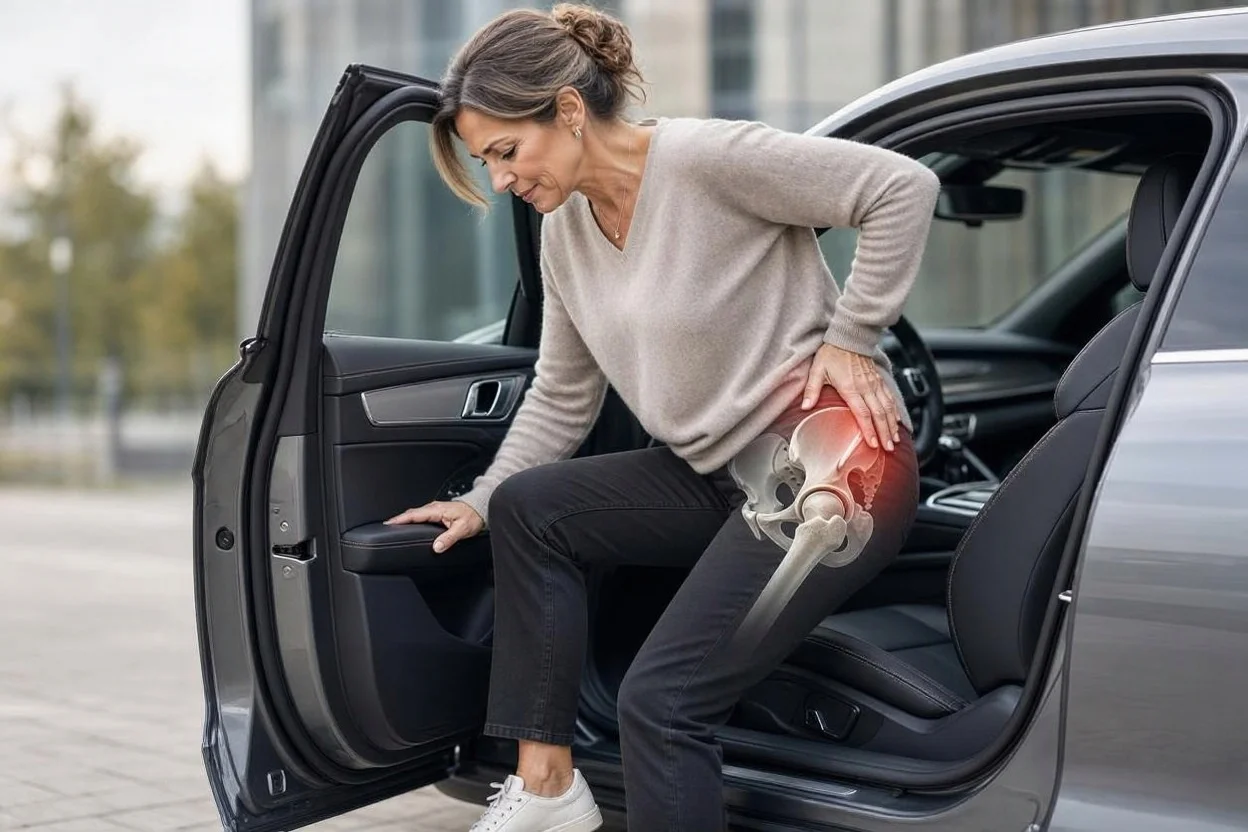
Pain on the outside of the hip is frequently associated with greater trochanteric pain syndrome, which is sometimes referred to as hip bursitis.
The condition involves irritation around the greater trochanter, the bony prominence on the outer side of the upper thigh. It can involve the gluteal tendons and nearby soft tissues, rather than inflammation of a bursa alone.
You may experience:
Pain on the outside of your hip.
Tenderness when pressing the affected area.
Discomfort when lying on that side.
Pain when climbing stairs.
Discomfort after sitting for a long time.
Pain when standing up or getting out of a car.
The movement of turning your body and transferring your weight while exiting a vehicle may increase discomfort around the outer hip.
Greater trochanteric pain syndrome can be associated with changes in activity, repetitive loading, weakness around the hip, or irritation of the gluteal tendons.
Treatment often focuses on managing irritating activities and gradually improving the strength and capacity of the muscles surrounding the hip.
3. Hip Osteoarthritis
Hip osteoarthritis occurs when the joint undergoes gradual changes involving the cartilage and surrounding structures.
As the condition progresses, movements that require hip rotation or bending may become uncomfortable. Getting out of a car can be particularly challenging because it often requires a combination of these movements.
Typical symptoms include:
Pain deep inside the hip or groin.
Stiffness after sitting.
Reduced hip flexibility.
Discomfort when walking.
Difficulty putting on shoes or socks.
Pain when getting into or out of a car.
Some people also experience morning stiffness or discomfort after periods of inactivity.
Hip osteoarthritis is more common with increasing age, although other factors, including previous injuries and certain structural conditions, can contribute.
Treatment depends on symptom severity and individual needs. It may include appropriate exercise, activity modification, weight management when relevant, medication prescribed by a healthcare professional, and physiotherapy.
For more information about movement-related pain and rehabilitation, visit Ritz Clinics’ Physiotherapy in Thornhill.
4. Gluteal Tendinopathy
The gluteal muscles are located around your buttocks and help stabilise your pelvis during standing, walking, and other daily movements.
Their tendons attach to the outer part of the hip. Repeated or excessive loading can irritate these tendons, leading to a condition known as gluteal tendinopathy.
This problem can cause pain when getting out of a car, especially if you experience discomfort on the outside of your hip.
Other symptoms may include:
Pain when standing on one leg.
Discomfort while walking uphill.
Pain when climbing stairs.
Tenderness around the outer hip.
Pain when lying on the affected side.
Discomfort after prolonged sitting.
When you get out of a car, your gluteal muscles help control your pelvis and support your body weight. If their tendons are irritated, this transition may become painful.
Treatment usually involves adjusting activities that aggravate the condition and gradually improving hip strength. A physiotherapist can help select exercises that match your symptoms and current physical capacity.
5. Hip Labral Injury
The hip labrum is a ring of cartilage surrounding the socket of the hip joint. It helps deepen the socket and contributes to joint stability.
A labral tear or irritation can sometimes cause pain during movements involving hip flexion and rotation.
Getting out of a car may reproduce symptoms because your hip moves through several positions during the process.
Possible symptoms include:
Deep pain around the groin.
Clicking or catching sensations.
A feeling of stiffness inside the joint.
Discomfort when twisting the hip.
Pain during prolonged sitting.
Reduced comfort when bending the hip deeply.
Labral problems can occur after an injury or develop alongside structural differences in the hip joint.
Not everyone who experiences clicking has a labral tear. A healthcare professional may recommend a physical examination and, when appropriate, imaging to investigate persistent symptoms.
6. Piriformis and Deep Gluteal Muscle Irritation
The deep muscles around your buttocks help control hip rotation and stabilise the pelvis.
The piriformis is one of these muscles. Irritation in the deep gluteal region can cause discomfort around the buttock and sometimes produce symptoms that extend down the leg.
You may notice:
Deep buttock pain.
Discomfort after prolonged sitting.
Pain when rotating your hip.
Stiffness when standing up.
Pain that sometimes travels toward the back of the thigh.
Getting out of a car can aggravate these symptoms because the hip moves from a bent position into a more extended position.
However, pain around the buttock is not always caused by the piriformis. Lumbar spine problems and nerve irritation can produce similar symptoms, so a proper assessment is important.
7. Sacroiliac Joint Dysfunction
The sacroiliac joints connect the sacrum at the base of your spine to the pelvis.
These joints help transfer forces between your upper body and legs. Problems involving the surrounding structures may contribute to discomfort around the lower back, buttocks, or pelvis.
Some people experience pain when:
Getting out of a car.
Standing up after sitting.
Climbing stairs.
Turning in bed.
Standing on one leg.
The discomfort may occur on one side or around the back of the pelvis.
Sacroiliac joint-related pain can resemble hip or lower back pain. A healthcare professional needs to assess the symptoms and consider other possible causes before identifying this joint as the source.
8. Lumbar Spine Problems and Nerve Irritation
Not all pain that feels like hip pain originates in the hip joint.
The lumbar spine contains nerves that supply the hips and legs. Irritation or compression involving these nerves can sometimes cause pain around the buttocks, outer hip, or thigh.
Possible causes include:
Lumbar disc problems.
Spinal joint irritation.
Nerve root compression.
Spinal stenosis.
You may experience symptoms such as:
Pain extending from the lower back toward the hip.
Tingling or numbness in the leg.
Burning sensations.
Discomfort after prolonged sitting.
Weakness in certain leg muscles.
If your hip pain travels down the leg or occurs alongside numbness, tingling, or weakness, a medical assessment is particularly important.
9. Muscle Strain or Previous Hip Injury
A previous fall, sports injury, sudden twisting movement, or muscle strain may continue to affect hip movement.
Even if the original injury seemed minor, the surrounding muscles and tendons may remain sensitive during certain activities.
Getting out of a car can reproduce pain because the movement combines hip rotation, bending, and weight transfer.
You may also notice discomfort when walking quickly, climbing stairs, bending down, or getting out of a low chair.
If your symptoms began after an injury, especially if you have difficulty bearing weight, do not assume that the problem is simply muscular.
10. Reduced Hip Mobility and Muscle Weakness
Sometimes hip discomfort is associated with reduced mobility or insufficient strength in the muscles that support the joint.
Your hip needs a comfortable range of movement to perform everyday activities. When mobility is restricted, the surrounding muscles may compensate.
Common contributing factors include:
Prolonged sitting.
Low levels of physical activity.
Reduced gluteal strength.
Limited hip rotation.
Previous injuries.
Age-related changes in joint mobility.
You may notice stiffness when getting out of a car, standing after sitting, or taking your first few steps.
A structured rehabilitation programme can help improve mobility, strength, and movement control when these factors contribute to your symptoms.
What Does the Location of Your Hip Pain Tell You?
The location of your discomfort can provide clues about which structures may be involved. However, it cannot confirm a diagnosis on its own.
| Where you feel the pain | Possible causes | Other symptoms |
|---|---|---|
| Front of the hip or groin | Hip flexor irritation, osteoarthritis, labral problems | Pain when bending or rotating the hip |
| Outside of the hip | Greater trochanteric pain syndrome, gluteal tendinopathy | Tenderness when lying on that side |
| Deep in the buttock | Deep gluteal irritation, lower back problems | Pain after prolonged sitting |
| Back of the pelvis | Sacroiliac or lumbar spine-related problems | Discomfort when standing or changing positions |
| Hip pain extending down the leg | Possible nerve irritation or referred pain | Tingling, numbness, or burning |
The NHS also identifies difficulty getting in and out of a car as a possible feature of several hip conditions, including greater trochanteric pain syndrome and osteoarthritis.
How to Reduce Hip Pain When Getting Out of a Car
If your pain is mild and you have no warning signs, changing how you sit and move may help reduce discomfort.
1. Change Your Position Before Standing
Avoid twisting your body suddenly while your feet remain inside the vehicle.
Instead:
Move your seat back slightly if space allows.
Turn your upper body and pelvis together.
Bring both legs out of the car.
Place your feet securely on the ground.
Use your hands for support if needed.
Stand up slowly without forcing your hip.
This approach may make the movement more comfortable, particularly if hip rotation triggers your symptoms.
2. Avoid Sitting for Too Long
If you regularly drive long distances, take breaks when practical.
During these breaks, stand up, walk gently, and change your position. Regular movement may help reduce stiffness associated with prolonged sitting.
3. Avoid Very Low Seats
Low car seats can require greater hip bending when you stand up. If possible, adjust the seat to make getting in and out easier.
Avoid sitting with your knees much higher than your hips for extended periods if this increases your discomfort.
4. Try Gentle Hip Mobility Exercises
Depending on the cause of your pain, gentle mobility exercises may help improve comfortable movement.
Examples include:
Gentle standing hip movements.
Comfortable seated knee lifts.
Slow walking.
Light hip extension movements.
Gentle gluteal activation exercises.
Start with movements that do not significantly increase your symptoms. Avoid aggressive stretching, deep squats, or exercises that reproduce sharp groin or hip pain.
If you are unsure which exercises are appropriate, seek professional guidance.
5. Use Cold or Heat When Appropriate
A cold pack wrapped in a towel may help when the area feels irritated after activity. Apply it for short periods, generally up to 20 minutes.
Some people find gentle warmth more comfortable when stiffness is their main symptom.
Do not apply ice or heat directly to your skin.
How Can Physiotherapy Help With Hip Pain When Getting Out of a Car?
Physiotherapy can be helpful when hip pain is related to muscle weakness, restricted mobility, tendon irritation, joint stiffness, or movement difficulties.
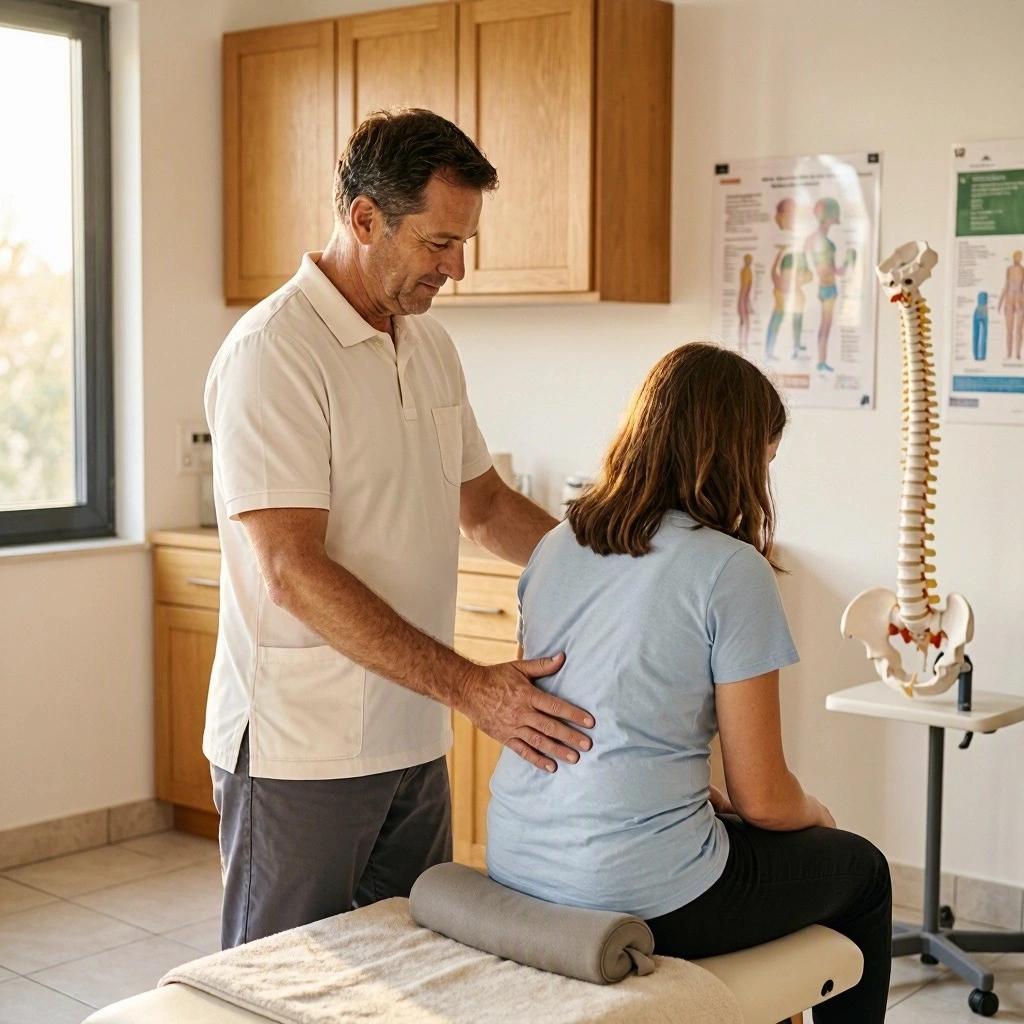
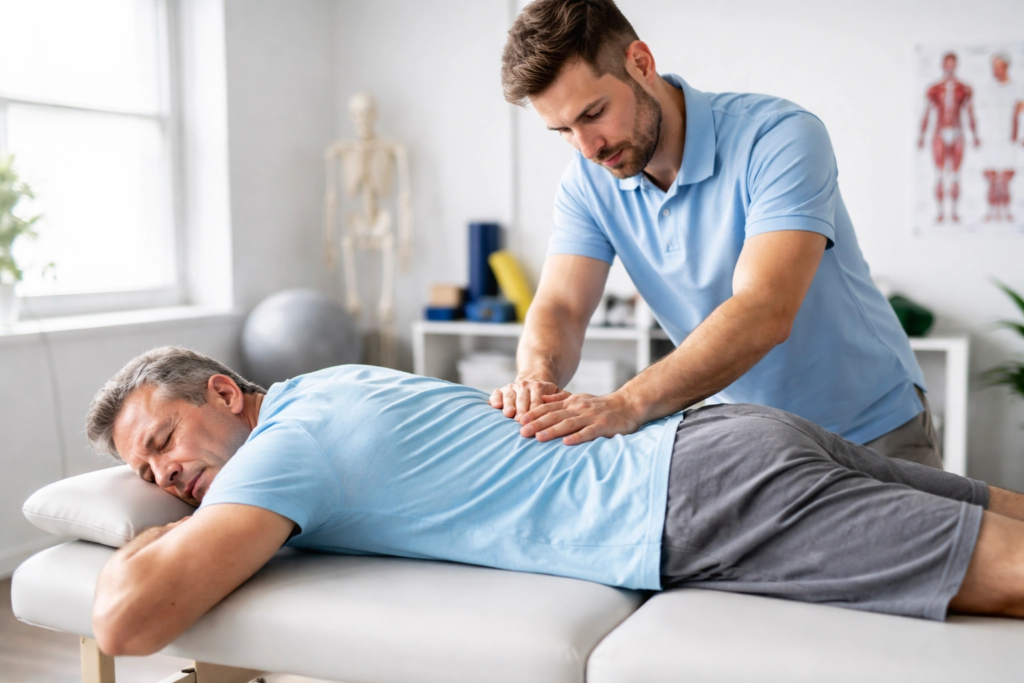
Rather than focusing only on the painful area, a physiotherapist assesses how your hip, pelvis, lower back, and surrounding muscles work together.
What Happens During a Physiotherapy Assessment?
An assessment may include:
1. Medical and symptom history
The physiotherapist asks when your pain started, where you feel it, and which activities make it better or worse.
2. Hip mobility assessment
Your hip movement may be evaluated to identify restrictions in bending, extension, and rotation.
3. Muscle strength testing
The gluteal muscles, hip flexors, and other supporting muscles may be assessed to identify weakness or differences between sides.
4. Functional movement assessment
Your ability to walk, stand up from a chair, balance, and perform other everyday movements may be examined.
5. Individual treatment planning
Your treatment plan may include mobility exercises, strengthening, movement retraining, and advice on modifying activities.
Therapeutic exercise is an important part of managing many musculoskeletal conditions, including hip osteoarthritis. NICE recommends individually tailored strengthening and aerobic exercise for people with osteoarthritis.
Physiotherapy at Ritz Clinics in Thornhill
If hip pain makes driving, walking, climbing stairs, or everyday movements uncomfortable, professional assessment may help identify the factors contributing to your symptoms.
At Ritz Clinics – Physiotherapy in Thornhill, treatment can be tailored to your movement limitations, physical condition, and rehabilitation goals.
Depending on the assessment findings, your physiotherapy programme may focus on:
Improving hip mobility.
Strengthening the muscles around the hip and pelvis.
Improving balance and movement control.
Reducing movement-related discomfort.
Restoring confidence during everyday activities.
Supporting a gradual return to normal physical activity.
The goal is not simply to reduce discomfort when leaving your car. It is to help you move more comfortably during other daily activities as well.
When Should You See a Healthcare Professional?
Although some cases of hip pain improve with appropriate activity modification and rehabilitation, certain symptoms require medical attention.
Arrange a medical assessment if:
Your hip pain keeps returning.
Discomfort is getting progressively worse.
Pain interferes with walking or sleeping.
You have difficulty putting on shoes or socks.
Your hip feels increasingly stiff.
You notice persistent clicking or catching with pain.
Symptoms have not improved after around two weeks of self-care.
Seek urgent medical advice if your hip suddenly becomes severely painful, hot, or swollen, particularly if you have a fever or feel unwell.
If you experience severe pain following a fall or injury, cannot walk or put weight on your leg, or develop numbness or loss of sensation following an injury, seek emergency medical care.
Frequently Asked Questions
1. Why does my hip hurt when I get out of a car but not when I walk?
Sitting keeps your hip in a bent position. Getting out requires rotation, extension, and weight transfer. Certain hip conditions may be aggravated by these movements even if ordinary walking feels relatively comfortable.
2. Why does the outside of my hip hurt when getting out of a car?
Pain on the outside of the hip may be associated with greater trochanteric pain syndrome or gluteal tendinopathy. These conditions can cause tenderness and discomfort when standing, climbing stairs, lying on the affected side, or moving your leg out of a car.
3. Can sitting in a car cause hip bursitis?
Prolonged sitting may contribute to discomfort around the hip, particularly when combined with pressure or restricted movement. However, sitting alone does not necessarily cause bursitis. Greater trochanteric pain syndrome can involve irritation of the gluteal tendons and surrounding tissues.
4. Why does my groin hurt when I stand up after driving?
Groin pain during this movement may be associated with hip osteoarthritis, hip flexor irritation, or problems involving the structures inside the hip joint. Persistent groin pain should be assessed to identify the underlying cause.
5. Is hip pain after sitting a sign of arthritis?
It can be. Hip osteoarthritis commonly causes stiffness and pain after periods of rest or sitting. However, tendon problems, muscle irritation, and other conditions can produce similar symptoms.
6. Can weak glute muscles cause hip pain when getting out of a car?
Weakness or reduced control of the gluteal muscles may affect how your pelvis and hip handle body weight. This can contribute to discomfort, particularly when tendon irritation or other movement problems are also present.
7. Should I stretch my hip if it hurts when getting out of a car?
Gentle stretching may help some people, especially when stiffness contributes to discomfort. However, stretching is not appropriate for every hip condition. Avoid forcing painful movements and seek guidance if symptoms persist.
8. Can physiotherapy improve hip mobility?
Yes. Depending on the underlying problem, physiotherapy may use targeted exercises, mobility training, strengthening, and movement education to improve hip function and reduce discomfort.
9. How long does hip pain after sitting take to improve?
Recovery depends on the cause, severity, and individual circumstances. Mild movement-related discomfort may improve over several weeks, while osteoarthritis and persistent tendon problems may require longer-term management.
10. When should I worry about hip pain when getting out of a car?
Sudden severe pain, inability to bear weight, a hot or swollen hip, fever, or significant pain following an injury requires prompt medical attention. Recurring pain that affects everyday activities also deserves professional assessment.
Conclusion
Hip pain when getting out of a car can have several causes, ranging from temporary muscle tightness to tendon irritation, hip osteoarthritis, or problems involving the lower back.
The movement itself places different demands on your hip because you need to bend, rotate, and support your body weight while standing. If one of the structures involved is irritated or restricted, getting out of a vehicle may become uncomfortable.
Pay attention to where the pain occurs, whether it improves after walking, and whether you experience other symptoms such as stiffness, weakness, or tingling.
Gentle movement, suitable seating adjustments, and avoiding prolonged periods in one position may help. However, persistent or worsening symptoms should be assessed by a healthcare professional.
With an appropriate diagnosis and an individualised rehabilitation plan, many people can improve their hip mobility and return to everyday activities with greater comfort.
NHS Inform – Greater Trochanteric Pain Syndrome
Summary Table: Hip Pain When Getting Out of a Car
| Possible cause | Common symptoms | Recommended approach |
|---|---|---|
| Hip flexor tightness | Front hip pain, groin tightness, stiffness after sitting | Gentle mobility and movement breaks |
| Greater trochanteric pain syndrome | Outer hip pain, tenderness, discomfort when lying on one side | Activity modification and targeted rehabilitation |
| Hip osteoarthritis | Deep hip or groin pain, stiffness, reduced mobility | Individualised exercise and physiotherapy |
| Gluteal tendinopathy | Outer hip pain, discomfort when climbing stairs or standing on one leg | Gradual strengthening and load management |
| Hip labral injury | Deep groin pain, clicking, catching, pain with rotation | Clinical assessment and appropriate treatment |
| Deep gluteal muscle irritation | Buttock pain, discomfort after prolonged sitting | Movement assessment and targeted rehabilitation |
| Sacroiliac joint-related pain | Pain around the back of the pelvis and buttock | Assessment of pelvic and lower-back movement |
| Lumbar spine problems | Hip or buttock pain with possible tingling or numbness | Medical assessment and appropriate rehabilitation |
| Previous muscle injury | Pain during twisting, standing, or walking | Gradual recovery and guided exercises |
| Reduced hip mobility or muscle weakness | Stiffness when standing and difficulty changing positions | Mobility and strengthening exercises |