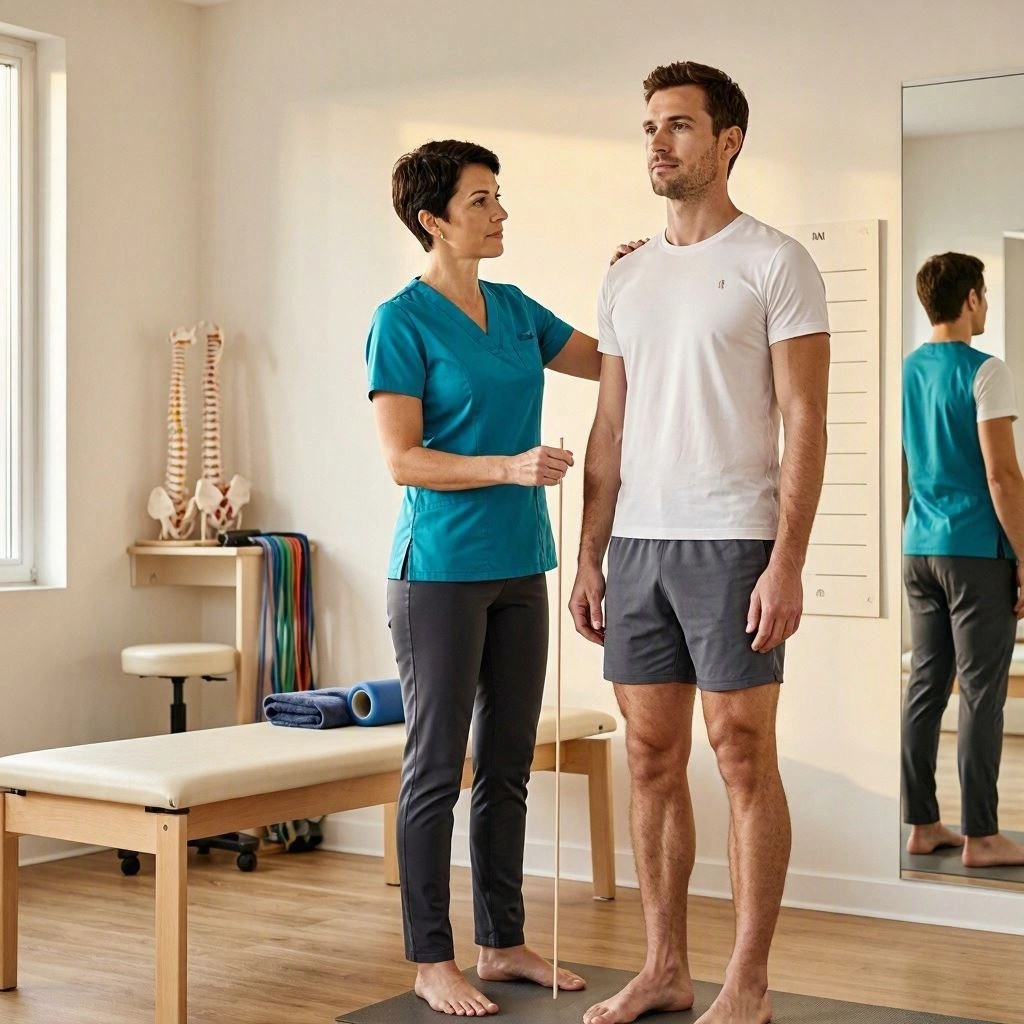
Physiotherapy for Body Alignment: A Complete Guide to Posture, Movement, and Physical Balance
Physiotherapy for body alignment focuses on understanding how the different parts of the body work together during standing, sitting, walking, exercise, and everyday movement. Good alignment is not simply about maintaining a perfectly straight posture. Instead, effective body alignment involves the ability to control and coordinate the body while adapting to different physical activities.
Poor movement habits, muscle weakness, joint restrictions, previous injuries, prolonged sitting, repetitive activities, and certain physical conditions can influence how a person moves. These changes may sometimes contribute to discomfort, reduced mobility, or difficulty performing certain activities.
Physiotherapy can assess movement patterns and identify areas of weakness, reduced mobility, balance limitations, or poor movement control. Treatment may include strengthening exercises, mobility training, postural education, balance exercises, movement retraining, and functional rehabilitation.
The goal is to help individuals develop efficient movement strategies that support their everyday activities and physical goals.
What Is Body Alignment?
Body alignment describes the relationship and positioning of different body segments during movement and static positions.
These areas include:
Head and neck
Shoulders
Spine
Pelvis
Hips
Knees
Ankles
Feet
Alignment changes naturally depending on the activity.
For example, the body position used while sitting at a desk is different from the position used during running, lifting, or climbing stairs.
Therefore, physiotherapy for body alignment focuses not only on static posture but also on movement control.
Why Body Alignment Matters
Efficient movement requires coordination between multiple parts of the body.
If one area becomes weak or restricted, another area may compensate.
For example, reduced ankle mobility may influence how someone performs a squat. Similarly, limited hip mobility may change movement around the lower back.
Physiotherapy can help identify these relationships and address relevant physical limitations.
Common Factors That Affect Body Alignment (Physiotherapy for Body Alignment)
Many factors can influence alignment and movement.
These may include:
Muscle weakness
Joint stiffness
Previous injuries
Repetitive activities
Prolonged sitting
Reduced physical activity
Poor movement habits
Balance problems
Muscle imbalance
Changes associated with aging
Not every alignment difference causes pain or requires treatment.
A physiotherapy assessment can help determine whether a particular movement pattern is functionally significant.
Physiotherapy Body Alignment Assessment
A physiotherapist may begin with a detailed movement assessment.
The assessment may include:
Posture observation
Joint mobility
Muscle strength
Balance
Flexibility
Walking
Squatting
Lunging
Reaching
Functional movement
The physiotherapist may also discuss the individual’s work environment, physical activity, previous injuries, and personal goals.
Posture and Body Alignment
Posture refers to how the body is positioned during different activities.
There is no single perfect posture that every person must maintain.
Modern physiotherapy generally recognizes that the body needs to move and adapt.
Instead of trying to hold one rigid position all day, treatment may focus on:
Movement variety
Physical capacity
Postural endurance
Strength
Mobility
Comfortable movement
Changing position regularly can be especially useful during long periods of sitting.
Forward Head Posture
Forward head positioning is often discussed in relation to prolonged screen use and desk work.
It may be associated with increased muscular demand around the neck and upper back.
Physiotherapy may address:
Neck mobility
Upper-back mobility
Shoulder strength
Postural endurance
Movement habits
Exercises should be individualized rather than based solely on visual posture.
Rounded Shoulders (Physiotherapy for Body Alignment)
Some people develop a tendency to position the shoulders forward, particularly during prolonged desk work.
A physiotherapist may assess:
Shoulder mobility
Thoracic mobility
Upper-back strength
Scapular control
Exercises may include:
Rowing movements
Shoulder strengthening
Thoracic mobility exercises
Scapular control exercises
The goal is to improve movement capacity rather than force the shoulders into a rigid position.
Pelvic Alignment
The pelvis connects the spine with the lower limbs and plays an important role in movement.
Pelvic position can change during:
Walking
Running
Squatting
Sitting
Standing
Physiotherapy may assess hip strength, trunk control, lower-limb mobility, and functional movement.
Treatment should focus on the individual’s functional limitations rather than attempting to maintain one fixed pelvic position at all times.
Hip Alignment and Movement
The hips contribute significantly to walking, running, squatting, and jumping.
Weakness around the hips can influence lower-limb control.
Physiotherapy may use exercises targeting:
Gluteal muscles
Hip abductors
Hip extensors
Core muscles
Exercises can include:
Bridges
Side steps
Step-ups
Split squats
Hip strengthening exercises
Knee Alignment
Knee movement is influenced by the hip, ankle, foot, and surrounding muscles.
Physiotherapists may assess knee control during:
Squatting
Walking
Stepping
Running
Jumping
Rehabilitation may address strength, mobility, balance, and movement technique.
Foot and Ankle Alignment
The feet provide the body’s connection with the ground.
Foot and ankle function can influence movement throughout the lower limb.
A physiotherapist may evaluate:
Ankle mobility
Calf strength
Balance
Walking
Foot control
Exercises may include calf strengthening, ankle mobility, balance training, and functional movement.
Spine and Body Alignment
The spine naturally has curves that contribute to movement and load distribution.
Physiotherapy does not aim to eliminate normal spinal curves.
Instead, treatment may focus on:
Spinal mobility
Trunk strength
Movement control
Functional capacity
Exercises can help people develop confidence and control during daily activities.
Body Alignment and Muscle Strength (Physiotherapy for Body Alignment)
Strength plays an important role in movement control.
Weakness may make it harder to maintain or control certain positions during physical activity.
A strengthening program may target:
Core
Hips
Legs
Back
Shoulders
Exercises are progressively adjusted as the individual’s strength improves.
Core Stability and Alignment
Core stability refers to the ability to control the trunk during movement.
Exercises may include:
Planks
Side planks
Bridges
Bird dogs
Dead bugs
Loaded carries
Core exercises can support movement control, but they should generally be part of a broader rehabilitation program.
Mobility and Body Alignment
Restricted mobility can influence movement patterns.
Common areas assessed include:
Ankles
Hips
Thoracic spine
Shoulders
Neck
Mobility exercises may be used when restrictions are relevant to the person’s functional limitations.
The objective is not necessarily to achieve maximum flexibility but to develop adequate movement for the individual’s activities.
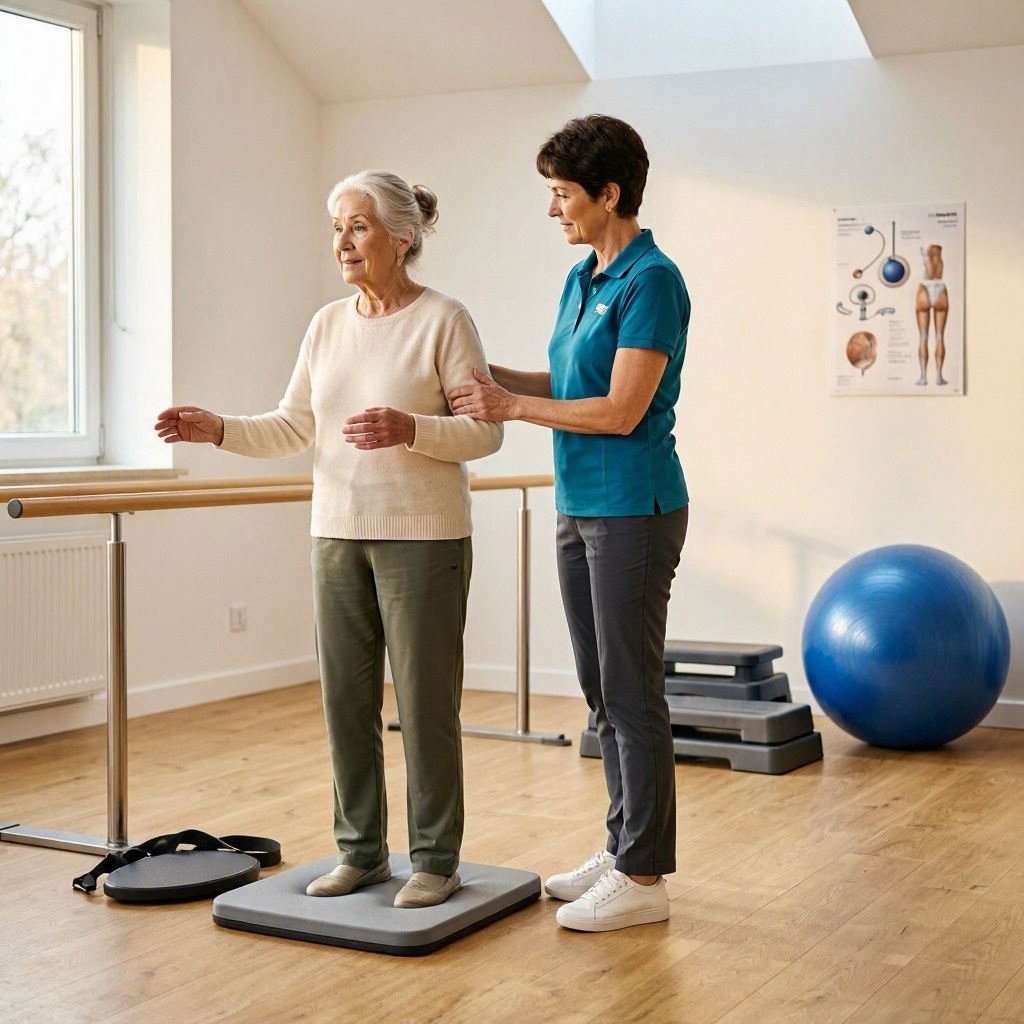
Balance Training
Balance training can help people develop better control during standing and movement.
Exercises may include:
Single-leg standing
Weight shifting
Step exercises
Reaching
Walking drills
Dynamic balance activities
The exercises can become progressively more challenging.
Body Alignment During Walking
Walking involves coordinated movement of the head, trunk, pelvis, hips, knees, ankles, and feet.
A physiotherapist may evaluate:
Step length
Walking speed
Foot placement
Balance
Hip movement
Knee control
Trunk movement
If relevant limitations are identified, treatment can incorporate gait training and targeted strengthening.
Body Alignment During Squats
The squat is a useful functional movement for assessing lower-body control.
A physiotherapist may observe:
Hip movement
Knee control
Ankle mobility
Trunk position
Balance
If difficulties are identified, exercises may be used to address the underlying limitations.
The objective is not to force every individual into exactly the same squat technique. Movement should be adapted to body structure, mobility, strength, and activity requirements.
Body Alignment During Running
Running requires repeated coordination between the lower limbs and trunk.
Sports physiotherapy may assess:
Running mechanics
Cadence
Strength
Mobility
Balance
Training volume
Rehabilitation may include running drills, strengthening, mobility work, and gradual workload progression.
Body Alignment and Workplace Ergonomics
Work environments can influence physical comfort and movement habits.
A physiotherapist may provide ergonomic guidance related to:
Desk height
Chair setup
Monitor position
Keyboard placement
Standing arrangements
However, ergonomics should not be viewed as simply finding one perfect workstation position.
Regular movement and changing positions are also important.
Physiotherapy for Desk Workers
People who spend many hours sitting may experience discomfort involving the:
Neck
Shoulders
Upper back
Lower back
Hips
Physiotherapy may combine exercise and workplace recommendations.
A program could include:
Neck mobility
Shoulder strengthening
Upper-back exercises
Hip mobility
Core strengthening
Short movement breaks throughout the working day can also be helpful.
Body Alignment After Injury
Injury can temporarily change how a person moves.
Pain or weakness may cause someone to avoid loading one side of the body.
Over time, this can affect movement patterns.
Physiotherapy may gradually restore:
Strength
Mobility
Balance
Confidence
Functional movement
Rehabilitation should respect tissue healing and medical restrictions.
Body Alignment After Surgery
Surgery may temporarily affect posture and movement.
A physiotherapist can create a progressive rehabilitation program based on the surgical procedure.
Treatment may involve:
Safe movement
Mobility
Muscle activation
Strengthening
Functional activities
Return to normal activity
The exact progression varies between procedures.
Body Alignment and Muscle Imbalance
Muscle imbalance is often discussed in relation to posture and alignment.
However, differences in muscle strength are not automatically a problem.
A physiotherapist can determine whether a strength difference is affecting function.
If appropriate, exercises can target specific muscle groups.
Movement Retraining (Physiotherapy for Body Alignment)
Movement retraining involves practicing physical activities with attention to control and coordination.
It can be used for:
Squatting
Lifting
Walking
Running
Reaching
Stepping
Jumping
The objective is to develop movement strategies that are appropriate for the individual’s physical requirements.
Functional Alignment Training
Body alignment should support real-life activities.
Functional training may involve:
Getting out of a chair
Carrying objects
Climbing stairs
Lifting
Reaching
Walking
Practicing these movements can help connect rehabilitation exercises with everyday life.
Manual Therapy and Body Alignment
Manual therapy may sometimes be included when joint or soft-tissue mobility is relevant to the individual’s limitations.
Techniques may include:
Joint mobilization
Soft-tissue techniques
Movement-assisted techniques
Manual therapy can complement active rehabilitation.
It should not necessarily replace strengthening, mobility work, or functional training.
Technology for Alignment Assessment
Modern physiotherapy clinics may use technology to assess movement.
Examples can include:
Video analysis
Digital posture assessment
Movement-tracking systems
Balance testing
Strength measurement
Technology can provide useful information, but visual or digital measurements should be interpreted alongside clinical assessment.
Does Poor Posture Always Cause Pain?
Not necessarily.
Posture and pain are complex and influenced by many factors.
Pain can be affected by:
Injury
Physical activity
Sleep
Stress
General health
Previous experiences
Training load
Therefore, it is usually too simplistic to say that one posture automatically causes pain.
Physiotherapy focuses on the individual’s complete physical and functional situation.
Exercises for Better Body Alignment
Depending on the individual’s needs, exercises may include:
Strength Exercises
Squats
Bridges
Rows
Step-ups
Lunges
Mobility Exercises
Hip mobility
Thoracic rotation
Ankle mobility
Shoulder mobility
Balance Exercises
Single-leg standing
Weight shifting
Step training
Core Exercises
Bird dogs
Planks
Side planks
Dead bugs
The appropriate exercises depend on the assessment.
How Often Should Alignment Exercises Be Performed?
Frequency depends on the individual’s condition and rehabilitation goals.
Some exercises may be prescribed several times per week, while mobility or movement drills may be appropriate more frequently.
The most important consideration is creating a manageable routine that can be performed consistently.
How Long Does Physiotherapy for Body Alignment Take?
Recovery timelines vary.
Factors include:
Current physical condition
Severity of limitations
Previous injuries
Strength
Mobility
Exercise consistency
Lifestyle
Treatment goals
Some people may notice improvements in movement relatively quickly, while others require longer-term rehabilitation.
There is no universal treatment timeline.
Choosing a Physiotherapist for Body Alignment
When selecting a physiotherapist, consider their experience with:
Posture assessment
Movement rehabilitation
Musculoskeletal conditions
Sports rehabilitation
Functional training
A good assessment should focus on your individual movement patterns and goals rather than simply labeling your posture as “good” or “bad.”
When Should You Seek Physiotherapy?
Consider a physiotherapy assessment if alignment or movement concerns are associated with:
Persistent pain
Reduced mobility
Muscle weakness
Balance problems
Difficulty exercising
Recurrent injuries
Difficulty walking
Reduced functional ability
A professional assessment can determine whether rehabilitation is appropriate.
When Medical Assessment Is Important
Some symptoms require medical evaluation rather than routine physiotherapy.
These include:
Sudden weakness
Sudden numbness
Severe pain following major trauma
Loss of bladder or bowel control
Significant neurological changes
Chest pain
Difficulty breathing
Sudden changes in speech or vision
These symptoms may indicate a serious medical condition.
Maintaining Good Movement Long Term
Body alignment is not something that needs to be constantly monitored.
A healthy long-term approach can include:
Regular physical activity
Strength training
Mobility exercises
Balance activities
Movement variety
Appropriate recovery
Maintaining physical capacity allows the body to adapt to different activities.
Conclusion
Physiotherapy for body alignment is a comprehensive approach to understanding and improving how the body moves. Rather than focusing only on achieving a particular static posture, modern physiotherapy considers strength, mobility, balance, coordination, movement control, and functional capacity.
Body alignment involves many interconnected areas, including the head, neck, spine, shoulders, pelvis, hips, knees, ankles, and feet. Changes in one area can sometimes influence movement elsewhere, making a complete assessment valuable.
Treatment may include therapeutic exercise, progressive strengthening, mobility training, balance exercises, movement retraining, functional rehabilitation, ergonomic education, and manual therapy when appropriate.
It is also important to understand that there is no single perfect posture for everyone. People naturally move through different positions during work, exercise, rest, and everyday activities. The goal of physiotherapy is generally to improve physical capacity and movement options rather than force the body into one rigid alignment.
For individuals experiencing pain, weakness, mobility restrictions, balance problems, or movement difficulties, a personalized physiotherapy assessment can help identify relevant physical factors and establish an appropriate rehabilitation program.
With consistent exercise and appropriate progression, individuals can develop better strength, mobility, movement control, and confidence. These improvements can support everyday activities, exercise, sports participation, and long-term physical function.