Shoulder Pain Physiotherapy Thornhill: Complete Guide to Shoulder Pain Treatment
Shoulder pain can make many ordinary activities surprisingly difficult. Reaching for an object, putting on a jacket, lifting groceries, sleeping on your side, working at a computer, or participating in sports can all become uncomfortable when the shoulder is injured or irritated. For people searching for Shoulder Pain Physiotherapy Thornhill, physiotherapy can provide a structured approach to improving shoulder movement, strength, function, and confidence.
The shoulder is one of the most mobile areas of the body. This large range of movement allows us to reach overhead, rotate the arm, throw, lift, push, and pull. However, the shoulder’s mobility also means that several muscles, tendons, joints, and surrounding structures work together to produce smooth movement.
Shoulder pain can develop after an injury, repetitive activity, sports participation, prolonged work, or gradually over time. Common problems include rotator cuff-related pain, tendinopathy, frozen shoulder, instability, arthritis, muscle strains, and injuries following falls or accidents.
For residents looking for Shoulder Pain Physiotherapy Thornhill, understanding the possible causes of shoulder pain and the role of physiotherapy can help make the rehabilitation process easier to understand.
What Causes Shoulder Pain?
Shoulder pain can have many different causes. Some problems develop suddenly after an injury, while others appear gradually.
Common causes include:
-
Sports injuries
-
Muscle strains
-
Rotator cuff problems
-
Tendinopathy
-
Shoulder instability
-
Frozen shoulder
-
Arthritis
-
Repetitive overhead activities
-
Falls
-
Motor vehicle accidents
-
Work-related strain
-
Reduced shoulder mobility
The location and behavior of the pain can provide useful information, but pain alone cannot always identify the exact source of a shoulder problem.
For this reason, a proper clinical assessment is an important first step.
Common Symptoms of Shoulder Problems
Shoulder problems can produce different symptoms depending on the condition.
Common symptoms include:
-
Shoulder pain
-
Stiffness
-
Weakness
-
Reduced range of motion
-
Pain when reaching overhead
-
Difficulty reaching behind the back
-
Pain when lifting
-
Pain when sleeping on the affected side
-
Clicking or catching sensations
-
Reduced ability to exercise
-
Difficulty performing work tasks
Some people experience pain primarily during movement, while others may have discomfort even while resting.
If shoulder pain is severe, rapidly worsening, or follows significant trauma, medical evaluation may be appropriate.
What Is Shoulder Pain Physiotherapy?
Shoulder Pain Physiotherapy Thornhill focuses on the assessment and rehabilitation of shoulder-related movement and functional problems.
A physiotherapist may evaluate:
-
Shoulder range of motion
-
Muscle strength
-
Joint movement
-
Scapular movement
-
Upper-back mobility
-
Posture
-
Functional movement
-
Pain during specific activities
The findings can then be used to develop an individualized rehabilitation program.
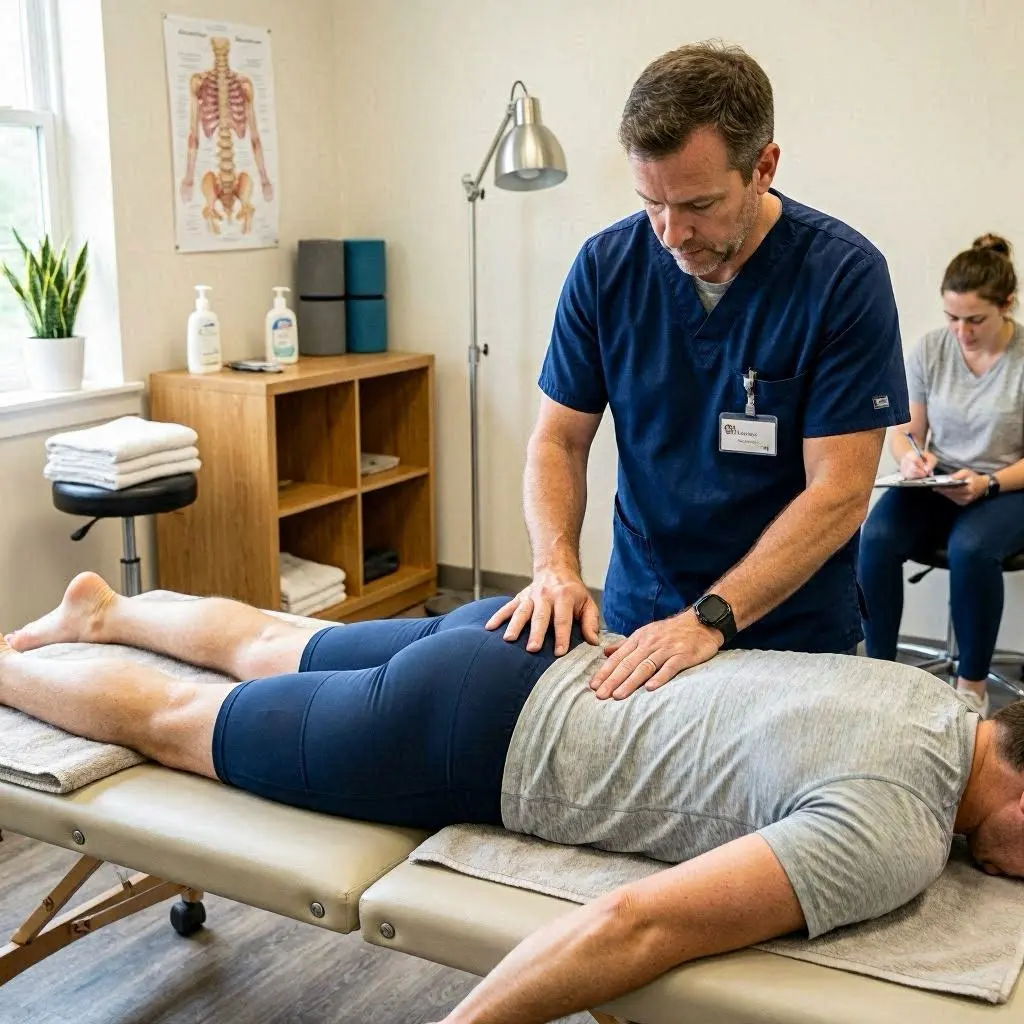
Treatment may include therapeutic exercise, strengthening, mobility work, manual therapy, movement education, and gradual return to normal activities.
Thornhill physiotherapy providers describe treatment approaches that can include biomechanical assessment, customized treatment plans, hands-on techniques, stretching, strengthening, joint mobilization, and patient education.
Why Is a Shoulder Assessment Important?
Shoulder pain does not always have the same cause.
For example, a person with frozen shoulder may have significant restrictions in movement, while someone with rotator cuff-related pain may have relatively good mobility but experience pain or weakness during certain movements.
A detailed assessment can help determine:
-
Which movements are limited
-
Which activities reproduce symptoms
-
Whether strength is reduced
-
Whether stiffness is present
-
How the shoulder functions during everyday tasks
-
Whether other areas contribute to the problem
This information allows rehabilitation to be tailored to the individual’s needs.
Physiotherapy for Rotator Cuff Problems (Shoulder Pain Physiotherapy Thornhill)
The rotator cuff is a group of muscles and tendons that contributes to shoulder movement and stability.
Rotator cuff-related problems can develop gradually or following an injury.
Symptoms may include:
-
Pain when lifting the arm
-
Pain reaching overhead
-
Shoulder weakness
-
Discomfort when sleeping
-
Difficulty performing certain exercises
Physiotherapy may focus on gradually improving shoulder strength and movement.
A rehabilitation program can include exercises targeting the rotator cuff, shoulder blade muscles, upper back, and other areas that contribute to shoulder function.
The progression should be based on the person’s symptoms and physical capacity.
Physiotherapy for Shoulder Tendinopathy
Tendinopathy can develop when a tendon is unable to tolerate the amount of load being placed on it.
Shoulder tendinopathy can be associated with repetitive lifting, overhead activity, sports, or changes in training volume.
Treatment often focuses on managing load and gradually rebuilding tendon capacity.
A physiotherapist may introduce:
-
Isometric exercises
-
Resistance exercises
-
Progressive strengthening
-
Shoulder mobility
-
Functional exercises
-
Gradual return to overhead activity
The goal is to help the shoulder tolerate progressively greater demands.
Simply avoiding all shoulder movement for an extended period may not be the best long-term strategy for many people.
Frozen Shoulder Physiotherapy (Shoulder Pain Physiotherapy Thornhill)
Frozen shoulder, also called adhesive capsulitis, can cause substantial pain and progressive stiffness.
People may have difficulty:
-
Raising their arm
-
Reaching behind their back
-
Getting dressed
-
Reaching overhead
-
Washing their hair
-
Sleeping comfortably
Frozen shoulder can significantly affect everyday independence.
Physiotherapy may focus on managing symptoms and gradually restoring mobility.
Treatment can include:
-
Gentle mobility exercises
-
Stretching
-
Joint mobilization
-
Functional movement
-
Progressive strengthening
Some specialized Thornhill rehabilitation programs combine medical management with an individualized physiotherapy program designed to restore shoulder mobility and function.
Because frozen shoulder can vary considerably between individuals, treatment should be adjusted according to the stage and severity of the condition.
Shoulder Arthritis and Physiotherapy
Arthritis can affect the shoulder joint and contribute to pain, stiffness, and reduced movement.
Shoulder arthritis may make activities such as reaching into cupboards, dressing, lifting, or fastening a seat belt more difficult.
Physiotherapy may help maintain useful mobility and strength.
A rehabilitation program can include:
-
Range-of-motion exercises
-
Strengthening
-
Functional movement
-
Activity modification
-
Education
-
Pain-management strategies
The goal is often to preserve function and help the person remain active.
Thornhill clinics serving the area list shoulder osteoarthritis among the conditions managed through physiotherapy and rehabilitation.
Shoulder Instability
Some people experience a feeling that the shoulder is slipping, moving excessively, or becoming unstable.
Instability can develop following an injury or may be related to the individual’s anatomy and movement patterns.
Rehabilitation may focus on improving:
-
Rotator cuff strength
-
Shoulder blade control
-
Coordination
-
Proprioception
-
Functional stability
Athletes involved in throwing, contact sports, or activities requiring rapid shoulder movement may require sport-specific rehabilitation before returning to full activity.
Shoulder Pain After a Fall or Accident (Shoulder Pain Physiotherapy Thornhill)
Shoulder pain can occur following a fall, collision, or other traumatic event.
In these situations, the first priority is determining whether there may be a more serious injury.
Depending on the circumstances, medical assessment or imaging may be necessary.
Once serious injury has been appropriately evaluated, physiotherapy may become part of the rehabilitation process.
Treatment can focus on gradually restoring:
-
Range of motion
-
Strength
-
Stability
-
Functional movement
-
Confidence
The rehabilitation timeline depends on the injury.
Shoulder Pain From Sports
Athletes often place substantial demands on their shoulders.
Sports such as:
-
Tennis
-
Swimming
-
Volleyball
-
Baseball
-
Basketball
-
Weightlifting
-
Golf
can involve repetitive shoulder movement.
Shoulder rehabilitation for athletes should consider the demands of the specific sport.
A tennis player, for example, may eventually need exercises related to serving and overhead movement, while a weightlifter may require progressive preparation for pressing and pulling exercises.
The final stage of rehabilitation should therefore be functional and activity-specific.
Shoulder Pain From Desk Work
Although desk work does not necessarily cause shoulder injuries, prolonged static positions and repetitive computer use can contribute to discomfort in the neck, upper back, and shoulder region.
People who spend long hours at a computer may benefit from:
-
Regular movement breaks
-
Shoulder mobility exercises
-
Upper-back strengthening
-
Ergonomic adjustments
-
Postural endurance exercises
Instead of trying to maintain one perfect posture for hours, changing positions regularly can be a practical strategy.
What Happens During a Shoulder Physiotherapy Assessment?
The first appointment generally begins with a discussion about the problem.
The physiotherapist may ask:
-
When did the pain begin?
-
Was there an injury?
-
What activities make the pain worse?
-
Is there pain at rest?
-
Does it affect sleep?
-
Can you lift your arm?
-
Do you participate in sports?
-
What work activities are difficult?
-
Have you had previous shoulder problems?
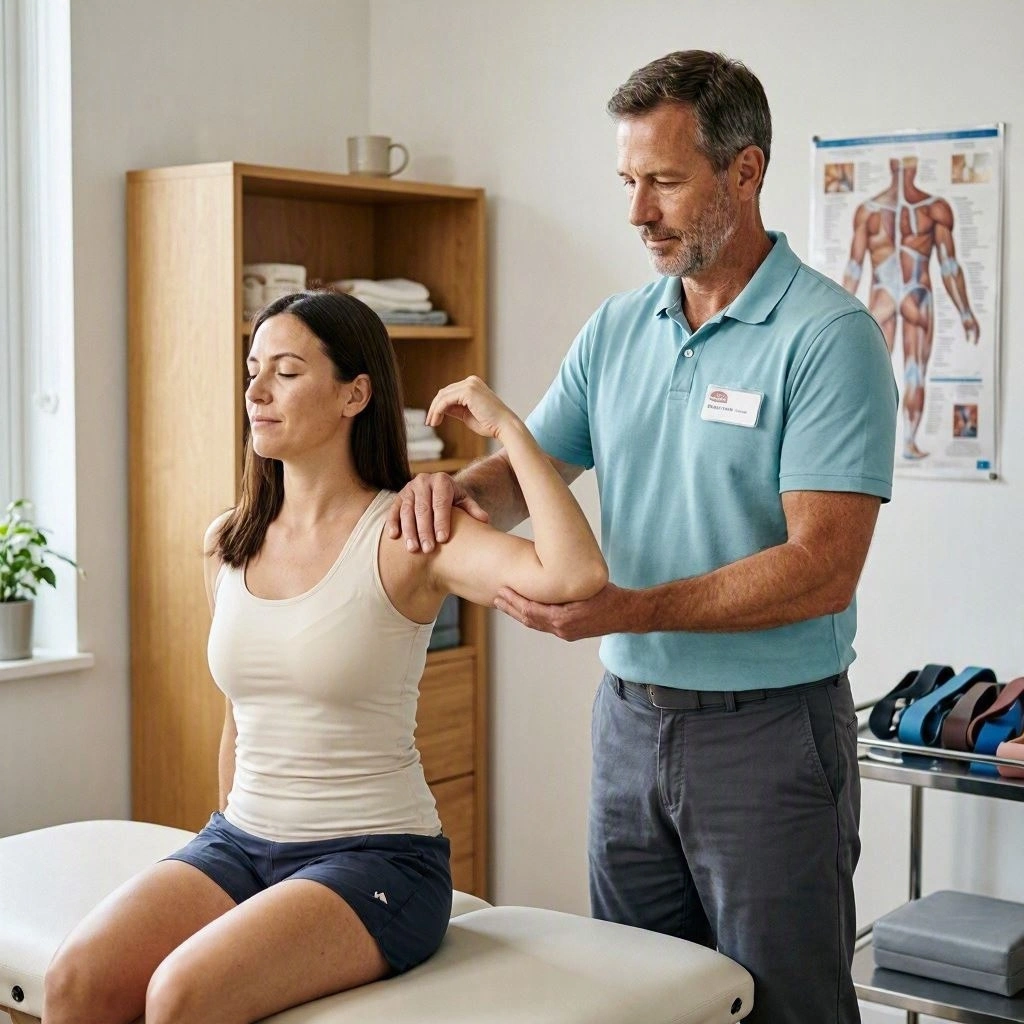
A physical assessment can then examine movement and function.
The physiotherapist may assess the shoulder, shoulder blade, upper back, and related areas.
This helps establish a baseline for rehabilitation.
Therapeutic Exercise for Shoulder Pain (Shoulder Pain Physiotherapy Thornhill)
Exercise is an important part of many shoulder rehabilitation programs.
Depending on the condition, exercises may target:
-
Rotator cuff muscles
-
Deltoid
-
Scapular stabilizers
-
Upper back
-
Chest
-
Core
Exercises can begin with low resistance and gradually become more challenging.
For example, someone with significant shoulder weakness may initially perform simple resistance-band exercises. As strength improves, the program may progress toward free weights, functional movements, and sport-specific exercises.
Shoulder Mobility Exercises
Stiffness can limit shoulder function.
Mobility exercises may help improve the ability to:
-
Reach overhead
-
Reach behind the back
-
Reach across the body
-
Rotate the arm
-
Perform everyday tasks
However, stretching should be appropriate for the underlying condition.
Someone with frozen shoulder may require a different mobility strategy from someone recovering from a traumatic injury or surgery.
A physiotherapist can determine which movements are appropriate and how aggressively they should be progressed.
Manual Therapy for Shoulder Pain
Manual therapy can be used as part of some shoulder rehabilitation programs.
Depending on the assessment, hands-on treatment may address muscles, soft tissues, or joint mobility.
It may be used to help manage symptoms or improve movement.
However, manual therapy is generally most useful when combined with active rehabilitation.
Strength and movement capacity are important because patients need to use their shoulders independently outside the clinic.
Strengthening the Shoulder
Weakness can develop after injury, pain, surgery, or periods of reduced activity.
Progressive strengthening can help restore the shoulder’s ability to tolerate everyday demands.
Exercises may include:
-
Resistance-band rotations
-
Rows
-
Shoulder raises
-
Scapular exercises
-
Pressing movements
-
Pulling movements
The appropriate exercises depend on the person’s condition.
Strength should be progressed gradually rather than increased too quickly.
Improving Shoulder Function (Shoulder Pain Physiotherapy Thornhill)
Reducing pain is important, but the ultimate goal of rehabilitation is often improved function.
For example, a patient may want to:
-
Return to work
-
Sleep comfortably
-
Lift groceries
-
Reach overhead
-
Return to the gym
-
Play sports
-
Pick up children
-
Perform household activities
A good rehabilitation program should reflect these real-world goals.
This is why physiotherapy can progress from isolated exercises toward functional movements.
Returning to Work After Shoulder Injury
Shoulder problems can affect both office-based and physically demanding jobs.
A person may have difficulty with:
-
Lifting
-
Carrying
-
Reaching
-
Repetitive movement
-
Working overhead
-
Computer work
A physiotherapist can help assess functional capacity and gradually increase activity.
For physically demanding occupations, rehabilitation may eventually include work-specific exercises.
Some rehabilitation programs also incorporate functional or work-hardening approaches when appropriate.
Returning to Exercise After Shoulder Pain
Returning to the gym too quickly can sometimes cause symptoms to return.
Instead, exercise can be reintroduced gradually.
A progression may involve:
-
Basic mobility
-
Light resistance
-
Controlled strengthening
-
Increased resistance
-
Functional movements
-
Sport-specific exercises
-
Full activity
The progression should depend on symptoms, strength, movement quality, and the requirements of the activity.
Shoulder Pain and Sleep (Shoulder Pain Physiotherapy Thornhill)
Shoulder pain frequently affects sleep, particularly when lying on the affected side.
Poor sleep can then make pain and fatigue more difficult to manage.
A physiotherapist may discuss:
-
Sleeping positions
-
Pillow support
-
Activity modification
-
Evening mobility
-
Appropriate strengthening
If night pain is persistent or severe, it should be discussed with a healthcare professional because the cause of shoulder pain needs to be considered.
How Long Does Shoulder Physiotherapy Take?
There is no universal recovery timeline.
The duration of treatment can depend on:
-
The underlying condition
-
Injury severity
-
Duration of symptoms
-
Age
-
Physical activity
-
Previous injuries
-
Work requirements
-
Treatment consistency
Some minor shoulder problems may improve within a relatively short period.
Other conditions, such as significant stiffness, post-operative rehabilitation, or chronic shoulder problems, may require a longer rehabilitation process.
Progress should be measured through function as well as pain.
For example, being able to lift the arm higher, sleep better, return to work, or perform an exercise that was previously difficult can all represent meaningful progress.
Choosing Shoulder Pain Physiotherapy Thornhill
When searching for Shoulder Pain Physiotherapy Thornhill, consider several factors.
Experience With Shoulder Conditions
Ask whether the physiotherapist regularly treats shoulder injuries and conditions such as rotator cuff problems, frozen shoulder, tendinopathy, instability, and arthritis.
Assessment Quality (Shoulder Pain Physiotherapy Thornhill)
A good assessment should examine more than the painful area.
The therapist should consider movement, strength, mobility, function, and relevant contributing factors.
Exercise-Based Rehabilitation
Ask whether treatment includes progressive exercise and strengthening.
Individualized Treatment
Your treatment plan should be adapted to your condition and goals.
Accessibility
Location, appointment availability, parking, and clinic hours can all influence consistency.
Thornhill has several physiotherapy clinics offering shoulder rehabilitation. For example, Movement Sports Medicine + Physiotherapy specifically lists shoulder conditions including rotator cuff problems, tendinopathy, instability, frozen shoulder, and arthritis. Other local providers, including Vaughan Physiotherapy Clinic and DC Sport Physio Clinic, also provide physiotherapy services in Thornhill for musculoskeletal conditions.
Questions to Ask Your Physiotherapist (Shoulder Pain Physiotherapy Thornhill)
Before beginning treatment, consider asking:
-
What may be causing my shoulder pain?
-
What did you find during the assessment?
-
Is my shoulder stiff or weak?
-
What movements should I avoid temporarily?
-
What exercises should I do at home?
-
How often should I exercise?
-
When can I return to the gym?
-
When can I return to sports?
-
How will we measure progress?
-
Should I see another healthcare professional?
Clear communication can make rehabilitation easier to understand and follow.
When Should Shoulder Pain Be Medically Assessed?
Not every shoulder problem should be treated as routine muscle pain.
Seek appropriate medical evaluation if shoulder pain follows major trauma or is accompanied by symptoms such as:
-
Severe deformity
-
Sudden major loss of movement
-
Significant swelling
-
Severe weakness
-
New numbness
-
Loss of sensation
-
Chest pain
-
Difficulty breathing
-
Unexplained severe pain
-
Rapidly worsening symptoms
Chest pain accompanied by shoulder or arm symptoms can sometimes indicate a medical emergency and should not automatically be assumed to be a musculoskeletal problem.
Preventing Future Shoulder Problems (Shoulder Pain Physiotherapy Thornhill)
There is no guaranteed way to prevent every shoulder injury.
However, several habits can support shoulder health.
These include:
-
Regular strength training
-
Gradual increases in exercise volume
-
Adequate recovery
-
Maintaining useful mobility
-
Avoiding sudden increases in overhead activity
-
Using appropriate exercise technique
-
Addressing recurring pain early
Athletes should pay particular attention to training volume and recovery.
Increasing throwing, swimming, lifting, or other repetitive shoulder activities too quickly can increase physical demands beyond what the body is prepared to tolerate.
Frequently Asked Questions About Shoulder Pain Physiotherapy Thornhill
What is Shoulder Pain Physiotherapy Thornhill?
Shoulder Pain Physiotherapy Thornhill refers to physiotherapy assessment and rehabilitation services in Thornhill for people experiencing shoulder pain, stiffness, weakness, injury, or reduced shoulder function.
Can physiotherapy help shoulder pain?
Physiotherapy can help many people with musculoskeletal shoulder problems by addressing mobility, strength, movement, and functional limitations.
Can physiotherapy help a rotator cuff injury?
Physiotherapy is commonly used to rehabilitate many rotator cuff-related conditions. Treatment can include progressive strengthening, mobility exercises, education, and gradual return to activity.
Can physiotherapy help frozen shoulder?
Yes. Physiotherapy can be part of a frozen shoulder rehabilitation plan and may focus on managing pain and gradually restoring shoulder mobility and function.
Can I exercise with shoulder pain?
The appropriate level of exercise depends on the cause and severity of your symptoms. A physiotherapist can help determine suitable exercises and progression.
How long does shoulder physiotherapy take?
Recovery varies according to the condition, severity, duration of symptoms, and individual factors. Some problems improve relatively quickly, while others require longer rehabilitation.
Can shoulder physiotherapy help athletes?
Yes. Athletes may benefit from rehabilitation focused on strength, mobility, stability, coordination, and sport-specific movements.
Can shoulder pain come from the neck?
Yes, some symptoms felt around the shoulder can be referred from the neck or other areas. This is one reason a comprehensive assessment is important.
Should I use heat or ice for shoulder pain?
The appropriate approach depends on the individual and the type of symptoms. Heat or cold may provide temporary symptom relief for some people, but neither should replace appropriate rehabilitation when rehabilitation is needed.
How do I choose a shoulder physiotherapist in Thornhill?
Consider the physiotherapist’s experience with shoulder conditions, assessment process, treatment approach, exercise program, communication, location, and availability.
Final Thoughts (Shoulder Pain Physiotherapy Thornhill)
Shoulder pain can interfere with work, sleep, exercise, sports, and everyday activities. Because the shoulder is a complex and highly mobile part of the body, identifying the factors contributing to pain is an important first step.
For people searching for Shoulder Pain Physiotherapy Thornhill, physiotherapy can provide an individualized rehabilitation approach focused on improving movement, strength, stability, and function.
Depending on the condition, treatment may include therapeutic exercise, progressive strengthening, mobility training, manual therapy, movement education, and gradual return to work, exercise, or sport.
Conditions such as rotator cuff problems, tendinopathy, frozen shoulder, instability, arthritis, and traumatic injuries can require different rehabilitation strategies. Therefore, treatment should be based on an appropriate assessment rather than a one-size-fits-all program.
The goal of physiotherapy is not simply to make the shoulder feel better temporarily. A successful rehabilitation program should also help you regain the physical abilities needed for your everyday life.
If shoulder pain is severe, follows significant trauma, rapidly worsens, or is associated with neurological, chest, or breathing symptoms, appropriate medical evaluation should be prioritized.
With individualized treatment, progressive exercise, and consistent participation in rehabilitation, many people can work toward better shoulder mobility, strength, confidence, and function.