Chiropractic Spinal Stability: A Complete Guide to Better Support, Movement, and Function
Chiropractic spinal stability is an important part of maintaining healthy movement, physical function, and confidence during everyday activities. The spine provides support for the body while allowing bending, rotation, walking, lifting, reaching, and many other movements. When the muscles and joints surrounding the spine do not work efficiently together, people may experience stiffness, discomfort, weakness, or difficulty performing normal activities.
Chiropractic spinal stability focuses on more than simply treating spinal discomfort. A comprehensive approach considers spinal movement, joint mobility, muscle function, posture, balance, coordination, and physical activity. Depending on an individual’s needs, chiropractic care may be combined with therapeutic exercise, mobility training, strengthening, soft tissue techniques, and movement education.
For people looking for professional chiropractic care, Ritz Clinic’s Chiropractic Treatment services can be part of an individualized approach to improving movement and physical function.
What Is Chiropractic Spinal Stability?
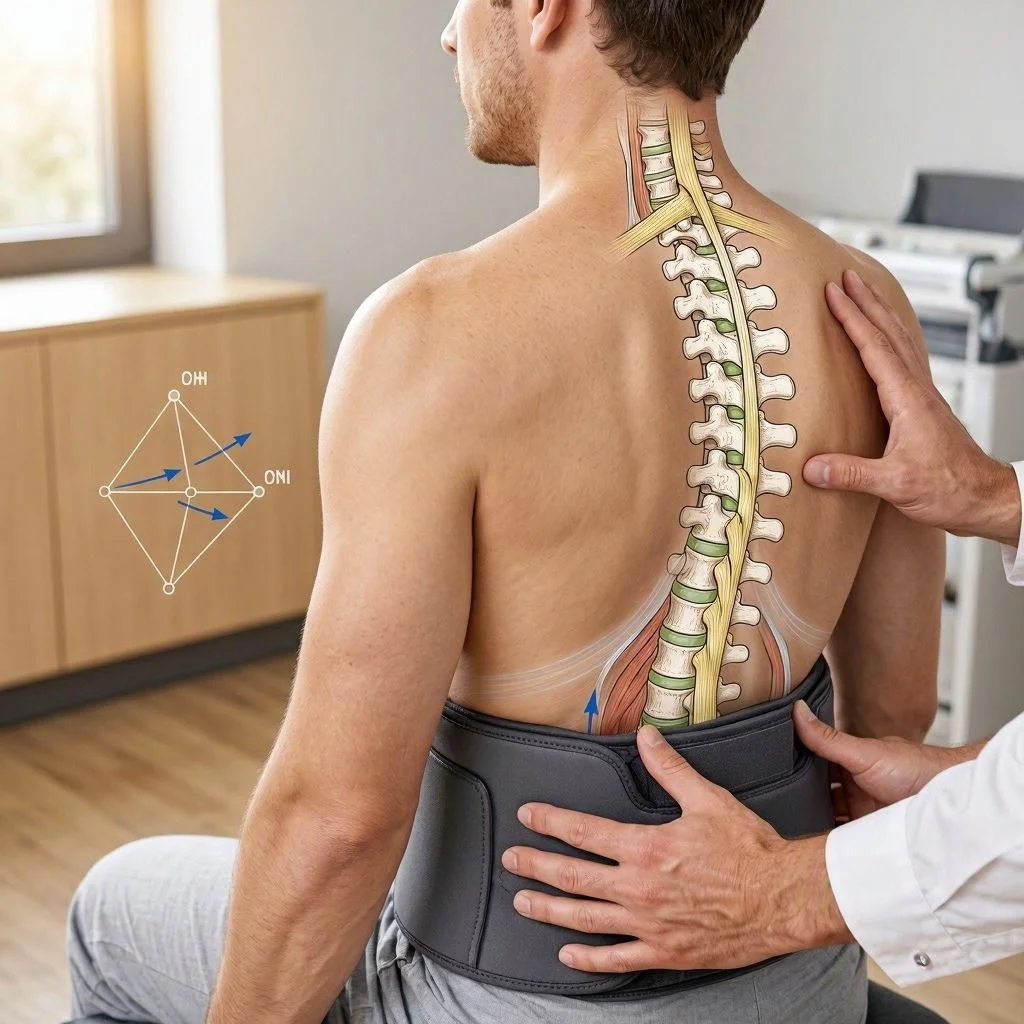
Chiropractic spinal stability refers to a movement-focused approach that aims to support the spine through healthy joint function, muscle control, mobility, strength, and coordination.
The spine is not designed to remain completely rigid. It needs enough stability to provide support while also maintaining enough mobility for normal movement. Therefore, good spinal stability is a balance between controlled movement and adequate support.
During a chiropractic assessment, several factors may be considered, including spinal movement, joint mobility, posture, muscle strength, flexibility, balance, and functional movement.
The purpose is not simply to identify one painful area. Instead, the goal is to understand how different parts of the body work together and whether limitations in movement or strength may be affecting physical function.
Chiropractic spinal stability can therefore be part of a broader plan for people experiencing back discomfort, movement limitations, muscle tension, reduced mobility, or difficulties returning to physical activity.
Why Is Spinal Stability Important?
The spine supports many everyday movements. Walking, sitting, standing, lifting, bending, reaching, and exercising all require coordinated movement between the spine, pelvis, hips, shoulders, and surrounding muscles.
When the body has good movement control, physical activities can often be performed more efficiently.
Spinal stability is particularly important because the spine needs to remain controlled while the arms and legs move. For example, lifting an object requires coordination between the legs, hips, abdominal muscles, back muscles, and upper body.
If strength, mobility, or coordination is limited, a person may change the way they move. Over time, these changes may contribute to stiffness, fatigue, or discomfort.
Improving spinal stability may help support:
- Better movement control
- Functional strength
- Physical confidence
- Balance and coordination
- Healthy posture
- Mobility
- Exercise performance
- Injury recovery
- Return to everyday activities
- Long-term physical function
However, spinal stability should not be viewed as a single solution for every type of back or neck problem. A proper assessment is important before deciding which treatment approach is appropriate.
Chiropractic Spinal Stability and Mobility
Stability and mobility are closely connected.
A healthy spine needs the ability to move through appropriate ranges while maintaining control. If the spine is excessively restricted, normal activities may become difficult. On the other hand, having mobility without sufficient muscular control may make certain movements less efficient.
For this reason, chiropractic spinal stability programs may combine mobility work with strengthening and movement training.
Mobility exercises can help people become more comfortable with movements such as:
- Spinal rotation
- Flexion
- Extension
- Side bending
- Hip movement
- Shoulder movement
Strengthening exercises can then help the body control those movements.
The goal is not necessarily to increase spinal movement as much as possible. Instead, the focus should be on useful movement that is comfortable, controlled, and appropriate for the person’s physical needs.
How Chiropractic Care Can Support Spinal Stability
Chiropractic care can include several approaches depending on the individual’s condition and treatment goals.
An assessment may help identify areas of restricted mobility, muscle weakness, poor movement control, or functional limitations.
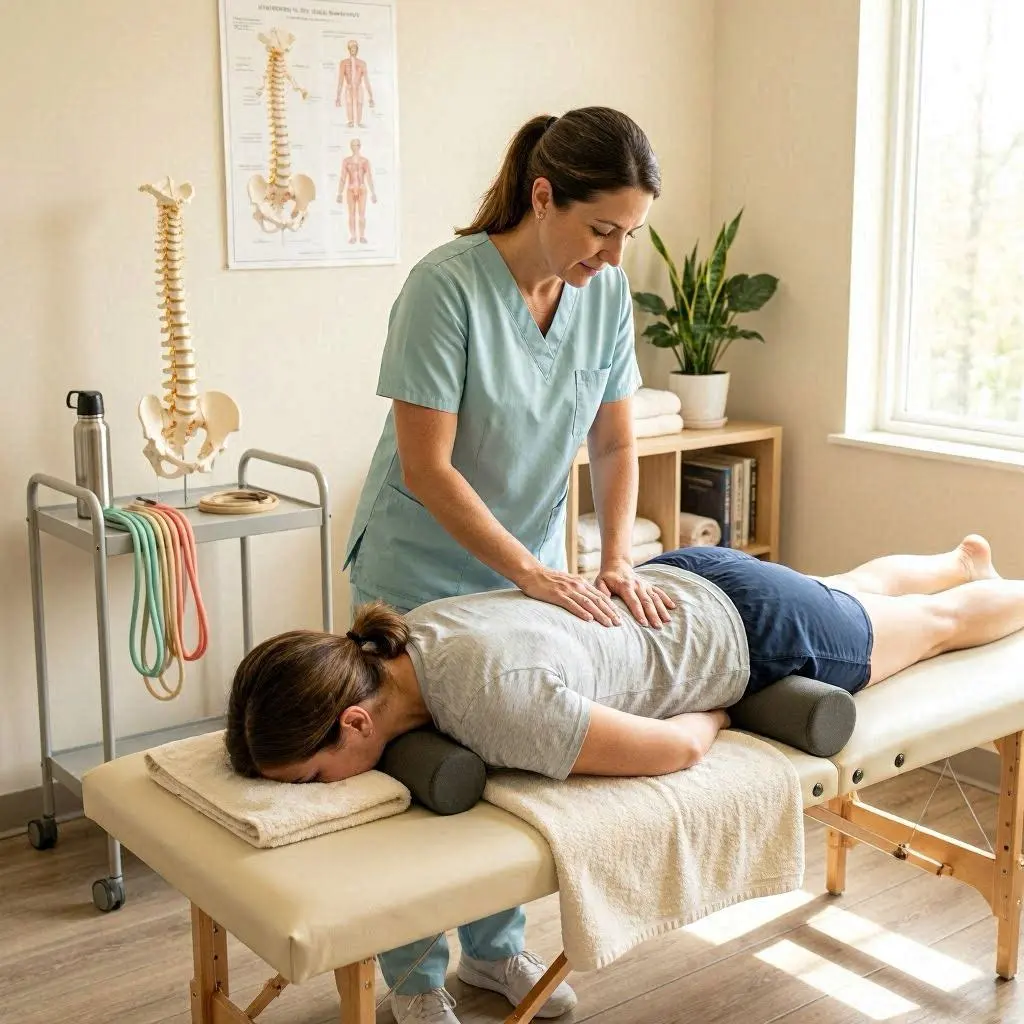
When appropriate, treatment may include joint mobilization, spinal techniques, soft tissue therapy, therapeutic exercise, stretching, posture education, and movement training.
For patients who also experience muscle tension or restricted soft tissue movement, Soft Tissue Therapy can complement a broader rehabilitation and movement program.
The specific combination depends on the individual.
For example, someone with spinal stiffness may initially benefit from mobility-focused treatment. Another person recovering from an injury may require more strengthening and functional rehabilitation. An active adult may need a program focused on movement quality, strength, and return to exercise.
This individualized approach is important because spinal stability is not identical for every person.
Chiropractic Spinal Stability Assessment
A good spinal stability program begins with an appropriate assessment.
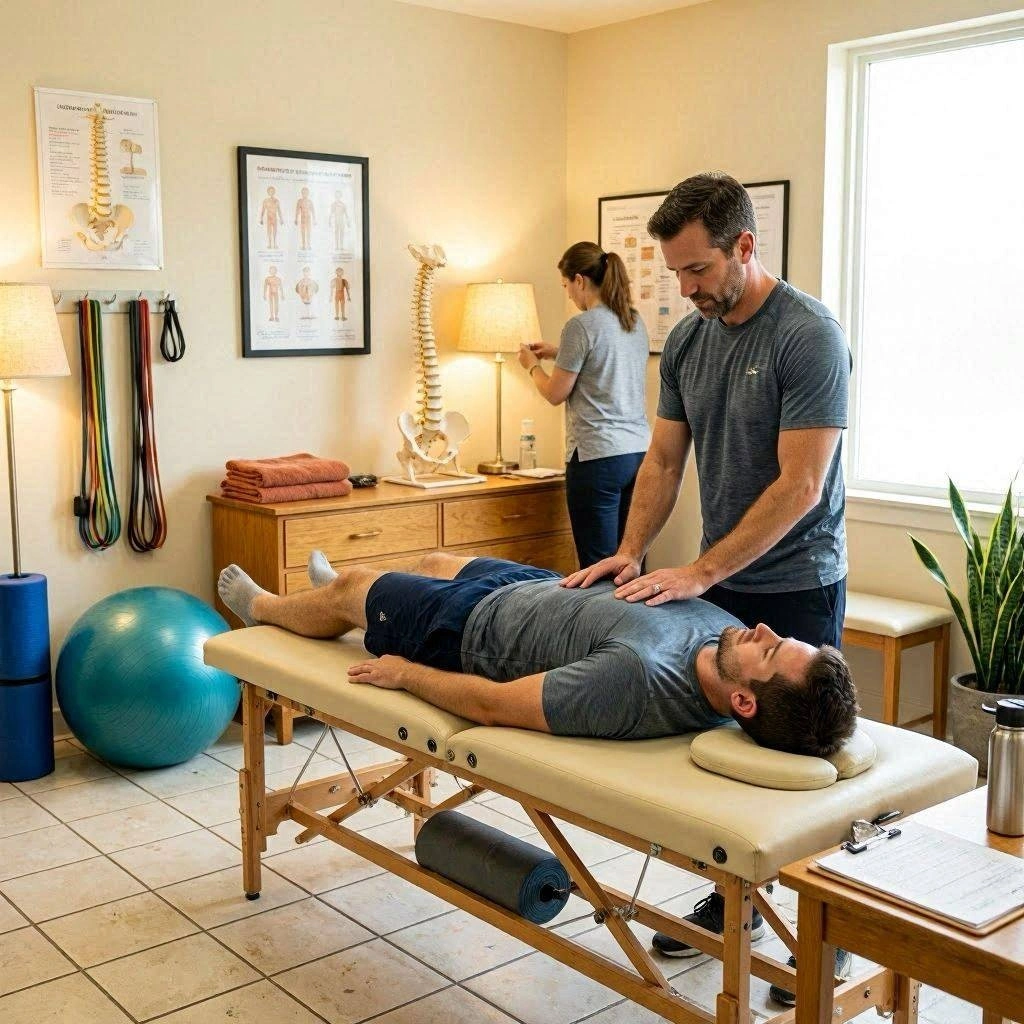
The chiropractor may ask questions about symptoms, daily activities, previous injuries, work demands, exercise habits, and treatment goals.
A physical assessment may consider:
Spinal Range of Motion
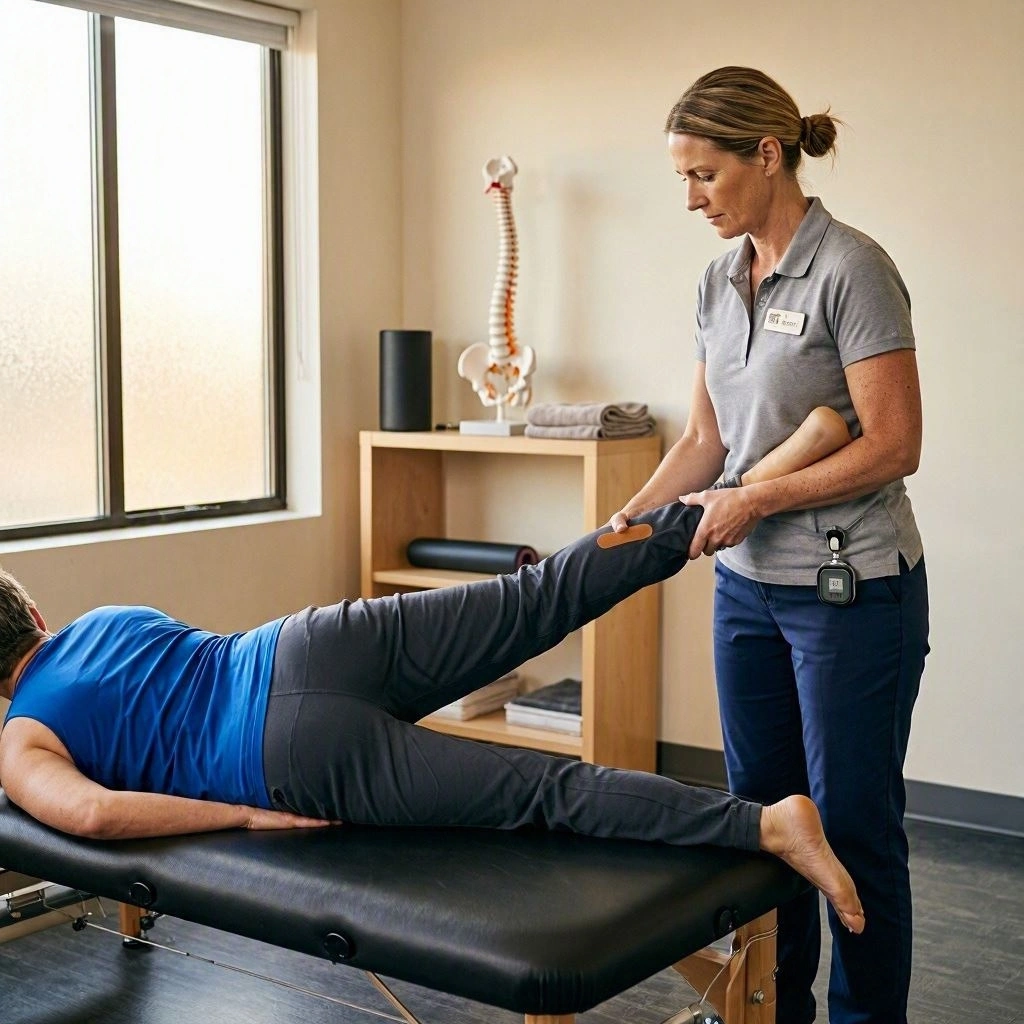
The practitioner may observe how the spine moves through different directions.
Joint Mobility
Joint movement can be assessed to identify areas that appear restricted or uncomfortable.
Muscle Strength
Strength testing can help identify differences in muscular function.
Posture
Standing, sitting, and movement patterns may be observed to understand how the body is positioned during different activities.
Balance
Balance testing may be useful when stability and coordination are important concerns.
Functional Movement
The practitioner may assess movements that relate to daily activities, work, exercise, or sport.
The information collected during an assessment can help create a treatment plan that reflects the person’s individual needs.
Core Strength and Spinal Stability
The core plays an important role in spinal stability.
The core is more than the abdominal muscles. It includes several muscles around the trunk and pelvis that contribute to movement control and support.
A strong core can help the body maintain control while the arms and legs move.
Common core exercises may include:
- Abdominal bracing
- Dead bugs
- Bird dogs
- Planks
- Side planks
- Glute bridges
- Controlled trunk exercises
However, exercises should be selected according to the person’s physical condition.
Someone with significant pain or a recent injury may need a modified program rather than immediately performing advanced exercises.
The objective is progressive improvement. Exercises can become more challenging as strength, control, and confidence improve.
Chiropractic Spinal Stability for Back Pain
Back pain is one of the most common reasons people seek musculoskeletal care.
Back discomfort can develop for many reasons, including physical inactivity, repetitive movements, lifting, sports, prolonged sitting, previous injuries, and other musculoskeletal factors.
Chiropractic spinal stability may be considered as part of a broader conservative approach for some people with back pain.
Treatment may combine manual techniques with:
- Mobility exercises
- Core strengthening
- Hip strengthening
- Stretching
- Functional movement training
- Posture education
- Activity modification
- Home exercises
For patients who require broader rehabilitation support, Injury Rehabilitation may be incorporated into a personalized treatment approach.
The goal is not simply to reduce symptoms temporarily. Improving physical capacity can help a person become more confident with everyday movement.
If back pain is severe, rapidly worsening, associated with neurological symptoms, or follows significant trauma, medical evaluation may be necessary.
Chiropractic Spinal Stability for Neck Pain
The neck also requires a balance between mobility and control.
The cervical spine allows the head to move in different directions while supporting the weight of the head. Activities such as working at a computer, driving, reading, exercising, and using mobile devices can place different demands on the neck and upper body.
A chiropractic assessment may consider:
- Neck mobility
- Upper-back mobility
- Shoulder movement
- Muscle function
- Posture
- Functional movement
- Symptoms during different activities
Depending on the assessment, treatment may include mobility work, strengthening, posture education, soft tissue techniques, or other appropriate approaches.
Not every neck problem requires spinal manipulation. Treatment should be selected according to the individual’s symptoms, medical history, examination findings, and goals.
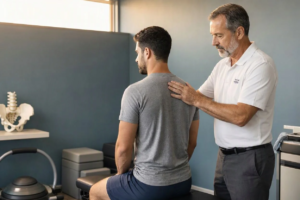
Spinal Stability and Posture
Posture is often discussed in relation to spinal health, but posture is more complex than simply sitting or standing in one perfect position.
The human body naturally changes position throughout the day.
Instead of attempting to maintain one rigid posture, a healthier approach may involve improving movement variety, physical strength, mobility, and tolerance to different positions.
For people who spend many hours sitting, useful strategies may include:
- Taking regular movement breaks
- Changing sitting positions
- Adjusting the workstation
- Standing periodically
- Performing mobility exercises
- Strengthening appropriate muscles
- Increasing general physical activity
Chiropractic spinal stability can support this broader movement-focused approach by addressing mobility, strength, coordination, and functional movement.
Chiropractic Spinal Stability After Injury
Injury can temporarily affect strength, mobility, coordination, and confidence.
After an injury, the body may change its movement patterns to protect a painful area. Although this can be useful in the short term, prolonged changes in movement may contribute to reduced physical capacity.
A rehabilitation-focused chiropractic program may gradually address these limitations.
Depending on the injury, rehabilitation can include:
- Mobility exercises
- Strength training
- Balance exercises
- Coordination training
- Soft tissue therapy
- Functional movement exercises
- Postural education
- Gradual return to activity
The progression should be appropriate for the injury and the individual’s recovery stage.
A person should not assume that spinal treatment is appropriate immediately after every injury. Significant trauma, suspected fractures, neurological symptoms, or severe pain may require medical assessment before manual treatment.
Chiropractic Spinal Stability for Athletes
Athletes place significant demands on the spine and surrounding muscles.
Running, jumping, changing direction, lifting, throwing, and contact sports all require coordinated trunk control.
Spinal stability can therefore be relevant to athletic movement and performance.
A sports-focused program may include:
- Core strengthening
- Hip strengthening
- Balance training
- Dynamic mobility
- Movement control
- Functional strengthening
- Sport-specific exercises
- Return-to-sport progression
The objective is not simply to make the athlete stronger. It is to develop strength and control that can be used effectively during sport.
For example, a runner may need strong trunk and hip control while maintaining repetitive movement. A golfer may require controlled spinal rotation. A tennis player may need stability while producing rapid rotational movements.
Exercise selection should therefore reflect the individual’s sport and physical requirements.
Spinal Stability and Functional Movement
Functional movement refers to the ability to perform movements that are relevant to everyday life, work, exercise, or sport.
Spinal stability can be trained through movements such as:
- Squatting
- Lunging
- Lifting
- Reaching
- Carrying
- Walking
- Rotating
- Stepping
- Climbing stairs
The purpose is to teach the body to maintain appropriate control while performing useful movements.
This is especially important during rehabilitation because patients eventually need to use their improved strength and mobility outside the clinic.
A successful program should gradually connect exercises with real-life activities.
Spinal Stability Exercises
There is no single exercise program that is appropriate for everyone.
However, several types of exercises may be used in spinal stability training.
Bird Dog
The bird dog challenges trunk control while the opposite arm and leg move.
Dead Bug
The dead bug can help develop controlled trunk movement while the arms and legs move.
Plank Variations
Planks can develop endurance in the muscles surrounding the trunk.
Side Plank
Side planks can challenge lateral trunk control.
Glute Bridge
Glute bridges strengthen the muscles around the hips while requiring trunk control.
Squat Training
Squats integrate the hips, legs, and trunk into a functional movement.
Carrying Exercises
Loaded carries can challenge trunk stability while the person walks.
The appropriate exercise depends on physical ability, symptoms, training experience, and treatment goals.
Progression should be gradual rather than based on performing the hardest exercise possible.
The Role of Strength Training
Strength training is an important part of long-term spinal stability.
Manual treatment may help improve mobility or reduce symptoms for some people, but active exercise allows patients to develop physical capacity.
Strength training can target:
- Abdominal muscles
- Back muscles
- Gluteal muscles
- Hip muscles
- Leg muscles
- Shoulder and upper-back muscles
Building strength can help people perform everyday tasks with greater confidence.
A progressive strengthening program can also be adapted for different levels of fitness.
Beginners may start with simple bodyweight movements, while athletes may eventually require resistance training and sport-specific exercises.
Chiropractic Spinal Stability and Rehabilitation
Spinal stability can be particularly useful within a rehabilitation program.
Rehabilitation often progresses through different stages.
The first stage may focus on symptom management and restoring comfortable movement.
The second stage may introduce basic strengthening and movement control.
The third stage can increase strength, endurance, balance, and functional capacity.
The final stage may focus on returning to work, exercise, sport, or other demanding activities.
This gradual progression helps avoid doing too much too quickly.
Rehabilitation should be adjusted according to how the person responds to treatment and exercise.
How Often Should You Work on Spinal Stability?
There is no universal schedule for spinal stability training.
Frequency depends on:
- Current symptoms
- Physical fitness
- Injury history
- Strength level
- Treatment goals
- Exercise tolerance
- Daily activity
- Recovery progress
Some exercises may be appropriate for regular home practice, while more demanding exercises may require recovery between sessions.
A healthcare professional can help determine the appropriate frequency and progression.
Consistency is generally more important than performing an extremely difficult workout occasionally.
Can Chiropractic Spinal Stability Prevent Injuries?
No treatment can guarantee that a person will never experience an injury.
However, improving strength, movement control, balance, physical conditioning, and mobility may support the body’s ability to handle physical demands.
Injury prevention should therefore be viewed as a broader strategy.
Useful components can include:
- Regular exercise
- Strength training
- Mobility work
- Adequate recovery
- Gradual training progression
- Proper technique
- Appropriate footwear or equipment
- Workstation adjustments
- Sport-specific preparation
Chiropractic care may form one part of this broader approach when appropriate.
Chiropractic Spinal Stability and Long-Term Wellness
Long-term spinal health is not only about treating pain when it occurs.
Daily habits can influence physical function over time.
Regular movement, strength training, healthy activity levels, adequate recovery, and appropriate ergonomics can all support physical health.
For people with recurring symptoms, identifying activities or movement patterns associated with discomfort may also be useful.
A long-term approach may therefore combine professional care with self-management.
The goal is to help people become more confident and capable of managing their physical health.
When Should You See a Chiropractor?
You may consider a chiropractic assessment if you experience musculoskeletal symptoms that affect movement or daily activities.
Potential reasons for an assessment include:
- Back stiffness
- Neck stiffness
- Reduced spinal mobility
- Muscle tension
- Joint stiffness
- Movement limitations
- Difficulty returning to exercise
- Recovery after certain injuries
- Reduced physical function
A professional assessment is particularly useful when symptoms continue or interfere with normal activities.
However, some symptoms require medical evaluation rather than routine chiropractic treatment.
Seek urgent medical attention for serious symptoms such as significant or rapidly worsening weakness, new bowel or bladder problems, saddle-area numbness, major trauma, severe unexplained pain, or other rapidly developing neurological symptoms.
What to Expect From a Chiropractic Spinal Stability Program
A typical program may begin with an assessment.
The chiropractor can discuss symptoms, medical history, physical activity, previous injuries, work requirements, and personal goals.
The physical assessment may then evaluate movement, mobility, strength, flexibility, balance, posture, and functional control.
After the assessment, the treatment plan can be explained.
Depending on the individual, treatment may include manual therapy, joint mobilization, soft tissue techniques, mobility exercises, strengthening, stretching, posture guidance, and functional rehabilitation.
Progress should be monitored over time.
As symptoms improve and physical capacity increases, the treatment program may shift from symptom management toward strengthening, self-management, and return to normal activity.
Chiropractic Spinal Stability and Physiotherapy
Chiropractic and physiotherapy can have complementary roles within musculoskeletal care.
Physiotherapy often places significant emphasis on therapeutic exercise, strength, mobility, rehabilitation, balance, and functional recovery.
Chiropractic care may include joint-focused manual treatment, spinal techniques, mobility work, soft tissue approaches, and movement guidance.
For people who need exercise-based rehabilitation alongside chiropractic care, Physiotherapy Services can provide another part of a broader musculoskeletal treatment plan.
The appropriate treatment should always depend on the individual’s condition, goals, and assessment findings.
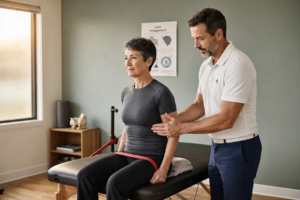
How to Support Spinal Stability at Home
Professional treatment can be supported by healthy daily habits.
Stay Active
Avoid prolonged inactivity when movement is safe and appropriate.
Take Movement Breaks
If you work at a desk, stand up and move regularly.
Build Strength Gradually
Use progressive exercises rather than suddenly increasing training intensity.
Improve Movement Variety
Avoid spending the entire day in one position.
Follow Your Exercise Program
Consistency can help maintain improvements in strength and mobility.
Listen to Symptoms
Pain that becomes severe, unusual, or progressively worse should not be ignored.
Frequently Asked Questions About Chiropractic Spinal Stability
What is Chiropractic Spinal Stability?
Chiropractic spinal stability is a movement-focused approach that considers spinal mobility, muscle strength, coordination, posture, balance, and functional movement to support better physical function.
Is spinal stability the same as spinal adjustment?
No. A spinal adjustment is one possible chiropractic technique. Spinal stability is a broader concept involving strength, movement control, mobility, coordination, and functional exercise.
Can chiropractic care improve spinal stability?
Chiropractic care may support spinal function through appropriate manual techniques, mobility work, exercise, strengthening, and movement education. The appropriate approach depends on the individual’s assessment.
Are spinal stability exercises good for back pain?
Some people with back pain may benefit from progressive strengthening and stability exercises. However, the exercises should be appropriate for the person’s condition and should be modified when necessary.
Can spinal stability help posture?
Improving strength, mobility, movement control, and physical activity may support better functional posture. Good posture does not require maintaining one rigid position throughout the day.
Can chiropractic spinal stability help athletes?
A stability program can support athletes by developing trunk control, strength, balance, mobility, and functional movement. Exercises can be adapted to the physical demands of a particular sport.
How long does it take to improve spinal stability?
Progress varies between individuals. Factors such as fitness level, symptoms, injury history, exercise consistency, and treatment goals can influence the rate of improvement.
Do I need chiropractic treatment for spinal stability?
Not necessarily. Exercise, physiotherapy, strength training, and other forms of rehabilitation can also contribute to spinal stability. A professional assessment can help determine which approach is appropriate.
Can spinal stability prevent back pain?
No program can guarantee prevention of back pain. However, maintaining physical activity, strength, mobility, and healthy movement habits can support overall physical function.
When should I seek medical help instead of chiropractic treatment?
Seek medical evaluation for serious or rapidly developing symptoms, significant weakness, new bowel or bladder problems, saddle-area numbness, major trauma, severe unexplained pain, or other concerning neurological symptoms.
Conclusion
Chiropractic spinal stability is best understood as part of a broader approach to movement and physical function. The spine needs both mobility and control, while the surrounding muscles must provide appropriate support during everyday activities, exercise, work, and sport.
A personalized approach may combine assessment, manual therapy, mobility exercises, strengthening, posture education, soft tissue techniques, and functional rehabilitation. The goal is not simply to make the spine feel better temporarily. It is to help people develop the movement capacity, strength, and confidence needed for their daily lives.
For people experiencing spinal stiffness, back discomfort, movement limitations, or difficulties returning to physical activity, a professional assessment can help determine the most appropriate treatment strategy. With an individualized plan and consistent active rehabilitation, spinal stability can become an important part of long-term musculoskeletal health.