Sciatica Recovery Exercises: A Complete Guide to Relieving Pain and Improving Mobility
Sciatica can make everyday activities such as walking, sitting, sleeping, and bending uncomfortable. The pain may begin in the lower back or buttock and travel down one leg, sometimes accompanied by tingling, numbness, or muscle weakness. Although recovery varies from person to person, appropriate movement and a carefully selected exercise routine may help improve mobility and make daily activities easier. Sciatica recovery exercises are designed to support comfortable movement, maintain flexibility, improve muscle strength, and gradually restore confidence during recovery. However, no single exercise works for everyone. The most suitable movements depend on the cause of the symptoms, their severity, and how the body responds to activity.
This guide explains how to approach exercise safely, which gentle movements may be worth discussing with a healthcare professional, how to progress over time, and when to seek medical attention. If you need an individualized rehabilitation plan, Ritz Clinics physiotherapy services can be a starting point for learning about physiotherapy-based care.
What Is Sciatica?
Sciatica describes pain associated with irritation or compression of nerve roots that contribute to the sciatic nerve. This nerve travels from the lower spine through the buttock and down each leg. Symptoms typically affect one side, although the pattern and intensity can vary.
Common symptoms include:
- Pain that travels from the lower back or buttock into the thigh or lower leg.
- Burning, shooting, or electric-like sensations.
- Tingling or pins and needles in the leg or foot.
- Numbness in parts of the affected leg.
- Difficulty sitting, standing, walking, or changing position comfortably.
Sciatica is often associated with a herniated or bulging spinal disc, but other conditions can irritate the relevant nerve roots. Because several conditions can cause similar symptoms, a proper assessment may be important when pain is severe, persistent, or accompanied by neurological changes.
Exercise may help maintain movement and support functional recovery, but it does not automatically remove the underlying cause of nerve irritation. The goal is to choose movements that suit the individual rather than force the body through pain.
How Can Exercise Support Sciatica Recovery?
During a painful episode, it may feel safer to remain in bed or avoid movement entirely. Brief periods of rest can sometimes provide comfort, but prolonged inactivity may reduce strength, stamina, and confidence.
A gradual return to comfortable activity can help address these problems.
1. Maintaining Everyday Mobility
Gentle movement helps prevent the body from becoming increasingly inactive during recovery. Short walks, comfortable position changes, and simple mobility exercises may make daily tasks more manageable.
The aim is not to push through severe pain. Instead, choose activities that your symptoms tolerate and increase them gradually.
2. Supporting Muscle Function
The muscles around the trunk, hips, and legs contribute to movement and balance. When pain limits activity, these muscles may become less conditioned.
Once symptoms permit, a rehabilitation plan may include strengthening exercises to help restore the ability to stand, walk, climb stairs, and perform other daily tasks.
3. Improving Movement Confidence
Pain can lead people to avoid bending, walking, or changing positions. Over time, this avoidance can make normal activities feel more difficult.
Gradual, controlled movement can help rebuild confidence. Progress should be based on symptom response and function rather than a rigid timetable.
4. Supporting Long-Term Activity
Recovery is not only about reducing pain on a particular day. It also involves returning to work, hobbies, exercise, and everyday responsibilities.
Guidance from a physiotherapist can help you select appropriate exercises and progress them as your capacity improves. The NHS and NICE both emphasize tailored activity and exercise as parts of managing low back pain and sciatica.
Safety Before Starting Sciatica Recovery Exercises
Before trying the exercises below, consider your current symptoms, medical history, and physical abilities. These movements are general examples, not a personalized treatment prescription.
Stop exercising and seek medical advice if a movement causes increasing pain that travels farther down the leg, new tingling or numbness, or worsening symptoms that do not settle when you stop.
Seek emergency medical care if you develop any of the following:
- New difficulty starting urination, inability to urinate, or loss of bladder control.
- Loss of bowel control.
- Numbness around the genitals, anus, or inner thighs.
- Severe or rapidly worsening weakness, particularly in both legs.
- Sciatica-like symptoms affecting both legs alongside concerning neurological changes.
These symptoms can indicate a serious problem requiring urgent assessment. Do not attempt to manage them with stretches or home exercises.
Arrange a clinical assessment before beginning a new exercise routine if you have recently sustained a significant injury, have substantial leg weakness, have a history of spinal surgery, or are unsure whether a particular movement is appropriate for you.
10 Sciatica Recovery Exercises to Discuss With a Healthcare Professional
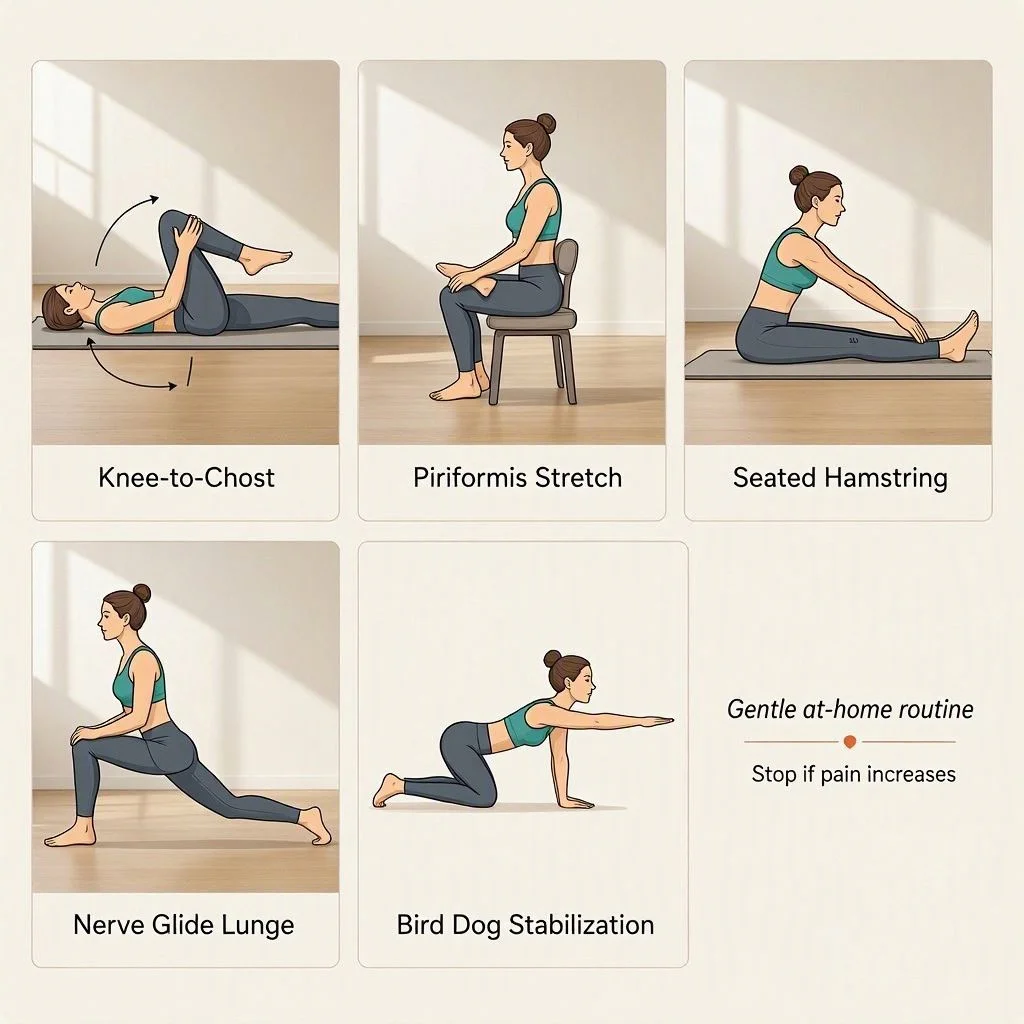
The following movements cover gentle mobility, comfortable positioning, walking, and gradual strengthening. You do not need to complete every exercise. Start with activities that are comfortable and appropriate for your condition.
1. Short, Comfortable Walking
Walking is a practical way to maintain general activity without requiring specialist equipment.
How to do it:
- Choose a flat, familiar surface.
- Begin at a comfortable pace.
- Walk for a short period, such as two to five minutes, if tolerated.
- Stop before your symptoms become difficult to manage.
- Repeat short walks during the day rather than attempting one long session.
If walking for five minutes is too uncomfortable, begin with a shorter period. If it feels manageable, gradually increase the duration.
Why it may help: Walking supports general conditioning and helps maintain everyday movement. Regular, manageable activity may be preferable to spending most of the day sitting or lying down.
Important note: If walking causes progressive leg weakness, substantial numbness, or worsening radiating pain, stop and seek professional guidance.
2. Comfortable Lying Position
Sometimes the first step in recovery is finding a position that reduces discomfort rather than performing a stretch.
How to do it:
- Lie on your back on a supportive surface.
- Bend your knees if that feels comfortable.
- Rest your feet on the surface, or place a pillow under your knees.
- Relax your shoulders and breathe normally.
- Remain in the position briefly, changing it if symptoms increase.
Another option may be lying on your side with a pillow between your knees, provided this feels comfortable.
Why it may help: A comfortable position can provide temporary relief during a painful episode and make it easier to transition into gentle movement.
There is no universally correct sleeping or resting position for sciatica. Choose the position that best suits your symptoms, and avoid staying in one position for unnecessarily long periods.
3. Gentle Pelvic Tilts
Pelvic tilts involve small movements of the pelvis while lying down. They can help some people explore comfortable lower-back movement.
How to do it:
- Lie on your back with your knees bent and feet resting on the floor.
- Keep your shoulders relaxed.
- Gently tilt your pelvis so that your lower back moves slightly toward the surface.
- Return to a comfortable neutral position.
- Repeat slowly, provided the movement does not increase your symptoms.
Begin with five repetitions and assess your response before doing more.
Why it may help: The exercise encourages controlled movement around the pelvis and lower back without requiring a large range of motion.
Caution: Avoid pressing forcefully through your back or repeatedly moving into a painful position. If pelvic tilts increase symptoms down the leg, stop and ask a physiotherapist whether another movement would be more appropriate.
4. Gentle Knee Bending While Lying Down
This exercise involves controlled bending and straightening of the knee while the leg remains supported.
How to do it:
- Lie on your back in a comfortable position.
- Keep one foot supported on the surface.
- Slowly slide the other heel toward your body, bending the knee.
- Stop before the movement becomes uncomfortable.
- Slide the heel back to the starting position.
- Repeat a few times, then reassess your symptoms.
You can try the other leg if appropriate, but do not assume both sides need identical treatment.
Why it may help: Gentle knee movement maintains mobility and provides an opportunity to move without placing the body under a heavy load.
Do not force the knee toward your chest or pull the leg into a deep stretch. The purpose is comfortable movement, not achieving a particular flexibility target.
5. Gentle Gluteal Stretch (Sciatica Recovery Exercises)
The gluteal muscles are located around the buttocks. Some people experience tightness in this area alongside low-back and leg symptoms. However, a gluteal stretch is not suitable for every type of sciatica.
How to approach it:
- Lie on your back with your knees bent.
- Keep your feet supported and your back relaxed.
- Notice whether a small change in hip position feels comfortable.
- If a clinician has recommended a specific gluteal stretch, follow their instructions and stay within the advised range.
- Return to a neutral position if symptoms increase.
A common gluteal stretch involves bringing one knee toward the opposite shoulder, but this position can aggravate symptoms in some people. It should not be treated as a universal exercise for sciatica.
Why individual guidance matters: Stretching can create tension around sensitive tissues. If the movement reproduces shooting pain, tingling, or numbness down the leg, stop rather than trying to stretch more deeply.
6. Modified Hamstring Stretch
The hamstrings run along the back of the thigh. Limited hamstring flexibility may coexist with back or leg discomfort, but stretching the hamstrings aggressively can also increase tension on sensitive neural structures.
For this reason, a modified stretch should be gentle and selected carefully.
How to approach it:
- Sit on a stable chair with your feet supported.
- Keep your back in a comfortable position.
- If comfortable, slowly straighten one knee a little.
- Stop before you feel a strong pulling sensation.
- Return the foot to the floor and relax.
Start with a few controlled repetitions rather than holding a deep stretch.
Why it may help: The movement can maintain comfortable knee and leg mobility without requiring an intense stretch.
Avoid bending far forward to touch your toes or locking your knee while pulling your foot toward you. If the movement produces nerve-like symptoms, stop and discuss alternatives with your physiotherapist.
7. Gentle Abdominal Bracing
Abdominal bracing involves lightly activating the muscles around your trunk without holding your breath or performing a full sit-up.
This exercise may become useful when acute symptoms are manageable and a healthcare professional considers strengthening appropriate.
How to do it:
- Lie on your back with your knees bent.
- Breathe normally.
- Gently tighten the abdominal muscles as if preparing for a small cough.
- Keep your shoulders, jaw, and buttocks relaxed.
- Hold the light contraction for three to five seconds if comfortable.
- Relax completely before repeating.
Begin with five repetitions.
Why it may help: Abdominal bracing encourages controlled trunk-muscle activation. It may form part of a broader strengthening programme that supports functional movement.
Do not hold your breath, push your lower back forcefully into the floor, or continue if the exercise increases leg symptoms.
8. Supported Sit-to-Stand
Standing up from a chair is an everyday task that can become difficult when back or leg pain limits movement.
How to do it:
- Choose a stable chair at a comfortable height.
- Sit with your feet placed securely on the floor.
- Lean forward slightly from your hips, keeping the movement controlled.
- Use the armrests or your hands for support if necessary.
- Stand up slowly, then sit down with control.
- Begin with three to five repetitions if tolerated.
Why it may help: This exercise practices a functional movement and can help rebuild strength and confidence for everyday activities.
If standing or sitting produces a sharp increase in radiating pain, try a higher chair or stop until a clinician can assess the problem. Do not repeatedly practise a painful movement in an attempt to force improvement.
9. Gentle Bridge Progression
A bridge exercise activates muscles around the hips and trunk. It may be appropriate during a later stage of recovery, but it is not suitable for everyone during an acute flare-up.
How to do it:
- Lie on your back with your knees bent and feet supported.
- Gently activate your abdominal and gluteal muscles.
- If comfortable, lift your hips a small distance from the surface.
- Avoid arching your lower back excessively.
- Lower slowly and rest.
Start with three to five repetitions, or omit the exercise if it does not feel comfortable.
Why it may help: A bridge can build hip and trunk strength when introduced at an appropriate stage.
Do not force your hips upward or hold the position through increasing pain. A physiotherapist may suggest a simpler alternative if bridging aggravates your symptoms.
10. Gradual Return to Low-Impact Exercise
As your symptoms improve, you may be able to build toward longer walks or other low-impact activities. Depending on your condition, preferences, and medical advice, these may include gentle stationary cycling or exercise in water.
How to progress:
- Select one activity that you can perform comfortably.
- Begin with a short duration.
- Monitor symptoms during the activity and afterward.
- Increase either duration or difficulty gradually, rather than changing everything at once.
- Reduce the workload if symptoms repeatedly worsen.
Why it may help: Gradual conditioning supports general fitness and helps prepare you for daily responsibilities and recreational activity.
Cycling is not appropriate for everyone because the forward-bent position may aggravate certain symptoms. Water-based activity also requires appropriate supervision and access. Choose an activity based on your individual response rather than assuming that all low-impact exercise is automatically safe.
Which Sciatica Exercises Should You Avoid?
No single list of exercises is unsafe for every person with sciatica. Nevertheless, certain movements deserve caution, particularly during a painful flare-up.
Aggressive Forward Bending (Sciatica Recovery Exercises)
Repeatedly bending deeply forward, especially while lifting a heavy object, may aggravate symptoms in some people.
Use a comfortable range of motion and avoid repeatedly testing movements that produce shooting leg pain.
Heavy Lifting During a Flare-Up
Heavy deadlifts, loaded squats, and similar exercises may exceed your current tolerance if pain is severe or your movement is restricted.
This does not mean you must avoid strength training permanently. Instead, return to resistance exercise gradually, with professional guidance when necessary.
Forceful Hamstring or Nerve Stretching
Pulling the leg aggressively or trying to reproduce a strong stretch can irritate sensitive tissues. Nerve-mobility exercises require particular care because their purpose is not to stretch a nerve forcefully.
A physiotherapist can determine whether a specific nerve-gliding technique is appropriate.
High-Impact Exercise When Symptoms Are Uncontrolled
Running, jumping, or intense training may be difficult to tolerate during a painful episode. Consider temporarily reducing the intensity and returning gradually as your capacity improves.
Exercises That Worsen Neurological Symptoms
Do not continue an exercise that causes new numbness, increasing weakness, or progressively worsening symptoms down the leg. New or rapidly worsening neurological changes require prompt medical assessment.
A Simple Four-Stage Sciatica Recovery Plan (Sciatica Recovery Exercises)
Recovery should be guided by symptoms and function rather than a fixed deadline. The stages below are an example of how activity might progress; they are not a guaranteed schedule.
Stage 1: Settle Symptoms and Maintain Comfortable Movement
Main goal: Find tolerable positions and avoid unnecessary inactivity.
Potential activities include:
- Brief walks around the home.
- Comfortable lying or sitting positions.
- Gentle position changes.
- Short periods of standing when tolerated.
Avoid forcing stretches or attempting demanding strengthening exercises when even basic movement is difficult.
Stage 2: Restore Gentle Mobility
Main goal: Build tolerance for controlled movement.
If appropriate, you may begin:
- Gentle knee bending.
- Small pelvic tilts.
- Short walks.
- Other mobility exercises recommended by a clinician.
Keep the routine short. Pay attention to whether the symptoms settle after activity or continue to intensify.
Stage 3: Rebuild Strength and Functional Ability
Main goal: Improve the ability to perform daily tasks.
Depending on your assessment, this stage may include:
- Abdominal bracing.
- Supported sit-to-stand.
- Modified hip-strengthening exercises.
- Gradually longer walks.
Not everyone needs the same exercises. A person who struggles with standing may need a different programme from someone whose main limitation is walking.
Stage 4: Return to Regular Activity (Sciatica Recovery Exercises)
Main goal: Resume work, recreation, and exercise with appropriate progression.
You may gradually increase walking duration, return to selected gym activities, or build toward other preferred forms of exercise.
Increase the workload in small steps and avoid making large changes to duration, resistance, and frequency simultaneously.
If your progress stalls, symptoms return repeatedly, or your ability to function declines, seek reassessment rather than continuing to increase the workload independently.
How Often Should You Perform Sciatica Recovery Exercises?
There is no universal number of repetitions or daily sessions that suits everyone.
A useful starting principle is to choose a small amount of comfortable activity and observe how your body responds. Short, frequent periods of movement may be more manageable than one long session.
For example, a person who tolerates walking may begin with several brief walks throughout the day. Another person may need to start with gentle position changes and only a few repetitions of a mobility exercise.
Use these principles to guide progression:
- Start small: Begin below the level that usually triggers a significant flare-up.
- Move slowly: Avoid jerking, bouncing, or forcing the end of a stretch.
- Monitor symptoms: Pay attention to pain, tingling, numbness, and weakness during and after activity.
- Progress gradually: Increase one aspect of activity at a time.
- Allow recovery: Reduce the workload if symptoms become more troublesome after a session.
A mild, temporary increase in discomfort does not always mean damage has occurred, but severe or progressively worsening symptoms should not be ignored. Your clinician can help you establish appropriate limits for your situation.
How Physiotherapy Can Help With Sciatica Recovery
Physiotherapy can help identify functional limitations, guide exercise selection, and develop a progressive plan based on your symptoms and goals.
A physiotherapist may assess your walking, strength, mobility, reflexes, sensation, and the movements that aggravate or relieve your symptoms. The findings help determine whether you need further medical evaluation or whether a conservative rehabilitation programme is appropriate.
Treatment may include:
Individualized Exercise Selection (Sciatica Recovery Exercises)
A clinician can select exercises according to your presentation rather than relying on a generic internet routine. This is especially important when some movements relieve symptoms while others make them worse.
Strength and Mobility Training
As symptoms allow, rehabilitation may focus on trunk and hip strength, general conditioning, and the mobility needed for daily activities.
Activity Modification
You may learn how to adjust sitting time, lifting techniques, walking duration, or work tasks while remaining as active as reasonably possible.
Progress Monitoring
A clinician can monitor changes in pain, sensation, strength, and function, adjusting the programme when necessary.
You can learn more about physiotherapy at Ritz Clinics. If you are exploring sciatica-specific care, the Sciatica Treatment page may also be relevant.
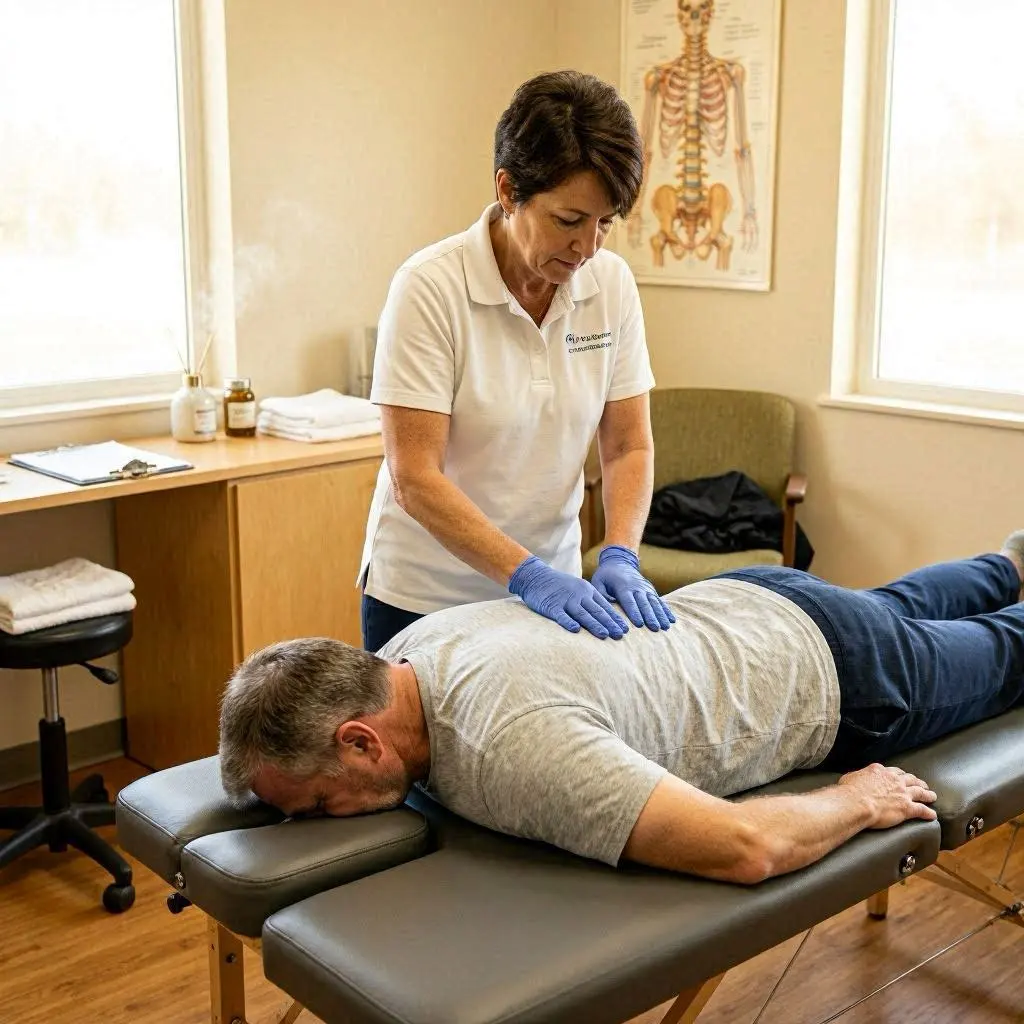
Manual therapy or massage may be considered as part of a broader treatment plan in selected cases, but they should not replace appropriate exercise, clinical assessment, or necessary medical care.
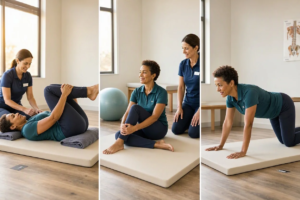
Everyday Habits That May Support Recovery (Sciatica Recovery Exercises)
Exercises are only one part of recovery. Daily habits can also influence how comfortably you move and how consistently you remain active.
Break Up Long Periods of Sitting
If prolonged sitting aggravates your symptoms, change position regularly. Stand briefly, walk around, or adjust your seating arrangement as needed.
You do not need to maintain one supposedly perfect posture all day. Comfortable variation and regular movement are often more practical.
Make Walking Manageable
Choose a route and pace that suit your current ability. If a long walk is difficult, divide it into shorter periods and build gradually.
Adjust Lifting Tasks
Keep objects close to your body when lifting and avoid combining heavy lifting with sudden twisting. Reduce the load or ask for help when necessary.
Prioritize Sleep and Recovery
Pain can interfere with sleep. Experiment with comfortable sleeping positions and use pillows for support if they help. Persistent pain that disrupts sleep deserves clinical attention.
Avoid Prolonged Bed Rest
Unless a healthcare professional has advised otherwise for a specific reason, extended inactivity is generally not the preferred approach to uncomplicated sciatica. Continue comfortable daily activities as much as your symptoms allow.
How Long Does Sciatica Recovery Take? (Sciatica Recovery Exercises)
Recovery time depends on the underlying cause, symptom severity, general health, and whether nerve function has been affected.
Some people notice improvement over several days or weeks. Others need longer, particularly when symptoms are persistent or the underlying condition requires additional treatment.
A gradual improvement in walking, sitting tolerance, sleep, and daily function can be useful evidence of progress, even if symptoms have not disappeared entirely.
Do not judge recovery only by how far you can stretch or how many repetitions you can complete. Better function and a more manageable symptom pattern may be more meaningful measures.
Seek medical advice if symptoms are severe, continue to worsen, interfere substantially with everyday activities, or fail to improve over the expected period. New weakness or other neurological changes require particular attention.
Frequently Asked Questions About Sciatica Recovery Exercises
1. What is the best exercise for sciatica recovery?
There is no single best exercise for everyone. Short walks and gentle, comfortable movements may be useful starting points, but the appropriate routine depends on the cause of symptoms and individual tolerance. A physiotherapist can help identify suitable exercises.
2. Can walking help sciatica?
Walking may help maintain general activity and conditioning during recovery. Begin with a manageable duration and increase it gradually. If walking consistently worsens radiating pain or causes neurological symptoms, stop and seek professional guidance.
3. Should I stretch when I have sciatica?
Some gentle stretches may be appropriate, but others can aggravate nerve-related symptoms. Avoid forcing a stretch or trying to achieve maximum flexibility. Stop if you experience increasing pain, tingling, or numbness.
4. Can I exercise during a sciatica flare-up?
Some people can continue gentle activity during a flare-up, while others need to reduce their usual workload temporarily. Choose movements that remain comfortable and do not worsen symptoms. Severe pain, new weakness, or other concerning symptoms warrant medical assessment.
5. How many times a day should I do sciatica exercises?
The frequency depends on the exercise and your current condition. Short, manageable sessions may be easier to tolerate than a long workout. Follow the plan provided by your healthcare professional and adjust it if symptoms worsen.
6. Are nerve-gliding exercises good for sciatica?
Nerve-gliding exercises may be considered in selected cases, but the technique and range of motion matter. They should not be performed as forceful nerve stretches. Ask a physiotherapist whether they are appropriate for your symptoms.
7. Can sciatica recover without surgery?
Many people improve without surgery, depending on the underlying cause and severity. Conservative management may include activity modification, exercise, physiotherapy, and other treatments recommended by a clinician. Surgery may be considered in selected cases, particularly when serious neurological problems occur or symptoms do not respond to appropriate treatment.
8. When should I stop exercising and see a doctor?
Stop and seek medical advice if exercises cause persistent worsening, new numbness, or increasing pain down the leg. Seek emergency care for loss of bladder or bowel control, numbness around the genital or anal area, or severe or rapidly progressing weakness.
9. Can strengthening exercises prevent sciatica from returning?
Strengthening and regular physical activity may support long-term function, but they cannot guarantee that sciatica will not recur. The most appropriate programme depends on your condition, movement capacity, and other risk factors.
10. Is physiotherapy necessary for sciatica?
Not everyone needs supervised physiotherapy, but it can be valuable when symptoms are persistent, exercise choices are unclear, or daily activities are significantly limited. A physiotherapist can help tailor the programme and identify when further medical evaluation is needed.
Final Thoughts: Building a Safe Sciatica Recovery Routine
Sciatica recovery exercises can be part of a broader strategy to maintain movement, improve strength, and return to everyday activities. The most effective approach is not necessarily the most intense one. It is the approach that matches your condition, remains tolerable, and progresses as your ability improves.
Start with comfortable movement, such as brief walks or gentle mobility exercises, when appropriate. Introduce strengthening gradually, avoid forceful stretches, and monitor how your symptoms respond. If pain persists or function declines, seek professional guidance instead of continuing a routine that is not helping.
For individualized support, explore Ritz Clinics physiotherapy services and discuss your symptoms with a qualified healthcare professional. A tailored plan can help you identify suitable movements, adapt activities, and work toward a safe return to your normal routine.
Medical disclaimer: This article is for general educational purposes and is not a substitute for diagnosis or individualized medical advice. Exercise suitability varies by person. Seek urgent medical care for warning signs such as new bladder or bowel dysfunction, saddle-area numbness, or severe or progressive weakness.