Soft Tissue Therapy Techniques: Complete Guide to Manual Techniques, Benefits, and Recovery
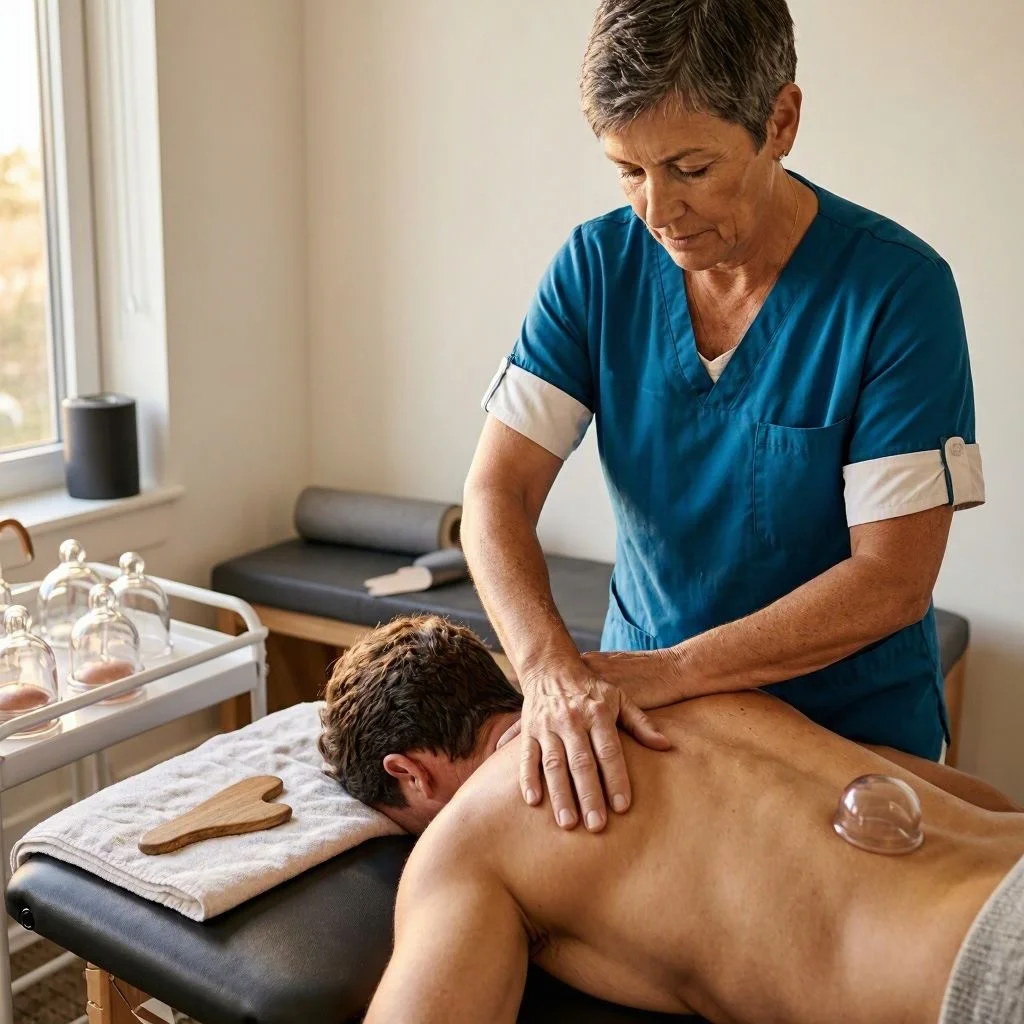
Soft Tissue Therapy Techniques use hands-on methods to work with muscles, fascia, tendons, and other soft tissues that support movement and physical function. These techniques can help people manage muscle tension, stiffness, exercise-related discomfort, reduced mobility, and certain musculoskeletal complaints.
However, soft tissue therapy does not refer to one single technique. Instead, practitioners can choose from several approaches, including massage, targeted pressure, compression, myofascial techniques, assisted stretching, and sports-focused methods. Therefore, treatment can vary considerably from one person to another.
For example, an office worker with persistent neck and shoulder tension may need a different approach from a runner who experiences calf tightness after training. Similarly, someone recovering from an injury may require a more conservative treatment plan than an athlete who wants occasional recovery-focused treatment.
Research from the National Center for Complementary and Integrative Health (NCCIH) shows that massage therapy includes many different techniques and may provide benefits for some types of pain. However, the strength of evidence varies between conditions, and some benefits may remain short-term.
Consequently, the most useful approach often combines appropriate hands-on treatment with active movement, strengthening, rehabilitation, and practical strategies that match the person’s goals.
What Are Soft Tissue Therapy Techniques?
Soft Tissue Therapy Techniques are hands-on methods that target muscles and surrounding soft tissues.
Depending on the practitioner’s training and the patient’s needs, treatment may include:
- Soft tissue massage
- Deep tissue techniques
- Myofascial techniques
- Trigger point techniques
- Compression
- Kneading
- Gliding movements
- Friction techniques
- Assisted stretching
- Sports massage techniques
- Muscle-specific manual treatment
Although these techniques may look similar, each one can serve a different purpose.
For instance, a general massage may use broad and rhythmic movements to promote relaxation and comfortable movement. On the other hand, targeted treatment may use focused pressure around a particular muscle or region.
Likewise, sports-focused treatment may consider training volume, physical workload, recovery, and the athlete’s upcoming activities.
As a result, the practitioner should select techniques according to the person’s symptoms, physical condition, treatment goals, and tolerance rather than simply applying the strongest available technique.
Why Are Soft Tissue Techniques Used?
Muscles and surrounding tissues contribute to almost every movement we perform. Walking, reaching, lifting, running, sitting, standing, and exercising all require coordinated muscle activity.
When a person experiences muscle tension or discomfort, movement may feel more difficult. As a result, the person may change the way they perform certain activities.
Soft tissue treatment may help some people:
- Reduce the sensation of muscular tightness
- Improve short-term comfort
- Support comfortable movement
- Address areas of muscular tension
- Prepare tissues for movement
- Complement exercise and rehabilitation
- Support recovery after physical activity
- Promote relaxation
However, these potential benefits do not mean that massage can correct every underlying cause of pain.
For example, recurring shoulder discomfort may involve weakness, reduced load tolerance, an injury, work demands, or another health problem. In that situation, massage alone may not address the entire issue.
Therefore, assessment remains important, particularly when symptoms continue or repeatedly return.
How Do Soft Tissue Therapy Techniques Work?
The effects of manual therapy involve several factors, and researchers do not completely understand every mechanism.
During treatment, a practitioner applies pressure and movement to soft tissues. This input can influence how a person experiences tension, discomfort, and movement.
For some people, treatment can create a temporary feeling of relaxation or reduced tightness. Consequently, they may find it easier to move immediately after a session.
However, it is important to avoid oversimplified claims that massage permanently “breaks up” every knot, removes toxins, or repairs all damaged tissue.
Instead, soft tissue therapy can influence the person’s experience of discomfort and movement while active rehabilitation can address physical capacity.
Therefore, hands-on treatment often works best as one part of a broader plan.
1. Soft Tissue Massage
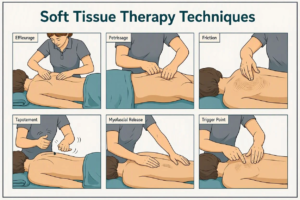
Soft tissue massage is one of the most familiar manual techniques.
During treatment, the practitioner can use controlled movements across muscles and surrounding tissues. Depending on the purpose of the session, these movements may include:
- Gliding strokes
- Kneading
- Compression
- Circular movements
- Rhythmic pressure
- Targeted manual contact
The practitioner can also adjust the pressure from gentle to moderately firm.
For example, a general session may cover a larger area, while clinical treatment may focus on a specific region associated with discomfort or movement limitations.
Someone who spends several hours at a computer may benefit from treatment around the neck, shoulders, and upper back. In contrast, an athlete may need treatment around muscles that receive a high training load.
Most importantly, more pressure does not automatically produce better results.
2. Deep Tissue Techniques
Deep tissue techniques generally use slower and more focused pressure than lighter massage approaches.
People often choose this type of treatment when they want more targeted work around areas that feel particularly tense or uncomfortable.
The practitioner can gradually apply pressure while monitoring the person’s response. Therefore, the technique does not have to involve aggressive or painful movements.
In fact, excessive pressure may create unnecessary soreness. For that reason, the practitioner should consider:
- The treatment area
- Current symptoms
- Tissue sensitivity
- Previous injuries
- Physical condition
- Treatment goals
- Individual tolerance
Communication also matters. If the pressure feels excessive, the patient should tell the practitioner so they can modify the technique.
3. Myofascial Techniques
Myofascial techniques focus on muscles and fascia.
Fascia is connective tissue that surrounds and connects many structures throughout the body. Practitioners may use sustained pressure, slow movements, stretching, or other manual approaches when working with these tissues.
People may seek myofascial treatment when they experience:
- A sensation of tightness
- Restricted movement
- Exercise-related stiffness
- Localized discomfort
- Reduced flexibility
However, practitioners use the term “myofascial release” in different ways. Therefore, patients should focus on the practical goals of treatment instead of expecting one specific physiological effect from every technique.
The goal may simply involve making movement more comfortable or helping the person participate more easily in active rehabilitation.
4. Trigger Point Techniques
Trigger point techniques use focused pressure around areas of muscular sensitivity or tension.
People often describe these areas as “knots.” However, the word “knot” does not necessarily represent a specific medical diagnosis.
During treatment, the practitioner may locate a sensitive area and apply controlled pressure while observing the patient’s response.
The treatment can feel noticeable, but it should remain tolerable.
If the pressure causes sharp, severe, or unusual pain, the practitioner should modify the approach.
Furthermore, recurring sensitivity may require more than repeated manual treatment. Strength, mobility, training load, work habits, sleep, and other factors may also deserve attention.
5. Compression Techniques
Compression involves applying controlled pressure to a particular muscle or area of soft tissue.
The practitioner may use the hands, fingers, or other appropriate contact methods. Compared with broad massage movements, compression allows the practitioner to focus more directly on a selected area.
The practitioner can change the pressure and duration according to the patient’s response.
In some treatment approaches, compression can also accompany movement. For example, the practitioner may apply controlled pressure while the patient performs a gentle range-of-motion exercise.
As a result, the session can connect hands-on treatment with active movement.
6. Kneading Techniques
Kneading involves rhythmic compression and movement of soft tissues.
This technique commonly appears in traditional massage approaches and can cover larger muscle groups.
The practitioner can adjust:
- Speed
- Pressure
- Direction
- Treatment area
- Duration
Kneading may support relaxation and comfortable movement. In addition, practitioners may use it as part of a broader sports recovery session.
Nevertheless, the appropriate intensity depends on the individual.
Someone with sensitive tissues may need lighter treatment, while another person may tolerate firmer pressure. Therefore, the practitioner should adapt the technique rather than follow a fixed pressure level.
7. Gliding Techniques
Gliding techniques involve smooth movements across the surface of soft tissues.
Practitioners often use these movements at the beginning of a session because they allow gradual introduction of pressure.
In addition, gliding movements can connect different techniques during the same treatment.
For example, the practitioner may begin with broader movements, identify areas of increased sensitivity, and then gradually introduce more focused treatment.
This gradual approach can improve comfort and give the practitioner useful feedback about the patient’s response.
8. Friction Techniques
Friction techniques use smaller and more focused movements over selected areas.
Some manual therapy approaches use friction around muscles and other soft tissues. However, practitioners should apply these methods carefully.
Not every painful tendon or muscle needs aggressive friction. In fact, recently irritated tissues may respond poorly to excessive pressure.
Therefore, the practitioner should consider the person’s condition, symptom history, tissue sensitivity, and treatment goals before choosing this approach.
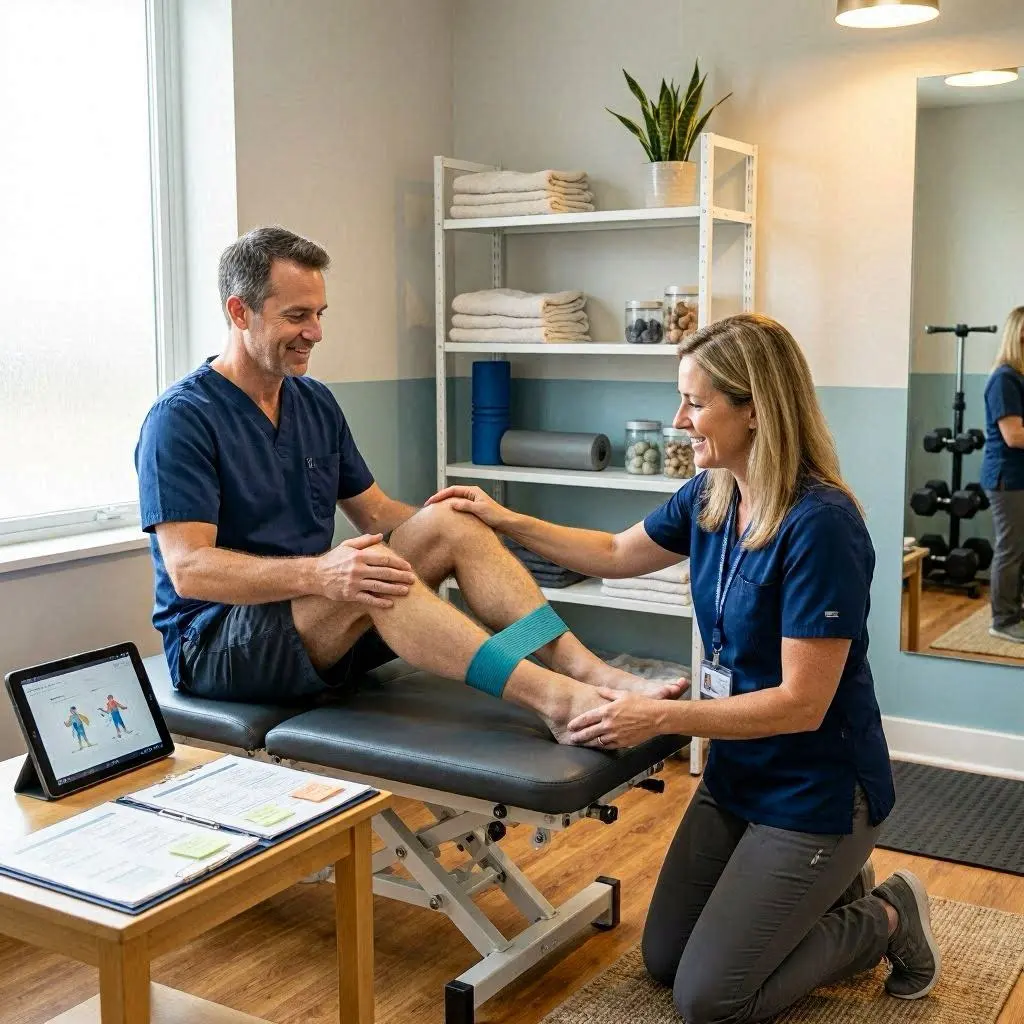
9. Assisted Stretching
Assisted stretching involves the practitioner helping a person move through a controlled range of motion.
This approach may support mobility when flexibility forms part of the person’s treatment goals.
For example, a practitioner may assist with gentle stretching of:
- Hamstrings
- Calves
- Hip muscles
- Shoulders
- Chest muscles
- Neck muscles
However, the appropriate range depends on the person’s condition.
Aggressive stretching does not automatically create better flexibility. Instead, excessive stretching can irritate sensitive tissues.
Consequently, the practitioner should distinguish between a normal stretching sensation and pain that suggests the movement needs modification.
10. Sports Soft Tissue Techniques
Sports-focused soft tissue treatment considers physical activity and training demands.
Athletes may place substantial loads on their muscles through:
- Running
- Jumping
- Strength training
- Repetitive movements
- Competition
- Acceleration
- Deceleration
- High training volume
Therefore, sports soft tissue treatment may target areas that receive considerable workload.
For example, a runner may receive treatment around the calves, thighs, hips, or other areas depending on their symptoms and training demands.
However, soft tissue therapy should complement proper training management rather than replace it.
Athletes also need appropriate:
- Sleep
- Nutrition
- Recovery
- Strength training
- Training progression
- Rest
- Activity management
Thus, manual treatment works best as one component of a complete recovery strategy.
11. Muscle-Specific Manual Techniques
Sometimes treatment focuses on one particular muscle or muscle group.
This approach may make sense when a specific region contributes to the person’s symptoms or movement limitations.
A practitioner may work with muscles around the:
- Neck
- Shoulders
- Upper back
- Lower back
- Hips
- Thighs
- Calves
- Forearms
However, muscles rarely work in isolation.
For example, a person’s shoulder movement depends on several joints and muscle groups. Therefore, treatment may combine local soft tissue techniques with mobility and strengthening exercises.
Soft Tissue Techniques for Neck and Shoulder Tension
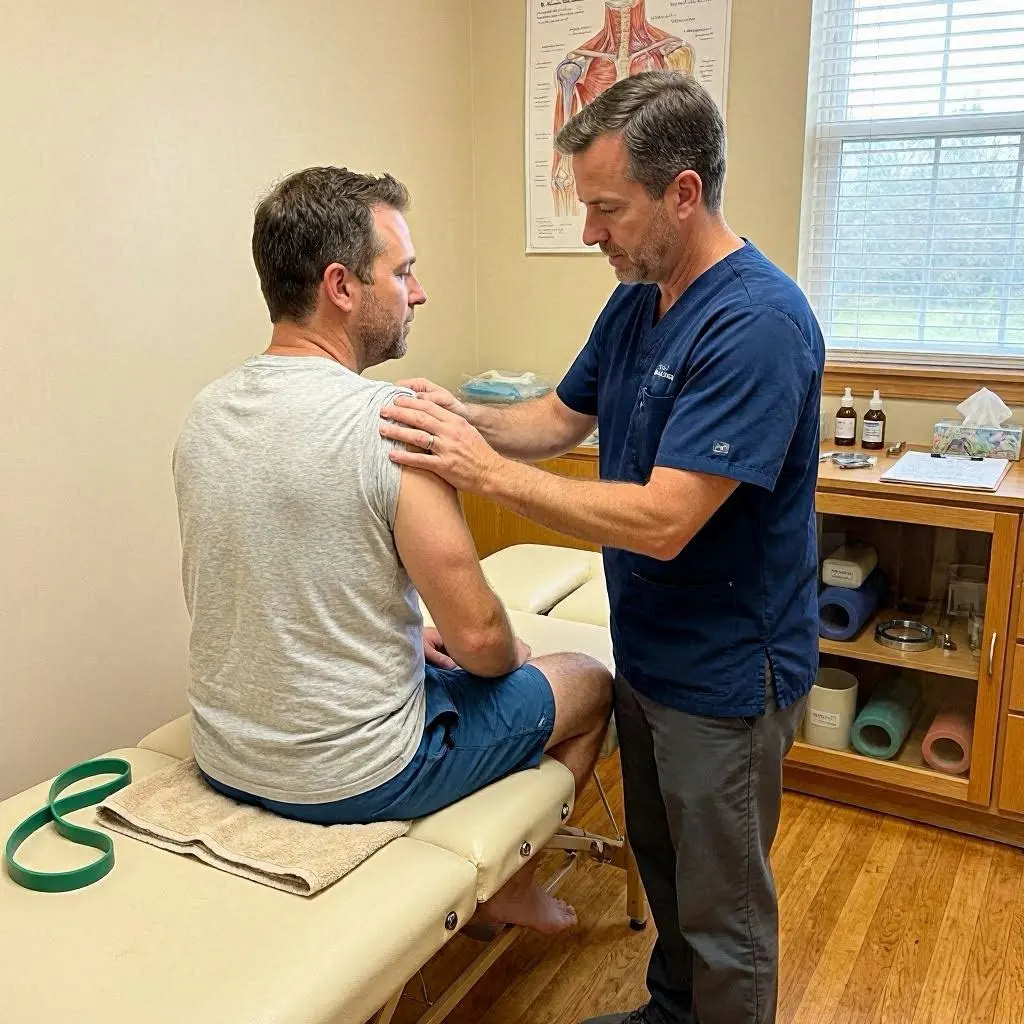
Neck and shoulder tension is a common reason people seek manual therapy.
Long periods of computer work, repetitive activities, exercise, stress, and sustained positions can contribute to feelings of tightness.
Therefore, treatment may combine gentle massage, targeted pressure, myofascial techniques, and mobility exercises.
The practitioner may also consider:
- Neck mobility
- Shoulder movement
- Upper-back mobility
- Workstation habits
- Exercise levels
- Sleep
- Strength
- Muscle endurance
Research suggests that massage may provide short-term benefits for some people with neck or shoulder pain. However, evidence remains mixed, and massage does not consistently outperform active treatments.
Consequently, recurring neck or shoulder symptoms may require a broader assessment.
Soft Tissue Techniques for Back Discomfort
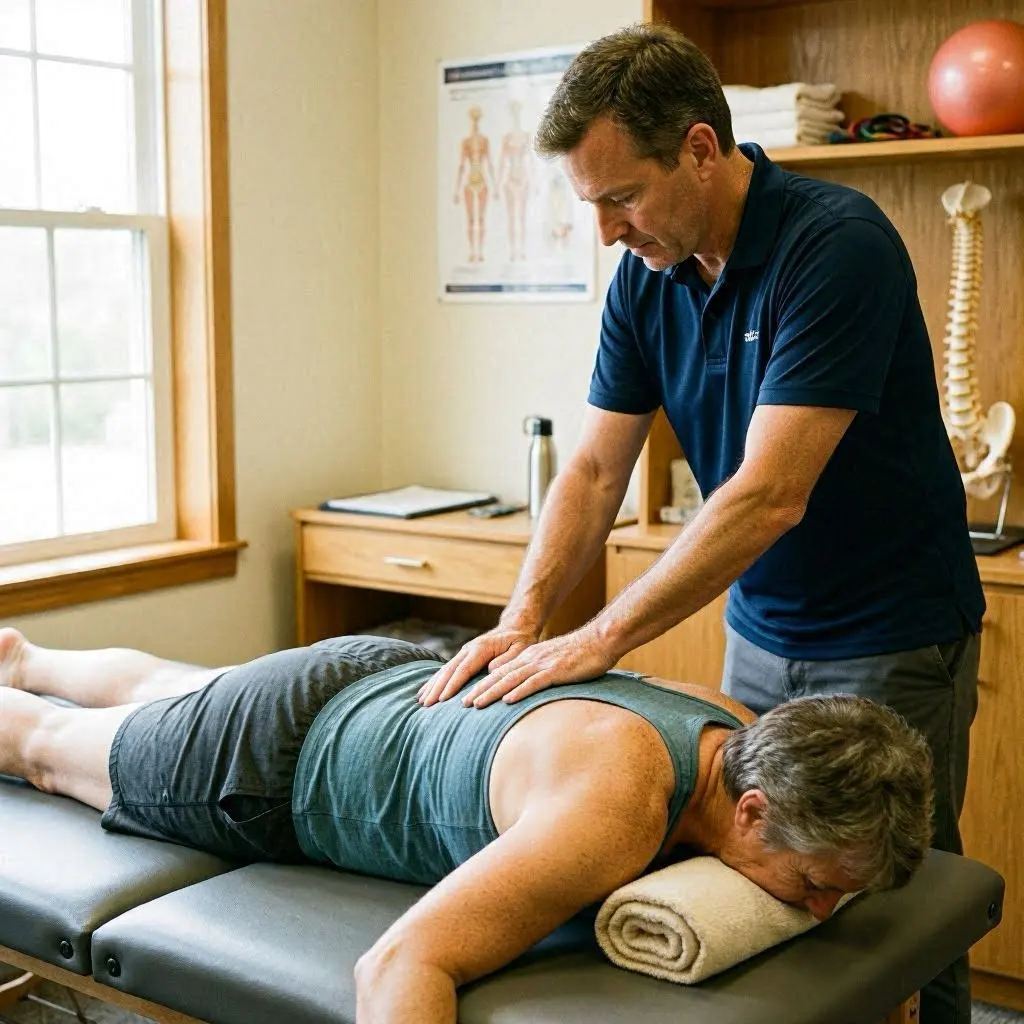
Practitioners also commonly use soft tissue treatment around the lower back and surrounding muscles.
Treatment may target:
- Lower-back muscles
- Gluteal muscles
- Hip muscles
- Upper-back muscles
- Muscles around the pelvis
For some people with low-back pain, massage can provide short-term improvements in pain. However, the evidence remains limited, and research does not establish massage as a universal long-term solution.
Therefore, a broader plan may include:
- Strengthening
- Mobility exercises
- Walking
- Functional training
- Activity modification
- Education
- Gradual return to normal activities
The right combination depends on the person’s symptoms and individual assessment.
Soft Tissue Techniques for Sports Recovery
After demanding exercise, athletes may experience temporary soreness and stiffness.
Soft tissue treatment can sometimes help an athlete feel more comfortable and mobile during recovery. However, soreness after exercise does not automatically mean that the tissue needs aggressive treatment.
Instead, recovery depends on several factors, including training load, rest, sleep, nutrition, and overall physical conditioning.
For that reason, athletes should not rely on massage alone.
A balanced recovery plan can combine appropriate training progression, sufficient rest, strength work, and other recovery strategies. Soft tissue treatment can then complement those efforts when appropriate.
Soft Tissue Therapy and Physiotherapy
Soft tissue techniques can complement physiotherapy because both approaches can contribute to a broader rehabilitation strategy.
Physiotherapy can address goals such as:
- Strength
- Mobility
- Balance
- Coordination
- Functional movement
- Exercise tolerance
- Return to activity
Meanwhile, manual treatment may temporarily make movement more comfortable.
For example, someone with shoulder stiffness might receive soft tissue treatment before performing mobility and strengthening exercises.
At Ritz Clinic, soft tissue therapy focuses on the individual’s symptoms, movement patterns, physical activity, lifestyle, and treatment goals. The clinic can also combine soft tissue treatment with broader rehabilitation when appropriate.
You can learn more about the Soft Tissue Therapy service at Ritz Clinic.
Soft Tissue Therapy and Exercise (Soft Tissue Therapy Techniques)
Exercise plays an important role in many musculoskeletal rehabilitation programs.
Although manual treatment can provide short-term comfort, exercise can help develop physical capacity over time.
Depending on the person’s needs, a program may include:
- Strength training
- Mobility exercises
- Stretching
- Balance exercises
- Core training
- Resistance exercises
- Walking
- Functional movements
For example, someone with recurring calf tightness may need more than repeated massage. Their program may also address calf strength, ankle mobility, running volume, and gradual training progression.
Similarly, someone with recurring shoulder tension may benefit from strengthening and movement exercises alongside manual treatment.
Therefore, exercise can help turn short-term improvements in comfort into longer-term improvements in physical capacity.
Can Soft Tissue Therapy Improve Mobility?
Some people feel more mobile immediately after manual treatment.
For example, reduced discomfort may allow a person to move a joint more comfortably. However, temporary changes do not automatically create long-term improvements.
Consequently, active movement can play an important role after hands-on treatment.
If a person feels more comfortable moving the shoulder after treatment, for instance, they may use that opportunity to perform appropriate mobility exercises.
Similarly, someone with lower-body stiffness may benefit from walking, strengthening, or controlled movement after treatment.
This approach creates a useful connection between passive treatment and active rehabilitation.
How a Soft Tissue Therapy Session Works
A professional session generally begins with an assessment or discussion.
The practitioner may ask about:
- Your symptoms
- Main areas of concern
- Previous injuries
- Exercise routine
- Work activities
- Physical demands
- Treatment goals
- Medical history
- Previous treatment
Next, the practitioner may observe movement or assess the relevant soft tissues.
Based on the findings, they can choose appropriate techniques.
During the session, the practitioner can adjust pressure and technique according to your response. Therefore, communication remains important.
Tell your practitioner if:
- The pressure feels too strong
- You experience sharp pain
- You notice numbness
- You feel unusually uncomfortable
- You want the pressure changed
- A specific area requires attention or avoidance
Afterward, the practitioner may recommend exercises, movement strategies, recovery advice, or activity modifications.
How Often Should Soft Tissue Therapy Be Used?
There is no universal treatment schedule.
Some people may use manual therapy occasionally for relaxation or exercise recovery. Others may receive treatment as part of a structured rehabilitation plan.
The appropriate frequency can depend on:
- Symptoms
- Treatment goals
- Physical workload
- Recovery demands
- Response to previous sessions
- Exercise program
- Other treatments
Therefore, more frequent treatment does not automatically mean better results.
If a person repeatedly needs treatment for the same problem without improving their function, the practitioner should reassess the overall strategy.
The plan may then include strengthening, mobility work, activity modification, or referral for further assessment when necessary.
Does Soft Tissue Therapy Have to Hurt?
No.
Pain should not serve as the main measurement of treatment effectiveness.
Some techniques can create noticeable pressure or mild temporary discomfort. However, severe pain is unnecessary.
If treatment causes significant or prolonged soreness, tell your practitioner.
A qualified professional can modify:
- Pressure
- Speed
- Technique
- Treatment area
- Duration
Consequently, the session can remain appropriate for the person’s tolerance and condition.
What Should You Do After Soft Tissue Treatment?
After treatment, many people can continue normal activities. However, the right activity level depends on the treatment and the person’s condition.
Your practitioner may recommend:
- Gentle movement
- Prescribed exercises
- Temporary reduction in intense activity
- Gradual return to exercise
- Recovery strategies
- Monitoring your symptoms
Complete rest does not automatically make sense for every person.
Instead, appropriate movement can help maintain physical capacity while the person progresses through rehabilitation.
Soft Tissue Therapy Safety
Soft tissue treatment has a generally low risk of harmful effects when a trained practitioner uses appropriate techniques. Nevertheless, serious adverse events have rarely occurred, particularly with vigorous techniques or in people who have higher risks.
For this reason, practitioners should consider the person’s health history before treatment.
Tell your practitioner about:
- Recent injuries
- Previous surgeries
- Medical conditions
- Medications
- Bleeding disorders
- Pregnancy
- Significant swelling
- Skin problems
- Other relevant health concerns
In particular, NCCIH notes that people with certain conditions or those taking anticoagulant medications may need to avoid forceful or deep tissue massage.
Therefore, appropriate screening matters just as much as technique selection.
When Should You Avoid Soft Tissue Treatment?
A practitioner may recommend delaying or modifying treatment when a person has:
- A recent significant injury
- Suspected fracture
- Acute severe swelling
- Unexplained severe pain
- Active infection
- Open wounds
- Significant bruising
- Certain vascular conditions
- Unexplained neurological symptoms
However, the appropriate precautions depend on the individual.
If you are unsure whether massage or manual treatment is safe, discuss your situation with an appropriate healthcare professional first.
Also, do not use soft tissue treatment as a substitute for medical evaluation when symptoms appear severe, unexplained, or rapidly worsen.
Choosing the Right Soft Tissue Therapy Technique (Soft Tissue Therapy Techniques)
There is no single technique that works best for everyone.
Instead, a practitioner should consider several factors.
Your Symptoms
First, consider where the discomfort occurs, when it started, and which activities affect it.
Your Activity Level
Next, consider your normal physical demands.
An athlete, office worker, construction worker, and older adult may require completely different treatment strategies.
Your Goals
Your goals also matter.
You may want:
- Relaxation
- Short-term comfort
- Improved movement
- Exercise recovery
- Support during rehabilitation
- Preparation for physical activity
Each goal can influence the treatment approach.
Your Medical History
Previous injuries, surgeries, medications, and medical conditions can affect which techniques are appropriate.
Your Tolerance
Finally, your pressure tolerance matters.
Some people prefer gentle treatment, while others tolerate firmer pressure.
Therefore, effective treatment should adapt to the person rather than forcing everyone into the same technique.
Combining Soft Tissue Techniques With Active Rehabilitation
One of the most practical ways to use soft tissue treatment involves combining it with active rehabilitation.
For example, someone with recurring shoulder discomfort might follow a plan that includes:
- Initial assessment
- Appropriate soft tissue treatment
- Shoulder mobility exercises
- Strengthening exercises
- Workstation adjustments
- Gradual return to normal activities
Similarly, an athlete with recurring lower-leg tightness might receive:
- Movement assessment
- Targeted soft tissue techniques
- Mobility work
- Strength training
- Training-load adjustments
- Sport-specific progression
As a result, the treatment plan addresses both immediate comfort and longer-term physical capacity.
Soft Tissue Therapy at Ritz Clinic
Ritz Clinic provides personalized Soft Tissue Therapy based on the individual’s symptoms, physical activity, movement patterns, lifestyle, and goals.
The clinic’s approach can include different manual techniques depending on the person’s needs. In addition, soft tissue therapy may complement physiotherapy, chiropractic care, massage therapy, osteopathy, or injury rehabilitation when appropriate.
The goal is not simply to apply the strongest possible pressure.
Instead, treatment should remain appropriate to the person’s condition and comfort.
For someone experiencing muscular tension, stiffness, exercise-related discomfort, or movement limitations, an individualized assessment can help determine whether soft tissue therapy fits their goals.
How to Get Better Results From Soft Tissue Therapy
Communicate During Treatment
First, explain what you feel during the session.
Clear communication allows your practitioner to adjust pressure and technique.
Follow Your Home Program (Soft Tissue Therapy Techniques)
If your practitioner recommends exercises, follow the program consistently.
However, do not add large amounts of extra exercise simply because the exercises feel easy. Instead, increase activity gradually.
Manage Your Training Load
If you exercise regularly, avoid sudden increases in training volume.
A gradual progression gives your body time to adapt.
Prioritize Recovery
Sleep, nutrition, hydration, rest, and appropriate activity all contribute to recovery.
Therefore, massage should form part of a broader recovery strategy rather than replace these fundamentals.
Focus on Function
Finally, look beyond temporary relief.
Ask whether you can:
- Move more comfortably
- Exercise more confidently
- Work with less discomfort
- Walk farther
- Perform daily activities more easily
- Return to sport
These functional improvements can provide useful information about progress.
Frequently Asked Questions About Soft Tissue Therapy Techniques
What are Soft Tissue Therapy Techniques?
Soft Tissue Therapy Techniques are hands-on methods that target muscles, fascia, and surrounding soft tissues. They can include massage, deep tissue techniques, myofascial techniques, compression, targeted pressure, and assisted stretching.
What is the most common soft tissue technique?
Massage is one of the most common forms of soft tissue treatment. However, the most appropriate technique depends on the person’s symptoms, goals, physical condition, and treatment area.
Is deep tissue massage better than regular massage?
Not necessarily. Deeper pressure does not automatically create better results. Instead, the practitioner should select the appropriate pressure according to the individual’s condition and tolerance.
Can soft tissue therapy reduce muscle tightness?
It may temporarily reduce the sensation of tightness and make movement feel more comfortable. However, recurring tightness may also require attention to strength, mobility, physical workload, recovery, and other factors.
Can soft tissue therapy help back pain?
Massage may provide short-term improvements for some people with low-back pain. However, research has found that the evidence remains limited, so massage should not be considered a universal long-term solution.
Can soft tissue therapy help neck pain?
Massage may provide short-term benefits for some people with neck or shoulder pain. Nevertheless, evidence remains mixed, so persistent symptoms may require a broader assessment.
Should soft tissue therapy hurt?
No. Treatment does not need to cause significant pain. Mild pressure or temporary discomfort can occur with some techniques, but severe pain is not necessary.
Can athletes use soft tissue therapy?
Yes. Athletes may use soft tissue treatment as part of a broader recovery or rehabilitation program. However, manual therapy should complement proper training, recovery, sleep, nutrition, and strength work.
Can soft tissue therapy improve flexibility?
It may temporarily improve comfortable movement when muscle tension contributes to restricted movement. However, long-term mobility also depends on active movement and physical conditioning.
How often should I receive soft tissue therapy?
There is no standard schedule. Frequency depends on symptoms, treatment goals, activity level, response to treatment, and whether manual therapy forms part of a larger rehabilitation plan.
Can soft tissue therapy replace physiotherapy?
Not always. Soft tissue therapy can complement physiotherapy, but physiotherapy can address broader goals such as strength, balance, mobility, coordination, functional movement, and rehabilitation.
When should I see a healthcare professional instead?
Seek appropriate medical assessment when pain is severe, rapidly worsening, unexplained, follows significant trauma, or occurs alongside symptoms such as progressive weakness, significant numbness, loss of coordination, fever, or other concerning symptoms.
Final Thoughts (Soft Tissue Therapy Techniques)
Soft Tissue Therapy Techniques include a wide range of hands-on methods that work with muscles and surrounding soft tissues.
Massage, deep tissue techniques, myofascial approaches, targeted pressure, compression, assisted stretching, and sports-focused treatment can all have different roles. However, the appropriate technique depends on the individual’s condition and goals.
Most importantly, effective treatment does not require the strongest possible pressure.
Instead, a good approach considers symptoms, physical condition, activity level, treatment goals, medical history, and tolerance. For some people, hands-on treatment can provide short-term comfort and make movement feel easier. For others, active rehabilitation may play a more important role.
Current evidence suggests that massage may provide short-term benefits for certain pain conditions, although the quality and consistency of evidence vary.
Therefore, soft tissue therapy should generally serve as one component of care rather than a guaranteed cure.
For recurring problems, combining manual treatment with mobility exercises, strengthening, gradual activity progression, appropriate recovery, and professional assessment can create a more comprehensive strategy.
At Ritz Clinic, Soft Tissue Therapy can be personalized around symptoms, movement patterns, physical activity, lifestyle, and individual goals. When appropriate, it can also complement physiotherapy, chiropractic care, massage therapy, osteopathy, and injury rehabilitation.
Ultimately, the purpose of soft tissue treatment should remain practical: helping people move more comfortably, participate in meaningful activities, and develop better physical function over time.