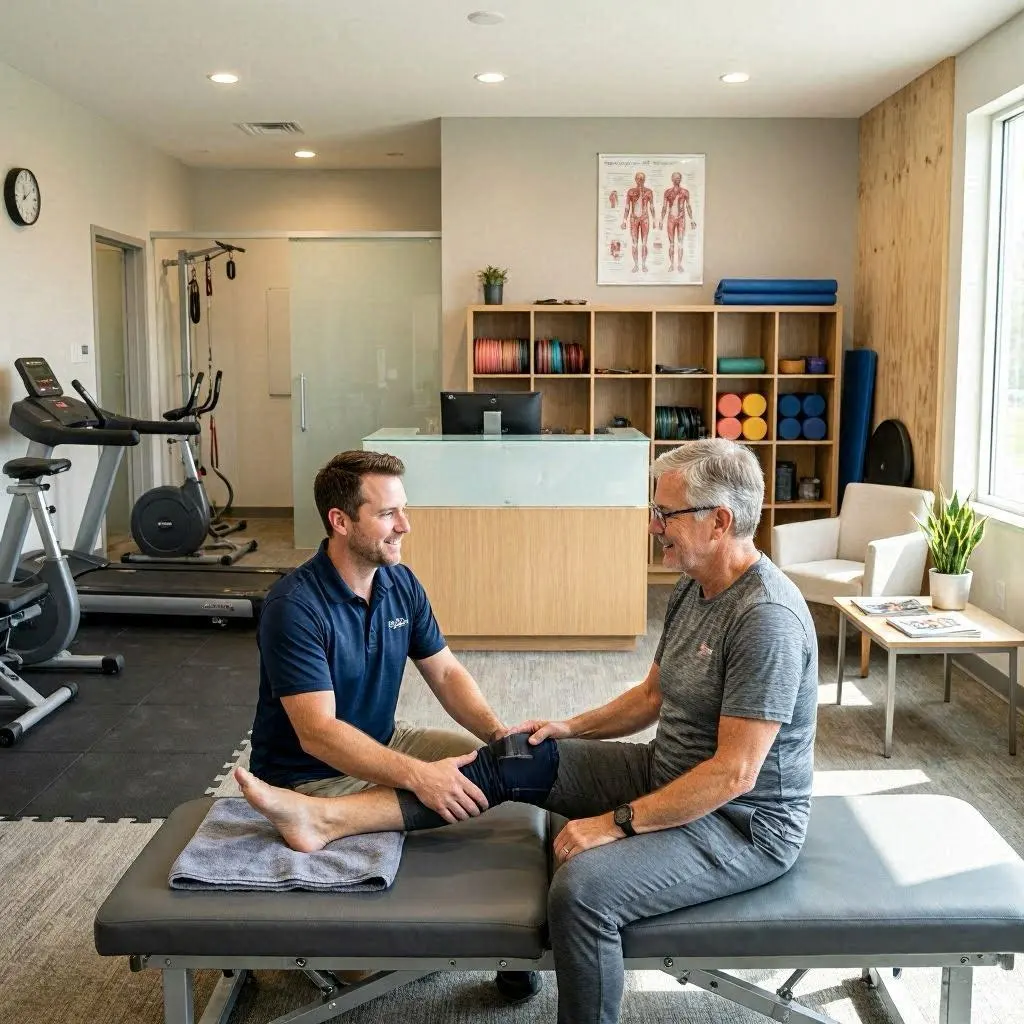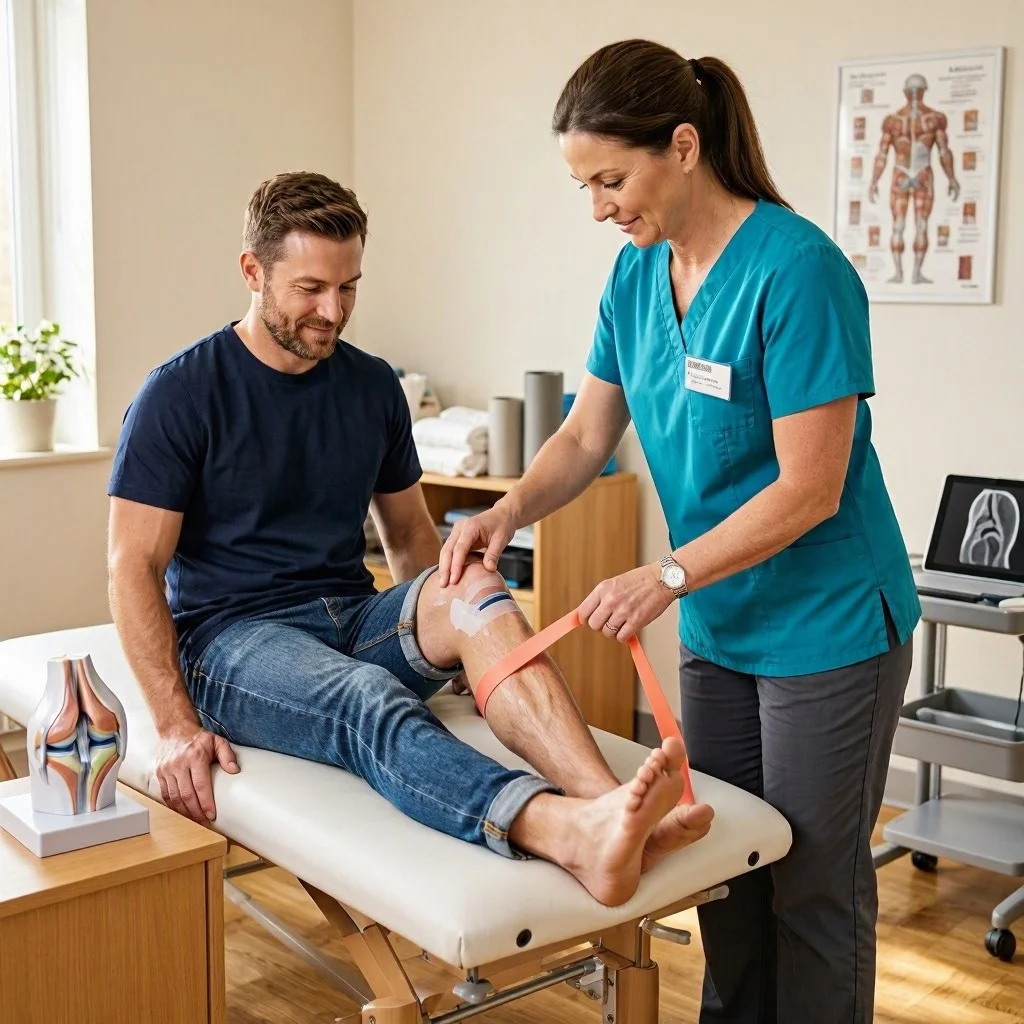
Physiotherapy for Meniscus Injuries: Exercises, Treatment, and Recovery
A meniscus injury can make everyday activities such as walking, climbing stairs, bending the knee, and getting up from a chair uncomfortable. For athletes, a torn meniscus may also interfere with running, jumping, and changing direction. The good news is that many meniscus injuries can be managed with an appropriate rehabilitation plan, and some people improve without surgery. Physiotherapy for meniscus injuries focuses on reducing symptoms, restoring knee movement, improving muscle strength, and helping patients return to daily activities safely. The right approach depends on the type of tear, the severity of symptoms, the patient’s activity level, and whether surgery is necessary.
Some injuries respond well to non-surgical treatment, while others require assessment by an orthopaedic specialist. Rehabilitation also plays an important role after meniscus surgery, although the exercises and restrictions differ depending on whether the meniscus was repaired or partially removed.
This guide explains how meniscus injuries occur, how physiotherapy can help, which exercises may be used during rehabilitation, how recovery progresses, and when medical assessment is important.
What Is the Meniscus?
The meniscus is a crescent-shaped piece of fibrocartilage inside the knee joint. Each knee has two menisci: the medial meniscus on the inner side and the lateral meniscus on the outer side.
These structures help distribute forces between the thighbone and shinbone. They also contribute to joint stability, load absorption, and smooth movement during walking, running, and other activities.
The menisci are important because the knee experiences substantial forces throughout the day. When a person walks, climbs stairs, squats, or participates in sports, the menisci help distribute pressure across the joint.
A tear can occur suddenly during a twisting movement or develop gradually as the tissue changes with age. Not every meniscus tear causes symptoms, and an abnormal finding on an MRI does not automatically mean that surgery is required.
The most appropriate treatment depends on the clinical examination, symptoms, tear characteristics, and the patient’s goals.
What Causes a Meniscus Injury?
Meniscus injuries can develop through several mechanisms. Understanding how the injury occurred can help a healthcare professional determine the next steps.
Sudden Twisting Movements
A traumatic meniscus tear may occur when the foot remains planted while the knee twists. This mechanism is common in sports such as football, basketball, tennis, and skiing.
Sudden changes in direction, awkward landings, and deep twisting movements under load may place substantial stress on the knee.
Deep Squatting and Heavy Loading
Deep knee bending combined with rotation or heavy loading can aggravate the meniscus. However, ordinary squatting does not automatically cause an injury. Risk depends on the circumstances, tissue condition, movement, and load.
Age-Related Changes
As people get older, the meniscal tissue can become less resilient. A tear may develop during a relatively ordinary activity, such as rising from a chair or turning while walking.
These injuries are often described as degenerative meniscus lesions. They may occur alongside osteoarthritis or other changes in the knee joint.
Other Knee Injuries (Physiotherapy for Meniscus Injuries)
Meniscus tears can occur alongside ligament injuries, including an anterior cruciate ligament (ACL) injury. When several structures are involved, rehabilitation may need to address more than the meniscus alone.
For this reason, significant swelling, instability, or difficulty bearing weight after an injury should not be managed solely with home exercises.
Common Symptoms of a Meniscus Tear
Symptoms vary according to the location and size of the tear. Some people experience sudden pain after a twisting injury, while others notice gradually increasing discomfort.
Common symptoms include:
- Pain along the inner or outer joint line of the knee.
- Swelling or stiffness, sometimes developing over several hours.
- Difficulty fully bending or straightening the knee.
- Discomfort during twisting, squatting, or kneeling.
- Clicking or catching sensations during movement.
- A feeling that the knee may give way.
- Difficulty walking or using stairs.
A knee that becomes physically locked and cannot fully straighten requires prompt medical assessment. A locked knee may indicate a displaced meniscus tear or another problem that needs specific treatment.
Swelling, pain, and clicking can also occur with other knee conditions. A healthcare professional can assess the symptoms and determine whether imaging or specialist referral is appropriate.
How Physiotherapy Helps With Meniscus Injuries
Physiotherapy aims to improve knee function while respecting the healing requirements of the injured tissue. It does not involve performing the same exercises for every patient.
A treatment programme may include the following components.
1. Managing Pain and Swelling
Pain and swelling can make it difficult to bend the knee, activate the thigh muscles, or walk normally. Early rehabilitation may focus on reducing excessive irritation and making basic movement more comfortable.
Depending on the injury, a physiotherapist may recommend temporarily reducing aggravating activities, using a cold pack wrapped in a towel, elevating the leg, or following a clinician’s advice about compression.
Cold therapy may provide temporary symptom relief, but it does not repair the meniscus itself. Avoid placing ice directly against the skin.
2. Restoring Knee Range of Motion
Some patients develop stiffness because swelling limits movement or because they avoid bending the knee due to pain.
When appropriate, gentle range-of-motion exercises help maintain or restore the ability to bend and straighten the knee.
The permitted range depends on the injury and whether surgery has taken place. After meniscus repair, certain bending movements may be restricted for a period to protect the repair.
3. Strengthening the Quadriceps (Physiotherapy for Meniscus Injuries)
The quadriceps are the muscles at the front of the thigh. They help straighten the knee and control movements such as standing up, walking, and climbing stairs.
Pain and swelling can reduce quadriceps activation. A physiotherapist may introduce gentle muscle contractions first, then progress to more demanding strengthening exercises as symptoms improve.
4. Strengthening the Hips and Lower Limb
The muscles around the hips and pelvis influence lower-limb movement during walking, squatting, and changing direction.
Strengthening the hip muscles, quadriceps, and other muscles around the leg can improve functional control. The appropriate exercises depend on the patient’s current ability and any restrictions associated with the injury.
5. Improving Balance and Neuromuscular Control
After a knee injury, a person may feel less confident when standing on one leg or changing direction.
Progressive balance exercises can help retrain coordination and control. More challenging exercises may be introduced later when the knee can tolerate them safely.
6. Returning to Everyday Activities
Physiotherapy also focuses on practical goals, such as walking comfortably, using stairs, returning to work, or resuming recreational activities.
A good rehabilitation plan measures progress through symptoms, movement, strength, and function rather than relying on pain levels alone.
For more information about treatment options, visit Ritz Clinics Physiotherapy. A clinician can help determine whether physiotherapy alone is appropriate or whether further assessment is necessary.
Can a Meniscus Tear Heal Without Surgery?
Yes, some meniscus injuries can be managed without surgery. However, the likelihood of improvement depends on the type of tear, its location, knee stability, associated injuries, and the patient’s symptoms.
The outer portion of the meniscus has a better blood supply than the inner portion. Consequently, healing potential differs across the tissue. Even so, blood supply alone cannot determine whether a particular tear will heal.
When Non-Surgical Treatment May Be Appropriate
A conservative treatment plan may be considered for selected patients, including some people with degenerative meniscus lesions and some stable acute tears.
Treatment may involve:
- Modifying activities that provoke symptoms.
- Gradually restoring comfortable knee movement.
- Strengthening the quadriceps and hip muscles.
- Improving balance and lower-limb control.
- Monitoring changes in pain, swelling, and function.
The 2025 international EU–US meniscus rehabilitation consensus identifies non-operative management, including physical therapy, as a first-line approach for degenerative meniscus lesions. It may also be an option for selected acute tears.
However, these recommendations do not mean every tear should be treated without surgery. Some injuries require specialist assessment, particularly when the knee is locked, the tear may be repairable, or other structures are damaged.
When Surgery May Be Considered
An orthopaedic specialist may consider surgery when the tear pattern, symptoms, and examination indicate that an operation could provide a meaningful benefit.
Examples include selected displaced tears that restrict knee movement or certain acute tears that may be suitable for repair.
When surgery is necessary, preserving meniscal tissue is an important consideration whenever clinically appropriate. The best treatment is determined individually rather than by MRI findings alone.
Meniscus Injury Exercises Used in Physiotherapy
The exercises below are examples of movements that may be included in rehabilitation. They are not a universal programme, and they should not replace an assessment.
Important: If you have recently undergone surgery, follow your surgeon’s and physiotherapist’s instructions. The exercises permitted after a meniscus repair can differ significantly from those allowed after partial meniscectomy.
1. Quadriceps Sets
Quadriceps sets involve contracting the thigh muscles without repeatedly bending the knee. They may be introduced early in rehabilitation when the exercise is permitted.
How to perform the exercise:
- Lie on your back with the affected leg supported.
- Keep the knee in the position recommended by your clinician.
- Gently tighten the muscles at the front of the thigh.
- Hold the contraction for approximately three to five seconds if comfortable.
- Relax fully before repeating.
Begin with a small number of repetitions and assess your response.
Potential benefit: Quadriceps sets can help maintain muscle activation when pain or swelling makes more demanding exercises difficult.
Do not force the knee straight against a painful restriction. After surgery, the permitted knee position may depend on the procedure.
2. Heel Slides
Heel slides are a controlled knee-bending exercise that may help maintain or restore range of motion when bending is permitted.
How to perform the exercise:
- Lie on your back on a comfortable surface.
- Slowly slide the heel toward your body.
- Bend the knee only within the range allowed by your clinician.
- Pause briefly if comfortable.
- Slide the heel back to the starting position.
Use a small range initially if the knee feels stiff.
Potential benefit: This movement helps practise controlled knee flexion without requiring standing or lifting weights.
Stop if the exercise causes sharp pain, increasing swelling, or a catching sensation. After a meniscus repair, follow the specific bending limits provided by your surgical team.
3. Straight Leg Raises (Physiotherapy for Meniscus Injuries)
Straight leg raises may help strengthen the quadriceps while limiting movement at the knee, provided the patient can perform the exercise correctly.
How to perform the exercise:
- Lie on your back with one knee bent and the affected leg positioned as directed.
- Gently tighten the thigh muscles.
- If permitted, lift the affected leg a short distance while keeping the knee straight.
- Pause briefly.
- Lower the leg slowly and rest.
Start with a few repetitions rather than pushing to fatigue.
Potential benefit: The exercise can help maintain quadriceps strength during a period when standing exercises are not yet appropriate.
If you cannot keep the knee straight or the movement causes pain, stop and ask your physiotherapist for an alternative.
4. Sit-to-Stand Practice
Sit-to-stand exercises help train a movement used frequently in everyday life.
How to perform the exercise:
- Sit on a stable chair at a comfortable height.
- Place both feet securely on the floor.
- Lean forward slightly from the hips.
- Stand up slowly, using your hands for support if necessary.
- Sit down with control.
Begin with a higher chair or additional support if needed.
Potential benefit: This exercise can improve functional strength and confidence when rising from a chair.
Avoid deep knee bending or forcing your weight through a painful knee. Your physiotherapist can adjust the chair height and movement range to suit your recovery stage.
5. Supported Calf Raises
Calf raises strengthen the muscles at the back of the lower leg and can help support walking and standing.
How to perform the exercise:
- Stand near a stable surface for support.
- Keep your feet approximately hip-width apart.
- Slowly rise onto your toes if comfortable.
- Lower your heels in a controlled manner.
- Repeat only as tolerated.
This exercise may be introduced once weight-bearing is permitted and comfortable.
Potential benefit: Stronger calf muscles contribute to general lower-limb function.
If you have been instructed to limit weight-bearing after surgery, do not attempt standing calf raises until your clinician approves them.
6. Hip Strengthening
Hip-strengthening exercises may be included because the muscles around the pelvis contribute to lower-limb control.
Depending on your condition, your physiotherapist may select exercises such as side-lying hip abduction or supported standing hip movements.
General approach:
- Begin in a stable position.
- Move the leg slowly within a comfortable range.
- Avoid twisting through the injured knee.
- Use support where necessary.
- Stop if the exercise increases knee pain or swelling.
The exact exercise should be selected according to your balance, strength, and weight-bearing restrictions.
7. Balance Training
Balance training may be introduced after the knee becomes more comfortable and the clinician determines that standing exercises are safe.
A basic progression may begin with standing on both feet near a stable support. More challenging tasks may later involve shifting weight between the legs or briefly standing on one leg.
Do not begin with unstable surfaces or eyes-closed exercises if your balance is uncertain.
Potential benefit: Progressive balance work can improve coordination and confidence during daily activities and sports preparation.
8. Step-Up Exercises
Step-ups may be used later in rehabilitation to practise climbing stairs and controlling the knee under load.
How to approach the exercise:
- Use a low, stable step.
- Hold a handrail or other secure support.
- Step up slowly if your clinician has approved the movement.
- Maintain control rather than pushing off forcefully.
- Step down carefully.
Begin with a low step and a small number of repetitions.
Step-ups may not be suitable during the early stages of an acute injury or after surgery when loading restrictions remain in place.
A Phased Physiotherapy Plan for Meniscus Injuries
Rehabilitation usually progresses through stages. The timing depends on the injury, the treatment approach, and the patient’s response. The stages below describe general principles rather than a fixed calendar.
Phase 1: Protect the Knee and Manage Symptoms
The initial goal is to reduce unnecessary irritation and preserve safe movement.
Depending on the injury, the plan may involve:
- Temporarily avoiding twisting and deep squatting.
- Managing swelling as advised by a clinician.
- Using walking aids if recommended.
- Performing permitted quadriceps activation.
- Maintaining movement within the allowed range.
The aim is to prevent avoidable stiffness and muscle deconditioning without aggravating the injured tissue.
Phase 2: Restore Movement and Basic Strength
Once symptoms allow, rehabilitation may focus on improving knee range of motion and restoring basic muscle activation.
A clinician may introduce heel slides, quadriceps exercises, straight leg raises, and carefully selected functional movements.
Progress depends on the knee’s response. Increasing swelling, worsening pain, or reduced movement may indicate that the workload needs adjustment.
Phase 3: Build Strength and Functional Control
When basic movement and loading become more comfortable, exercises may become progressively more challenging.
This stage may include:
- Sit-to-stand practice.
- Progressive quadriceps strengthening.
- Hip-strengthening exercises.
- Supported balance training.
- Step-ups when appropriate.
The objective is to improve the knee’s ability to tolerate everyday activities and prepare for more demanding tasks.
Phase 4: Return to Higher-Level Activity
Patients who want to return to running, gym training, or competitive sport may need additional rehabilitation.
Depending on the sport and the injury, training may include progressive resistance exercises, controlled single-leg movements, balance tasks, running progression, and eventually sport-specific drills.
High-impact activity and sudden changes of direction should not be resumed simply because a certain number of weeks has passed. The knee should meet appropriate functional criteria and the treating clinician’s requirements.
Physiotherapy After Meniscus Surgery (Physiotherapy for Meniscus Injuries)
Rehabilitation after surgery is essential, but the correct programme depends on the procedure performed.
Two common procedures are partial meniscectomy and meniscus repair. These operations have different implications for tissue healing and exercise progression.
Physiotherapy After Partial Meniscectomy
During a partial meniscectomy, the surgeon removes the damaged portion of the meniscus while preserving as much healthy tissue as possible.
Recovery may focus on:
- Managing swelling and discomfort.
- Restoring knee extension and flexion.
- Rebuilding quadriceps strength.
- Improving walking mechanics.
- Progressing to functional and strengthening exercises.
Some patients can increase weight-bearing relatively early after this procedure, but the actual plan depends on the surgeon’s instructions and any additional procedures.
Physiotherapy After Meniscus Repair (Physiotherapy for Meniscus Injuries)
During meniscus repair, the surgeon uses sutures or another technique to preserve and reattach the torn tissue.
Because the repair needs time to heal, rehabilitation may involve restrictions on weight-bearing, knee bending, or particular exercises.
The programme may progress through protected movement, muscle activation, strength development, balance training, and eventual sport-specific activity.
Do not copy a rehabilitation plan intended for partial meniscectomy if you have undergone meniscus repair. The procedures are different, and the wrong exercise progression may place unnecessary stress on the healing tissue.
Why Surgical Protocols Matter
The 2025 EU–US consensus on meniscus rehabilitation emphasizes that postoperative care varies according to the procedure and clinical circumstances. Recovery decisions should account for both time and functional progress.
The surgeon and physiotherapist should coordinate restrictions and progression, especially when the patient has also undergone ligament reconstruction or another knee procedure.
How Long Does Recovery From a Meniscus Injury Take?
There is no single recovery timeline for all meniscus injuries.
Some people with uncomplicated symptoms improve over several weeks with activity modification and rehabilitation. Others require several months, particularly when the injury is more complex or surgery has taken place.
Recovery depends on factors such as:
- The location, pattern, and severity of the tear.
- Whether the injury is acute or degenerative.
- The presence of osteoarthritis or other knee injuries.
- The type of treatment performed.
- The patient’s strength, activity demands, and general health.
- Whether symptoms and function improve during rehabilitation.
After partial meniscectomy, patients may progress more quickly than those who undergo meniscus repair, because repair requires protection of the healing tissue. However, individual outcomes vary.
Returning to everyday walking is also different from returning to competitive sport. A person may walk comfortably before they have sufficient strength, balance, and control for sprinting or changing direction.
A realistic recovery plan should therefore use clinical assessment and functional milestones rather than promising that everyone will recover within a particular number of weeks.
When Should You See a Doctor for a Meniscus Injury?
Not every episode of knee pain requires emergency treatment, but some symptoms deserve prompt assessment.
Seek urgent medical evaluation if:
- Your knee is locked and you cannot fully straighten it.
- You cannot bear weight after a significant injury.
- The knee becomes severely swollen soon after trauma.
- The knee appears deformed.
- You develop a hot, red knee with fever or feel generally unwell.
- You experience significant instability or suspect an associated ligament injury.
A clinician can assess the injury, determine whether imaging is needed, and decide whether conservative treatment or specialist referral is appropriate.
Do not assume that clicking or swelling confirms a meniscus tear. Similar symptoms can occur with ligament injuries, cartilage problems, osteoarthritis, and other knee conditions.
How to Prevent Future Meniscus Injuries
Although not every meniscus injury can be prevented, good movement preparation and appropriate training may help reduce overall knee injury risk.
Warm Up Before Sport
Begin with light activity and progressively introduce movements relevant to your sport. Sudden, intense activity without preparation may place unnecessary demands on the knee.
Improve Leg Strength
Progressive strengthening of the quadriceps, hamstrings, hips, and calf muscles can support lower-limb function.
Choose resistance and exercise ranges that match your ability and increase the workload gradually.
Practise Balance and Movement Control
Sport-specific training can include controlled landing, deceleration, balance, and direction-change drills. These exercises should be introduced progressively and supervised when necessary.
Avoid Sudden Increases in Training Load
Increasing training volume, intensity, and frequency simultaneously can make it harder to adapt safely. Build activity gradually and allow enough recovery between demanding sessions.
Respond to Persistent Symptoms
Do not repeatedly train through increasing pain, swelling, or reduced knee movement. Early assessment may help identify the problem and guide appropriate activity modification.
Frequently Asked Questions About Physiotherapy for Meniscus Injuries
1. Is physiotherapy effective for a meniscus tear?
Physiotherapy can help improve movement, strength, and function in many people with meniscus injuries. It may be used as non-surgical treatment or as part of postoperative rehabilitation. Results depend on the type of tear and other clinical factors.
2. Can a meniscus tear heal with physiotherapy alone?
Some injuries improve with conservative management, although symptom improvement does not necessarily mean the torn tissue has structurally healed. Degenerative meniscus lesions are often initially managed without surgery. Some acute tears also respond to non-operative care, while others require specialist assessment.
3. What are the best exercises for a meniscus injury?
Depending on the stage of recovery, exercises may include quadriceps sets, heel slides, straight leg raises, hip strengthening, balance work, and functional exercises. The best selection depends on pain, swelling, injury characteristics, and any postoperative restrictions.
4. Should I walk with a meniscus tear?
Walking may be appropriate for some stable injuries, but it depends on pain, swelling, stability, and weight-bearing instructions. If you cannot bear weight comfortably or your knee repeatedly gives way, seek medical assessment instead of forcing yourself to walk.
5. Can I squat with a meniscus tear?
Deep squats may aggravate some meniscus injuries, especially when combined with twisting or heavy loading. Squatting may be reintroduced gradually when appropriate, but the permitted depth and resistance should be based on your symptoms and rehabilitation plan.
6. How long does physiotherapy take for a meniscus injury?
The duration varies. Some non-surgical cases improve over several weeks, while more complex injuries and postoperative rehabilitation can take months. Progress should be assessed through movement, strength, swelling, and functional ability.
7. Is physiotherapy necessary after meniscus surgery?
Rehabilitation is commonly recommended after meniscus surgery to restore movement, strength, and function. The programme must follow the specific surgical protocol, because partial meniscectomy and meniscus repair require different precautions.
8. When can I return to sport after a meniscus tear?
Return to sport depends on the injury, treatment, symptoms, strength, balance, and ability to perform sport-specific movements. After surgery, the treating team should consider both time since the procedure and functional readiness. Do not return solely because pain has decreased.
9. Does every meniscus tear require an MRI?
Not every knee problem requires an MRI. A clinician may diagnose or assess a suspected meniscus injury using the injury history, physical examination, and other tests. Imaging may be recommended when the result could change treatment decisions.
10. Can an untreated meniscus tear cause long-term problems?
The consequences vary. Some tears remain relatively stable, while others cause persistent pain, swelling, catching, or functional limitation. A clinician can help determine whether monitoring, rehabilitation, imaging, or specialist treatment is appropriate.
Final Thoughts: Choosing the Right Physiotherapy Plan
Physiotherapy for meniscus injuries can play an important role in restoring knee movement, improving strength, and helping patients return to daily activities. For some people, a structured non-surgical programme may be appropriate. For others, specialist assessment or surgery may be necessary.
The key is to match rehabilitation to the type of injury. Early treatment may focus on swelling, comfortable movement, and muscle activation. Later stages can introduce progressive strengthening, balance work, and functional training. After surgery, the programme must follow the restrictions and milestones established by the surgical team.
Avoid forcing painful movements, rushing back to sport, or copying a rehabilitation plan intended for a different procedure. If your knee is locked, severely swollen, unstable, or difficult to bear weight on, seek medical assessment.
For support with knee rehabilitation, explore Ritz Clinics Physiotherapy and discuss your symptoms with a qualified healthcare professional. An individualized plan can help you work toward improved mobility, strength, and confidence while respecting the needs of your knee.
Medical disclaimer: This article is for educational purposes and does not replace an individual diagnosis or treatment plan. The appropriate exercises and recovery timeline depend on the injury and any surgical procedure. Follow your healthcare professional’s advice.