Chiropractic Posture Correction: Complete Guide to Better Posture and Movement
Modern lifestyles have changed the way many people sit, work, travel, exercise, and use technology. Long hours at a desk, frequent smartphone use, limited physical activity, and repetitive movements can all influence how a person holds and moves their body. Over time, these habits may contribute to stiffness, discomfort, muscle tension, or difficulty maintaining a comfortable posture. This is why chiropractic posture correction is a topic that receives attention from people who want to improve their movement habits and address musculoskeletal discomfort.
Posture is more than simply sitting or standing with a perfectly straight back. It involves the way different parts of the body work together during movement and while maintaining different positions. A personalized approach may therefore consider spinal mobility, joint movement, muscle strength, flexibility, daily activities, workstation habits, and the symptoms a person experiences.
Chiropractic care may include assessment, manual techniques, mobility work, exercise recommendations, and lifestyle guidance depending on the individual’s needs. Spinal manipulation is one technique used by chiropractors, although it is only one component of chiropractic care. According to the National Center for Complementary and Integrative Health (NCCIH), spinal manipulation may provide modest improvements in pain and function for some people with low-back pain, while evidence for neck pain varies in quality. NCCIH’s information on spinal manipulation provides a detailed overview of the evidence and safety considerations.
This guide explains chiropractic posture correction, common posture-related habits, how a chiropractic assessment may work, potential benefits, exercises and lifestyle strategies, and when professional assessment may be appropriate.
What Is Chiropractic Posture Correction?
Chiropractic posture correction refers to a personalized approach that may help a person understand and improve movement and positioning patterns that contribute to discomfort or functional limitations.
The phrase “posture correction” can sometimes create the impression that there is one perfect posture that everyone should maintain throughout the day. In reality, healthy movement is more dynamic.
People naturally change positions while sitting, standing, walking, lifting, working, and sleeping. Staying in one position for too long may be more problematic than occasionally sitting or standing in a particular posture.
Therefore, chiropractic posture correction generally focuses on improving movement habits and physical function rather than forcing the body into one rigid position.
Depending on an individual’s needs, care may involve:
- Postural assessment
- Spinal and joint mobility assessment
- Muscle and movement assessment
- Manual therapy
- Spinal manipulation when appropriate
- Mobility exercises
- Strengthening exercises
- Stretching
- Ergonomic recommendations
- Home exercises
- Lifestyle guidance
The specific approach should depend on the person’s symptoms, physical findings, health history, and goals.
Why Does Posture Matter?
Posture affects how the body distributes loads during everyday activities.
When you sit at a desk, for example, your head, neck, shoulders, upper back, pelvis, and legs all contribute to your overall position. If you remain in one position for several hours, some tissues may become uncomfortable even if the position itself is not inherently harmful.
For example, a person who spends eight hours working at a computer may develop:
- Neck stiffness
- Shoulder tension
- Upper-back discomfort
- Lower-back discomfort
- Headaches associated with neck tension
- Reduced movement
- General muscle fatigue
However, posture is only one potential contributor to these problems.
Sleep, stress, physical activity, previous injuries, work demands, fitness level, and other factors may also influence symptoms.
Therefore, a good posture assessment should look at the person as a whole rather than simply identifying whether the shoulders are rounded or the head is forward.
Common Posture Problems
Many people notice posture changes in specific areas of the body.
Forward Head Position
Forward head positioning occurs when the head sits farther forward relative to the trunk.
This position can commonly appear while using:
- Smartphones
- Laptops
- Desktop computers
- Tablets
- Gaming systems
A person may spend hours looking downward or forward without changing position.
Over time, this can be associated with neck stiffness and muscle discomfort.
However, having a forward head position does not automatically mean that someone has an injury. Posture should always be considered alongside symptoms, movement, and individual circumstances.
Rounded Shoulders
Rounded shoulders are another common posture concern.
People who spend significant time sitting may notice that their shoulders naturally move forward, particularly when they are focused on a screen.
Reduced upper-back movement, limited shoulder mobility, muscle weakness, or simply spending too much time in one position may contribute to the appearance of rounded shoulders.
A movement-focused approach may include exercises designed to improve upper-back mobility and shoulder strength.
Excessive Sitting
Sitting itself is not necessarily harmful.
The bigger concern is often prolonged inactivity and remaining in the same position for extended periods.
Someone who sits for several hours may benefit from regularly standing, walking, changing positions, or performing gentle movement throughout the day.
Small changes can make a workstation routine more dynamic.
Poor Desk Ergonomics
A poorly arranged workstation can make comfortable posture more difficult.
Common issues include:
- Monitor positioned too low or too high
- Chair without appropriate support
- Keyboard positioned too far away
- Mouse placed awkwardly
- Laptop used at an unsuitable height
- Feet unsupported
- Long periods without movement breaks
Ergonomics cannot eliminate every source of discomfort, but a better workstation setup can make healthy movement habits easier.
What Happens During a Chiropractic Posture Assessment?
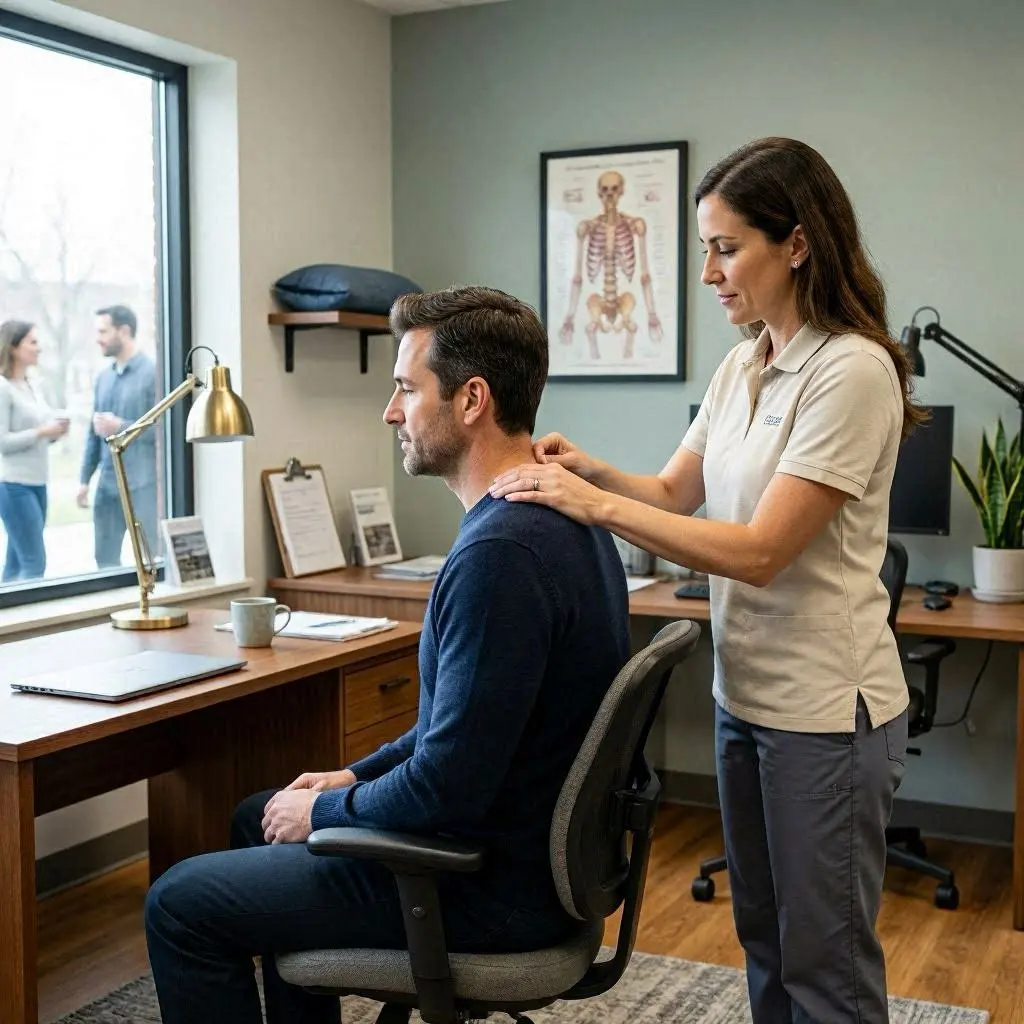
A chiropractic posture assessment may begin with a conversation about your symptoms, daily activities, previous injuries, and goals.
A chiropractor may ask questions such as:
- Where do you feel discomfort?
- When did the symptoms begin?
- What activities make them worse?
- What activities make them better?
- How many hours do you spend sitting?
- Do you exercise regularly?
- What type of work do you perform?
- Have you experienced previous injuries?
- Do you have any relevant medical conditions?
The chiropractor may then evaluate movement and physical function.
Depending on the situation, the assessment may include observation of:
- Standing posture
- Walking
- Spinal movement
- Neck movement
- Shoulder movement
- Hip movement
- Balance
- Muscle function
- Joint mobility
The purpose is not simply to identify whether someone “has bad posture.”
Instead, the assessment can help identify factors that may be contributing to symptoms or movement limitations.
Chiropractic Posture Correction and Spinal Mobility
Spinal mobility can play an important role in comfortable movement.
The spine naturally moves through flexion, extension, rotation, and side bending. Different regions of the spine contribute differently to these movements.
If someone spends most of the day in a limited range of positions, they may feel stiff when they attempt movements they rarely perform.
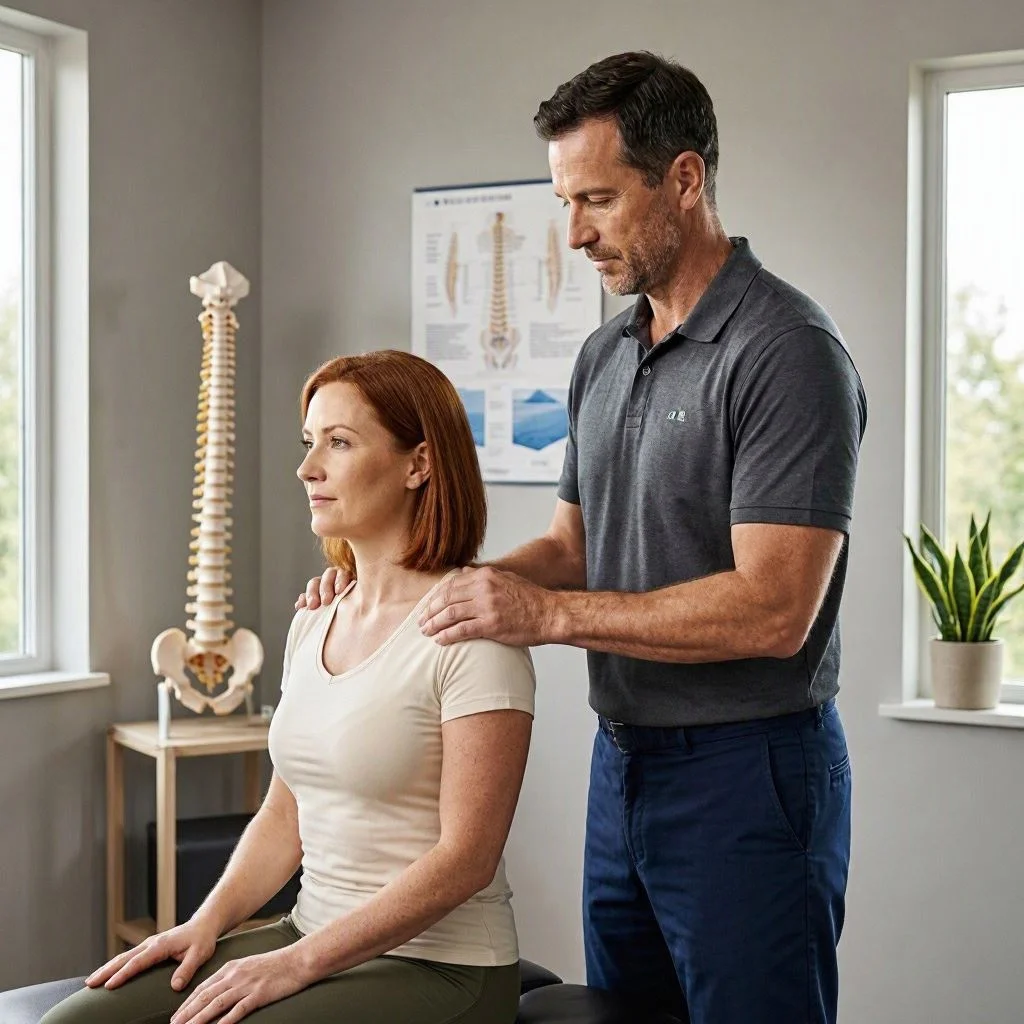
A chiropractor may assess spinal movement and, when appropriate, use manual techniques to address restricted movement.
However, treatment should not be based solely on the idea that a specific spinal segment is “out of place.”
The body is complex, and discomfort does not always indicate that a bone has moved out of position.
Instead, a modern movement-focused approach can consider mobility, strength, coordination, symptoms, activity, and functional goals together.
What Is Spinal Manipulation?
Spinal manipulation is a manual technique in which a practitioner applies a controlled force to a spinal joint.
Chiropractors commonly use spinal manipulation, although other healthcare professionals may also use similar techniques.
It is important to distinguish spinal manipulation from the broader concept of chiropractic posture correction.
Posture correction does not require spinal manipulation in every case.
A person may benefit from exercise, mobility work, ergonomic changes, education, or other approaches depending on their assessment.
Research summarized by NCCIH indicates that spinal manipulation may produce small improvements in pain and function for some adults with acute or chronic low-back pain. Research on neck pain suggests possible benefits as well, although evidence quality varies. NCCIH’s evidence overview also discusses possible temporary side effects and the importance of appropriate assessment.
Potential Benefits of Chiropractic Posture Correction
The potential benefits depend on the individual’s condition and the techniques used.
Improved Awareness of Movement Habits
One useful benefit can be increased awareness.
Many people do not realize how often they:
- Lean toward one side
- Sit without moving
- Hold their shoulders tensely
- Look down at a phone
- Work with an awkward screen position
- Avoid certain movements
Understanding these patterns can make it easier to change them.
Better Mobility
If stiffness contributes to discomfort, mobility exercises and manual therapy may help a person move more comfortably.
Improved movement can make daily tasks easier and may help someone return to activities they previously avoided.
Support for Exercise
Posture work should not replace general physical activity.
Instead, it can complement an exercise program.
A person may combine mobility exercises with:
- Walking
- Resistance training
- Core strengthening
- Cardiovascular exercise
- Stretching
- Recreational activities
The appropriate combination depends on the person’s health, fitness, symptoms, and goals.
Improved Workstation Habits
Posture-focused care may also encourage better workstation habits.
This can include adjusting:
- Chair height
- Screen position
- Keyboard placement
- Mouse position
- Foot support
- Desk height
The goal is not to create a rigid position that must be maintained for eight hours.
Instead, the workstation should allow comfortable movement and frequent changes in position.
Support for Back and Neck Comfort
Some people seek chiropractic care because they experience neck or back discomfort.
Spinal manipulation is one of several non-drug approaches that may be considered for certain types of low-back pain. NCCIH reports modest benefits for some people, while emphasizing that evidence varies and that treatment decisions should consider the individual situation.
If you are experiencing persistent symptoms, an individualized assessment can help determine whether chiropractic care is appropriate.
Chiropractic Posture Correction for Desk Workers
Desk workers are particularly likely to spend long periods in the same position.
A typical workday may involve several hours of:
- Sitting
- Typing
- Looking at a monitor
- Using a mouse
- Reading
- Attending online meetings
The problem is not necessarily one particular sitting posture.
Instead, a lack of movement can become a larger issue.
Take Regular Movement Breaks
Instead of remaining seated continuously, consider short movement breaks throughout the day.
For example, you can:
- Stand during a phone call
- Walk for a few minutes
- Perform gentle shoulder movements
- Change your sitting position
- Stretch your legs
- Walk to get water
These small changes can make the workday more active.
Adjust Your Screen
Your screen should be positioned so that you can work without constantly bending your neck downward.
If you work primarily from a laptop, an external keyboard and mouse can make it easier to raise the screen to a more comfortable height.
Avoid Staying Rigid
Trying to maintain a perfectly straight posture for hours can create unnecessary tension.
Instead, allow your body to move.
Change positions regularly and use the workstation setup to make comfortable movement easier.

Chiropractic Posture Correction for Smartphone Users
Smartphones have become a major part of daily life.
People often use them while:
- Sitting
- Walking
- Lying in bed
- Commuting
- Working
- Watching television
Looking downward for long periods can contribute to neck discomfort in some people.
Instead of worrying about achieving a perfect neck position, focus on changing positions regularly.
You can:
- Raise the phone closer to eye level
- Take breaks from looking down
- Alternate hands
- Avoid long uninterrupted sessions
- Perform gentle neck and upper-back movements
The goal is not to stop using your phone. It is to create healthier movement habits around its use.
Exercises That May Support Better Posture
Exercise can be an important part of posture-focused care.
The exact exercises should depend on the person’s physical condition and goals. However, several broad categories may be useful.
Upper-Back Mobility
Gentle upper-back mobility exercises can help people who spend much of the day sitting.
Movement can include controlled thoracic extension and rotation exercises.
The objective is to improve comfortable movement rather than force the spine into a specific position.
Shoulder Blade Strengthening
Strengthening the muscles around the shoulder blades can support shoulder movement and upper-body function.
Exercises may include:
- Rows
- Scapular retraction exercises
- Resistance-band movements
- Controlled pulling exercises
The appropriate resistance and technique depend on the individual.
Core Strengthening
Core exercises can help develop trunk strength and control.
Examples may include:
- Dead bugs
- Bridges
- Planks
- Bird-dog exercises
However, not everyone needs the same exercises.
A professional assessment can help determine which movements are appropriate.
Hip Mobility
The hips contribute significantly to posture and movement.
Limited hip mobility may influence how someone sits, stands, bends, or exercises.
Depending on the person, a program may include hip mobility exercises and strengthening.
Can Chiropractic Posture Correction Fix Bad Posture Permanently?
There is no simple answer.
Posture is influenced by habits, physical activity, strength, mobility, environment, work demands, and individual anatomy.
Therefore, no single treatment can guarantee permanent posture correction.
Even if a person improves their movement pattern, returning to long periods of inactivity may bring old habits back.
Long-term improvement usually depends on maintaining useful habits.
This may involve:
- Regular exercise
- Frequent movement
- Appropriate workstation setup
- Mobility work
- Strength training
- Healthy activity levels
- Awareness of uncomfortable movement patterns
The goal should be sustainable improvement rather than achieving a perfect posture.
Chiropractic Posture Correction vs. Physiotherapy
Chiropractic care and physiotherapy can overlap in some areas, particularly when addressing musculoskeletal pain, movement limitations, and physical function.
Both professions may use exercise, manual techniques, education, and movement-based strategies.
However, the exact approach depends on the practitioner and the individual’s needs.
Some people may benefit from physiotherapy, while others may consider chiropractic care. In some situations, coordinated care may be appropriate.
If your main concern involves restoring movement after an injury, you can also explore Ritz Clinic’s Physiotherapy services.
The most important factor is matching the assessment and treatment approach to the person’s actual condition rather than choosing a treatment based only on the name of the therapy.
Chiropractic Posture Correction After an Injury
Posture may change after an injury because people naturally protect painful areas.
For example, someone with shoulder pain may hold the arm differently. A person with back pain may move more cautiously.
These temporary changes can affect movement patterns.
After an injury, the priority should be appropriate assessment and recovery.
Depending on the injury, rehabilitation may include:
- Pain management
- Mobility exercises
- Strengthening
- Movement retraining
- Gradual return to activity
- Functional exercises
People recovering from significant injuries may benefit from coordinated rehabilitation.
If your symptoms started after an accident or sports injury, professional assessment can help determine the safest approach.
Chiropractic Posture Correction for Neck Discomfort
Neck discomfort is one of the common reasons people become interested in posture.
Long periods of screen use, repetitive activities, stress, and limited movement can contribute to neck symptoms.
However, neck pain can have many causes.
Chiropractic care may be considered for certain musculoskeletal neck problems. Research summarized by NCCIH suggests spinal manipulation or mobilization may help some people with chronic neck pain, although the evidence is not uniformly strong.
Because the neck contains important nerves and blood vessels, appropriate screening is particularly important before cervical manipulation.
A practitioner should review relevant symptoms and medical history before recommending treatment.
Chiropractic Posture Correction for Back Discomfort
Back discomfort can also lead people to seek posture correction.
Poor movement habits may contribute to discomfort for some people, but back pain is not always caused by posture.
Back pain can have many different causes, and treatment should reflect the individual’s symptoms and clinical findings.
Spinal manipulation is one possible non-drug approach for certain types of low-back pain.
NCCIH reports that research has found modest improvements in pain and function for some people with acute and chronic low-back pain following spinal manipulation.
Exercise, staying active, education, and other treatments may also play important roles.
How to Maintain Better Posture During the Day
Posture improvement does not need to involve constant self-correction.
Instead, create an environment that encourages movement.
While Sitting
Try to:
- Keep both feet supported
- Use a comfortable chair
- Avoid staying in one position too long
- Adjust your screen appropriately
- Move regularly
While Standing
Try to:
- Distribute your weight comfortably
- Avoid locking your knees
- Change positions
- Walk periodically
- Avoid holding one rigid position
While Working
Try to:
- Adjust your workstation
- Keep frequently used items within comfortable reach
- Take movement breaks
- Alternate between sitting and standing if possible
- Avoid prolonged uninterrupted screen time
While Using a Phone
Try to:
- Raise the phone occasionally
- Take regular breaks
- Avoid prolonged downward-looking positions
- Change your position frequently
When Should You Consider Chiropractic Posture Correction?
You may consider a professional assessment if posture concerns are accompanied by:
- Persistent neck discomfort
- Persistent back discomfort
- Recurrent muscle tension
- Limited mobility
- Difficulty performing normal activities
- Symptoms that interfere with work or exercise
- Movement restrictions
- Recurring discomfort despite lifestyle changes
An assessment can help determine whether posture is actually contributing to the problem.
When Should You Seek Medical Attention?
Not every pain problem should be treated as a posture issue.
Seek prompt medical evaluation when symptoms are severe, rapidly worsening, associated with major trauma, or accompanied by concerning neurological symptoms.
Examples include:
- New significant weakness
- Loss of sensation
- Loss of bladder or bowel control
- Severe unexplained pain
- Loss of consciousness
- Serious injury
- Significant difficulty walking
- Other sudden or concerning neurological changes
In these situations, professional medical evaluation should take priority over routine posture correction.
Is Chiropractic Posture Correction Safe?
The safety of chiropractic treatment depends on the techniques used, the practitioner’s training, the individual’s health status, and appropriate screening.
Spinal manipulation commonly produces temporary effects such as soreness, stiffness, headache, or increased discomfort. Serious complications are rare, but they have been reported. NCCIH specifically notes that cervical manipulation has been associated with rare cervical artery dissections, although the causal relationship remains debated.
For this reason, patients should tell their practitioner about relevant medical conditions, medications, previous injuries, and other health concerns.
Treatment should also be modified or avoided when the assessment indicates that a particular technique is inappropriate.
The Importance of Active Participation
Posture improvement is not something a practitioner can accomplish entirely for you.
Manual therapy may be useful in some situations, but daily habits also matter.
Active participation can include:
- Completing recommended exercises
- Moving regularly
- Improving workstation habits
- Building strength
- Improving mobility
- Returning gradually to activities
- Paying attention to recurring symptoms
This approach can make posture-related changes more sustainable.

How Long Does Chiropractic Posture Correction Take?
There is no universal treatment timeline.
Some people may notice changes in comfort or movement relatively quickly, while others may require more time.
The timeline depends on factors such as:
- The underlying problem
- Symptom duration
- Physical activity
- Previous injuries
- Exercise consistency
- Work demands
- Lifestyle
- Individual response to treatment
A responsible approach should focus on measurable progress rather than promising a specific number of sessions.
Progress might involve:
- Greater range of motion
- Less discomfort
- Improved ability to work
- Better exercise tolerance
- Easier daily movement
- Increased confidence with physical activity
Frequently Asked Questions About Chiropractic Posture Correction
What is chiropractic posture correction?
Chiropractic posture correction is a personalized approach that may combine assessment, manual techniques, exercise, mobility work, and lifestyle guidance to help people improve movement patterns and address musculoskeletal discomfort.
Can a chiropractor fix my posture?
A chiropractor may help identify movement and lifestyle factors associated with posture and provide strategies to improve mobility, strength, and movement habits. However, there is no guarantee of permanent posture correction, and posture is influenced by many factors.
Is posture the main cause of back pain?
Not necessarily. Back pain can have many causes. Posture may contribute to discomfort in some people, but it should not automatically be considered the sole cause of pain.
Does chiropractic posture correction involve spinal adjustments?
It can, but not every person needs spinal manipulation. Treatment should be based on an individual’s assessment, symptoms, health history, and goals.
Can chiropractic care help neck posture?
Chiropractic care may be considered for some musculoskeletal neck problems. Research suggests spinal manipulation or mobilization may help certain people with neck pain, although evidence quality varies.
How can I improve my posture at work?
Start by creating a comfortable workstation, positioning your screen appropriately, supporting your feet, and taking regular movement breaks. Most importantly, avoid staying in one position for prolonged periods.
Are posture exercises useful?
Exercise can help improve strength, mobility, coordination, and physical capacity. The most appropriate exercises depend on the individual’s condition and goals.
How often should I take movement breaks?
There is no single schedule that works for everyone. A practical strategy is to avoid long uninterrupted periods in one position and regularly stand, walk, or change positions throughout the day.
Can chiropractic posture correction help with back pain?
Spinal manipulation is one of several non-drug approaches that may provide modest improvements in pain and function for some people with low-back pain. However, treatment should be individualized.
Should I see a chiropractor or physiotherapist for posture problems?
Both chiropractic care and physiotherapy may address musculoskeletal movement problems, depending on the practitioner’s approach. The best option depends on your symptoms, goals, health history, and assessment findings.
Final Thoughts
Chiropractic posture correction is best understood as a personalized approach to movement rather than a promise to place the body into one perfect position.
Posture naturally changes throughout the day. Sitting, standing, walking, exercising, and working all require different positions. Therefore, the goal should be to develop comfortable, adaptable movement habits rather than constantly forcing the body to remain rigid.
For people experiencing posture-related discomfort, a professional assessment can help identify potential contributing factors. Depending on the findings, treatment may include education, mobility exercises, strengthening, ergonomic adjustments, manual therapy, or spinal manipulation when appropriate.
Research suggests that spinal manipulation can provide modest improvements for some types of low-back pain and may help some people with neck pain, although evidence varies and treatment should be individualized.
At the same time, long-term posture and movement habits depend heavily on what happens outside the clinic. Regular physical activity, strength training, movement breaks, appropriate workstation habits, and consistent exercise can all contribute to better physical function.
If persistent pain, weakness, numbness, major trauma, or other concerning symptoms are present, medical evaluation should take priority rather than assuming that posture is the cause.
Ultimately, good posture is not about being perfectly straight all day. It is about having the mobility, strength, awareness, and flexibility to move comfortably through the activities of everyday life.