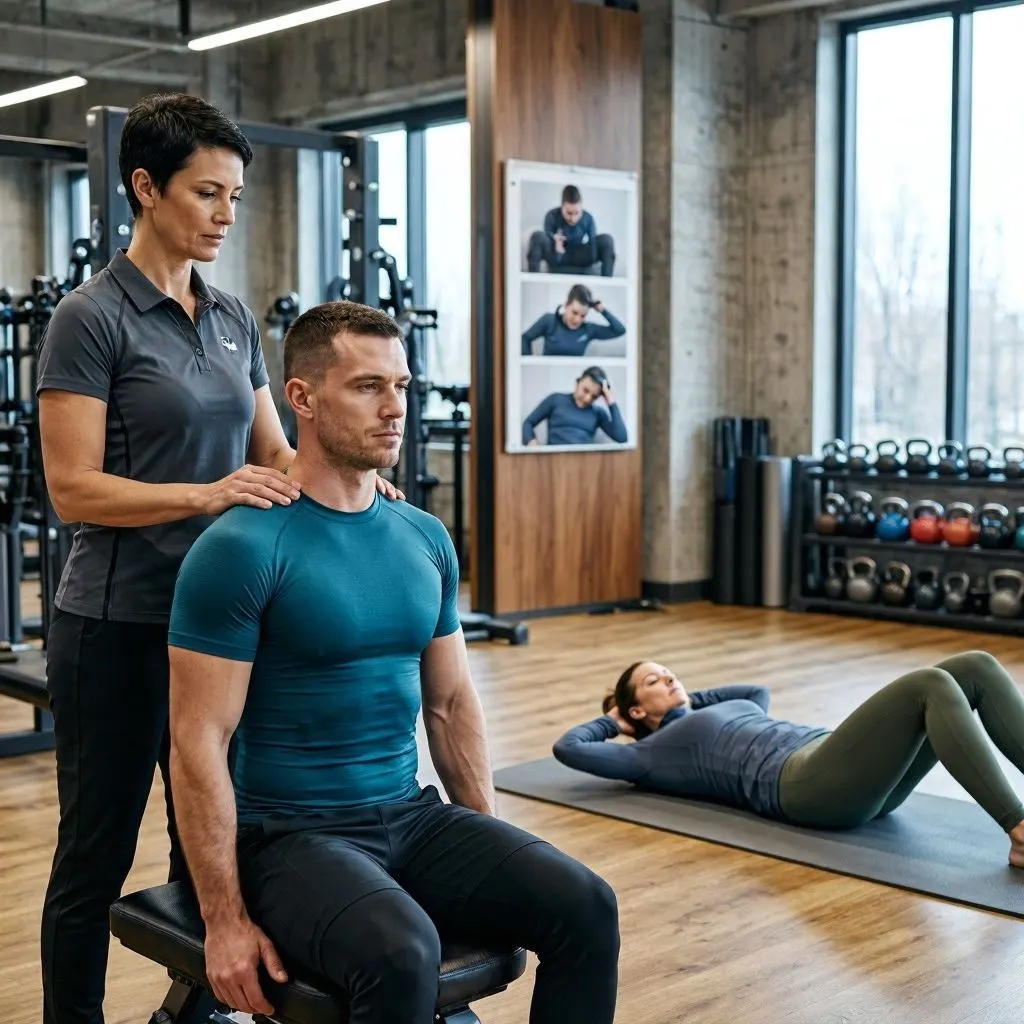
Neck Strengthening Exercises: A Complete Guide to Building Strength, Stability, and Mobility
Neck strengthening exercises can be an important part of a well-rounded exercise or rehabilitation program. The neck supports the head, contributes to movement and balance, and works closely with the shoulders and upper back during everyday activities. Developing appropriate strength and endurance in this region can help improve physical capacity and tolerance for activities such as computer work, driving, exercise, and sports.
Neck training should not be limited to people who experience pain. Athletes, office workers, older adults, and people recovering from certain injuries may all benefit from appropriately selected exercises. However, the right exercises depend on an individual’s symptoms, physical condition, previous injuries, and goals.
Neck strengthening should also be approached carefully. The cervical spine contains important nerves and other structures, and some symptoms require medical assessment rather than self-directed exercise.
This guide explains the benefits of neck strengthening, different types of exercises, beginner-friendly movements, progression strategies, common mistakes, and when professional assessment may be appropriate.
Why Is Neck Strength Important?
The neck supports the head and helps control its position during movement.
The muscles around the cervical spine also work with the shoulders and upper back to coordinate movement.
Adequate neck strength and endurance can be useful for:
- Everyday activities
- Computer work
- Driving
- Exercise
- Sports
- Lifting
- Carrying
- Maintaining movement control
Strength is only one part of neck function. Mobility, coordination, endurance, and the ability to adapt to different positions are also important.
What Are Neck Strengthening Exercises?
Neck strengthening exercises are movements designed to improve the ability of the muscles around the neck and upper body to produce or control force.
They can target different functions, including:
- Neck flexion
- Neck extension
- Rotation
- Side bending
- Isometric control
- Postural endurance
- Shoulder and upper-back support
Exercises can be performed without equipment or with resistance bands and other training tools.
The intensity should be appropriate for the individual’s physical condition.
Who Can Benefit From Neck Strengthening?
Appropriate neck exercises may benefit people who want to improve:
- Neck endurance
- General strength
- Movement control
- Physical conditioning
- Sports performance
- Postural endurance
They may also form part of rehabilitation for certain musculoskeletal conditions.
However, not everyone with neck pain should immediately begin strengthening exercises. A professional assessment may be appropriate when symptoms are persistent, severe, or associated with neurological changes.
Neck Strength and Posture
Neck strength is often discussed alongside posture.
People sometimes assume that strengthening the neck will automatically correct posture.
In reality, posture is influenced by multiple factors, including:
- Strength
- Mobility
- Work habits
- Physical activity
- Fatigue
- Individual anatomy
- Movement preferences
Neck exercises can improve physical capacity, but they do not need to force the head into one fixed position.
Neck Strengthening and Computer Users
People who spend long periods at computers may experience neck fatigue.
Computer work often involves relatively prolonged periods of sitting and looking at a screen.
A strengthening program may target:
- Neck endurance
- Deep neck muscle function
- Shoulder strength
- Upper-back strength
However, exercises should be combined with regular movement breaks and a comfortable workstation.
Understanding the Neck Muscles
Several groups of muscles contribute to neck movement and stability.
These include muscles involved in:
- Flexion
- Extension
- Rotation
- Side bending
The deep neck flexor muscles are particularly relevant to controlled cervical movement.
The muscles around the shoulders and upper back also influence how the neck functions during everyday activities.
Deep Neck Flexor Exercises
Deep neck flexor exercises are commonly included in cervical rehabilitation.
One basic movement involves gently drawing the chin backward without aggressively tilting the head downward.
The movement should be controlled and comfortable.
The objective is to develop controlled activation rather than maximum force.
A physiotherapist can provide individualized guidance on technique and progression.
Chin Tucks
Chin tucks are one of the most commonly recommended neck exercises.
To perform a basic version:
- Sit or stand comfortably.
- Look straight ahead.
- Gently draw the chin backward.
- Avoid forcing the head downward.
- Hold briefly.
- Relax.
The movement should feel controlled rather than strained.
If the exercise causes dizziness, significant pain, or unusual symptoms, stop and seek appropriate guidance.
Isometric Neck Exercises
Isometric exercises involve producing muscle tension without significant joint movement.
They can be useful when controlled strengthening is appropriate.
Common directions include:
- Flexion
- Extension
- Rotation
- Side bending
For example, a person may gently press their head against their hand while resisting movement.
The force should be controlled rather than maximal.
Isometric Neck Flexion
For a basic isometric flexion exercise:
- Sit upright.
- Place a hand against the forehead.
- Gently press the head forward against the hand.
- Prevent actual head movement.
- Hold briefly.
- Relax.
The amount of resistance should be light initially.
Isometric Neck Extension
For extension:
- Place a hand behind the head.
- Gently press the head backward.
- Resist the movement with the hand.
- Hold briefly.
- Relax.
The exercise should not involve forceful neck movement.
Isometric Side-Bending (Neck Strengthening Exercises)
Place one hand against the side of the head.
Gently attempt to move the head toward the hand while resisting the movement.
Repeat on both sides.
The goal is controlled muscle activation rather than maximal effort.
Isometric Neck Rotation
Place a hand against the side of the head.
Gently attempt to rotate the head toward the hand while preventing movement.
Repeat on the opposite side.
This exercise can help develop controlled rotational strength.
Neck Rotation Exercises
Strength should not be developed at the expense of mobility.
Controlled neck rotation can help maintain comfortable movement.
To practice:
- Sit comfortably.
- Keep the shoulders relaxed.
- Slowly rotate the head to one side.
- Return to the center.
- Repeat on the other side.
Avoid forcing the neck into its maximum range.
Neck Side-Bending Exercises
Side bending involves bringing the ear closer toward the shoulder.
A controlled movement can help maintain cervical mobility.
The shoulders should remain relatively relaxed.
Do not use the hand to force the head farther into the movement.
Neck Flexion and Extension
Controlled flexion and extension exercises can be useful when appropriate.
Move slowly and stay within a comfortable range.
These movements should not be performed aggressively or repeatedly to the point of discomfort.
Resistance Band Neck Exercises
Resistance bands can provide an additional challenge.
They may be used for controlled strengthening exercises targeting:
- Flexion
- Extension
- Rotation
- Side bending
However, resistance should be introduced gradually.
Because the neck is a sensitive area, excessive resistance is unnecessary for most people.
Neck Strengthening With a Towel
A towel can sometimes be used to provide light resistance during isometric exercises.
For example, a towel can be placed behind the head while the person gently presses backward against it.
The towel should provide controlled resistance without forcing movement.
Shoulder Strength and Neck Function
The neck does not work in isolation.
Weakness around the shoulders and upper back can influence how the upper body functions during computer work, lifting, and exercise.
Therefore, neck rehabilitation often includes exercises for:
- Trapezius muscles
- Scapular stabilizers
- Rotator cuff
- Upper back
- Core
Resistance Band Rows
Rows are a useful general exercise for strengthening the upper back.
To perform:
- Secure a resistance band.
- Hold the handles or band.
- Pull the elbows backward.
- Keep the movement controlled.
- Return slowly.
Avoid shrugging the shoulders toward the ears.
Scapular Strengthening
Scapular control can complement neck strengthening.
Exercises may include:
- Band rows
- Wall exercises
- Scapular retraction
- Controlled shoulder movements
The goal is to improve coordination rather than force the shoulder blades into one fixed position.
Upper-Back Exercises
The thoracic spine contributes to upper-body movement.
Useful exercises can include:
- Thoracic rotations
- Extension exercises
- Rows
- Reverse fly movements
Improving upper-back strength and mobility can support overall neck and shoulder function.
Core Strengthening for Neck Health
The trunk and neck are connected through the body’s movement system.
Core exercises can help develop general physical capacity.
Examples include:
- Bird dogs
- Dead bugs
- Bridges
- Planks
These exercises should complement rather than replace neck-specific strengthening.
Neck Strengthening for Athletes
Athletes may have additional reasons to develop neck strength.
Sports such as:
- Rugby
- Wrestling
- Football
- Hockey
- Martial arts
can involve physical contact or rapid head and body movements.
Sport-specific neck conditioning should be supervised when high levels of resistance or contact exposure are involved.
Neck Training for Runners
Runners may not need intensive neck strengthening, but general endurance and upper-body conditioning can support overall exercise capacity.
A balanced program may include:
- Neck mobility
- Upper-back strengthening
- Shoulder strengthening
- Core training
Running itself should remain the primary focus of running-specific conditioning.
Neck Strengthening for Office Workers
Office workers may benefit from combining neck exercises with general physical activity.
A simple routine might include:
- Chin tucks
- Gentle neck rotations
- Shoulder movements
- Band rows
- Upper-back mobility
Short movement breaks throughout the workday can complement these exercises.
Neck Strengthening for Older Adults
Maintaining physical strength becomes increasingly important with age.
Older adults may benefit from exercises that improve:
- Neck endurance
- Upper-body strength
- Balance
- General mobility
Exercises should be adapted to the individual’s abilities and health status.
Neck Strengthening After Injury
Neck strengthening may be included in rehabilitation following certain injuries.
However, the timing and exercise selection depend on the injury.
A physiotherapist may gradually introduce:
- Pain-free movement
- Isometric exercises
- Light strengthening
- Endurance training
- Functional exercises
The progression should respect medical restrictions and tissue healing.
Neck Strengthening After Whiplash
Whiplash can affect the muscles and joints around the neck.
Some individuals develop persistent symptoms after a whiplash injury.
Rehabilitation may include:
- Gentle movement
- Neck endurance
- Strengthening
- Shoulder exercises
- Upper-back conditioning
Because whiplash presentations vary, individualized assessment is important.
Neck Exercises for Headache-Related Symptoms
Some headaches can be associated with musculoskeletal factors involving the neck.
In these situations, physiotherapy may assess:
- Neck mobility
- Strength
- Upper-back function
- Muscle endurance
However, headaches have many possible causes.
New or severe headaches should be evaluated appropriately rather than automatically attributed to neck weakness.
How Often Should You Perform Neck Strengthening Exercises?
Exercise frequency depends on:
- Exercise intensity
- Individual goals
- Symptoms
- Fitness level
- Rehabilitation stage
Low-intensity endurance exercises may be performed more frequently than high-resistance exercises.
A physiotherapist can provide a personalized schedule.
How Many Repetitions Should You Do?
There is no universal repetition range for every neck exercise.
A beginner may start with:
- Low resistance
- Short holds
- Small numbers of repetitions
The difficulty can gradually increase as tolerance improves.
Quality of movement is more important than completing a large number of repetitions.
How Long Should You Hold Isometric Exercises?
Isometric exercises can begin with short holds.
For example, a person may start with several-second contractions and gradually increase duration if appropriate.
The exercise should remain controlled and comfortable.
Longer holds are not automatically better.
How to Progress Neck Exercises
Progression can occur through:
- More repetitions
- Longer holds
- Slightly greater resistance
- More challenging positions
- Improved movement control
Only one variable needs to increase at a time.
Progress should be gradual.
Common Mistakes During Neck Exercises
Several mistakes can reduce the effectiveness of neck strengthening.
Using Too Much Resistance
The neck does not generally require heavy resistance.
Moving Too Quickly
Fast movements reduce control.
Forcing Range of Motion
Neck exercises should not be aggressive.
Holding the Breath
Breathing should remain relaxed.
Ignoring Symptoms
Significant pain, dizziness, or neurological symptoms should not be ignored.
Neck Strengthening and Breathing
People sometimes hold their breath during strengthening exercises.
Try to maintain relaxed breathing during most exercises.
Exhale during effort when appropriate and avoid excessive straining.
Should Neck Exercises Hurt?
Neck strengthening exercises should generally be performed within a comfortable range.
Mild muscular effort can be expected.
However, significant pain, sharp pain, dizziness, nausea, visual changes, or unusual neurological symptoms are reasons to stop the exercise and seek appropriate advice.
Neck Exercises and Muscle Soreness
New strengthening exercises can sometimes produce temporary muscle soreness.
This may occur when muscles are exposed to a new training stimulus.
If soreness is severe, persistent, or accompanied by other concerning symptoms, the program should be reassessed.
Combining Strength With Mobility
A strong neck should also be able to move.
A balanced program can therefore combine:
- Strength
- Endurance
- Mobility
- Coordination
Focusing exclusively on strength may not address every physical limitation.
Importance of General Exercise (Neck Strengthening Exercises)
Neck exercises are only one part of overall physical health.
Regular physical activity can include:
- Walking
- Resistance training
- Cycling
- Swimming
- Recreational sports
Whole-body fitness can contribute to better physical capacity.
Ergonomics and Neck Strength
Strengthening exercises do not eliminate the need for a comfortable work environment.
Computer users should also consider:
- Monitor placement
- Keyboard position
- Chair setup
- Desk height
- Movement breaks
The combination of physical conditioning and practical workstation habits can be more useful than focusing exclusively on either one.
Neck Strengthening and Posture Correction
Neck exercises can support postural endurance, but “posture correction” should not mean holding one position all day.
A healthy approach involves:
- Changing positions
- Moving regularly
- Building strength
- Improving endurance
- Maintaining mobility
The objective is adaptable movement.
When Should You See a Physiotherapist?
Professional assessment may be appropriate if you have:
- Persistent neck pain
- Reduced neck mobility
- Recurrent symptoms
- Weakness
- Pain after an injury
- Difficulty exercising
- Symptoms that interfere with work
- Headaches associated with neck symptoms
A physiotherapist can determine which exercises are appropriate.
When to Avoid Self-Directed Neck Exercises (Neck Strengthening Exercises)
Extra caution is appropriate following:
- Major trauma
- Suspected fracture
- Recent surgery
- Severe unexplained pain
- Significant neurological symptoms
Professional medical evaluation may be required before starting exercise.
Warning Signs
Seek urgent medical attention for symptoms such as:
- Sudden weakness
- Significant numbness
- Loss of coordination
- Difficulty walking
- Loss of bladder or bowel control
- Severe neck pain following major trauma
- Severe headache with neurological symptoms
- Difficulty speaking
- Sudden vision changes
- Loss of consciousness
These symptoms should not be treated as simple muscle weakness.
Creating a Simple Neck Exercise Routine
A basic routine may combine several categories.
Mobility
Gentle neck rotation and side bending.
Deep Neck Control
Controlled chin-tuck exercises.
Isometric Strength
Light resistance in different directions.
Shoulder Strength
Resistance-band rows.
Upper-Back Mobility
Thoracic rotation exercises.
General Conditioning
Walking or other cardiovascular activity.
The exact routine should be adapted to individual needs.
Example Beginner Routine
A beginner who has no concerning symptoms might start with:
- Gentle neck rotations
- Controlled side bending
- Chin tucks
- Light isometric exercises
- Resistance-band rows
- Thoracic mobility
- General walking
The exercises should be performed comfortably and progressively adjusted.
This is an educational example rather than a personalized treatment prescription.
Long-Term Neck Strength
Long-term improvement requires consistency.
Rather than performing an intense neck workout occasionally, individuals may benefit more from a manageable routine performed consistently.
Strength should gradually increase while maintaining mobility and good exercise technique.
Conclusion
Neck strengthening exercises can help improve cervical muscle strength, endurance, movement control, and overall physical capacity when performed appropriately. They can be useful for people who want to maintain neck strength, office workers who spend long periods at computers, athletes involved in physically demanding sports, and individuals participating in rehabilitation programs.
Effective neck training does not require heavy resistance. Controlled exercises such as chin tucks, isometric contractions, gentle mobility movements, and upper-body strengthening can provide a useful foundation.
It is also important to remember that the neck does not function independently. The shoulders, upper back, trunk, and overall physical conditioning all contribute to movement and endurance. For this reason, a comprehensive exercise program can include neck strengthening alongside shoulder, upper-back, core, mobility, balance, and cardiovascular exercises.
Progression should be gradual. Increasing resistance, repetitions, or exercise difficulty too quickly may increase symptoms. Good technique and controlled movement are more important than completing a large number of repetitions.
Computer users can also benefit from combining neck exercises with workstation adjustments and regular movement breaks. Athletes may require more specialized conditioning based on their sport and physical demands.
People recovering from neck injuries should follow an individualized rehabilitation plan. The appropriate exercises and progression depend on the type and severity of the injury.
Most importantly, neck exercises should not be used to ignore serious symptoms. Significant weakness, numbness, coordination problems, severe pain following trauma, sudden neurological changes, or unusual severe headaches require appropriate medical assessment.
For people without concerning symptoms, a consistent and appropriately progressive exercise routine can support neck strength and endurance. The ultimate goal is not simply to make the neck stronger but to develop a body that can move comfortably, tolerate daily activities, and adapt to different physical demands.