Osteopathy for Posture: Complete Guide to Alignment, Movement, and Musculoskeletal Comfort
Posture influences how we sit, stand, walk, work, and perform everyday activities. Spending long hours at a desk, using a phone frequently, driving for extended periods, or repeating the same movements can contribute to physical discomfort. As a result, many people explore Osteopathy for Posture to understand their movement habits, manage muscular tension, and improve everyday comfort.
Osteopathy focuses primarily on the musculoskeletal system, including muscles, joints, connective tissues, and movement. Depending on an individual’s symptoms and assessment, an osteopath may use hands-on techniques, mobility exercises, movement education, and practical advice to help manage musculoskeletal discomfort.
However, posture is more complicated than simply standing straight or keeping the shoulders back. There is no single perfect posture that everyone must maintain throughout the day. Instead, movement variety, physical strength, comfortable positioning, and the ability to change positions can all contribute to better movement tolerance.
At Ritz Clinics, osteopathy can form part of an individualized approach to musculoskeletal care. This guide explains how osteopathy may support posture-related concerns, what treatment can involve, which everyday habits may help, and when professional assessment is appropriate.
What Is Osteopathy for Posture?
Osteopathy for Posture refers to an approach that considers posture, movement patterns, joint mobility, muscle function, and physical discomfort when developing a musculoskeletal care plan.
An osteopath may examine how a person sits, stands, bends, reaches, walks, or performs work-related movements. The goal is not necessarily to make the body look perfectly aligned. Instead, the assessment helps identify movement limitations, physical difficulties, and habits that may be relevant to the person’s symptoms.
For example, someone who works at a computer may experience recurring neck stiffness and shoulder tension. Their assessment could consider how long they remain in one position, their upper-back mobility, their activity levels, and whether particular movements reproduce their symptoms.
Similarly, someone who experiences lower-back discomfort while standing may benefit from an assessment of their movement tolerance, hip mobility, strength, and daily activity patterns.
Osteopathic treatment may include:
- Soft-tissue techniques to address muscular tension.
- Gentle joint mobilization when appropriate.
- Stretching or mobility exercises.
- Movement and activity advice.
- Guidance on workstation habits.
- Recommendations for strengthening and general physical activity.
- Strategies for managing symptoms between appointments.
The exact approach depends on the person’s medical history, symptoms, preferences, and treatment goals.
Importantly, osteopathy cannot guarantee permanent postural correction. Its potential value lies in helping suitable patients manage musculoskeletal symptoms, improve movement comfort, and develop practical strategies for everyday activities.
For more information about available care, visit the Ritz Clinics osteopathy page.
How Does Posture Affect Musculoskeletal Comfort?
Posture describes the position and arrangement of the body while sitting, standing, lying down, or moving. It changes throughout the day according to the activity being performed.
For instance, a person may lean forward while reading, bend their knees when lifting an object, or round their upper back while reaching for something. These positions are not automatically harmful. Their suitability depends on the activity, the duration, the person’s physical capacity, and other individual factors.
Problems may arise when a position becomes uncomfortable, when a person remains relatively still for long periods, or when their physical capacity does not match the demands of an activity.
Several factors can influence posture-related discomfort:
Prolonged Static Positions
Remaining in one position for an extended period can increase stiffness or discomfort. Office workers, drivers, students, and people performing repetitive tasks may experience this problem.
Changing positions regularly can help distribute physical demands rather than placing the same demands on the body continuously.
Muscle Strength and Endurance
Muscles help support movement and maintain positions. If an activity requires more strength or endurance than a person currently has, it may become uncomfortable.
Gradual strengthening and regular physical activity can help build capacity for work, recreation, and daily tasks.
Mobility and Movement Habits
Restricted movement, previous injuries, and activity habits may influence how comfortably someone performs particular tasks.
An assessment can help determine whether mobility exercises, strengthening, activity modification, or another approach is appropriate.
Stress, Sleep, and Recovery (Osteopathy for Posture)
Stress and insufficient sleep can affect how people experience discomfort and recover from demanding activities. Therefore, posture-related care should not focus exclusively on body position.
A broader approach may also consider sleep quality, stress management, physical activity, and recovery habits.
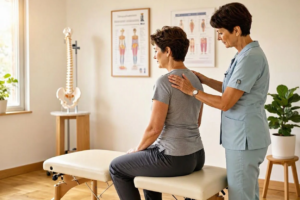
Common Posture-Related Problems Osteopathy May Address
People seek osteopathic care for different reasons. Some have pain, while others notice stiffness, reduced movement, or difficulty tolerating specific activities.
Depending on the assessment, osteopathy may be considered as part of a broader plan for the following concerns.
Neck Discomfort
Long periods of computer work or phone use may coincide with neck stiffness and discomfort. However, neck pain can have several causes, and posture alone does not explain every case.
An osteopath may assess comfortable neck movement, shoulder mobility, activity habits, and symptoms during everyday tasks. Treatment may include appropriate manual techniques, movement advice, and exercises.
If neck pain follows significant trauma or occurs alongside progressive weakness, substantial numbness, coordination difficulties, or other concerning symptoms, medical assessment is important.
Shoulder Tension
Shoulder discomfort can affect reaching, dressing, exercise, lifting, and sleeping.
An assessment may consider shoulder movement, upper-back mobility, muscle strength, and the activities that aggravate symptoms.
Depending on the findings, a treatment plan may include gentle manual techniques, mobility work, strengthening, and adjustments to repetitive activities.
Upper-Back Stiffness
Some people notice upper-back stiffness after working at a desk, driving, or performing repetitive tasks.
An osteopath may assess thoracic spine movement, shoulder function, breathing-related discomfort, and relevant activity patterns. Appropriate mobility exercises and regular movement breaks may also form part of the plan.
Persistent or unexplained upper-back pain should not automatically be attributed to posture, particularly when other symptoms are present.
Lower-Back Discomfort
Lower-back pain may occur during sitting, standing, bending, lifting, or walking. Its causes vary, and many cases cannot be explained by one specific postural problem.
Osteopathy may help some people manage musculoskeletal lower-back pain, particularly when hands-on treatment complements exercise, education, and gradual return to normal activity.
For related information, see osteopathy for back pain.
Hip and Pelvic Discomfort
Hip mobility, muscular strength, previous injuries, and activity demands may influence how comfortably a person walks, climbs stairs, or changes position.
A practitioner may assess relevant movement patterns and recommend appropriate exercises or manual techniques. However, hip or pelvic pain may require medical investigation when symptoms are severe, unexplained, or persistent.
What Happens During a Posture Assessment?
A posture assessment should involve more than looking at someone’s standing position. A useful assessment considers symptoms, medical history, movement, daily activities, and personal goals.
1. Discussing Your Symptoms and Goals
The appointment may begin with questions about when symptoms started, what makes them better or worse, and how they affect everyday life.
You may also discuss previous injuries, medical conditions, medication, work routines, exercise habits, and previous treatment.
Your goals matter as well. For example, you might want to sit through a working day more comfortably, return to exercise, lift objects with greater confidence, or reduce recurring neck stiffness.
2. Observing Posture and Movement
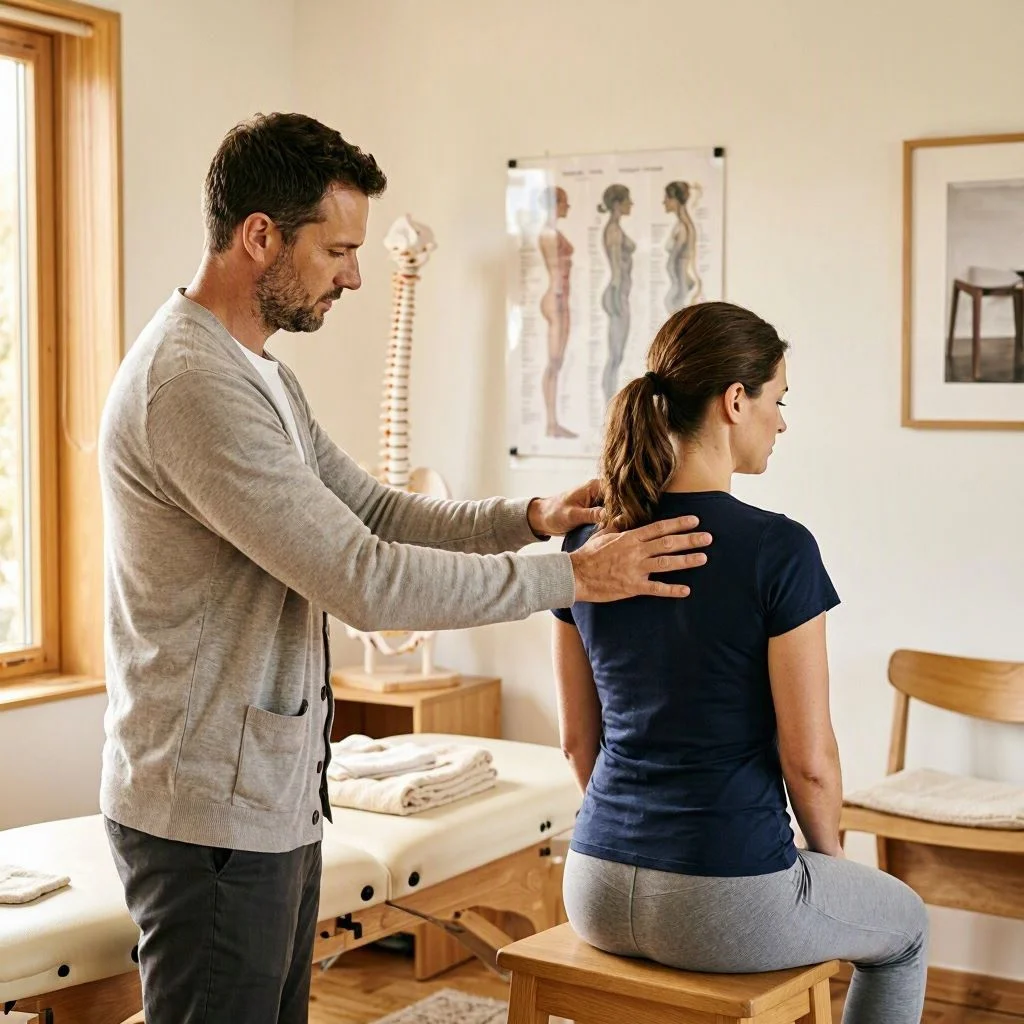
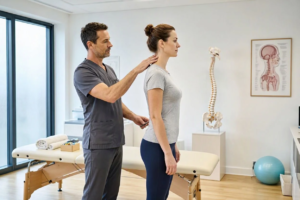
The practitioner may observe how you sit, stand, walk, bend, reach, or perform selected movements.
These observations help provide context, but appearance alone cannot determine whether a posture is harmful or identify the cause of pain.
3. Assessing Mobility and Function (Osteopathy for Posture)
Depending on your symptoms, the assessment may include joint movement, muscle function, strength, flexibility, balance, and the ability to perform relevant tasks.
The practitioner may also check whether specific movements reproduce or reduce your discomfort.
4. Discussing the Findings
After the assessment, the practitioner should explain the findings in understandable language.
You should be able to ask questions about the proposed approach, possible benefits, limitations, alternatives, and any risks associated with treatment.
5. Developing an Individualized Plan
The plan may combine hands-on treatment with exercise, movement education, and self-management strategies.
It should reflect your needs rather than relying on the same routine for every patient.
Osteopathic Techniques Used for Posture-Related Concerns
Osteopaths may use different techniques depending on their training, the person’s condition, and the clinical assessment. Not every technique suits every patient.
Soft-Tissue Techniques
Soft-tissue techniques involve manual contact with muscles and surrounding tissues. They may help some people experience temporary relief from muscular discomfort or feel more comfortable moving.
The practitioner should adjust pressure and technique to your symptoms, preferences, and medical history.
Joint Mobilization (Osteopathy for Posture)
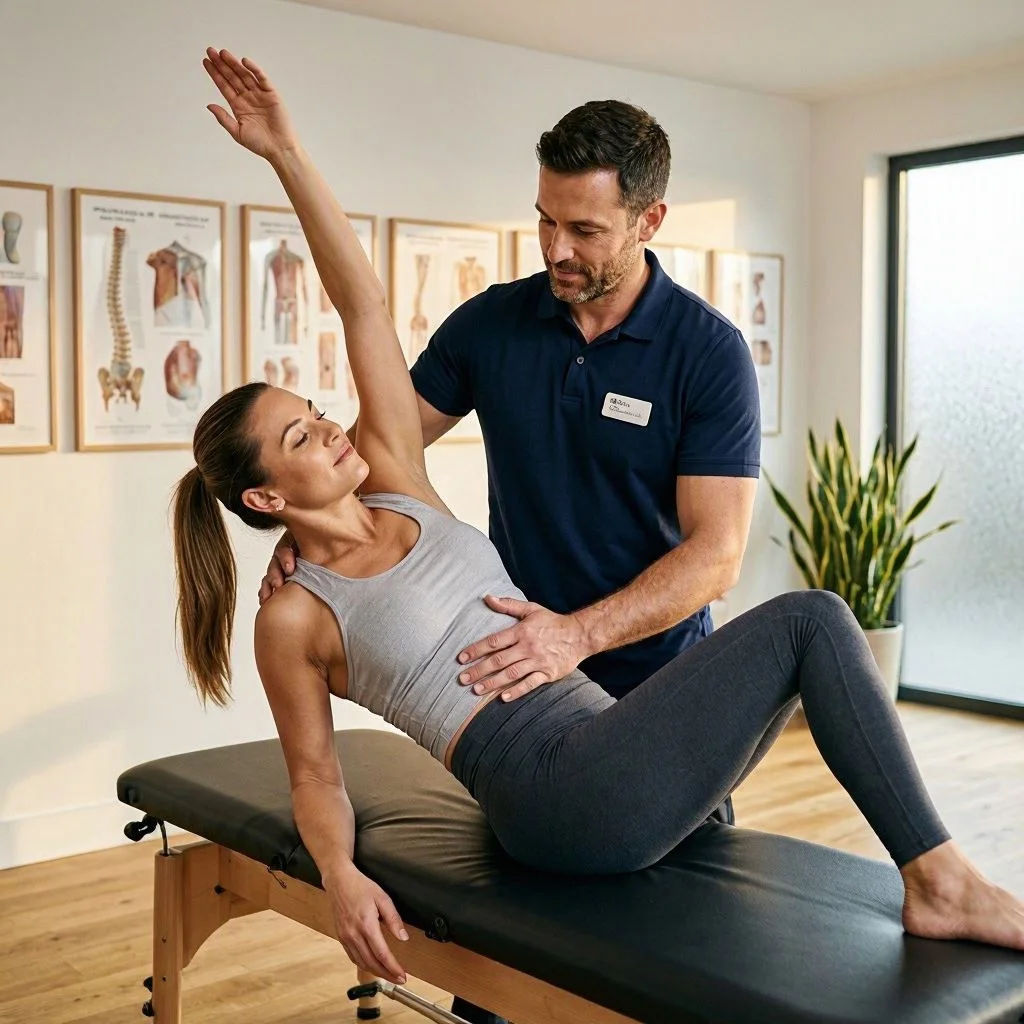
Joint mobilization involves controlled movement applied to a joint. A practitioner may use it when joint stiffness or movement discomfort is relevant to the person’s symptoms.
The technique should remain appropriate to the patient’s condition and tolerance.
Stretching and Mobility Work
Stretching or mobility exercises may help when a specific movement limitation affects daily activities.
However, stretching is not always necessary. Some people benefit more from strengthening, graded activity, or changing how they perform a task.
Movement Education
Movement education helps people understand how to adjust activities according to comfort and physical capacity.
For example, an office worker may benefit from alternating between sitting and standing, while someone who lifts objects regularly may need guidance on building strength and varying their movement strategies.
Exercise Recommendations
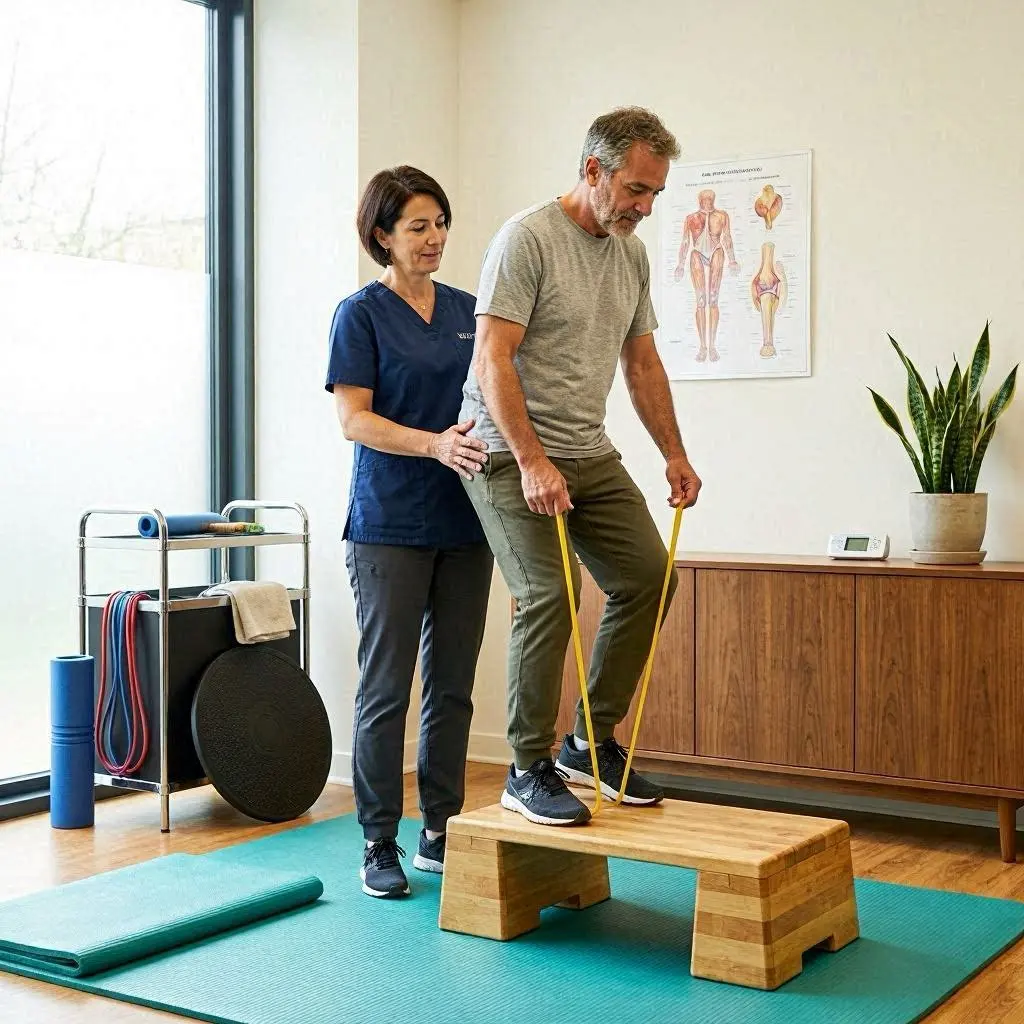
Exercises can support strength, endurance, balance, and mobility. They also give patients an active role in managing their condition outside appointments.
The most appropriate exercises depend on individual findings. A practitioner should explain how to perform them safely and how to progress them gradually.
For a broader overview of potential benefits and limitations, read Osteopathy Benefits at Ritz Clinics.
Osteopathy for Posture in Office Workers
Office workers often spend long periods using computers, attending meetings, and completing repetitive tasks. These routines can contribute to discomfort when movement breaks are limited or when work demands exceed a person’s current physical capacity.
Nevertheless, sitting is not inherently damaging, and an upright position does not need to remain unchanged all day.
A practical approach may include:
- Changing sitting positions throughout the day.
- Taking short walking or movement breaks.
- Adjusting the monitor to a comfortable viewing height.
- Keeping the keyboard and mouse within easy reach.
- Supporting the feet when needed.
- Alternating between sitting and standing if practical.
- Performing regular physical activity outside work.
- Building strength and endurance gradually.
The best workstation is one that supports your tasks and allows comfortable movement. You do not need to maintain a rigid posture or constantly monitor every position.
An osteopath may help you identify which adjustments are relevant to your symptoms. However, ergonomic changes should complement, rather than replace, appropriate exercise and medical care when necessary.
Everyday Habits That May Support Better Movement (Osteopathy for Posture)
Posture-related care becomes more useful when recommendations fit naturally into daily life.
Take Regular Movement Breaks
If you work at a desk, consider standing, walking, stretching gently, or changing position periodically. Short breaks can interrupt prolonged static activity and provide an opportunity to move.
You do not need to follow one perfect break schedule. Choose a routine that fits your work and helps you avoid remaining in one position for too long.
Build Physical Strength
Strength training can help prepare the body for everyday demands. Exercises for the legs, hips, trunk, back, and shoulders may be useful depending on your goals and current abilities.
Start at a manageable level and increase the difficulty gradually. If an exercise causes significant or worsening pain, stop and seek appropriate advice.
Maintain General Physical Activity
Walking, cycling, swimming, dancing, and other enjoyable activities can help improve general fitness and movement confidence.
The World Health Organization’s physical activity guidance provides recommendations for physical activity across different age groups.
Choose activities that fit your health, preferences, and abilities. Consistency is generally more practical than attempting an intense routine that you cannot maintain.
Review Your Phone Habits
Looking down at a phone for long periods may contribute to neck or shoulder discomfort for some people.
Try bringing the screen closer to a comfortable viewing height, supporting your arms when practical, and changing positions regularly.
The goal is not to avoid every forward-leaning position. Instead, reduce prolonged discomfort and create more opportunities for movement.
Improve Sleep and Recovery
Sleep supports general health and recovery. If discomfort affects your sleep, consider whether your sleeping position, mattress comfort, or evening routine could be adjusted.
There is no single sleeping position that suits everyone. Comfort and the ability to rest adequately are important considerations.
Posture During Driving, Lifting, and Exercise (Osteopathy for Posture)
Different activities place different demands on the body. Therefore, advice should reflect what you actually do rather than applying one postural rule to every situation.
Driving
Long journeys can involve prolonged sitting. Adjust the seat and steering wheel so that you can reach the controls comfortably and maintain a clear view.
On longer trips, take breaks when safe and practical. Move around, walk briefly, and change position before stiffness becomes difficult to manage.
Lifting Objects
Lifting does not require one perfect technique for every object. The most appropriate strategy depends on the object’s weight, shape, distance, and the person’s physical capacity.
Keep the load manageable, bring it closer when possible, avoid sudden movements when handling heavy objects, and use help or equipment for challenging tasks.
Gradual strength training can also prepare you for everyday lifting demands.
Exercise and Sport
Exercise naturally involves different positions. Squatting, bending, reaching, and rotating are not automatically harmful movements.
Good technique can help you perform activities effectively, but technique should also reflect your body, experience, and goals.
If you experience recurring pain during training, consider reviewing the workload, recovery, exercise selection, and progression with an appropriately qualified professional.
Can Osteopathy Permanently Correct Posture?
Osteopathy cannot guarantee permanent correction of posture, and the idea of one ideal body alignment oversimplifies how people move.
Posture changes according to the task, environment, fatigue, strength, mobility, and personal habits. Some visible differences are normal and do not necessarily require treatment.
For people experiencing discomfort, a more useful goal may be to improve movement tolerance, develop strength, reduce activity limitations, and find comfortable ways to perform daily tasks.
Manual therapy may provide short-term improvements in pain or movement for some musculoskeletal conditions. However, results vary, and treatment should not promise permanent structural changes without appropriate evidence.
A broader plan that includes physical activity, exercise, education, and self-management may be more useful than relying exclusively on repeated hands-on sessions.
Osteopathy for Posture in Older Adults (Osteopathy for Posture)
As people age, changes in strength, balance, joint mobility, and physical activity can influence everyday movement. However, these changes vary widely between individuals.
Older adults may seek care for stiffness, back discomfort, shoulder symptoms, or difficulty performing certain activities.
An osteopath should consider the person’s medical history, medication, bone health, balance, and previous injuries before recommending treatment.
For example, people with osteoporosis or fragile bones may need additional precautions, and certain manual techniques may be unsuitable.
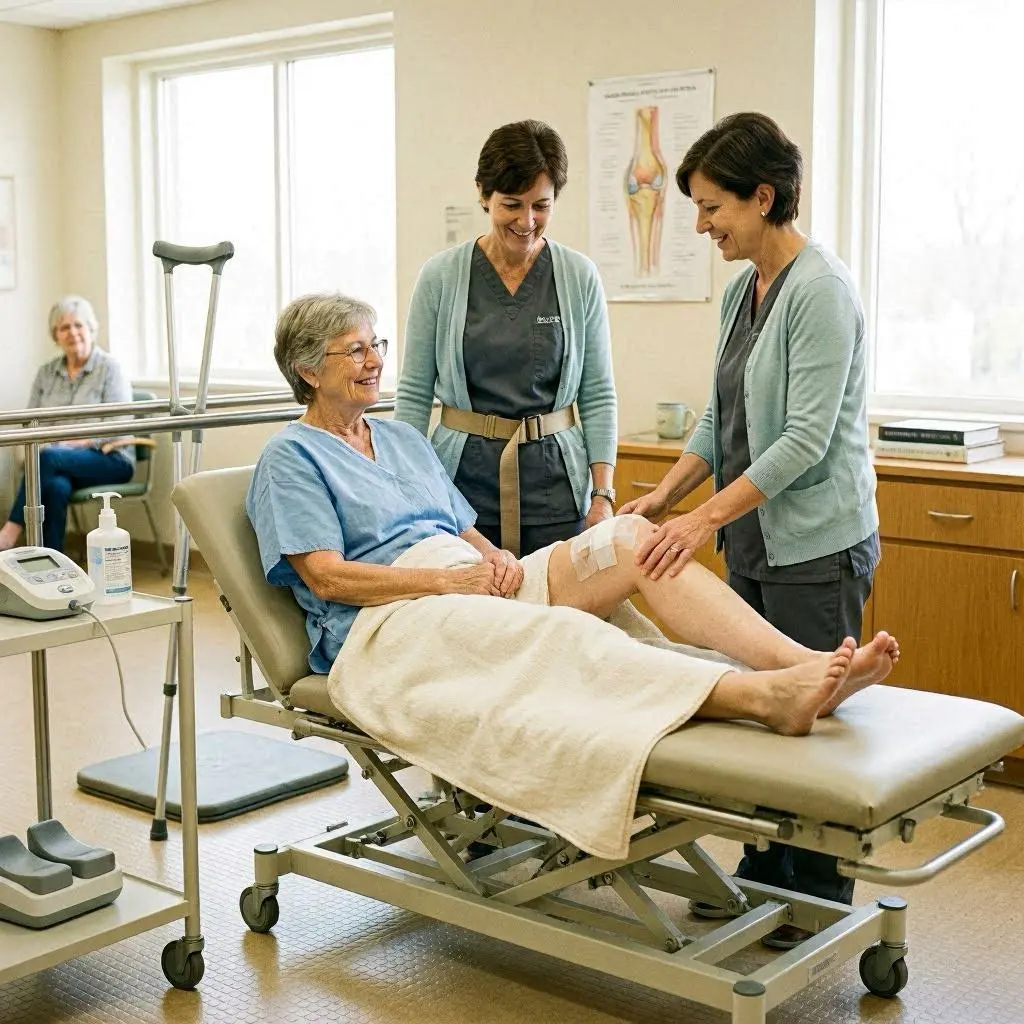
A suitable plan may include gentle movement, strength and balance exercises, activity advice, and coordination with other healthcare professionals when needed.
The goal should be to support safe function, independence, and participation in meaningful activities rather than achieve a particular visual posture.
Is Osteopathy for Posture Safe?
Osteopathic care may be appropriate for some musculoskeletal concerns when a qualified practitioner conducts a suitable assessment and selects treatment carefully. Nevertheless, manual therapy can cause side effects, and no treatment is risk-free.
Temporary soreness, stiffness, or discomfort can occur after some techniques. Serious complications are uncommon, but certain treatments, particularly forceful techniques involving the neck, require careful consideration of potential risks.
Before treatment, tell your practitioner about:
- Previous injuries or surgery.
- Osteoporosis or fragile bones.
- Blood-thinning medication or bleeding disorders.
- Neurological conditions.
- Significant cardiovascular or other medical conditions.
- Pregnancy, where relevant.
- New, unexplained, or worsening symptoms.
Ask about gentler alternatives if you feel uncomfortable with a proposed technique. You should understand what the practitioner plans to do and be able to give informed consent.
For general information about the scope and considerations of osteopathy, consult the NHS guide to osteopathy.
When Should You Seek Medical Assessment?
Not every posture-related concern requires osteopathic treatment. Some symptoms need medical assessment before manual therapy or exercise begins.
Seek urgent medical attention if you develop severe or rapidly worsening weakness, new loss of bladder or bowel control, numbness around the groin or saddle area, major trauma, chest pain, or difficulty breathing.
You should also seek prompt medical advice for unexplained persistent pain, fever accompanied by significant pain, unexplained weight loss, substantial numbness, or symptoms that are progressively worsening.
A new severe headache or neck pain accompanied by neurological symptoms also requires urgent assessment.
These signs may have causes that cannot be addressed safely through routine posture treatment alone. When in doubt, contact an appropriate healthcare professional.
What to Expect During Osteopathy Treatment at Ritz Clinics
Your first appointment should focus on understanding your symptoms, medical history, activity demands, and goals. You can explain which tasks cause discomfort and what you hope to improve.
The practitioner may then assess relevant movements, joint mobility, and physical function. Depending on the findings, the plan may include hands-on techniques, exercise recommendations, movement advice, or referral for further assessment if necessary.
You should receive an explanation of the proposed treatment and have an opportunity to ask questions. The practitioner should also discuss expected benefits, limitations, and possible risks.
At Ritz Clinics, the osteopathy approach considers posture, movement patterns, joint mobility, muscular tension, and individual needs. You can explore the Ritz Clinics osteopathy treatment page to learn more about the service.
Treatment frequency depends on the nature of the problem, your response, and your goals. More sessions do not automatically mean better results. A responsible plan should include regular reviews and a clear reason for continuing treatment.
How Is Progress Measured?
Progress should reflect meaningful improvements in everyday function, not simply whether your posture looks different.
Depending on your initial concerns, useful measures may include:
- Less discomfort during desk work.
- Improved tolerance for sitting or standing.
- Greater comfort when turning your head.
- Easier reaching, lifting, or walking.
- Improved strength or exercise tolerance.
- Better participation in work and leisure activities.
- Increased confidence managing symptoms independently.
You and your practitioner can review these goals during follow-up appointments.
If there is little improvement, symptoms worsen, or new symptoms appear, the treatment plan may need to change. Further medical assessment or a different rehabilitation approach may be appropriate.
Ultimately, the purpose of care is to support better function and quality of life rather than keep someone in treatment without a clear objective.
Frequently Asked Questions About Osteopathy for Posture
1. What is Osteopathy for Posture?
Osteopathy for Posture is an approach that considers posture, movement, joint mobility, and muscle function when managing musculoskeletal discomfort. Treatment may include hands-on techniques, exercises, and practical movement advice.
2. Can osteopathy improve my posture?
Osteopathy may help some people manage discomfort and move more comfortably. However, it cannot guarantee permanent postural correction. Results depend on the individual, the underlying problem, and the overall management plan.
3. Can osteopathy help with rounded shoulders?
An osteopath may assess shoulder movement, upper-back mobility, strength, and activity habits when someone is concerned about rounded shoulders. Depending on the findings, treatment may include movement education, appropriate manual techniques, and strengthening exercises.
Rounded shoulders do not automatically indicate a medical problem, so treatment should be guided by symptoms and functional needs.
4. Does osteopathy help with neck pain caused by desk work?
Osteopathy may help some people manage musculoskeletal neck discomfort. A broader approach can include movement breaks, workstation adjustments, exercise, and advice on managing work demands. Persistent or worsening symptoms require appropriate assessment.
5. How many osteopathy sessions will I need?
There is no fixed number of sessions for everyone. The appropriate frequency depends on your symptoms, health history, treatment goals, and response to care. Your practitioner should review progress and explain why further sessions may be useful.
6. Is osteopathy better than physiotherapy for posture?
Neither option is automatically better for every person. Osteopathy may emphasize hands-on treatment and movement assessment, while physiotherapy often includes structured exercise and rehabilitation. The most appropriate service depends on your condition, preferences, and goals.
Some people may benefit from a coordinated approach involving both services.
7. Can I improve posture without treatment?
Yes. Many people can make useful changes through regular physical activity, strength training, movement breaks, comfortable workstation adjustments, and changes to daily habits. Professional assessment may be helpful if pain persists or limits your activities.
8. Is osteopathy safe for everyone?
No treatment is suitable for everyone. Certain medical conditions, medications, injuries, and bone-health concerns may affect which techniques are appropriate. Provide a complete medical history and discuss any concerns before treatment.
9. Should I maintain perfect posture all day?
No. There is no single posture that everyone must maintain continuously. Changing positions regularly, moving comfortably, and building the strength needed for daily activities are generally more practical goals than holding one rigid position.
10. When should I see a healthcare professional for posture-related pain?
Consider professional assessment if discomfort persists, repeatedly returns, interferes with work or sleep, or limits everyday activities. Seek urgent medical care for serious warning signs such as new bladder or bowel problems, rapidly worsening weakness, major trauma, or chest pain.
Conclusion (Osteopathy for Posture)
Osteopathy for Posture can be one option for people experiencing musculoskeletal discomfort, stiffness, or movement limitations associated with everyday activities. Through an individualized assessment, an osteopath may identify relevant movement difficulties and recommend appropriate hands-on treatment, exercise, and self-management strategies.
However, posture is not simply a matter of standing straight or keeping the shoulders back. People naturally move through different positions, and a posture that feels comfortable for one person may not suit another. Therefore, the focus should remain on comfortable movement, physical capacity, and meaningful improvements in daily function.
Regular activity, strength training, movement breaks, suitable workstation habits, and adequate recovery can complement professional care. If symptoms persist, worsen, or include concerning warning signs, appropriate medical assessment remains essential.
At Ritz Clinics, osteopathy can be considered as part of an individualized approach to musculoskeletal health. The most useful plan is one that reflects your symptoms and goals, explains its limitations, monitors progress, and helps you become more confident managing your physical wellbeing.