Trigger Point Massage Therapy: Benefits, Techniques, and What to Expect
Introduction
Muscle tension can affect almost every part of daily life. Long hours at a desk, repetitive movements, intense exercise, poor posture, physical work, and stress can all contribute to tight or uncomfortable muscles. In some cases, a small, sensitive area within a muscle may become particularly painful when pressure is applied. These areas are commonly referred to as trigger points. Trigger Point Massage Therapy is a focused massage approach that aims to address areas of muscular tension and sensitivity through controlled pressure and other manual techniques. Instead of treating the entire body with the same type of massage, the therapist identifies specific areas that may be contributing to discomfort and works on them according to the individual’s needs.
Trigger point massage can be incorporated into a broader treatment plan for people experiencing muscular tension. It may also be used alongside stretching, exercise, posture improvements, mobility work, and other approaches designed to support physical function.
Understanding what trigger points are, how trigger point massage works, what techniques may be used, and when professional assessment is appropriate can help you determine whether this type of massage is suitable for your needs.
What Is Trigger Point Massage Therapy?
Trigger Point Massage Therapy is a targeted form of massage that focuses on sensitive areas within muscles and surrounding soft tissues.
A trigger point is commonly described as a localized, sensitive area that may feel tight or painful when pressure is applied. Some trigger points can also produce discomfort that seems to occur somewhere other than the exact location being pressed.
For example, tension around certain muscles in the neck or shoulders may be associated with discomfort in nearby areas. However, not every painful area is necessarily a trigger point, and symptoms can have many different causes.
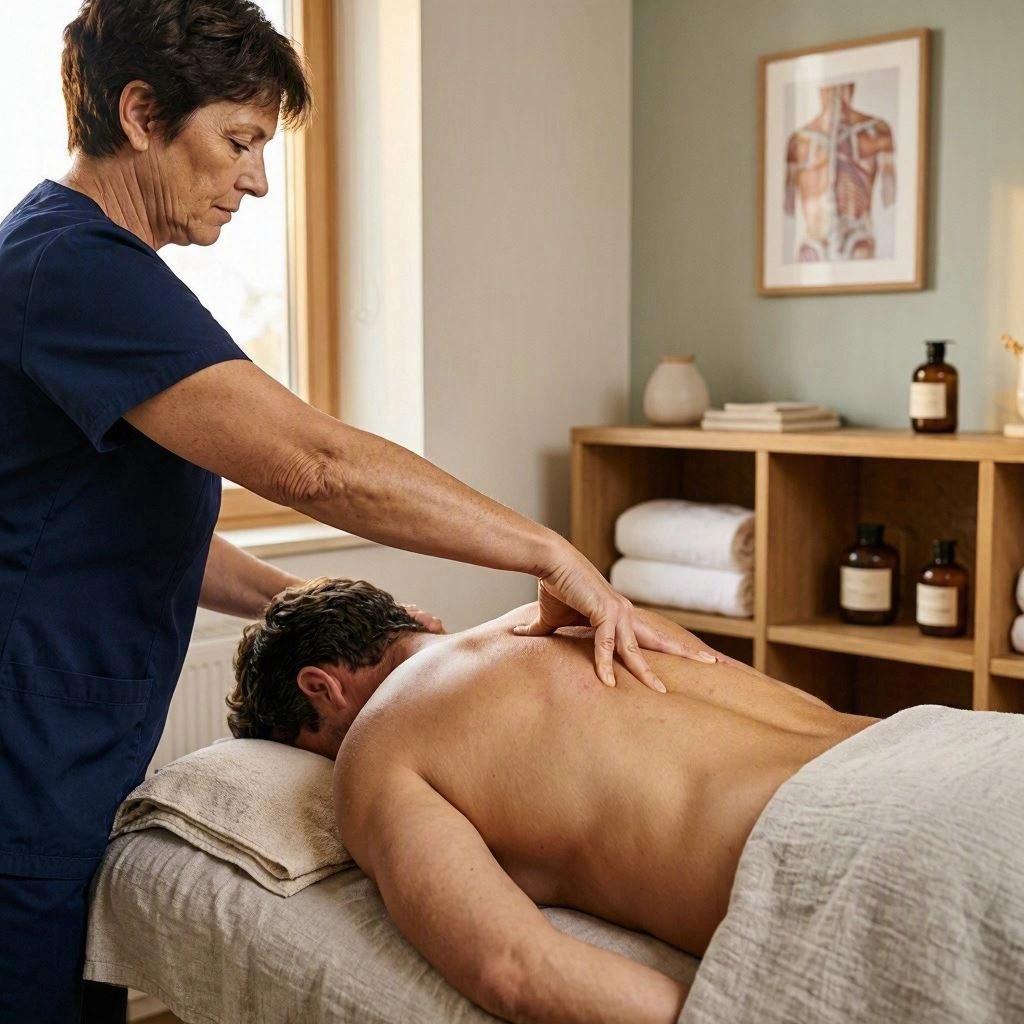
During a trigger point massage session, a qualified therapist may use their hands, fingers, thumbs, or other appropriate techniques to apply controlled pressure to specific areas.
The pressure should be adapted to the individual’s tolerance. The goal is not simply to apply as much pressure as possible.
What Causes Trigger Points?
Trigger points may develop for different reasons. They are often associated with repeated or sustained muscular stress.
Common contributing factors can include:
-
Repetitive movements
-
Poor posture
-
Prolonged sitting
-
Overuse
-
Intense physical activity
-
Muscle fatigue
-
Sudden changes in exercise
-
Physical work
-
Stress-related muscle tension
-
Inadequate recovery
For example, someone who spends many hours working at a computer may repeatedly hold the head and shoulders in the same position. Over time, this can contribute to tension in the neck, shoulders, and upper back.
Similarly, an athlete who suddenly increases training volume may place additional demands on specific muscle groups.
Trigger points are therefore not always caused by one specific event. They may develop gradually as a result of repeated physical stress.
Common Symptoms Associated With Trigger Points
People experiencing muscular trigger points may notice several types of discomfort.
Localized Muscle Pain
The most obvious symptom may be tenderness in a particular area of the muscle.
The area can feel tight, sensitive, or uncomfortable when touched.
Referred Discomfort
Some trigger points may be associated with discomfort that appears away from the area being pressed.
This is one reason why identifying the source of muscular discomfort can sometimes be difficult.
Muscle Tightness
A person may feel that a muscle is constantly tight or difficult to relax.
Reduced Comfortable Movement
Muscle tension can sometimes make certain movements feel restricted or uncomfortable.
Tenderness During Pressure
A trigger point may feel particularly sensitive when pressure is applied.
It is important to remember that these symptoms are not specific to trigger points. Similar symptoms can occur with other muscular, joint, nerve, or medical conditions.
How Trigger Point Massage Therapy Works
Trigger Point Massage Therapy typically involves identifying areas of muscular sensitivity and applying controlled manual pressure.
A session may begin with a general assessment of posture, movement, and areas of discomfort.
The therapist may then palpate the muscles to identify areas of increased tension or tenderness.
Once a potentially relevant area is identified, the therapist can use appropriate techniques to address it.
Controlled Pressure
Pressure is generally applied gradually rather than suddenly.
The therapist should monitor the client’s response and adjust the intensity accordingly.
Sustained Pressure
In some approaches, the therapist applies steady pressure to a sensitive area for a period of time.
The intensity should remain within a tolerable range.
Massage Around the Area
Rather than focusing exclusively on one sensitive point, the therapist may also work on the surrounding muscles and soft tissues.
This can help create a more comfortable treatment experience.
Movement and Stretching
Depending on the therapist’s training and the individual’s needs, gentle movement or stretching may be incorporated into the session.
Benefits of Trigger Point Massage Therapy
The potential benefits of trigger point massage can vary from person to person. Massage should be viewed as a complementary approach rather than a guaranteed treatment for every type of pain.
1. May Reduce Muscle Tension
One of the primary reasons people seek trigger point massage is general muscular tension.
Targeted massage can provide a sensation of relaxation in tight muscles.
This may be particularly useful for people whose muscle tension is associated with repetitive activity or prolonged postures.
2. May Improve Comfort
Working on areas of muscular sensitivity may help some individuals experience temporary improvements in comfort.
The response can depend on the underlying cause of the discomfort.
3. Supports Relaxation
Although trigger point massage is more targeted than a traditional relaxation massage, it can still provide a relaxing experience.
Muscle tension and stress can influence one another. Creating time for physical relaxation may therefore be valuable as part of a broader wellness routine.
4. May Support Comfortable Movement
When muscular tightness contributes to a feeling of restricted movement, massage may help the person feel more comfortable moving the affected area.
However, persistent movement limitations may require assessment and exercise-based treatment.
5. Encourages Body Awareness
Trigger point massage can help people become more aware of areas that repeatedly become tense.
This awareness may encourage them to examine factors such as posture, workstation setup, training habits, and recovery.
Trigger Point Massage for Neck and Shoulder Tension
The neck and shoulders are common areas where people experience muscular tension.
Computer work, mobile phone use, prolonged sitting, stress, and repetitive tasks can all contribute to discomfort in this region.
A therapist may assess muscles around the neck, upper back, and shoulders to identify areas of increased tension.
Massage may then be adjusted according to the individual’s symptoms and comfort.
It is important to remember that neck pain can have many causes. Severe, persistent, or unusual neck symptoms should be evaluated by an appropriate healthcare professional rather than assumed to be caused by trigger points.
Trigger Point Massage for Back Tension
The back contains large muscle groups that can become fatigued through prolonged sitting, lifting, standing, and physical activity.
Trigger point massage may be used to address areas of muscular tightness in the upper or lower back.
The therapist should avoid treating unexplained severe pain as though it were simply muscular tension.
If back pain is accompanied by significant weakness, numbness, loss of bladder or bowel control, fever, trauma, or other concerning symptoms, appropriate medical evaluation is important.
Trigger Point Massage for Athletes
Athletes may experience muscular tension because of repetitive training, high workloads, competition, or sudden changes in activity.
Trigger point techniques may be incorporated into a broader sports massage or recovery program.
For example, a runner may experience recurring tension in the calves or glutes, while a tennis player may experience tension around the shoulders and forearms.
However, athletes should distinguish ordinary muscular tightness from injury.
Sharp pain, swelling, bruising, instability, or significant loss of function may require assessment rather than massage.
Trigger Point Massage and Exercise (Trigger Point Massage Therapy)
Massage can complement exercise, but it should not replace strength or mobility training.
If a person repeatedly develops tension in the same muscle, the underlying factors may need attention.
These could include:
-
Training technique
-
Exercise volume
-
Muscle weakness
-
Poor movement patterns
-
Limited mobility
-
Insufficient recovery
-
Workstation ergonomics
-
Repetitive activity
A comprehensive approach can address both symptoms and contributing factors.
Trigger Point Massage vs. Deep Tissue Massage
deep tissue massage and Trigger point massage are related but are not exactly the same.
Trigger point massage generally focuses on specific sensitive areas within muscles.
Deep tissue massage often uses slower, more focused pressure to work with deeper layers of soft tissue.
A therapist may combine techniques during a session depending on the client’s needs.
Importantly, deeper pressure does not automatically mean better treatment.
A massage should be appropriate for the individual’s condition and tolerance. Excessive pressure can result in unnecessary discomfort.
Trigger Point Massage vs. Relaxation Massage (Trigger Point Massage Therapy)
Relaxation massage primarily focuses on creating a calming experience through smooth, rhythmic, and generally gentle techniques.
Trigger point massage is more targeted and may involve focused pressure on specific areas of muscular sensitivity.
Someone seeking general stress reduction may prefer relaxation massage, while someone interested in addressing localized muscular tension may benefit from a more targeted approach.
In some cases, both styles can be incorporated into the same appointment.
What to Expect During a Trigger Point Massage Session
Knowing what happens during treatment can make the experience more comfortable.
Initial Consultation
The therapist will usually ask about your symptoms, activity level, health history, and treatment goals.
Explain where you experience discomfort and what activities seem to affect it.
Assessment
The therapist may observe movement or palpate muscles to identify areas of tension.
This does not replace a medical diagnosis when one is necessary.
Treatment
The therapist applies appropriate massage techniques to the selected areas.
Pressure should be communicated throughout the session.
Feedback
Your feedback is important. Tell the therapist if pressure is too strong, too weak, or uncomfortable.
A productive session should not require you to tolerate severe pain.
After Treatment
You may feel relaxed or notice temporary tenderness in areas that were treated.
It can be helpful to allow your body time to return to normal activity rather than immediately performing strenuous exercise.
How Often Should You Get Trigger Point Massage?
There is no universal frequency for trigger point massage.
Some people may benefit from occasional sessions when muscular tension develops, while others may incorporate massage into a regular wellness or sports recovery routine.
Frequency can depend on:
-
Activity level
-
Training schedule
-
Work demands
-
Severity and duration of symptoms
-
Response to massage
-
Overall health
-
Treatment goals
If the same painful area repeatedly returns despite massage, it may be worth investigating the underlying cause rather than simply increasing massage frequency.
Preparing for Trigger Point Massage Therapy
A little preparation can improve the treatment experience.
Explain Your Symptoms
Be specific about where you experience discomfort and whether it changes with movement.
Mention Recent Exercise
Tell your therapist about recent workouts, competitions, or physically demanding activities.
Discuss Pressure Preferences
Everyone has a different tolerance for pressure. Communicate your preferences before and during the session.
Provide Relevant Health Information
Inform the therapist about relevant medical conditions, injuries, surgeries, or other circumstances that could affect treatment.
Is Trigger Point Massage Painful?
Some pressure may feel intense when a sensitive area is being treated, but the treatment should remain within a tolerable range.
There is a common misconception that massage must hurt to be effective.
This is not necessarily true.
Excessive pain can cause the body to tense rather than relax. Therefore, communication between the client and therapist is essential.
If pressure causes sharp, severe, burning, or unusual pain, inform the therapist immediately.
Safety and Contraindications
Massage therapy is appropriate for many healthy adults, but there are situations where it may need to be avoided or modified.
Extra caution may be necessary in cases involving:
-
Acute injuries
-
Significant swelling
-
Open wounds
-
Skin infections
-
Recent surgery
-
Unexplained severe pain
-
Certain medical conditions
-
Suspected blood clots
-
Severe or unexplained neurological symptoms
If you are uncertain whether massage is appropriate, consult an appropriate healthcare professional before treatment.
Massage should never be used to delay necessary medical evaluation.
Choosing a Trigger Point Massage Therapist (Trigger Point Massage Therapy)
Selecting an appropriately trained therapist is important.
Look for Appropriate Training
Choose a practitioner with relevant massage education and professional experience.
Ask About Experience
If you have a specific issue, ask whether the therapist has experience working with similar muscular concerns.
Consider Communication
The therapist should listen carefully to your symptoms and explain the treatment approach.
Avoid Excessive Pressure
A professional therapist should understand that stronger pressure is not always more effective.
Combining Trigger Point Massage With Other Treatments
Massage can be more useful when combined with other appropriate strategies.
Stretching
Gentle stretching may help maintain comfortable movement.
Strength Training
Strength exercises can address muscular capacity and may help reduce recurring problems when appropriately prescribed.
Posture Improvements
If prolonged sitting contributes to tension, improving workstation setup and taking regular movement breaks may be useful.
Mobility Exercises
Regular mobility work can support comfortable movement and complement massage.
Stress Management
Stress can contribute to muscle tension. Relaxation techniques, exercise, adequate sleep, and other healthy habits can therefore support long-term well-being.
When to Seek Professional Medical Assessment
Not every painful area is a trigger point.
You should seek appropriate medical assessment if you experience:
-
Severe or worsening pain
-
Sudden weakness
-
Persistent numbness
-
Significant swelling
-
Loss of coordination
-
Fever
-
Serious injury
-
Unexplained symptoms
-
Pain that does not improve
A healthcare professional can help determine whether symptoms are muscular or related to another condition.
Frequently Asked Questions (Trigger Point Massage Therapy)
What is Trigger Point Massage Therapy?
Trigger Point Massage Therapy is a targeted massage approach that focuses on sensitive or tense areas within muscles using controlled manual techniques.
Does trigger point massage remove trigger points?
Massage may help reduce the sensation of muscular tension and discomfort for some people, but results vary. Persistent symptoms may require a broader assessment and treatment approach.
Is trigger point massage painful?
It can involve noticeable pressure around sensitive areas, but it should not require severe or unbearable pain.
How long does trigger point massage take?
Sessions can vary from approximately 30 to 90 minutes depending on the treatment plan and the number of areas being addressed.
Can trigger point massage help neck tension?
It may help some people with muscular neck and shoulder tension. However, persistent or severe neck pain should be appropriately assessed.
Can athletes use trigger point massage?
Yes. Trigger point techniques may be incorporated into an athlete’s recovery or sports massage routine when appropriate.
Is trigger point massage the same as deep tissue massage?
No. Trigger point massage focuses more specifically on localized sensitive areas, while deep tissue massage generally uses focused pressure across deeper layers of soft tissue.
How often should I receive trigger point massage?
There is no standard frequency. The appropriate schedule depends on your symptoms, activity level, recovery needs, and response to treatment.
Can massage replace physical therapy?
Massage and physical therapy have different roles. Massage may help with relaxation and muscular comfort, while physical therapy can address strength, movement, function, and rehabilitation.
Final Thoughts
Trigger Point Massage Therapy provides a targeted approach to addressing areas of muscular tension and sensitivity. By focusing on specific muscles and using controlled pressure, massage may help some people experience greater comfort, relaxation, and awareness of recurring areas of tension.
However, massage should not be viewed as a universal solution for pain. Trigger points can be difficult to distinguish from other sources of discomfort, and persistent symptoms may require professional assessment.
For the best results, trigger point massage can be combined with appropriate exercise, mobility work, stretching, ergonomic improvements, adequate recovery, and healthy lifestyle habits.
The most effective treatment is not necessarily the most painful or aggressive. A qualified therapist should adapt the session to your individual needs, communicate clearly with you, and recognize when a symptom may require further medical evaluation.
Whether you are an athlete dealing with training-related muscle tension, an office worker experiencing neck and shoulder tightness, or simply someone looking for targeted muscular relaxation, trigger point massage can be considered as one component of a comprehensive approach to physical well-being.