Physiotherapy for Achilles Tendon Pain: Causes, Treatment, Exercises, and Recovery
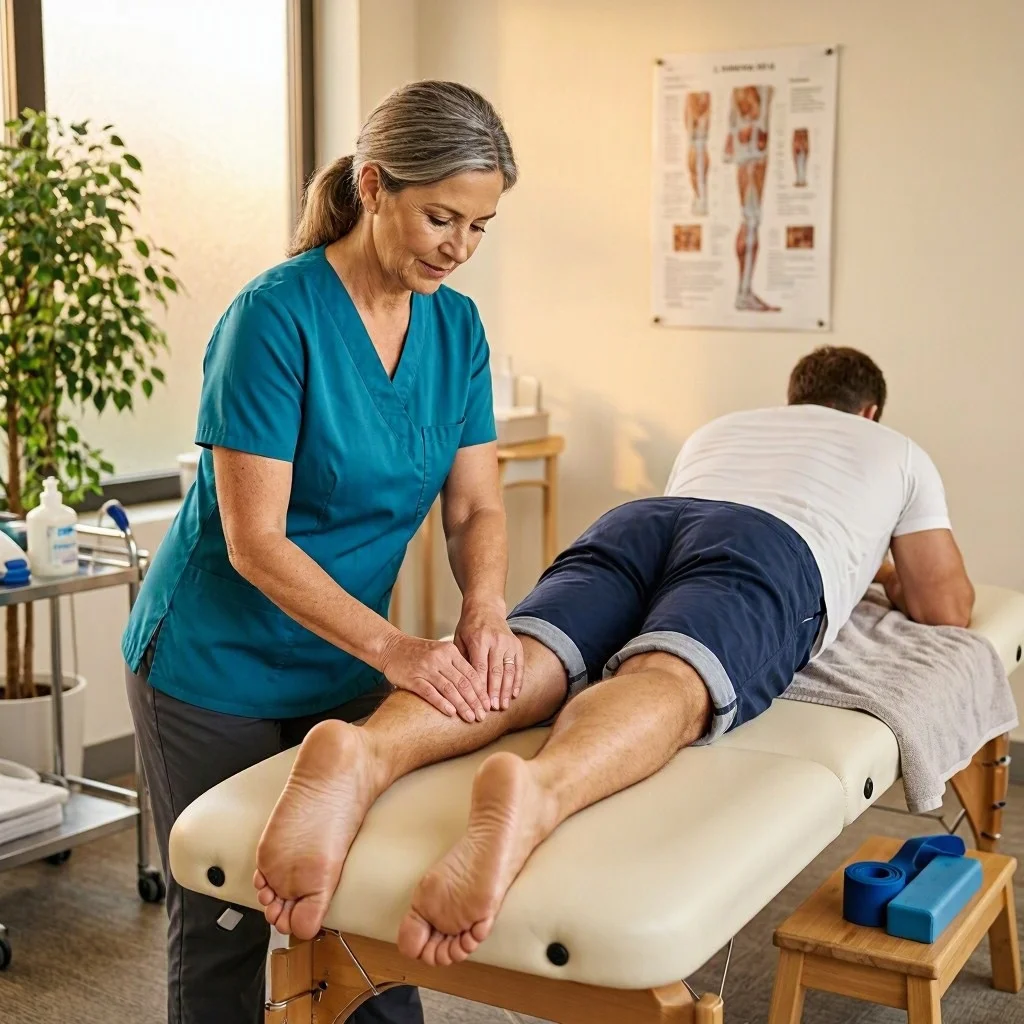
Achilles tendon pain can make everyday activities such as walking, climbing stairs, running, and standing on your toes uncomfortable. The Achilles tendon connects the calf muscles to the heel bone and plays an essential role in pushing the body forward during movement. When this tendon becomes irritated or overloaded, even simple activities can become challenging. Physiotherapy for Achilles tendon pain focuses on identifying the cause of symptoms, managing stress on the tendon, restoring calf strength, and gradually improving the ability to walk, run, and participate in sports. Rather than relying only on temporary pain relief, a structured rehabilitation program helps the tendon adapt to physical demands over time.
Achilles tendon pain can develop gradually because of repetitive loading, or it may occur suddenly following an injury. The appropriate treatment depends on the location and severity of the pain, the activities that trigger it, and whether the tendon has been affected by tendinopathy, a partial tear, or a complete rupture.
At Ritz Clinics, our physiotherapy services in Thornhill focus on personalized assessment, movement, rehabilitation, and treatment planning based on individual needs. Understanding how Achilles tendon problems develop can help you recognize when professional assessment may be useful and what to expect during recovery.
What Is the Achilles Tendon?
The Achilles tendon is the strong band of connective tissue that joins the gastrocnemius and soleus calf muscles to the calcaneus, or heel bone. It is the largest tendon in the human body and helps transfer force from the calf muscles to the foot.
Whenever you walk, climb stairs, jump, or run, the Achilles tendon helps lift the heel and propel your body forward. It also stores and releases energy during many movements, allowing the lower leg to function efficiently.
Because the tendon experiences considerable forces during everyday activities and exercise, repeated loading can sometimes exceed its current capacity to recover. This does not necessarily mean that the tendon is seriously damaged. However, persistent overload, sudden changes in training, and inadequate recovery may contribute to pain and reduced function.
Achilles tendon pain is not a single condition. It can result from several problems, including:
- Achilles tendinopathy: Pain and impaired tendon function associated with repeated loading.
- Insertional Achilles tendinopathy: Symptoms where the tendon attaches to the heel bone.
- Midportion Achilles tendinopathy: Symptoms in the tendon above its attachment, commonly several centimetres above the heel.
- Achilles tendon tear or rupture: A partial or complete disruption of tendon fibres that may require urgent assessment.
- Other heel and ankle conditions: Problems involving nearby bursae, joints, nerves, or other structures may cause similar symptoms.
Correctly identifying the source of pain is important because the rehabilitation approach for gradual tendon pain is different from the management of a suspected rupture.
Common Symptoms of Achilles Tendon Pain
Achilles tendon symptoms vary according to the underlying condition and how long the problem has been present. Some people notice mild stiffness after waking up, while others experience pain that limits walking or prevents them from running.
Common symptoms include:
Pain at the Back of the Heel
Pain may occur where the Achilles tendon attaches to the heel bone or along the tendon itself. It can feel like an ache, tenderness, burning discomfort, or a sharper sensation during movement.
The location of pain can provide useful information during a physiotherapy assessment. Pain at the tendon attachment may require different exercise modifications from pain in the middle portion of the tendon.
Morning Stiffness
Some people experience stiffness during their first steps in the morning or after sitting for an extended period. The tendon may feel uncomfortable initially and become easier to move as activity begins.
However, improvement after warming up does not mean the tendon is fully recovered. Symptoms may return after prolonged walking, running, or exercise.
Pain During Running and Jumping
Running, sprinting, hill training, and jumping place substantial demands on the Achilles tendon. Pain may develop when training volume increases too quickly or when the tendon is not yet prepared for the activity.
Some people initially notice symptoms only after exercise. As the condition progresses, discomfort may appear during exercise or everyday walking.
Tenderness and Thickening
The tendon may feel tender when touched, and some people notice localized thickening or swelling. These findings can occur with tendinopathy, although swelling and tenderness are not enough to establish a diagnosis on their own.
Sudden swelling, bruising, or a noticeable change in tendon shape following an injury requires prompt medical assessment.
Reduced Calf Strength
Achilles tendon pain can make it difficult to raise the heel, stand on tiptoe, climb stairs, or push off the ground while walking.
Reduced strength may reflect pain, decreased activity, or changes in tendon function. A physiotherapist can assess these limitations and determine how to rebuild strength safely.
When Should You Seek Urgent Medical Attention?
Not every case of Achilles tendon pain is a gradual overuse problem. A complete rupture can occur during sports or even during an unexpected movement.
Seek urgent medical assessment if you experience:
- A sudden pop or snapping sensation at the back of the ankle.
- Sudden severe pain after pushing off, jumping, or changing direction.
- Difficulty walking or pushing off the affected foot.
- Inability to rise onto the toes of the affected leg after an injury.
- Rapid swelling or bruising around the ankle or heel.
A person with an Achilles tendon rupture may still be able to move the ankle or walk with difficulty, so the ability to walk does not reliably rule out a rupture. Avoid testing the tendon repeatedly or starting strengthening exercises if a rupture is suspected.
Seek emergency care if calf or leg pain occurs alongside significant swelling, warmth, or redness, especially if accompanied by chest pain or shortness of breath. These symptoms may indicate a blood clot or another serious condition.
If symptoms are gradual but persistent, worsening, or interfering with normal activity, arrange an assessment with an appropriate healthcare professional.
What Causes Achilles Tendon Pain?
Achilles tendon pain often develops when the demands placed on the tendon increase faster than its ability to tolerate them. Several factors can contribute, and more than one may be involved.
Sudden Increases in Exercise
Increasing running distance, speed, hill work, jumping, or training frequency too quickly can place additional stress on the tendon.
For example, someone who starts running every day after a period of inactivity may experience symptoms because their calf muscles and tendon have not yet adapted to the new workload.
Gradual progression allows the body more time to adapt.
Repetitive Loading Without Adequate Recovery
The tendon needs time to respond to training. Repeated high-intensity sessions, limited recovery between workouts, or returning to sport before strength has recovered may contribute to persistent symptoms.
Recovery needs vary between individuals and depend on training intensity, sleep, general health, and the nature of the injury.
Calf Muscle Weakness
The calf muscles help control ankle movement and transfer force through the Achilles tendon. If calf strength and endurance are insufficient for an activity, the tendon may struggle to tolerate its demands.
Weakness can also develop after a period of reduced activity because of pain or injury.
Changes in Footwear and Training Surface
Changing from supportive footwear to minimal footwear, switching running surfaces, or suddenly introducing more uphill or downhill training may alter the demands placed on the lower leg.
These changes do not automatically cause injury. However, a gradual transition can help people adapt to different physical demands.
Limited Ankle Mobility
Ankle movement restrictions may influence how someone performs particular activities. In some cases, limited dorsiflexion, which is the movement that brings the toes toward the shin, can affect calf and tendon loading.
However, ankle flexibility is only one factor. Stretching is not appropriate for every Achilles tendon problem, particularly when pain occurs at the tendon attachment.
Previous Achilles Tendon Problems
A history of Achilles tendon pain may increase the need for careful workload management during a return to exercise. Previous symptoms do not mean that another injury is inevitable, but they can be relevant when planning training progression.
Other Contributing Factors
Age, certain medical conditions, medication use, and metabolic health may influence tendon health. Some antibiotics, particularly fluoroquinolones, and systemic corticosteroids have been associated with tendon injury.
If you develop tendon symptoms while taking medication or have concerns about a possible medication-related risk, speak with your prescribing clinician. Do not stop prescribed medication without medical guidance.
How Can Physiotherapy Help With Achilles Tendon Pain?
Physiotherapy for Achilles tendon pain aims to improve function by combining appropriate load management, progressive exercise, education, and individualized rehabilitation.
The goal is not simply to eliminate discomfort during a single appointment. It is to help the tendon and surrounding muscles tolerate the activities that matter to you.
1. Comprehensive Assessment
Treatment begins with an assessment of your symptoms, injury history, activity levels, and functional limitations.
Your physiotherapist may ask when the pain started, where it is located, which activities aggravate it, and whether you have recently changed your exercise routine.
The physical assessment may include:
- Observation of walking and ankle movement.
- Assessment of calf strength and endurance.
- Evaluation of ankle mobility.
- Examination of swelling and tenderness.
- Functional testing appropriate to your symptoms.
- Review of footwear, training habits, and recovery patterns.
A clinician may also consider whether symptoms suggest a different condition or require referral for medical imaging or specialist assessment.
Imaging is not always necessary for typical Achilles tendinopathy, but it may be considered when the diagnosis is unclear, symptoms are atypical, or a tear is suspected.
2. Load Management
One of the most important parts of rehabilitation is adjusting the amount of stress placed on the tendon.
Complete rest for every case is generally not the goal. Instead, your physiotherapist can help identify activities that aggravate symptoms and modify them while maintaining appropriate movement and conditioning.
Depending on your symptoms, temporary adjustments may include:
- Reducing running distance or speed.
- Avoiding sprinting, jumping, or steep hills.
- Shortening walks that cause a significant increase in pain.
- Replacing high-impact exercise with a tolerable lower-impact activity.
- Allowing sufficient recovery between demanding sessions.
The right level of activity depends on the severity and type of injury. A suspected rupture requires a different approach from uncomplicated tendinopathy.
3. Progressive Calf Strengthening (Physiotherapy for Achilles Tendon Pain)
Progressive strengthening is a central component of rehabilitation for many cases of Achilles tendinopathy. Exercises help improve calf muscle capacity and gradually prepare the tendon for everyday and sporting demands.
A program may begin with supported or seated exercises and progress toward standing heel raises, single-leg strengthening, and more demanding movements.
Progression should depend on your response to exercise, not simply on the number of days since symptoms began.
4. Mobility and Movement Training
Some patients benefit from exercises that improve ankle movement or address movement limitations. However, stretching should be selected carefully.
For insertional Achilles tendinopathy, lowering the heel below the level of a step may compress the tendon near its attachment and aggravate symptoms. In this situation, exercises may initially be performed on a flat surface or within a comfortable range.
A physiotherapist can help determine whether mobility work is appropriate and which movements should be modified.
5. Education and Return-to-Activity Planning
Understanding how tendon loading works can help patients make informed decisions about activity.
A physiotherapist can explain why symptoms may fluctuate, how to monitor the response to exercise, and how to increase activity without making abrupt changes.
Return-to-running planning may include a gradual increase in walking tolerance, calf strength, hopping ability, running duration, and speed. The exact progression depends on the individual and the demands of their sport.
Physiotherapy Exercises for Achilles Tendon Pain
Exercise selection depends on whether symptoms involve the midportion or insertion of the tendon, how severe they are, and whether a rupture or other condition has been excluded.
The following exercises are examples of rehabilitation approaches, not a personalized prescription. If you have sudden severe pain, significant swelling, or a suspected tear, do not begin these exercises before receiving appropriate medical assessment.
Exercise 1: Seated Heel Raises
Seated heel raises can be a starting point for some people who find standing exercises uncomfortable.
How to perform the exercise:
- Sit on a stable chair with your feet flat on the floor.
- Keep your toes in contact with the ground.
- Slowly lift your heels while keeping the movement controlled.
- Pause briefly at the top if comfortable.
- Lower your heels gradually to the starting position.
Begin with a manageable number of repetitions and stop if the exercise causes sharp or clearly worsening pain.
As strength improves, a physiotherapist may recommend adding resistance across the thighs or progressing to a different exercise.
Exercise 2: Double-Leg Standing Heel Raises
This exercise strengthens the calf muscles while distributing the load across both legs.
How to perform the exercise:
- Stand near a wall or stable support.
- Place your feet approximately hip-width apart.
- Slowly lift both heels from the floor.
- Keep your weight distributed evenly between your feet.
- Lower your heels with control.
Start on a flat surface rather than a step if lowering the heel increases discomfort near the tendon attachment.
Your physiotherapist can determine the appropriate repetitions, sets, and frequency based on your current capacity.
Exercise 3: Isometric Calf Contractions
Isometric exercise involves producing muscle force without substantial joint movement. It may be useful as an early strengthening option for selected patients.
For example, a person may gently raise the heel and hold the position while supported, provided the movement is appropriate for their condition.
The hold duration, resistance, and number of repetitions should be adjusted to your symptoms and physical capacity. Isometric exercise does not reliably eliminate pain for everyone, and it should be viewed as one possible component of a broader program.
Exercise 4: Progressive Heel Raises
Once basic heel raises become manageable, a physiotherapist may progress the exercise by increasing repetitions, resistance, or the amount of weight placed on the affected leg.
Possible stages include:
- Seated heel raises.
- Double-leg standing heel raises.
- Single-leg heel raises with support.
- Single-leg heel raises without support.
- Heel raises with additional resistance.
Not everyone needs to follow these stages in exactly the same order. Progression should reflect strength, control, symptoms, and the location of the tendon problem.
Exercise 5: Balance and Single-Leg Control
Balance training may help people who need to regain control during walking, recreational exercise, or sport.
A simple starting point may involve standing on one leg while holding a stable support. As balance improves, the exercise may become more challenging.
Balance exercises do not replace progressive calf strengthening. They are most useful when combined with other components of a rehabilitation plan.
Should You Stretch the Achilles Tendon?
Stretching is not essential for every patient with Achilles tendon pain. Some people may benefit from specific calf mobility exercises, while others experience increased discomfort.
If pain is located at the tendon attachment, aggressive calf stretching or lowering the heel below a step may increase compression and aggravate symptoms.
The safest approach is to choose exercises based on the location of pain and the findings of your assessment.
How to Manage Achilles Tendon Pain at Home
Home management can support physiotherapy and help you maintain a consistent rehabilitation routine.
Adjust Activities That Trigger Pain
Temporarily reduce activities that cause a substantial increase in pain, such as sprinting, repeated jumping, or long uphill runs. You may be able to maintain fitness with a lower-impact activity if it does not aggravate symptoms.
The aim is to find a tolerable level of activity rather than repeatedly pushing through significant pain.
Choose Supportive Footwear (Physiotherapy for Achilles Tendon Pain)
Comfortable footwear with adequate support may make walking easier. Some people find that a modest heel lift reduces discomfort temporarily, although it is not suitable for every condition and should not replace appropriate rehabilitation.
Avoid making abrupt footwear changes while symptoms are active.
Use Ice for Short-Term Comfort
Applying a cold pack wrapped in a towel may provide temporary relief when the area feels sore after activity. Avoid placing ice directly on the skin and stop if the skin becomes painful or unusually numb.
Ice may help with comfort, but it does not replace progressive strengthening or address every cause of tendon pain.
Monitor Your Response to Exercise
Pay attention to how the tendon responds during activity and over the following day. A substantial increase in pain, swelling, stiffness, or difficulty walking may indicate that the current workload needs adjustment.
A physiotherapist can help you establish an appropriate symptom-monitoring strategy for your condition.
Allow Time for Recovery
Tendon rehabilitation often takes longer than expected. Consistent exercise, sensible progression, and adequate recovery are usually more useful than frequently changing programs or increasing resistance too quickly.
What Is the Difference Between Insertional and Midportion Achilles Tendinopathy?
Understanding the location of symptoms is important because these conditions may require different exercise modifications.
Midportion Achilles tendinopathy affects the tendon above its attachment to the heel bone. Symptoms often occur several centimetres above the heel and may become noticeable during running, jumping, or heel raises.
Insertional Achilles tendinopathy affects the tendon where it attaches to the heel bone. Pain may be aggravated by footwear pressure, hills, or movements that compress the tendon against the heel.
For midportion symptoms, some rehabilitation programs eventually include heel raises performed from a step, allowing greater ankle movement. For insertional symptoms, starting with heel raises on a flat surface may reduce unnecessary compression.
These differences are important, but the exact program should be determined through assessment rather than self-diagnosis.
How Long Does Achilles Tendon Rehabilitation Take?
Recovery time varies according to the diagnosis, severity, duration of symptoms, physical demands, and response to rehabilitation.
Some people notice improvements in daily comfort within several weeks of adjusting activity and beginning an appropriate program. However, restoring calf strength and returning to demanding sports may take several months.
For persistent Achilles tendinopathy, rehabilitation may require a period of six to nine months or longer before a person comfortably returns to their previous activity level. This is not a fixed timeline, and improvement can occur sooner or take longer.
Recovery may be influenced by:
- The severity and duration of symptoms.
- The location of tendon pain.
- Calf strength and endurance.
- Consistency with rehabilitation.
- Training load and recovery time.
- Other medical conditions.
- The physical demands of work and sport.
Progress should be measured through improvements in function, strength, walking tolerance, and activity capacity rather than pain alone.
Returning to Running and Sports (Physiotherapy for Achilles Tendon Pain)
Returning to sport too early can lead to repeated flare-ups and frustration. A gradual plan helps the tendon adapt to increasing demands.
Before returning to higher-impact exercise, it is useful to assess whether you can walk comfortably, perform appropriate heel raises, and tolerate progressively more demanding activities.
A physiotherapist may consider several factors:
Walking Tolerance
You should be able to manage everyday walking without a substantial worsening of symptoms. The amount of walking required depends on your daily routine and the demands of your sport.
Calf Strength and Endurance
Heel-raise performance can help assess calf function. The affected side may need to demonstrate adequate strength and endurance before more demanding activities are introduced.
Jumping and Running Readiness
For people returning to running or court sports, rehabilitation may progress from low-impact exercise to controlled hopping, short running intervals, and eventually faster or more demanding movements.
These activities should only be introduced when clinically appropriate. They are not suitable for someone with a suspected rupture or an injury that has not been assessed.
Gradual Training Progression (Physiotherapy for Achilles Tendon Pain)
Increase one or more training variables cautiously rather than making several large changes at once. For example, a person may initially increase running duration before adding speed work or hill training.
Monitor symptoms and adjust the plan if pain or stiffness increases significantly.
Can Manual Therapy Help Achilles Tendon Pain?
Manual therapy may be used as an additional treatment in selected cases, depending on the patient’s symptoms and assessment findings.
Hands-on techniques may aim to improve comfort or address certain mobility restrictions. However, manual therapy alone does not provide the progressive loading required to rebuild tendon capacity.
For many patients with Achilles tendinopathy, a plan centered on education, appropriate activity modification, and progressive strengthening is more important than passive treatment alone.
Your physiotherapist can explain which techniques are appropriate and how they fit into the broader rehabilitation plan.
Do Orthotics or Heel Lifts Help?
Some patients may benefit temporarily from footwear adjustments, heel lifts, or orthotic devices. These options can alter loading or improve comfort during walking and exercise.
However, orthotics are not necessary for everyone with Achilles tendon pain. Their usefulness depends on the person’s symptoms, footwear, activity, and other clinical findings.
If a device is recommended, it should be reviewed over time to determine whether it improves function and supports progress toward independent activity.
When Is Surgery Considered?
Most cases of Achilles tendinopathy are initially managed without surgery. Rehabilitation and activity modification can help many people improve their symptoms and function.
Surgery may be considered in selected cases when symptoms remain significantly limiting despite an appropriate period of conservative treatment, or when the underlying injury requires surgical management.
A complete Achilles tendon rupture requires prompt medical assessment. Treatment options depend on the injury, patient factors, and clinical findings; they may include surgical or non-surgical management followed by a structured rehabilitation program.
A healthcare professional can explain the available options, expected recovery, and risks for the specific diagnosis.
Physiotherapy for Achilles Tendon Pain at Ritz Clinics
Achilles tendon pain can affect walking, exercise, work, and everyday comfort. An individualized physiotherapy assessment can help clarify the likely source of symptoms and determine which activities and exercises are appropriate.
At Ritz Clinics, physiotherapy focuses on assessing movement limitations, understanding each patient’s goals, and developing a treatment plan suited to their needs. Depending on the assessment, rehabilitation may include therapeutic exercise, strength development, mobility work, education, and a gradual return to normal activity.
If your symptoms are affecting your ability to walk, exercise, or perform everyday tasks, you can learn more about our physiotherapy services in Thornhill or contact Ritz Clinics to discuss booking an assessment.
Treatment recommendations depend on the nature of the injury. A suspected tendon rupture or another urgent condition requires appropriate medical assessment rather than routine rehabilitation alone.
Frequently Asked Questions
1. Can physiotherapy help with Achilles tendon pain?
Yes. Physiotherapy can help many people with Achilles tendinopathy by adjusting aggravating activities, improving calf strength, and gradually increasing the tendon’s capacity to tolerate everyday and sporting demands. The treatment approach depends on the diagnosis and severity of symptoms.
2. What is the best exercise for Achilles tendon pain?
There is no single exercise that is best for everyone. Seated heel raises, standing heel raises, and other progressive calf-strengthening exercises may be useful. The appropriate starting point depends on the location of pain, symptom severity, and whether a tear has been excluded.
3. Should I keep walking if my Achilles tendon hurts?
It depends on the severity and cause of the pain. Some people can continue with shorter walks at a tolerable level, while others need to reduce activity temporarily. Sudden severe pain or difficulty pushing off the foot requires prompt assessment.
4. How long does Achilles tendinopathy take to heal?
Recovery varies. Some people improve over several weeks, while restoring strength and returning to demanding sports may take several months. Persistent symptoms can require six to nine months or longer of rehabilitation.
5. Is walking good for Achilles tendonitis?
Walking may be appropriate if the amount is manageable and does not significantly worsen symptoms. Long distances, steep hills, and prolonged walking may need to be reduced temporarily. Your activity level should be adjusted to the condition and your response.
6. Should I stretch my calf if my Achilles tendon hurts?
Not necessarily. Calf stretching may aggravate some cases, particularly insertional Achilles tendinopathy. A physiotherapist can determine whether stretching is appropriate and recommend a safe range of movement.
7. Can I run with Achilles tendon pain?
Running may need to be reduced or temporarily paused if it significantly aggravates symptoms. Return-to-running decisions should consider walking tolerance, calf strength, exercise response, and the nature of the injury.
8. Does Achilles tendon pain always mean the tendon is torn?
No. Many cases are associated with tendinopathy rather than a tear. However, sudden pain, a popping sensation, bruising, swelling, or difficulty pushing off the foot may indicate a rupture and requires urgent medical assessment.
9. Are heel lifts useful for Achilles tendon pain?
Heel lifts may reduce discomfort for some people by changing the loading on the tendon. They are not suitable for every patient and should be considered alongside the overall treatment plan.
10. When should I see a physiotherapist?
Consider an assessment if Achilles tendon pain persists, returns repeatedly, limits walking or exercise, or makes it difficult to increase activity. Seek urgent medical care if you suspect a rupture or experience sudden severe symptoms.
Conclusion (Physiotherapy for Achilles Tendon Pain)
Physiotherapy for Achilles tendon pain can help improve strength, restore movement, and support a gradual return to everyday activities and sport. Successful rehabilitation often involves a combination of activity modification, progressive calf strengthening, appropriate footwear, education, and regular monitoring of symptoms.
The best approach depends on the location and severity of the pain. Midportion and insertional Achilles tendinopathy may require different exercise modifications, while a suspected rupture needs urgent medical assessment.
With an appropriate diagnosis and a carefully progressed rehabilitation plan, many people can improve their function and return to activities that matter to them. If Achilles tendon pain is interfering with your routine, a physiotherapy assessment can help identify suitable next steps and establish a plan based on your individual needs.