Why Does My Elbow Hurt When I Lift Something? Causes, Treatments, and Exercises
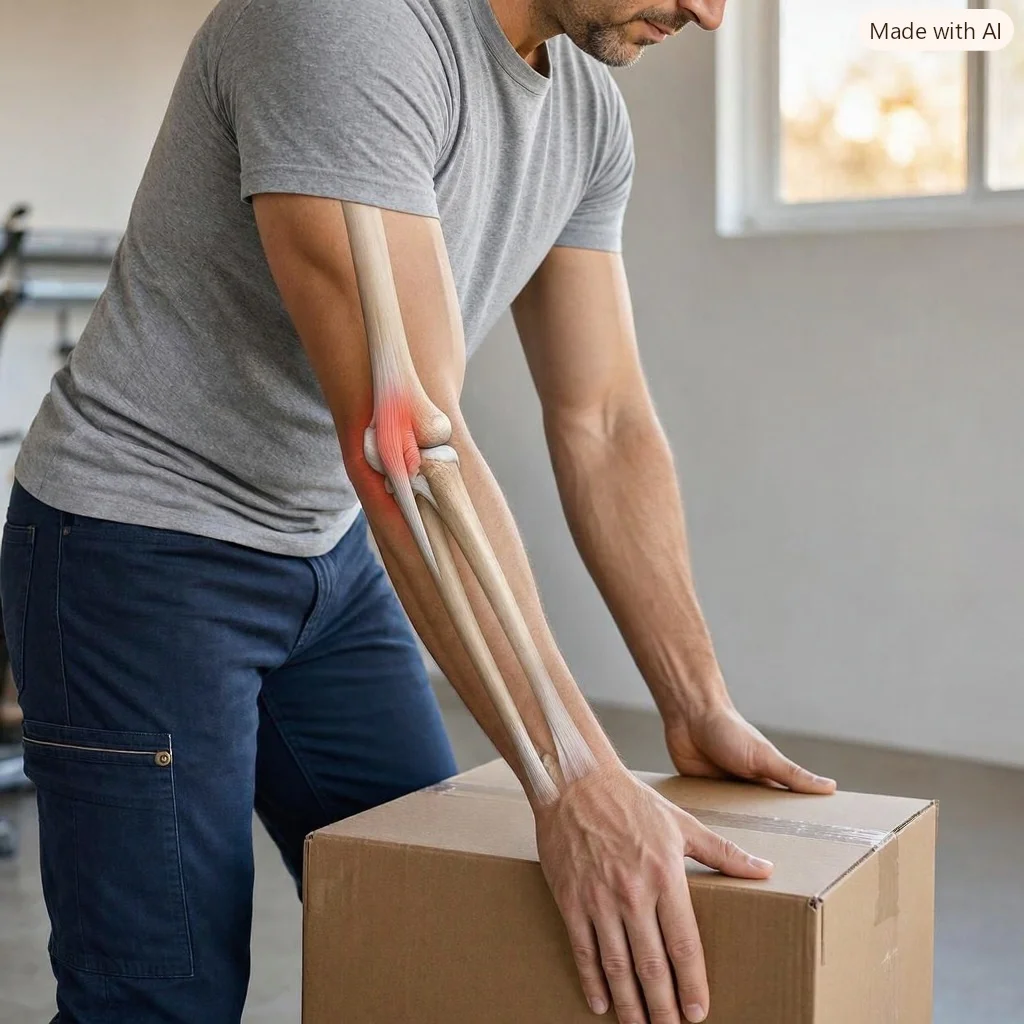
Elbow pain when lifting something can make everyday activities surprisingly difficult. You might notice discomfort when picking up a grocery bag, carrying a suitcase, lifting weights, holding a cup of coffee, or even moving a light object from one place to another. If your elbow hurts when lifting, the problem may involve the tendons, muscles, joints, or nerves surrounding the elbow. One of the most common causes is tennis elbow, but golfer’s elbow, tendon injuries, joint inflammation, and nerve irritation can also produce similar symptoms.
The important thing is to understand where the pain occurs, which movements make it worse, and whether other symptoms are present. These details can help identify the possible cause and determine which treatment may be appropriate.
In this guide, we explain the most common reasons for elbow pain when lifting objects, practical ways to relieve discomfort, helpful exercises, and warning signs that should not be ignored.
Why Does My Elbow Hurt When I Lift Something?
Your elbow is responsible for controlling many movements involving your arm, wrist, and hand. Several muscles and tendons around this joint work together whenever you grip, pull, push, or lift something.
When these tissues become irritated, overloaded, or injured, lifting objects can trigger pain.
Some of the most common reasons include:
- Tennis elbow (lateral epicondylitis).
- Golfer’s elbow (medial epicondylitis).
- Tendonitis or tendon degeneration.
- Muscle strain or ligament injury.
- Elbow bursitis.
- Nerve compression.
- Arthritis or other joint conditions.
The location of your pain can provide useful clues. For example, discomfort on the outside of your elbow often suggests tennis elbow, while pain on the inside may indicate golfer’s elbow.
However, these symptoms can overlap, so an accurate diagnosis requires an assessment by a qualified healthcare professional.

1. Tennis Elbow: A Common Cause of Pain When Lifting
Tennis elbow is one of the most common explanations for pain around the outside of the elbow.
Despite its name, you do not need to play tennis to develop this condition. It can affect people who regularly perform activities involving gripping, wrist movements, repetitive lifting, or twisting.
Tennis elbow develops when the tendons connecting the forearm muscles to the outer part of the elbow become overloaded and develop painful changes.
Common Symptoms of Tennis Elbow
You may experience:
- Pain on the outside of your elbow.
- Discomfort when lifting a cup or carrying groceries.
- Pain when gripping objects tightly.
- Weakness in your hand or wrist.
- Pain when turning a door handle.
- Tenderness when pressing the outer elbow.
- Discomfort when extending your wrist.
For some people, the pain initially appears only during physical activity. Over time, it may also interfere with simple daily tasks.
Why Does Tennis Elbow Hurt When Lifting?
The muscles involved in extending your wrist attach near the outside of your elbow.
When you lift something, these muscles help stabilize your wrist and control the movement. If their tendons are irritated, the additional load can reproduce the pain.
This is why even relatively light objects can become uncomfortable to lift.
How Can You Manage Tennis Elbow?
Treatment usually begins with reducing activities that aggravate the symptoms.
Helpful strategies include:
- Temporarily reducing heavy lifting.
- Avoiding repetitive gripping and twisting.
- Keeping your wrist in a neutral position when carrying objects.
- Applying a wrapped cold pack for up to 15–20 minutes.
- Gradually introducing appropriate strengthening exercises.
- Getting physiotherapy advice if symptoms persist.
Physiotherapy can help restore tendon capacity, improve forearm strength, and make everyday activities more comfortable.
2. Golfer’s Elbow: Pain on the Inner Side of the Elbow
Golfer’s elbow, medically known as medial epicondylitis, affects the tendons attached to the inner part of your elbow.
Although golfers can develop this condition, it also affects people who lift weights, perform manual work, use tools, or repeatedly grip objects.
The condition often develops gradually because of repeated stress on the muscles and tendons responsible for bending the wrist and fingers.
Symptoms of Golfer’s Elbow
Common symptoms include:
- Pain on the inside of the elbow.
- Discomfort when lifting or carrying objects.
- Pain when making a tight fist.
- Weakness when gripping items.
- Tenderness around the inner elbow.
- Pain when bending your wrist.
- Discomfort when twisting your forearm.
Some people also experience tingling or numbness in the ring and little fingers if the nearby ulnar nerve becomes irritated.
Why Does Golfer’s Elbow Make Lifting Difficult?
The muscles on the inner side of your forearm help you grip and stabilize objects.
When the attached tendons become overloaded, activities such as carrying shopping bags, lifting weights, or opening jars can cause pain.
What Can Help?
You may benefit from:
- Reducing repetitive gripping activities.
- Temporarily lowering the weight of objects you lift.
- Taking breaks during repetitive tasks.
- Keeping your wrist straight while carrying objects.
- Following a progressive strengthening programme.
- Consulting a physiotherapist for an individualized recovery plan.
Avoid repeatedly testing the painful movement with heavy objects. This can aggravate an already sensitive tendon.
3. Elbow Tendonitis and Tendon Injuries
Tendons connect muscles to bones and help transfer force during movement.
When you repeatedly lift heavy objects or perform activities that your arm is not prepared for, the tendons around your elbow may become overloaded.
People sometimes use the word tendonitis to describe all tendon pain. However, longer-lasting tendon problems may involve changes in tendon structure rather than inflammation alone.
What Are the Symptoms?
Depending on the affected tendon, symptoms may include:
- Pain during lifting.
- Tenderness around the elbow.
- Discomfort when straightening or bending the arm.
- Reduced grip strength.
- Pain during repetitive movements.
- Stiffness after periods of inactivity.
A sudden injury can produce a different pattern. For example, a distal biceps tendon injury may cause sudden pain at the front of the elbow when lifting something heavy.
A significant tendon tear can also cause bruising, swelling, weakness, or a visible change in the shape of the upper arm.
What Should You Do?
If the pain started after a sudden heavy lift, especially with a popping sensation or noticeable weakness, arrange prompt medical assessment.
For gradual symptoms, temporarily modify the activities that cause pain and seek professional guidance if discomfort continues.
Treatment depends on the specific tendon involved and the severity of the injury.
4. Muscle Strain Around the Elbow
Muscle strains occur when muscle fibres become overstretched or damaged.
This can happen when you lift an object that is too heavy, suddenly pull something, or perform an unfamiliar exercise without adequate preparation.
Common Signs of a Muscle Strain
You might notice:
- Localized pain when lifting.
- Tenderness when touching the affected muscle.
- Discomfort when bending or straightening your arm.
- Mild swelling or bruising.
- Reduced strength during certain movements.
Unlike many overuse-related tendon conditions, a muscle strain may begin immediately after a particular movement.
How Can You Relieve the Discomfort?
For a mild strain, temporarily reduce activities that cause pain and allow the affected tissues to recover.
Gentle movement can help maintain mobility, but avoid forcing painful movements or returning to heavy lifting too quickly.
If you have significant bruising, severe weakness, or difficulty moving your arm, seek medical assessment.
5. Elbow Bursitis
Bursitis occurs when a small fluid-filled sac called a bursa becomes irritated.
The olecranon bursa is located near the pointed bone at the back of your elbow. Its purpose is to reduce friction between surrounding tissues.
When this bursa becomes irritated, swelling may develop around the back of the elbow.
Symptoms of Elbow Bursitis
Common symptoms include:
- Noticeable swelling at the back of the elbow.
- Tenderness around the elbow tip.
- Discomfort when bending the arm.
- Pain when leaning on the affected elbow.
- Warmth or redness in some cases.
Lifting may become uncomfortable because swelling and irritation interfere with normal movement.
Important: A red, hot, swollen elbow accompanied by fever or feeling generally unwell requires urgent medical assessment because an infection may be present.
6. Nerve Compression Around the Elbow
Not all elbow pain comes from muscles or tendons. Sometimes, a nerve becomes compressed or irritated.
One important example is cubital tunnel syndrome, which involves the ulnar nerve passing along the inner side of the elbow.
Symptoms of Nerve Irritation
You may experience:
- Tingling in your ring and little fingers.
- Numbness in part of your hand.
- Pain around the inner elbow.
- Weakness when gripping objects.
- Symptoms that worsen when your elbow stays bent for a long time.
Unlike typical tendon pain, nerve-related symptoms often include tingling, numbness, or changes in hand strength.
If you notice persistent numbness or increasing weakness, arrange a medical assessment rather than treating the problem as ordinary muscle soreness.
7. Arthritis and Other Elbow Joint Problems
Arthritis can also cause elbow pain during lifting.
The elbow joint contains cartilage that allows the bones to move smoothly. When joint structures become affected by arthritis or another joint condition, movement can become painful or restricted.
Common Symptoms
- Pain during elbow movement.
- Joint stiffness, particularly after resting.
- Swelling around the joint.
- Reduced range of motion.
- Discomfort when lifting or carrying objects.
If your elbow feels stiff as well as painful, a healthcare professional can assess whether the symptoms are related to a joint condition rather than a tendon problem.
How to Identify the Possible Cause of Your Elbow Pain
The location and pattern of your pain can help narrow down the possibilities.
| Where you feel the pain | Possible cause | Common symptoms |
|---|---|---|
| Outside of the elbow | Tennis elbow | Pain when gripping and lifting |
| Inside of the elbow | Golfer’s elbow | Pain when bending the wrist or gripping |
| Back of the elbow | Elbow bursitis | Swelling and tenderness |
| Front of the elbow | Biceps tendon injury | Pain during lifting or elbow bending |
| Inner elbow and fingers | Ulnar nerve irritation | Tingling or numbness |
| Throughout the joint | Arthritis or joint injury | Stiffness and restricted movement |
This table is a guide, not a diagnostic tool. Several elbow conditions can produce similar symptoms.
How Can I Relieve Elbow Pain When Lifting Something?
The right treatment depends on the underlying cause, but several practical steps may help reduce discomfort.
1. Reduce Activities That Trigger Pain
If lifting a heavy bag or performing a particular exercise causes sharp discomfort, temporarily modify that activity.
You do not necessarily need to stop using your arm completely. Instead, reduce the load and frequency of painful movements while maintaining comfortable daily activity.
2. Apply a Cold Pack
A cold pack wrapped in a towel may help reduce discomfort after an activity that aggravates your elbow.
Apply it for approximately 15–20 minutes, then allow your skin to return to its normal temperature.
Never place ice directly against your skin.
3. Improve Your Lifting Technique
Your lifting technique can influence how much stress reaches the muscles and tendons around your elbow.
Try these adjustments:
- Keep your wrist relatively straight.
- Hold objects close to your body.
- Avoid gripping objects more tightly than necessary.
- Use both hands when appropriate.
- Avoid sudden pulling or twisting movements.
- Break heavier loads into smaller amounts.
For example, carrying two smaller shopping bags may be more comfortable than carrying one very heavy bag with a painful arm.
4. Avoid Repeated Heavy Lifting During Recovery
Continuing to perform painful activities without modifying the load can make recovery more difficult.
If you regularly lift weights, consider temporarily reducing the weight, repetitions, or exercises that reproduce your symptoms.
Return to heavier activities gradually as your strength and tolerance improve.
5. Consider Physiotherapy
Physiotherapy can be particularly helpful when elbow pain affects your work, exercise, or everyday activities.
A physiotherapist may assess:
- Elbow mobility.
- Wrist and forearm strength.
- Grip strength.
- Tendon sensitivity.
- Lifting technique.
- Shoulder and upper-limb movement patterns.
Based on the findings, they can develop a rehabilitation programme that gradually improves strength and function.
Exercises That May Help Elbow Pain When Lifting
Appropriate exercises can help improve flexibility and strengthen the muscles supporting your elbow.
However, the best exercises depend on the diagnosis. The following movements are general examples, not a treatment programme for every type of elbow injury.
Stop if an exercise causes sharp pain, new numbness, or worsening symptoms.
Exercise 1: Gentle Elbow Bending and Straightening
<text>Purpose: Maintain comfortable elbow movement.</text>
- Sit or stand with your arm relaxed.
- Slowly bend your elbow.
- Bring your hand towards your shoulder as far as comfortable.
- Slowly straighten your arm.
- Repeat 8–10 times without forcing the movement.
This exercise may help maintain mobility when your elbow feels stiff.
Exercise 2: Wrist Extensor Stretch
<text>Purpose: Gently stretch the muscles along the back of your forearm.</text>
- Extend your affected arm in front of you.
- Keep your elbow comfortably straight.
- Turn your palm towards the floor.
- Gently bend your wrist down using your other hand.
- Hold for approximately 15–20 seconds.
- Relax and repeat two or three times if comfortable.
Avoid pulling strongly or forcing the wrist into a painful position.
Exercise 3: Wrist Flexor Stretch
<text>Purpose: Stretch the muscles along the inner forearm.</text>
- Extend your arm in front of you.
- Turn your palm upwards.
- Gently move your fingers towards the floor using your opposite hand.
- Hold for 15–20 seconds.
- Relax and repeat if comfortable.
This movement should create a mild stretch, not sharp elbow pain.
Exercise 4: Gentle Grip Exercise
<text>Purpose: Gradually improve hand and forearm strength.</text>
- Hold a soft foam ball or rolled towel.
- Gently squeeze it.
- Hold for approximately three seconds.
- Slowly release your grip.
- Repeat 8–10 times if comfortable.
Do not squeeze as hard as possible. Begin with light pressure and increase gradually.
Should You Exercise If Your Elbow Hurts?
In many cases, completely avoiding movement is unnecessary. However, exercises should match your condition and current tolerance.
For persistent tennis elbow or golfer’s elbow, a physiotherapist may introduce progressive resistance exercises to improve tendon strength and the arm’s ability to tolerate everyday loads.
When Should You See a Doctor or Physiotherapist?
Most mild elbow problems can improve with appropriate activity modification and conservative care. However, persistent or severe symptoms should not be ignored.
Consider arranging an assessment if:
- Your elbow pain continues for more than two weeks despite self-care.
- You cannot lift everyday objects comfortably.
- Your grip strength is getting weaker.
- You experience recurring elbow pain.
- Your elbow movement becomes restricted.
- You notice persistent tingling or numbness in your fingers.
Seek urgent medical attention if you have:
- Severe pain and difficulty moving your arm.
- A significant injury followed by swelling or deformity.
- A popping sensation followed by sudden weakness.
- A hot, red, swollen elbow accompanied by fever.
- New or worsening numbness after an injury.
Sudden arm pain accompanied by chest pressure, tightness, or heaviness requires emergency medical attention because it may be related to a heart problem.
How Is Elbow Pain Diagnosed?
A healthcare professional usually begins by asking about your symptoms and examining your arm.
They may want to know:
- When did the pain begin?
- Did it start after lifting something heavy?
- Does the pain occur on the inside or outside of your elbow?
- Does gripping make the discomfort worse?
- Do you experience numbness or tingling?
- Does the pain improve when you rest?
During the physical examination, the clinician may assess your elbow movement, wrist strength, grip strength, tenderness, and response to specific movements.
Imaging is not always necessary. However, an X-ray, ultrasound, or MRI may be considered when there is a suspected structural injury or the diagnosis remains unclear.
How Long Does Elbow Pain Take to Heal?
Recovery time depends on the cause, severity, and how consistently the problem is managed.
A mild muscle strain may improve relatively quickly, while persistent tendon problems can take several months to recover.
For example, tennis elbow can sometimes last for months and may take longer than a year to resolve completely.
Several factors can influence recovery:
- How severe the original injury is.
- Whether you continue repetitive painful activities.
- Your overall strength and physical condition.
- Whether you follow an appropriate rehabilitation programme.
- Whether another condition is contributing to the pain.
The goal is not simply to eliminate pain temporarily. It is to restore comfortable movement and gradually improve your arm’s ability to handle normal activities.

How Can You Prevent Elbow Pain When Lifting?
Prevention is particularly important if your job, hobbies, or exercise routine involve repetitive arm movements.
Here are some practical habits that may help:
Warm up before exercise: Prepare your arms and wrists before lifting heavy weights or performing demanding activities.
Increase weight gradually: Avoid sudden increases in lifting intensity, repetitions, or training volume.
Use proper lifting technique: Keep your wrist stable and avoid unnecessary twisting while carrying objects.
Take regular breaks: Repeated gripping and lifting can place considerable stress on forearm tendons.
Strengthen your forearms: Appropriate wrist and grip exercises can improve your ability to tolerate physical activities.
Pay attention to early symptoms: If your elbow starts hurting, modify the activity instead of repeatedly pushing through the discomfort.
Maintain balanced upper-body strength: Your shoulder, arm, wrist, and forearm muscles work together during lifting. Improving overall movement control may help distribute physical demands more effectively.
Final Thoughts: What Should You Do If Your Elbow Hurts When Lifting Something?
Elbow pain when lifting something can result from several conditions, including tennis elbow, golfer’s elbow, tendon injuries, muscle strains, nerve irritation, and joint problems.
The location of your pain is an important clue. Pain on the outside of your elbow may suggest tennis elbow, while discomfort on the inside may indicate golfer’s elbow. Swelling, numbness, sudden weakness, or restricted movement may point towards other problems that require professional assessment.
Start by modifying painful activities, using comfortable lifting techniques, and maintaining gentle movement. If your symptoms persist, interfere with everyday tasks, or become worse, consult a qualified healthcare professional.
Physiotherapy can help identify contributing movement problems and develop a gradual rehabilitation plan to restore strength, mobility, and confidence when lifting.
You do not have to accept elbow pain as a normal part of daily activities. Understanding its cause and addressing it early can make a meaningful difference to your recovery.
Frequently Asked Questions
1. Why does my elbow hurt when I lift something heavy?
Heavy lifting can overload the muscles and tendons around your elbow. Tennis elbow, golfer’s elbow, and tendon injuries are common possibilities, particularly when pain occurs during gripping or wrist movements.
2. Why does my elbow hurt when I lift something light?
Pain with light objects may indicate an irritated tendon or another condition that makes your elbow sensitive to everyday loads. Tennis elbow can cause discomfort even when lifting a cup or holding a small object.
If the pain is persistent, arrange an assessment to identify the cause.
3. Why does the outside of my elbow hurt when lifting?
Pain on the outside of your elbow is commonly associated with tennis elbow. The condition affects tendons connecting forearm muscles to the outer elbow and often causes discomfort during gripping, lifting, and wrist extension.
4. Why does the inside of my elbow hurt when lifting weights?
Pain on the inner side of your elbow may be caused by golfer’s elbow. Repeated gripping, wrist bending, and lifting can overload the tendons attached to the inner elbow.
5. Should I stop lifting weights if my elbow hurts?
You should temporarily modify exercises that reproduce your pain. Reducing the weight, changing your technique, and avoiding painful movements may help. However, complete inactivity is not always necessary. A physiotherapist can help determine when and how to return to resistance training.
6. Can poor lifting technique cause elbow pain?
Yes. Repeated lifting with an awkward wrist position, excessive gripping, or sudden increases in weight can place additional stress on the elbow tendons and surrounding muscles.
7. Can tennis elbow heal without surgery?
Yes. Many people improve with activity modification, appropriate exercises, and physiotherapy. Surgery is generally considered only in selected cases when symptoms remain persistent despite appropriate nonsurgical treatment.
8. Is elbow pain when lifting a sign of nerve damage?
Not necessarily. Tendon problems are common causes of lifting-related elbow pain. However, tingling, numbness, or weakness in the hand may indicate nerve irritation and should be assessed by a healthcare professional.
9. Does ice help elbow pain?
A cold pack wrapped in a towel may temporarily relieve discomfort, particularly after an activity that aggravates the elbow. It should not be applied directly to the skin.
10. Can physiotherapy help with elbow pain when lifting?
Yes. Physiotherapy can help assess the source of pain, improve elbow and wrist mobility, strengthen the forearm muscles, and develop a progressive return-to-activity programme.
11. Why does my elbow hurt when I lift something and rotate my wrist?
Pain during both lifting and wrist rotation may be associated with tennis elbow, golfer’s elbow, or another tendon problem. The location of the pain and a physical examination can help distinguish between these conditions.
12. When is elbow pain a serious problem?
Severe pain, significant swelling, deformity, sudden weakness, persistent numbness, or a hot and red elbow accompanied by fever requires prompt medical attention. Sudden arm pain with chest pressure is an emergency.