Soft Tissue Therapy for Posture: Complete Guide to Muscle Tension, Alignment, and Movement
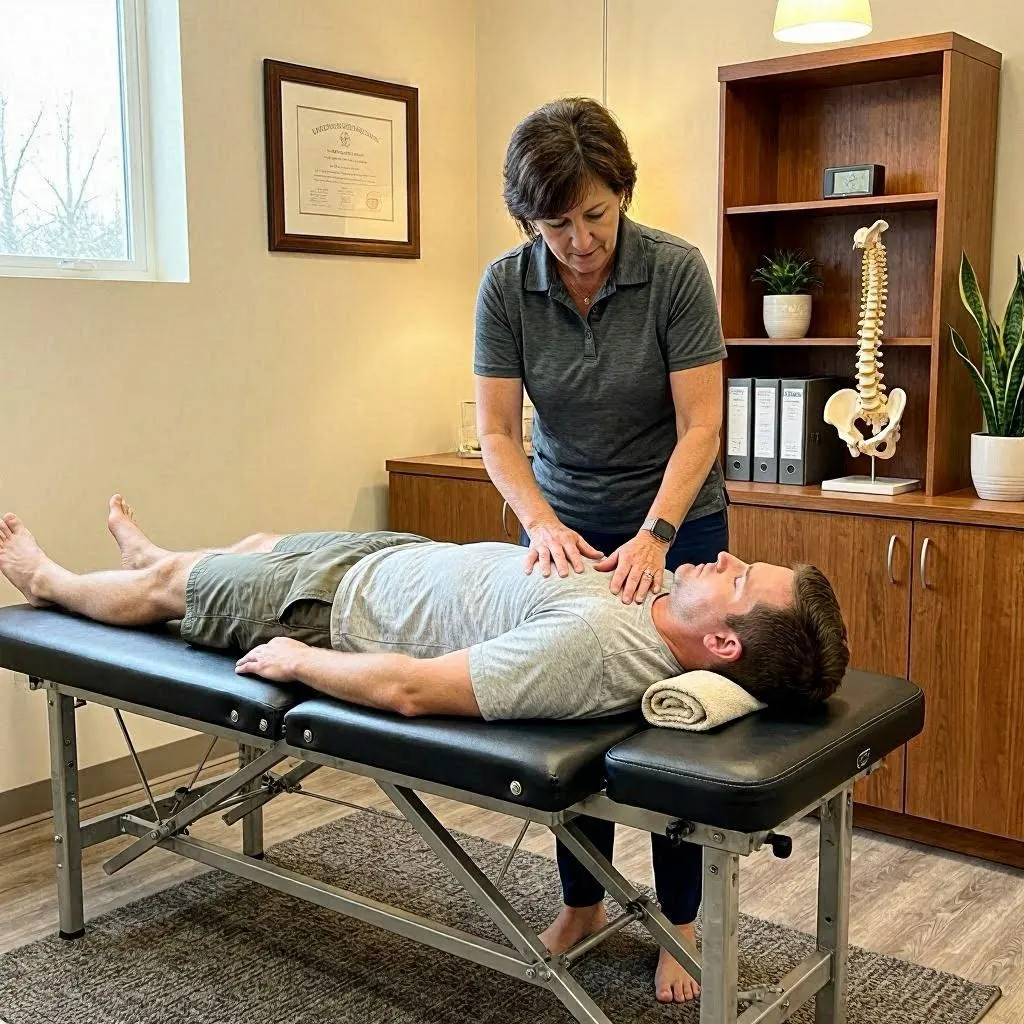
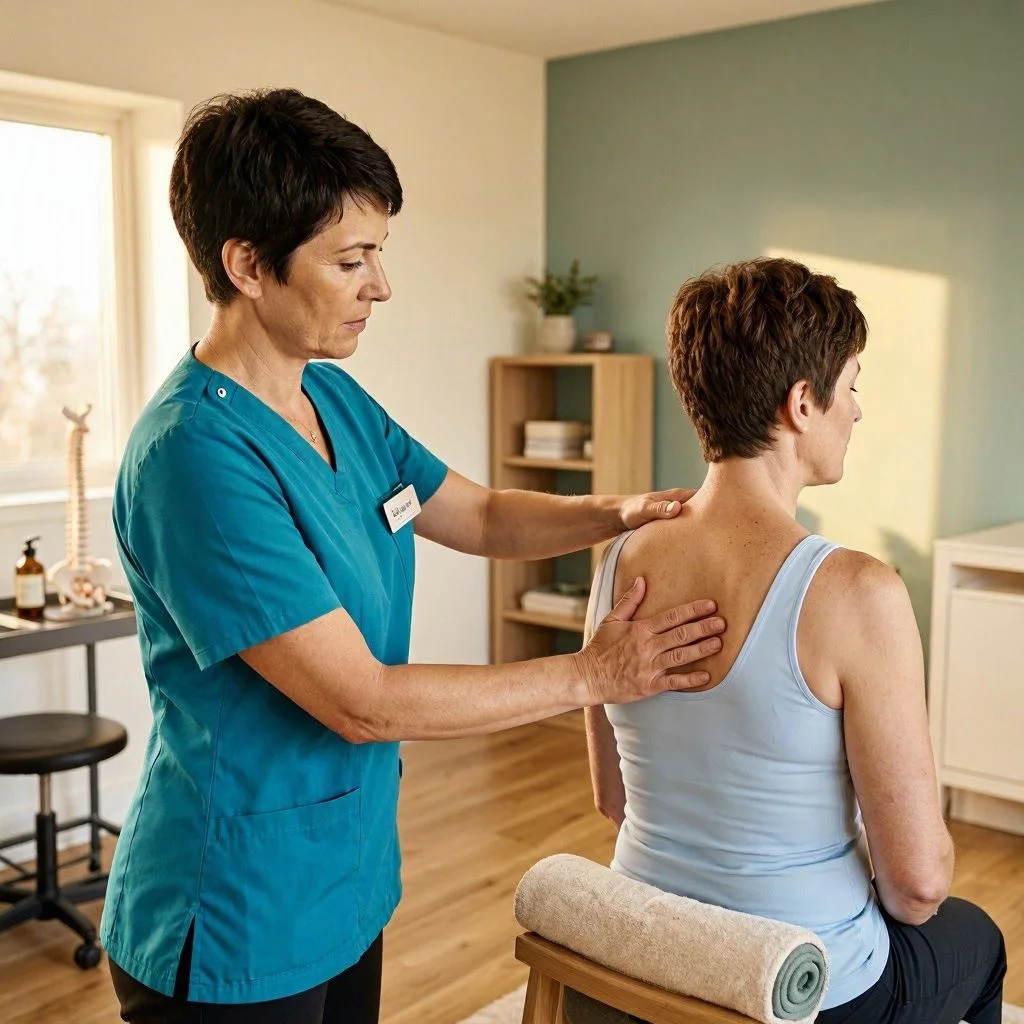
Posture affects the way the body sits, stands, walks, works, exercises, and performs everyday activities. However, posture is more than simply keeping the back straight or pulling the shoulders backward. It involves the coordinated movement of the head, neck, shoulders, spine, pelvis, hips, knees, and feet.When people spend long hours sitting, working at a computer, using a phone, driving, or performing repetitive activities, they may develop muscle tension and stiffness. These changes can make certain positions uncomfortable and may influence how a person moves. Soft Tissue Therapy for Posture can be used as a complementary approach when muscular tension contributes to discomfort or restricted movement. Hands-on treatment may focus on muscles, fascia, tendons, and other soft tissues. Depending on the individual, techniques can include massage, targeted pressure, myofascial techniques, stretching, and other manual approaches.
However, soft tissue therapy should not be considered a standalone method for permanently correcting posture. Posture is influenced by strength, mobility, physical activity, movement habits, work environment, previous injuries, and individual anatomy. Therefore, a more complete approach may combine soft tissue treatment with strengthening, mobility exercises, movement education, ergonomic adjustments, and physiotherapy.
At Ritz Clinic, soft tissue treatment is individualized around symptoms, physical activity, movement patterns, lifestyle, and recovery goals. The clinic also provides physiotherapy and posture-focused services that can complement hands-on treatment. (Ritz Clinic)
What Is Soft Tissue Therapy for Posture?
Soft tissue therapy is a hands-on treatment approach that focuses on the muscles and other soft tissues involved in movement.
These tissues can include:
- Muscles
- Fascia
- Tendons
- Connective tissues
- Areas surrounding joints
When someone experiences prolonged muscular tension, repetitive physical activity, exercise-related tightness, or reduced mobility, soft tissue treatment may help make movement feel more comfortable.
For posture-related concerns, treatment may focus on areas such as:
- Neck muscles
- Upper trapezius
- Shoulders
- Chest muscles
- Upper back
- Lower back
- Hip muscles
The goal is not to force the body into one “perfect” position.
Instead, treatment may help reduce the sensation of muscular tightness and support comfortable movement while the person works on active strategies that improve strength, mobility, and movement control.
This distinction matters because there is no single posture that every person should maintain throughout the day. A physiotherapy resource from Cambridge University Hospitals emphasizes that there is no universally “best” posture and that changing position regularly is important.
Understanding Posture
Posture describes how the body is positioned while sitting, standing, lying, and moving.
People often think about posture as a static position. For example, they may imagine standing with the shoulders back, chest up, and spine straight.
However, posture is dynamic.
The body constantly changes position while:
- Walking
- Sitting
- Standing
- Reaching
- Bending
- Lifting
- Exercising
- Turning
- Climbing stairs
Therefore, healthy posture is not necessarily about maintaining one rigid position.
Instead, useful posture involves the ability to move comfortably and control the body during different activities.
This is why posture improvement should consider both static and dynamic movement.
Can Poor Posture Cause Muscle Tension?
Posture and muscle tension can influence one another.
For example, spending several hours at a computer may cause someone to remain in the same position for a long period. Over time, the person may notice tension around the neck, shoulders, and upper back.
However, posture should not automatically be blamed for every episode of pain.
Pain and muscular tension can have many contributing factors, including:
- Physical workload
- Stress
- Sleep
- Exercise
- Previous injuries
- Strength
- Mobility
- Repetitive activity
- Recovery
- Individual sensitivity
Consequently, posture assessment should be part of a broader physical assessment rather than an assumption that one alignment issue explains every symptom.
How Soft Tissue Therapy May Support Posture
Soft tissue therapy may help when muscular tension is making movement uncomfortable.
For example, someone who spends many hours working at a desk may develop tightness around the upper trapezius, neck, chest, and upper back.
A therapist may use hands-on techniques to address areas of perceived tension.
This may make certain movements feel easier temporarily.
However, the longer-term goal should be to improve the person’s ability to move and tolerate everyday activities.
That may require:
- Strengthening
- Mobility training
- Movement breaks
- Ergonomic changes
- Exercise
- Postural awareness
- Functional movement training
Therefore, soft tissue therapy can be one part of a larger posture strategy.
Soft Tissue Therapy for Forward Head Posture
Forward head positioning is commonly discussed in relation to prolonged computer and smartphone use.
People may notice that their head appears farther forward relative to their trunk, especially when sitting.
This position can also be associated with muscular tension around the:
- Neck
- Upper trapezius
- Upper back
- Chest
Soft tissue treatment may target muscles that feel tight or uncomfortable.
However, treatment should not simply attempt to force the head backward.
Instead, a broader approach can include:
- Neck mobility
- Upper-back mobility
- Shoulder strengthening
- Postural awareness
- Movement breaks
- Workstation adjustments
- Functional exercises
The objective is to help the person develop comfortable control of the head and upper body during different activities.
Soft Tissue Therapy for Rounded Shoulders
Rounded shoulder positioning can develop alongside prolonged sitting, repetitive computer use, and limited movement variety.
However, shoulder position is influenced by several factors.
These may include:
- Thoracic mobility
- Shoulder mobility
- Muscle strength
- Exercise habits
- Workstation setup
- Movement patterns
- Previous injuries
Soft tissue treatment may focus on areas such as the chest, upper back, shoulders, and surrounding muscles when tension is present.
Nevertheless, hands-on treatment alone cannot guarantee permanent changes in shoulder posture.
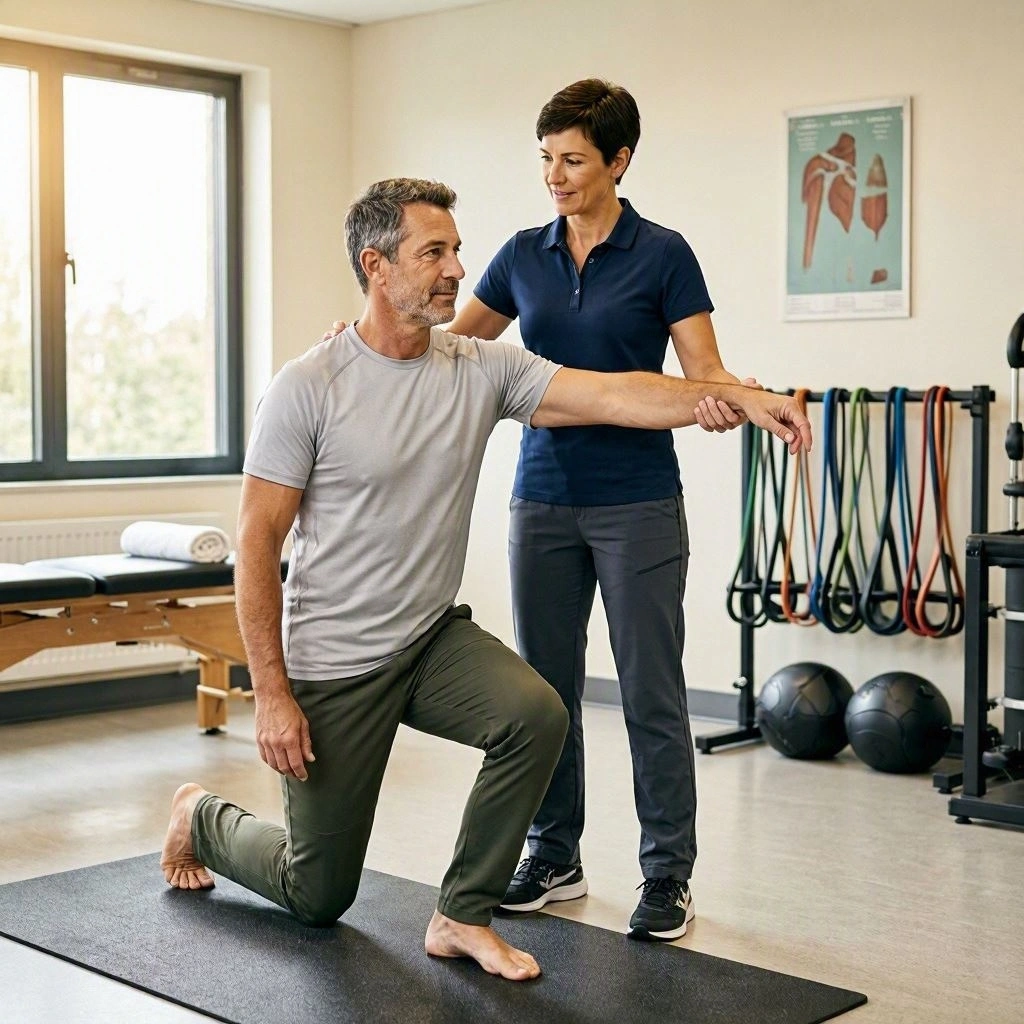
Active rehabilitation can be more important for developing long-term movement capacity.
Exercises may include:
- Rowing movements
- Scapular control exercises
- Shoulder strengthening
- Thoracic mobility
- Chest mobility
- Functional reaching
The appropriate exercises depend on the individual’s physical assessment.
Soft Tissue Therapy for Upper Back Tension
The upper back often becomes tense during prolonged sitting.
This can happen when someone spends hours:
- Typing
- Reading
- Driving
- Using a phone
- Working at a desk
- Performing repetitive tasks
Upper-back tension may also occur in people who exercise frequently.
Soft tissue therapy may provide temporary comfort for some people with muscular tension.
Massage has been studied for neck and shoulder discomfort, with evidence suggesting that some people may experience short-term benefits. However, results vary, and massage may not be more effective than other active treatments.
For that reason, treatment should be combined with strategies that address the person’s daily physical demands.
Soft Tissue Therapy for Neck Posture
Neck posture can be affected by prolonged screen use, sitting, driving, and repetitive activities.
A person may experience:
- Neck stiffness
- Shoulder tension
- Upper-back discomfort
- Reduced neck movement
- Headaches associated with muscular tension
Soft tissue treatment may target muscles around the neck and shoulders.
However, not every neck symptom is caused by muscular tension.
Persistent, severe, worsening, or unexplained neck symptoms should receive appropriate assessment, particularly if they occur alongside neurological symptoms such as significant weakness, numbness, or changes in coordination.
A comprehensive approach may combine:
- Soft tissue therapy
- Neck mobility exercises
- Upper-back exercises
- Shoulder strengthening
- Ergonomic changes
- Regular movement breaks
Soft Tissue Therapy for Desk Workers
Desk workers are among the people most likely to spend long periods in relatively static positions.
Common complaints include:
- Neck tension
- Shoulder stiffness
- Upper-back discomfort
- Lower-back stiffness
- Wrist and forearm tension
However, sitting itself is not necessarily harmful.
The larger issue can be staying in the same position for too long without enough movement variation.
Therefore, one of the simplest posture strategies is to change positions regularly.
For example:
Sit → Stand → Walk → Move → Sit
Regular movement breaks can reduce prolonged static loading and give different tissues opportunities to move.
Workstation setup can also matter.
Useful considerations include:
- Screen height
- Keyboard position
- Chair adjustment
- Foot support
- Desk height
- Mouse position
- Distance from the screen
Soft tissue therapy may help manage muscular tension, while ergonomic changes and movement habits address the environment contributing to the problem.
Soft Tissue Therapy and Computer Posture
Computer use often involves prolonged periods of:
- Sitting
- Looking at a screen
- Typing
- Using a mouse
- Holding the arms in front of the body
This combination can contribute to muscular fatigue and tension.
Soft tissue treatment may address tight areas around the neck, shoulders, upper back, and forearms.
However, treatment should not encourage someone to hold a rigid “perfect” posture for eight hours.
Instead, a better strategy is to develop comfortable positioning and regular movement.
Changing the position of the:
- Head
- Shoulders
- Arms
- Spine
- Hips
throughout the day can provide movement variety.
Soft Tissue Therapy for Lower Back Posture
Lower-back posture is another common concern.
People may worry about:
- Excessive arching
- Flattening the lower back
- Slouching
- Pelvic position
However, there is no single lower-back position that everyone needs to maintain.
The body is designed to move.
Lower-back discomfort can also have many causes, so posture should not automatically be considered the underlying problem.
Soft tissue therapy may provide temporary relief for some people experiencing muscular tension in the lower back. Research summarized by NCCIH suggests massage may provide short-term improvements for some people with low-back pain, although the evidence is limited and longer-term effects are less certain.
For this reason, soft tissue therapy should often be combined with:
- Strength training
- Walking
- Mobility exercises
- Functional movement
- Activity modification
- Gradual physical conditioning
The NHS also recommends staying active and identifies physiotherapy and manual therapy among possible treatments for back pain when appropriate.
Soft Tissue Therapy and Hip Position
Hip position can influence how the body moves during sitting, standing, walking, and exercise.
People who sit for long periods may experience tightness around:
- Hip flexors
- Glutes
- Lower back
- Outer hip muscles
Soft tissue treatment may be used to address muscular tension in these areas.
However, hip posture should not be considered independently from the rest of the body.
Movement involves the:
- Feet
- Ankles
- Knees
- Hips
- Pelvis
- Spine
Therefore, a comprehensive assessment may be more useful than focusing on one muscle.
Soft Tissue Therapy and Pelvic Alignment
Pelvic alignment is another area where people often look for a simple explanation.
However, the pelvis naturally moves during walking, sitting, bending, and exercise.
Small differences in alignment do not automatically mean that something is wrong.
A physiotherapist may evaluate:
- Hip mobility
- Leg strength
- Core strength
- Balance
- Walking
- Functional movement
If muscular tension contributes to discomfort, soft tissue therapy may form part of treatment.
At the same time, strengthening and movement exercises can help develop better control.
Does Soft Tissue Therapy Correct Posture?
This is one of the most important questions.
Soft tissue therapy alone should not be considered a permanent posture correction method.
It may help reduce the sensation of muscular tension and make movement more comfortable. However, posture is influenced by many factors.
Longer-term improvement may require:
- Strength
- Mobility
- Movement control
- Physical conditioning
- Ergonomics
- Exercise
- Movement variety
- Postural awareness
Ritz Clinic’s posture-focused physiotherapy approach similarly combines posture assessment with strengthening, stretching, core stability, manual therapy, ergonomic advice, mobility work, and functional movement training rather than relying on manual treatment alone. (Physiotherapy for Posture Correction)
Soft Tissue Therapy and Postural Awareness
Postural awareness means becoming more aware of how your body feels and moves.
It does not mean constantly checking whether your shoulders are perfectly positioned.
Instead, awareness can help you notice when:
- You have been sitting too long
- Your shoulders feel tense
- You need to change position
- You have stopped moving
- A workstation needs adjustment
- A particular activity causes discomfort
The goal is not perfection.
The goal is flexibility and movement variety.
If a person notices that their neck becomes uncomfortable after several hours of uninterrupted computer work, the solution may involve movement breaks and workstation changes in addition to soft tissue treatment.
Soft Tissue Therapy and Movement Breaks
Movement breaks are one of the simplest ways to support posture during the workday.
A movement break does not necessarily require a complicated stretching routine.
It can involve:
- Standing
- Walking
- Shoulder movements
- Gentle neck movement
- Changing sitting position
- Getting water
- Walking to another room
- Performing a few mobility exercises
The key is to avoid remaining in one position for excessive periods.
This approach fits the broader principle that posture is dynamic.
Rather than trying to maintain one position all day, develop the ability to move between comfortable positions.
Soft Tissue Therapy and Strength Training
Strength is an important component of physical function.
If a person lacks the strength or endurance needed for a particular activity, they may fatigue more quickly.
For posture-related concerns, strengthening may target:
- Upper back
- Shoulders
- Core
- Hips
- Legs
However, there is no single group of “posture muscles” that must always be strengthened.
The appropriate exercises depend on the person’s assessment and goals.
Examples may include:
- Rows
- Resistance-band exercises
- Squats
- Hip strengthening
- Core exercises
- Shoulder strengthening
- Functional lifting
The goal is to build physical capacity rather than create a rigid body position.
Soft Tissue Therapy and Mobility Exercises
Mobility exercises can complement soft tissue treatment.
If muscular tension contributes to restricted movement, hands-on treatment may temporarily make a movement feel easier.
The person can then use that improved comfort during active mobility work.
For example:
Soft tissue treatment → Comfortable movement → Mobility exercise → Strengthening → Functional activity
This sequence is not necessary for everyone, but it illustrates how passive and active strategies can complement each other.
Soft Tissue Therapy for Posture During Exercise
Posture also matters during exercise, but again, there is rarely one perfect position.
Different exercises require different body positions.
For example:
- Squatting involves coordinated movement of the hips, knees, and ankles.
- Running requires repeated movement of the entire body.
- Swimming requires coordinated shoulder and trunk movement.
- Weight training requires control under resistance.
Soft tissue therapy may help address muscular tension that affects movement.
However, exercise technique, strength, mobility, training load, and recovery should also be considered.
Athletes should not rely on massage to compensate for excessive training volume or poor recovery.
Soft Tissue Therapy for Athletes
Athletes may experience muscular tension because of repeated training.
Depending on the sport, common areas may include:
- Calves
- Hamstrings
- Quadriceps
- Hip muscles
- Lower back
- Upper back
- Shoulders
Soft tissue treatment can be included as part of an athlete’s recovery strategy.
However, it should complement:
- Strength training
- Mobility
- Conditioning
- Warm-ups
- Recovery
- Sleep
- Training progression
The objective should be maintaining physical capacity rather than simply making muscles feel temporarily loose.

Soft Tissue Therapy and Posture After Injury
An injury can change how a person moves.
For example, someone with knee pain may shift weight away from the affected side.
Someone with shoulder pain may avoid reaching.
Someone with back pain may move more cautiously.
These adaptations can sometimes contribute to muscular tension.
Soft tissue treatment may help manage some of this tension.
However, rehabilitation should also address the underlying movement limitation.
Depending on the injury, this may involve:
- Strengthening
- Balance
- Mobility
- Functional movement
- Walking
- Progressive loading
A broader injury rehabilitation program can help connect manual care with active recovery.
Soft Tissue Therapy and Physiotherapy for Posture
Physiotherapy can provide a broader framework for posture-related concerns.
A physiotherapist may assess:
- Head position
- Shoulder alignment
- Spinal position
- Pelvic position
- Hip alignment
- Knee position
- Foot placement
- Range of motion
- Muscle strength
- Flexibility
- Functional movement
Ritz Clinic’s Physiotherapy Physical Assessment service describes assessment of posture, range of motion, muscle strength, flexibility, and functional movement. This type of assessment can help determine whether posture is actually related to a person’s symptoms or physical limitations.
This is important because posture should not be treated in isolation.
What Happens During a Soft Tissue Therapy Session for Posture?
A session generally begins with a discussion of your concerns.
Your practitioner may ask about:
- Where you feel tension
- How long you have experienced it
- Your work habits
- Exercise routine
- Previous injuries
- Daily activities
- Treatment goals
Depending on the situation, the practitioner may also observe movement.
Treatment may then focus on selected soft tissues.
Techniques can include:
- Massage
- Targeted pressure
- Myofascial techniques
- Assisted stretching
- Compression
- Other manual approaches
The appropriate technique depends on the individual’s condition and tolerance.
More pressure is not automatically better.
A treatment should feel appropriate rather than unnecessarily painful.
What Should You Expect After Treatment?
After soft tissue treatment, some people feel relaxed or notice that certain movements feel easier.
Others may experience temporary tenderness, particularly following firmer techniques.
Your practitioner may recommend:
- Gentle movement
- Mobility exercises
- Regular activity
- Hydration
- Temporary modification of intense exercise
The recommendations depend on the treatment and your individual circumstances.
Importantly, any severe, unusual, or worsening symptoms should receive appropriate professional attention.
How Often Should You Have Soft Tissue Therapy for Posture?
There is no universal schedule.
The appropriate frequency depends on:
- Muscle tension
- Work demands
- Exercise routine
- Symptoms
- Treatment response
- Physical goals
- Other rehabilitation strategies
Some people may benefit from occasional treatment.
Others may use soft tissue therapy during periods of increased physical workload.
However, regular treatment should not replace active strategies.
If tension repeatedly returns after every session, it may be useful to investigate contributing factors such as:
- Workstation setup
- Training volume
- Strength
- Mobility
- Sleep
- Recovery
- Stress
- Movement habits
Is Soft Tissue Therapy Safe?
Soft tissue treatment is generally considered low risk when appropriate techniques are used by a trained professional, but it is not suitable in exactly the same way for everyone.
You should inform your practitioner about relevant health information, including:
- Previous surgery
- Significant injuries
- Medical conditions
- Medications
- Bleeding or clotting concerns
- Skin problems
- Open wounds
- Pregnancy when relevant
Certain situations may require modifications or medical guidance before treatment.
Soft tissue therapy should also not delay medical assessment when symptoms suggest a potentially serious condition.
When Should You Seek Medical Assessment?
Posture-related muscle tension is usually not an emergency.
However, certain symptoms require appropriate medical evaluation.
Seek medical attention when you experience:
- Severe or rapidly worsening pain
- Major trauma
- Sudden weakness
- Progressive numbness
- Significant loss of coordination
- Loss of bladder or bowel control
- Chest pain
- Difficulty breathing
- Loss of consciousness
- Severe unexplained headache
- Significant swelling
- Major loss of function
These symptoms may have causes that cannot be appropriately addressed through soft tissue therapy alone.
Common Posture Mistakes to Avoid
Trying to Sit Perfectly All Day
No single sitting position needs to be maintained continuously.
Instead, change positions regularly.
Pulling the Shoulders Back Constantly
Keeping the shoulders rigidly pulled backward can create unnecessary tension.
Comfortable movement is more useful than forcing a fixed position.
Ignoring Strength
Posture is not only about flexibility.
Strength and endurance can influence how comfortably the body handles daily activities.
Stretching Everything
Stretching is not automatically the answer to every posture problem.
Some people need strengthening, mobility, movement training, or changes to their daily activities.
Relying Only on Massage
Massage can provide useful short-term support, but active rehabilitation may be necessary for longer-term physical changes.
Ignoring the Work Environment
If your workstation repeatedly places you in an uncomfortable position, treatment alone may not solve the problem.
How to Improve Posture Alongside Soft Tissue Therapy
A comprehensive strategy can include several simple habits.
Change Position Regularly
Avoid staying in one position for long periods.
Walk During the Day
Walking provides movement variety and can break up long periods of sitting.
Strengthen Regularly
Build strength appropriate to your physical needs.
Improve Mobility
Work on areas where limited mobility affects movement.
Adjust Your Workstation
Make your desk and screen setup comfortable and practical.
Take Movement Breaks
Short breaks throughout the day can be more realistic than waiting until the end of the workday to exercise.
Sleep Well
Recovery and physical tolerance are influenced by sleep.
Stay Physically Active
Regular exercise supports general strength, mobility, and physical capacity.
Soft Tissue Therapy for Posture at Ritz Clinic
At Ritz Clinic, soft tissue treatment can be used as part of an individualized approach to muscle tension and movement-related concerns.
The clinic’s soft tissue therapy service focuses on muscles, fascia, tendons, and other soft tissues involved in movement and physical function. It may be useful for people experiencing muscular tension associated with prolonged sitting, repetitive work, exercise, or physical activity. (Soft Tissue Therapy Services)
For posture-related concerns, treatment can also be complemented by physiotherapy, exercise, movement education, ergonomic recommendations, and functional rehabilitation.
Ritz Clinic’s posture-focused services recognize that posture is influenced by multiple factors rather than one isolated muscle or body position. Its posture optimization approach includes assessment, mobility, strengthening, soft tissue therapy, and movement education. (Posture Optimization)
This broader approach is particularly useful when posture concerns are accompanied by recurring neck, shoulder, back, or hip tension.
Building a Long-Term Posture Strategy
The most useful posture strategy is one that fits into your everyday life.
Instead of trying to remember dozens of posture rules, focus on a few practical principles:
Move regularly.
Do not remain in one position for hours.
Build strength.
Develop physical capacity that matches your lifestyle.
Maintain useful mobility.
Keep the joints and muscles moving comfortably.
Adjust your environment.
Make your workstation and daily setup practical.
Use soft tissue therapy when appropriate.
Hands-on treatment can support comfort and movement when muscular tension is present.
Focus on function.
Ask whether you can sit, stand, walk, work, exercise, and perform daily activities comfortably.
This approach is generally more sustainable than trying to maintain a rigid posture throughout the day.

Final Thoughts
Soft Tissue Therapy for Posture can be a useful complementary treatment for people who experience muscular tension, stiffness, or discomfort associated with prolonged sitting, repetitive activities, exercise, or movement habits.
Massage and other soft tissue techniques may help some people experience short-term improvements in comfort and mobility. Research suggests that massage can provide short-term benefits for certain types of neck, shoulder, and back discomfort, although the strength of evidence varies.
However, soft tissue therapy should not be presented as a permanent solution for posture by itself.
Posture is dynamic and influenced by many factors, including strength, mobility, physical activity, movement habits, work environment, previous injuries, and individual anatomy.
Therefore, a more complete approach may combine soft tissue treatment with:
- Strength training
- Mobility exercises
- Functional movement
- Ergonomic improvements
- Movement breaks
- Physiotherapy
- Exercise
- Postural awareness
Most importantly, the goal should not be to achieve one perfect posture.
Instead, the goal is to develop a body that can move comfortably, change positions, tolerate physical demands, and perform meaningful activities.
For people experiencing recurring muscular tension or posture-related discomfort, a professional assessment can help determine whether soft tissue treatment is appropriate and what other strategies may be useful.
At Ritz Clinic, soft tissue therapy can be incorporated into a broader approach to movement, posture, rehabilitation, and physical function.
Frequently Asked Questions About Soft Tissue Therapy for Posture
What is Soft Tissue Therapy for Posture?
Soft Tissue Therapy for Posture is a hands-on approach that addresses muscles and surrounding soft tissues that may contribute to muscular tension or movement discomfort. It can complement strengthening, mobility exercises, ergonomic changes, and physiotherapy.
Can soft tissue therapy correct poor posture?
Soft tissue therapy alone cannot guarantee permanent posture correction. It may help reduce muscular tension and make movement more comfortable, while long-term changes may require strength training, mobility work, movement education, and changes to daily habits.
Can massage improve posture?
Massage may temporarily reduce muscle tension and make movement feel more comfortable. However, posture depends on many factors, so massage works best as one component of a broader approach.
Can soft tissue therapy help rounded shoulders?
It may help when muscular tension contributes to discomfort around the chest, shoulders, or upper back. However, strengthening, mobility exercises, movement training, and ergonomic changes may also be important.
Can soft tissue therapy help forward head posture?
It may reduce tension in some neck and shoulder muscles, potentially making movement more comfortable. However, long-term management may also involve neck and upper-back exercises, shoulder strengthening, movement breaks, and workstation adjustments.
Can soft tissue therapy help office workers?
Yes. Office workers may experience muscular tension from prolonged sitting and repetitive computer work. Soft tissue treatment may provide temporary comfort, while movement breaks, workstation adjustments, exercise, and strengthening can address broader contributors.
How often should I get soft tissue therapy for posture?
There is no universal frequency. Treatment frequency depends on your symptoms, activity level, work demands, treatment response, and overall rehabilitation plan.
Should posture treatment be painful?
No. Treatment does not need to be excessively painful to be useful. Pressure should be appropriate for your condition and tolerance.
Is there one perfect posture?
No. The body naturally moves through different positions. A practical approach is to develop strength, mobility, movement control, and the ability to change positions regularly.
Is posture the main cause of back pain?
Not necessarily. Back pain can have many contributing factors. Posture may influence comfort for some people, but it should not automatically be considered the primary cause of pain.
Can soft tissue therapy replace physiotherapy?
No. Soft tissue therapy can complement physiotherapy, but physiotherapy can address broader areas such as strength, mobility, balance, movement control, exercise tolerance, and functional activity.
Can I exercise while receiving soft tissue therapy?
In many situations, yes. Exercise can complement hands-on treatment. However, the appropriate exercises and training intensity depend on your condition and goals.
What muscles are commonly treated for posture-related tension?
Depending on the individual, treatment may focus on the neck, upper trapezius, shoulders, chest, upper back, lower back, hips, and surrounding soft tissues.
Can soft tissue therapy help lower-back tension?
It may provide short-term comfort for some people with muscular tension or low-back discomfort. However, strengthening, mobility, physical activity, and appropriate rehabilitation may also be important.
When should I see a healthcare professional instead of getting soft tissue therapy?
Seek appropriate medical assessment if you have severe or worsening symptoms, major trauma, sudden weakness, progressive numbness, significant loss of coordination, chest pain, difficulty breathing, loss of bladder or bowel control, or other concerning symptoms.
Where can I get Soft Tissue Therapy for Posture?
Ritz Clinic provides soft tissue therapy and posture-focused physiotherapy services. Treatment can be individualized according to symptoms, physical activity, movement patterns, lifestyle, and recovery goals.