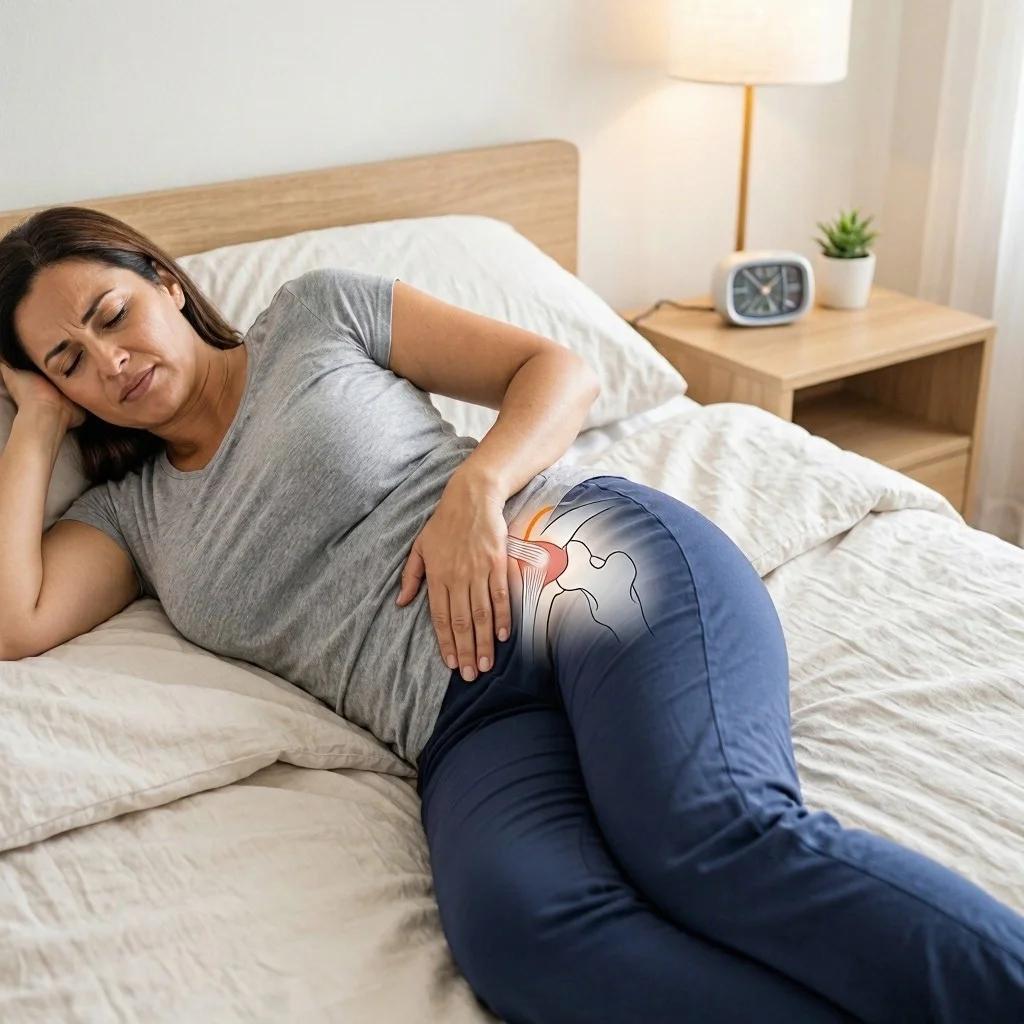
Why Does My Hip Hurt When I Lie on My Side?
Hip pain when lying on your side can make it difficult to fall asleep, stay asleep, or find a comfortable sleeping position. You may notice pain on the outside of your hip, near your buttock, or around the upper thigh. Sometimes, the discomfort disappears when you stand up or change positions. In other cases, it continues throughout the day.
This type of pain is relatively common and can have several causes, including irritation of the tendons around the hip, pressure on sensitive tissues, bursitis, muscle problems, or an underlying joint condition.
Understanding where the pain occurs, what makes it worse, and whether other symptoms are present can help you identify what may be contributing to the problem.
In this article, we explain the most common reasons your hip hurts when you lie on your side, how to relieve discomfort, which sleeping positions may help, and when professional assessment is important.
1. What Causes Hip Pain When Lying on Your Side?
Side-lying hip pain often develops because body weight places pressure on the structures around the hip. However, pressure is not always the only cause. An existing tendon or joint problem may become more noticeable when you lie down.
Here are some common explanations.
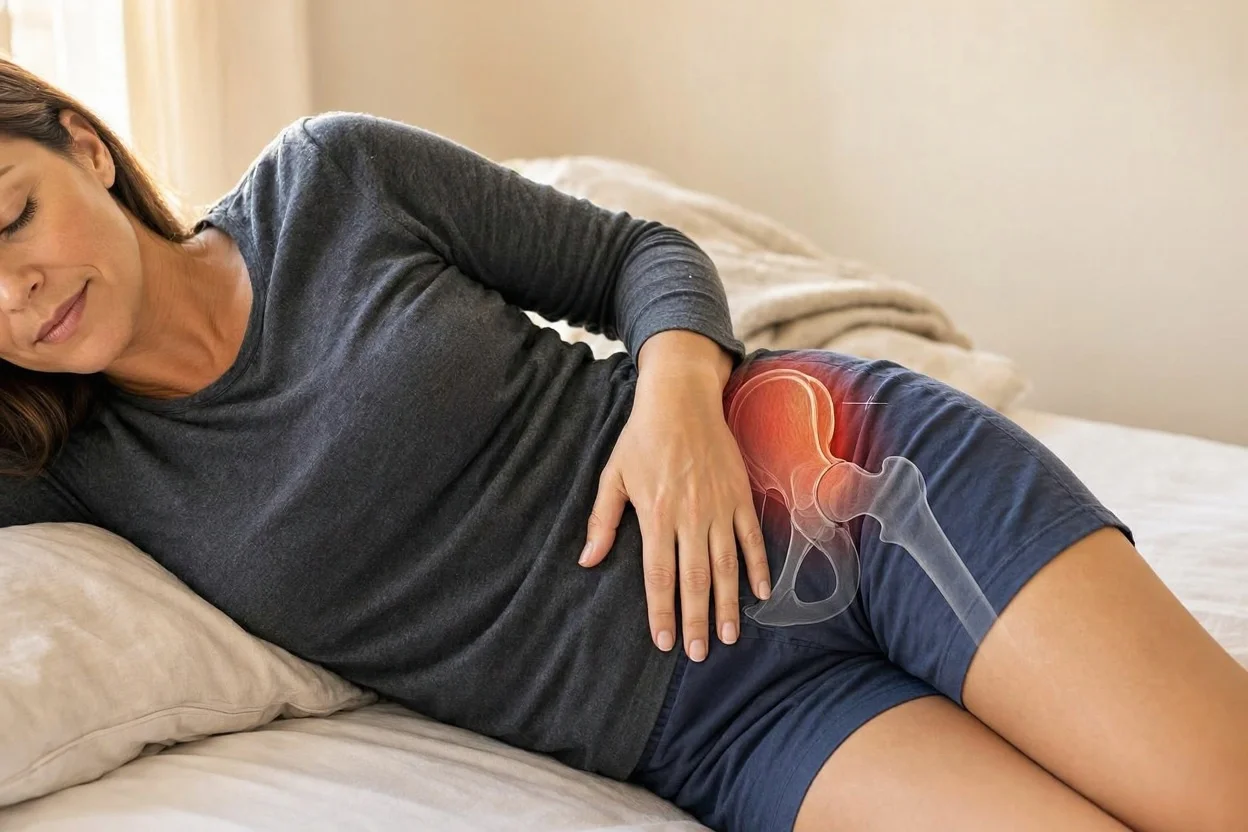
Greater Trochanteric Pain Syndrome (GTPS)
One of the most common causes of pain on the outside of the hip is Greater Trochanteric Pain Syndrome (GTPS).
GTPS describes pain around the greater trochanter, the bony prominence on the outer side of your upper thigh. It is frequently associated with irritation or overload of the gluteal tendons. In some cases, nearby bursae may also be involved.
People with GTPS often experience:
Pain on the outside of the hip.
Discomfort when lying on the affected side.
Pain when climbing stairs.
Tenderness when pressing the outer hip.
Discomfort after sitting for a long time.
Pain during walking, running, or standing on one leg.
The pain may become particularly noticeable at night because lying directly on the affected hip increases pressure on already sensitive tissues.
Hip Bursitis
Bursae are small, fluid-filled sacs that help reduce friction between bones, tendons, and surrounding soft tissues.
When a bursa becomes irritated, it can cause pain and tenderness. Inflammation involving the bursa near the outer hip may contribute to symptoms commonly associated with GTPS.
You may notice:
Localized tenderness on the outer hip.
Pain when lying on that side.
Discomfort when getting out of bed.
Pain when walking or climbing stairs.
It is important to understand that not all outer hip pain is bursitis. Gluteal tendon problems are also common, and a healthcare professional can help distinguish between possible causes.
Gluteal Tendinopathy
The gluteal muscles help stabilize your pelvis and control hip movement. Their tendons attach around the outside of the hip.
Repeated loading, sudden increases in physical activity, or prolonged positions that compress these tendons may contribute to gluteal tendinopathy.
Symptoms can include pain when lying on your side, walking uphill, climbing stairs, or standing on one leg.
If your pain is worse when your knees come together while sleeping, the position may increase compression around the outer hip.
Hip Osteoarthritis
Hip osteoarthritis occurs when the joint gradually changes over time, affecting cartilage and other joint structures.
Unlike pain that is limited to the outside of the hip, osteoarthritis often causes discomfort in the groin, front of the thigh, or deep inside the joint.
Other symptoms may include:
Morning stiffness.
Reduced hip flexibility.
Pain when walking.
Difficulty putting on shoes or socks.
Discomfort after prolonged activity.
Although osteoarthritis is not always directly caused by sleeping position, lying on your side may make existing symptoms more noticeable.
Muscle Strains and Overuse
The muscles surrounding your hip help support your body and control movement. Repetitive activity, sudden increases in exercise, or an awkward movement can strain these muscles.
A hip muscle strain may cause:
Pain when moving your leg.
Tenderness around the hip or upper thigh.
Discomfort when turning in bed.
Muscle tightness after physical activity.
Pain when stretching or contracting the affected muscle.
If the discomfort began after a workout, long walk, or unusual physical activity, a muscle strain may be one possible explanation.
Lower Back or Nerve-Related Pain
Not all pain that feels like hip pain actually starts in the hip. Problems involving the lower back can sometimes cause discomfort around the buttock, outer hip, or thigh.
For example, irritation of a nerve in the lower back may produce:
Pain that travels from the lower back into the buttock.
Burning or shooting sensations.
Tingling or numbness in the leg.
Symptoms that change with spinal position.
If your pain travels below the knee or is accompanied by back pain, a professional assessment should consider both your hip and lower back.
2. Why Does My Hip Hurt Only When I Sleep on One Side?
If your hip feels comfortable during the day but becomes painful when you lie on one side, pressure may be contributing to the problem.
When you sleep directly on one hip, your body weight compresses the tissues between the outside of your hip and the mattress. If the gluteal tendons or nearby structures are already sensitive, this pressure can trigger discomfort.
Several factors may make this more likely:
Sleeping on the painful hip: Direct pressure can irritate sensitive tissues around the greater trochanter.
Poor leg alignment: Allowing the upper knee to fall forward can place additional stress on the outer hip.
An unsuitable mattress: A mattress that does not provide adequate support or pressure relief may make certain sleeping positions uncomfortable.
Previous hip problems: Existing tendon irritation, joint stiffness, or an old injury may become more noticeable at night.
If you regularly wake up because of hip pain, it is worth investigating the cause rather than assuming that your mattress is responsible.
3. What Does the Location of Your Hip Pain Mean?
The location of your discomfort can provide useful clues, although it cannot confirm a diagnosis by itself.
| Pain Location | Possible Explanation | Common Symptoms |
|---|---|---|
| Outside of the hip | GTPS or gluteal tendinopathy | Tenderness and pain when lying on that side |
| Groin or front of the hip | Hip joint problems, including osteoarthritis | Stiffness and discomfort with hip movement |
| Buttock | Gluteal muscle problems or lower back conditions | Deep aching or pain that may spread down the leg |
| Upper outer thigh | Gluteal tendon irritation or referred pain | Tenderness and discomfort during walking |
| Both hips | Sleeping position, activity-related irritation, or other conditions | Discomfort on either side when lying down |
Pay attention to whether the pain occurs only when pressure is applied or also during walking, climbing stairs, and getting out of a chair. These details can help a healthcare professional understand the possible source.
4. How Can You Relieve Hip Pain When Lying on Your Side?
The right approach depends on the underlying cause. However, several practical changes may help reduce pressure on the hip and make sleeping more comfortable.
Change Your Sleeping Position
If lying on your painful hip increases discomfort, try sleeping on your back temporarily.
You can place a pillow under your knees to support your legs and help you feel more comfortable.
If you prefer sleeping on your side, try lying on the opposite side and placing a pillow between your knees. This can help keep your hips and legs aligned.
Avoid allowing your upper leg to fall too far forward or across your body.
Use a Supportive Pillow
A pillow between your knees may reduce unwanted rotation and improve leg alignment.
Choose a pillow that is thick enough to keep your knees comfortably separated without forcing your hips into an unnatural position.
If you experience pain on both sides, sleeping on your back may be a better temporary option.
Avoid Prolonged Pressure on the Hip
Try to avoid remaining in one position for too long, particularly if it involves direct pressure on the painful area.
During the day, consider changing positions regularly and avoiding prolonged standing with most of your weight resting on one leg.
You may also benefit from temporarily reducing activities that repeatedly increase your symptoms.
Apply Ice or Heat
Some people find that a cold pack helps reduce discomfort after activity, particularly when the area feels irritated.
Others prefer gentle heat to relieve muscle tightness.
If you use a cold or warm pack, wrap it in a towel and avoid placing it directly against your skin. Use it for a limited period and stop if it causes discomfort.
If you have reduced skin sensation or circulation problems, ask a healthcare professional before using temperature-based treatments.
Maintain Gentle Physical Activity
Complete inactivity is not usually the best long-term solution for most uncomplicated hip pain.
Depending on the cause, gentle walking and comfortable movement may help maintain mobility. However, avoid exercises or activities that significantly increase your pain.
For persistent symptoms, an individualized rehabilitation plan may be more appropriate than trying random exercises from the internet.
5. Which Exercises May Help With Hip Pain?
Exercises can help improve hip strength and movement, particularly when symptoms are related to the muscles and tendons surrounding the hip.
However, not every exercise is suitable for every condition. For example, aggressive stretching or exercises that compress an irritated gluteal tendon may make some cases of outer hip pain worse.
Consider these general options only if they feel comfortable.
Gentle Gluteal Muscle Activation
Lie on your back with your knees bent and feet resting on the floor.
Gently tighten your buttock muscles without lifting your hips. Hold the contraction briefly, then relax.
Repeat a few times, keeping the movement comfortable.
This exercise introduces gentle muscle activation without requiring a large range of hip movement.
Supported Standing Hip Exercise
Stand beside a stable chair or countertop.
Keep your body upright and slowly move one leg slightly out to the side. Avoid leaning your upper body or rotating your pelvis.
Return to the starting position and repeat only if the movement does not increase your symptoms.
This movement may help introduce controlled activity to the muscles that support the hip.
Gentle Walking
Short, comfortable walks may help maintain general mobility.
Start with a distance that does not increase your pain. If symptoms become worse during or after walking, reduce the distance and consider seeking professional guidance.
Important: Stop any exercise that causes sharp pain, increasing discomfort, numbness, or unusual weakness. A physiotherapist can help determine which exercises are appropriate for your condition.
6. Can Physiotherapy Help With Hip Pain at Night?
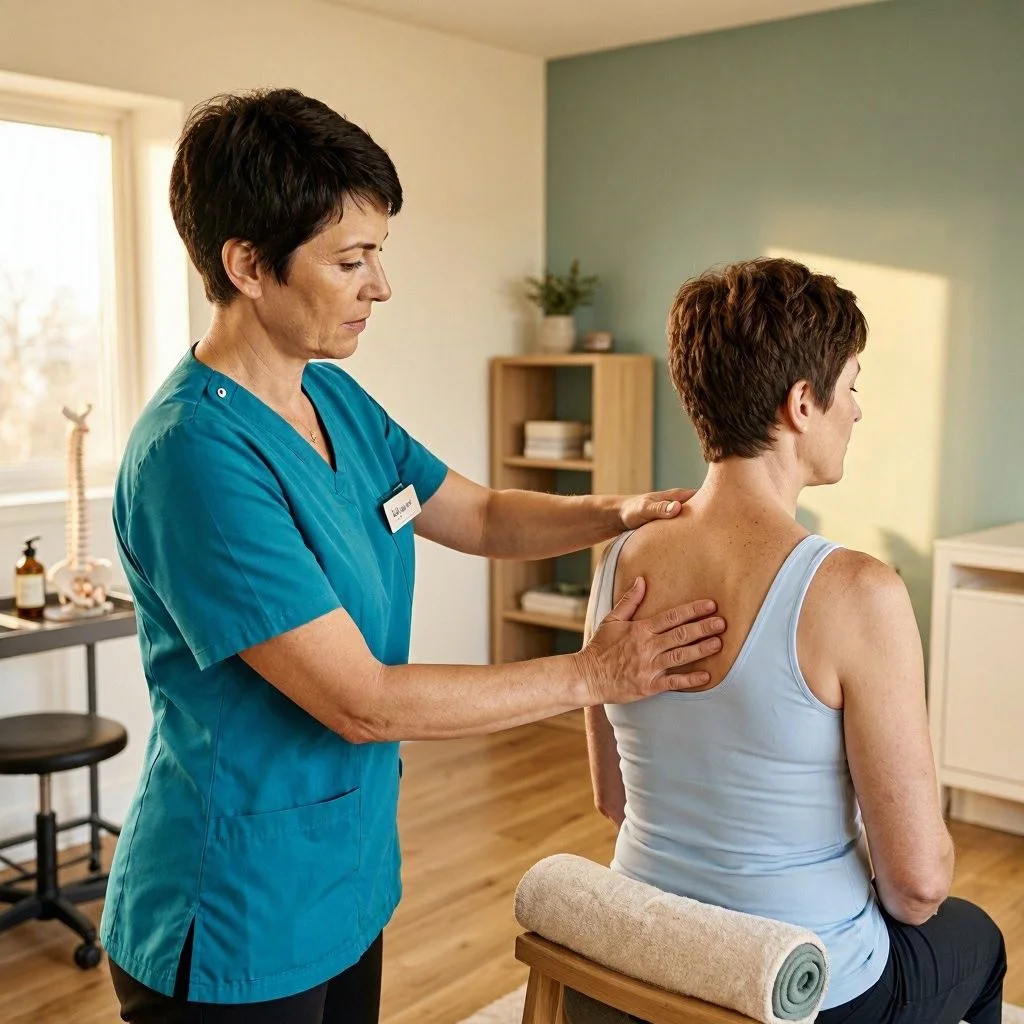
Yes. Physiotherapy may help people whose hip pain is related to muscle weakness, tendon irritation, movement patterns, or reduced mobility.
The first step is understanding where the pain comes from. A physiotherapist may assess your hip movement, muscle strength, walking pattern, balance, and activities that reproduce your symptoms.
Treatment may include:
Individualized hip-strengthening exercises.
Gradual progression of physical activity.
Movement and posture education.
Advice about sleeping positions.
Strategies to reduce unnecessary pressure on sensitive tissues.
Exercises to improve hip and pelvic control.
For example, someone with gluteal tendinopathy may benefit from a carefully progressed strengthening program and changes to positions that repeatedly compress the outer hip.
If hip pain is affecting your sleep or everyday movement, you can learn more about physiotherapy services at Ritz Clinic.
The goal is not simply to reduce nighttime discomfort. It is also to improve your ability to walk, climb stairs, exercise, and perform daily activities comfortably.
What About Soft Tissue Therapy?
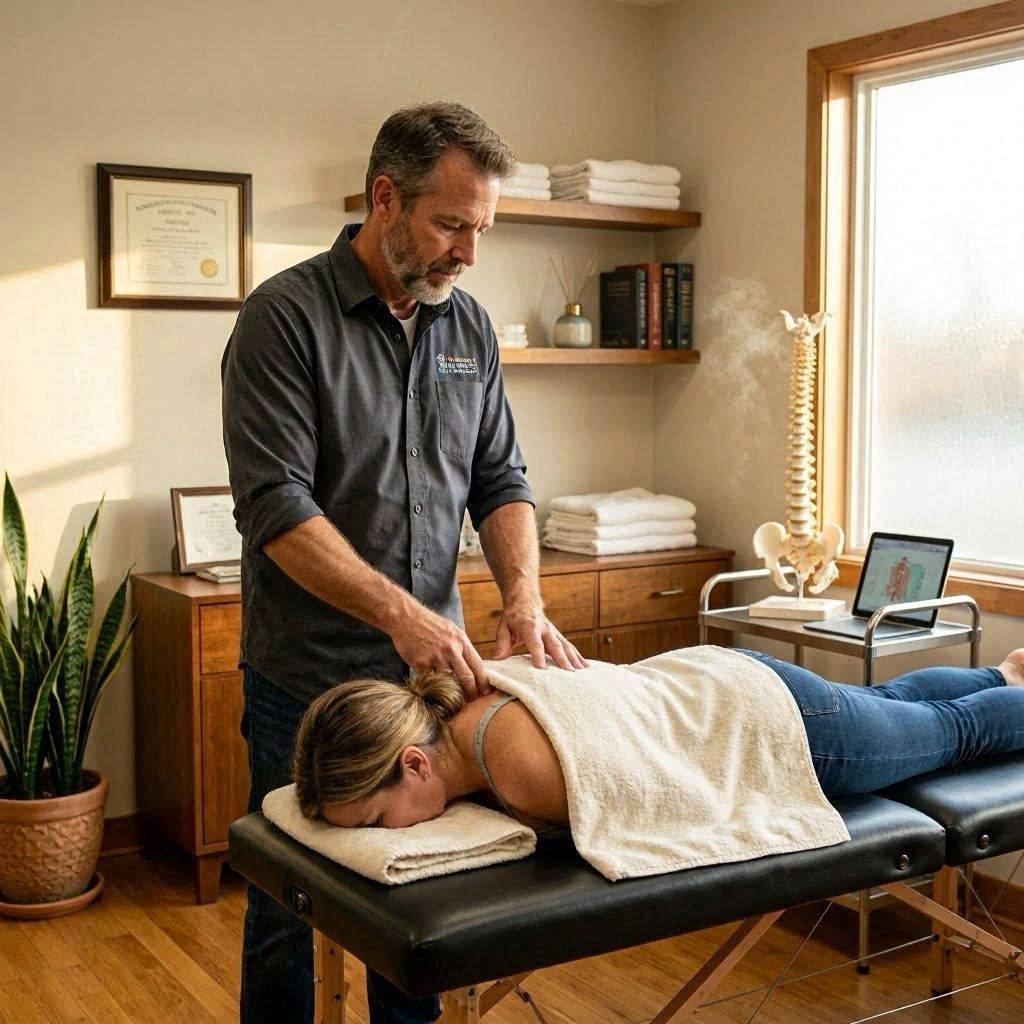
Depending on the assessment findings, soft tissue treatment may be considered as part of a broader management plan.
It may help address certain areas of muscle tension, but direct pressure or aggressive massage over a painful outer hip may aggravate sensitive tendons.
You can read more about Soft Tissue Therapy at Ritz Clinic.
Treatment should be selected according to the cause of your symptoms rather than relying on massage alone.
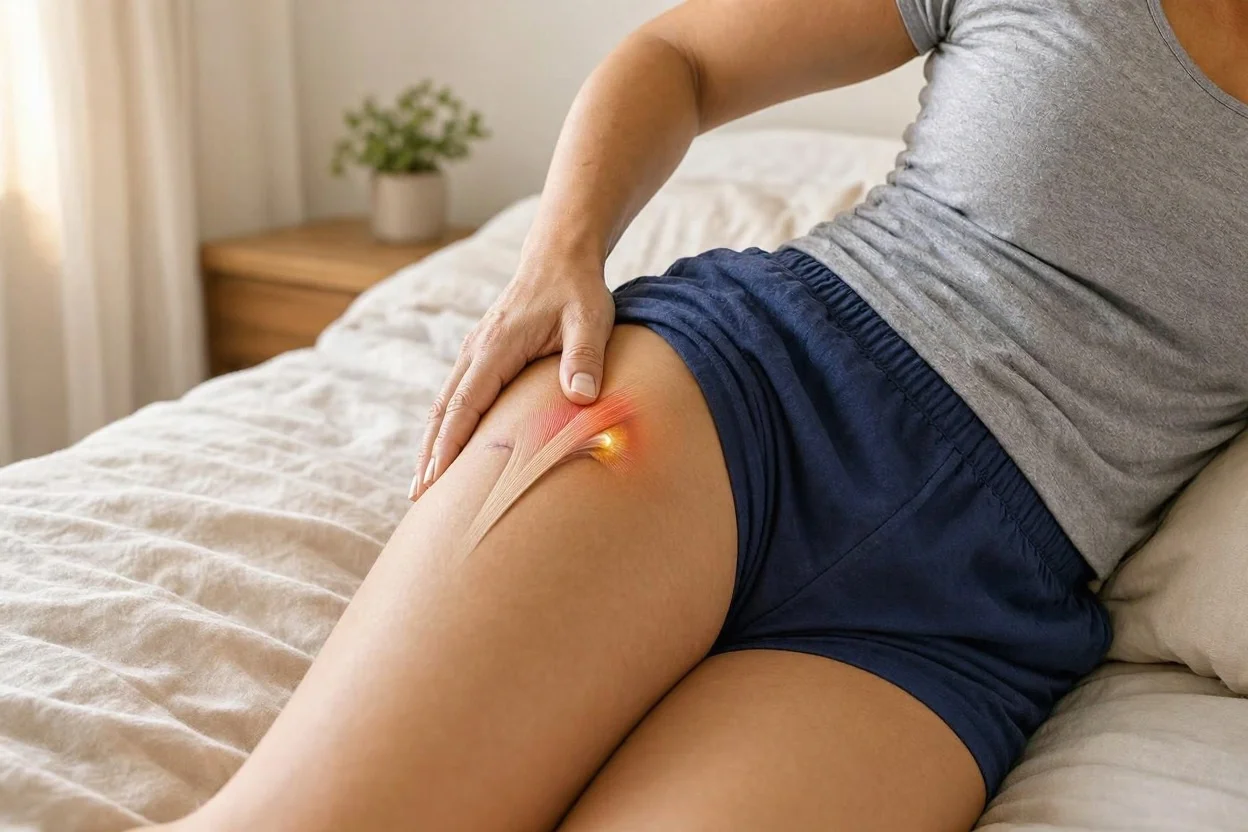
7. How Is the Cause of Hip Pain Diagnosed?
A healthcare professional will usually begin by asking questions about your symptoms and examining your hip.
You may be asked:
Which side of your hip hurts?
Does the pain occur only when lying down?
Does walking or climbing stairs make it worse?
Do you experience stiffness in the morning?
Does the pain travel into your thigh or lower back?
Have you recently changed your exercise routine?
Have you experienced a fall or previous hip injury?
A physical examination may include checking hip movement, muscle strength, tenderness, balance, and walking patterns.
Imaging is not always necessary. However, an X-ray may be recommended if a joint problem or injury is suspected. Ultrasound or MRI may be considered when a tendon injury or another soft tissue problem needs further investigation.
The appropriate tests depend on your symptoms and examination findings.
8. When Should You See a Healthcare Professional?
Occasional discomfort after unusual activity may improve with simple changes. However, persistent or worsening hip pain should not be ignored.
Arrange an assessment if:
Hip pain regularly interrupts your sleep.
You have difficulty walking or climbing stairs.
The pain keeps returning.
You experience persistent stiffness or reduced movement.
Symptoms have not improved after approximately two weeks of self-care.
You notice increasing tenderness around the hip.
Seek urgent medical attention if you experience sudden, severe hip pain, particularly without an obvious explanation.
You should also seek urgent care if your hip becomes hot or swollen, you develop a fever, or you feel generally unwell.
If you have experienced a fall or injury and cannot put weight on your leg, seek immediate medical assessment. These symptoms may indicate a more serious problem, such as a fracture or joint infection.
9. How Can You Prevent Hip Pain While Sleeping?
Although you cannot prevent every cause of hip pain, changing certain daily habits may reduce unnecessary stress on your hips.
Consider the following recommendations:
Avoid sleeping directly on a painful hip. Change positions when you notice increasing discomfort.
Use a pillow between your knees. This may help maintain a more comfortable leg position.
Avoid crossing your legs for long periods. This position may increase compression around the outer hip.
Change your sitting position regularly. Avoid remaining in the same position throughout the day.
Increase exercise gradually. Sudden increases in walking, running, or strength training may overload the tissues around your hips.
Strengthen the muscles around your hips. Appropriate exercises can improve support and movement control.
Choose comfortable footwear. Shoes that provide suitable support may make everyday movement more comfortable.
Consistency is important. Small changes to your daily habits can help reduce repeated irritation, although persistent pain still needs an appropriate assessment.
Frequently Asked Questions
Why does my hip hurt when I lie on my side but not when I walk?
Lying on your side places direct pressure on the outer hip. If the gluteal tendons or nearby tissues are sensitive, this pressure may cause pain even when walking feels comfortable. Greater trochanteric pain syndrome is one possible explanation.
Why do both hips hurt when I sleep on my side?
Pain in both hips may be related to sleeping position, pressure from the mattress, or irritation affecting the tissues around both hip joints. If the discomfort continues or affects your sleep regularly, arrange a professional assessment.
Is hip pain when sleeping a sign of bursitis?
It can be, but not always. Outer hip pain may also be associated with gluteal tendinopathy or other conditions. Greater trochanteric pain syndrome includes several possible problems involving the tissues around the outer hip.
Should I sleep on the painful hip?
If lying on the affected side increases your discomfort, avoid that position temporarily. Try sleeping on your back or on the opposite side with a pillow between your knees.
Can a mattress cause hip pain?
An unsuitable mattress may contribute to discomfort by providing insufficient support or creating pressure around the hip. However, persistent pain may also indicate an underlying tendon, muscle, or joint problem.
How long does hip pain from lying on your side last?
The duration depends on the cause and severity. Mild pressure-related discomfort may improve after changing sleeping positions. Tendon-related conditions can take considerably longer and may require a structured rehabilitation program.
Can physiotherapy help with outer hip pain?
Yes. Physiotherapy may help improve hip strength, movement control, and tolerance to everyday activities. A physiotherapist can also recommend appropriate exercises and adjustments to your sleeping and daily positions.
Conclusion
Hip pain when lying on your side can result from several conditions, including greater trochanteric pain syndrome, gluteal tendinopathy, bursitis, muscle strain, and hip osteoarthritis. The location of your pain and the activities that make it worse can provide useful clues about its possible cause.
Changing your sleeping position, using a pillow between your knees, reducing unnecessary pressure, and maintaining comfortable physical activity may help relieve symptoms.
However, if your hip pain repeatedly interrupts your sleep, becomes worse, or affects your ability to move comfortably, professional assessment is important. Identifying the underlying cause can help you choose the right treatment and work towards better sleep and everyday mobility.
NHS Inform – Greater Trochanteric Pain Syndrome
Article Summary Table
| Topic | Summary |
|---|---|
| Main Causes | GTPS, gluteal tendinopathy, bursitis, osteoarthritis, and muscle strain |
| Common Pain Location | Outer hip, groin, buttock, or upper thigh |
| Why Side Sleeping Hurts | Direct pressure on sensitive tendons, muscles, and surrounding tissues |
| Common Symptoms | Hip tenderness, nighttime pain, stiffness, and discomfort when climbing stairs |
| Sleeping Recommendations | Sleep on your back or opposite side and use a pillow between your knees |
| Pain Management | Modify painful activities, use comfortable positions, and maintain gentle movement |
| Helpful Exercises | Gentle gluteal activation, supported hip exercises, and comfortable walking |
| Physiotherapy | Individualized strengthening, movement assessment, and activity modification |
| When to Seek Help | Persistent pain, worsening symptoms, sleep disruption, or difficulty walking |
| Urgent Warning Signs | Sudden severe pain, a hot or swollen hip, fever, or inability to bear weight after an injury |