How to Sleep More Comfortably With Lower Back Pain?
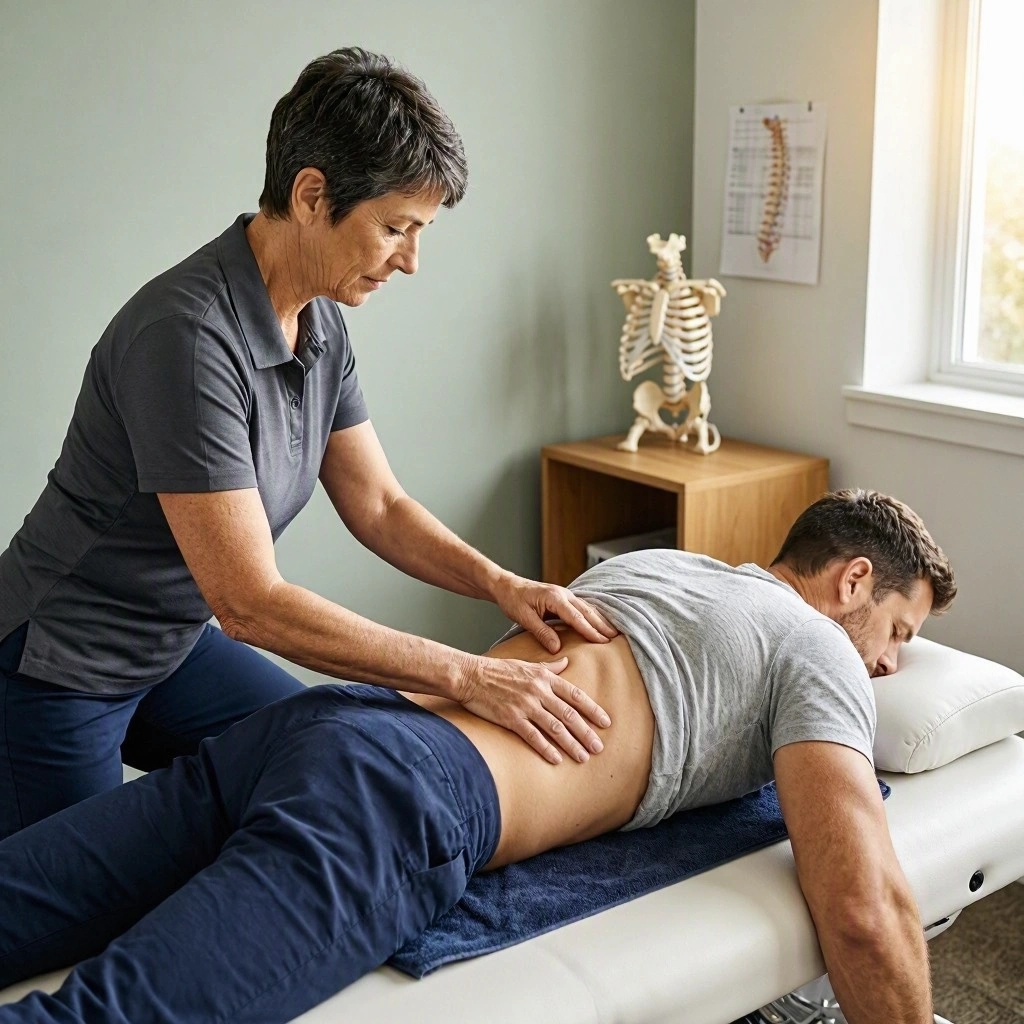
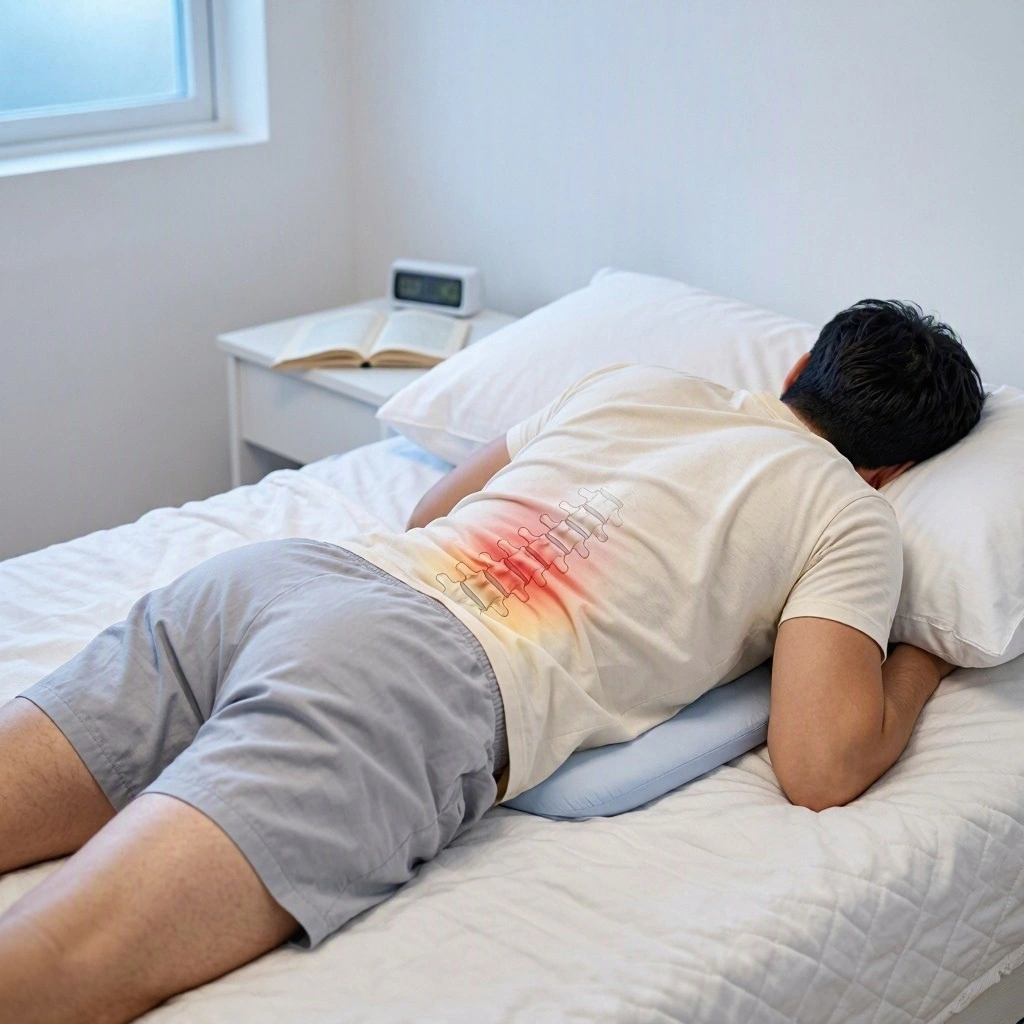
How can I sleep more comfortably with lower back pain? If back pain makes it difficult to fall asleep or stay asleep, simple changes to your sleeping position, pillow placement, and bedtime routine may help. Finding a comfortable sleeping position can reduce discomfort and make it easier to get the rest your body needs.
The good news is that small changes to your sleeping position, pillow placement, and bedtime routine may help you rest more comfortably. You do not necessarily need an expensive mattress or a complicated nighttime routine to make a difference.
The most helpful approach is to find a comfortable position that supports your back, reduce unnecessary twisting, and make it easier to move when you wake up.
This guide explains how to sleep more comfortably with lower back pain, which sleeping positions you can try, how to choose pillows and a mattress, and what to do when pain interrupts your sleep.
Important: This article provides general educational information. It does not replace medical advice. If you have severe, persistent, or unexplained back pain, speak with a qualified healthcare professional.
What Is the Best Sleeping Position for Lower Back Pain?
There is no single sleeping position that works for everyone with lower back pain. The best position is usually the one that allows you to relax while keeping your back in a comfortable, supported position.
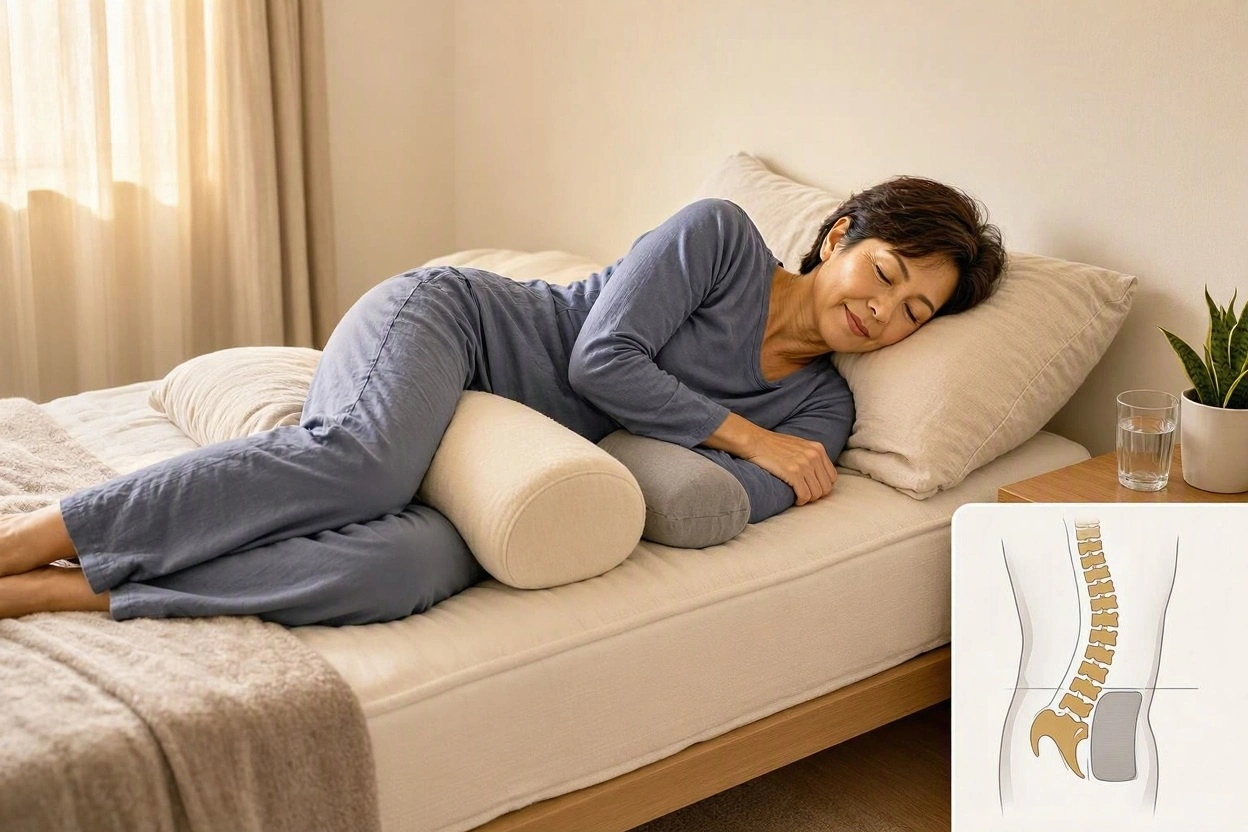
Many people find that sleeping on their side with a pillow between their knees or sleeping on their back with a pillow under their knees helps reduce discomfort.
The goal is not to force your spine into a perfectly straight line. Instead, try to avoid positions that place unnecessary strain on your back or make your symptoms worse.
If you already have a preferred sleeping position, you may not need to change it completely. A small adjustment can sometimes make a noticeable difference.
1. Sleep on Your Side With a Pillow Between Your Knees
Side sleeping is a useful starting point if lying flat on your back feels uncomfortable.
When you sleep on your side, your upper leg may move forward and pull your pelvis into a twisted position. A pillow between your knees can help keep your hips more comfortable and reduce unwanted rotation.
To try this position:
- Lie on your side with your head supported by a comfortable pillow.
- Bend your knees slightly rather than pulling them tightly toward your chest.
- Place a pillow between your knees.
- Adjust the pillow until your hips feel relaxed and your lower back is comfortable.
- Make sure your upper leg does not fall too far forward.
A full-length body pillow can be useful if you find it difficult to keep your legs in a comfortable position.
You can also try sleeping on your less painful side. If one side feels uncomfortable, gently change sides rather than forcing yourself to remain in that position.
The important thing is to find a position that feels comfortable and allows you to sleep without repeatedly adjusting your body.
2. Sleep on Your Back With a Pillow Under Your Knees
If you prefer sleeping on your back, try placing a pillow beneath your knees.
This position may help reduce the arch in your lower back and allow your back muscles to relax.
Here is how to set it up:
- Lie on your back with your head supported.
- Place a pillow beneath both knees.
- Allow your legs to rest comfortably on the pillow.
- Check whether your lower back feels more relaxed.
- Adjust the pillow height until you find a comfortable position.
You do not need a large or expensive pillow. A regular bed pillow may provide enough support.
Some people also find a small, rolled towel beneath the lower back comfortable. However, this is not necessary for everyone. If it creates pressure or makes your pain worse, remove it.
If lying flat makes your symptoms worse, do not force yourself to remain in that position.
3. What If You Prefer Sleeping on Your Stomach?
Sleeping on your stomach can be uncomfortable for some people with lower back pain. This position may increase the arch in your lower back and require you to turn your head to one side.
However, not everyone experiences discomfort in the same way.
If stomach sleeping is the only position in which you feel comfortable, try making a few adjustments before deciding to change your sleeping habits completely.
You can try placing a thin pillow beneath your lower abdomen or pelvis. This may help reduce the arch in your lower back.
A thinner pillow under your head may also help keep your neck more comfortable.
If you are trying to change your sleeping position, start by spending a little time on your side or back before falling asleep. You do not need to force a completely unfamiliar position if it prevents you from resting.
How to Get Out of Bed Without Making Back Pain Worse?
Getting out of bed can be one of the most uncomfortable parts of the morning when your lower back is sore.
The way you move from lying down to standing can make a difference. Instead of sitting straight up, try rolling onto your side first.
This method is sometimes called the log-roll technique because it helps you move your shoulders, hips, and legs together.
A Simple Step-by-Step Method
- While lying on your back, bend your knees slightly.
- Roll onto your side, keeping your shoulders and hips moving together.
- Move your legs toward the edge of the bed.
- Use your arms to help push your upper body into a sitting position.
- Pause briefly before standing up.
- Place your feet firmly on the floor and stand up slowly.
If you feel dizzy or unusually weak, remain seated and seek appropriate help.
You may also find it easier to get out of bed when you keep your bedside area clear and have a stable surface nearby for support.
Avoid rushing out of bed, especially if your back feels stiff in the morning.
Can Your Mattress Make Lower Back Pain Worse?
Your mattress can influence how comfortable you feel during the night. However, there is no mattress that is guaranteed to eliminate lower back pain.
A mattress that is too soft may allow your hips to sink more than the rest of your body. A very firm mattress may create uncomfortable pressure around your hips and shoulders.
The most useful mattress is one that feels supportive and comfortable for your body.
Should You Choose a Firm or Soft Mattress?
You may have heard that people with back pain should always sleep on a firm mattress.
That advice is too simple.
A mattress that is excessively firm may not feel comfortable, while a mattress that is too soft may not provide enough support.
Research suggests that a medium-firm mattress may be more comfortable for some people with chronic lower back pain than a very firm mattress. However, individual needs vary, and this does not mean that everyone should purchase a new mattress.
Before spending money on a replacement, consider whether your current mattress is damaged, sagging, or uncomfortable.
You can also try changing your pillow placement and sleeping position first.
How to Test Your Current Mattress?
Pay attention to how your back feels when you first lie down.
Ask yourself:
- Does my mattress feel comfortable when I lie on my side?
- Do my hips sink noticeably into the mattress?
- Do I feel pressure around my shoulders or hips?
- Does changing my position make me more comfortable?
- Do I wake up feeling worse than when I went to bed?
These observations can help you decide whether your sleeping surface needs attention.
If your mattress is old or visibly sagging, replacing it may be worth considering. If it is relatively new and comfortable, you may benefit more from adjusting your sleeping position.
How to Choose the Right Pillow for Lower Back Pain?
A pillow is not a treatment for every cause of back pain, but the right pillow placement may help you sleep more comfortably.
The best pillow depends on your sleeping position.
Pillow Placement for Side Sleepers
If you sleep on your side, choose a head pillow that keeps your neck comfortable and aligned with your upper body.
A pillow that is too high or too low may cause neck discomfort.
You can place a second pillow between your knees to help keep your hips comfortable.
If your knees tend to separate during sleep, a longer body pillow may be easier to use.
Pillow Placement for Back Sleepers
If you sleep on your back, try a pillow beneath your knees.
The pillow should support your legs without forcing your knees into an uncomfortable position.
You can also use a comfortable pillow beneath your head to support your neck.
Pillow Placement for Stomach Sleepers
If you sleep on your stomach, a thin head pillow may feel more comfortable than a thick one.
You can also try a small pillow beneath your lower abdomen or pelvis.
If a pillow creates additional discomfort, remove it. Pillow placement should help you feel more comfortable, not make your position more complicated.
What to Do Before Bed When Your Lower Back Hurts?
Your bedtime routine can affect how easily you fall asleep.
If your back feels uncomfortable in the evening, you may find it helpful to spend a little time relaxing before getting into bed.
You do not need a long routine. A few simple habits may be enough.
1. Try Gentle Movement
Gentle movement may help reduce stiffness and make it easier to settle down.
If you experience discomfort when bending or moving, understanding the possible causes can help. Read our guide on lower back pain when bending forward to learn about common causes, relief options, and treatment approaches.
If you have been sitting for a long time, try taking a short walk around your home.
You can also try gentle movements that feel comfortable for your back.
Avoid forcing stretches or exercises that increase your pain.
If you have been given specific exercises by a healthcare professional, follow their instructions.
2. Take a Warm Shower or Bath
Some people find that warmth helps them relax before bed.
A warm shower or bath may help you feel more comfortable, especially if your back feels stiff.
The water should be comfortably warm rather than excessively hot.
If you use a heating pad, follow its safety instructions and avoid falling asleep with it switched on.
3. Make Your Bedroom Comfortable
A comfortable bedroom can make it easier to fall asleep.
Try to keep your sleeping area quiet, dark, and at a temperature that feels comfortable.
Make sure your pillows are within easy reach so you do not have to stretch or twist repeatedly when adjusting your position.
If you wake up during the night, a comfortable environment may help you return to sleep more easily.
4. Avoid Spending Too Much Time in Bed During the Day
When your back hurts, resting may feel like the easiest option.
However, staying in bed for long periods can sometimes make stiffness worse.
If you can move comfortably, try to maintain your usual daily activities as much as possible.
Short periods of rest may be helpful when symptoms are uncomfortable, but prolonged bed rest is generally not recommended for uncomplicated lower back pain.
If you are unsure how much activity is appropriate, speak with a healthcare professional.
What to Do When Lower Back Pain Wakes You Up at Night?
Waking up because of back pain can be frustrating, particularly when you have already tried to get comfortable.
The first step is to avoid panicking or immediately assuming that something serious is happening.
Back pain can fluctuate, and some nights may be more uncomfortable than others.
Try the following approach.
Step 1: Change Your Position Slowly
If you are lying on your back, try turning onto your side.
If you are already on your side, try adjusting your knees or moving the pillow between them.
Make small changes rather than repeatedly twisting your body.
Step 2: Get Out of Bed if You Need To
If you cannot get comfortable after several attempts, you can get out of bed for a short period.
Walk gently around your room or sit somewhere comfortable.
You do not need to remain in bed simply because it is nighttime.
When you feel ready, return to bed and try a comfortable sleeping position.
Step 3: Avoid Checking the Clock Repeatedly
Repeatedly checking the time can make it harder to relax.
If you wake up, focus on getting comfortable rather than calculating how much sleep you have left.
If you are unable to fall asleep, a quiet activity in dim lighting may help you feel more relaxed.
Step 4: Notice Any Changes in Your Symptoms
If you repeatedly wake up because of back pain, pay attention to whether your symptoms are improving, staying the same, or becoming worse.
It may help to keep a simple record of your sleep and symptoms.
For example, you could note which position felt most comfortable, whether you woke up during the night, and how your back felt in the morning.
This information can help you identify patterns and explain your symptoms to a healthcare professional.
Can Stress and Poor Sleep Make Back Pain Feel Worse?

Pain and sleep can influence one another.
When you are uncomfortable, you may find it harder to fall asleep or stay asleep. Poor sleep can then make it more difficult to cope with discomfort during the following day.
Stress may also contribute to muscle tension and make it harder to relax at bedtime.
This does not mean that your pain is imaginary or that you can simply think it away.
It means that improving sleep habits and reducing stress may be useful parts of a broader approach to managing back pain.
Try a Simple Relaxation Exercise
Before going to bed, find a comfortable position and allow your shoulders to relax.
Take a slow, comfortable breath in and then breathe out gently.
Repeat this for a few minutes without forcing your breathing.
If focusing on your breathing makes you uncomfortable, try listening to quiet music or another relaxing activity.
The goal is to help your body settle down before sleep.
Should You Stretch Before Bed for Lower Back Pain?
Gentle stretching may help some people feel more comfortable before bed.
However, not every stretch is appropriate for every type of back pain.
If you have a movement that consistently makes your symptoms worse, avoid forcing it.
You can start with gentle walking or small movements that feel comfortable.
If you already have a stretching routine recommended by a physiotherapist, you may be able to continue it as instructed.
If you are unsure which exercises are appropriate, a healthcare professional can help you choose movements based on your symptoms.
The purpose of movement is to support comfortable activity, not to push through pain.
How to Build a Comfortable Bedtime Routine?
A simple bedtime routine can make it easier to prepare for sleep when your back hurts.
You do not need to follow every step perfectly. Start with the changes that feel most useful.
One Hour Before Bed
Begin winding down.
Reduce activities that keep you mentally alert, and prepare your bedroom for sleep.
If you have been sitting for a long time, try a short walk or gentle movement.
Thirty Minutes Before Bed
Take a warm shower or spend a few minutes doing something relaxing.
Prepare your pillows so they are easy to reach.
If you use a pillow between your knees, place it near the side of the bed where you usually sleep.
When You Get Into Bed
Start with the sleeping position that feels most comfortable.
If you sleep on your side, try a pillow between your knees.
If you sleep on your back, try a pillow beneath your knees.
Make small adjustments until your back feels supported.
When You Wake Up
Move slowly and use your arms to help you sit up if necessary.
If your back feels stiff, allow yourself a little time to get comfortable before beginning your usual activities.
You may find that a consistent routine helps you identify which changes are genuinely useful.
When Should You See a Healthcare Professional?
Lower back pain often improves with time and appropriate self-care. However, some symptoms need medical attention.
Seek emergency medical care if you develop new difficulty controlling your bladder or bowels, numbness around your groin or buttocks, or significant weakness in your legs.
These symptoms can indicate a serious problem that requires urgent assessment.
You should also seek medical advice if your back pain:
- Is severe or getting progressively worse.
- Follows a significant injury.
- Is accompanied by fever or feeling generally unwell.
- Causes persistent pain at night that does not improve with changing position.
- Is associated with unexplained weight loss.
- Does not improve after a few weeks of appropriate self-care.
If you have an existing medical condition or have recently undergone surgery, follow the advice of your healthcare professional.
Do not assume that every episode of back pain is caused by your mattress or sleeping position.
Frequently Asked Questions
What Is the Best Sleeping Position for Lower Back Pain?
Sleeping on your side with a pillow between your knees or sleeping on your back with a pillow beneath your knees may help reduce discomfort.
The best position depends on your symptoms and what feels comfortable for your body.
Is It Better to Sleep on Your Back or Side With Lower Back Pain?
Both positions may be comfortable for people with lower back pain.
Side sleeping with a pillow between your knees can help support your hips, while back sleeping with a pillow beneath your knees may reduce the arch in your lower back.
Try both positions and choose the one that feels more comfortable.
Should I Sleep on a Firm Mattress if I Have Lower Back Pain?
Not necessarily.
A supportive mattress that feels comfortable is generally a better starting point than choosing a mattress based only on firmness.
Some people with chronic lower back pain find medium-firm mattresses comfortable, but individual preferences and needs vary.
Can a Pillow Between My Knees Help With Lower Back Pain?
Yes, it may help some people.
A pillow between your knees can support your hips and reduce twisting when you sleep on your side.
It is a simple adjustment that you can try without buying specialized equipment.
Why Does My Lower Back Hurt More in the Morning?
Morning discomfort may be related to stiffness, your sleeping position, or the underlying cause of your back pain.
If your symptoms improve after gentle movement, stiffness may be contributing to the discomfort.
However, persistent or worsening morning pain should be discussed with a healthcare professional.
Is It Safe to Sleep on My Stomach With Lower Back Pain?
Some people can sleep comfortably on their stomach, while others find that this position makes their symptoms worse.
If stomach sleeping is comfortable for you, try a thin pillow beneath your lower abdomen or pelvis.
If the position increases your pain, try sleeping on your side or back instead.
How Can I Get Out of Bed Without Hurting My Back?
Try rolling onto your side before sitting up.
Move your legs toward the edge of the bed while using your arms to help lift your upper body.
This can reduce the need to twist your back when getting out of bed.
Should I Stay in Bed Until My Back Pain Goes Away?
Prolonged bed rest is generally not recommended for uncomplicated lower back pain.
If you can move comfortably, try to maintain your usual daily activities.
Short periods of rest may be helpful, but speak with a healthcare professional if your pain is severe or makes normal activities difficult.
Can Better Sleep Help My Lower Back Pain?
Better sleep may help you cope with discomfort and support your overall recovery.
However, improving your sleep position alone may not address the underlying cause of your back pain.
If your symptoms continue, you may need an assessment and a more comprehensive treatment plan.
Final Thoughts
Learning how to sleep more comfortably with lower back pain often starts with a few simple changes.
Try sleeping on your side with a pillow between your knees or on your back with a pillow beneath your knees. Make sure your mattress and head pillow feel comfortable, and avoid forcing positions that make your symptoms worse.
A relaxing bedtime routine, gentle movement, and a comfortable sleeping environment may also help you get better rest.
Most importantly, pay attention to your symptoms and seek medical advice when necessary.
You do not need to find a perfect sleeping position. The goal is to find a comfortable way to rest while giving your body the support it needs.
1. Mayo Clinic – Guidance on Sleeping Positions
https://www.mayoclinic.org/diseases-conditions/back-pain/in-depth/sleeping-positions/art-20546852
2. NHS – Back Pain
https://www.nhs.uk/conditions/back-pain/
3. National Institute of Arthritis and Musculoskeletal and Skin Diseases – Living With Back Pain
https://catalog.niams.nih.gov/sites/default/files/2024-09/Living-With-Back-Pain.pdf
4. Alberta Health Services – Back Pain Information
https://myhealth.alberta.ca/Health/pages/conditions.aspx?hwid=zm2808
Medical Disclaimer
The information provided in this article is for general educational and informational purposes only. It is not intended to replace professional medical advice, diagnosis, or treatment. Always consult a qualified healthcare professional regarding back pain, sleep-related discomfort, or any medical concerns. Never ignore professional medical advice or delay seeking care because of information you have read on this website.