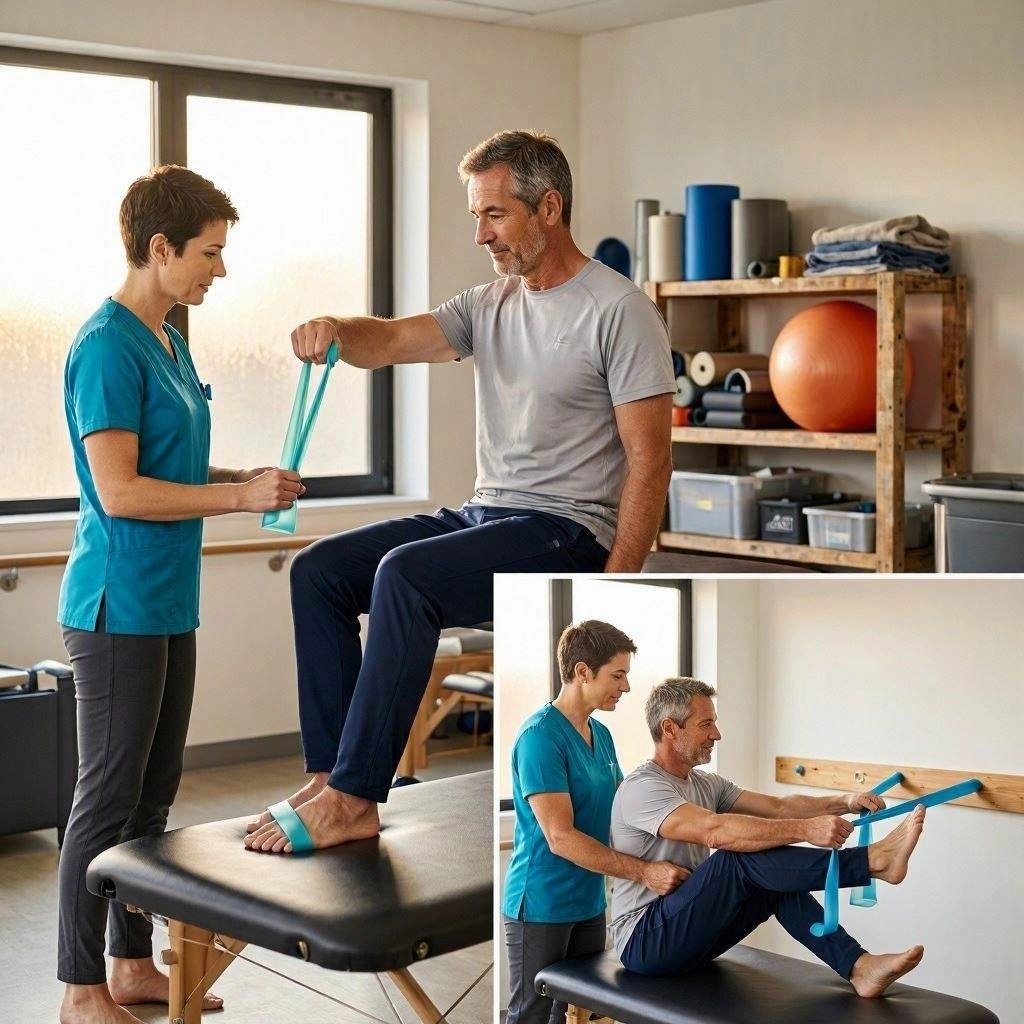

What Causes Shoulder Pain When Reaching Behind My Back? Causes, Treatments, and Exercises
Have you ever experienced shoulder pain when reaching behind your back to put on a jacket, fasten a bra, tuck in your shirt, or reach into your back pocket? This movement may seem simple, but it requires several muscles, tendons, and joints to work together.
If your shoulder hurts when reaching behind your back, you may notice a sharp pain, stiffness, pulling sensation, or difficulty moving your arm into certain positions. Sometimes, the discomfort develops gradually. In other cases, it begins after lifting something heavy, exercising, or performing repetitive movements.
One common explanation is a problem involving the rotator cuff tendons. However, frozen shoulder, shoulder bursitis, arthritis, and other conditions can also make this movement painful.
Understanding the possible cause is important because different shoulder problems require different treatment approaches. In this guide, we explain why reaching behind your back can cause shoulder pain, which symptoms to watch for, how to improve shoulder mobility, and when to seek professional help.
Why Does My Shoulder Hurt When I Reach Behind My Back?
Reaching behind your back requires a combination of shoulder movements, including internal rotation, extension, and movement of your arm towards your body.
These movements depend on the coordinated function of several structures, including:
- Rotator cuff muscles and tendons.
- Shoulder joint capsule.
- Shoulder blade muscles.
- Ligaments and surrounding soft tissues.
- The glenohumeral joint.
If any of these structures becomes irritated, stiff, injured, or less mobile, reaching behind your back may become uncomfortable.
For example, you might experience shoulder pain when putting on a coat, reaching for your wallet, fastening clothing, or washing your back.
The location and severity of the pain can provide useful clues, but symptoms alone cannot confirm a diagnosis.
7 Common Causes of Shoulder Pain When Reaching Behind Your Back
Several conditions can make it difficult or painful to move your arm behind your body. Understanding these possibilities can help you recognize when professional assessment may be necessary.
1. Rotator Cuff Tendinopathy
The rotator cuff is a group of four muscles and their tendons that help stabilize and move your shoulder.
These structures allow you to lift, rotate, and control your arm during everyday activities.
When the rotator cuff tendons become irritated or develop painful changes, certain movements may become uncomfortable.
This condition is often associated with repetitive activities, increased physical demands, age-related tendon changes, or previous injuries.
Common symptoms include:
- Pain when reaching behind your back.
- Discomfort when lifting your arm.
- Shoulder pain during repetitive activities.
- Weakness when rotating your arm.
- Pain when lying on the affected shoulder.
- Discomfort when putting on a jacket.
You may initially notice pain only during certain movements. However, symptoms can become more noticeable if the shoulder continues to experience activities that aggravate it.
Why does it hurt when reaching behind your back?
Reaching behind your body requires the shoulder to rotate internally and move into extension. These movements can place additional demands on an already sensitive rotator cuff.
A physiotherapist can assess your shoulder strength, mobility, and movement patterns to determine whether rotator cuff-related pain is contributing to your symptoms.
2. Frozen Shoulder (Adhesive Capsulitis)
Frozen shoulder, medically known as adhesive capsulitis, occurs when the capsule surrounding the shoulder joint becomes thickened and stiff.
This condition can gradually reduce shoulder movement and make everyday activities difficult.
Unlike some other shoulder problems, frozen shoulder often causes restrictions in several directions rather than pain during only one specific movement.
Common symptoms include:
- Persistent shoulder pain.
- Increasing stiffness.
- Difficulty reaching behind your back.
- Trouble putting on clothing.
- Difficulty reaching overhead.
- Pain that may disturb sleep.
- Reduced ability to rotate your arm.
One important clue is that both active movement and passive movement can become restricted. This means that even when someone else gently tries to move your arm, the shoulder may still feel stiff.
Why does frozen shoulder make reaching behind your back difficult?
The shoulder joint capsule normally allows the arm to move through a wide range of positions.
When the capsule becomes stiff, internal rotation and other movements may become restricted. As a result, reaching behind your back can become particularly difficult.
Recovery can take several months or longer, so an individualized treatment plan is important.
3. Shoulder Impingement and Subacromial Pain Syndrome
Subacromial pain syndrome is a broad term for pain associated with structures around the rotator cuff and the space beneath the acromion.
It may involve rotator cuff-related pain and irritation of the surrounding bursa.
Although the term shoulder impingement is still commonly used, shoulder pain is not always caused by a simple mechanical pinching problem.
Symptoms may develop after repetitive movements, increased physical activity, or gradual changes in tendon health.
Common symptoms include:
- Pain around the front or outer shoulder.
- Discomfort when raising your arm.
- Pain when reaching behind your back.
- Difficulty lifting objects.
- Shoulder discomfort during exercise.
- Pain when sleeping on the affected side.
What makes this condition painful?
Certain shoulder movements can increase the demands placed on sensitive tissues around the rotator cuff.
Reaching behind your back may reproduce symptoms, particularly when the shoulder is already irritated.
Treatment generally focuses on managing painful activities and gradually improving shoulder strength and movement.
4. Shoulder Bursitis
A bursa is a small fluid-filled sac that helps reduce friction between moving tissues.
The shoulder contains several bursae, including the subacromial bursa, which helps the rotator cuff tendons move smoothly.
When a bursa becomes irritated, shoulder movement may become painful.
Possible symptoms include:
- Pain around the shoulder.
- Tenderness when moving your arm.
- Discomfort when reaching behind your back.
- Pain when raising your arm.
- Difficulty sleeping on the affected shoulder.
- Increased discomfort during repetitive activities.
Bursitis may occur alongside rotator cuff-related problems, so these conditions can produce similar symptoms.
A healthcare professional can assess whether the bursa or another shoulder structure is contributing to your pain.
5. Shoulder Osteoarthritis
Osteoarthritis is a joint condition involving changes to cartilage and other joint structures.
Although it is more commonly associated with certain joints, it can also affect the shoulder.
As the joint changes, movement may become stiff or painful.
Common symptoms include:
- Deep shoulder pain.
- Stiffness after resting.
- Reduced shoulder mobility.
- Discomfort when reaching behind your back.
- Pain during everyday movements.
- Clicking or grinding sensations in some cases.
Shoulder osteoarthritis can make movements involving internal rotation particularly uncomfortable.
If you experience persistent stiffness and pain, a clinical assessment can help determine whether arthritis is involved.
6. Rotator Cuff Tear
A rotator cuff tear occurs when one or more of the rotator cuff tendons become partially or completely damaged.
Some tears develop gradually because of tendon changes or repeated loading. Others happen suddenly after a fall, lifting injury, or unexpected movement.
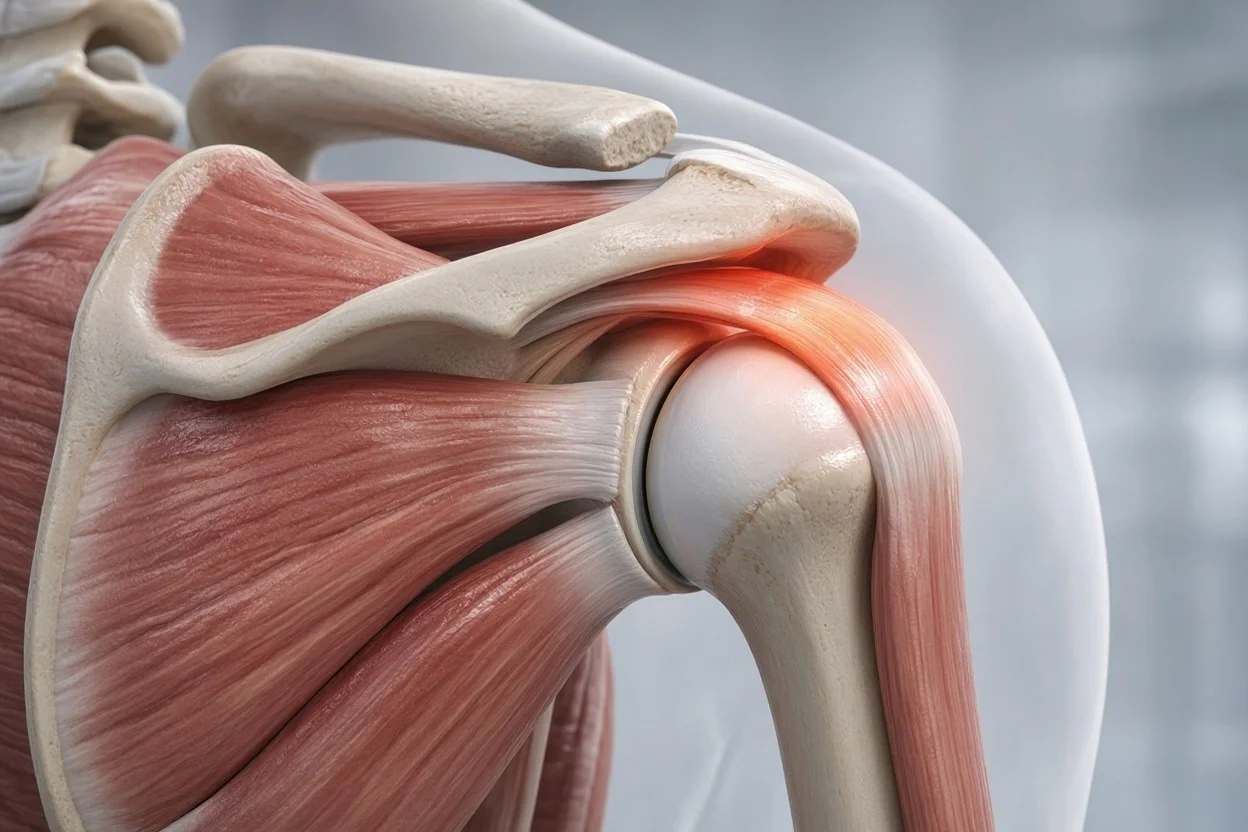
Symptoms may include:
- Shoulder pain when reaching behind your back.
- Weakness when lifting your arm.
- Pain during overhead activities.
- Discomfort when sleeping.
- Difficulty performing everyday tasks.
- Sudden weakness after an injury.
A significant tear may make it difficult to lift or control your arm.
If your shoulder pain started suddenly after an injury and you noticed immediate weakness, seek prompt medical assessment.
7. Shoulder Labral Injury or Instability
The labrum is a ring of cartilage that surrounds the shoulder socket and helps support joint stability.
An injury to this structure may occur after trauma, repetitive overhead activity, or shoulder instability.
Possible symptoms include:
- Deep shoulder pain.
- Clicking or catching sensations.
- A feeling that the shoulder may slip out of place.
- Discomfort during certain arm movements.
- Reduced confidence when moving the shoulder.
A labral injury is not the most common explanation for pain when reaching behind your back, but it may be considered when symptoms follow an injury or involve instability.
A professional examination is needed to distinguish it from more common shoulder conditions.
Why Does Reaching Behind Your Back Hurt More Than Other Shoulder Movements?
You may notice that lifting your arm forward or sideways feels relatively comfortable, but reaching behind your back causes significant pain.
This happens because different shoulder movements place different demands on the joint and surrounding tissues.
For example, reaching behind your back requires a combination of:
Internal rotation: Your upper arm rotates inward.
Extension: Your arm moves backwards relative to your body.
Adduction: Your arm moves closer to or across your body.
Shoulder blade movement: Your shoulder blade must coordinate with your upper arm.
If the shoulder capsule is stiff, the rotator cuff is sensitive, or other structures are irritated, this combination of movements may become uncomfortable.
This is why reaching behind your back can be difficult even when some other shoulder movements remain relatively normal.
How Can I Relieve Shoulder Pain When Reaching Behind My Back?
The right treatment depends on the underlying cause. However, several practical steps may help reduce discomfort and support recovery.
1. Temporarily Modify Painful Activities
If reaching behind your back causes significant pain, avoid repeatedly forcing the movement.
For example:
- Avoid pulling your arm forcefully behind your body.
- Use your other arm when putting on clothing.
- Choose clothing that is easier to put on.
- Avoid heavy lifting that aggravates your shoulder.
- Modify exercises that reproduce sharp pain.
You do not necessarily need to stop using your shoulder completely. Gentle movement within a comfortable range can help maintain mobility.
2. Apply Heat or Cold
Heat and cold packs may provide temporary relief.
A cold pack wrapped in a towel may help after a recent activity that aggravates your shoulder.
A warm compress may feel more comfortable when your shoulder is stiff or tight.
Use either option for approximately 15–20 minutes and avoid placing extreme temperatures directly against your skin.
3. Avoid Sleeping Directly on the Painful Shoulder
Sleeping on an irritated shoulder can increase discomfort during the night.
You may find it more comfortable to:
- Sleep on your back.
- Lie on the opposite side.
- Place a pillow under your affected arm.
- Keep your shoulder in a comfortable position.
- Avoid positions that force your arm behind your body.
If shoulder pain repeatedly wakes you up, consider seeking professional advice.
4. Maintain Gentle Shoulder Movement
Completely avoiding shoulder movement for long periods may contribute to stiffness.
Instead, try gentle movements that do not significantly increase your pain.
For example, you may perform comfortable shoulder rolls, gentle arm movements, or supported exercises.
However, if you have a suspected tear, recent injury, or severe movement restriction, obtain professional guidance before starting an exercise programme.
5. Gradually Improve Shoulder Strength
Once painful symptoms are manageable, appropriate strengthening exercises may help improve shoulder function.
The rotator cuff and shoulder blade muscles play an important role in controlling arm movement.
A progressive strengthening programme can help improve the shoulder’s ability to tolerate everyday activities.
5 Exercises That May Help Shoulder Pain When Reaching Behind Your Back
The following exercises are general examples that may help maintain shoulder movement and improve muscular control.
They are not suitable for every shoulder condition. In particular, avoid aggressive internal-rotation stretches if they cause sharp pain or if you have a recent injury.
Exercise 1: Pendulum Exercise
Purpose: Encourage gentle shoulder movement without requiring much active muscle effort.
Instructions:
- Stand beside a table or chair.
- Support yourself with your unaffected hand.
- Allow your affected arm to hang naturally.
- Gently move your body to create small arm movements.
- Move your arm forwards and backwards.
- Repeat with small circular movements.
- Continue for approximately 30–60 seconds if comfortable.
Keep the movement relaxed and avoid forcing your shoulder.
Exercise 2: Shoulder Blade Squeezes
Purpose: Improve activation of the muscles around your shoulder blades.
Instructions:
- Sit or stand comfortably.
- Relax your arms beside your body.
- Gently bring your shoulder blades towards each other.
- Avoid lifting your shoulders.
- Hold for three to five seconds.
- Relax.
- Repeat 8–10 times.
This exercise may help improve upper-back muscle control.
Exercise 3: Supported Shoulder Flexion
Purpose: Maintain comfortable forward shoulder movement.
Instructions:
- Sit at a table.
- Place your affected hand on a towel.
- Slowly slide your hand forward across the table.
- Allow your body to lean forward slightly.
- Stop before the movement becomes painful.
- Slowly return to the starting position.
- Repeat 8–10 times if comfortable.
Do not force the movement or allow your shoulder to shrug excessively.
Exercise 4: Gentle External Rotation
Purpose: Activate the muscles that help control shoulder rotation.
Instructions:
- Keep your elbow bent at approximately 90 degrees.
- Place a small towel between your elbow and your body.
- Keep your elbow close to your side.
- Gently rotate your forearm outward.
- Return to the starting position.
- Repeat 8–10 times.
Begin without resistance. A resistance band may be introduced later if appropriate.
Exercise 5: Gentle Internal Rotation
Purpose: Practise comfortable inward shoulder rotation.
Instructions:
- Stand with your elbow bent at approximately 90 degrees.
- Keep your elbow close to your body.
- Slowly move your forearm towards your stomach.
- Return to the starting position.
- Repeat 8–10 times if comfortable.
Do not force your hand behind your back. The goal is to practise comfortable movement, not to push through a restricted range.
Important: Stop if an exercise causes sharp pain, increasing weakness, or new tingling. If your shoulder becomes progressively stiffer, seek professional assessment rather than repeatedly trying to stretch it further.
Can Physiotherapy Help With Shoulder Pain When Reaching Behind Your Back?
Yes. Physiotherapy can help identify the possible cause of shoulder pain and develop a treatment plan based on your symptoms and physical examination.
A physiotherapist may assess:
- Shoulder range of motion.
- Internal and external rotation.
- Rotator cuff strength.
- Shoulder blade movement.
- Joint stiffness.
- Pain during specific activities.
- Functional movements such as reaching behind your back.
Depending on the findings, your treatment programme may include:
Mobility exercises: Improving comfortable shoulder movement.
Strengthening exercises: Building strength in the rotator cuff and surrounding muscles.
Movement retraining: Improving how your shoulder and shoulder blade work together.
Activity modification: Adjusting movements that repeatedly aggravate your symptoms.
Manual therapy: Selected hands-on techniques may be used when appropriate to support comfort and movement.
If shoulder pain interferes with dressing, exercise, or daily activities, professional physiotherapy treatment may help you work towards better shoulder mobility and function.
In some cases, soft tissue therapy may also be considered as part of a broader treatment programme, depending on the clinical assessment.
The most effective approach depends on whether your symptoms are related to tendon problems, joint stiffness, muscle dysfunction, or another condition.

How Is Shoulder Pain When Reaching Behind Your Back Diagnosed?
A healthcare professional usually starts by discussing your symptoms and examining your shoulder.
They may ask:
- When did your shoulder pain begin?
- Did it start after an injury?
- Does reaching behind your back cause sharp pain?
- Can you lift your arm overhead?
- Does your shoulder hurt at night?
- Do you experience weakness?
- Is your shoulder stiff in other directions?
The physical examination may include checking your active and passive shoulder movement, muscle strength, joint tenderness, and response to specific movements.
Imaging tests are not always necessary.
However, an X-ray may help identify arthritis or bone changes. Ultrasound or MRI may be considered when a tendon injury or another structural problem is suspected.
The decision depends on your symptoms and examination findings.
How Long Does Shoulder Pain When Reaching Behind Your Back Take to Heal?
Recovery depends on the underlying condition and the severity of your symptoms.
Mild shoulder discomfort may improve over several weeks with appropriate activity modification and exercises.
However, some conditions take considerably longer.
For example:
- Mild muscle irritation may improve relatively quickly.
- Rotator cuff-related pain may require several weeks or months of rehabilitation.
- Frozen shoulder can take many months or longer to improve.
- Significant tendon tears may require specialist assessment and, in selected cases, surgery.
Your recovery may also depend on your activity levels, overall shoulder strength, sleep quality, and consistency with your rehabilitation programme.
Do not judge recovery only by whether the pain disappears immediately. Improvements in movement, strength, sleep, and daily function are also important.
When Should You See a Doctor or Physiotherapist?
Shoulder pain that makes reaching behind your back difficult should not always be ignored, particularly when it continues or becomes worse.
Consider seeking professional advice if:
- Your shoulder pain lasts more than two weeks without improvement.
- You cannot comfortably put on a jacket.
- Your shoulder becomes increasingly stiff.
- You experience weakness when lifting your arm.
- Pain regularly wakes you at night.
- Your symptoms interfere with everyday activities.
- You have difficulty reaching in multiple directions.
Seek urgent medical attention if you experience:
- Sudden severe shoulder pain.
- Inability to move your arm after an injury.
- Significant swelling or a change in shoulder shape.
- New or persistent numbness.
- A hot shoulder accompanied by fever or feeling unwell.
Shoulder pain accompanied by chest pressure, shortness of breath, sweating, or sudden unexplained discomfort in the arm or jaw may indicate a medical emergency. Do not assume these symptoms are caused by a shoulder injury.
How Can You Prevent Shoulder Pain When Reaching Behind Your Back?
Although not every shoulder condition can be prevented, some daily habits may help maintain shoulder function and reduce unnecessary strain.
1. Avoid sudden increases in activity: Gradually increase exercise intensity and lifting demands.
2. Strengthen your shoulder muscles: Appropriate rotator cuff and shoulder blade exercises can support shoulder function.
3. Take breaks from repetitive tasks: Avoid performing the same demanding arm movements continuously.
4. Maintain comfortable movement: Change positions regularly and avoid remaining in one uncomfortable posture for extended periods.
5. Warm up before exercise: Prepare your shoulder before demanding upper-body activities.
6. Address early symptoms: If your shoulder becomes painful, modify activities instead of repeatedly forcing painful movements.
7. Follow an appropriate rehabilitation plan: If you have an existing shoulder problem, use exercises that match your condition and current ability.
Final Thoughts: What Should You Do If Your Shoulder Hurts When Reaching Behind Your Back?
Shoulder pain when reaching behind your back can result from several conditions, including rotator cuff tendinopathy, frozen shoulder, bursitis, osteoarthritis, and tendon injuries.
The combination of shoulder movements required to reach behind your body can place additional demands on sensitive or restricted structures.
Start by avoiding forceful movements, modifying painful activities, and maintaining comfortable shoulder movement. Gentle exercises may help improve mobility and strength when they are appropriate for your condition.
If your shoulder becomes increasingly stiff, weak, or painful, seek a professional assessment.
Physiotherapy can help identify contributing factors and develop an individualized rehabilitation programme to improve shoulder movement and make everyday activities more comfortable.
You should not have to struggle with simple movements such as putting on a jacket or reaching into your back pocket. Understanding the cause of your shoulder pain is the first step towards improving your mobility and returning to daily activities with greater confidence.
Frequently Asked Questions (FAQs)
1. Why does my shoulder hurt when I reach behind my back?
Shoulder pain during this movement may be related to rotator cuff problems, frozen shoulder, bursitis, arthritis, or other conditions that affect shoulder rotation and mobility.
2. Why does my shoulder hurt when I put my arm behind my back?
Putting your arm behind your back requires internal rotation and extension. If your shoulder tendons or joint capsule are irritated or stiff, this movement may reproduce pain.
3. Is shoulder pain when reaching behind my back a sign of frozen shoulder?
It can be. Frozen shoulder commonly causes progressive stiffness and restricted movement in several directions, including reaching behind your back. However, other shoulder conditions can cause similar symptoms.
4. Can a rotator cuff injury make it difficult to reach behind my back?
Yes. Rotator cuff-related pain and tears can make reaching behind your back uncomfortable, particularly when the movement involves sensitive or weakened shoulder structures.
5. Why does my shoulder hurt when I put on a jacket?
Putting on a jacket requires several shoulder movements, including rotation and extension. Tendon irritation, joint stiffness, or a rotator cuff problem may make this activity painful.
6. Should I stretch my shoulder if reaching behind my back hurts?
Gentle movement may help maintain mobility, but you should not force painful stretches. If your shoulder is significantly stiff or you suspect an injury, seek professional advice before attempting aggressive stretching.
7. Can shoulder bursitis cause pain when reaching behind my back?
Yes. Shoulder bursitis may cause pain during different arm movements, including reaching behind your body. It can also occur alongside rotator cuff-related problems.
8. How can I improve shoulder internal rotation?
Depending on the underlying condition, gentle mobility exercises and progressive strengthening may help improve shoulder internal rotation. The right programme should be based on your symptoms and shoulder assessment.
9. Can sleeping on my side make shoulder pain worse?
Yes. Sleeping directly on an irritated shoulder may increase discomfort, particularly when rotator cuff-related pain or bursitis is present.
10. How long does it take to recover from shoulder pain?
Recovery varies depending on the diagnosis. Some mild problems improve within weeks, while frozen shoulder and persistent tendon conditions may take several months or longer.
11. Can physiotherapy help me reach behind my back again?
Physiotherapy may help improve shoulder mobility, strength, and movement control. A personalized rehabilitation programme can address the factors contributing to your difficulty.
12. When should shoulder pain be considered serious?
Sudden severe pain, major weakness after an injury, significant swelling, deformity, persistent numbness, or fever with a hot swollen shoulder requires prompt medical attention.