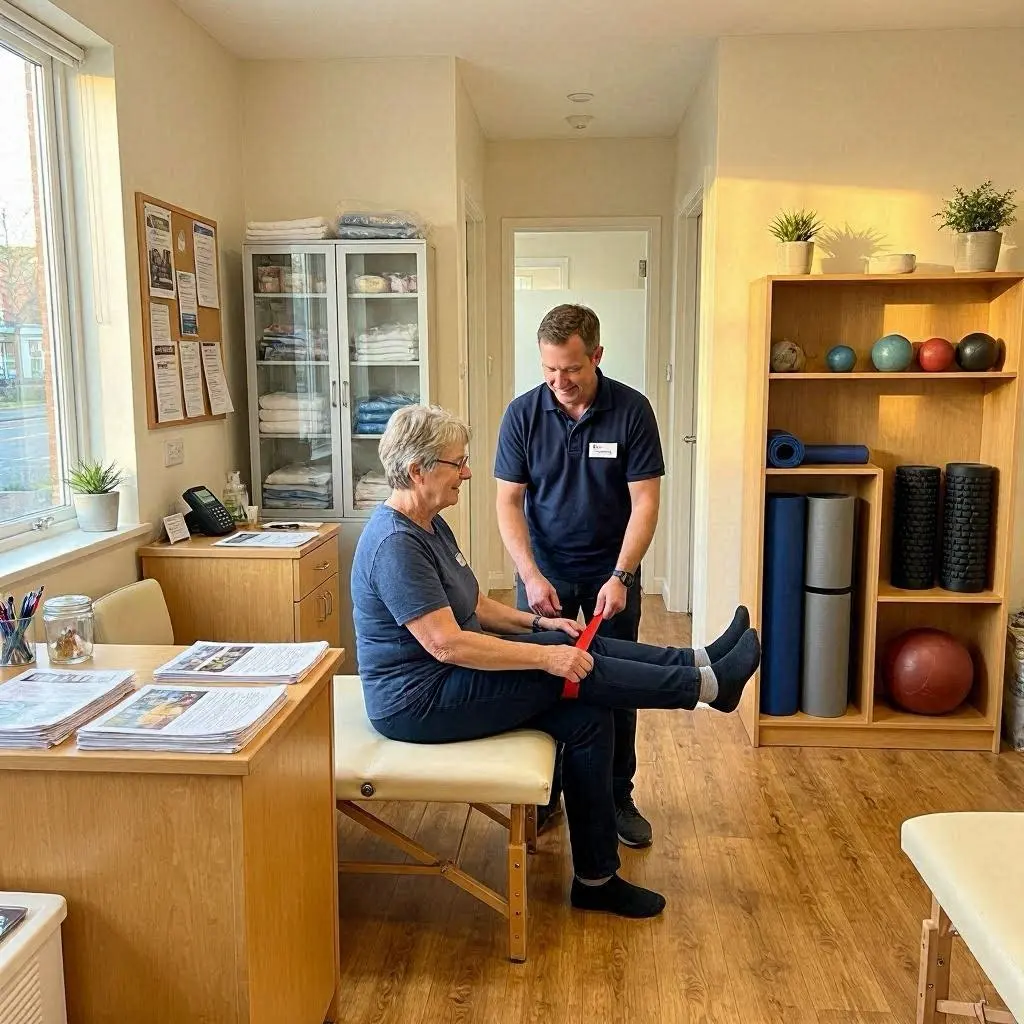

Why Does My Ankle Hurt When I Walk Downhill? 7 Possible Causes and Treatments
Walking downhill should be a normal part of everyday movement. However, if you experience ankle pain when walking downhill, even a gentle slope can become uncomfortable. You may notice pain at the back, front, or sides of your ankle, stiffness when lowering your foot, or discomfort that becomes worse after a long hike.
The reason downhill walking can trigger ankle pain is that it changes how your foot and ankle manage body weight. Your muscles must control your movement, your ankle joint must adapt to a different position, and your tendons and ligaments must tolerate repeated loading.
Several conditions can contribute to this problem, including posterior ankle impingement, Achilles tendinopathy, arthritis, previous ankle sprains, and tendon irritation.
Understanding where the pain occurs and what makes it worse can help identify the possible cause. In this guide, we explain why your ankle may hurt when walking downhill, which symptoms to watch for, and what treatments and exercises may help.
Why Does My Ankle Hurt When I Walk Downhill?
Ankle pain during downhill walking can occur because descending a slope places different demands on your ankle compared with walking on flat ground.
When you walk downhill, your body needs to control forward movement against gravity. Your ankle muscles help regulate foot placement, while the joint and surrounding soft tissues absorb and transfer forces.
Depending on your walking technique, slope, speed, footwear, and existing ankle condition, this may increase irritation in certain structures.
Some of the most common explanations include:
- Posterior ankle impingement: Compression of tissues at the back of the ankle during certain foot positions.
- Achilles tendinopathy: Irritation or degeneration of the tendon connecting your calf muscles to your heel.
- Ankle arthritis: Joint stiffness and pain associated with cartilage damage or inflammation.
- Previous ankle sprains: Reduced stability or persistent symptoms following ligament injuries.
- Tendon overload: Excessive repetitive stress on the muscles and tendons supporting your ankle.
- Ankle stiffness: Restricted movement that makes adapting to slopes more difficult.
- Footwear and walking mechanics: Shoes or movement patterns that increase pressure on sensitive structures.
The exact cause cannot be determined from the activity that triggers pain alone. However, the location and nature of your symptoms can provide useful clues.
7 Common Causes of Ankle Pain When Walking Downhill
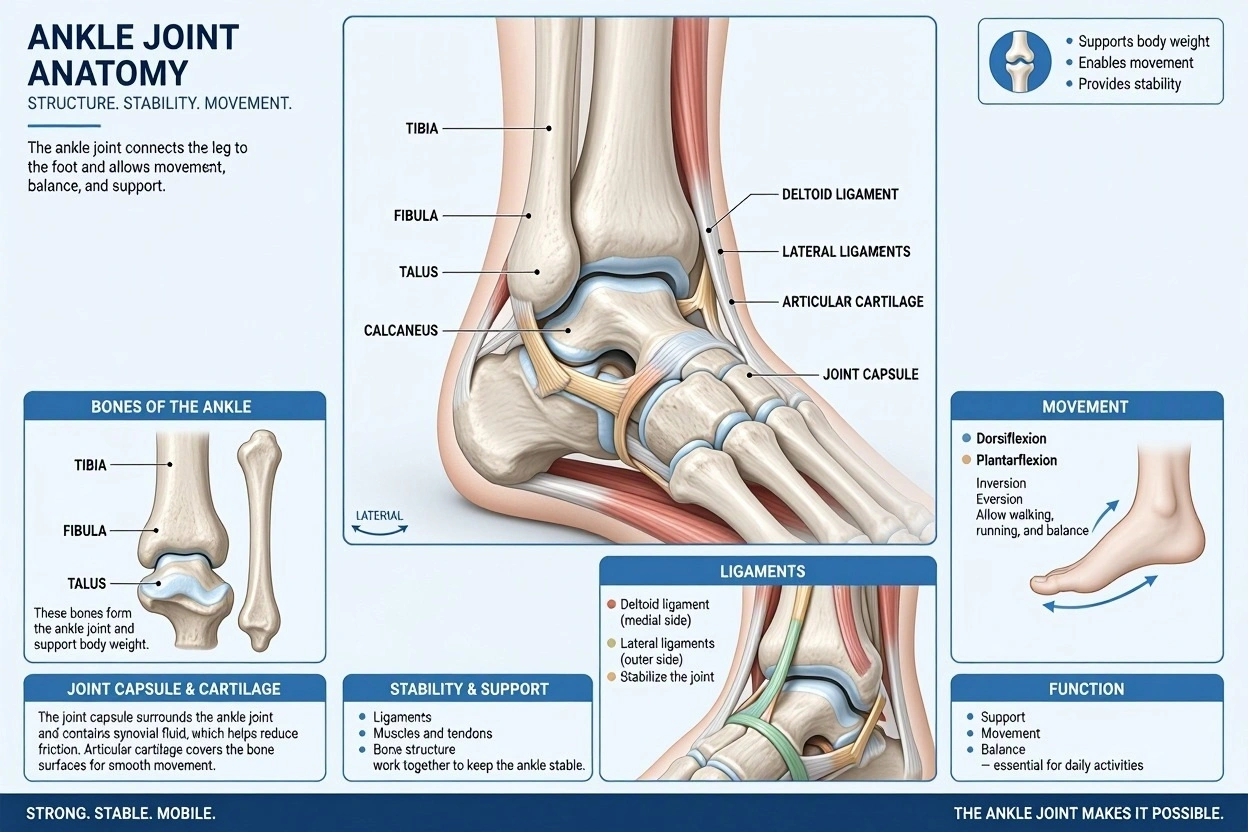
1. Posterior Ankle Impingement
Posterior ankle impingement is a possible cause of pain at the back of the ankle, particularly during activities that involve pointing the toes downward (plantarflexion).
This condition occurs when soft tissues or bony structures at the back of the ankle become compressed during certain movements. In some individuals, an additional bone called an os trigonum may contribute to this compression.
According to the British Orthopaedic Foot & Ankle Society (BOFAS), posterior ankle impingement can cause pain during activities involving repeated or sustained plantarflexion.
Common symptoms may include:
- Deep pain at the back of the ankle.
- Discomfort when pointing the toes downward.
- Tenderness around the back of the ankle.
- Pain during activities such as dancing, running, or walking on certain slopes.
- Reduced comfort during repeated ankle movements.
Downhill walking may aggravate symptoms in some individuals, depending on ankle position and the underlying structures involved.
Treatment depends on the cause and severity of the condition. Conservative options may include modifying painful activities, appropriate footwear, and physiotherapy. Persistent symptoms may require further medical assessment and imaging.
Symptoms may include:
- Pain deep inside the back of the ankle.
- Discomfort near the Achilles tendon.
- Pain when pointing your toes downward.
- Symptoms when walking downhill or descending stairs.
- Tenderness or stiffness around the back of the ankle.
The discomfort may become more noticeable during hiking, running downhill, or activities involving repeated ankle movement.
Treatment depends on the underlying cause and may include temporary activity modification, appropriate footwear, physiotherapy, and exercises designed to improve movement and strength.
Persistent symptoms may require imaging or assessment by an orthopedic specialist.
2. Achilles Tendinopathy
Achilles tendinopathy is another possible cause of ankle pain when walking downhill. It affects the Achilles tendon, which connects the calf muscles to the heel bone and plays an essential role in walking, running, jumping, and pushing the body forward.
This condition develops when the tendon is repeatedly exposed to loading that exceeds its current capacity. It may lead to pain, stiffness, tenderness, and reduced tolerance for physical activity.
Downhill walking can aggravate existing Achilles tendon problems because the calf-Achilles complex must repeatedly control movement and manage forces during each step. Symptoms may become more noticeable when walking longer distances, hiking, or descending steep slopes.
Common symptoms include:
- Pain at the back of the heel or along the Achilles tendon.
- Morning stiffness around the tendon.
- Tenderness when touching the affected area.
- Discomfort during walking or pushing off the foot.
- Pain or stiffness after physical activity.
- Reduced tolerance for running, hiking, or climbing stairs.
Treatment usually focuses on gradually improving the tendon’s ability to tolerate physical activity. A physiotherapist may recommend progressive calf strengthening, activity modification, and an individualized rehabilitation program.
For more information about managing this condition, explore our guide to physiotherapy for Achilles tendon pain, which explains treatment approaches, exercises, and recovery strategies.
Common symptoms include:
- Pain at the back of the heel or ankle.
- Morning stiffness around the Achilles tendon.
- Tenderness when touching the tendon.
- Discomfort after prolonged walking.
- Pain during calf raises or pushing off the foot.
- Occasional thickening of the tendon.
Achilles tendinopathy may develop gradually, particularly after increasing walking distance, hiking frequency, or exercise intensity too quickly.
A physiotherapy program often focuses on progressive calf strengthening and carefully managed tendon loading.
However, the correct exercises depend on whether the problem affects the middle portion of the tendon or its attachment to the heel. Aggressive stretching may aggravate certain cases.
For more information, read our guide to Physiotherapy for Achilles Tendon Pain.
3. Ankle Arthritis
Ankle arthritis can cause pain and stiffness when walking, particularly on uneven surfaces or slopes.
The ankle joint contains cartilage that helps the bones move smoothly against each other. When this cartilage becomes damaged or wears down, movement may become painful.
Unlike hip and knee osteoarthritis, ankle osteoarthritis is frequently associated with previous injuries, including significant ankle fractures and repeated sprains.
Possible symptoms include:
- Pain around the ankle joint.
- Stiffness after resting.
- Swelling after physical activity.
- Reduced ankle movement.
- Discomfort during prolonged walking.
- Pain when walking downhill or descending stairs.
Some people also notice that their ankle feels less flexible in the morning.
Downhill walking may expose existing joint limitations because the ankle must adapt to changing positions while controlling body movement.
Treatment may involve activity modification, appropriate footwear, physiotherapy, strengthening exercises, and weight management when appropriate.
In more advanced cases, a physician may discuss injections or surgical options.
4. Previous Ankle Sprains and Chronic Ankle Instability
A previous ankle sprain can continue affecting your movement long after the initial swelling and bruising have disappeared.
An ankle sprain occurs when one or more ligaments become overstretched or torn. Ligaments help stabilize the joint and prevent excessive movement.
Some people develop chronic ankle instability after repeated sprains or incomplete rehabilitation.
This can lead to:
- A feeling that the ankle may give way.
- Repeated ankle rolling.
- Discomfort on uneven surfaces.
- Reduced balance.
- Swelling after physical activity.
- Difficulty controlling the foot during downhill walking.
Descending a slope requires accurate coordination and balance. If your ankle does not provide sufficient stability, the surrounding muscles may need to work harder to control movement.
Rehabilitation commonly includes balance training, strengthening, mobility exercises, and gradual return to challenging activities.
Simply resting the ankle may not restore the strength and coordination required for comfortable walking.
5. Tendon Irritation Around the Ankle
Several tendons help control ankle movement and support the foot.
Besides the Achilles tendon, these include the peroneal tendons on the outside of the ankle and the posterior tibial tendon on the inside.
Repeated walking, hiking, sudden increases in activity, or changes in footwear can overload these structures.
The location of discomfort may provide clues:
Outer ankle pain: Peroneal tendon irritation may cause tenderness behind or below the outer ankle bone.
Inner ankle pain: Posterior tibial tendon problems may cause discomfort along the inside of the ankle and arch.
Front ankle pain: Extensor tendon irritation or other joint-related problems may cause pain across the front of the ankle.
Symptoms may include localized tenderness, mild swelling, discomfort during walking, and pain with specific foot movements.
Treatment depends on the affected tendon. It may involve reducing aggravating activities, modifying footwear, and gradually rebuilding muscle strength.
6. Reduced Ankle Mobility and Calf Muscle Stiffness
Your ankle needs sufficient mobility to adapt to different walking surfaces.
One important movement is dorsiflexion, which involves bringing your foot upward toward your shin.
If your ankle has limited mobility, you may compensate by changing your foot position, rotating your leg, or adjusting your walking pattern.
Calf muscle stiffness can also contribute to restricted ankle movement.
People with reduced mobility may experience:
- Tightness around the ankle.
- Difficulty walking on slopes.
- Stiffness when descending stairs.
- Reduced comfort during squatting.
- Increased effort during longer walks.
However, limited dorsiflexion does not explain every case of downhill ankle pain. Other joint, tendon, and soft-tissue problems must also be considered.
A physiotherapist can assess ankle mobility and determine whether stretching, joint mobilization, strengthening, or another intervention is appropriate.
7. Footwear and Downhill Walking Technique
Sometimes, ankle pain is aggravated by the way you walk or by the shoes you wear.
Footwear that is too tight, poorly fitted, excessively worn, or unsuitable for hiking may contribute to discomfort.
For example, shoes that place pressure over the top of the foot may irritate sensitive tendons. Inadequate support or poor traction may also affect movement control.
Walking technique matters as well.
Taking long steps downhill, moving too quickly, or walking on unstable surfaces may increase the physical demands placed on your lower limbs.
Practical adjustments include:
- Taking shorter, controlled steps.
- Avoiding unnecessary speed.
- Choosing shoes with good traction.
- Using hiking poles on challenging trails.
- Taking breaks during longer descents.
These adjustments may reduce discomfort, but persistent pain still requires an assessment to identify the underlying problem.
Symptoms Associated With Downhill Ankle Pain
The symptoms accompanying ankle pain can help guide further assessment.
Pay attention to the exact location, intensity, and timing of your discomfort.
| Symptom | Possible explanation |
|---|---|
| Pain at the back of the ankle | Posterior impingement or Achilles tendon problems |
| Pain around the ankle joint | Arthritis or joint irritation |
| Pain behind the outer ankle bone | Peroneal tendon irritation |
| Pain along the inner ankle | Posterior tibial tendon problems |
| Stiffness after resting | Joint or tendon-related conditions |
| Swelling after walking | Injury, inflammation, or overuse |
| Feeling that the ankle gives way | Chronic ankle instability |
| Sudden severe pain after twisting | Possible sprain or fracture |
These patterns are not diagnostic. Different conditions can produce similar symptoms, and more than one problem may exist simultaneously.
How Is the Cause of Ankle Pain Diagnosed?
A proper assessment helps determine which structures are responsible for your discomfort.
A healthcare professional may ask:
- When did the pain begin?
- Does it occur only when walking downhill?
- Is the pain at the front, back, inside, or outside of the ankle?
- Have you previously injured this ankle?
- Does swelling occur after activity?
- Can you walk comfortably on flat ground?
A physical examination may include:
Range-of-motion assessment: Evaluating how far the ankle moves in different directions.
Strength testing: Checking the calf muscles and other muscles responsible for ankle control.
Balance assessment: Identifying problems with stability and coordination.
Palpation: Gently examining the tendons, ligaments, and joint for tenderness.
Walking assessment: Observing how your foot and ankle behave during different movements.
Imaging is not necessary for every case. However, an X-ray may be appropriate when a fracture, arthritis, or bony abnormality is suspected. Ultrasound or MRI may be considered when a tendon, ligament, or other soft-tissue problem needs further investigation.
How to Treat Ankle Pain When Walking Downhill
Treatment depends on the underlying diagnosis, symptom severity, and how long the problem has been present.
The following approaches may help manage uncomplicated ankle discomfort.
1. Temporarily Modify Aggravating Activities
If downhill walking consistently causes pain, reduce the duration or steepness of your descents temporarily.
You do not necessarily need to stop all physical activity. Comfortable walking on level ground or another lower-impact activity may be appropriate if it does not aggravate your symptoms.
Avoid repeatedly testing painful movements.
2. Use Ice When Appropriate
If your ankle becomes swollen or uncomfortable after activity, applying a cold pack may provide temporary symptom relief.
Wrap the cold pack in a towel and apply it for approximately 15–20 minutes.
Never place ice directly against your skin.
3. Choose Appropriate Footwear
Wear comfortable shoes that fit properly and provide suitable support and traction.
For hiking, choose footwear designed for the terrain. Avoid shoes that create pressure around painful areas.
Some people may benefit from supportive insoles or heel modifications. However, custom orthotics are not necessary for everyone.
Their suitability should be determined through an individual assessment.
4. Consider Physiotherapy
Physiotherapy can help identify movement limitations and address the physical factors contributing to ankle pain.
Depending on the diagnosis, treatment may include:
- Ankle mobility exercises.
- Calf strengthening.
- Balance and stability training.
- Progressive tendon loading.
- Walking and movement retraining.
- Education about activity modification.
The aim is to improve the ankle’s ability to tolerate everyday activities rather than simply reduce discomfort temporarily.
5. Use Pain Medication Carefully
Some people may benefit from over-the-counter pain relief.
However, medication is not suitable for everyone. Anti-inflammatory medications such as ibuprofen may have risks for people with certain medical conditions or those taking specific medications.
Ask a pharmacist or healthcare professional which option is appropriate for you.
Exercises That May Help Improve Ankle Function

Exercise can improve ankle strength, flexibility, balance, and movement control.
However, the following exercises are intended for general education, not as a treatment for every cause of ankle pain.
Do not start them if you have a suspected fracture, significant acute injury, severe swelling, or instructions to immobilize the ankle.
1. Ankle Circles
Ankle circles help maintain gentle joint movement.
- Sit in a comfortable position.
- Lift your foot slightly off the floor.
- Slowly rotate your ankle clockwise.
- Repeat in the opposite direction.
- Perform the movement without forcing the joint.
Start with 5–10 repetitions in each direction if comfortable.
2. Seated Calf Raises
This exercise gently strengthens the calf muscles.
- Sit on a chair with your feet flat.
- Slowly raise your heels while keeping your toes on the floor.
- Hold briefly.
- Lower your heels in a controlled manner.
- Repeat for a comfortable number of repetitions.
Gradually increase the difficulty when your symptoms and clinical advice allow.
3. Standing Calf Raises
Standing calf raises help develop strength in the muscles responsible for controlling ankle movement.
- Stand near a stable surface for support.
- Keep your feet approximately hip-width apart.
- Slowly rise onto your toes.
- Pause briefly.
- Lower your heels with control.
Begin with a small number of repetitions.
Avoid this exercise if it causes sharp pain or significantly aggravates Achilles tendon symptoms.
4. Supported Single-Leg Balance
Balance training can help improve ankle stability and coordination.
- Stand near a wall or sturdy chair.
- Shift your weight onto one leg.
- Lift the opposite foot slightly.
- Maintain your balance for 10–20 seconds.
- Repeat on the other side.
Use hand support when necessary.
Important Exercise Guidance
Exercises should not cause sharp or increasing pain.
If symptoms become noticeably worse during exercise or remain aggravated afterward, reduce the intensity or stop and seek professional guidance.
People with Achilles tendon problems, ankle arthritis, or previous ligament injuries may need different exercise selections and progressions.
How to Prevent Ankle Pain During Downhill Walking
Preventing recurring discomfort involves improving ankle capacity and managing the demands placed on your feet.
Consider these practical strategies:
1. Increase walking distance gradually. Avoid suddenly adding long hikes or steep descents to your routine.
2. Strengthen your calves. Strong calf muscles help control ankle movement and support walking.
3. Improve balance. Regular balance training may help improve coordination and reduce the risk of recurrent ankle sprains.
4. Wear suitable hiking shoes. Choose footwear with appropriate fit, traction, and support.
5. Warm up before hiking. Begin with gentle walking and comfortable ankle movements.
6. Control your downhill speed. Shorter steps and controlled movement may make steep descents easier to manage.
7. Avoid ignoring recurring symptoms. Repeated ankle pain may indicate an underlying problem that requires assessment.
8. Allow adequate recovery. Increase activity gradually and avoid repeatedly overloading a painful ankle.
When Should You See a Doctor or Physiotherapist?
Occasional mild discomfort may improve with activity modification and appropriate self-care.
However, some symptoms require medical attention.
Seek urgent medical assessment if:
- You cannot bear weight or walk more than a few steps after an injury.
- Your ankle or foot looks deformed.
- You experience severe pain following a fall or twisting injury.
- You hear a snapping sound followed by sudden pain and difficulty using the ankle.
- Your foot becomes numb, unusually cold, or changes colour.
- Your ankle becomes hot and swollen and you develop a fever or feel unwell.
These symptoms may indicate a fracture, significant injury, infection, or another condition requiring prompt treatment.
Arrange a non-urgent medical or physiotherapy assessment if:
- Ankle pain keeps returning during downhill walking.
- Symptoms are getting progressively worse.
- Swelling does not settle.
- You experience persistent stiffness.
- Your ankle repeatedly gives way.
- Pain interferes with normal activities.
- Symptoms have not improved after approximately two weeks of appropriate home care.
People with diabetes, reduced sensation, or circulation problems should seek advice earlier because foot and ankle problems may require additional care.
Frequently Asked Questions
1. Why does my ankle hurt when I walk downhill but not uphill?
Walking uphill and downhill place different demands on the ankle.
Downhill walking requires controlled lowering of the body and different muscle and joint actions. Depending on your movement pattern, this may aggravate posterior ankle impingement, tendon problems, arthritis, or an existing ankle injury.
Pain that occurs only during descents does not identify one specific condition. A clinical assessment can help determine the cause.
2. Why does the back of my ankle hurt when walking downhill?
Pain at the back of your ankle may be associated with posterior ankle impingement or Achilles tendon problems.
Posterior impingement involves compression of structures at the back of the ankle during certain foot positions. Achilles tendinopathy generally causes pain and tenderness around the tendon connecting your calf to your heel.
The two conditions can produce similar symptoms, so an examination may be necessary to distinguish them.
3. Can ankle arthritis cause pain when walking downhill?
Yes. Ankle arthritis can cause joint pain, stiffness, and reduced mobility.
Walking downhill may make symptoms more noticeable because the joint must adapt to changing movement demands.
Treatment may include physiotherapy, activity modification, suitable footwear, and medical management.
4. Is downhill walking bad for ankle injuries?
Not necessarily.
Downhill walking is not automatically harmful, but it can aggravate certain ankle injuries, particularly when symptoms are already present.
If you have a recent sprain, tendon injury, or significant swelling, follow an appropriate rehabilitation plan before returning to steep descents.
5. Can weak ankle muscles cause pain when walking downhill?
Weakness may contribute to poor movement control and reduced tolerance for repeated walking demands.
The calf muscles and smaller muscles around the ankle help control movement and maintain stability.
However, weakness is not the only possible explanation. Tendon disorders, joint problems, and previous injuries should also be considered.
6. Should I stretch my ankle if it hurts when walking downhill?
That depends on the underlying condition.
Gentle mobility exercises may help some people with restricted ankle movement. However, aggressive stretching can aggravate certain tendon and impingement problems.
If stretching reproduces your pain, stop and seek professional advice.
7. How long does downhill ankle pain take to heal?
Recovery depends on the cause and severity.
Mild activity-related irritation may improve after reducing aggravating activities. Tendon problems, significant sprains, and ankle arthritis may require a longer-term management plan.
If pain persists, worsens, or repeatedly returns, an assessment is recommended.
8. Can physiotherapy help with ankle pain when walking downhill?
Yes. Physiotherapy may help when symptoms are related to restricted mobility, muscle weakness, tendon problems, or ankle instability.
A physiotherapist can assess your movement, identify relevant limitations, and develop an exercise program based on your condition.
The treatment plan may include strengthening, balance training, mobility work, and gradual return to walking on slopes.
Final Thoughts
Experiencing ankle pain when walking downhill can make hiking, exercise, and everyday movement frustrating.
The problem may be related to posterior ankle impingement, Achilles tendinopathy, arthritis, previous ankle sprains, tendon irritation, or restricted ankle mobility.
Although downhill walking changes the demands placed on your ankle, the exact cause depends on your symptoms, injury history, and physical examination.
The most effective approach is to identify the underlying problem rather than repeatedly avoiding activities without understanding why they cause discomfort.
Appropriate footwear, gradual activity progression, strengthening exercises, and professional rehabilitation may help improve ankle function and walking comfort.
If your symptoms persist, worsen, or interfere with daily activities, consider consulting a qualified healthcare professional.
At Ritz Clinic, an individualized physiotherapy assessment can help evaluate movement limitations and determine whether rehabilitation may be appropriate for your needs.
Medical Disclaimer
This article is intended for general educational purposes only. It does not provide a medical diagnosis or replace an examination, professional medical advice, or individualized treatment.
Ankle pain can have several possible causes, and treatment recommendations depend on the underlying condition.
If you experience severe pain, significant swelling, inability to bear weight, deformity, fever, or other concerning symptoms, seek appropriate medical attention.
Always consult a qualified healthcare professional before starting a new exercise or rehabilitation program, particularly if you have a recent injury or an existing medical condition.