Golf Performance Chiropractic: Improve Mobility, Balance, and Your Golf Game
What Is Golf Performance Chiropractic?
Golf requires much more than a good swing. Players need mobility, balance, coordination, flexibility, strength, and body control to perform consistently on the course. Even small limitations in movement can affect swing mechanics and increase stress on the lower back, hips, shoulders, elbows, and wrists. Golf Performance Chiropractic focuses on helping golfers improve the way their bodies move so they can perform more efficiently. Instead of focusing only on pain, this approach considers posture, joint movement, muscle function, flexibility, and overall physical performance.
Chiropractic care can complement golf training by supporting proper movement patterns and helping players maintain their physical condition throughout the season.
Why Mobility Matters in Golf
A golf swing requires coordinated movement throughout the entire body. The hips, spine, shoulders, arms, and legs all contribute to the swing.
Limited mobility can make certain parts of the body work harder than necessary. For example, restricted hip movement may cause a golfer to rotate the lower back more aggressively. Limited shoulder mobility can also affect the backswing and follow-through.
Golf Performance Chiropractic can help identify movement restrictions and provide care that supports healthier joint motion. Better mobility can allow golfers to move through their swing with greater control and efficiency.
Chiropractic Care for Golfers (Golf Performance Chiropractic)
Golfers often spend hours practicing the same movement repeatedly. Repetition can place stress on certain joints and muscles, especially when a player has poor posture or limited mobility.
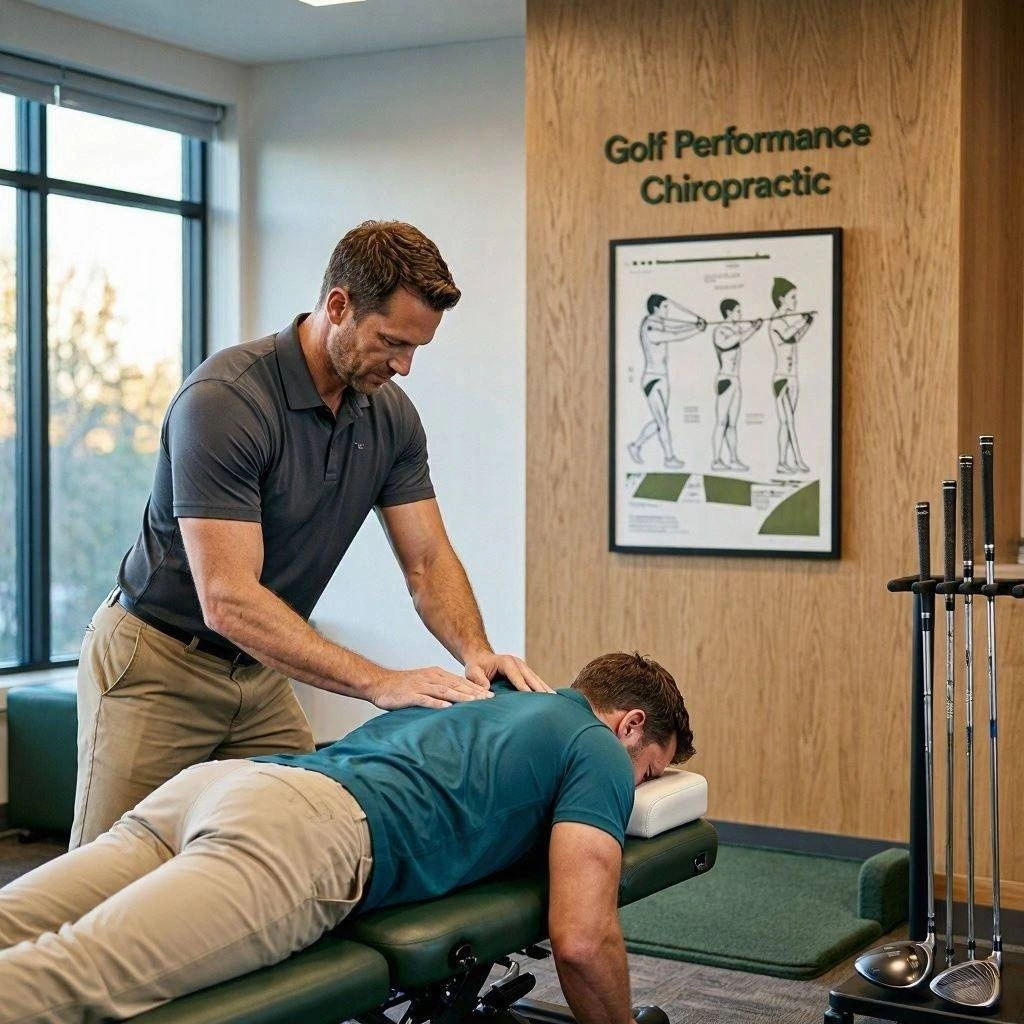
A chiropractor can evaluate areas such as the spine, hips, shoulders, and extremities to identify movement restrictions. Depending on the individual’s needs, treatment may include spinal adjustments, joint mobilization, soft-tissue techniques, mobility exercises, and corrective movements.
The goal is to help the body move more effectively while supporting the golfer’s training and performance goals.
Golf Performance Chiropractic and Swing Mechanics
The golf swing depends on a sequence of movements. The body must transfer energy from the lower body through the torso and into the arms and club.
When one area cannot move properly, another area may compensate. These compensations can affect swing mechanics and create unnecessary physical stress.
For example, poor thoracic spine mobility may make it difficult to rotate the upper body during the backswing. A golfer may compensate by creating additional movement in the lower back or shoulders.
Improving mobility and movement quality can help golfers develop a more controlled and efficient swing.
Improving Golf Flexibility
Flexibility plays an important role in golf performance. Golfers need enough flexibility to rotate their torso, move their hips, and maintain a comfortable posture throughout the swing.
A personalized chiropractic program may include exercises that target areas commonly used during golf. These exercises can focus on:
Hip mobility
Thoracic spine rotation
Shoulder flexibility
Hamstring flexibility
Core control
Ankle mobility
Overall movement coordination
Regular mobility work can help golfers maintain a greater range of motion during training and play.
Golf Injury Prevention
Golf may seem like a low-impact sport, but repetitive swings can place considerable stress on the body. Golfers commonly experience discomfort involving the lower back, shoulders, elbows, wrists, and hips.
Poor technique, sudden increases in practice volume, inadequate warm-ups, and limited mobility can contribute to these problems.
Golf Performance Chiropractic can form part of a broader injury-prevention strategy. A chiropractor can assess movement patterns and identify areas that may need additional attention.
Golfers can also reduce injury risk by warming up before playing, maintaining proper technique, strengthening important muscle groups, taking appropriate rest periods, and gradually increasing training intensity.
Chiropractic Care for Lower Back Health
The lower back plays an important role in the golf swing. Players repeatedly rotate and stabilize their spine throughout a round.
Poor movement patterns can place additional stress on the lumbar region. Golfers who experience recurring discomfort may benefit from a professional assessment to determine which movement limitations contribute to their symptoms.
Chiropractic care can support spinal mobility and help golfers develop better movement habits. Exercise and strength training can further support the muscles responsible for spinal stability.
Supporting Hip and Shoulder Mobility
The hips and shoulders contribute significantly to golf swing mechanics. Healthy hip mobility can help golfers rotate their body while maintaining stability. Shoulder mobility can support a comfortable backswing and controlled follow-through.
A Golf Performance Chiropractic program may combine manual care with targeted exercises to improve movement in these areas.
Golfers can also incorporate mobility exercises into their regular training routine. Consistent mobility work often provides better results than occasional stretching before a round.
Balance and Stability for Golfers
Balance affects every stage of the golf swing. Players need a stable base during setup, controlled weight transfer during the backswing, and proper balance during the follow-through.
Poor balance can affect consistency and make it harder to control the club.
Chiropractic care can complement exercises that improve stability, coordination, and body awareness. Strengthening the core, hips, and legs can also help golfers maintain better control throughout the swing.
Golf Performance Chiropractic for Different Skill Levels
Chiropractic care can benefit golfers at different stages of their development.
Beginners
New golfers often focus heavily on technique. Improving mobility and body awareness can help beginners develop healthier movement patterns from the start.
Recreational Golfers (Golf Performance Chiropractic)
Recreational players may spend long periods between rounds without structured physical training. Mobility and strengthening exercises can help prepare the body for regular play.
Competitive Golfers
Competitive golfers place greater demands on their bodies because they practice and compete frequently. A performance-focused chiropractic program can support mobility, recovery, and movement quality throughout the season.
What to Expect From a Chiropractic Assessment
A chiropractic assessment for golfers typically begins with a discussion about goals, training habits, previous injuries, and physical concerns. The chiropractor may then assess posture, joint movement, flexibility, balance, and functional movement.
The assessment helps identify areas that may affect golf performance. The chiropractor can then create a personalized plan based on the golfer’s needs.
Every golfer has different physical characteristics, so an individualized approach can provide more useful results than a one-size-fits-all routine.
Combining Chiropractic Care With Golf Training
Chiropractic care works best as part of a complete golf performance strategy. Golfers can combine chiropractic treatment with strength training, mobility exercises, cardiovascular conditioning, technical coaching, proper nutrition, hydration, and adequate recovery.
A golf professional can address swing mechanics while a qualified healthcare professional can address physical movement and musculoskeletal concerns. Together, these approaches can support a more complete performance plan.
Final Thoughts (Golf Performance Chiropractic)
Golf Performance Chiropractic offers golfers a performance-focused approach to movement, mobility, balance, and physical health. By addressing areas such as spinal mobility, hip movement, shoulder flexibility, stability, and posture, chiropractic care can complement regular golf training.
Whether you play golf recreationally or compete at a high level, taking care of your body can help you move more efficiently and stay prepared for the demands of the game.
A personalized assessment can help identify movement limitations and provide practical strategies that support your individual golf goals. Combined with proper training and recovery, chiropractic care can become a valuable part of a golfer’s long-term performance routine.