Physiotherapy for Muscle Weakness: A Complete Guide to Strength, Mobility, and Recovery
Physiotherapy for muscle weakness is a structured approach to improving strength, movement, balance, endurance, and physical function. Muscle weakness can affect people of all ages and may develop after an injury, surgery, illness, prolonged inactivity, neurological condition, or period of reduced physical activity. In some cases, weakness can also be associated with underlying medical conditions that require appropriate medical evaluation.
Weak muscles can make everyday activities more challenging. Simple tasks such as standing from a chair, climbing stairs, walking, lifting objects, or maintaining balance may become difficult. Physiotherapy can help identify physical limitations and develop an individualized rehabilitation program designed to improve strength and functional capacity.
Treatment often includes progressive strengthening exercises, mobility training, balance activities, functional rehabilitation, and education. The specific program depends on the cause of weakness, the person’s physical condition, and their goals.
What Is Muscle Weakness?
Muscle weakness refers to a reduced ability of a muscle or group of muscles to generate force.
It can affect:
Arms
Legs
Back
Abdomen
Hips
Shoulders
Hands
Weakness can be mild or severe and may affect one part of the body or several areas.
It is important to distinguish true muscle weakness from fatigue. Fatigue means feeling tired or unable to continue an activity, while weakness involves reduced ability to produce physical force.
A professional assessment can help determine the difference.
Common Causes of Muscle Weakness
Muscle weakness can have many causes.
Common physical causes include:
Injury
Surgery
Prolonged inactivity
Immobilization
Muscle strain
Joint problems
Aging
Deconditioning
Neurological conditions, systemic illnesses, nutritional issues, and certain medications can also contribute to weakness.
Because the causes are varied, persistent or unexplained muscle weakness should be medically assessed rather than automatically attributed to inactivity.
How Physiotherapy Helps Muscle Weakness
Physiotherapy focuses on identifying the functional effects of weakness and developing a progressive rehabilitation plan.
A physiotherapist may use:
Strength testing
Therapeutic exercise
Resistance training
Functional movement
Balance exercises
Mobility training
Gait rehabilitation
Activity progression
The aim is to gradually increase the body’s ability to perform physical tasks.
Muscle Strength Assessment
A physiotherapy assessment may include different methods of evaluating strength.
The physiotherapist may compare:
Left and right sides
Different muscle groups
Strength during functional movements
Ability to maintain positions
Exercise tolerance
The assessment helps identify which muscles require additional attention.
For example, weakness in the quadriceps may make stair climbing difficult, while hip weakness may affect single-leg balance and walking.
Why Progressive Strength Training Matters
Progressive resistance training is one of the most important tools for improving muscle strength.
Muscles adapt when exposed to appropriate physical demands.
A strengthening program may gradually increase:
Resistance
Repetitions
Sets
Exercise complexity
Movement range
Duration
Progress should be based on the individual’s condition and response to exercise.
Increasing resistance too quickly can cause excessive soreness or aggravate an existing problem.
Bodyweight Exercises
Bodyweight exercises can be useful for people beginning rehabilitation.
Examples include:
Sit-to-stand
Wall squats
Step-ups
Bridges
Calf raises
Modified push-ups
These exercises can often be modified according to the individual’s abilities.
For someone with significant weakness, even a small number of controlled repetitions may provide an appropriate starting point.
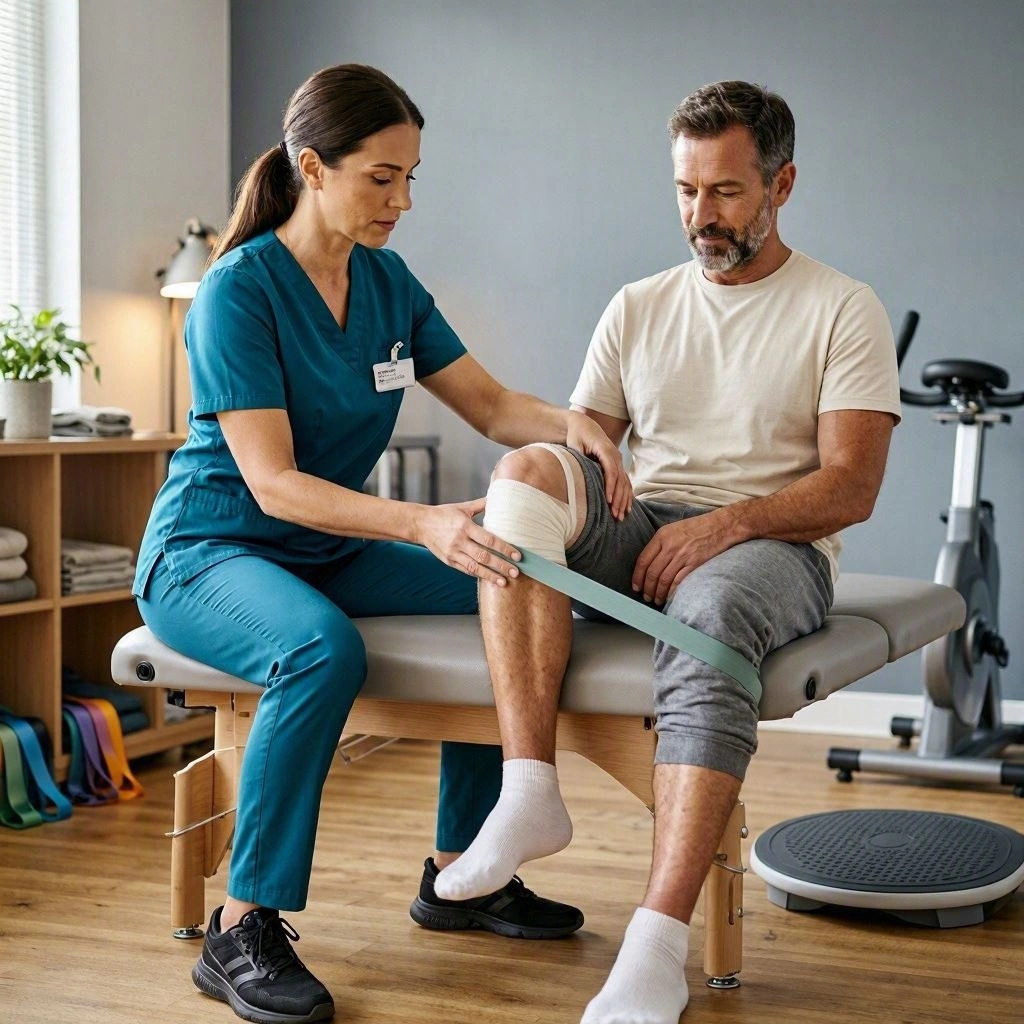
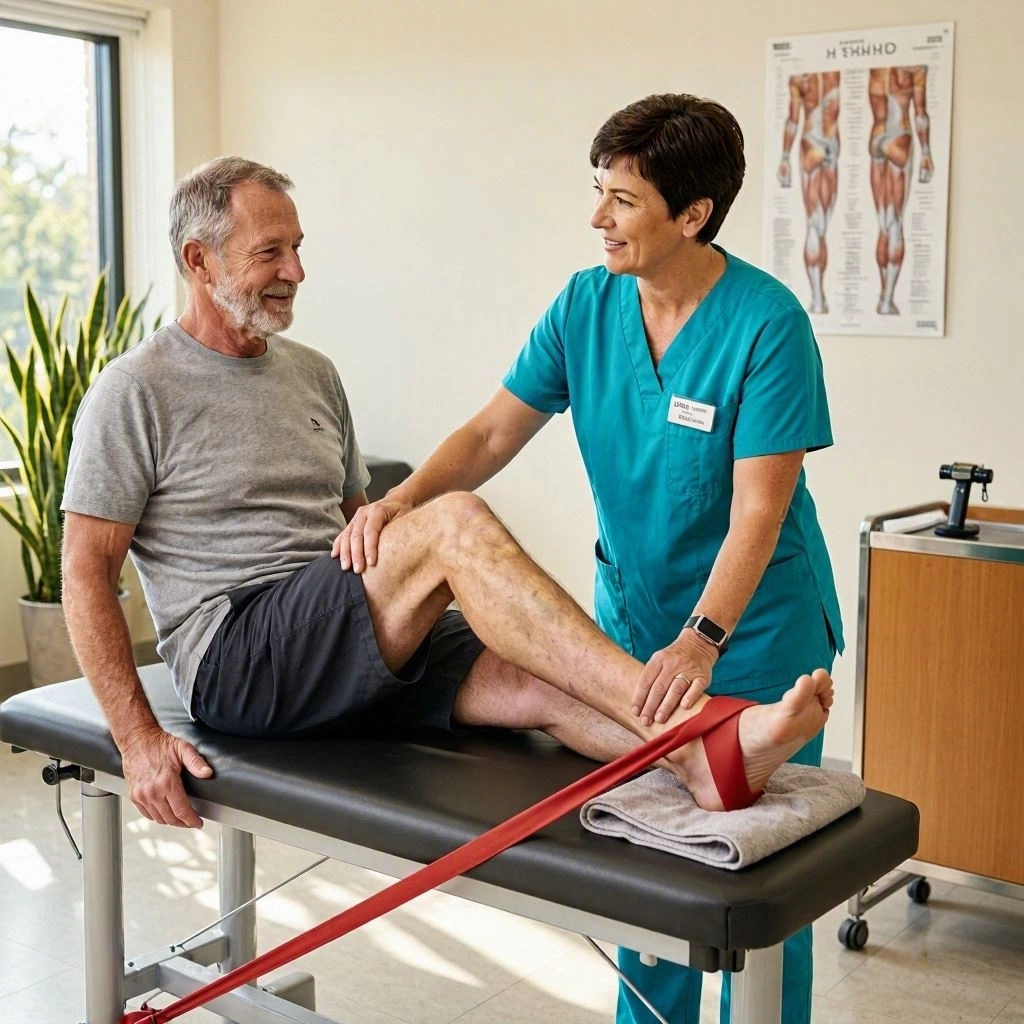
Resistance Band Exercises (Physiotherapy for Muscle Weakness)
Resistance bands provide adjustable resistance and can be useful for home rehabilitation.
They may be used for:
Hip strengthening
Shoulder strengthening
Knee exercises
Back exercises
Arm strengthening
The resistance should be appropriate for the person’s current strength.
As the muscles become stronger, the exercise can be progressed.
Weight Training for Muscle Weakness
Free weights and resistance machines may be introduced when appropriate.
Exercises may target:
Quadriceps
Hamstrings
Gluteal muscles
Calves
Back
Chest
Shoulders
Arms
Weight training should be performed with appropriate technique and progression.
A physiotherapist can help determine which exercises are suitable based on the person’s condition.
Lower-Body Weakness
Lower-body weakness can significantly affect independence.
It may cause difficulty with:
Walking
Standing
Stair climbing
Getting out of a chair
Getting into a vehicle
Maintaining balance
Physiotherapy may focus on strengthening the hips, thighs, calves, and core.
Functional exercises are particularly useful because they connect strength improvements to everyday tasks.
Upper-Body Weakness (Physiotherapy for Muscle Weakness)
Weakness in the arms and shoulders can affect:
Reaching
Carrying
Lifting
Dressing
Household activities
Work tasks
A rehabilitation program may include progressive resistance exercises for the shoulders, arms, chest, and upper back.
The exercises can be adapted to the person’s specific functional needs.
Core Muscle Weakness
Core rehabilitation may include:
Bridges
Bird dogs
Dead bugs
Planks
Side planks
Controlled trunk exercises
The objective is to improve the ability to stabilize and control the trunk during functional activities.
Core exercises should be integrated into a broader strengthening program rather than treated as the only solution for general weakness.
Physiotherapy for Muscle Weakness After Injury
Injury can lead to reduced activity and muscle loss.
For example, someone with a knee injury may avoid putting weight on the affected leg. Over time, the muscles surrounding the knee can become weaker.
Physiotherapy can gradually reintroduce:
Weight-bearing
Mobility
Strength exercises
Balance activities
Functional movement
The rehabilitation plan should reflect the nature and severity of the injury.
Muscle Weakness After Surgery (Physiotherapy for Muscle Weakness)
Surgery can result in temporary muscle weakness due to pain, inactivity, immobilization, or restrictions on movement.
Physiotherapy may help restore strength through a gradual progression.
Rehabilitation can include:
Safe movement
Muscle activation
Basic strengthening
Progressive resistance
Functional training
Return to normal activities
The exact progression depends on the surgical procedure and medical instructions.
Muscle Weakness From Inactivity
Prolonged inactivity can result in deconditioning.
This may happen after:
Extended bed rest
Illness
Long periods of sitting
Recovery from injury
Hospitalization
The body can lose strength when it is not regularly challenged.
Physiotherapy can help rebuild physical capacity through gradual exercise.
The program may begin with simple movements and progress toward walking, resistance training, and functional activities.
Physiotherapy for Muscle Weakness in Older Adults
Muscle strength naturally changes with age, but physical activity and resistance training can help maintain functional capacity.
Older adults may benefit from exercises targeting:
Legs
Hips
Core
Arms
Balance
Strengthening can support activities such as:
Walking
Stair climbing
Getting up from a chair
Carrying groceries
Household activities
Programs should be adapted to individual abilities and medical considerations.
Balance and Muscle Weakness
Weak muscles can contribute to balance difficulties.
For example, reduced leg strength may make it harder to recover from a loss of balance.
Physiotherapy may combine strengthening with balance exercises.
These can include:
Supported standing
Weight shifting
Step exercises
Single-leg balance
Walking drills
The exercises can become progressively more challenging as strength improves.
Muscle Weakness and Walking
Walking requires coordinated strength from several muscle groups.
Weakness in the hips, knees, ankles, or trunk can affect walking ability.
A physiotherapist may evaluate:
Step length
Walking speed
Foot placement
Balance
Lower-limb strength
Coordination
Gait training can then be combined with targeted strengthening.
Functional Strength Training (Physiotherapy for Muscle Weakness)
Functional strength refers to the ability to use strength during real-world activities.
Exercises may simulate:
Lifting
Carrying
Pushing
Pulling
Climbing stairs
Getting up from a chair
Functional training helps ensure that improvements in strength translate into everyday life.
Neurological Conditions and Muscle Weakness
Neurological conditions can affect muscle activation, coordination, balance, and movement.
Examples include various disorders affecting the brain, spinal cord, or peripheral nerves.
Physiotherapy may focus on:
Functional movement
Strength where appropriate
Balance
Walking
Coordination
Transfers
Independence
Neurological rehabilitation should be individualized and coordinated with appropriate medical care.
Muscle Weakness and Chronic Conditions
Some chronic conditions can affect energy, endurance, or muscle function.
Physiotherapy may help individuals remain active within their capabilities.
Treatment may include:
Gentle strengthening
Aerobic conditioning
Mobility exercises
Functional training
Energy management
Exercise intensity should be appropriate to the person’s health status.
Muscle Weakness and Fatigue (Physiotherapy for Muscle Weakness)
Weakness and fatigue are not the same thing.
A person may have normal muscle strength but experience significant fatigue. Another individual may have measurable weakness without severe fatigue.
A physiotherapist can help evaluate physical performance, while unexplained or persistent fatigue should be discussed with a healthcare professional.
Improving Muscle Endurance
Strength is not the only physical quality that matters.
Muscular endurance allows muscles to perform activities repeatedly or for longer periods.
Physiotherapy may use:
Repeated low-to-moderate resistance exercises
Walking
Cycling
Functional circuits
Gradual activity progression
The program can be adjusted as endurance improves.
Mobility and Muscle Strength
Mobility and strength often work together.
A person may have sufficient muscle strength but still struggle with movement because of restricted joint mobility.
Similarly, a person with good mobility may have difficulty moving effectively because of weakness.
Comprehensive physiotherapy can address both factors.
The Importance of Consistency (Physiotherapy for Muscle Weakness)
Muscle strengthening requires regular training.
A home exercise program may be prescribed to help patients continue rehabilitation between clinic appointments.
Consistency may involve:
Completing prescribed exercises
Walking regularly
Practicing functional movements
Gradually increasing activity
Rest and recovery are also important.
Muscles need adequate recovery between challenging sessions.
How Quickly Can Muscle Strength Improve?
The rate of improvement varies between individuals.
Factors include:
Cause of weakness
Severity
Age
Training history
General health
Nutrition
Sleep
Exercise consistency
Medical conditions
Some people may notice functional improvements relatively quickly, while others require a longer rehabilitation period.
Progress should be evaluated individually.
Preventing Future Muscle Weakness (Physiotherapy for Muscle Weakness)
After strength improves, maintaining physical activity can help preserve those gains.
Long-term strategies may include:
Regular resistance training
Walking
Mobility exercises
Balance training
Cardiovascular activity
Functional exercise
The appropriate routine depends on individual goals and health.
When Should You See a Physiotherapist?
A physiotherapy assessment may be useful if muscle weakness affects:
Walking
Standing
Stair climbing
Exercise
Work
Daily activities
Balance
Sports performance
Professional assessment is particularly important when weakness persists or affects independence.
When Muscle Weakness Requires Urgent Medical Attention
Sudden or unexplained muscle weakness should not simply be treated as a rehabilitation issue.
Seek urgent medical evaluation if weakness develops suddenly, particularly if it is accompanied by:
Facial drooping
Difficulty speaking
Severe dizziness
Sudden loss of coordination
New numbness
Severe headache
Loss of consciousness
These symptoms can indicate a serious neurological or medical condition.
Creating a Personalized Strength Program
A personalized physiotherapy program should consider the individual’s:
Current strength
Functional abilities
Medical history
Previous injuries
Activity level
Work demands
Personal goals
Exercises can then be selected and progressed accordingly.
A person recovering from surgery may need a very different program from an athlete experiencing deconditioning.
Measuring Progress in Rehabilitation
Strength improvements can be measured in several ways.
Progress may include:
Increased resistance
More repetitions
Improved walking distance
Easier stair climbing
Better balance
Improved functional performance
Greater exercise tolerance
Functional improvements are particularly important because they demonstrate whether increased strength is helping with everyday activities.
Conclusion
Physiotherapy for muscle weakness provides a structured approach to rebuilding strength, mobility, balance, endurance, and functional independence. Muscle weakness can develop for many reasons, including injury, surgery, inactivity, aging, neurological conditions, and other health problems. Because the causes vary, appropriate assessment is essential.
Physiotherapy may use progressive resistance training, bodyweight exercises, resistance bands, mobility exercises, balance training, gait rehabilitation, and functional movement. Programs should be individualized and progressed gradually according to the person’s abilities and goals.
Strengthening is not only about lifting heavier weights. The ultimate objective is to help people perform meaningful activities more effectively, whether that means walking independently, climbing stairs, returning to work, exercising, or participating in sport.
Consistency is an important part of rehabilitation. Regular exercise, appropriate progression, sufficient recovery, and professional guidance can help individuals rebuild physical capacity and maintain their improvements over time.
If muscle weakness is persistent, unexplained, worsening, or associated with sudden neurological symptoms, medical evaluation is important. Once the underlying cause has been appropriately assessed, physiotherapy can be an important part of a broader strategy for restoring movement and physical function.