Balance Training: Improve Stability, Coordination, and Overall Physical Health
Maintaining good balance is essential for nearly every movement you make, from walking and climbing stairs to exercising and participating in sports. Although many people associate balance with older adults, it is important at every stage of life. Children need balance to develop motor skills, athletes rely on it to enhance performance, and adults benefit from it to prevent injuries and maintain independence.Balance training is a structured approach to improving stability, coordination, body awareness, and movement control. Through targeted exercises and rehabilitation techniques, balance training strengthens the muscles that support your joints, enhances communication between the brain and body, and helps reduce the risk of falls and injuries. Whether you are recovering from an injury, improving athletic performance, or simply aiming to stay active, balance training can play a valuable role in your overall health.
What Is Balance Training?
It consists of exercises that improve your ability to maintain stability while standing still or moving. It involves coordination between several body systems, including the muscles, joints, inner ear (vestibular system), eyes, and nervous system.
When these systems work together efficiently, your body can react quickly to changes in position, uneven surfaces, or unexpected movements. Consequently, you are better able to maintain control during everyday activities and physical exercise.
Balance training programs are often customized based on an individual’s age, fitness level, medical history, and specific goals.
Why Balance Is Important
Good balance supports nearly every physical activity. It helps you move efficiently, maintain proper posture, and react safely to changes in your environment.
Healthy balance contributes to:
-
Better posture
-
Improved coordination
-
Greater body control
-
Reduced fall risk
-
Better athletic performance
-
Increased confidence during movement
-
Improved joint stability
-
Enhanced mobility
-
Safer daily activities
-
Better overall physical function
Even small improvements in balance can make a noticeable difference in everyday life.
Who Can Benefit from Balance Training?
Balance training is beneficial for people of all ages.
Older Adults
As people age, balance naturally declines due to changes in muscle strength, vision, and the vestibular system. Regular training helps reduce the risk of falls and supports independence.
Athletes
Athletes use balance training to improve agility, reaction time, coordination, and injury prevention.
Office Workers (Balance Training)
Long periods of sitting may weaken core muscles and reduce postural control. Balance exercises help restore movement efficiency.
Individuals Recovering from Injury
After ankle sprains, knee injuries, hip surgery, or spinal conditions, balance rehabilitation helps restore normal movement.
Children
Balance activities support motor skill development, coordination, and confidence during physical play.
How Balance Works
Maintaining balance requires continuous communication between several systems.
Vision
Your eyes provide information about your surroundings and body position.
Vestibular System
Located in the inner ear, the vestibular system detects head movement and helps maintain equilibrium.
Muscles and Joints (Balance Training)
Receptors in muscles, tendons, and joints send information to the brain about body position.
Nervous System
The brain processes all incoming information and quickly adjusts muscle activity to maintain stability.
If one of these systems is affected, balance may become less efficient.
Benefits of Balance Training
Improved Stability
Stronger stabilizing muscles help you maintain control while standing, walking, or changing direction.
Better Coordination
Training improves communication between muscles and the nervous system, allowing smoother, more efficient movement.
Reduced Risk of Falls (Balance Training)
One of the greatest benefits of balance training is fall prevention, particularly for older adults.
Stronger Core Muscles
Many balance exercises activate the abdominal, back, and hip muscles that support the spine.
Better Athletic Performance
Athletes often experience improved agility, speed, and body control after incorporating balance exercises into their routines.
Injury Prevention
Better stability helps protect joints from excessive movement, reducing the risk of sprains and other injuries.
Common Balance Exercises
Balance programs may include a variety of exercises depending on individual ability.
Single-Leg Standing
Standing on one foot strengthens stabilizing muscles while improving coordination.
Heel-to-Toe Walking (Balance Training)
Walking in a straight line with one foot directly in front of the other improves control and stability.
Standing Marches
Slow marching movements challenge balance while strengthening the hips and core.
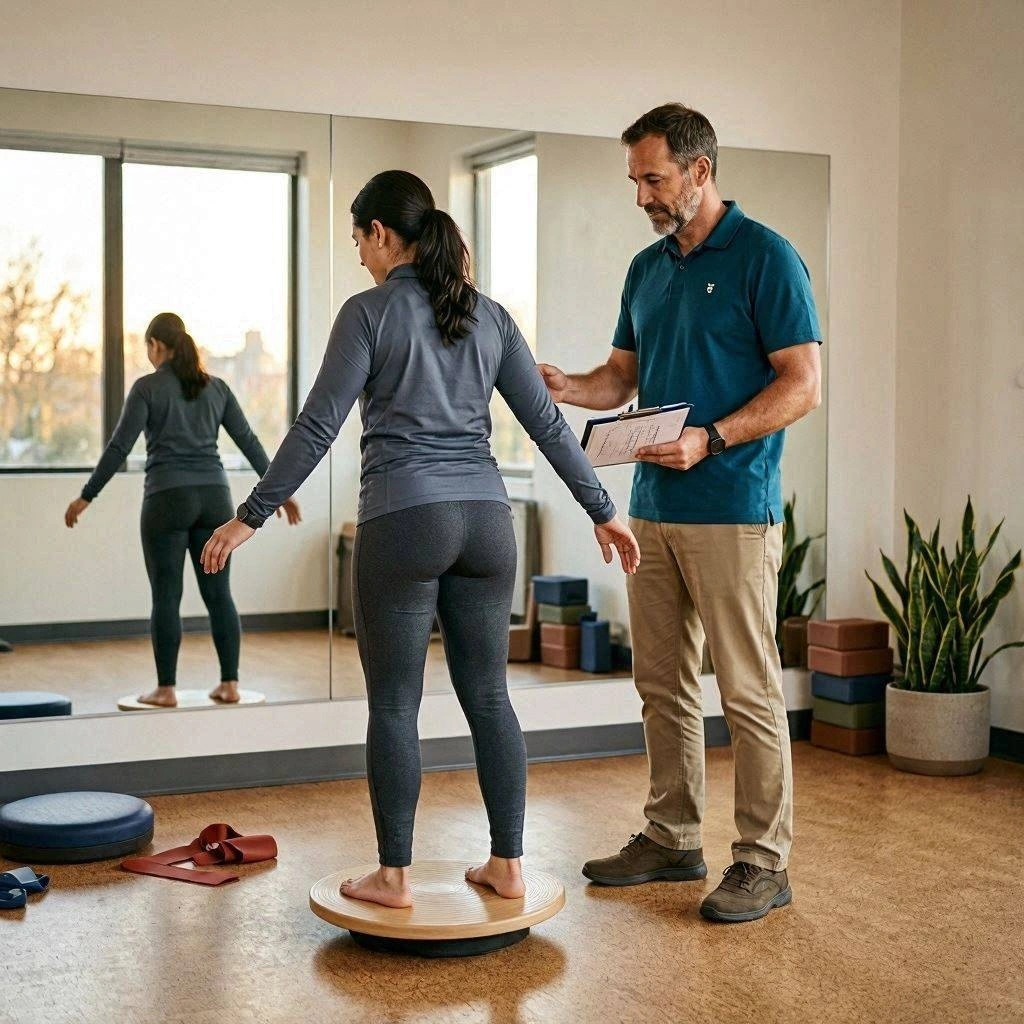
Balance Board Exercises
Balance boards increase the challenge by creating an unstable surface that requires constant adjustments.
Functional Reach Exercises
These exercises improve stability while reaching, bending, or performing everyday tasks.
Step-Ups
Controlled step-up exercises strengthen the legs while improving coordination and balance.
Balance Training in Rehabilitation (Balance Training)
Healthcare professionals frequently include balance exercises in rehabilitation programs.
Conditions that may benefit include:
-
Ankle sprains
-
Knee injuries
-
Hip replacement recovery
-
Stroke rehabilitation
-
Vestibular disorders
-
Back pain
-
Neck pain
-
Arthritis
-
Sports injuries
Balance exercises are usually combined with strengthening, stretching, and mobility training for the best outcomes.
The Role of Chiropractic Care
Chiropractic care may complement balance training by improving spinal mobility and joint function. Restoring normal movement in the spine and other joints can support better posture and body mechanics, making balance exercises more effective.
A chiropractor may also recommend corrective exercises and ergonomic advice to improve long-term stability.
Healthy Habits That Support Better Balance (Balance Training)
In addition to structured exercise, several daily habits contribute to healthy balance.
Helpful strategies include:
-
Exercise regularly.
-
Strengthen your core muscles.
-
Stretch daily.
-
Wear supportive footwear.
-
Maintain good posture.
-
Stay physically active.
-
Keep your home free of trip hazards.
-
Stay hydrated.
-
Eat a balanced diet.
-
Get enough sleep.
These habits help maintain both physical strength and coordination.
When Should You Seek Professional Guidance?
Professional evaluation is recommended if you experience:
-
Frequent falls
-
Dizziness
-
Poor coordination
-
Difficulty walking
-
Persistent joint instability
-
Muscle weakness
-
Balance problems after an injury
-
Fear of falling
A healthcare professional can identify the underlying cause and develop a personalized training program.
Warning Signs That Require Immediate Medical Attention
Balance problems accompanied by the following symptoms require urgent medical evaluation:
-
Sudden weakness on one side of the body
-
Difficulty speaking
-
Vision loss
-
Severe dizziness with chest pain
-
Loss of consciousness
-
Sudden inability to walk
-
Severe head injury
-
Persistent vomiting after a fall
These symptoms may indicate a serious medical emergency and should not be ignored.
Long-Term Benefits of Consistent Balance Training (Balance Training)
It is most effective when practiced consistently. Over time, regular exercise helps maintain strength, coordination, flexibility, and confidence during movement.
Long-term benefits include:
-
Better posture
-
Improved mobility
-
Greater independence
-
Reduced injury risk
-
Enhanced athletic performance
-
Increased confidence
-
Healthier joints
-
Stronger muscles
-
Improved quality of life
Making balance exercises part of your weekly routine supports lifelong physical wellness.
Conclusion (Balance Training)
It is an essential component of overall fitness and musculoskeletal health. By improving stability, coordination, posture, and body awareness, it helps people of all ages move more confidently and safely. Whether you are recovering from an injury, seeking better athletic performance, preventing falls, or simply maintaining an active lifestyle, balance training offers lasting physical benefits.Combined with chiropractic care, strength training, flexibility exercises, and healthy daily habits, a personalized balance training program can reduce injury risk, improve movement efficiency, and support long-term wellness. Investing in your balance today can help you enjoy greater mobility, independence, and confidence for years to come.