Best Treatment for Neck Pain: Complete Guide to Relief, Recovery, and Prevention
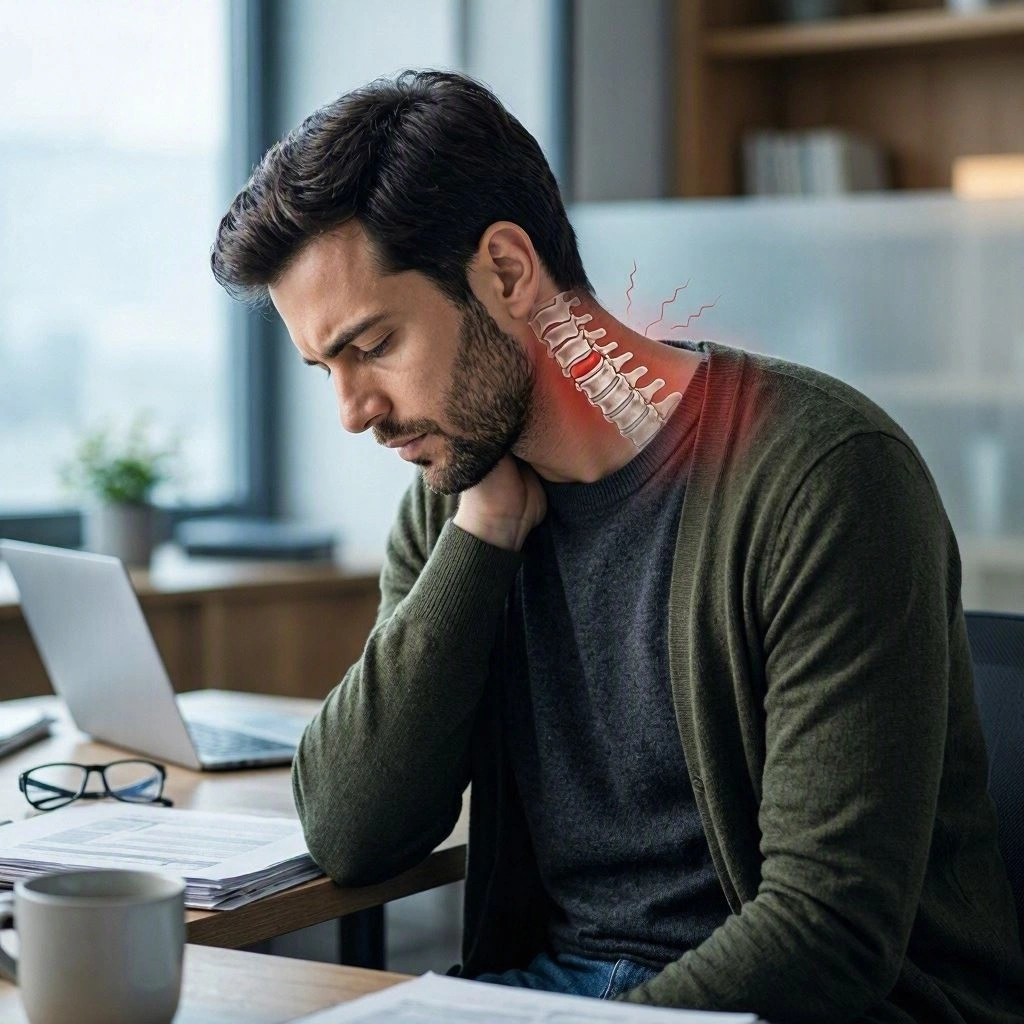
Finding the best treatment for neck pain depends on the cause, severity, duration, and symptoms associated with the condition. Neck pain is extremely common and can affect people who work at computers, spend significant time on smartphones, drive for long periods, participate in sports, perform physical work, or experience an injury.
Some people experience mild stiffness that improves within a few days. Others develop persistent pain that affects sleep, work, exercise, and everyday activities. Neck pain can involve muscles, joints, nerves, or surrounding tissues, and different causes may require different treatment strategies.
The best approach is usually not a single treatment. A combination of appropriate movement, exercise, activity modification, ergonomic improvements, and professional care when necessary can provide a more comprehensive way to manage symptoms.
This guide explores effective approaches to neck pain treatment, including physiotherapy, exercises, mobility, strengthening, home care, posture strategies, workplace modifications, and prevention.
What Causes Neck Pain?
Understanding the potential cause is an important first step when determining the best treatment for neck pain.
Common contributors include:
Muscle strain
Prolonged sitting
Computer use
Smartphone use
Repetitive movements
Poor workstation setup
Sleeping position
Sports injuries
Lifting
Whiplash
Nerve irritation
Joint irritation
Age-related changes
Stress
Reduced physical activity
Neck pain can also develop from a combination of factors.
For example, a person who works at a computer for several hours may experience discomfort because of prolonged sitting, limited movement, stress, and reduced upper-body conditioning.
Identifying these contributing factors can help create a more effective treatment plan.
What Is the Best Treatment for Neck Pain?
There is no single treatment that is best for every person.
For uncomplicated neck pain, effective management may involve:
Staying physically active
Gentle neck mobility
Progressive strengthening
Physiotherapy
Ergonomic adjustments
Improving sleep habits
Managing activity levels
Reducing prolonged static positions
If neck pain is caused by an injury, neurological symptoms, or another underlying condition, professional assessment may be necessary.
Physiotherapy for Neck Pain
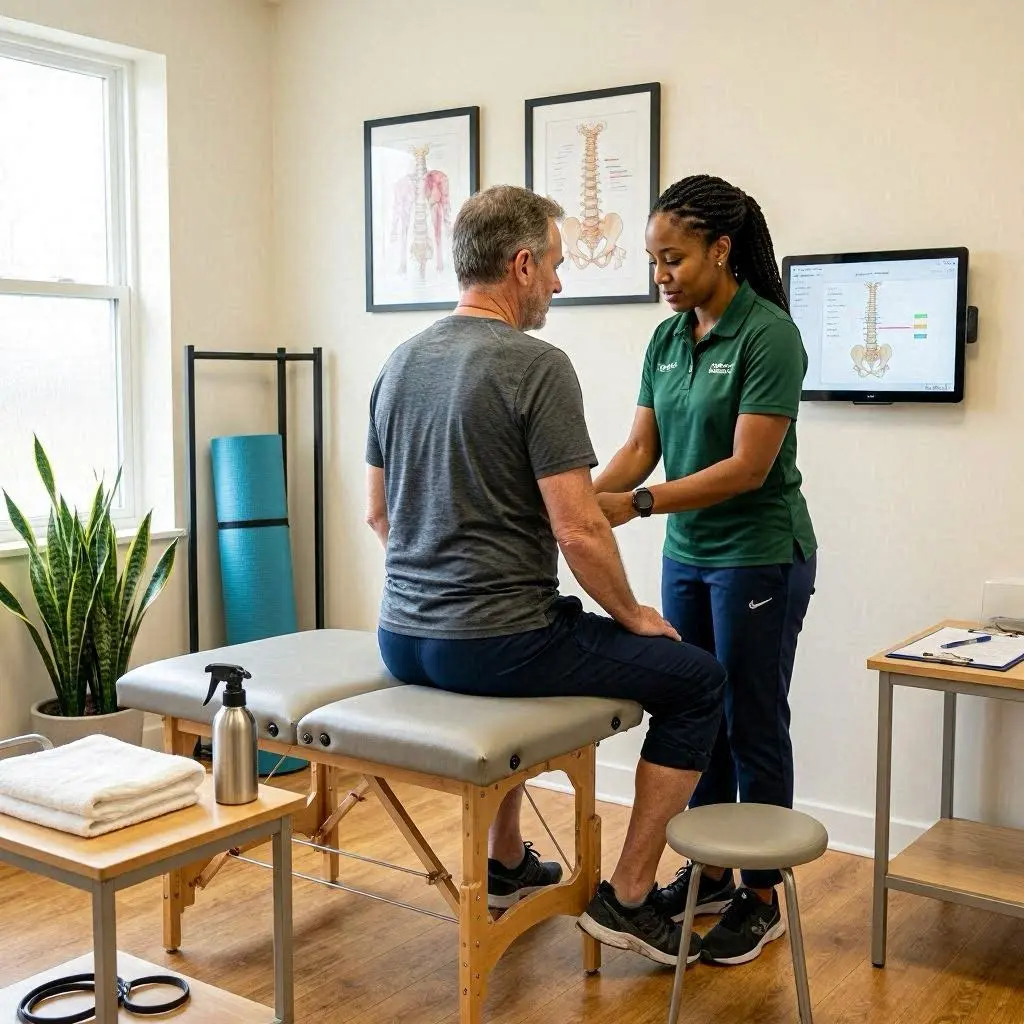
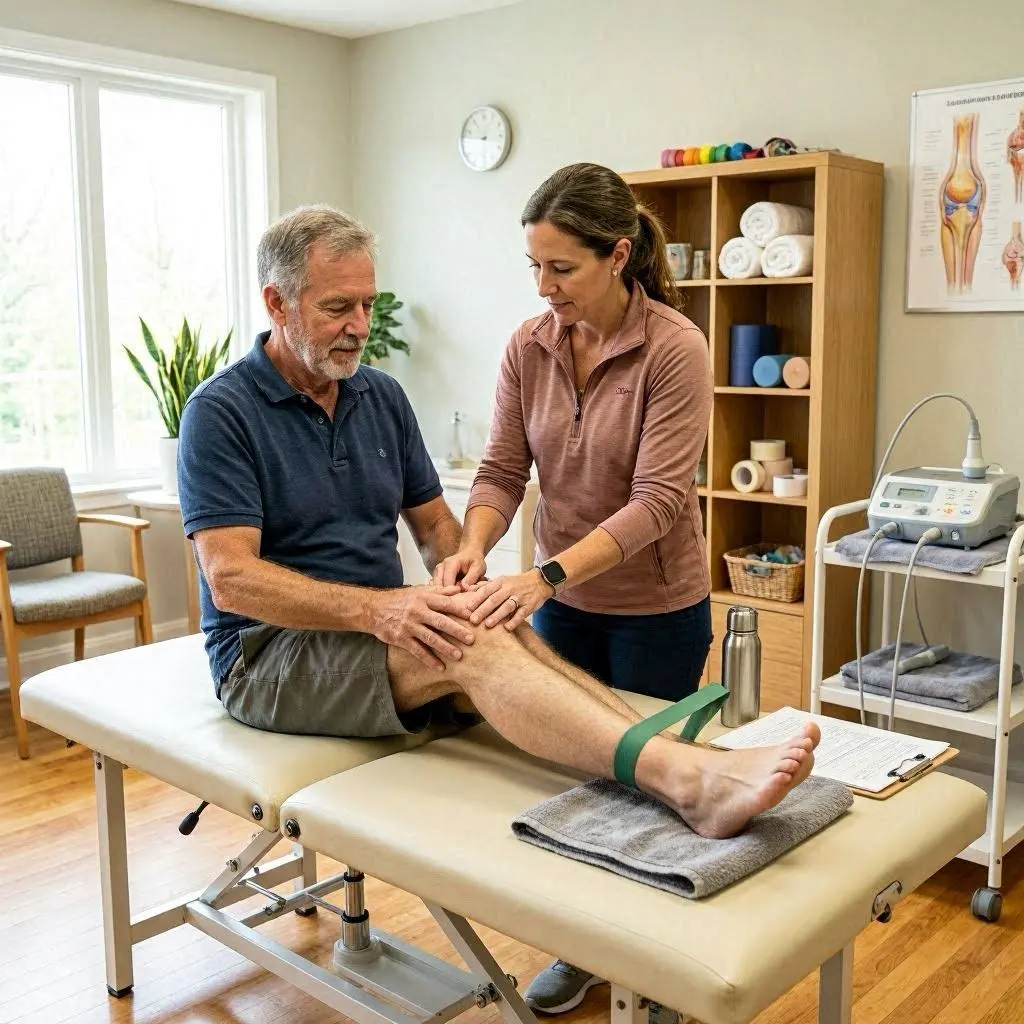
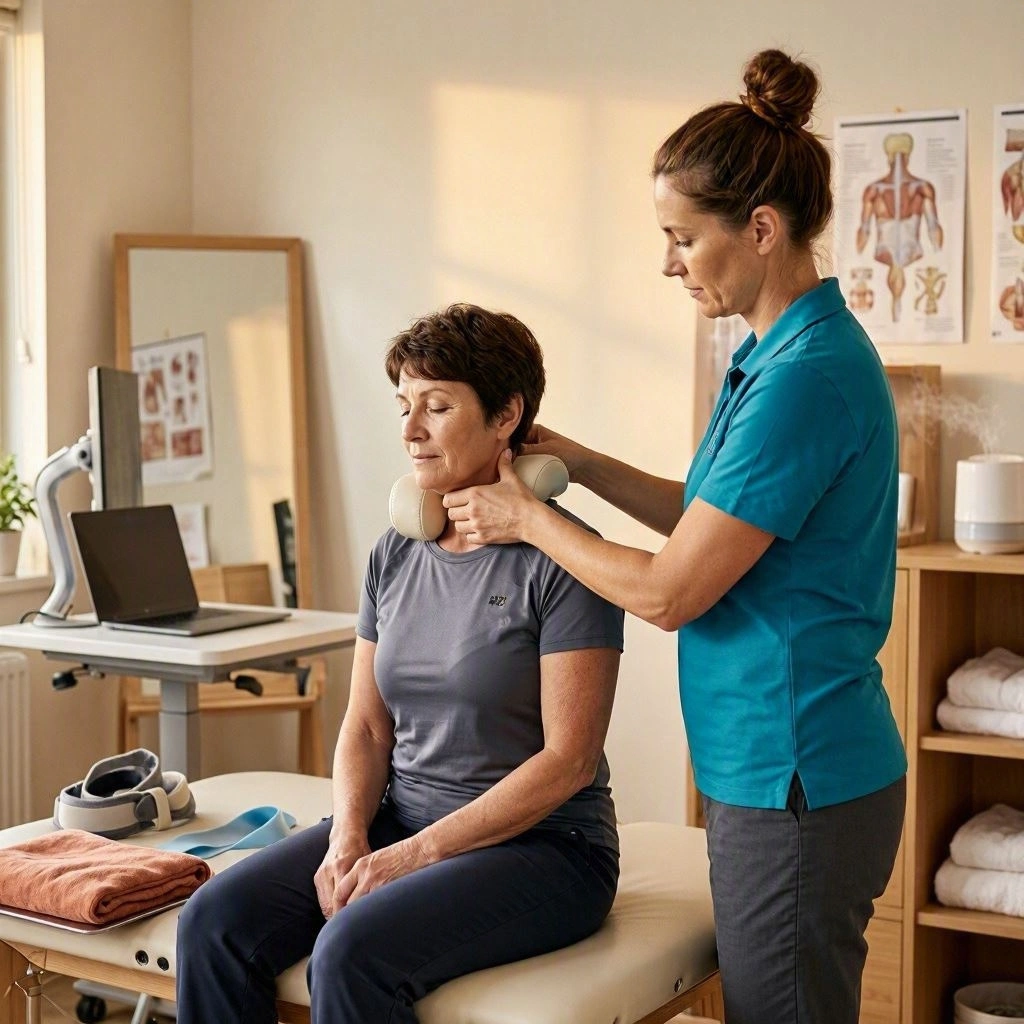
Physiotherapy is one of the most commonly used approaches for managing persistent musculoskeletal neck pain.
A physiotherapist can assess several factors, including:
Neck mobility
Muscle strength
Muscle endurance
Shoulder movement
Upper-back mobility
Posture and movement habits
Work demands
Exercise technique
Functional limitations
Based on the assessment, the physiotherapist can create an individualized treatment plan.
Treatment may include therapeutic exercises, mobility work, strengthening, education, ergonomic advice, and manual therapy when appropriate.
Why Exercise Is Important
Exercise can be an important part of neck pain rehabilitation.
When neck pain develops, people may become less active because they are worried about making symptoms worse. However, excessive inactivity can contribute to stiffness, reduced strength, and decreased confidence in movement.
A gradual exercise program can help improve:
Strength
Mobility
Endurance
Coordination
Physical confidence
Activity tolerance
Exercises should be selected according to the person’s symptoms and physical abilities.
Gentle Neck Mobility Exercises (Best Treatment for Neck Pain)
Gentle mobility exercises can help maintain comfortable movement.
Neck Rotation
Sit or stand comfortably.
Slowly turn your head toward one side until you reach a comfortable range. Return to the center and repeat on the opposite side.
Avoid forcing the movement.
Neck Side Bending
Slowly bring one ear toward the corresponding shoulder.
Return to the center and repeat on the other side.
Keep your shoulders relaxed.
Controlled Flexion and Extension
Slowly look downward and then return to a neutral position.
If comfortable, gently look upward and return to neutral.
These movements should remain controlled and comfortable.
Chin Tucks
Chin tucks are commonly included in neck rehabilitation programs.
To perform a basic chin tuck:
Sit or stand comfortably.
Look straight ahead.
Gently draw your chin backward.
Keep your head level.
Hold briefly.
Relax.
Avoid pushing the head aggressively forward or backward.
Neck Strengthening Exercises
Strengthening can help improve the ability of the neck to tolerate daily activities.
Isometric exercises are one possible starting point.
Neck Flexion
Place your hand against your forehead.
Gently attempt to move your head forward while using your hand to prevent actual movement.
Neck Extension
Place your hand behind your head.
Gently press backward while resisting the movement.
Side Resistance
Place your hand against one side of your head.
Gently press toward your hand while preventing movement.
Repeat on the opposite side.
Rotation Resistance
Place your hand against the side of your head and gently attempt to rotate while resisting the movement.
The resistance should remain light and controlled.
Strengthen the Upper Back
Neck treatment should not always focus exclusively on the neck.
The upper back and shoulders contribute to upper-body movement and endurance.
Resistance-band rows are one example of an upper-back exercise.
Regular strengthening can help improve the body’s ability to tolerate activities such as computer work, lifting, and exercise.
Shoulder Strengthening (Best Treatment for Neck Pain)
Shoulder strengthening can complement neck rehabilitation.
Potential exercises include:
Resistance-band rows
External rotations
Wall exercises
Scapular strengthening
Light resistance exercises
The correct exercise selection depends on your symptoms and current fitness level.
Improve Thoracic Mobility
The thoracic spine works closely with the neck and shoulders.
Gentle upper-back mobility exercises may include:
Thoracic rotations
Open-book exercises
Controlled thoracic extension
Improving movement through the upper back can help support normal movement throughout the upper body.
Core Strengthening
The neck is part of the body’s larger movement system.
Core exercises can improve general strength and physical conditioning.
Examples include:
Bridges
Bird dogs
Dead bugs
Planks
Core exercises should complement neck-specific rehabilitation rather than replace it.
Stay Physically Active
Remaining active can be an important part of recovery.
Activities such as walking, cycling, swimming, and appropriate resistance training can support general physical fitness.
If a particular activity aggravates your symptoms, temporarily modify its intensity or duration rather than stopping all movement.
Avoid Prolonged Static Positions
One of the most useful strategies for people with computer-related neck pain is to avoid remaining in one position for too long.
You can:
Stand regularly
Walk during breaks
Change sitting positions
Move your shoulders
Perform gentle neck movements
Movement variety can reduce the amount of time spent in a single static position.
Improve Your Computer Workstation
An appropriate workstation can make computer use more comfortable.
Consider:
Monitor height
Chair position
Desk height
Keyboard placement
Mouse position
Your monitor should be positioned so you can view it comfortably without repeatedly bending your neck downward.
If you use a laptop extensively, an external keyboard and mouse can help you position the screen more appropriately.
Smartphone-Related Neck Pain
Frequent smartphone use can contribute to prolonged periods of looking downward.
You do not necessarily need to stop using your phone.
Instead:
Raise the phone closer to eye level
Take regular breaks
Change positions
Avoid prolonged sessions without movement
The goal is to increase movement variety.
Sleep and Neck Pain
Sleep can influence how your neck feels the following day.
If you regularly wake with neck pain, consider whether your pillow and sleeping position are comfortable.
There is no single pillow or sleeping position that is perfect for everyone.
The most important consideration is whether your sleeping arrangement allows you to remain comfortable without repeatedly aggravating symptoms.
Heat for Neck Pain
Heat can provide temporary relief for some people experiencing muscular stiffness or tension.
Options include:
Warm showers
Heating pads
Warm compresses
Heat should be comfortably warm rather than excessively hot.
It can help with short-term comfort but does not necessarily address the underlying cause.
Massage Therapy (Best Treatment for Neck Pain)
Massage can provide temporary relief for some people with muscular tension.
It may help promote relaxation and reduce the sensation of tightness.
However, massage alone may not address:
Muscle weakness
Poor endurance
Reduced physical activity
Workstation issues
Repetitive movement
Training problems
For persistent symptoms, massage may be more useful when combined with active rehabilitation.
Manual Therapy
Manual therapy may be included in physiotherapy treatment when appropriate.
Depending on the individual’s presentation, a qualified professional may use techniques involving:
Muscles
Joints
Soft tissues
Manual therapy may provide short-term improvements in pain or mobility.
However, active exercise and education remain important components of long-term management.
Managing Stress
Stress can influence muscle tension and pain perception.
During stressful periods, people may unconsciously tighten their neck and shoulders.
Helpful strategies may include:
Walking
Exercise
Breathing exercises
Relaxation techniques
Regular breaks
Adequate sleep
Stress does not mean neck pain is imaginary. Physical and psychological factors can interact and influence symptoms.
Medication for Neck Pain
Some people may use over-the-counter pain medication for short-term symptom management.
However, medication is not appropriate for everyone.
Before taking medication, speak with an appropriate healthcare professional or pharmacist if you:
Take other medications
Have existing health conditions
Are pregnant
Have allergies
Are concerned about possible side effects
Medication may reduce symptoms but does not necessarily address the factors causing recurrent neck pain.
Managing Neck Pain After Exercise
Neck pain can sometimes develop after exercise or sports.
Consider whether you recently changed:
Training volume
Resistance
Exercise selection
Repetitions
Training frequency
Technique
If a specific exercise causes pain, modify it temporarily.
Once symptoms improve, gradually rebuild the activity.
Managing Neck Pain After an Injury
Neck pain following an injury should be approached carefully.
Minor muscular discomfort may improve with appropriate activity modification and gradual movement.
However, significant trauma, such as a major vehicle accident or sports collision, may require medical assessment.
Do not assume that severe post-injury neck pain is simply muscle soreness.
Whiplash and Neck Pain (Best Treatment for Neck Pain)
Whiplash can occur when the head and neck are rapidly moved during an impact.
Symptoms may include:
Neck pain
Stiffness
Headaches
Shoulder discomfort
Reduced neck movement
Treatment depends on the individual’s symptoms and injury.
A healthcare professional or physiotherapist can assess the condition and recommend an appropriate rehabilitation plan.
Nerve-Related Neck Pain (Best Treatment for Neck Pain)
Sometimes neck pain is accompanied by symptoms traveling into the arm.
These may include:
Tingling
Numbness
Burning sensations
Weakness
Radiating pain
These symptoms can sometimes indicate nerve irritation.
Persistent or worsening neurological symptoms should be assessed by an appropriate healthcare professional.
Neck Pain and Headaches
Some headaches can be associated with neck-related musculoskeletal problems.
A physiotherapist may assess:
Neck mobility
Upper-back movement
Muscle function
Strength
Endurance
However, headaches have many possible causes.
A sudden or severe headache, particularly when associated with neurological symptoms, requires appropriate medical assessment.
Posture and Neck Pain
Posture is often discussed when talking about neck pain.
However, there is no single perfect posture that everyone needs to maintain throughout the day.
Instead, focus on:
Changing positions
Moving regularly
Improving strength
Building endurance
Creating a comfortable workstation
Movement variety is often more practical than trying to maintain one rigid position.
How Long Does Neck Pain Take to Improve?
Recovery varies.
Mild muscular neck pain may improve within days or several weeks.
More complicated conditions can take longer.
Recovery can depend on:
The underlying cause
Severity
Previous injuries
Activity levels
Strength
Sleep
Stress
Work demands
If symptoms are not improving or are getting worse, professional assessment may be appropriate.
Preventing Future Neck Pain (Best Treatment for Neck Pain)
Prevention involves improving your ability to tolerate normal activities.
Useful habits include:
Regular exercise
Strength training
Neck mobility
Upper-back strengthening
Movement breaks
Comfortable ergonomics
Gradual exercise progression
Adequate sleep
Managing stress
You do not need to avoid normal activities simply because you have experienced neck pain in the past.
When Should You See a Physiotherapist?
Consider physiotherapy if neck pain:
Persists for several weeks
Repeatedly returns
Limits movement
Interferes with work
Affects exercise
Disturbs sleep
Makes daily activities difficult
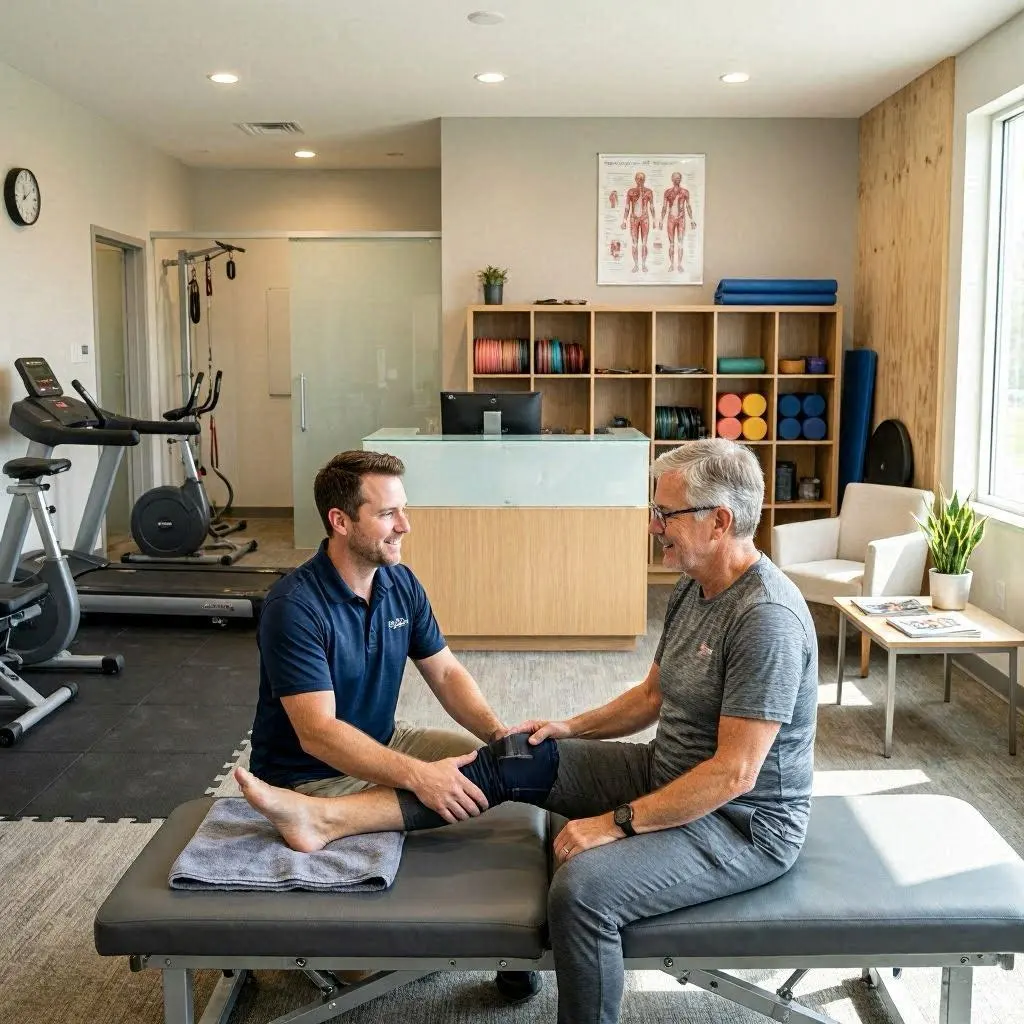
A physiotherapist can develop an individualized rehabilitation program based on your symptoms and goals.
When Should You See a Doctor?
Medical assessment may be necessary when neck pain is associated with:
Significant weakness
Persistent numbness
Major trauma
Severe unexplained pain
Loss of coordination
Difficulty walking
Other neurological symptoms
A healthcare professional can determine whether additional testing or treatment is necessary.
Neck Pain Warning Signs
Some symptoms require urgent medical attention.
Seek urgent care if neck pain occurs with:
Severe pain after significant trauma
Sudden weakness
Significant loss of sensation
Difficulty walking
Loss of coordination
Loss of bladder or bowel control
Severe headache with neurological symptoms
Difficulty speaking
Sudden vision changes
Loss of consciousness
These symptoms should not be assumed to be ordinary muscle tension.
A Simple Neck Pain Recovery Routine
A general routine may include several small habits.
Morning
Perform gentle neck and shoulder mobility.
During Work
Change positions regularly and take movement breaks.
During the Day
Walk and maintain normal activities when comfortable.
Exercise
Perform appropriate strengthening for the neck, shoulders, upper back, and core.
Evening
Use gentle mobility exercises if they feel comfortable.
This is a general educational approach rather than an individualized medical treatment plan.
Choosing the Right Treatment Approach
The best treatment for neck pain should be based on the individual rather than a universal formula.
For example, someone with mild muscular stiffness may benefit from:
Gentle movement
Exercise
Activity modification
Someone with persistent symptoms may benefit from:
Physiotherapy
Progressive strengthening
Ergonomic assessment
Movement retraining
Someone with neurological symptoms may require medical assessment.
The most appropriate approach depends on the presentation.
Conclusion
The best treatment for neck pain is usually a comprehensive approach that addresses both symptoms and the factors contributing to them. While mild neck pain may improve with simple strategies such as gentle movement, activity modification, exercise, and ergonomic changes, persistent or complex symptoms may require professional assessment.
Physiotherapy can play an important role in neck pain management by assessing mobility, strength, endurance, movement patterns, and functional limitations. A personalized rehabilitation program may include neck exercises, upper-back strengthening, shoulder training, mobility work, education, and other appropriate treatments.
Daily habits also matter. Taking regular movement breaks, adjusting your workstation, limiting prolonged smartphone positions, maintaining physical activity, and creating a comfortable sleeping environment can all contribute to better neck health.
Strengthening the neck and upper body can help improve physical capacity, while gradually increasing exercise can help the body become more resilient to everyday activities.
It is also important not to ignore warning signs. Significant trauma, persistent numbness, weakness, coordination problems, difficulty walking, or other serious neurological symptoms require appropriate medical evaluation.
Ultimately, successful neck pain management is not simply about finding a quick way to eliminate discomfort. The long-term goal is to restore comfortable movement, improve strength and endurance, return to normal activities, and reduce the likelihood of recurring problems. With an appropriate combination of exercise, movement, healthy habits, and professional guidance when necessary, many people can improve their neck function and quality of life.