
Why Does My Foot Feel Numb After Wearing Tight Shoes? Causes, Symptoms, and Treatment
Have you ever taken off a pair of tight shoes and noticed that your foot still feels numb, tingly, or unusually sensitive? This sensation can be uncomfortable and sometimes worrying, especially when it affects your ability to walk normally.
Foot numbness after wearing tight shoes is often related to pressure on nerves, restricted circulation, or irritation of the tissues inside the foot. Shoes that squeeze the toes, compress the ball of the foot, or place excessive pressure around the ankle can interfere with normal nerve function.
In many cases, the sensation improves after removing the shoes and allowing the foot to recover. However, numbness that lasts for a long time, happens repeatedly, or occurs alongside weakness and pain may indicate an underlying problem that deserves medical attention.
Understanding why your foot becomes numb, which symptoms to watch for, and how to choose better footwear can help you protect your foot health and walk more comfortably.
This guide explores the most common causes of foot numbness after wearing tight shoes, practical ways to relieve pressure, and when professional assessment may be necessary.
1. Why Do Tight Shoes Make Your Foot Feel Numb?
Your feet contain an extensive network of nerves, blood vessels, muscles, and soft tissues. These structures work together to provide sensation, movement, balance, and support while walking.
When shoes are too tight, they can place excessive pressure on these structures.
One common explanation is nerve compression. Nerves carry messages between your feet and brain. When a nerve becomes compressed or irritated, it may not transmit signals normally. This can cause numbness, tingling, burning, or a sensation similar to pins and needles.
Tight footwear may also restrict normal blood flow in certain circumstances, particularly when it compresses the foot or ankle significantly.
Several factors can contribute:
Narrow shoes that squeeze the toes together.
Tight laces pressing against the top of the foot.
High heels shifting body weight toward the forefoot.
Thick socks that reduce the available space inside shoes.
Poorly fitted footwear that creates pressure during walking.
Swelling that makes an otherwise comfortable shoe feel too tight.
The location of the numbness can provide useful clues. For example, numbness around the toes may be related to forefoot compression, while tingling across the top of the foot may involve pressure on nerves passing through that area.
2. Common Causes of Foot Numbness After Wearing Tight Shoes
Foot numbness does not always have one single cause. The following conditions and mechanisms may explain why your foot feels strange after wearing restrictive footwear.
2.1 Nerve Compression
Nerve compression is one of the most common explanations for temporary numbness caused by tight shoes.
When footwear presses against a nerve, the nerve may become irritated or temporarily unable to function normally.
You might experience:
Tingling in the toes.
Reduced sensation across part of the foot.
Burning or electric-like sensations.
A feeling that your toes are asleep.
Symptoms that become worse while wearing the shoes.
For example, a narrow pair of dress shoes may squeeze the front of your foot. This pressure can irritate small nerves between the metatarsal bones.
Removing the shoes may relieve the pressure, although the numbness can sometimes take time to settle.
If the symptoms keep returning, changing footwear alone may not address the underlying issue.
2.2 Morton’s Neuroma
Morton’s neuroma is a condition involving thickening or irritation of tissue surrounding a nerve in the forefoot. It commonly affects the nerve between the third and fourth toes.
Tight shoes, especially narrow footwear and high heels, may increase pressure in this area and aggravate symptoms.
Typical signs include:
Numbness or tingling between the toes.
Burning pain in the ball of the foot.
A sensation of walking on a small stone.
Sharp discomfort when wearing narrow shoes.
Symptoms that improve after removing footwear.
Although Morton’s neuroma can cause numbness, not everyone experiences the same symptoms.
Wider footwear and reducing pressure around the forefoot may help. Persistent symptoms should be assessed to confirm the cause and discuss appropriate treatment.
2.3 Restricted Blood Flow
Footwear that is excessively tight can compress soft tissues and, in some circumstances, affect circulation.
Blood vessels deliver oxygen and nutrients to the tissues. When circulation is significantly reduced, the foot may feel uncomfortable or unusually cold.
Possible warning signs include:
Unusual coldness in the toes.
Pale or bluish skin.
Persistent discomfort.
Reduced sensation.
Changes in skin colour compared with the other foot.
It is important to distinguish ordinary pressure-related numbness from circulation problems. A foot that suddenly becomes cold, pale or blue, particularly with severe pain or loss of sensation, requires urgent medical attention.
2.4 Peripheral Nerve Irritation
Peripheral nerves travel from the spinal cord to different parts of the body, including the feet.
Some nerves pass through narrow spaces around the ankle and foot. Pressure, swelling, repetitive movement, or an underlying medical condition can irritate these nerves.
Tight shoes may aggravate an existing nerve problem rather than being the only cause.
You may notice:
Numbness in specific toes.
Tingling across the sole.
Burning sensations.
Reduced sensitivity to touch.
Discomfort that continues after removing your shoes.
If numbness happens even when you are barefoot or wearing comfortable footwear, it is worth investigating other possible causes.
2.5 Tarsal Tunnel Syndrome
Tarsal tunnel syndrome occurs when the tibial nerve becomes compressed as it passes through a narrow space on the inside of the ankle called the tarsal tunnel.
Although the compression occurs near the ankle, symptoms may spread into the sole and toes.
Common symptoms include:
Tingling in the bottom of the foot.
Burning sensations around the ankle or sole.
Numbness in the toes.
Pain that increases after standing or walking.
Symptoms that may become more noticeable with certain footwear.
Tight shoes may contribute to discomfort in some people, particularly if they place pressure around the ankle.
However, tarsal tunnel syndrome has several possible causes, including swelling, injuries, and structural changes around the ankle. A professional assessment is needed to determine whether this condition is responsible.
2.6 Tight Laces and Pressure on the Top of the Foot
Sometimes the problem is not the width of the shoe but how tightly it is fastened.
Shoelaces that are pulled too firmly can create pressure across the top of the foot. This may irritate superficial nerves and produce tingling or numbness.
You may notice that:
Symptoms appear after tightening your laces.
The top of your foot feels sensitive.
Loosening the laces reduces discomfort.
Numbness is concentrated around the upper foot or toes.
Try adjusting the lacing pattern and ensuring that the shoe holds your foot securely without squeezing it.
2.7 Diabetes-Related Peripheral Neuropathy
Diabetes can damage peripheral nerves over time, particularly in the feet and legs. This condition is known as diabetic peripheral neuropathy.
People with this condition may experience:
Numbness in the toes or soles.
Burning or tingling sensations.
Reduced ability to feel temperature.
Sensitivity to touch.
Balance difficulties.
Tight shoes may make existing symptoms more noticeable because the foot is exposed to additional pressure.
One important concern is that reduced sensation can make it difficult to notice blisters, cuts, or pressure injuries.
If you have diabetes and develop new foot numbness, arrange a medical assessment. Check your feet regularly and avoid walking in shoes that create pressure or friction.
2.8 Foot Swelling and Inflammation
Sometimes your shoes become too tight because your feet swell during the day.
Swelling can happen after prolonged standing, walking, physical activity, or certain medical conditions. When the foot becomes larger, footwear that fitted comfortably in the morning may start pressing against the toes and surrounding tissues later in the day.
You may notice:
Shoes feel tighter in the afternoon or evening.
Your toes feel compressed.
The top of your foot becomes uncomfortable.
Numbness appears after prolonged standing.
Removing your shoes reduces the pressure.
If swelling is persistent, affects only one foot, or appears suddenly with pain, redness, or warmth, seek medical advice rather than assuming your shoes are the only cause.
2.9 Nerve Problems Originating in the Lower Back
Not all foot numbness begins in the foot itself. Sometimes a nerve can become irritated or compressed in the lower back, causing symptoms that travel down the leg.
This may happen with conditions involving the lumbar spine, including a herniated disc or sciatica.
Possible symptoms include:
Tingling that travels from the back or buttock down the leg.
Numbness in part of the foot.
Burning or shooting pain.
Symptoms that change with certain positions.
Weakness in the leg or foot.
If your foot becomes numb even when you are not wearing tight shoes, the source may be elsewhere in the nervous system. A healthcare professional can assess whether your symptoms are related to your foot, ankle, or lower back.
3. What Part of Your Foot Feels Numb?
The location of numbness can provide helpful clues, although it cannot confirm a diagnosis on its own.
| Location of numbness | Possible explanation |
|---|---|
| Between the third and fourth toes | Morton’s neuroma or local nerve irritation |
| All toes feel compressed or numb | Narrow toe box or general footwear pressure |
| Top of the foot | Pressure from tight laces or irritation of nerves in the area |
| Sole of the foot | Nerve irritation, tarsal tunnel syndrome, or peripheral neuropathy |
| Outer edge of the foot | Local nerve irritation or a problem involving a nerve higher in the leg |
| Foot and lower leg together | Possible nerve involvement beyond the foot, including the lower back |
Pay attention to whether the sensation affects one foot or both. Numbness in both feet, especially when it happens regularly, may need a broader medical assessment.
4. Why Does My Foot Stay Numb After I Take My Shoes Off?
Temporary pressure-related tingling often improves after removing the shoes. However, the sensation may not disappear immediately.
When a nerve has been compressed, it can take some time for normal sensation to return. The duration depends on the amount of pressure, how long it lasted, and whether the nerve was already irritated.
For example, wearing narrow shoes for several hours may cause numbness that takes longer to settle than the brief tingling you experience after loosening a shoe.
There are several possible reasons for lingering symptoms:
The nerve remains irritated after the pressure is removed.
Repeated compression has made the area more sensitive.
An underlying condition is contributing to nerve symptoms.
Swelling continues to place pressure on surrounding tissues.
The numbness is not caused by footwear alone.
If numbness repeatedly lasts after removing your shoes, continues when barefoot, or gradually becomes more noticeable, arrange a medical assessment. Persistent loss of sensation should not be treated as a normal footwear problem.

5. How to Relieve Foot Numbness After Wearing Tight Shoes
If your symptoms are mild and clearly related to footwear pressure, a few practical steps may help. These measures are intended for temporary discomfort, not unexplained or persistent loss of sensation.
5.1 Remove the Tight Shoes
The first step is to remove the source of pressure.
Take off your shoes and socks if they are restrictive. Allow your toes to rest in a comfortable position.
Avoid immediately putting on another pair of narrow shoes.
5.2 Move Your Toes Gently
Gentle toe movements may help restore comfortable mobility.
Try the following:
Sit in a comfortable position.
Keep your foot relaxed.
Slowly spread your toes apart.
Bring them back together.
Repeat a few times without forcing the movement.
Stop if you experience pain, increased tingling, or worsening numbness.
5.3 Elevate Your Foot if It Is Swollen
If your foot appears swollen, resting with it slightly elevated may help reduce discomfort.
However, unexplained swelling, particularly when it affects one foot or appears suddenly, should be assessed.
5.4 Check Your Socks
Socks that are too thick, tight, or restrictive can reduce the available space inside your shoes.
Choose comfortable socks that do not leave deep marks around your ankles or compress your toes.
5.5 Avoid Repeating the Same Pressure
Do not return to the same tight footwear immediately after experiencing numbness.
If a particular pair repeatedly causes symptoms, stop wearing it until you can identify and correct the fit problem.
5.6 Avoid Aggressive Massage
Gentle movement may be comfortable, but pressing hard on an area with reduced sensation can cause additional irritation or injury.
Avoid aggressive massage, particularly if you have diabetes, poor circulation, unexplained swelling, or reduced ability to feel touch.
6. How to Choose Shoes That Do Not Cause Foot Numbness
Choosing properly fitted footwear is one of the most practical ways to reduce pressure on the nerves in your feet.
A shoe should support your foot without squeezing it.
Consider these features when choosing your next pair.
A Wide Toe Box
The front of the shoe should provide enough space for your toes to spread naturally.
Your toes should not overlap or feel pushed together when you stand.
The Correct Shoe Size
Do not assume that your shoe size stays the same throughout your life. Foot length and width can change with age, swelling, and other factors.
Measure both feet and choose footwear that accommodates the larger foot.
Appropriate Cushioning
A comfortable sole may help reduce pressure during walking and standing.
However, cushioning alone does not correct every foot problem. The overall fit and structure of the shoe also matter.
Adjustable Fastening
Shoes with adjustable laces, straps, or fasteners allow you to change the fit across different parts of your foot.
This can be particularly helpful if the top of your foot becomes uncomfortable.
Avoid Excessively High Heels
High heels shift body weight toward the front of the foot. This can increase pressure around the toes and forefoot, potentially aggravating nerve-related symptoms.
Check Your Shoes at the End of the Day
Feet can become slightly larger during the day. Trying shoes later in the afternoon may help you choose a size that remains comfortable during normal activities.
If you regularly experience foot pressure or discomfort despite wearing appropriate shoes, an assessment of your foot mechanics may be useful.
For people with specific pressure-distribution concerns, custom orthotics at Ritz Clinics may be worth discussing with a qualified professional. These devices are not necessary for everyone, and their suitability depends on the individual assessment.
7. Can Exercises Help With Foot Numbness?
Exercises may help maintain comfortable movement and improve foot and ankle function. However, they do not directly resolve every cause of numbness.
If you have unexplained loss of sensation, significant weakness, a suspected injury, or a medical condition affecting circulation, seek professional advice before starting an exercise routine.
The following gentle movements may be appropriate for some people when symptoms are mild and movement is comfortable.
7.1 Toe Spreading
Toe spreading encourages movement of the small muscles inside the foot.
Sit with your feet resting comfortably.
Gently spread your toes apart.
Hold briefly.
Relax your foot.
Repeat several times.
Do not force the toes apart.
7.2 Ankle Circles
Ankle circles help maintain comfortable ankle movement.
Sit with your foot slightly raised.
Slowly rotate your ankle.
Complete a few circles in one direction.
Repeat in the opposite direction.
Keep the movement gentle and controlled.
7.3 Gentle Calf Stretch
Calf flexibility can influence ankle movement and how your foot loads during walking.
Stand facing a wall.
Place your hands against it.
Move one foot behind you.
Keep the back heel on the ground.
Gently bend your front knee.
Stop when you feel a comfortable stretch in your calf.
Do not stretch into pain or increased tingling.
7.4 Short Foot Exercise
This exercise focuses on activating the small muscles that support the arch of the foot.
Sit with your foot flat on the floor.
Keep your toes relaxed.
Gently draw the ball of your foot toward your heel without curling your toes.
Hold for a few seconds.
Relax and repeat if comfortable.
These exercises are not a treatment for nerve compression or peripheral neuropathy by themselves. A physiotherapist can help determine whether they are appropriate for your particular symptoms.
8. When Should You See a Healthcare Professional?
Occasional tingling after wearing uncomfortable shoes may settle when you remove the pressure. However, recurring or persistent numbness deserves attention.
Arrange a medical assessment if:
Your foot remains numb after removing your shoes.
Numbness keeps returning, even with comfortable footwear.
You experience burning, tingling, or shooting pain.
You notice reduced sensation in your toes or sole.
Your foot feels weak or you have difficulty lifting it.
You experience balance problems while walking.
You have diabetes and develop new numbness.
You notice a wound, blister, or skin injury that you cannot feel properly.
Get urgent medical help if your foot suddenly becomes numb, particularly if you also experience weakness, difficulty walking, severe pain, or a pale, blue, or unusually cold foot.
Sudden numbness accompanied by facial drooping, speech difficulties, or weakness on one side of the body may indicate a stroke. Call emergency services immediately.
You should also seek urgent assessment for new back pain accompanied by numbness around the groin or saddle area, or new bladder or bowel control problems.
The NHS recommends medical assessment for persistent or recurring pins and needles and early symptoms of peripheral neuropathy.
9. How Is Foot Numbness Diagnosed?
Finding the reason for foot numbness involves more than checking whether your shoes are tight.
A healthcare professional may use several assessment methods to understand which structures are involved.
Medical History
You may be asked:
When did the numbness begin?
Does it happen with a particular pair of shoes?
Does it affect one foot or both?
Which toes or areas feel numb?
Does the sensation disappear after removing your shoes?
Do you experience burning, pain, or weakness?
Do you have diabetes or another medical condition?
Have you experienced a recent foot or ankle injury?
These details help distinguish temporary pressure-related symptoms from possible nerve or circulation problems.
Physical Examination
The healthcare professional may examine your foot and ankle for swelling, tenderness, skin changes, and areas of pressure.
They may also check your toe movement, muscle strength, sensation, and circulation.
Nerve and Sensation Testing
Simple clinical tests may assess how well you feel light touch, vibration, or other sensations.
If a nerve problem is suspected, additional neurological assessment may be recommended.
Imaging and Other Tests
Not everyone needs imaging. Depending on the symptoms, a clinician may recommend:
X-rays to assess bones and joint structure.
Ultrasound to investigate selected soft-tissue or nerve problems.
MRI when more detailed assessment is needed.
Nerve conduction studies or electromyography in certain cases.
Blood tests to investigate conditions such as diabetes or vitamin deficiencies.
The correct tests depend on your medical history and examination findings.
10. Can Physiotherapy Help With Foot Numbness?
Physiotherapy may help when foot symptoms are associated with movement restrictions, muscle weakness, certain mechanical problems, or difficulties with walking.
However, it is important to identify the cause of numbness first. Physiotherapy should not replace medical assessment when symptoms suggest significant nerve damage, poor circulation, or another medical condition.
Depending on the assessment, a physiotherapist may focus on:
Foot and ankle mobility: Appropriate exercises may help improve comfortable movement around the foot and ankle.
Muscle strengthening: Targeted exercises may improve the function of muscles that support the foot during standing and walking.
Walking assessment: Observing your walking pattern can help identify unusual loading or movement patterns that may contribute to discomfort.
Footwear recommendations: A professional may help identify footwear features that create unnecessary pressure.
Activity modification: Adjusting walking distance, standing time, and exercise intensity may help reduce repeated irritation.
Rehabilitation planning: If symptoms are associated with an injury or an identified mechanical problem, a suitable rehabilitation program may help restore function.
At Ritz Clinics, you can learn more about the available physiotherapy services and how an individualized assessment may help address movement-related concerns.
If your symptoms are associated with soft-tissue discomfort or movement restrictions, soft tissue therapy may also be worth discussing with a qualified professional. The appropriate approach depends on the underlying diagnosis.
11. Can Custom Orthotics Prevent Numbness From Tight Shoes?
Custom orthotics are individually designed shoe inserts intended to provide support or modify how pressure is distributed across the foot.
They may be considered when a person’s foot structure or loading pattern contributes to ongoing discomfort.
For example, some people with forefoot pressure or certain biomechanical problems may benefit from an appropriately selected insole.
However, orthotics cannot make an excessively narrow shoe fit properly. They also do not treat every type of nerve compression or circulation problem.
Before considering custom orthotics, it is important to:
Identify the reason for your symptoms.
Check whether your shoes provide enough space.
Assess your foot structure and walking mechanics.
Determine whether an insert is appropriate.
Ensure that the orthotic does not make your footwear tighter.
A professional assessment can help establish whether custom orthotics are likely to provide meaningful benefits.
12. How to Prevent Foot Numbness in the Future
Preventing recurring numbness often starts with reducing unnecessary pressure on your feet.
Here are some practical habits:
Choose shoes that provide enough room around the toes.
Avoid wearing narrow shoes for long periods.
Adjust laces so they hold your foot securely without creating pressure.
Replace footwear that has become damaged or uncomfortable.
Avoid excessively high heels if they aggravate your symptoms.
Check your feet regularly for redness, blisters, and pressure marks.
Take breaks when standing or walking for extended periods.
Increase exercise intensity gradually.
Pay attention to recurring tingling or changes in sensation.
If you have diabetes or reduced foot sensation, check your feet every day. Do not rely on pain alone to identify an injury, because reduced sensation can make skin damage harder to notice.
13. Frequently Asked Questions
Why does my foot go numb when I wear tight shoes?
Tight shoes can compress nerves and surrounding tissues, causing temporary numbness, tingling, or burning. Narrow toe boxes, tight laces, and high heels can all contribute to pressure.
How long should foot numbness last after removing tight shoes?
Mild pressure-related tingling may settle after the shoes are removed, but recovery time varies. If numbness persists, repeatedly returns, or becomes worse, seek medical assessment rather than assuming it is harmless.
Can tight shoes cause permanent nerve damage?
Repeated or prolonged compression can irritate nerves and may contribute to more persistent symptoms. However, not every episode of numbness causes permanent damage. Recurrent symptoms should be investigated.
Why are my toes numb after wearing high heels?
High heels shift more body weight toward the front of the foot. This increases pressure around the toes and metatarsal bones and may irritate nerves, particularly in people susceptible to Morton’s neuroma.
Can Morton’s neuroma cause numbness in the toes?
Yes. Morton’s neuroma can cause tingling, burning, and numbness, often between the third and fourth toes. Symptoms may become worse when wearing narrow shoes or walking.
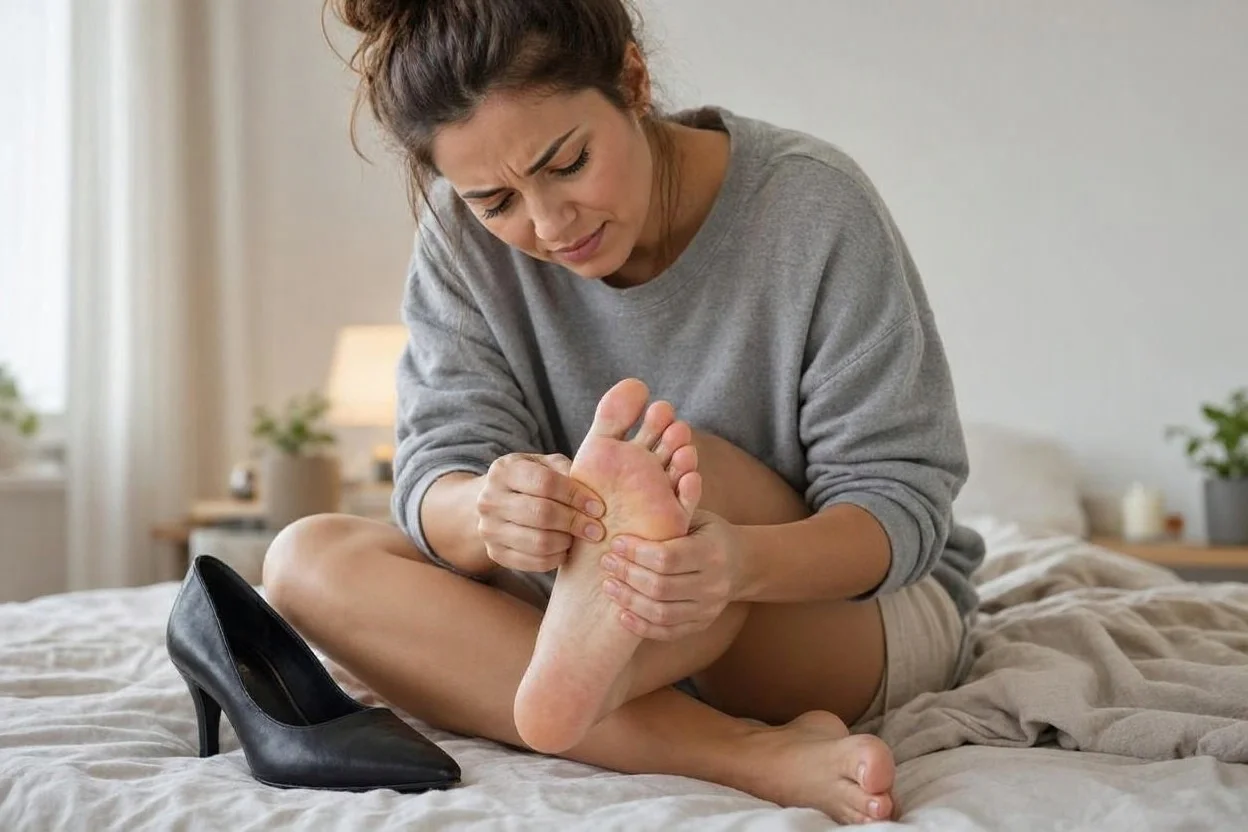
Should I massage my foot when it feels numb?
Gentle movement may be comfortable, but aggressive massage is not recommended when sensation is reduced or the cause is unknown. People with diabetes or circulation problems should be particularly cautious.
Can foot numbness be related to diabetes?
Yes. Diabetes can damage peripheral nerves and cause numbness, burning, tingling, and reduced sensation in the feet. New or recurring symptoms should be assessed by a healthcare professional.
Are wider shoes enough to fix foot numbness?
Wider shoes may help if compression from footwear is the main cause. However, they may not resolve numbness caused by peripheral neuropathy, tarsal tunnel syndrome, or problems involving nerves in the lower back.
Why does only one foot become numb in my shoes?
One foot may have a different shape, width, or swelling pattern than the other. Local nerve irritation, an injury, or another medical condition may also affect only one side. Persistent one-sided numbness deserves assessment.
Can physiotherapy help with numb feet?
Physiotherapy may help address certain movement-related problems, muscle weakness, and walking difficulties. However, the cause of numbness should be assessed first, particularly when symptoms are persistent or accompanied by weakness.
Conclusion
If your foot feels numb after wearing tight shoes, excessive pressure on the nerves is one possible explanation. Narrow toe boxes, tight laces, high heels, and poorly fitted footwear can all contribute to tingling and reduced sensation.
Changing to comfortable shoes, allowing your feet to rest, and avoiding repeated pressure may help when symptoms are mild and temporary.
However, numbness that continues after removing your shoes, keeps returning, or occurs with burning, weakness, swelling, or changes in skin colour should not be ignored. Conditions such as Morton’s neuroma, tarsal tunnel syndrome, and peripheral neuropathy may require specific assessment and treatment.
The most important step is to identify the underlying cause rather than simply changing shoes and hoping the symptoms disappear. With appropriate evaluation, you can choose a treatment approach that supports comfortable movement and long-term foot health.
American Academy of Orthopaedic Surgeons – Morton’s Neuroma
Summary Table: Foot Numbness After Wearing Tight Shoes
| Cause | Common Symptoms | Recommended Next Step |
|---|---|---|
| Nerve compression | Tingling and temporary numbness | Remove pressure and change footwear |
| Morton’s neuroma | Burning and numbness between toes | Wider shoes and professional assessment |
| Restricted circulation | Coldness or colour changes | Prompt medical assessment if persistent or sudden |
| Tarsal tunnel syndrome | Tingling in the sole and toes | Clinical nerve assessment |
| Tight laces | Numbness across the top of the foot | Adjust laces and shoe fit |
| Diabetic neuropathy | Persistent numbness or burning | Medical assessment and regular foot checks |
| Foot swelling | Shoes become tight and uncomfortable | Assess the cause of swelling |
| Lower-back nerve irritation | Numbness spreading down the leg | Medical or neurological assessment |