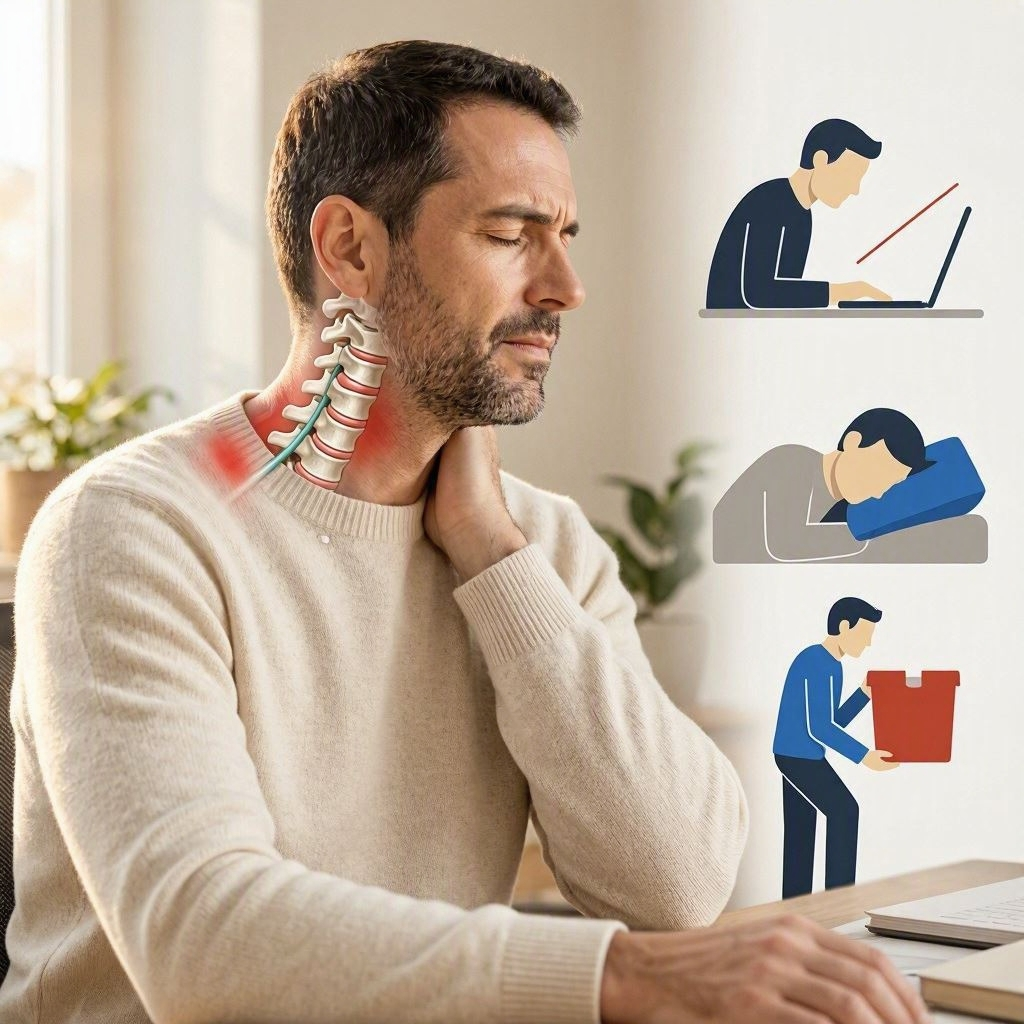

Why Do I Get Headaches That Start at the Base of My Skull?
Headaches that begin at the base of the skull can be uncomfortable, persistent, and sometimes confusing. The pain may start where the neck meets the head and gradually spread toward the temples, forehead, behind the eyes, or across one side of the head. Some people describe it as a dull ache or pressure, while others experience sharp, shooting, or throbbing sensations.
In many cases, pain in this area is associated with neck muscle tension, poor posture, irritation of the nerves at the back of the head, or problems involving the cervical spine. However, the location of a headache alone cannot identify its exact cause. Several different conditions can produce similar symptoms, so understanding the pattern of pain and any accompanying signs is important.
This guide explains the common reasons headaches start at the base of the skull, what symptoms may help distinguish them, which self-care strategies may provide relief, and when professional assessment is necessary.

1. Common Causes of Headaches at the Base of the Skull
The base of the skull is closely connected to the upper cervical spine, surrounding muscles, joints, and occipital nerves. Problems affecting any of these structures may contribute to pain that travels into the back of the head.
1.1 Cervicogenic Headache
A cervicogenic headache is a type of secondary headache that originates from a problem in the neck but is felt in the head. It may develop when structures in the cervical spine, including joints, discs, ligaments, or surrounding soft tissues, become irritated.
The pain often begins in the upper neck or at the base of the skull before spreading toward one side of the head. Some people feel it behind the eye or around the forehead.
Common features include:
Pain that usually affects one side of the head.
Discomfort that begins in the neck and travels upward.
Reduced neck mobility or stiffness.
Headaches that become worse when turning or moving the neck.
Pain triggered by maintaining the same head position for a long time.
Cervicogenic headaches may be associated with neck injuries, arthritis, disc problems, or muscle and joint dysfunction. However, having neck pain alongside a headache does not automatically mean the headache is cervicogenic. A healthcare professional needs to assess the symptoms and neck function to determine whether the neck is actually contributing to the pain.
1.2 Occipital Neuralgia
Occipital neuralgia occurs when the occipital nerves, which travel from the upper neck through the back of the scalp, become irritated or injured.
Unlike the dull pressure often associated with muscle tension, this condition can produce sudden, sharp, burning, or electric-shock-like pain. The discomfort may begin at the base of the skull and travel upward toward the scalp, behind the ears, or even behind one eye.
Possible symptoms include:
Brief episodes of stabbing or shooting pain.
Burning or throbbing sensations at the back of the head.
Tenderness when touching the scalp.
Pain when brushing or washing the hair.
Discomfort that travels from the upper neck toward the forehead.
Tight neck muscles, nerve compression, previous head or neck injuries, and certain cervical spine conditions may contribute to occipital nerve irritation. However, the exact cause is not always identified.
Occipital neuralgia can resemble migraine or other headache disorders, so a clinical examination is important before deciding on treatment.
1.3 Tension-Type Headaches
Tension-type headaches are among the most common headache disorders. They often produce a dull, pressing, or tightening sensation rather than sharp or pulsating pain.
Although the discomfort may affect both sides of the head, some people notice it around the back of the skull, upper neck, and shoulders.
Common contributing factors include:
Emotional stress or anxiety.
Poor sleep quality.
Prolonged computer or phone use.
Muscle tension around the neck and shoulders.
Fatigue and long periods without breaks.
A tension-type headache may feel like a tight band around the head. Neck and shoulder tenderness can occur at the same time, making it difficult to distinguish from a headache related to cervical structures.
1.4 Neck Muscle Strain
The muscles at the back of the neck help support the head and control its movement. Spending hours looking down at a phone, working at a poorly adjusted desk, or sleeping in an awkward position can place extra demands on these muscles.
When the muscles become strained or remain tense for extended periods, discomfort may spread toward the base of the skull.
You may notice:
A dull ache in the upper neck.
Tenderness when pressing the muscles.
Stiffness after waking up.
Discomfort when turning your head.
Headaches that become more noticeable after working at a desk.
Muscle strain does not always cause a headache, but it can contribute to pain in the surrounding areas.
1.5 Cervical Joint or Disc Problems
The cervical spine consists of seven vertebrae that support the head and allow the neck to move. Small joints, discs, and surrounding tissues help control movement and distribute mechanical loads.
Changes such as age-related joint degeneration, disc irritation, or previous injuries may contribute to neck pain and, in some cases, headaches.
People with cervical joint-related problems may experience:
Pain around the upper neck and back of the head.
Stiffness after periods of inactivity.
Reduced ability to turn or tilt the head.
Discomfort that increases with certain neck movements.
It is important to remember that findings such as disc degeneration on an imaging scan do not automatically prove that the scan finding is responsible for a headache. The results need to be interpreted alongside symptoms and physical examination findings.
1.6 Poor Sleeping Position
Your sleeping position can influence how much pressure is placed on your neck overnight.
A pillow that is too high, too low, or unsuitable for your usual sleeping position may leave the neck in an uncomfortable position for several hours. Sleeping with the head twisted or using an unsupported mattress may also contribute to morning stiffness.
If your headache regularly starts after waking up, consider whether you also experience:
Neck stiffness in the morning.
Pain when turning your head after getting out of bed.
Tenderness around the upper shoulders.
Improvement after gentle movement during the day.
Morning headaches can have other causes too, so recurring symptoms should not automatically be blamed on your pillow.
2. Why Does the Pain Spread from the Neck to the Head?
The neck and head share connected nerve pathways. Some nerves that carry sensory information from the upper cervical spine also interact with pathways involved in sensation around the head.
Because of these connections, irritation in the upper neck may be perceived as pain in the back, side, or front of the head. This is one reason why a problem outside the skull can sometimes feel like a headache.
For example, irritation involving the upper cervical joints may produce referred pain that travels toward the forehead. Similarly, irritation of an occipital nerve may cause sharp sensations that move upward through the scalp.
This does not mean every headache starting near the neck has a spinal or muscular cause. Migraine and other headache disorders can also involve neck discomfort. A proper assessment helps distinguish between these possibilities.
3. Symptoms That May Help Identify the Cause
The location, duration, intensity, and triggers of a headache can provide useful clues. However, symptoms alone cannot confirm a diagnosis.
| Symptom pattern | Possible explanation |
|---|---|
| Dull pressure around the back of the head and shoulders | Tension-type headache or muscle tension |
| Pain beginning in the neck and spreading to one side of the head | Cervicogenic headache |
| Sudden electric or stabbing pain traveling across the scalp | Occipital neuralgia |
| Headache that worsens with certain neck movements | Possible cervical contribution |
| Morning headache with neck stiffness | Sleeping position or neck-related discomfort |
| Headache with nausea and sensitivity to light or sound | Migraine may be involved |
If your headache is new, recurring, becoming more severe, or interfering with daily activities, arrange an assessment rather than relying on symptom comparisons alone.
4. Can Poor Posture Cause Headaches at the Base of the Skull?
Poor posture may contribute to headaches, particularly when it involves prolonged periods of looking down or holding the head forward.
For example, when working on a laptop, you might gradually move your head forward while rounding your shoulders. This position can change the way the neck muscles and joints manage the weight of the head.
The problem is not that one posture is always harmful. Rather, remaining in the same position for too long can increase discomfort, especially when you already have neck sensitivity or limited mobility.
Common habits that may contribute include:
Looking down at a smartphone for extended periods.
Working with a computer monitor positioned too low.
Sitting without back support.
Holding the phone between the ear and shoulder.
Driving for long periods without taking breaks.
Working without changing position throughout the day.
Improving your workstation, changing positions regularly, and maintaining comfortable neck movement may help reduce unnecessary strain.
5. How Can You Relieve a Headache That Starts at the Base of Your Skull?
The most appropriate approach depends on the underlying cause. If your symptoms are mild and there are no warning signs, several practical strategies may help reduce discomfort.
5.1 Apply Gentle Heat
A warm compress or heating pad placed around the upper neck may help relax tight muscles and reduce stiffness.
Try applying comfortable warmth for approximately 15 to 20 minutes. Avoid excessive heat, and do not fall asleep while using a heating pad.
If the pain started after a recent injury, or you notice swelling or unusual symptoms, seek professional advice instead of relying on heat treatment.
5.2 Improve Your Sitting Position
Small adjustments to your workspace can make daily activities more comfortable.
Consider the following:
Position your monitor near eye level.
Keep your shoulders relaxed.
Place your feet comfortably on the floor.
Support your lower back when sitting.
Keep your keyboard and mouse within easy reach.
Avoid holding your head in one position for extended periods.
You do not need to maintain a rigid posture throughout the day. Changing positions regularly is often more practical than trying to sit perfectly.
5.3 Take Regular Movement Breaks
If you spend several hours working at a computer, take short breaks to stand, walk, and move your shoulders.
Gentle movement may help reduce stiffness associated with prolonged sitting. You can also try slowly turning your head from side to side within a comfortable range.
Stop if an activity causes sharp pain, dizziness, numbness, or worsening symptoms.
5.4 Try Gentle Neck Exercises
If your symptoms appear related to muscle stiffness and there are no warning signs, gentle exercises may help maintain comfortable movement.
Chin Tucks
Sit upright with your shoulders relaxed.
Look straight ahead.
Gently draw your chin backward, as though making a small double chin.
Keep your head level rather than tilting it downward.
Hold briefly, then relax.
Repeat a few times without forcing the movement.
Gentle Neck Rotation
Sit in a comfortable position.
Slowly turn your head to the right.
Return to the centre.
Repeat toward the left.
Stay within a comfortable range.
Shoulder Rolls
Sit or stand with your arms relaxed.
Slowly roll your shoulders upward and backward.
Lower them gently.
Repeat several times.
These movements are not suitable for every cause of headache. Avoid forceful stretching, sudden neck movements, and self-manipulation. If exercise increases your headache or causes new symptoms, stop and seek advice.
5.5 Stay Hydrated and Maintain Regular Meals
Dehydration and skipped meals can contribute to headaches in some people.
Try to drink fluids regularly throughout the day and avoid going for long periods without eating. Adequate sleep and managing stress may also help reduce headache triggers.
The NHS recommends hydration, rest, relaxation, and avoiding prolonged eye strain as practical self-care measures for common headaches.
6. How Physiotherapy May Help with Neck-Related Headaches
When headaches are associated with neck stiffness, muscle tension, or reduced cervical mobility, physiotherapy may be part of a treatment plan.
The goal is not simply to reduce the headache temporarily. A physiotherapist can assess whether the neck muscles, joints, movement patterns, or daily activities may be contributing to the symptoms.
A physiotherapy assessment may include:
Reviewing your headache history and when symptoms occur.
Checking neck range of motion.
Assessing muscle strength and flexibility.
Identifying movements or positions that reproduce discomfort.
Evaluating shoulder posture and upper-back mobility.
Considering whether further medical assessment is needed.
Depending on the findings, treatment may include several approaches.
6.1 Individualized Exercise Therapy
A physiotherapist may recommend exercises to improve neck mobility, strengthen supporting muscles, and build better tolerance for daily activities.
The exercise plan should match your symptoms and physical abilities. For example, someone with reduced neck endurance may need a different programme from someone recovering from a neck injury.
6.2 Manual Therapy
Some treatment plans include hands-on techniques directed at the neck and surrounding soft tissues. These may help improve comfort and movement in selected patients.
Manual therapy should be based on an appropriate assessment. High-velocity neck manipulation is not suitable for everyone and should never be attempted as a self-treatment technique.
6.3 Posture and Movement Education
A physiotherapist can help identify habits that may be contributing to repeated discomfort.
This might involve adjusting your workstation, changing how you use your phone, improving driving posture, or planning movement breaks throughout the day.
6.4 Managing the Underlying Neck Problem
If an assessment suggests that a cervical joint, muscle, or movement problem is contributing to your headaches, treatment can focus on that specific issue.
You can learn more about the clinic’s physiotherapy services and how an individualized treatment approach may support neck movement, mobility, and everyday function.
Physiotherapy is not a replacement for medical evaluation when a headache has unusual features or warning signs. The first priority is to identify whether the symptoms require further investigation.
7. How Are Headaches at the Base of the Skull Diagnosed?
There is no single test that identifies every cause of pain at the base of the skull. Diagnosis usually begins with a detailed review of your symptoms and medical history.
A healthcare professional may ask:
When did the headaches first begin?
Do they occur every day or only occasionally?
Does the pain start in the neck or directly in the head?
Is it sharp, burning, throbbing, or pressure-like?
Does turning your head make it worse?
Have you experienced a recent neck or head injury?
Do you have nausea, dizziness, visual changes, or sensitivity to light?
What activities or positions seem to trigger the pain?
A physical examination may include checking neck movement, muscle tenderness, posture, strength, sensation, and neurological function.
Depending on the symptoms, additional investigations may be appropriate. These could include:
MRI: May help assess cervical discs, soft tissues, nerves, and other structures.
CT scan: May be used when certain bone injuries or structural problems need assessment.
X-ray: May help evaluate some bone and alignment changes.
Diagnostic nerve block: In selected cases, a specialist may use an injection to help determine whether an occipital nerve is responsible for the pain.
Not everyone with a headache needs imaging. The decision depends on the medical history, examination findings, and presence of warning signs.
8. When Should You Be Concerned About a Headache at the Base of Your Skull?
Most headaches are not caused by a life-threatening condition. However, certain symptoms require urgent medical attention.
Call emergency services or go to an emergency department if your headache:
Starts suddenly and becomes extremely severe within seconds or minutes.
Occurs with weakness, numbness, facial drooping, or difficulty speaking.
Is accompanied by confusion, fainting, seizures, or difficulty walking.
Occurs with a high fever, stiff neck, or a rash.
Develops after a significant head injury.
Causes sudden loss of vision or severe new visual problems.
These symptoms can indicate serious conditions that need immediate assessment, including bleeding around the brain, stroke, or infection. Do not wait to see whether the pain improves.
Mayo Clinic+2
Arrange a medical appointment promptly if your headaches are becoming more frequent, progressively worsening, different from your usual pattern, or interfering with sleep and daily activities. A new headache after age 50, or a headache accompanied by unexplained visual changes or jaw pain while chewing, also deserves prompt medical assessment.
Mayo Clinic+1
9. Can These Headaches Be Prevented?
Not every headache can be prevented, particularly when it is related to an underlying medical condition. However, certain habits may reduce the likelihood of recurring neck-related discomfort.
Consider incorporating these habits into your routine:
Keep your workstation comfortable. Position your screen so that you do not need to constantly look downward. Use a supportive chair and keep frequently used items within reach.
Avoid staying in one position for too long. Change positions regularly, especially during long periods of computer work or driving.
Maintain regular physical activity. Walking and appropriate strengthening exercises can support general physical health and help maintain movement.
Choose a comfortable pillow. Your pillow should support your neck without forcing it into an exaggerated upward or downward position.
Manage stress. Relaxation techniques, regular breaks, and consistent sleep routines may help reduce tension-related headache triggers.
Track your headaches. Record when the pain starts, how long it lasts, where it travels, and what you were doing beforehand. A headache diary can help identify patterns and provide useful information during a medical appointment.
The NHS also recommends keeping a headache diary to help identify potential triggers.

10. Frequently Asked Questions
Why do I get headaches at the base of my skull every day?
Daily headaches can have several causes, including tension-type headaches, migraine, neck-related disorders, medication overuse, or other medical conditions. If the pain occurs every day, arrange a medical assessment to identify the cause rather than assuming it is simply muscle tension.
Can tight neck muscles cause pain at the back of my head?
Yes. Tight or strained muscles around the upper neck may contribute to pain that spreads toward the base of the skull. However, similar symptoms can occur with other headache disorders, so an examination may be necessary.
Why does my headache get worse when I turn my head?
Pain that increases with neck movement may suggest that cervical joints, muscles, or other neck structures are contributing to the symptoms. Cervicogenic headaches, for example, can become more noticeable with particular neck movements. However, this symptom alone does not confirm the diagnosis.
Can occipital neuralgia cause pain behind the eyes?
Yes. Irritation of the occipital nerves can produce pain that travels from the back of the head toward the scalp or behind an eye. The pain may feel sharp, burning, or electric-shock-like.
Can sleeping on the wrong pillow cause headaches at the base of the skull?
An unsuitable pillow or uncomfortable sleeping position may contribute to neck stiffness and discomfort after waking. If morning headaches happen regularly, consider your sleeping position but also discuss recurring symptoms with a healthcare professional.
Is a headache at the base of the skull a sign of a serious condition?
Not necessarily. Many cases are associated with common headache disorders or neck-related discomfort. However, sudden severe pain, fever with a stiff neck, neurological symptoms, or headaches following significant injury require urgent medical attention.
Does physiotherapy help with headaches that start in the neck?
Physiotherapy may help when the headache is related to cervical movement problems, muscle dysfunction, or neck stiffness. Treatment may include individualized exercises, movement education, and selected manual techniques. The suitability of physiotherapy depends on the underlying cause.
How long does a neck-related headache last?
The duration varies. Some episodes improve within hours, while recurring or persistent headaches may continue for days or longer. A headache that does not improve, keeps returning, or becomes progressively worse should be assessed by a healthcare professional.
Conclusion
Headaches that start at the base of the skull may be associated with several conditions, including cervicogenic headaches, occipital neuralgia, tension-type headaches, and neck muscle strain. Poor sleeping positions, prolonged desk work, and limited movement may also contribute to discomfort in some people.
The most useful first step is to understand the pattern of your symptoms. Notice whether the pain spreads from the neck, worsens when you turn your head, feels like an electric shock, or appears after long periods of sitting. These details can help a healthcare professional determine which assessments are appropriate.
American Association of Neurological Surgeons – Occipital Neuralgia
If your symptoms are linked to neck stiffness or movement difficulties, an individualized physiotherapy programme may help improve mobility and manage contributing factors. However, sudden severe headaches and symptoms such as weakness, confusion, vision loss, fever with a stiff neck, or pain after a significant head injury need urgent medical attention.
Summary Table
| Key Point | What to Know |
|---|---|
| Common causes | Cervicogenic headache, occipital neuralgia, tension, and neck muscle strain |
| Typical symptoms | Neck stiffness, pressure, sharp pain, scalp tenderness, or pain spreading upward |
| Common triggers | Prolonged sitting, poor sleeping position, stress, and certain neck movements |
| Self-care | Gentle movement, comfortable heat, hydration, and workstation adjustments |
| Professional treatment | Medical assessment and, when appropriate, individualized physiotherapy |
| Emergency warning signs | Sudden severe headache, weakness, confusion, vision loss, fever with a stiff neck, or significant head injury |