Neck Mobility Exercises: Complete Guide to Flexibility, Movement, and Neck Comfort
Neck stiffness can make everyday activities more difficult than they should be. Turning your head while driving, looking at a computer screen, reading, exercising, or checking your surroundings may become uncomfortable when your neck does not move easily. Fortunately, Neck Mobility Exercises can help many people maintain comfortable movement and gradually improve flexibility when performed appropriately.
The neck, also known as the cervical spine, supports the head and allows it to move in different directions. Its muscles and joints work together with the shoulders and upper back during everyday activities. When these areas become stiff or sensitive, you may notice reduced movement, muscle tension, or discomfort during certain tasks.
Prolonged sitting, repetitive activities, stress, minor muscle strains, and previous injuries can contribute to neck symptoms. However, neck stiffness does not always have the same cause, so an exercise routine should reflect your symptoms and physical abilities.
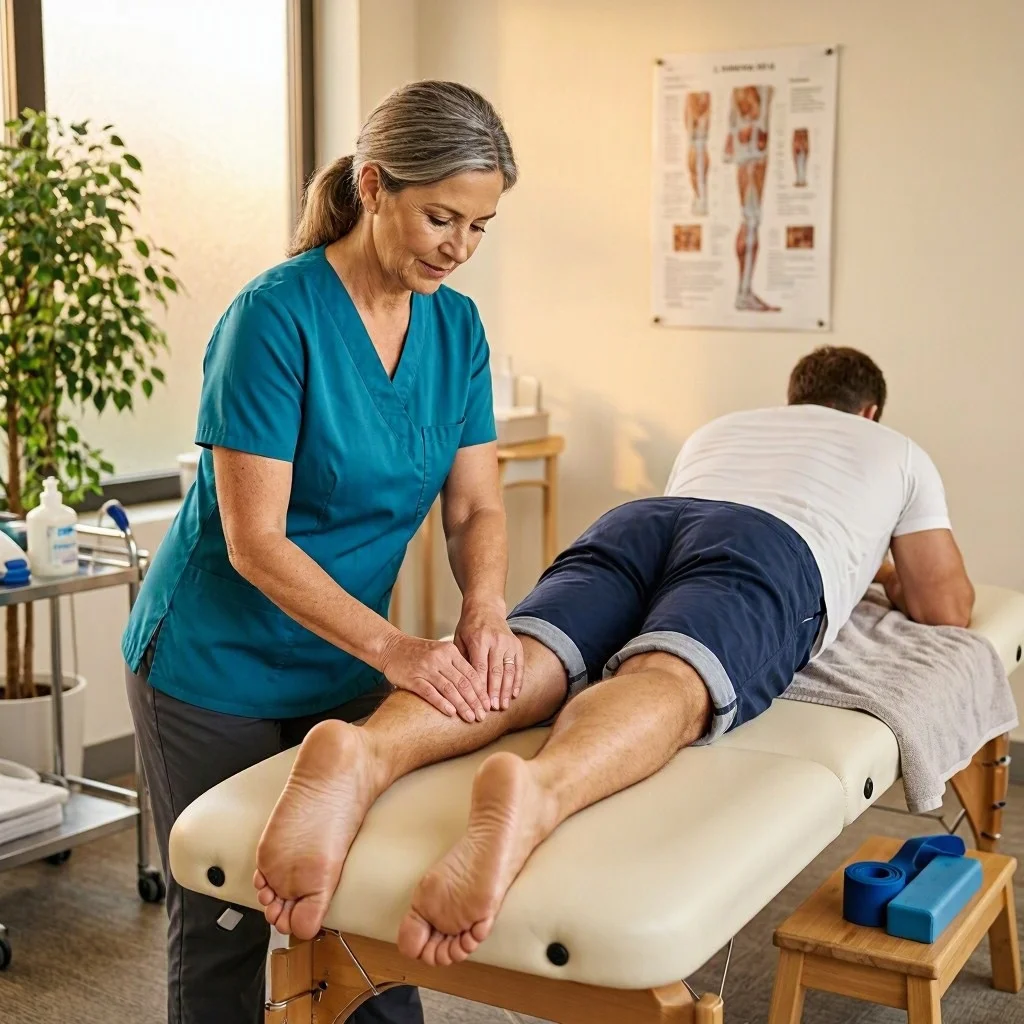
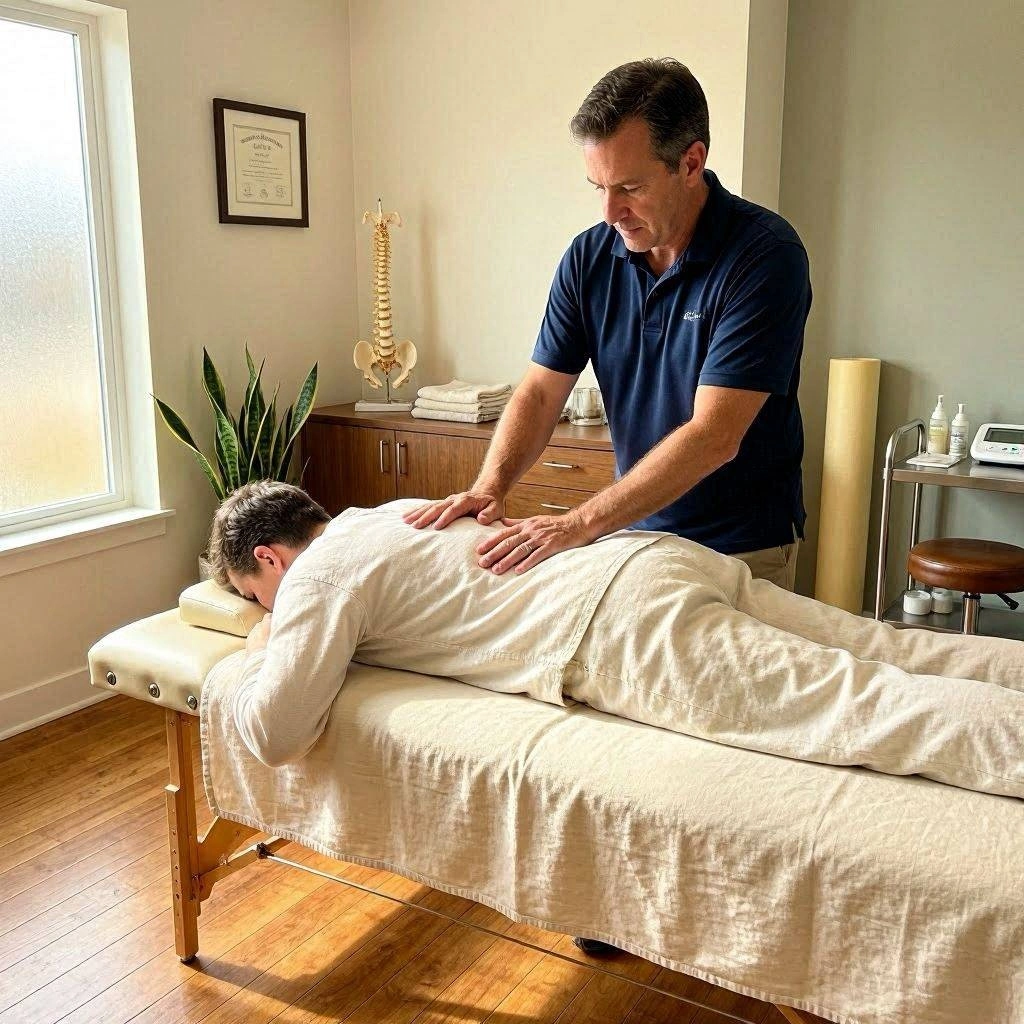
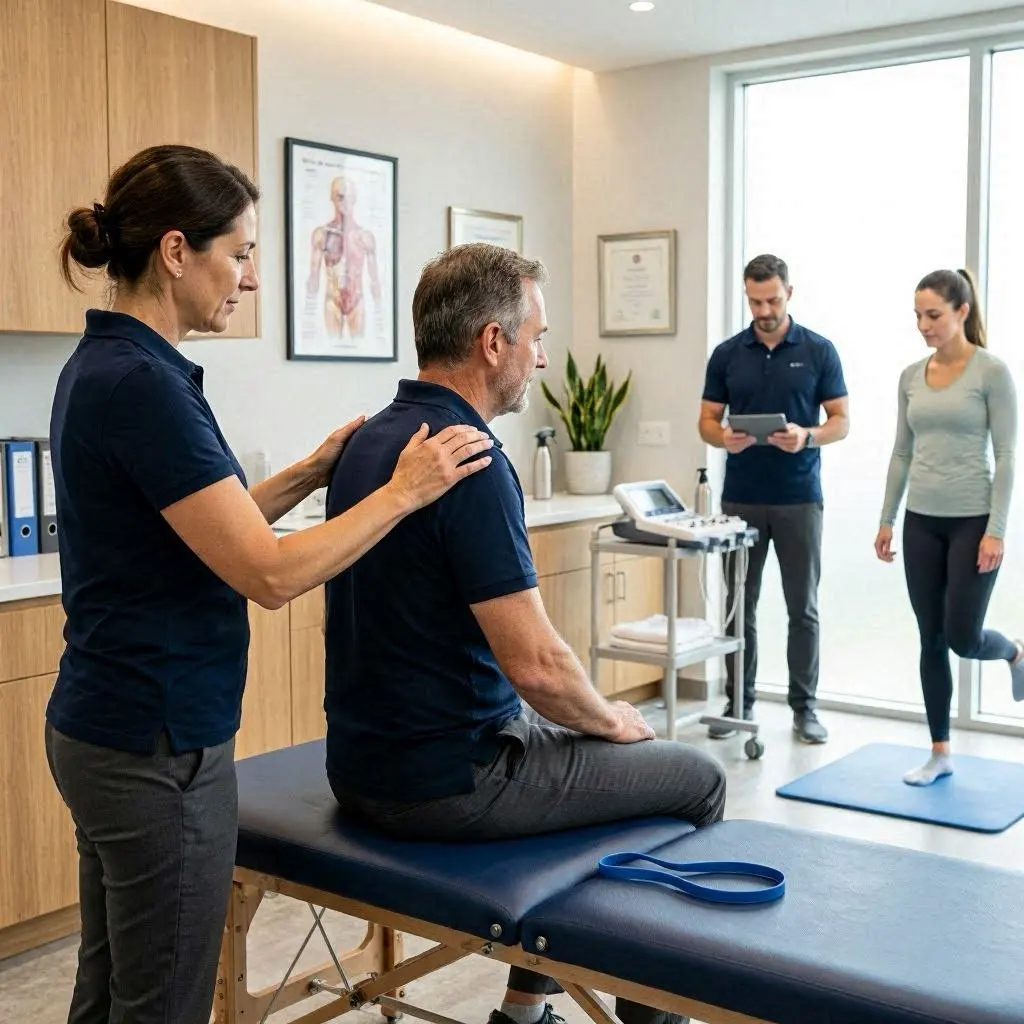
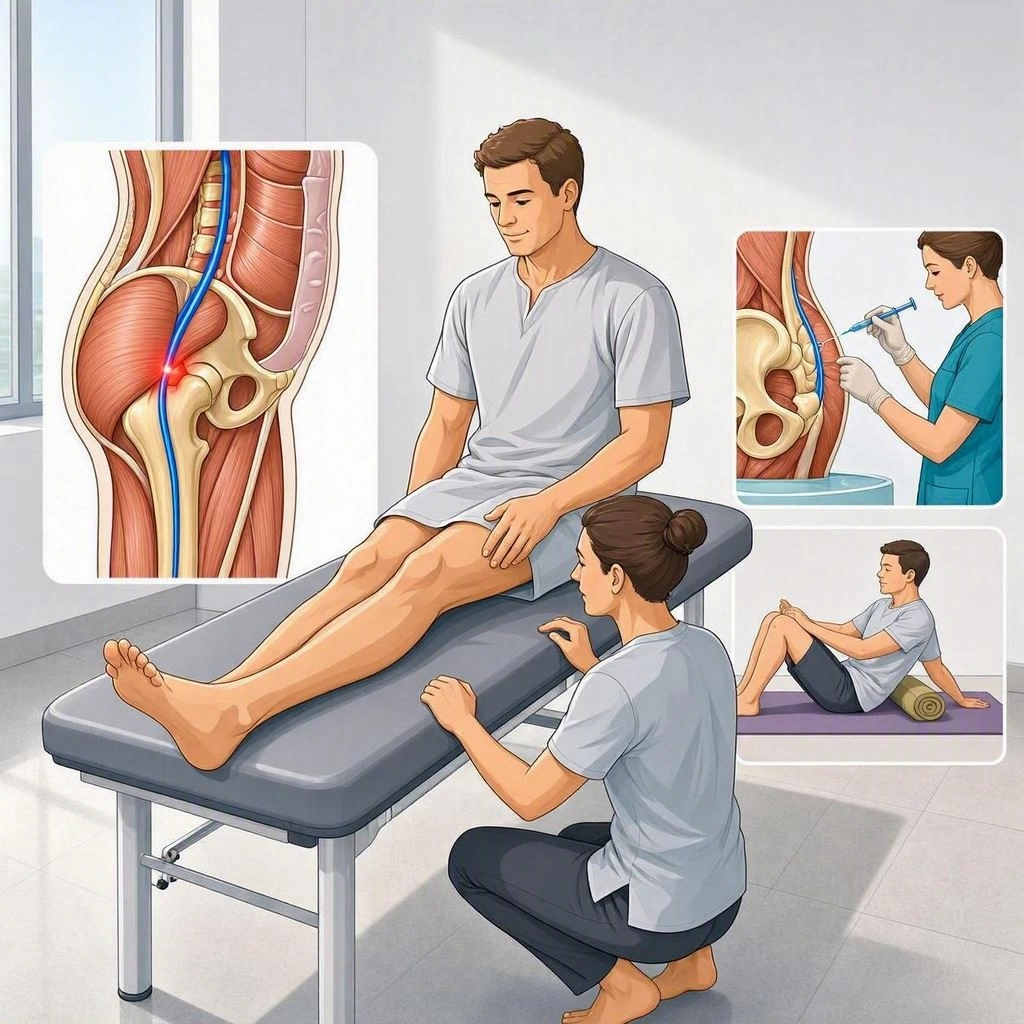
At Ritz Clinics, physiotherapy can help people understand movement limitations and develop an individualized rehabilitation plan when needed. This guide explains how neck mobility exercises work, how to perform common movements safely, how to build a simple routine, and when professional assessment may be appropriate.
What Are Neck Mobility Exercises?
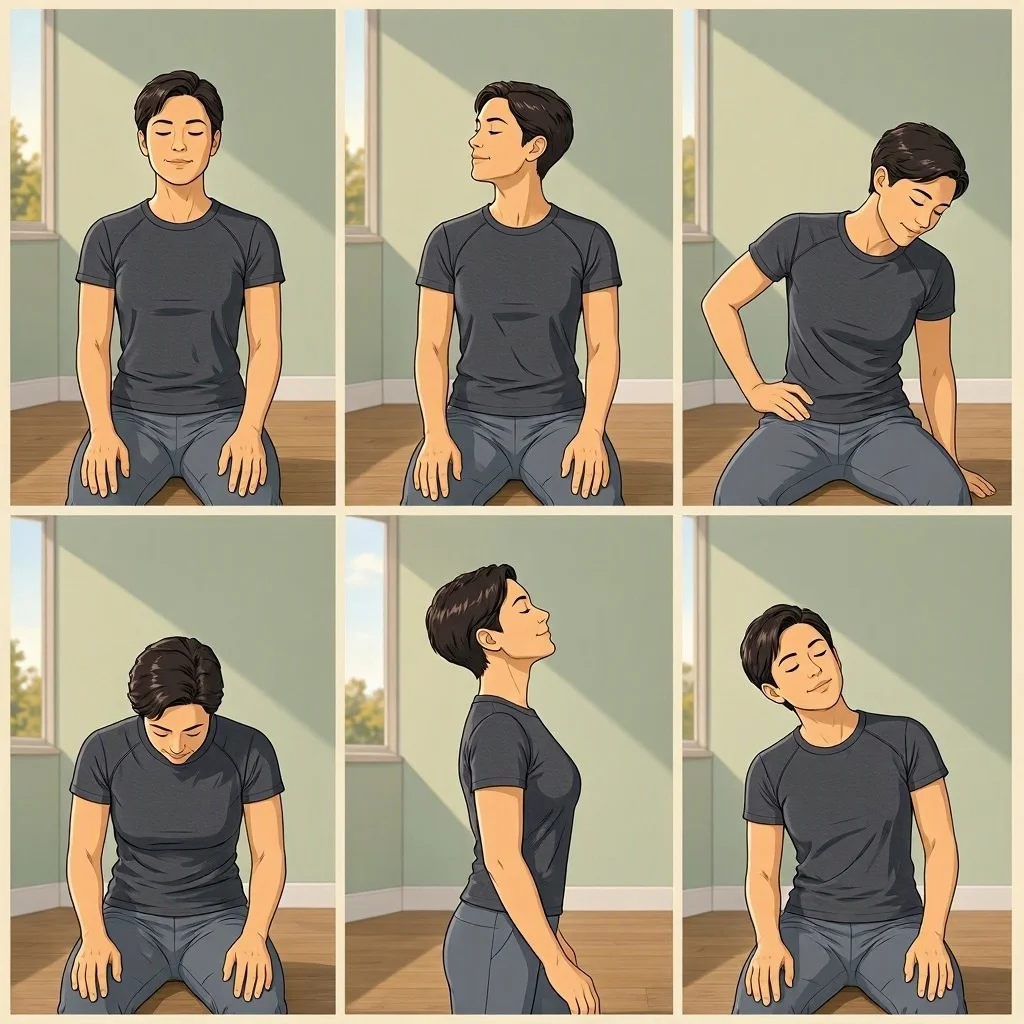
Neck mobility exercises are controlled movements designed to help maintain or improve the comfortable range of motion of the neck. They involve moving the head in different directions without forcing the joints or surrounding muscles beyond a comfortable limit.
These exercises may be useful for people who experience mild stiffness after sitting for a long time, have difficulty turning their head comfortably, or want to maintain movement as part of a general fitness routine.
Common neck mobility movements include:
- Neck rotation from side to side.
- Gentle neck flexion, or looking downward.
- Comfortable neck extension, or looking upward.
- Side bending toward each shoulder.
- Controlled chin tucks.
- Shoulder rolls and upper-back mobility movements.
Each movement has a different purpose. For example, neck rotation helps practise turning the head, while side bending allows you to move one ear toward the corresponding shoulder.
Mobility exercises are not the same as strengthening exercises. Mobility focuses on controlled movement, whereas strengthening develops the muscles’ ability to produce or resist force. Depending on your needs, a physiotherapist may recommend both.
Importantly, the goal is not to force your neck into its maximum possible range. Instead, aim for gradual, comfortable movement that supports everyday activities.
Why Is Neck Mobility Important?
Your neck helps coordinate movements between your head, shoulders, and upper body. You rely on it throughout the day, often without noticing how frequently it moves.
When neck mobility decreases, ordinary tasks may become uncomfortable or require you to move your entire body to compensate.
Supporting Everyday Activities
Turning your head helps you look over your shoulder, check your surroundings, follow conversations, and perform various household or work tasks.
If rotation becomes restricted, these activities may feel more difficult. Gentle mobility exercises can help you practise the movement within a comfortable range.
However, do not rely on exercises alone if restricted movement follows a significant injury or occurs with other concerning symptoms.
Reducing Stiffness Associated With Prolonged Positions
Working at a computer, reading, or using a phone can involve keeping the head in a relatively fixed position for extended periods.
This does not mean that sitting or looking down automatically damages your neck. Nevertheless, remaining in one position for a long time may contribute to stiffness or discomfort in some people.
Taking movement breaks and changing positions regularly can help reduce the amount of time you spend remaining still.
Maintaining Movement Confidence
When movement causes discomfort, people sometimes avoid turning or bending their necks altogether. Although temporary modification may be appropriate for some injuries, prolonged avoidance can reduce confidence in movement.
For uncomplicated stiffness, gentle and gradual movement may help you become more comfortable with everyday activities.
If movement repeatedly causes significant pain, numbness, dizziness, or other unusual symptoms, seek professional advice before continuing.
Supporting a Broader Rehabilitation Program
Neck mobility is only one part of neck function. Muscle strength, endurance, coordination, shoulder movement, and general physical activity also matter.
A balanced rehabilitation program may therefore combine mobility exercises with strengthening, activity adjustments, and practical advice.
For more information about related care, visit the Ritz Clinics physiotherapy page.
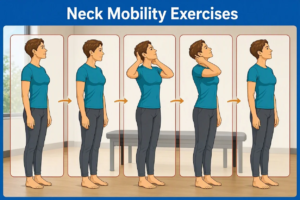
Before You Start Neck Mobility Exercises
A few simple precautions can help make your routine more appropriate and comfortable.
Choose a Comfortable Position
You can perform many basic neck mobility exercises while sitting in a stable chair or standing with your feet comfortably positioned.
Keep your shoulders relaxed and begin with your head facing forward. You do not need to hold an unusually rigid posture.
Choose a position that allows you to move without losing balance or straining other parts of your body.
Start With a Small Range
If your neck feels stiff, you may not be able to turn your head as far as usual. That is fine.
Begin with a small, comfortable movement and gradually explore a little more range if it feels appropriate. Avoid bouncing, forcing the movement, or pulling your head with your hands.
Move Slowly
Controlled movement allows you to notice how your neck responds.
Move into the position gradually, pause briefly if comfortable, and return to the starting point. Speed and intensity are not the goals.
Monitor Your Symptoms
A gentle stretch or mild sensation of stiffness may occur during movement. However, an exercise should not produce sharp pain or a significant increase in symptoms.
Stop if you experience new tingling, numbness, weakness, dizziness, visual disturbance, severe headache, or pain spreading into your arm.
If you have recently experienced a significant neck injury, have a known cervical spine condition, or have been advised to restrict neck movement, seek individualized guidance before starting exercises.
1. Neck Rotation Exercise
Neck rotation is one of the most straightforward mobility exercises. It helps you practise turning your head from side to side.
How to perform it:
- Sit upright or stand comfortably.
- Keep your shoulders relaxed and look straight ahead.
- Slowly turn your head toward the right.
- Stop when you reach a comfortable range.
- Return to the centre.
- Repeat toward the left.
Try three to five repetitions on each side initially. If the movement feels comfortable, you can gradually increase the repetitions.
Why it may help: Neck rotation practises a movement used during driving, conversations, and everyday activities. It may also help you notice whether one direction feels more restricted than the other.
Do not force your chin toward your shoulder. The movement should remain smooth and controlled.
2. Neck Side-Bending Exercise
Side bending involves gently bringing one ear toward the corresponding shoulder without lifting the shoulder to meet it.
How to perform it:
- Sit or stand comfortably.
- Look straight ahead.
- Keep both shoulders relaxed.
- Slowly move your right ear toward your right shoulder.
- Return to the centre.
- Repeat on the left.
Start with three to five repetitions on each side. You do not need to touch your shoulder with your ear.
Why it may help: Side bending allows you to practise a movement used during everyday head positioning. It may also help maintain comfortable movement through the muscles and joints involved in this direction.
Avoid pulling your head down with your hand. If the exercise causes pain that spreads into your arm or produces unusual symptoms, stop.
3. Gentle Neck Flexion
Neck flexion means bending your head forward, as though you are looking down toward your chest.
How to perform it:
- Sit comfortably with your shoulders relaxed.
- Begin by looking straight ahead.
- Slowly lower your chin toward your chest.
- Stop before you feel significant discomfort.
- Return to the starting position.
Try three to five repetitions.
Why it may help: Gentle flexion allows you to practise looking downward in a controlled way. It may be useful when comfortable movement in this direction feels restricted.
Avoid forcing your chin against your chest or repeatedly stretching into a painful position. If bending your neck causes tingling, radiating pain, or other unusual symptoms, seek advice.
4. Controlled Neck Extension
Neck extension involves gently moving your head backward so that you look slightly upward.
How to perform it:
- Sit or stand comfortably.
- Keep your shoulders relaxed.
- Begin with your eyes looking forward.
- Slowly tilt your head backward a small amount.
- Return to the neutral position.
Start with three to five repetitions if the movement is appropriate for you.
Why it may help: Extension helps practise looking upward, which is useful for various daily tasks.
This movement is not suitable for everyone. If looking upward causes dizziness, significant pain, visual changes, or symptoms spreading into your arm, stop. Do not force the range, especially if you have a known neck condition or have been advised to avoid extension.
5. Chin Tucks
Chin tucks are commonly used in neck rehabilitation to practise controlled head positioning. Unlike a large neck stretch, the movement is small.
How to perform it:
- Sit or stand comfortably.
- Look straight ahead.
- Gently draw your chin backward, as though creating a small double chin.
- Keep your eyes level and avoid forcing your head downward.
- Hold for two to three seconds if comfortable.
- Relax and return to the starting position.
Try five repetitions initially.
Why it may help: Chin tucks practise controlled head positioning and may be included in some rehabilitation programs for neck discomfort.
They are not a universal fix for posture or pain. If the exercise causes a headache, significant discomfort, dizziness, or radiating symptoms, stop and seek guidance.
6. Shoulder Rolls
Neck mobility often works best alongside comfortable shoulder movement because the neck and shoulder regions contribute to many of the same activities.
How to perform it:
- Sit or stand comfortably with your arms relaxed.
- Gently lift your shoulders toward your ears.
- Move them backward in a smooth circular motion.
- Allow them to return to a relaxed position.
- Repeat five to ten times.
- Change direction if that feels comfortable.
Why it may help: Shoulder rolls encourage movement around the shoulder girdle and provide a simple break from prolonged sitting.
Keep the movement gentle. You do not need to make large circles or squeeze your shoulders together forcefully.
7. Shoulder Blade Movement
The muscles around the shoulder blades contribute to upper-body movement and work alongside the neck muscles during many activities.
How to perform it:
- Sit comfortably with your arms by your sides.
- Gently move your shoulder blades slightly backward.
- Avoid shrugging your shoulders toward your ears.
- Hold for two seconds.
- Relax completely.
- Repeat five to ten times.
The movement should be subtle rather than forceful.
Why it may help: Shoulder blade movement can help you practise upper-body control and interrupt prolonged static positions. Depending on your symptoms, a physiotherapist may include it alongside neck mobility or strengthening exercises.
8. Upper-Back Mobility Exercise
The upper back, or thoracic spine, works with the neck during activities such as looking around, reaching, and maintaining different positions.
Improving comfortable movement through the upper back may therefore complement a neck mobility routine.
How to perform a seated upper-back extension:
- Sit in a stable chair with your feet supported.
- Place your hands across your chest.
- Keep your lower body comfortably still.
- Gently extend your upper back over the backrest if it allows this movement safely.
- Return to a neutral position.
Try three to five slow repetitions.
Avoid throwing your head backward. The movement should come mainly from the upper back, and you should stop if it causes neck pain or other symptoms.
If you have osteoporosis, a recent spinal injury, or another condition affecting spinal movement, ask a healthcare professional whether this exercise is appropriate.
How Often Should You Perform Neck Mobility Exercises?
The ideal frequency depends on your symptoms, physical condition, and the exercises you choose.
For general stiffness, you may find it useful to perform a few gentle movements during the day, particularly after spending a long time in one position. You do not need to complete a long workout every time.
A practical starting approach is to perform three to five repetitions of selected movements once or twice a day, provided they remain comfortable. This is a general example rather than a prescription for every neck condition.
As movement becomes easier, you can gradually adjust the number of repetitions or frequency. However, increasing the amount of exercise is not always necessary.
Pay attention to how you feel during the session and afterward. If discomfort becomes noticeably worse or remains aggravated, reduce the intensity and seek professional guidance if needed.
Consistency, comfort, and appropriate exercise selection are more important than forcing a particular number of repetitions.
A Simple Daily Neck Mobility Routine
If you experience mild, uncomplicated stiffness, the following routine can provide a simple starting point. It is not intended for people with recent significant trauma, severe symptoms, or warning signs that require medical assessment.
Step 1: Neck rotation
Perform three gentle repetitions to each side.
Step 2: Neck side bending
Perform three repetitions to each side, keeping your shoulders relaxed.
Step 3: Gentle neck flexion
Lower your chin comfortably and return to neutral three times.
Step 4: Chin tucks
Perform five small, controlled repetitions.
Step 5: Shoulder rolls
Complete five to ten relaxed shoulder rolls.
Step 6: Change position
After finishing, stand up or walk briefly if you have been sitting for a long time.
The entire routine should take only a few minutes. If one movement is uncomfortable, leave it out until you have received appropriate advice.
You do not need to complete every exercise daily. Choose movements that suit your needs and adjust the routine as your comfort and function change.
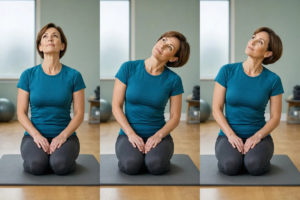
Neck Mobility Exercises for Office Workers
Office workers often spend extended periods using computers, attending meetings, and looking at screens. Although desk work does not automatically cause neck damage, remaining in one position for too long may contribute to stiffness for some people.
A few practical changes can make movement easier to incorporate into the working day.
Adjust Your Screen
Position your screen so you can view it comfortably without repeatedly leaning forward or looking down excessively.
The ideal arrangement depends on your equipment, eyesight, task, and personal comfort. You do not need to maintain one rigid position all day.
Take Movement Breaks
Stand up, walk briefly, move your shoulders, or perform a few gentle neck rotations when convenient.
Changing positions regularly may help reduce prolonged static loading and give you opportunities to notice early stiffness.
Keep Frequently Used Items Within Reach
Arrange your keyboard, mouse, phone, and other frequently used items so that you do not repeatedly twist or reach awkwardly.
If you spend a great deal of time on the phone, consider a suitable headset rather than holding the phone between your ear and shoulder.
Avoid Constantly Correcting Your Posture
You do not need to hold your shoulders back or keep your neck perfectly straight every minute.
Instead, aim for comfortable positioning, regular movement, and enough strength and endurance to tolerate your daily tasks.
Common Mistakes to Avoid
Even simple mobility exercises can become uncomfortable if performed too aggressively or without considering your symptoms.
Forcing the Neck to Stretch Further
Pushing into the end of your range can irritate sensitive tissues. A larger movement is not necessarily more effective.
Move gradually and stop before significant discomfort.
Moving Too Quickly
Fast or jerky movements make it harder to control the range and notice how your body responds.
Use a slow, comfortable pace.
Repeating Only One Exercise
Neck rotation may be useful, but it does not address every direction of movement or every cause of stiffness.
Depending on your needs, a routine may include several gentle movements along with shoulder and upper-back activity.
Ignoring Worsening Symptoms
Do not continue an exercise simply because it appears in a general online guide.
Stop if you develop significant pain, new tingling, numbness, weakness, dizziness, or other unusual symptoms.
Expecting Immediate Results
Some people notice improvement quickly, while others need a more gradual approach. The result depends on the underlying cause, the person’s health, and how the exercises fit into their overall routine.
Persistent or recurring symptoms may require assessment rather than more repetitions.
When Should You Seek Professional Help?
Many episodes of mild neck stiffness improve with time and appropriate activity. However, not all neck pain is caused by muscle tightness or prolonged sitting.
Arrange a medical assessment if your neck pain is severe, continues without improvement, repeatedly returns, or interferes with sleep, work, or daily activities. Pain spreading into an arm, numbness, tingling, or weakness also warrants professional assessment.
Seek urgent medical attention if neck pain follows a serious accident or fall, or if it occurs alongside fever and severe headache, significant weakness, difficulty walking, loss of coordination, or other serious symptoms.
Do not begin a self-directed exercise program after a significant neck injury until you have received appropriate guidance.
If you are unsure which exercises are suitable, a physiotherapist can assess your movement, symptoms, strength, and activity needs. They can also help determine whether you need additional medical evaluation.
For further reading, see Best Treatment for Neck Pain at Ritz Clinics and the NHS guidance on neck pain.
How Physiotherapy Can Help Improve Neck Mobility
When neck stiffness persists, the most useful exercise program may involve more than stretching. A physiotherapist can assess the factors that may contribute to your movement limitations and help you develop a suitable plan.
Depending on the findings, treatment may include:
- Assessment of neck movement and symptoms.
- Gentle mobility exercises.
- Strengthening and endurance exercises.
- Shoulder and upper-back conditioning.
- Advice about activity modification.
- Guidance on returning to exercise and daily tasks.
- Monitoring progress and adjusting the program.
The appropriate treatment depends on the individual. Some people may need only basic exercise advice, while others may benefit from a more structured rehabilitation program.
At Ritz Clinics, physiotherapy may help individuals address movement difficulties and work toward practical functional goals. You can explore the Ritz Clinics physiotherapy service to learn more.
The goal is not simply to increase how far you can turn your head. It is to help you move more comfortably and confidently during the activities that matter to you.
Frequently Asked Questions About Neck Mobility Exercises
1. What are the best neck mobility exercises?
Common options include gentle neck rotation, side bending, flexion, comfortable extension, chin tucks, and shoulder rolls. The most appropriate exercises depend on your symptoms, physical abilities, and medical history.
2. How often should I do neck mobility exercises?
For mild, uncomplicated stiffness, you may start with a few gentle repetitions once or twice daily. Adjust the routine according to your response, and seek professional advice if symptoms persist or worsen.
3. Can neck mobility exercises relieve stiffness?
Gentle movement may help some people maintain or improve comfortable neck movement. However, stiffness has different possible causes, and exercises are not suitable for every condition.
4. Should neck mobility exercises hurt?
They should not cause sharp pain or a significant worsening of symptoms. Stop if you experience unusual symptoms, such as dizziness, new numbness, tingling, weakness, or pain spreading into an arm.
5. Can I do neck exercises at my desk?
Many gentle movements, including comfortable neck rotation and shoulder rolls, can be performed while seated. Make sure your chair is stable and that the exercises do not interfere with your ability to work safely.
6. Are neck mobility exercises the same as neck strengthening exercises?
No. Mobility exercises focus on controlled movement, while strengthening exercises aim to improve muscle capacity and endurance. Depending on your needs, a rehabilitation plan may include both.
7. Can neck mobility exercises fix poor posture?
Exercises may support comfortable movement and physical function, but they cannot guarantee a particular posture or solve every cause of neck pain. Regular movement, strength, endurance, and comfortable work habits can also be important.
8. When should I stop doing neck mobility exercises?
Stop if symptoms become significantly worse or if you experience new tingling, numbness, weakness, dizziness, severe headache, or other unusual symptoms. Seek appropriate medical advice rather than continuing through these warning signs.
9. How long does it take to improve neck mobility?
There is no fixed timeline. Progress depends on the cause of stiffness, symptom severity, overall health, and the suitability of the exercise program. Persistent limitations may require professional assessment.
10. Can physiotherapy help with limited neck movement?
Yes. A physiotherapist can assess your neck and surrounding areas, recommend suitable exercises, and help you progress safely. They can also identify signs that require further medical evaluation.
Conclusion
Neck Mobility Exercises can be a useful way to maintain comfortable movement and manage mild stiffness when selected and performed appropriately. Gentle neck rotation, side bending, flexion, chin tucks, shoulder rolls, and upper-back movement can help you practise motions used throughout everyday life.
However, no single exercise routine suits everyone. Move slowly, stay within a comfortable range, and avoid forcing your neck into painful positions. Regular movement breaks and a balanced approach to strength, activity, and recovery may also support everyday comfort.
If your symptoms are severe, persistent, worsening, or associated with neurological changes, seek professional assessment instead of relying on exercises alone.
At Ritz Clinics, physiotherapy can help people understand their movement limitations and develop individualized strategies to improve function. With an appropriate approach, the goal is to build confidence in everyday movement rather than chase a perfect range of motion.