Physiotherapy Movement Therapy: Complete Guide to Better Mobility, Strength, and Recovery
Physiotherapy Movement Therapy is an approach to rehabilitation that focuses on helping people move more comfortably, safely, and effectively. Movement plays an important role in almost every part of daily life. Walking, sitting, standing, reaching, lifting, climbing stairs, exercising, and participating in sports all require coordinated movement between muscles, joints, the nervous system, and the surrounding tissues.
When pain, injury, stiffness, weakness, surgery, or another physical condition changes the way a person moves, everyday activities can become more difficult. Physiotherapy movement therapy can help address these limitations through assessment, therapeutic exercise, mobility training, strengthening, balance exercises, functional movement training, and education.
According to the NHS physiotherapy guidance, physiotherapy can help ease pain and improve movement following injury, illness, or disability. Treatment may include exercise, manual therapy, advice, and other approaches depending on the individual’s needs.
At Ritz Clinic, Physiotherapy Services are designed around individual symptoms, movement limitations, lifestyle, and recovery goals. This personalized approach can help patients work toward better mobility, physical function, and confidence.
What Is Physiotherapy Movement Therapy?
Physiotherapy movement therapy focuses on improving how a person moves and functions rather than concentrating only on pain.
Pain can influence movement. When a person experiences discomfort, they may unconsciously change how they walk, lift, reach, or use an injured body part. Over time, these changes can contribute to weakness, stiffness, reduced confidence, or difficulty performing certain activities.
Movement therapy can address these issues by gradually restoring physical capacity.
Depending on the patient, a movement-based physiotherapy program may include:
- Joint mobility exercises
- Stretching
- Strength training
- Balance exercises
- Coordination training
- Core exercises
- Functional movement training
- Postural and ergonomic education
- Gait training
- Progressive activity
- Sport-specific rehabilitation
- Home exercise programs
The appropriate combination depends on the individual’s condition and goals.
There is also no single “perfect” movement pattern that applies to everyone. Instead, physiotherapy aims to identify relevant limitations and develop movement strategies that are appropriate for the person’s body, activities, and physical demands.
Why Is Movement Important?
Movement helps maintain physical function throughout life.
Regular movement allows muscles and joints to work through different ranges while supporting strength, coordination, balance, and physical independence.
When movement becomes limited, several areas of daily life can be affected.
For example, someone with knee pain may avoid stairs. A person with shoulder pain may stop reaching overhead. Someone with back pain may avoid lifting objects. After an ankle injury, a person may reduce walking because of discomfort or instability.
These changes can reduce physical activity and gradually affect strength and conditioning.
Physiotherapy movement therapy aims to break this cycle through appropriate and progressive activity.
The goal is not necessarily to perform every movement perfectly. Instead, the goal is to improve the person’s ability to perform meaningful activities with greater comfort, control, and confidence.
How Does Physiotherapy Movement Therapy Work?
Movement therapy usually begins with an assessment.
A physiotherapist may ask about:
- Current symptoms
- Previous injuries
- Medical history
- Daily activities
- Work requirements
- Exercise habits
- Sports participation
- Movement limitations
- Treatment goals
The physical assessment may then examine:
- Range of motion
- Muscle strength
- Flexibility
- Balance
- Coordination
- Posture
- Walking
- Functional movements
- Joint mobility
The physiotherapist uses this information to develop a personalized treatment plan.
Ritz Clinic’s Physiotherapy Treatment Plan approach also emphasizes assessment, goal setting, exercise, manual therapy, and functional movement according to the patient’s condition.
Movement Assessment in Physiotherapy
A movement assessment helps the physiotherapist understand how the body currently performs different tasks.
The assessment may involve simple activities such as:
Walking
Walking provides information about balance, coordination, joint movement, and lower-body control.
Squatting
A squat can provide information about hip, knee, and ankle mobility and lower-body strength.
Lunging
Lunges can help assess single-leg control, balance, strength, and coordination.
Reaching
Upper-body reaching can provide information about shoulder and upper-back movement.
Getting Up From a Chair
This functional movement requires coordination between the hips, knees, ankles, and trunk.
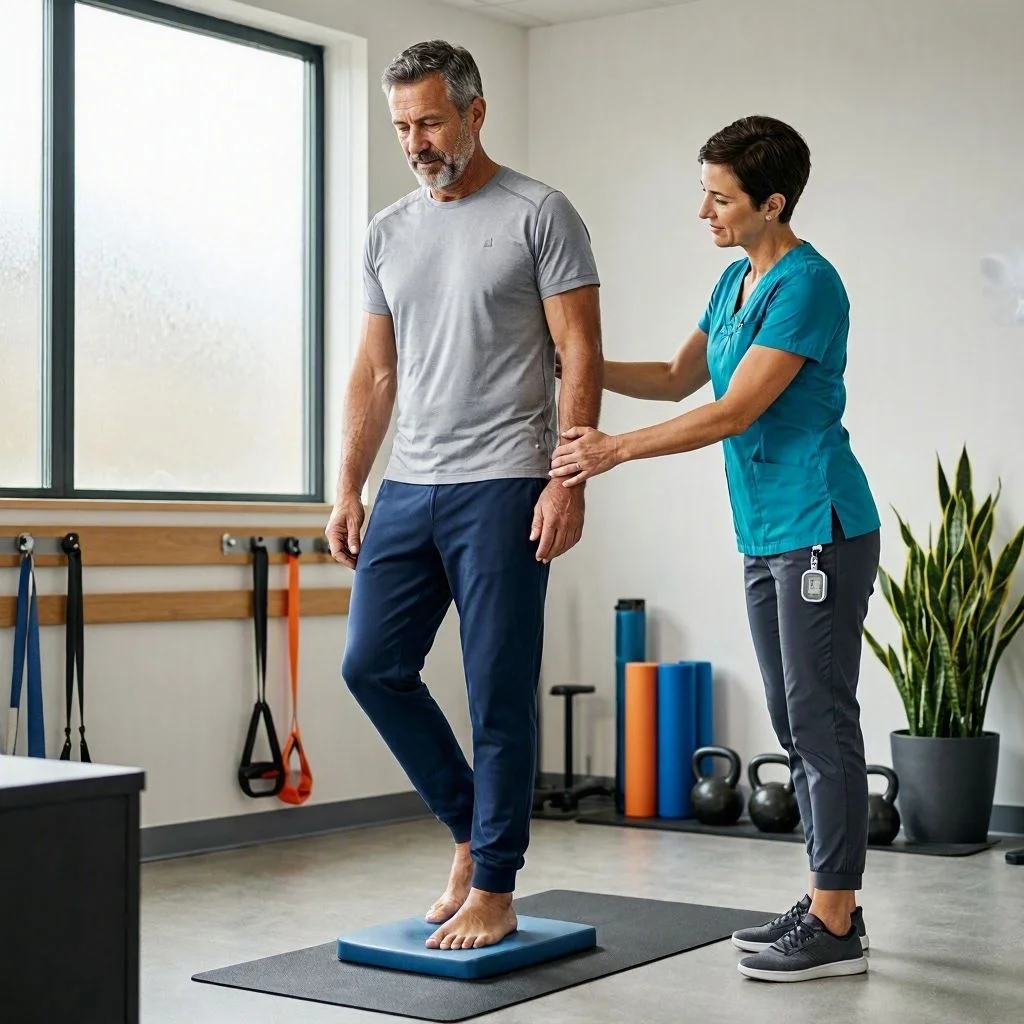
Single-Leg Standing
Single-leg balance can help identify differences in stability and coordination.
The purpose of these assessments is not to label a movement as simply “good” or “bad.” Instead, the physiotherapist considers whether a specific limitation is relevant to the patient’s symptoms or functional goals.
Mobility Therapy
Mobility is a major part of movement.
A person needs sufficient joint movement to perform many daily and athletic activities.
Limited mobility may occur because of:
- Injury
- Surgery
- Joint stiffness
- Muscle tightness
- Reduced activity
- Pain
- Prolonged immobilization
- Certain medical conditions
Physiotherapy may use active movement, stretching, mobility drills, and manual techniques when appropriate.
For example, a person with limited ankle mobility may struggle with squatting or walking. A person with restricted shoulder movement may find reaching or dressing difficult.
The treatment should address the specific limitation rather than assuming that everyone needs the same mobility exercises.
Strength Training and Movement Therapy
Strength provides the physical capacity needed for movement.
A person may have good mobility but lack the strength to control that range effectively.
For example, someone may be able to move their leg through a large range but struggle to perform a controlled single-leg squat. Similarly, a person may have adequate shoulder range but lack the strength required to lift an object repeatedly.
For this reason, movement therapy often includes progressive strengthening.
Exercises may include:
- Squats
- Lunges
- Step-ups
- Bridges
- Resistance-band exercises
- Rows
- Presses
- Calf raises
- Hip strengthening
- Core exercises
The exercises should match the patient’s ability.
As strength improves, resistance, repetitions, movement complexity, or exercise speed may gradually increase.
Balance and Coordination
Balance allows the body to maintain control while stationary or moving.
Coordination allows different parts of the body to work together efficiently.
Both are important for:
- Walking
- Running
- Climbing stairs
- Changing direction
- Sports
- Reaching
- Lifting
- Preventing falls
Balance training can begin with simple exercises and gradually become more challenging.
For example, a patient may begin with standing on both feet and later progress to single-leg standing, reaching, stepping, or dynamic balance activities.
The level of difficulty should match the patient’s current ability.
Functional Movement Therapy
Functional movement therapy connects rehabilitation exercises with real-life activities.
Instead of focusing exclusively on isolated muscles, functional exercises can reproduce movements required at home, work, or during sports.
Examples include:
- Lifting
- Carrying
- Pushing
- Pulling
- Reaching
- Walking
- Climbing stairs
- Getting up from a chair
- Squatting
- Stepping
For example, someone who works in a warehouse may need lifting and carrying exercises. An office worker may need strategies for sitting, standing, and taking movement breaks. An athlete may need running, jumping, landing, and change-of-direction exercises.
Functional training makes rehabilitation more relevant to everyday life.
Physiotherapy Movement Therapy for Back Pain
Back pain can significantly change the way a person moves.
People may become cautious with bending, lifting, sitting, walking, or turning.
Although avoiding activities that significantly worsen symptoms can be reasonable, prolonged avoidance of movement can contribute to reduced physical capacity.
A physiotherapist can assess movement, strength, mobility, and functional limitations.
Treatment may include:
- Gentle mobility exercises
- Strength training
- Core exercises
- Hip strengthening
- Functional movement
- Education
- Gradual return to activity
The NHS back pain guidance recommends staying active and notes that exercise can help manage many cases of back pain.
For patients who need structured rehabilitation, Injury Rehabilitation at Ritz Clinic can provide additional support with strength, mobility, balance, and functional movement.
Physiotherapy Movement Therapy for Neck Pain
Neck pain can affect head movement, posture, work activities, exercise, and sleep.
A movement-based physiotherapy program may evaluate:
- Neck range of motion
- Shoulder movement
- Upper-back mobility
- Muscle strength
- Postural endurance
- Functional movement
Treatment may include mobility exercises, strengthening, manual therapy, and movement education.
For people who spend long hours at a computer, the program may also include ergonomic recommendations and regular movement breaks.
The objective is not to hold the neck in one fixed position all day. Instead, the focus can be on developing physical capacity and changing positions regularly.
Physiotherapy Movement Therapy for Shoulder Problems
The shoulder requires coordinated movement between the shoulder joint, shoulder blade, upper back, and surrounding muscles.
Pain or weakness can affect reaching, lifting, dressing, sleeping, and exercise.
A physiotherapist may assess:
- Shoulder range of motion
- Rotator cuff strength
- Shoulder blade movement
- Upper-back mobility
- Functional movement
- Strength differences
A rehabilitation program may then include mobility exercises, strengthening, movement retraining, and gradual return to overhead activity.
Patients experiencing ongoing shoulder limitations can also combine movement therapy with appropriate manual treatment when clinically indicated.
Physiotherapy Movement Therapy for Knee Pain
The knee works together with the hip and ankle during many movements.
Knee pain can therefore affect:
- Walking
- Squatting
- Running
- Stairs
- Jumping
- Getting up from a chair
Movement therapy may focus on restoring knee mobility while strengthening surrounding muscles.
Exercises can include:
- Sit-to-stand exercises
- Step-ups
- Squats
- Lunges
- Calf strengthening
- Hip strengthening
- Balance exercises
The difficulty can increase gradually as strength and confidence improve.
Physiotherapy Movement Therapy After an Injury
An injury can temporarily change movement patterns.
For example, someone with an ankle injury may shift weight onto the opposite leg. A person with a shoulder injury may avoid using the affected arm. Someone with knee pain may reduce the amount of weight placed through one leg.
These adaptations can be useful in the short term because they may reduce discomfort. However, rehabilitation may eventually need to restore more normal function.
At Ritz Clinic Injury Rehabilitation, rehabilitation programs can include therapeutic exercise, mobility training, balance work, movement training, and gradual return to activity.
The progression depends on the injury and the patient’s recovery.
Physiotherapy Movement Therapy After Surgery
Surgery can temporarily affect strength, mobility, balance, and confidence.
Physiotherapy may help guide the recovery process through appropriate stages.
Depending on the surgery, rehabilitation may include:
- Safe early movement
- Range-of-motion exercises
- Muscle activation
- Strengthening
- Balance training
- Functional movement
- Progressive activity
- Return to sport or normal activities
The exact timeline depends on the surgical procedure and medical instructions.
Patients should follow the guidance provided by their surgeon and rehabilitation team.
Movement Therapy for Athletes
Athletes often require movement therapy because their activities place higher physical demands on the body.
A recreational athlete may want to return to exercise after an injury, while a competitive athlete may need to return to high-speed, high-load movements.
Sports rehabilitation may involve:
- Running
- Jumping
- Landing
- Acceleration
- Deceleration
- Agility
- Balance
- Strength
- Sport-specific movements
For athletes, rehabilitation should gradually reproduce the demands of their sport.
A runner may need progressive running exposure. A basketball player may require jumping and landing drills. A tennis player may need rotational and overhead movement. A weightlifter may need progressive resistance training.
Movement Therapy for Older Adults
Movement therapy is not only for athletes.
Older adults may use physiotherapy to maintain mobility, strength, balance, and independence.
Appropriate exercises may help support activities such as:
- Walking
- Standing
- Climbing stairs
- Getting out of a chair
- Carrying objects
- Maintaining balance
Balance training can be particularly useful when a person has difficulty feeling stable during movement.
The program should always consider the individual’s health, physical ability, and safety.
Movement Therapy for Office Workers
Office workers may spend many hours sitting or using computers.
Although sitting is not automatically harmful, long periods without movement can contribute to stiffness and reduced activity.
Physiotherapy movement therapy may include:
- Workplace movement strategies
- Mobility exercises
- Strength training
- Postural education
- Ergonomic advice
- Movement breaks
Instead of trying to maintain one perfect posture throughout the day, it can be more practical to change positions regularly and develop the strength and mobility needed to tolerate different positions.
The Role of Core Training
Core training is often included in movement-based rehabilitation.
The core includes muscles around the trunk, abdomen, pelvis, and lower back.
Effective core training is not simply about developing visible abdominal muscles.
Instead, the goal can be to improve control of the trunk during movement.
Exercises may include:
- Bridges
- Bird dogs
- Dead bugs
- Planks
- Side planks
- Controlled trunk movements
The appropriate exercises depend on the patient’s symptoms and goals.
Manual Therapy and Movement Therapy
Movement therapy can sometimes be combined with manual therapy.
Manual therapy may include hands-on techniques designed to improve mobility or reduce stiffness.
According to the NHS physiotherapy guidance, physiotherapy may include manual therapy alongside exercise and advice.
At Ritz Clinic, Manual Physiotherapy Techniques may be incorporated when appropriate as part of a broader rehabilitation program.
However, hands-on treatment does not need to be the only component of care. Exercise and active rehabilitation can help patients build physical capacity and become more independent.
Soft Tissue Therapy and Movement
Muscle tension can sometimes contribute to feelings of stiffness or discomfort.
When appropriate, soft tissue techniques may be combined with movement exercises.
At Ritz Clinic, Soft Tissue Therapy focuses on muscles, fascia, tendons, and other soft tissues while considering movement patterns, physical activity, and individual treatment goals.
Combining hands-on treatment with movement may help some patients transition from short-term symptom management toward active rehabilitation.
Progressive Loading in Movement Therapy
The body adapts to physical demands.
Therefore, rehabilitation often needs to progress gradually.
Progression may involve:
- More repetitions
- More resistance
- Greater movement range
- Longer exercise duration
- More complex movements
- Faster movement
- Greater training volume
- Sport-specific activity
For example, a patient may begin with basic bodyweight exercises and later progress to resistance training.
The correct pace depends on the individual’s condition.
Increasing exercise too quickly can aggravate symptoms, while never increasing the challenge may limit progress.
Home Exercise Programs
A home exercise program can help patients continue rehabilitation between appointments.
A program may include:
- Mobility exercises
- Strength exercises
- Balance training
- Walking
- Stretching
- Core exercises
- Functional movement
Consistency often matters more than complexity.
A short program that a patient can perform regularly may be more practical than a long program that is difficult to maintain.
The physiotherapist can also adjust the program as the patient’s ability changes.
How Long Does Movement Therapy Take?
There is no universal timeline.
Some people may notice improvements within a few sessions, while others require longer rehabilitation.
Recovery can depend on:
- Type of condition
- Severity
- Duration of symptoms
- Previous injuries
- Physical condition
- Age
- Activity level
- Consistency with exercises
- Treatment goals
Progress should therefore be measured through function as well as symptoms.
For example, a patient may notice that they can walk farther, climb stairs more easily, lift more comfortably, or return to exercise even if some symptoms remain.
How Progress Is Measured
A physiotherapist may monitor several areas during treatment.
These can include:
Pain
Changes in pain intensity and frequency can provide useful information.
Range of Motion
Improved joint movement may make daily activities easier.
Strength
Strength testing can show whether physical capacity is improving.
Balance
Better balance can improve confidence and functional independence.
Function
The ability to perform meaningful activities is one of the most important measures of progress.
Activity Tolerance
Patients may gradually tolerate longer walks, workouts, work shifts, or sports sessions.
Preventing Future Movement Problems
Movement therapy can also support long-term physical health.
However, no rehabilitation program can guarantee that a person will never experience another injury or episode of pain.
A long-term approach may include:
- Regular physical activity
- Strength training
- Mobility work
- Appropriate recovery
- Gradual increases in training
- Ergonomic strategies
- Maintaining physical conditioning
- Addressing recurring symptoms
The goal is to maintain enough physical capacity to meet the demands of everyday life.
When Should You See a Physiotherapist?
You may benefit from professional assessment if movement problems:
- Continue for several weeks
- Interfere with daily activities
- Prevent exercise
- Cause weakness
- Limit mobility
- Affect balance
- Develop after an injury
- Return repeatedly
- Make work activities difficult
You can also seek assessment when you are unsure which exercises are appropriate.
A physiotherapist can help determine whether the problem is suitable for rehabilitation or whether additional medical evaluation may be necessary.
When Should You Seek Medical Attention?
Movement therapy is not appropriate for every symptom.
Seek appropriate medical attention for severe or rapidly worsening symptoms, significant trauma, unexplained neurological changes, loss of bladder or bowel control, major weakness, severe swelling, deformity, or other concerning symptoms.
A physiotherapist can work as part of a broader healthcare team, but serious medical conditions require appropriate medical assessment.

Final Thoughts
Physiotherapy Movement Therapy provides a practical and personalized approach to improving movement, strength, mobility, balance, coordination, and physical function.
Rather than focusing only on pain, movement-based rehabilitation considers how a person’s symptoms affect everyday activities, exercise, work, and sport.
A comprehensive program may include mobility exercises, strengthening, balance training, functional movement, manual therapy, education, and progressive activity. The exact combination should depend on the individual’s condition and goals.
Movement therapy can support recovery after injury or surgery, help people manage physical limitations, and assist athletes who want to return to activity safely. It can also benefit office workers, older adults, recreational exercisers, and people who want to improve their physical capacity.
At Ritz Clinic, Physiotherapy is personalized according to each patient’s symptoms, movement limitations, lifestyle, and recovery goals.
Ultimately, effective movement therapy is not about forcing every person into the same movement pattern. It is about understanding the individual, identifying relevant limitations, building physical capacity gradually, and helping the patient move with greater confidence and control.
Frequently Asked Questions
What is Physiotherapy Movement Therapy?
Physiotherapy Movement Therapy is a rehabilitation approach that uses movement, exercise, mobility training, strengthening, balance, coordination, and functional activities to improve physical function.
Can movement therapy help with pain?
Movement-based physiotherapy can help some people manage pain while improving physical function. The appropriate approach depends on the cause of the symptoms and the individual’s condition.
Is movement therapy only for athletes?
No. Movement therapy can benefit athletes, office workers, older adults, people recovering from injuries, and anyone experiencing movement limitations.
How often should I perform movement therapy exercises?
The appropriate frequency depends on the exercise and your condition. Your physiotherapist can recommend a schedule based on your goals and recovery stage.
Can physiotherapy movement therapy help after surgery?
Yes. Physiotherapy is commonly used after many types of surgery to help restore movement, strength, and function. The specific rehabilitation program should follow the surgical team’s recommendations.
Can movement therapy prevent injuries?
Movement therapy may help address strength, mobility, balance, and physical capacity. However, no program can completely eliminate injury risk.
How long does physiotherapy movement therapy take?
Treatment duration varies. It depends on the condition, severity, goals, physical capacity, and response to rehabilitation.
Can I do movement therapy at home?
Many physiotherapy exercises can be performed at home. However, exercises should be appropriate for your condition and ideally selected or reviewed by a qualified professional.
What is the difference between movement therapy and exercise?
Exercise is a major part of movement therapy, but movement therapy can also include assessment, mobility work, functional training, education, manual techniques, and progression toward specific activities.
Can movement therapy help me return to sports?
Yes. A structured program can gradually rebuild strength, mobility, balance, coordination, and sport-specific capacity before returning to higher-intensity activity.