
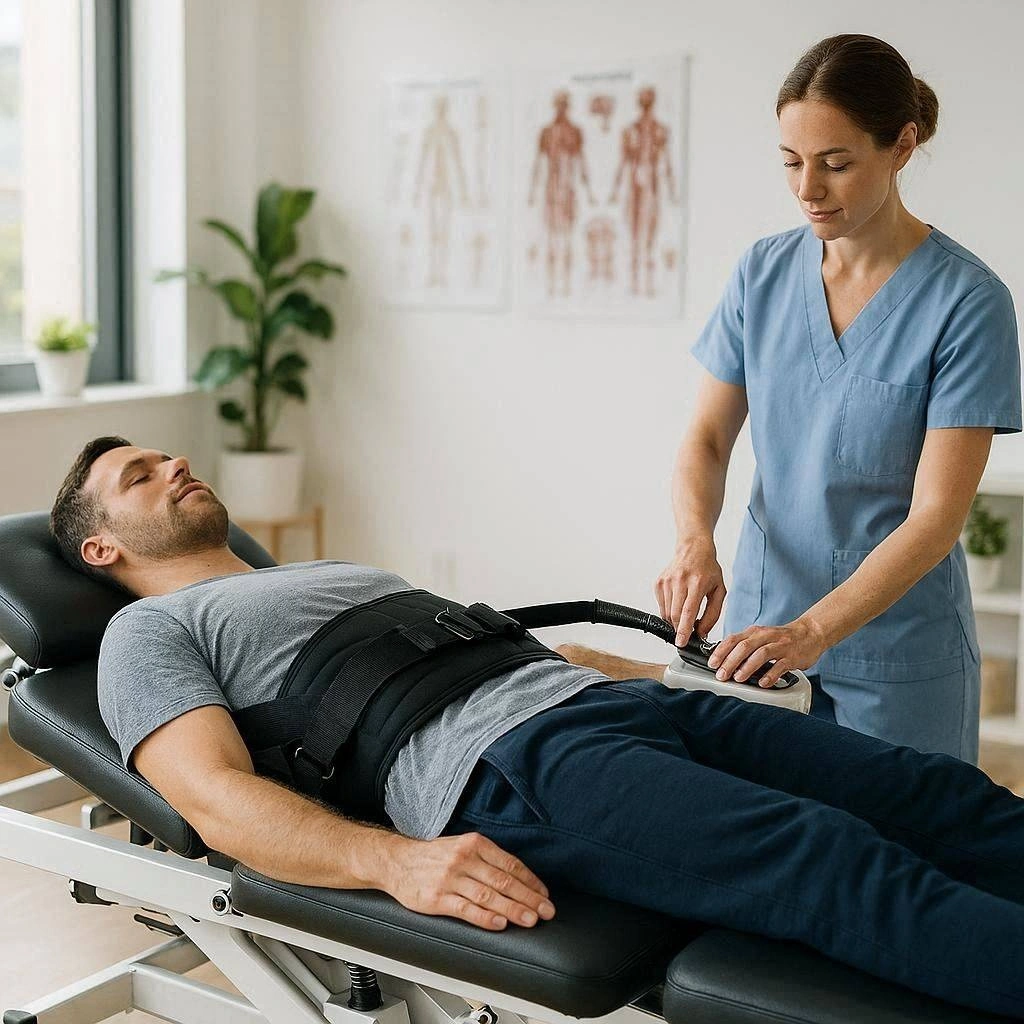
Spinal Decompression: A Non-Surgical Solution for Back Pain, Neck Pain, and Disc Recovery
Back pain and neck pain are among the most common musculoskeletal conditions affecting people of all ages. Whether caused by a herniated disc, degenerative disc disease, sciatica, or spinal joint dysfunction, these conditions can interfere with work, exercise, and daily activities. Fortunately, spinal decompression is a non-surgical treatment option designed to relieve pressure on the spine, reduce nerve irritation, and support the body’s natural healing process.Unlike treatments that only mask symptoms, spinal decompression focuses on addressing the underlying mechanical causes of pain. By gently stretching the spine under controlled conditions, this therapy helps reduce pressure on spinal discs and nerves while improving circulation to injured tissues. As a result, many patients experience less pain, greater mobility, and improved overall function without surgery.
What Is Spinal Decompression?
It is a conservative treatment that gently stretches the spine to reduce pressure within the spinal discs. The goal is to relieve compression affecting nerves, joints, and soft tissues while promoting the movement of nutrients, oxygen, and fluids into damaged discs.
It may be performed manually by a healthcare professional or with specialized motorized equipment that carefully controls the amount of traction applied to the spine.
Before treatment begins, a comprehensive assessment is performed to determine whether spinal decompression is appropriate for your condition.
The evaluation may include:
-
Medical history review
-
Discussion of symptoms
-
Posture assessment
-
Spinal mobility testing
-
Muscle strength evaluation
-
Neurological examination
-
Functional movement analysis
-
Review of imaging studies such as MRI or X-rays when available
Following the assessment, an individualized treatment plan is developed based on your diagnosis, symptoms, and recovery goals.
How Spinal Decompression Works
Healthy spinal discs act as cushions between the vertebrae, absorbing shock while allowing movement. However, injury, aging, repetitive stress, or poor posture may cause discs to bulge, herniate, or degenerate. Consequently, nearby nerves may become irritated or compressed, resulting in pain, numbness, tingling, or weakness.
Spinal decompression creates gentle negative pressure within the affected discs. This process may help reduce disc pressure, encourage improved fluid exchange, and decrease stress on compressed nerves. Furthermore, reducing spinal compression often allows surrounding muscles to relax, improving flexibility and overall movement.
Conditions That May Benefit from Spinal Decompression
Healthcare professionals commonly recommend spinal decompression for several musculoskeletal conditions.
Herniated Discs
A herniated disc occurs when the soft center of a spinal disc pushes through its outer layer. Spinal decompression may reduce pressure on the affected disc and surrounding nerves.
Bulging Discs
Although less severe than herniated discs, bulging discs can still cause pain and nerve irritation. Conservative treatment often helps improve symptoms.
Degenerative Disc Disease
Age-related changes may reduce disc height and flexibility. Spinal decompression can help relieve mechanical stress while supporting spinal mobility.
Sciatica
Compression of the sciatic nerve frequently causes pain that travels from the lower back into the leg. Decompression may reduce pressure contributing to these symptoms.
Chronic Neck Pain
Patients with cervical disc problems often benefit from gentle decompression combined with rehabilitation exercises and posture correction.
Chronic Lower Back Pain
Persistent lower back pain associated with spinal compression or disc injuries may improve through individualized decompression therapy.
Benefits of Spinal Decompression
Non-Surgical Treatment
One of the greatest advantages of spinal decompression is that it provides a conservative alternative for many patients who wish to avoid surgery.
Reduced Pain
By decreasing pressure on spinal structures, decompression therapy often helps reduce back pain, neck pain, and nerve-related symptoms.
Improved Mobility
Less spinal compression allows joints and muscles to move more freely. Consequently, patients frequently notice improved flexibility and range of motion.
Better Disc Health
Improved circulation of nutrients and fluids supports healthy spinal discs and may encourage the body’s natural healing response.
Reduced Nerve Irritation
Decreasing pressure on spinal nerves often helps reduce numbness, tingling, burning sensations, and radiating pain.
Enhanced Quality of Life
As pain decreases and mobility improves, many patients are able to return to work, exercise, hobbies, and everyday activities with greater confidence.
Treatments Often Combined with Spinal Decompression
Spinal decompression is usually most effective when combined with a comprehensive rehabilitation program.
Chiropractic Care
Chiropractic adjustments improve spinal mobility while restoring normal joint movement.
Therapeutic Exercise
Personalized exercise programs strengthen the muscles supporting the spine and improve long-term stability.
Core Strengthening
Strong abdominal and back muscles reduce stress on spinal discs while improving posture.
Stretching Programs
Stretching tight muscles improves flexibility and helps reduce additional strain on the spine.
Postural Education
Patients learn healthy sitting, standing, lifting, and workplace habits that protect the spine during everyday activities.
Supporting Recovery at Home
Home care plays a significant role in successful rehabilitation.
Patients are encouraged to:
-
Complete prescribed exercises.
-
Walk regularly.
-
Stretch daily.
-
Avoid prolonged sitting.
-
Maintain proper posture.
-
Lift objects correctly.
-
Stay hydrated.
-
Sleep on a supportive mattress.
-
Maintain a healthy body weight.
-
Follow professional recommendations consistently.
Most importantly, maintaining healthy movement habits helps support long-term spinal health.
Who Is a Good Candidate for Spinal Decompression?
Spinal decompression may benefit individuals experiencing:
-
Herniated discs
-
Bulging discs
-
Degenerative disc disease
-
Sciatica
-
Chronic back pain
-
Chronic neck pain
-
Nerve compression
-
Limited spinal mobility
However, not everyone is an appropriate candidate. Certain medical conditions require alternative treatment approaches.
Who Should Avoid Spinal Decompression?
Spinal decompression may not be suitable for individuals with:
-
Severe osteoporosis
-
Spinal fractures
-
Certain spinal infections
-
Spinal tumors
-
Advanced spinal instability
-
Recent spinal surgery without medical clearance
-
Pregnancy (depending on the treatment method)
A healthcare professional will determine whether decompression is appropriate after a thorough assessment.
When Should You Seek Professional Care?
Professional evaluation is recommended if you experience:
-
Persistent back or neck pain
-
Pain radiating into the arms or legs
-
Numbness or tingling
-
Reduced mobility
-
Difficulty walking
-
Recurring episodes of spinal pain
-
Pain affecting work or daily activities
Early intervention often improves recovery while reducing the risk of chronic symptoms.
When Is Emergency Medical Care Necessary?
Seek immediate medical attention if you experience:
-
Loss of bowel or bladder control
-
Severe weakness in the arms or legs
-
Numbness around the groin or saddle area
-
High fever with severe spinal pain
-
Significant trauma after an accident
-
Progressive neurological symptoms
-
Loss of balance accompanied by severe spinal pain
These symptoms require urgent medical evaluation.
Why Choose Professional Spinal Decompression?
Professional spinal decompression provides a carefully controlled treatment designed specifically for your condition. Healthcare providers evaluate your spinal health, determine whether decompression is appropriate, and monitor your progress throughout rehabilitation. Furthermore, treatment is often combined with exercise, posture correction, and education to maximize long-term outcomes.
Because every patient is different, personalized treatment plans generally produce better results than generalized approaches.
Conclusion (Spinal Decompression)
It offers a safe, non-surgical approach to relieving back pain, neck pain, disc injuries, and nerve compression. By reducing pressure on spinal discs and nerves, improving mobility, and supporting natural healing, this treatment helps many individuals recover without invasive procedures.Whether your symptoms are caused by a herniated disc, bulging disc, sciatica, or degenerative spinal changes, professional It may be an effective part of your recovery plan. Combined with chiropractic care, therapeutic exercise, healthy posture, and consistent home care, spinal decompression can help restore movement, reduce pain, and support long-term spinal health.