
What Causes Thumb Pain When Gripping or Pinching? Causes, Treatment, and Exercises
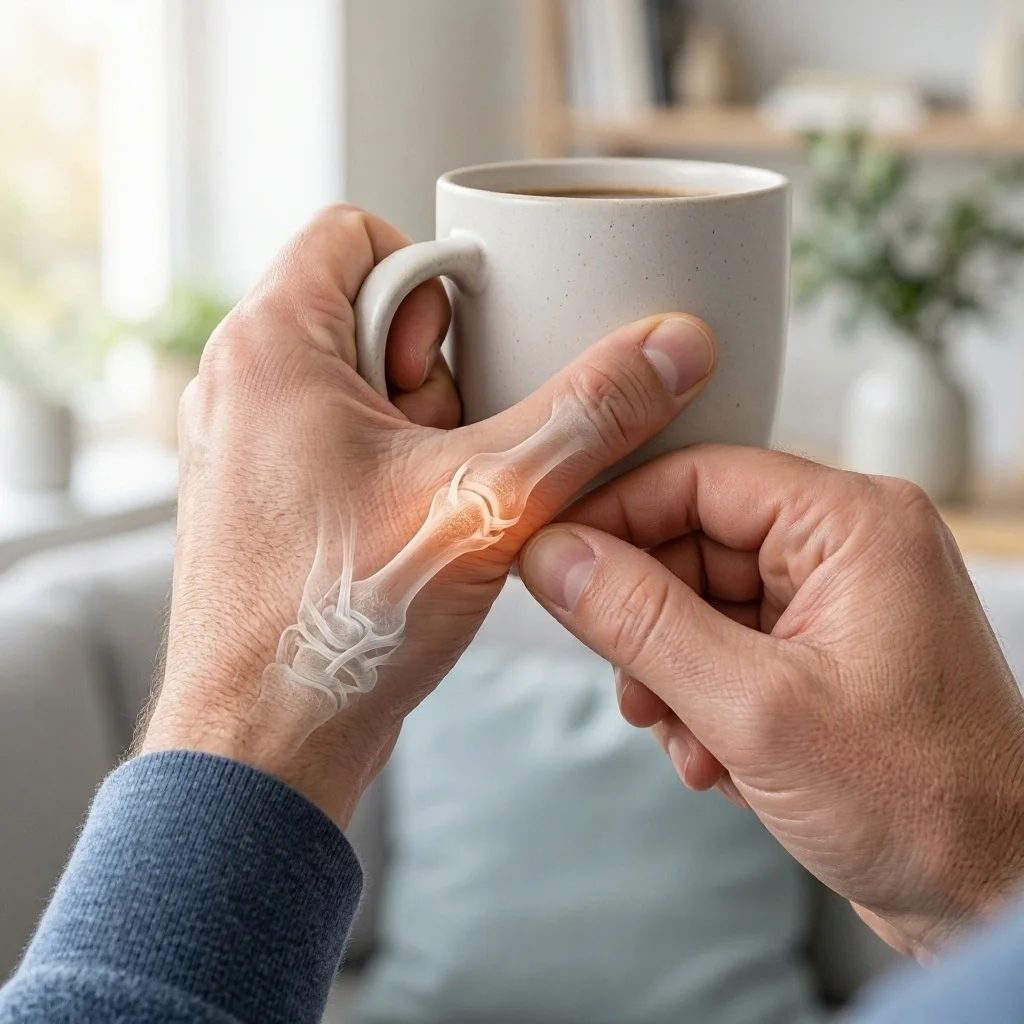
Thumb pain when gripping or pinching can make everyday activities surprisingly difficult. You may notice discomfort when opening a jar, turning a key, holding your phone, writing, lifting a cup, or carrying shopping bags. Sometimes the pain develops gradually after repetitive hand movements. In other cases, it starts following an injury or appears alongside swelling and stiffness.
The thumb plays an essential role in hand function. Unlike the other fingers, it can move across the palm and work with the fingertips to create a strong grip and precise pinch. This movement depends on several joints, tendons, ligaments, and muscles. When one of these structures becomes irritated or injured, gripping and pinching may become painful.
Common causes include thumb arthritis, De Quervain’s tenosynovitis, trigger thumb, tendon irritation, and ligament injuries. Understanding where the pain occurs and which movements make it worse can help identify the possible cause.
This article explains why your thumb may hurt when gripping or pinching, what symptoms to watch for, and which treatments and exercises may help restore comfortable hand movement.
Why Does My Thumb Hurt When I Grip or Pinch?
Your thumb works with the rest of your hand to hold objects, apply pressure, and control small movements. During gripping and pinching, several structures experience mechanical stress.
For example, opening a tight jar requires your thumb to stabilize the object while your fingers apply force. Similarly, holding a pen requires coordinated movement between the thumb and index finger.
If the joint cartilage, tendons, or surrounding soft tissues become irritated, these activities can produce pain.
The location of the discomfort can provide useful clues:
Pain at the base of the thumb: May be associated with thumb arthritis or tendon irritation.
Pain near the thumb-side of the wrist: May suggest De Quervain’s tenosynovitis.
Pain in the palm near the thumb: May be associated with trigger thumb.
Pain following an injury: Could indicate a sprain, ligament injury, or fracture.
Pain with numbness or tingling: May involve nerve compression, such as carpal tunnel syndrome.
These patterns are not diagnostic on their own. A proper assessment is necessary to determine the underlying problem.
Common Causes of Thumb Pain When Gripping or Pinching
1. Thumb Osteoarthritis
One of the common causes of pain during gripping and pinching is osteoarthritis at the base of the thumb.
The joint connecting the thumb to the wrist is called the carpometacarpal (CMC) joint. It allows the thumb to move in different directions, making it possible to hold objects and perform precise movements.
Over time, the cartilage inside this joint may wear down. As the joint becomes less protected, movement can produce discomfort and inflammation.
Common symptoms include:
Pain at the base of the thumb.
Discomfort when opening jars or turning keys.
Weakness during gripping and pinching.
Swelling or tenderness around the joint.
Stiffness after periods of inactivity.
Reduced thumb movement.
Thumb arthritis often develops gradually. Activities that require strong pinching or repeated gripping may make the symptoms more noticeable.
Age, previous thumb injuries, family history, and repetitive hand activities may contribute to the risk of developing this condition.
If you regularly experience pain when holding objects or turning door handles, an assessment can help determine whether the CMC joint is involved.
2. De Quervain’s Tenosynovitis
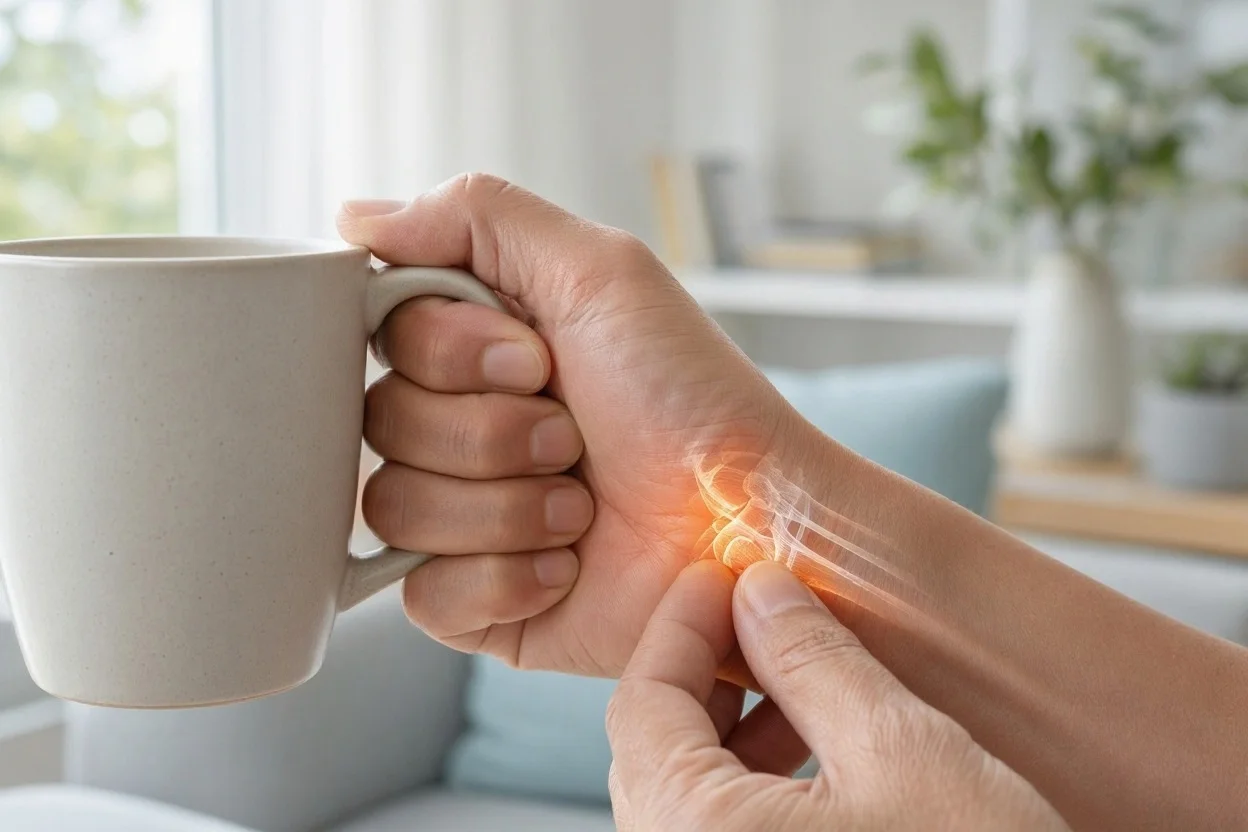
De Quervain’s tenosynovitis affects the tendons running along the thumb side of the wrist. These tendons help move the thumb away from the hand and straighten it.
The tendons normally glide through a narrow protective tunnel. When the surrounding tendon sheath becomes irritated or thickened, movement may become painful.
Symptoms often include:
Pain near the base of the thumb and wrist.
Tenderness along the thumb-side of the wrist.
Discomfort when gripping or pinching.
Pain when lifting objects.
Swelling around the affected tendons.
Difficulty moving the thumb comfortably.
The pain may also spread toward the forearm.
Activities involving repeated thumb and wrist movements can aggravate this condition. Examples include gardening, lifting a child, playing racket sports, using tools, and repeatedly gripping a phone.
If your thumb hurts when you make a fist, grip an object, or turn your wrist, De Quervain’s tenosynovitis is one possible explanation.
3. Trigger Thumb
Trigger thumb is a condition that affects the tendon responsible for bending the thumb.
A healthy tendon moves smoothly through a protective sheath. When the tendon or its surrounding tissue becomes thickened, the tendon may struggle to glide normally.
This can cause the thumb to catch or lock during movement.
Common symptoms include:
Pain near the base of the thumb.
Tenderness on the palm side.
Clicking or popping when bending the thumb.
Stiffness, particularly after waking.
Difficulty straightening the thumb.
A thumb that temporarily becomes locked in a bent position.
Repeated gripping may aggravate symptoms. Some people notice that the thumb clicks when they try to straighten it after holding an object.
Trigger thumb can occur alongside other hand conditions. Diabetes and certain arthritic conditions may increase the likelihood of trigger finger or thumb problems.
If your thumb repeatedly locks or catches, avoid forcing it straight. A healthcare professional can assess the tendon and recommend appropriate treatment.
4. Thumb Sprain or Ligament Injury
Ligaments connect bones and help stabilize joints. A thumb sprain occurs when one or more of these ligaments become stretched or torn.
This can happen when the thumb is bent backward or forced away from the hand. Falls, sporting injuries, and accidents are common situations in which thumb ligaments may be damaged.
Symptoms can include:
Sudden pain after an injury.
Swelling around the thumb joint.
Bruising.
Tenderness when pressing the joint.
Difficulty gripping objects.
A feeling that the thumb is unstable.
Some ligament injuries affect the joint near the base of the thumb, while others involve the joint closer to the palm.
A significant injury should be assessed because a severe ligament tear may require specialist treatment. Continuing to grip heavy objects with an injured thumb can make symptoms worse.
5. Tendon Irritation From Repetitive Hand Use
Repetitive hand movements can place repeated stress on the muscles and tendons responsible for thumb movement.
This may happen when you:
Use your smartphone for extended periods.
Work with a computer mouse.
Perform repetitive manual tasks.
Use hand tools.
Play musical instruments.
Spend long periods writing or drawing.
Tendon irritation may produce discomfort during gripping, pinching, or moving the thumb against resistance.
The pain can develop gradually and become more noticeable after a demanding day.
Reducing aggravating activities, improving hand positioning, and gradually restoring comfortable movement may help. However, persistent symptoms should be assessed to rule out a specific tendon condition.
6. Carpal Tunnel Syndrome
Carpal tunnel syndrome occurs when the median nerve becomes compressed as it passes through the wrist.
Although the problem occurs at the wrist, symptoms can affect the thumb, index finger, middle finger, and part of the ring finger.
Possible symptoms include:
Tingling or numbness in the thumb.
Pain or discomfort in the hand.
Weakness when gripping objects.
Difficulty holding small items.
Symptoms that become more noticeable at night.
Carpal tunnel syndrome is not the most common explanation for isolated thumb pain during pinching. However, nerve compression can affect thumb function and make gripping more difficult.
If your thumb pain occurs alongside numbness, tingling, or noticeable weakness, seek an assessment rather than treating it as a simple muscle strain.
How Can You Tell What Is Causing Your Thumb Pain?
The location of the pain, how it started, and which movements trigger it can help distinguish between possible causes.
| Symptoms | Possible cause |
|---|---|
| Pain at the base of the thumb when opening jars | Thumb osteoarthritis |
| Pain near the thumb-side of the wrist during gripping | De Quervain’s tenosynovitis |
| Clicking or locking when bending the thumb | Trigger thumb |
| Sudden pain and swelling after an injury | Thumb sprain or fracture |
| Pain after repetitive gripping and tool use | Tendon irritation |
| Thumb pain with tingling or numbness | Possible nerve compression |
These symptoms can overlap. For example, someone may have thumb arthritis and carpal tunnel syndrome at the same time. A healthcare professional may examine joint movement, tendon function, grip strength, sensation, and stability.
Depending on the findings, an X-ray or other investigation may be recommended.
How Can I Reduce Thumb Pain When Gripping or Pinching?
The right treatment depends on the underlying cause. However, several practical changes may help reduce unnecessary strain while your thumb recovers.
1. Reduce Repetitive Gripping
If certain activities consistently trigger pain, temporarily reduce their frequency or intensity.
For example:
Avoid opening very tight jars without assistance.
Use both hands when carrying heavier objects.
Choose tools with wider, comfortable handles.
Avoid squeezing objects more tightly than necessary.
Take breaks during repetitive work.
Change your grip when using a smartphone.
The aim is to reduce excessive loading without completely stopping comfortable hand movement.
2. Apply Cold Therapy When Appropriate
If your thumb becomes painful or swollen after an activity or recent injury, a cold pack may help relieve discomfort.
Wrap the cold pack in a towel and apply it for up to 20 minutes. Do not place ice directly against your skin.
Avoid using cold therapy if you have reduced sensation or circulation problems without first getting appropriate advice.
The NHS also recommends temporarily reducing painful activities and using a wrapped ice pack for thumb pain.
3. Consider a Thumb Support
A thumb splint may help reduce movement and provide support during everyday activities.
The appropriate splint depends on the problem:
A thumb-spica splint may be recommended for De Quervain’s tenosynovitis.
A CMC support may help some people with thumb-base arthritis.
Other supports may be considered after a ligament injury.
A splint should fit comfortably and should not cause numbness, increased pain, or skin irritation. Ask a healthcare professional which type is suitable for your symptoms.
4. Adjust Your Smartphone and Computer Habits
Frequent smartphone use can increase repetitive thumb movements, particularly when you type or scroll using only one hand.
Try these changes:
Hold your phone with both hands.
Use your index finger for scrolling when comfortable.
Avoid prolonged one-handed texting.
Use voice typing for longer messages.
Take regular breaks.
Keep your wrist in a comfortable position.
At a computer, avoid holding the mouse tightly. A comfortable workstation and relaxed grip may reduce unnecessary hand strain.
Exercises That May Help With Thumb Pain
Gentle exercises can help maintain thumb mobility and support hand function. However, they are not suitable for every injury or condition.
Start slowly and avoid forcing your thumb into painful positions. If an exercise increases swelling, sharp pain, clicking, or locking, stop and seek professional advice.
1. Thumb Opposition Exercise
Purpose: Maintain comfortable thumb movement.
Hold your hand in front of you with your fingers relaxed.
Slowly move your thumb toward your index finger.
Touch the fingertip gently.
Move your thumb toward your middle finger.
Continue toward your ring and little fingers.
Slowly return to the starting position.
Repeat several times if comfortable.
2. Thumb Extension Exercise
Purpose: Maintain movement away from the palm.
Place your hand on a table with your palm facing upward.
Keep your fingers relaxed.
Slowly move your thumb away from your palm.
Hold briefly without forcing the movement.
Return to the starting position.
Repeat gently.
3. Gentle Thumb Flexion
Purpose: Maintain comfortable bending movement.
Hold your hand in a relaxed position.
Slowly move your thumb across your palm.
Aim toward the base of your little finger.
Stop if you feel significant discomfort.
Return your thumb to its starting position.
This movement should remain controlled and comfortable.
4. Gentle Finger Opening and Closing
Purpose: Maintain general hand mobility.
Extend your fingers gently.
Slowly bend them toward your palm.
Make a loose fist without squeezing.
Open your hand again.
Repeat several times.
These exercises are intended to maintain movement, not to strengthen an injured tendon or joint aggressively. If you have a recent thumb injury, significant swelling, or a locking thumb, obtain professional guidance before starting an exercise programme.
When Should You See a Healthcare Professional?
Thumb pain that repeatedly interferes with gripping, pinching, or everyday activities should not be ignored.
Arrange an assessment if:
Your thumb pain keeps returning.
Pain is gradually becoming worse.
You have swelling or tenderness around the joint.
Your grip strength is decreasing.
Your thumb clicks or locks during movement.
You experience numbness or tingling.
Home treatment has not improved symptoms after two weeks.
You have diabetes and develop a new or persistent hand problem.
Seek urgent medical attention if you experience severe pain, a significant injury, an obvious change in thumb shape or colour, loss of sensation, or an inability to move your thumb or hold objects. These symptoms may indicate a fracture or another serious injury.
How Can Physiotherapy Help With Thumb Pain?
Physiotherapy may help people experiencing thumb pain related to repetitive strain, reduced joint mobility, certain tendon problems, or recovery after an injury.
Treatment begins with an assessment of how your thumb and wrist move. A physiotherapist may also examine grip strength, joint mobility, tenderness, and how particular activities affect your symptoms.
Depending on the findings, treatment may include:
Mobility exercises: Gentle movements can help maintain comfortable thumb and wrist movement.
Strengthening exercises: Once pain has settled sufficiently, progressive exercises may help improve the muscles involved in gripping and hand control.
Activity modification: A physiotherapist can help identify repetitive movements that aggravate symptoms and suggest practical adjustments.
Movement and ergonomic advice: Changes to how you hold tools, use a keyboard, or handle everyday objects may reduce unnecessary strain.
Rehabilitation after injury: A structured programme may help restore movement and function after an appropriate period of protection and recovery.
At Ritz Clinic’s Physiotherapy Services, patients can explore physiotherapy support for musculoskeletal pain and movement-related problems. Treatment recommendations should be based on an individual assessment, especially when thumb pain is associated with joint swelling, tendon locking, or an injury.
In selected cases, Soft Tissue Therapy at Ritz Clinic may also be relevant as part of a broader rehabilitation approach. However, soft tissue treatment alone cannot correct joint damage or replace medical treatment for a significant ligament injury or nerve compression.
Frequently Asked Questions
1. Why does my thumb hurt when I squeeze something?
Pain during squeezing may be related to thumb-base arthritis, tendon irritation, De Quervain’s tenosynovitis, or a ligament injury. The location of the pain and whether swelling or clicking is present can help identify the possible cause.
2. Why does the base of my thumb hurt when pinching?
The carpometacarpal joint at the base of your thumb experiences considerable force during pinching. Osteoarthritis in this joint can cause pain, tenderness, and weakness when holding small objects or opening jars.
3. Can using my phone cause thumb pain?
Yes. Repeated scrolling, texting, and holding your phone in one position can increase strain on the thumb and surrounding tendons. Taking breaks, switching hands, and avoiding excessive one-handed use may help.
4. Is thumb pain a sign of arthritis?
It can be, particularly when pain is located at the base of the thumb and worsens during gripping or pinching. However, tendon problems, trigger thumb, and injuries can cause similar symptoms. An assessment is needed to distinguish between them.
5. How long does thumb tendon pain take to improve?
Recovery time depends on the affected tendon, severity of irritation, and treatment. Mild symptoms may improve with activity modification, while persistent De Quervain’s tenosynovitis or trigger thumb may require additional treatment.
6. Should I wear a thumb brace?
A suitable thumb brace may reduce painful movement and support the joint or tendons. However, the correct design depends on the cause. A healthcare professional can help determine whether a thumb-spica splint or another type of support is appropriate.
7. Can I exercise if my thumb hurts?
Gentle movement may help maintain mobility, but avoid exercises that produce sharp pain, increased swelling, or locking. If the pain began after an injury, get it assessed before starting strengthening exercises.
8. Does De Quervain’s tenosynovitis cause pain when gripping?
Yes. It commonly causes pain near the thumb-side of the wrist, particularly during gripping, pinching, lifting, and twisting movements. The discomfort may also spread toward the thumb or forearm.
Conclusion
Thumb pain when gripping or pinching can develop for several reasons, including osteoarthritis, De Quervain’s tenosynovitis, trigger thumb, tendon irritation, and ligament injuries. Although these conditions can produce similar symptoms, the location and nature of the pain often provide useful clues.
Reducing repetitive gripping, adjusting smartphone habits, using appropriate support, and performing comfortable mobility exercises may help improve symptoms. However, persistent pain, swelling, clicking, numbness, or reduced grip strength should be professionally assessed.
The most effective approach is to identify the underlying cause rather than simply avoiding activities that hurt. With an appropriate assessment and treatment plan, many people can improve thumb movement and return to everyday activities more comfortably.
Summary Table
| Topic | Key information |
|---|---|
| Common causes | Thumb arthritis, De Quervain’s tenosynovitis, trigger thumb, tendon irritation, and sprains |
| Typical symptoms | Pain during gripping, pinching, lifting, or twisting |
| Pain at thumb base | May indicate CMC joint arthritis |
| Pain near wrist | May indicate De Quervain’s tenosynovitis |
| Clicking or locking | May indicate trigger thumb |
| Home management | Activity modification, appropriate cold therapy, and suitable thumb support |
| Exercises | Thumb opposition, extension, flexion, and gentle hand movements |
| Professional treatment | Medical assessment and individualized physiotherapy where appropriate |