Why Does My Knee Hurt When Going Downstairs? Causes, Treatment, and Prevention
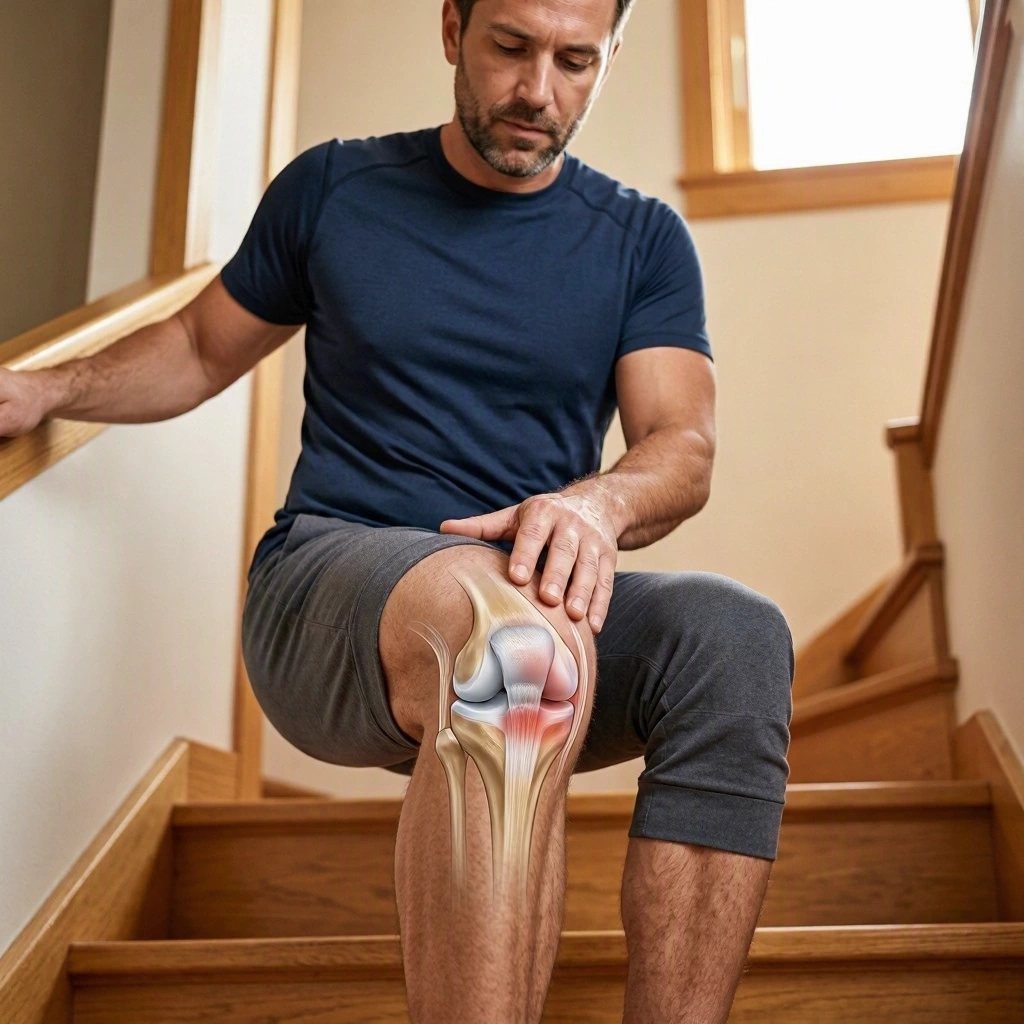
Knee pain when walking downstairs can make a simple daily activity uncomfortable. You might notice a sharp pain around your kneecap, an aching sensation inside the joint, or stiffness that becomes worse each time you bend your knee. Sometimes, the discomfort appears only when descending stairs, while walking on flat ground feels completely normal.
So, why does your knee hurt when going downstairs? One common explanation is patellofemoral pain syndrome, a condition that affects the area around or behind the kneecap. However, knee arthritis, tendon irritation, meniscus injuries, and muscle weakness can also contribute to the problem.
Understanding where the pain occurs, when it started, and whether other symptoms are present can help you decide what to do next. This guide explains the most common causes of knee pain on stairs, practical ways to reduce discomfort, and when to consider professional assessment.
Why Is Going Downstairs Harder on Your Knees?
Walking downstairs places different demands on your knees than walking on a level surface. As you lower your body from one step to the next, the muscles around your knee work to control the movement and prevent you from dropping too quickly.
Your quadriceps muscles, located at the front of your thighs, help control this lowering motion. At the same time, your kneecap moves against the thigh bone as your knee bends.
These movements increase the forces acting on the knee joint. If the joint is irritated, the surrounding muscles are weak, or the kneecap does not move comfortably, you may experience pain while descending stairs.
According to the Cleveland Clinic’s guide to patellofemoral pain syndrome, pain around the kneecap can become more noticeable during activities such as squatting, running, and walking downstairs.
However, the exact cause varies from person to person. Stair-related pain is a symptom rather than a diagnosis.
7 Common Reasons Your Knee Hurts When Going Downstairs
1. Patellofemoral Pain Syndrome
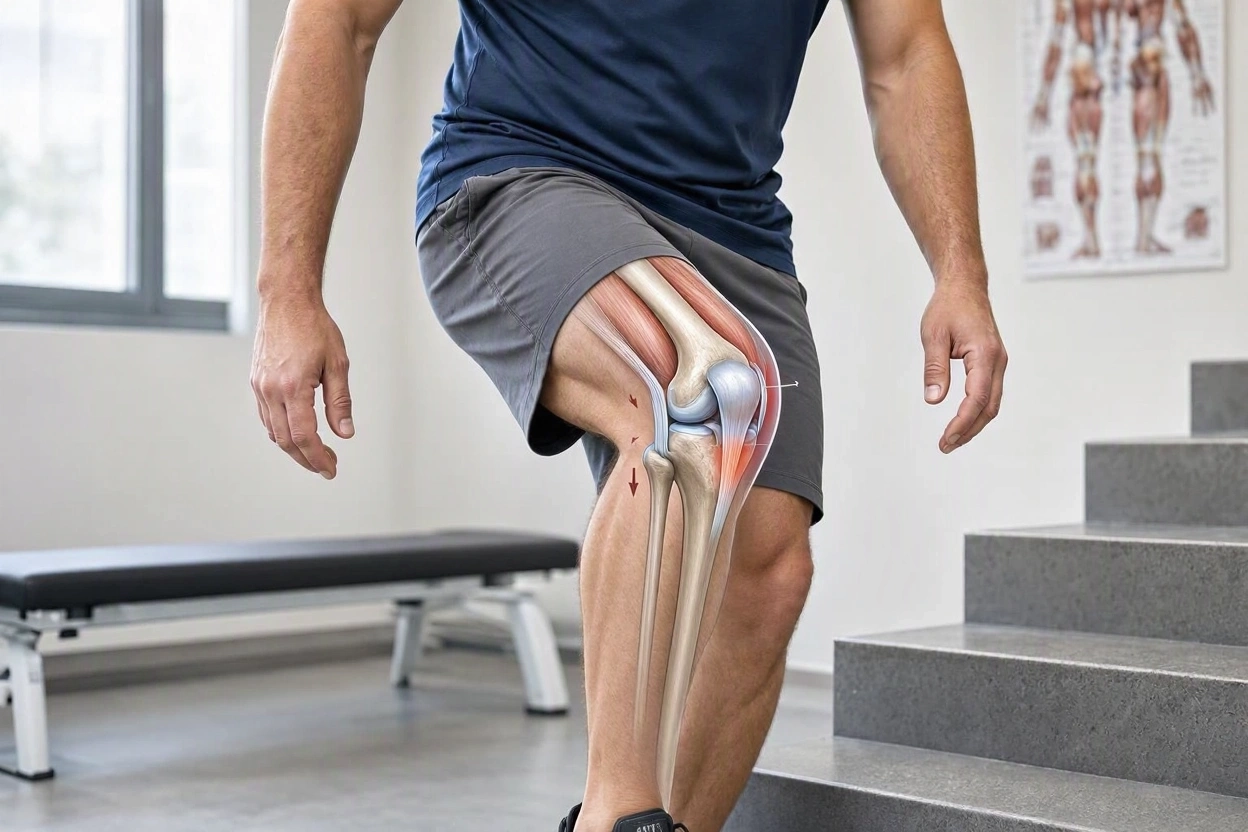
Patellofemoral pain syndrome, sometimes called runner’s knee, is one of the common causes of pain around or behind the kneecap.
People with this condition often describe a dull ache at the front of the knee. The discomfort may become sharper when bending the knee, squatting, exercising, or descending stairs.
Other possible symptoms include:
- Pain around or underneath the kneecap.
- Discomfort after sitting with the knees bent for a long time.
- Pain during squats or lunges.
- Occasional clicking or grinding sensations.
- Symptoms that worsen after increasing physical activity.
This condition can develop without a specific injury. Changes in exercise intensity, weakness in the hip or thigh muscles, and excessive or sudden increases in activity may contribute.
A healthcare professional can assess your symptoms and movement to determine whether patellofemoral pain is a likely explanation.
2. Knee Osteoarthritis
Osteoarthritis occurs when changes in the joint’s cartilage and surrounding structures cause pain, stiffness, and sometimes swelling. It becomes more common with age, although younger people can also develop it, particularly after certain injuries.
If osteoarthritis contributes to your knee pain, you may notice:
- Stiffness after waking up or sitting for a long time.
- Pain during stair climbing or descending.
- Reduced flexibility when bending the knee.
- Swelling or tenderness.
- Discomfort after prolonged walking or standing.
The pain may be more noticeable when your knee supports your body weight while bent.
Not every painful knee has arthritis, and stair pain alone cannot confirm this diagnosis. A clinician will consider your symptoms, medical history, and physical examination before recommending further tests.
3. Quadriceps or Hip Muscle Weakness
The muscles around your hips and knees help control how your leg moves. When these muscles lack strength or endurance, your knee may have difficulty tolerating repeated activities such as descending stairs.
Your quadriceps are particularly important because they control the movement of your body as you lower yourself onto the next step.
Muscle weakness may develop after a period of inactivity, an injury, surgery, or a sudden reduction in exercise. It can also occur when your usual activity increases faster than your muscles can adapt.
In some cases, improving strength and movement control through an appropriate exercise programme can reduce discomfort and make everyday activities easier.
However, strengthening exercises should match your symptoms and physical abilities. If your knee is very painful, swollen, or unstable, seek professional advice before starting a new routine.
4. Patellar Tendon Irritation
The patellar tendon connects the kneecap to the shinbone. It helps transfer force from the quadriceps to straighten your knee.
Repeated jumping, running, or other activities that place substantial demands on this tendon can cause irritation.
Pain associated with patellar tendon problems is often felt just below the kneecap. It may worsen during jumping, squatting, running, or using stairs.
If the pain began after a substantial increase in training or repetitive activity, tendon irritation may be worth considering.
Reducing aggravating activities temporarily and gradually rebuilding strength may help. Persistent or severe symptoms should be assessed to distinguish tendon problems from other causes of knee pain.
5. Meniscus Injury
The menisci are pieces of cartilage that help distribute loads and support movement within the knee. A meniscus can become injured during a twisting movement, sports activity, or sometimes through age-related changes.
Possible symptoms include:
- Pain along the inner or outer side of the knee.
- Swelling that develops after an injury.
- Difficulty bending or straightening the knee.
- A catching sensation during movement.
- Locking or a feeling that the knee is giving way.
Going downstairs may aggravate these symptoms because the knee bends while supporting body weight.
If your knee started hurting after a twist, fall, or sudden movement, particularly if you have swelling or difficulty straightening it, arrange a medical assessment. A knee that becomes locked or cannot bear weight requires urgent evaluation.
6. Previous Knee Injury
A previous ligament injury, kneecap injury, fracture, or surgery may affect how your knee tolerates daily activities.
Even after the initial injury has improved, you may experience reduced strength, stiffness, limited movement, or difficulty controlling the knee when lowering your body.
For example, someone recovering from a knee injury may feel comfortable walking on level ground but struggle with stairs because descending requires controlled muscle action.
Recovery may involve a combination of appropriate activity modification, mobility work, strengthening, and balance training. The best approach depends on the original injury and your current symptoms.
7. Bursitis or Other Causes of Inflammation
Bursae are small, fluid-filled sacs that help reduce friction between tissues around joints. When a bursa becomes irritated, it can cause local pain and swelling.
Knee bursitis may cause tenderness, warmth, or swelling, particularly around the front of the knee. Bending or kneeling can make the discomfort worse.
Other conditions, including inflammatory arthritis and, less commonly, joint infection, may also cause knee pain.
A knee that becomes suddenly hot, red, and swollen—especially when accompanied by fever or feeling unwell—needs urgent medical assessment. Do not assume that these symptoms are simply the result of overuse.
What Does the Location of Your Knee Pain Mean?
The location of your pain can provide useful clues, although it cannot establish a diagnosis on its own.
| Where you feel the pain | Possible explanations |
|---|---|
| Around or behind the kneecap | Patellofemoral pain syndrome |
| Just below the kneecap | Patellar tendon irritation or another source of anterior knee pain |
| Along the inner or outer joint line | Meniscus problems, osteoarthritis, or other joint conditions |
| Across the whole knee with stiffness | Osteoarthritis or another joint condition |
| Around the knee with swelling after an injury | Sprain, meniscus injury, or another structural injury |
Pay attention to whether your symptoms began suddenly or gradually. Also consider whether the pain occurs when walking upstairs, standing up from a chair, squatting, or sitting for extended periods.
Sharing these details with a healthcare professional can help guide the assessment.
How to Relieve Knee Pain When Going Downstairs
The right treatment depends on the underlying cause. Nevertheless, several practical measures may help reduce strain while you arrange an assessment or monitor mild symptoms.
1. Temporarily Reduce Activities That Aggravate the Pain
If stairs, deep squats, running, or jumping make your symptoms worse, reduce the intensity or frequency of those activities for a short period.
This does not necessarily mean avoiding all movement. Gentle activity that does not significantly aggravate your symptoms may help you maintain mobility.
Try to identify which activities your knee tolerates comfortably and adjust your routine accordingly.
2. Use a Handrail
A handrail can improve balance and help you control your movement while using stairs.
Move slowly and avoid rushing. If your knee feels unstable or the pain is severe, do not continue using stairs without appropriate assistance.
For some people, taking one step at a time is more comfortable than using a normal alternating-step pattern.
3. Apply Ice if the Knee Is Painful or Swollen
For a recent flare-up or injury, a cold pack wrapped in a towel may help relieve discomfort.
Apply it for approximately 15–20 minutes at a time, leaving several hours between applications if needed. Never place ice directly on your skin.
If you have reduced skin sensation or circulation problems, ask a healthcare professional whether cold therapy is appropriate for you.
4. Choose Supportive Footwear
Comfortable, supportive shoes may make walking easier and improve your confidence on stairs.
Replace footwear that is excessively worn or uncomfortable. However, shoes alone will not resolve every cause of knee pain, and the best footwear depends on your individual needs.
5. Return to Activity Gradually
Once your symptoms begin to settle, increase activity gradually rather than returning immediately to demanding workouts.
Suddenly increasing your walking distance, running volume, or number of stair repetitions may aggravate an already sensitive knee.
If pain repeatedly returns when you increase activity, consider getting professional advice about how to adjust your exercise programme.
Can Physiotherapy Help With Knee Pain on Stairs?
Physiotherapy may help when knee pain is associated with muscle weakness, movement difficulties, an overuse problem, or recovery after certain injuries.
A physiotherapist can assess your symptoms, strength, flexibility, balance, knee movement, and ability to perform everyday activities. This assessment helps identify potential contributing factors and determine whether further medical evaluation is needed.
Depending on the findings, a treatment plan may include:
- Strengthening exercises: To improve the capacity of the quadriceps, hip muscles, and other supporting muscles.
- Mobility exercises: To address relevant restrictions in movement.
- Movement retraining: To help you manage stairs and other activities more comfortably.
- Activity modification: To balance exercise and recovery without unnecessary inactivity.
- A gradual return to exercise: To rebuild strength and tolerance at a suitable pace.
Not everyone needs the same exercises or treatment. For example, a person with patellofemoral pain may need a different programme from someone recovering from a meniscus injury.
If knee discomfort is affecting your mobility or daily routine, learn more about physiotherapy services at Ritz Clinic. A professional assessment can help determine whether physiotherapy is appropriate for your symptoms and what other care may be necessary.
Exercises That May Help Your Knees
Exercise selection should depend on the cause and severity of your pain. When a clinician considers strengthening appropriate, a programme may include gentle quadriceps exercises, hip strengthening, and controlled functional movements.
Quadriceps Tightening
- Sit or lie with your leg extended in a comfortable position.
- Gently tighten the muscles at the front of your thigh.
- Hold the contraction for a few seconds while breathing normally.
- Relax and repeat if the movement is comfortable.
This exercise activates the quadriceps without requiring repeated stair climbing.
Straight Leg Raises
- Lie on your back with one knee bent and the other leg straight.
- Tighten the thigh muscles of the straight leg.
- Raise the leg slowly, keeping the knee straight.
- Lower it with control.
Start only if this movement is comfortable and appropriate for your condition.
Sit-to-Stand Practice
If your knee tolerates it, practise standing up from a stable chair and sitting down slowly.
Keep the movement controlled and use your hands for support if needed. Begin with a chair height that allows you to move comfortably.
Important: These are examples, not a personalised rehabilitation programme. Stop an exercise if it causes sharp pain, significant worsening of symptoms, or a sense of instability. Do not start strengthening exercises without medical guidance if your knee is acutely injured, severely swollen, locked, or unable to bear weight.
When Should You See a Healthcare Professional?
Mild knee discomfort may improve with sensible activity adjustments. However, ongoing pain deserves attention, especially when it interferes with walking, work, sleep, or other daily activities.
Arrange an assessment if:
- Your knee pain does not improve after a few weeks.
- The discomfort keeps returning whenever you use stairs.
- You have persistent swelling or stiffness.
- Your knee feels unstable or repeatedly gives way.
- You cannot fully bend or straighten your knee.
- Pain is limiting your usual activities.
Seek urgent medical attention if you cannot bear weight or move the knee, the knee becomes badly swollen or changes shape, or you experience severe pain following an injury. A hot, red knee accompanied by fever or feeling unwell may indicate a serious problem and also requires urgent assessment.
For additional guidance, see the NHS advice on knee pain.
How Can You Prevent Knee Pain When Using Stairs?
Although not every knee problem can be prevented, a few habits may reduce unnecessary strain.
Build strength gradually. Regular, appropriate strengthening can help improve the capacity of the muscles supporting your knees and hips.
Increase exercise slowly. Avoid making sudden changes to training intensity, running distance, or workout frequency.
Allow time for recovery. If your knee becomes increasingly painful after activity, review your routine instead of repeatedly pushing through the symptoms.
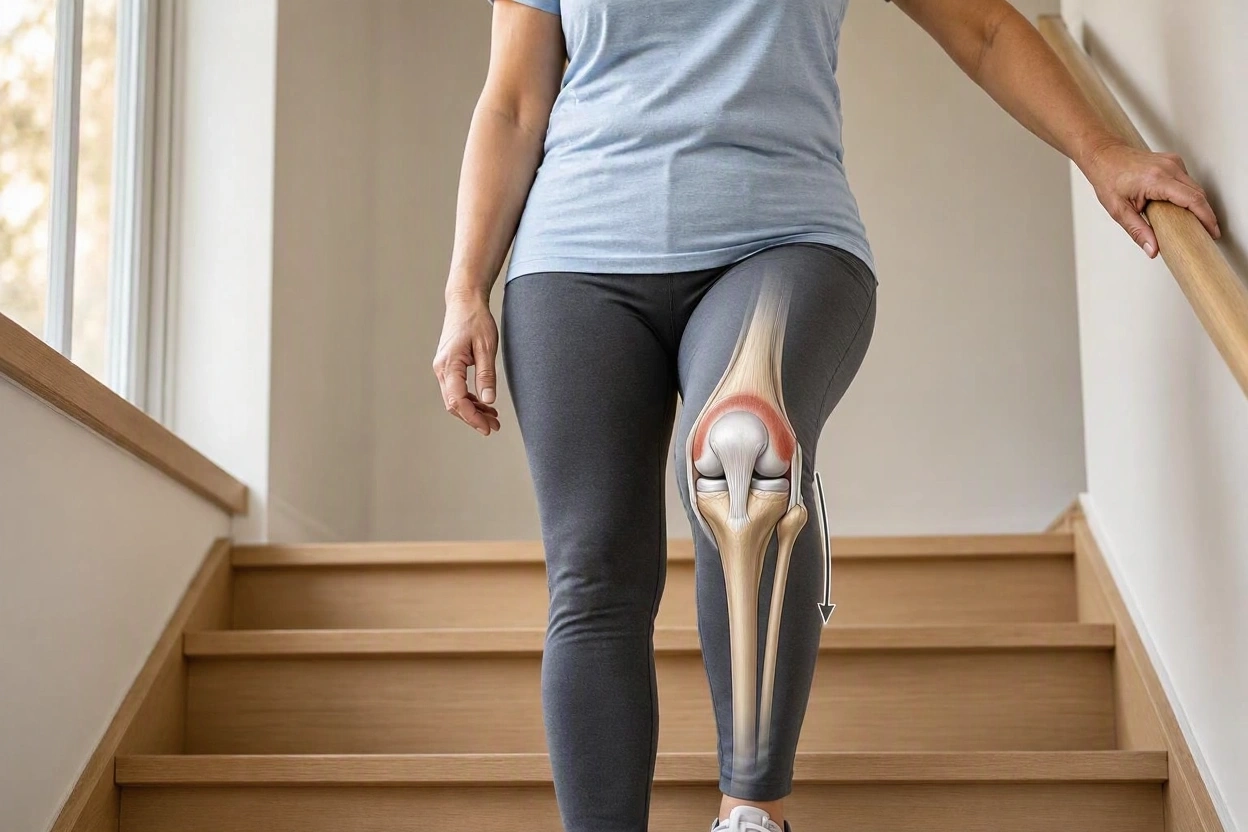
Pay attention to movement quality. Use the handrail when needed, move at a controlled pace, and avoid rushing down stairs when your knee feels uncomfortable.
Address recurring symptoms early. If knee pain keeps returning, a professional assessment may help identify contributing factors before the problem further limits your daily activities.
Frequently Asked Questions
Why does my knee hurt going downstairs but not upstairs?
Descending stairs requires your quadriceps to control your body’s downward movement while your knee remains bent. This can increase the load on the area around the kneecap. Patellofemoral pain is one possible explanation, but other knee conditions can produce similar symptoms.
Does knee pain when going downstairs mean I have arthritis?
No. Osteoarthritis can cause pain on stairs, particularly when accompanied by stiffness and reduced mobility, but it is not the only possible cause. Patellofemoral pain, tendon irritation, muscle weakness, and injuries can also contribute.
Why does my knee hurt when walking downstairs but not on flat ground?
Walking on level ground places different demands on the knee than stepping down. Descending stairs requires controlled lowering and greater knee bending, which may aggravate sensitive tissues or expose limitations in strength and movement control.
Should I stop using stairs if my knee hurts?
You may need to reduce unnecessary stair use temporarily if it aggravates your symptoms. When stairs are unavoidable, use a handrail, move slowly, and consider taking one step at a time. Avoid pushing through severe pain or continuing if the knee feels unstable.
Can physiotherapy fix knee pain when going downstairs?
Physiotherapy may improve pain, strength, movement, and daily function when the underlying problem responds to rehabilitation. Results depend on the cause, severity, and individual circumstances. Some conditions also require medical treatment or additional investigation.
How long does knee pain on stairs take to improve?
Recovery varies. Mild irritation may settle relatively quickly, while persistent patellofemoral pain, arthritis, and structural injuries may require a longer management plan. If your symptoms persist, worsen, or interfere with daily life, seek professional advice rather than relying on a fixed recovery timeline.
Is knee clicking when going downstairs dangerous?
Not necessarily. Clicking without pain or other symptoms is common and often harmless. However, painful clicking, locking, significant swelling, or a feeling that the knee gives way should be assessed by a healthcare professional.
Conclusion
If you are wondering, “Why does my knee hurt when going downstairs?”, the answer depends on the location of your pain, your medical history, and the movements that trigger your symptoms.
Patellofemoral pain syndrome is one common cause, but osteoarthritis, tendon irritation, muscle weakness, and meniscus injuries can also make descending stairs uncomfortable.
Start by reducing activities that aggravate your symptoms, using a handrail, and returning to activity gradually when appropriate. If the pain persists, affects your mobility, or occurs with swelling or instability, arrange a professional assessment.
With the right diagnosis and an appropriate treatment plan, many people can improve their knee function and return to daily activities more comfortably.
Medical disclaimer: This article is for educational purposes only and does not replace an individual assessment, diagnosis, or treatment plan from a qualified healthcare professional.