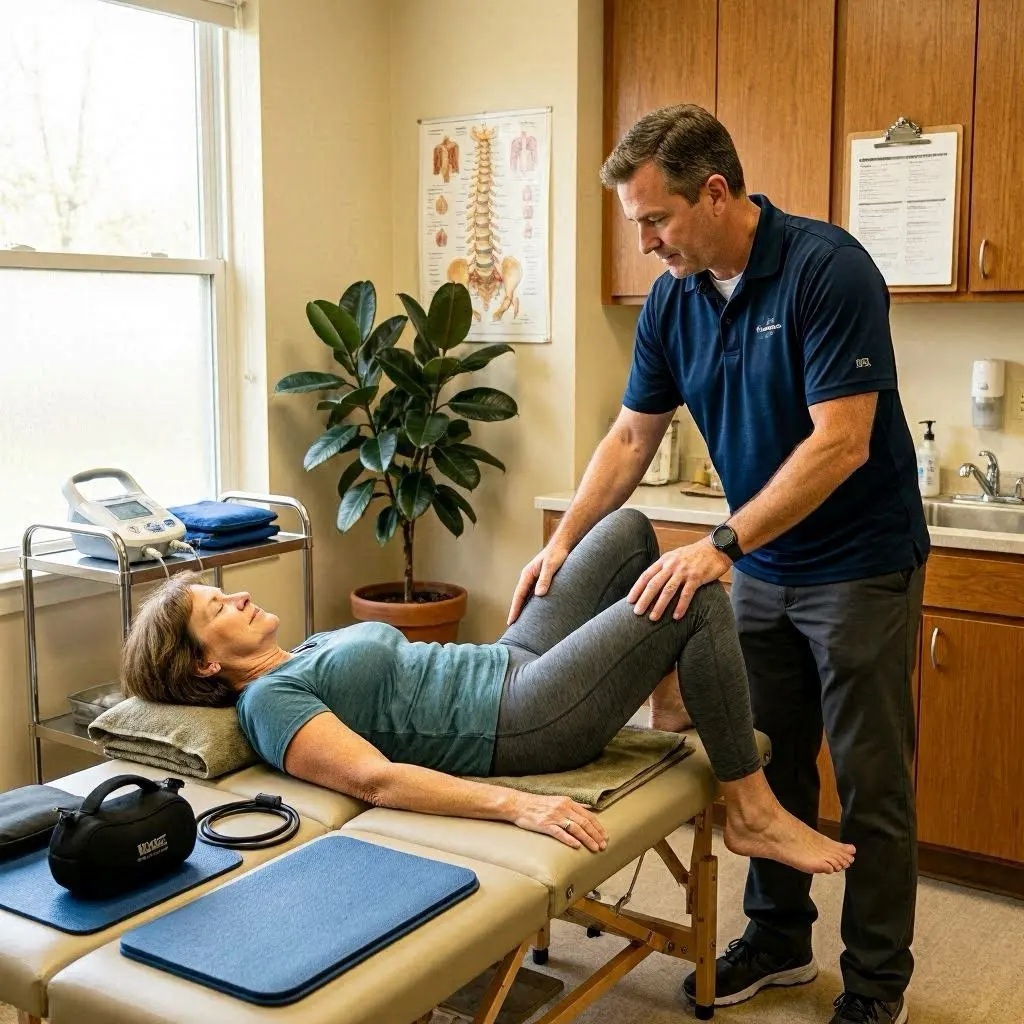

Why Is My Neck Stiff? Causes, Relief, Exercises, and Treatment
If you are wondering, “Why is my neck stiff?”, there are many possible explanations. Neck stiffness is extremely common and can happen after sleeping in an unusual position, spending several hours at a computer, looking down at a phone, exercising, driving, or simply remaining in one position for too long.
Sometimes stiffness is temporary and improves within a short period. In other cases, it may continue for days or repeatedly return. Persistent stiffness can interfere with everyday activities such as driving, working, exercising, reading, and sleeping.
The cervical spine, or neck, is made up of vertebrae, joints, discs, muscles, ligaments, and nerves that work together to support and move the head. Problems involving any of these structures can contribute to stiffness.
Understanding the potential causes of neck stiffness can help you determine what steps may be appropriate. Gentle movement, regular physical activity, strengthening, ergonomic improvements, and physiotherapy may all play a role in managing uncomplicated neck stiffness.
However, not every stiff neck should be treated with home exercises. Severe symptoms, significant trauma, neurological changes, or other warning signs require professional medical assessment.
What Does Neck Stiffness Feel Like?
Neck stiffness can feel different from person to person.
Common sensations include:
Difficulty turning the head
Tight neck muscles
Reduced range of motion
Soreness
A feeling of pressure
Pain when looking up or down
Shoulder tightness
Upper-back discomfort
Difficulty finding a comfortable position
Some people notice stiffness primarily in the morning, while others experience it after several hours of work or physical activity.
Stiffness can also occur without significant pain.
For example, you may be able to move your neck but feel that it does not move as freely as usual.
Common Causes of Neck Stiffness (Why Is My Neck Stiff)
There is no single cause of a stiff neck.
Common contributing factors include:
Sleeping position
Muscle tension
Prolonged computer use
Smartphone use
Poor workstation setup
Stress
Repetitive activities
Exercise
Sudden movements
Whiplash
Reduced physical activity
Cervical joint irritation
Nerve-related problems
Age-related changes
Sometimes several factors occur at the same time.
For example, spending eight hours at a computer while rarely changing positions may contribute to stiffness through a combination of prolonged positioning, muscular fatigue, and reduced movement.
1. Sleeping in an Uncomfortable Position
One of the most common reasons people wake up with a stiff neck is an uncomfortable sleeping position.
Your neck remains in roughly the same position for several hours while you sleep. If that position is uncomfortable, you may wake up with stiffness or reduced movement.
You may notice:
Difficulty turning your head
Tightness on one side
Shoulder discomfort
Pain when looking down
This type of stiffness often improves gradually as you begin moving throughout the day.
If morning stiffness occurs frequently, consider whether your pillow and sleeping setup are comfortable.
2. Muscle Tension
Muscle tension is another common reason for neck stiffness.
The muscles around the neck and shoulders help support the head and control movement throughout the day.
They can become tense after:
Prolonged sitting
Repetitive activities
Exercise
Stress
Poor sleep
Long periods of concentration
Muscle tension may create a feeling that the neck is “locked” or difficult to move.
Gentle movement, relaxation, physical activity, and appropriate strengthening may help improve muscular function.
3. Computer Use
Spending long periods at a computer can contribute to neck stiffness.
The issue is not necessarily computer use itself. Instead, remaining in one position for a long time can increase muscular fatigue and reduce movement.
Computer-related stiffness may be worse:
At the end of the workday
After long meetings
During extended study sessions
After prolonged gaming
During intensive desk work
Try changing your position regularly.
Standing, walking, moving your shoulders, and performing brief mobility exercises can help break up long periods of static activity.
4. Smartphone Use (Why Is My Neck Stiff)
Smartphone use is another common contributor to neck stiffness.
When you look down at your phone for extended periods, your neck remains in a relatively fixed position.
You may notice stiffness around the:
Neck
Upper shoulders
Upper back
Try holding the phone closer to eye level when practical.
More importantly, avoid using your phone continuously for long periods without moving.
5. Stress
Stress can affect muscle tension.
When people are stressed, they may unconsciously raise their shoulders or tighten the muscles around their neck.
Over time, this can contribute to stiffness.
Stress-related neck tension may also occur alongside:
Headaches
Shoulder tightness
Jaw clenching
Upper-back discomfort
Difficulty relaxing
Regular exercise, walking, relaxation techniques, breathing exercises, and adequate sleep may help manage overall tension.
6. Poor Movement Habits
Staying in one position for too long can make your neck feel stiff.
This can happen during:
Driving
Reading
Studying
Sewing
Working
Gaming
Watching television
Your body generally benefits from movement variety.
Rather than trying to maintain one perfect position throughout the day, change positions regularly.
7. Lack of Physical Activity
Physical inactivity can contribute to reduced mobility and strength.
If you spend most of your day sitting and rarely exercise, the muscles around your neck, shoulders, and upper back may have less opportunity to develop endurance.
Regular physical activity can support:
Strength
Mobility
Endurance
Coordination
General physical health
Walking is a simple way to increase daily movement.
8. Exercise and Neck Stiffness
Exercise can sometimes cause temporary neck stiffness.
This may occur after:
Weightlifting
Running
Cycling
Swimming
Contact sports
Resistance training
Overhead exercises
If stiffness appeared after changing your exercise routine, consider whether you increased your training load too quickly.
Changes in:
Weight
Repetitions
Exercise selection
Training frequency
Training duration
can all increase physical demands.
A gradual progression gives the body more time to adapt.
9. Sudden Neck Movement
A sudden movement can irritate muscles or other tissues around the neck.
This may happen during:
Sports
Lifting
Reaching
Falling
Sudden braking
Turning quickly
If symptoms are mild, gradual movement may help.
However, significant trauma should receive appropriate medical assessment.
10. Whiplash
Whiplash is associated with rapid acceleration and deceleration of the neck.
It commonly occurs during vehicle collisions but can also happen during certain sports or other accidents.
Symptoms may include:
Neck stiffness
Neck pain
Reduced movement
Headaches
Shoulder discomfort
After significant trauma, medical evaluation is important.
A rehabilitation program may later include gradual mobility, strengthening, and functional exercises.
11. Cervical Joint Irritation
The cervical spine contains several small joints that contribute to movement and stability.
Irritation around these joints can sometimes cause:
Local pain
Stiffness
Reduced movement
Discomfort when turning the head
A physical assessment can help determine whether joint-related factors may be contributing to symptoms.
12. Cervical Disc Problems
The discs between the cervical vertebrae help distribute forces and allow movement.
Changes involving these discs can sometimes contribute to neck pain and stiffness.
In some cases, disc-related problems may also affect nearby nerves.
Possible symptoms include:
Neck pain
Arm pain
Tingling
Numbness
Weakness
Persistent neurological symptoms should be assessed by a healthcare professional.
13. Nerve Irritation
A stiff neck accompanied by arm symptoms may sometimes involve nerve irritation.
Watch for:
Tingling
Numbness
Burning sensations
Weakness
Pain traveling into the arm
These symptoms should not automatically be attributed to simple muscle tightness.
If they persist or worsen, seek professional assessment.
14. Age-Related Changes
As people age, normal changes can occur within the cervical spine.
These may involve the:
Discs
Joints
Bones
Soft tissues
However, seeing changes on an X-ray or MRI does not automatically mean that those changes are causing pain.
A healthcare professional should interpret imaging alongside your symptoms and physical examination.
Why Is My Neck Stiff in the Morning?
Morning neck stiffness is relatively common.
Possible contributors include:
Sleeping position
Pillow setup
Reduced movement during sleep
Muscle tension
Existing neck problems
If stiffness improves after you get up and move around, gentle mobility may help.
However, persistent or severe morning stiffness should be evaluated, particularly if it is accompanied by other symptoms.
Why Is My Neck Stiff After Sitting?
If your neck becomes stiff after sitting, prolonged static positioning may be contributing.
This is particularly common with:
Office work
Studying
Gaming
Driving
Watching television
Try changing positions frequently.
You can also incorporate short movement breaks into your routine.
Why Is My Neck Stiff After Sleeping?
A stiff neck after sleeping may be related to your sleeping position or pillow.
Rather than immediately assuming that your pillow is the only cause, consider your overall sleeping comfort.
If the problem happens repeatedly, a physiotherapist can also assess your neck mobility and identify other potential contributors.
Why Is My Neck Stiff When I Turn My Head?
Difficulty turning your head can occur when the muscles or joints around the cervical spine become irritated or stiff.
If the problem started suddenly after sleeping awkwardly, gentle movement may help.
Avoid forcing your head through a painful range.
If restricted movement follows trauma or is accompanied by neurological symptoms, professional assessment is more appropriate.
How Can I Reduce Neck Stiffness? (Why Is My Neck Stiff)
For mild and uncomplicated stiffness, several strategies may help.
Keep Moving
Gentle movement can help prevent the neck from becoming increasingly stiff.
Try:
Slow neck rotations
Gentle side bending
Shoulder movements
Walking
Keep movements comfortable.
Take Movement Breaks
If you work at a computer, take regular breaks.
Stand up.
Walk around.
Move your shoulders.
Change your sitting position.
Small amounts of movement throughout the day can help reduce prolonged static positioning.
Gentle Neck Rotation Exercise
Neck rotation is a simple mobility exercise.
How to perform it
Sit or stand comfortably.
Relax your shoulders.
Look straight ahead.
Slowly turn your head toward the right.
Stop at a comfortable range.
Return to the center.
Repeat toward the left.
Do not force the end range.
If the exercise causes significant pain, stop.
Chin Tucks
Chin tucks can help develop controlled head and neck positioning.
How to perform them
Sit upright.
Look straight ahead.
Gently draw your chin backward.
Keep your head level.
Hold briefly.
Relax.
The movement should be small.
Avoid aggressively pushing your head backward.
Shoulder Blade Squeezes (Why Is My Neck Stiff)
Upper-back strengthening may complement cervical rehabilitation.
How to perform them
Sit or stand comfortably.
Relax your arms.
Gently draw your shoulder blades toward each other.
Hold briefly.
Relax.
Avoid shrugging your shoulders.
Upper-Back Exercises
The thoracic spine and shoulders influence upper-body movement.
Exercises such as:
Resistance-band rows
Thoracic rotations
Wall exercises
Shoulder strengthening
may be included in a rehabilitation program.
A physiotherapist can determine which exercises are appropriate for your symptoms.
Should You Stretch a Stiff Neck?
Gentle stretching may help when muscular tightness contributes to stiffness.
Possible stretches include:
Upper trapezius stretch
Levator scapulae stretch
Gentle side bending
Gentle rotation
Avoid aggressive stretching.
You should not force your neck into extreme positions simply because it feels stiff.
Should You Use Heat?
Heat may temporarily reduce the sensation of muscular tightness for some people.
A warm shower or comfortably warm heating pad may help you feel more comfortable.
However, heat does not necessarily address the underlying reason your neck is stiff.
If symptoms repeatedly return, consider addressing exercise, movement habits, ergonomics, sleep, and other contributing factors.
Should You Use Ice?
Cold may sometimes be useful following certain acute injuries.
However, it is not necessary for every stiff neck.
If stiffness follows significant trauma, professional assessment is more important than relying solely on home treatments.
Improve Your Workstation
If your neck becomes stiff during work, review your workstation.
Consider:
Monitor height
Chair position
Desk height
Keyboard position
Mouse placement
Your setup should allow you to work comfortably without constantly looking down or reaching forward.
Don’t Try to Maintain Perfect Posture (Why Is My Neck Stiff)
Many people assume neck stiffness is caused entirely by poor posture.
Posture can be a contributing factor, but there is no single position that everyone needs to maintain all day.
Instead, focus on:
Movement variety
Strength
Endurance
Comfortable positioning
Regular breaks
Changing position regularly can be more useful than trying to hold one “perfect” posture.
How Physiotherapy Can Help a Stiff Neck
If you frequently ask yourself, “Why is my neck stiff?”, a physiotherapy assessment can help identify potential contributing factors.
A physiotherapist may evaluate:
Cervical mobility
Muscle strength
Muscle endurance
Shoulder movement
Upper-back mobility
Movement patterns
Work activities
Exercise technique
Treatment may include:
Therapeutic exercise
Strengthening
Mobility training
Manual therapy
Ergonomic education
Functional rehabilitation
The treatment plan should be adjusted according to your individual needs.
Cervical Spine Rehabilitation
Cervical spine rehabilitation focuses on restoring the ability of the neck and surrounding structures to move and tolerate everyday demands.
A rehabilitation program may include:
Mobility exercises
Neck strengthening
Upper-back strengthening
Shoulder conditioning
Core exercises
Endurance training
Functional movements
The goal is gradual improvement rather than forcing rapid changes.
Neck Stiffness From Computer Use (Why Is My Neck Stiff)
Computer-related stiffness can often be managed by combining exercise with changes to your daily routine.
Consider:
Adjusting your workstation.
Taking frequent movement breaks.
Performing appropriate mobility exercises.
Strengthening the neck and upper back.
Walking regularly.
Avoiding long periods in one position.
These strategies can complement each other.
Neck Stiffness From Smartphone Use
If your phone contributes to stiffness, consider reducing long periods of downward viewing.
Try holding your phone closer to eye level.
Take frequent breaks.
Change positions.
Avoid using the phone continuously while sitting in the same position.
Neck Stiffness and Headaches (Why Is My Neck Stiff)
Neck stiffness can sometimes occur alongside headaches.
Musculoskeletal factors around the cervical spine may contribute to certain headache patterns.
However, headaches can have many causes.
If you experience a sudden, severe, or unusual headache, especially alongside neurological symptoms, seek medical attention.
Neck Stiffness and Shoulder Pain
Neck and shoulder symptoms commonly occur together.
The muscles around the neck and shoulder blades work closely during everyday movement.
A rehabilitation program may therefore address:
Neck mobility
Shoulder strength
Scapular control
Upper-back mobility
Postural endurance
Treating the entire movement system may be more useful than focusing exclusively on the painful area.
Neck Stiffness After Exercise (Why Is My Neck Stiff)
If your neck becomes stiff after exercise, consider whether the training session was unusually demanding.
Review:
Exercise selection
Resistance
Technique
Training volume
Recovery time
If symptoms are mild, temporarily reducing the intensity may help.
If symptoms are severe or persistent, seek professional advice.
Neck Stiffness and Stress
Stress can increase muscular tension.
When stressed, you may unconsciously:
Raise your shoulders
Clench your jaw
Tighten your neck
Sit rigidly
Relaxation and physical activity can help reduce this pattern.
Consider incorporating walking, breathing exercises, regular breaks, and adequate sleep into your routine.
How Long Does Neck Stiffness Last? (Why Is My Neck Stiff)
The duration depends on the cause.
Temporary stiffness from sleeping awkwardly may improve relatively quickly.
Stiffness associated with an injury or persistent musculoskeletal problem may take longer.
Factors affecting recovery include:
Cause
Severity
Duration
Physical activity
Sleep
Stress
Exercise
Previous injuries
If stiffness does not improve or repeatedly returns, professional assessment may be appropriate.
When Should You See a Physiotherapist?
Consider seeing a physiotherapist if your neck stiffness:
Persists
Repeatedly returns
Limits movement
Interferes with work
Affects exercise
Disturbs sleep
Makes daily activities difficult
A physiotherapist can identify physical factors that may be contributing to the problem and create an individualized treatment plan.
When Should You See a Doctor?
Medical assessment may be appropriate if neck stiffness occurs with:
Significant weakness
Persistent numbness
Major trauma
Severe unexplained pain
Loss of coordination
Difficulty walking
Other neurological symptoms
These symptoms may require investigation beyond routine exercise and stretching.
Neck Stiffness Warning Signs
A stiff neck can occasionally be associated with more serious conditions.
Seek urgent medical attention if neck stiffness occurs with symptoms such as:
Severe pain after major trauma
Sudden weakness
Significant loss of sensation
Difficulty walking
Loss of coordination
Loss of bladder or bowel control
Severe headache with neurological symptoms
Difficulty speaking
Sudden vision changes
Loss of consciousness
Do not assume these symptoms are simply caused by muscle tightness.
How to Prevent Neck Stiffness (Why Is My Neck Stiff)
You may not be able to prevent every episode, but several habits can support healthy neck function.
Stay Active (Why Is My Neck Stiff)
Regular physical activity helps maintain strength and mobility.
Move Frequently
Avoid spending hours in one position.
Strengthen the Upper Body
Include exercises for your neck, shoulders, and upper back when appropriate.
Take Computer Breaks
Stand, walk, and change positions throughout the workday.
Manage Smartphone Use
Avoid prolonged periods of looking down without movement.
Sleep Comfortably
Use a sleeping arrangement that allows your neck to remain comfortable.
Progress Exercise Gradually
Avoid sudden increases in training intensity.
A Simple Daily Routine for Neck Stiffness
A general routine could include:
Morning: Gentle neck rotation and shoulder movement.
During work: Short movement breaks every so often.
Afternoon: Walking or another form of physical activity.
Exercise session: Appropriate neck, shoulder, upper-back, and core strengthening.
Evening: Gentle mobility if it feels comfortable.
The exact exercises and frequency should be adjusted according to your condition.
Common Mistakes When Treating a Stiff Neck (Why Is My Neck Stiff)
Stretching Too Aggressively (Why Is My Neck Stiff)
A stiff neck does not necessarily need aggressive stretching.
Staying Completely Still
Long periods of inactivity can increase stiffness.
Focusing Only on Posture
Movement, strength, and endurance are also important.
Ignoring Persistent Symptoms
Recurring stiffness deserves attention rather than repeated temporary treatment.
Returning to Exercise Too Quickly
Gradual progression is generally more sustainable.
Ignoring Other Body Regions
The shoulders and upper back can influence cervical movement.
Final Thoughts (Why Is My Neck Stiff)
If you are asking “Why is my neck stiff?”, there are many possible answers. Sleeping position, muscle tension, computer work, smartphone use, stress, repetitive activity, exercise, inactivity, and injuries are common contributors. Problems involving the cervical joints, discs, or nerves can also cause stiffness and should be considered when symptoms persist or are accompanied by other signs.
For mild and uncomplicated stiffness, gentle movement is often a useful starting point. Neck rotations, comfortable side bending, chin tucks, shoulder movements, upper-back exercises, and regular walking can help maintain physical activity and mobility.
Sleep and stress can also influence how your neck feels. A comfortable sleeping setup, adequate rest, physical activity, and stress-management strategies can complement a rehabilitation program.
If your stiffness persists, repeatedly returns, or interferes with daily life, a physiotherapist can assess your neck, shoulders, upper back, strength, mobility, and movement patterns. A personalized rehabilitation program can then target the factors most relevant to your symptoms.
Finally, severe pain after significant trauma, sudden weakness, persistent numbness, difficulty walking, loss of coordination, or other neurological symptoms should not be treated as an ordinary stiff neck. These symptoms require appropriate medical evaluation.
A stiff neck is often manageable, but understanding why your neck is stiff is an important first step toward choosing the right approach to recovery and maintaining healthier neck function over time.