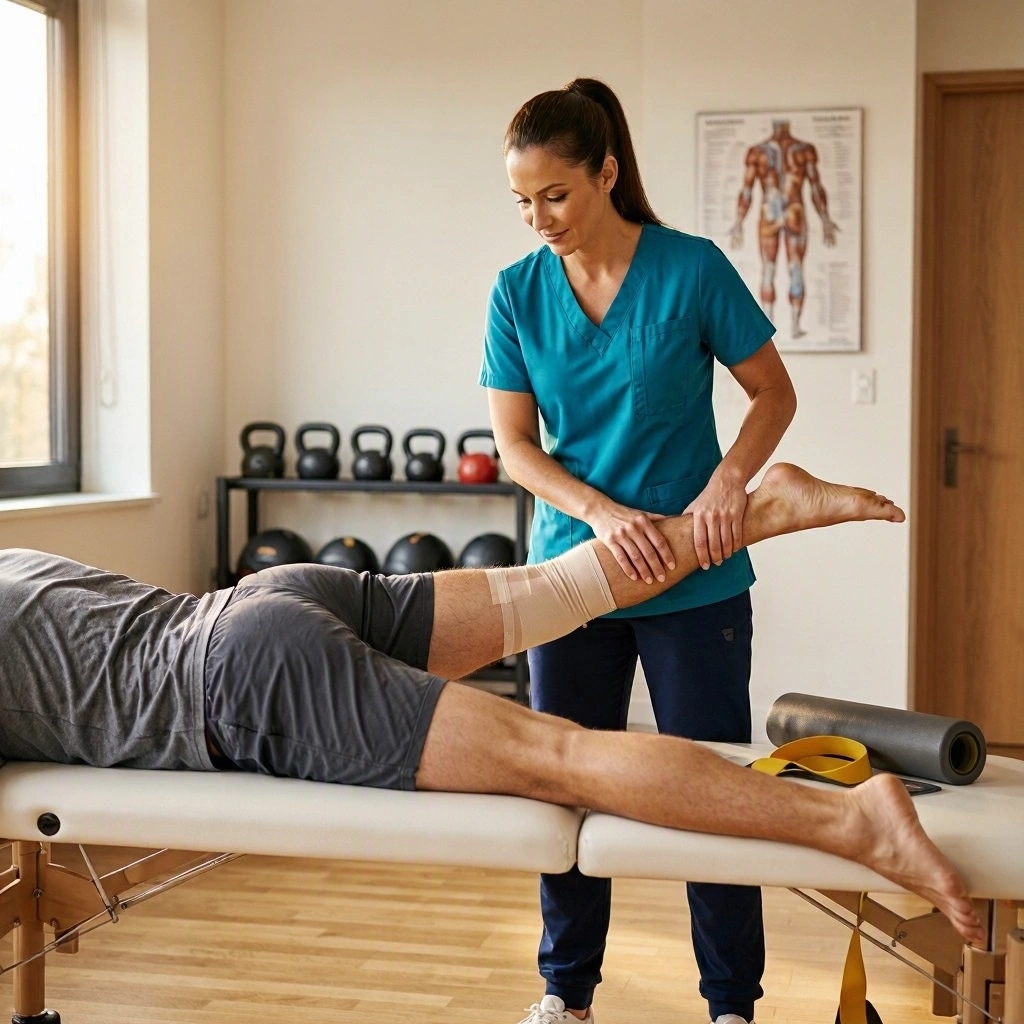
Hamstring Strain Rehabilitation: A Complete Guide to Recovery, Exercises, and Return to Sport
A hamstring strain is a common injury that affects the muscles at the back of the thigh. It can happen while sprinting, playing football, running, jumping, or performing exercises that place sudden demands on the legs. Depending on its severity, the injury may cause mild discomfort, significant pain, swelling, bruising, and difficulty walking. Hamstring strain rehabilitation plays an important role in restoring strength, improving movement, and helping people return safely to their usual activities. Although mild strains may improve within a few weeks, more severe injuries can require several weeks or months of recovery. Returning to sport too early may increase the risk of reinjury.
A successful rehabilitation plan should be tailored to the type and severity of the injury, the individual’s activity level, and the physical demands of their sport or occupation. It commonly combines temporary activity modification, progressive strengthening, movement retraining, and a gradual return to running.
This guide explains the causes and symptoms of hamstring strains, the stages of rehabilitation, useful exercises, common recovery mistakes, and the criteria that can help determine when it is safe to return to sport.
What Is a Hamstring Strain?
The hamstrings are a group of three muscles located along the back of the thigh:
- Biceps femoris: One of the main muscles responsible for bending the knee and extending the hip.
- Semitendinosus: Helps extend the hip, bend the knee, and control lower-limb movement.
- Semimembranosus: Contributes to hip extension, knee flexion, and stability during movement.
Together, these muscles help control walking, running, jumping, accelerating, and decelerating. They are especially important during sprinting, when they work to control the movement of the leg as it swings forward and prepares for ground contact.
A hamstring strain occurs when muscle fibres or the musculotendinous tissues become injured under excessive loading. Some injuries involve relatively limited tissue damage, while others affect a larger portion of the muscle or its tendon.
The term hamstring strain does not describe every possible injury at the back of the thigh. Pain in this area can also result from tendon problems, nerve irritation, referred pain from the lower back, or an injury near the hamstring’s attachment to the pelvis.
Correct assessment is therefore important before beginning an exercise programme.
Common Causes of Hamstring Strains
Hamstring injuries often occur when the muscles are exposed to forces that exceed their current capacity.
1. Sprinting and Acceleration
Rapid acceleration and high-speed running place substantial demands on the hamstrings. During sprinting, the muscles help control the leg as it swings forward and prepare it for contact with the ground.
A sudden increase in running speed, an intense sprint, or a rapid change of direction may contribute to injury, especially when the athlete is not adequately prepared for the required load.
2. Sudden Stretching
Hamstring strains may occur during movements that lengthen the muscles rapidly, such as kicking, reaching for a ball, slipping, or performing an unexpected split-like movement.
These injuries can occur during sports or everyday activities. The risk depends on the force, speed, range of motion, and the person’s current physical capacity.
3. Training Load That Increases Too Quickly
Suddenly increasing running distance, sprint volume, hill training, or resistance-training intensity may exceed the muscles’ ability to adapt.
Progressive training helps the body build strength and tolerance. A well-planned programme should account for both the intensity of exercise and the recovery time between demanding sessions.
4. Previous Hamstring Injury
A previous hamstring strain is an important risk factor for another injury. Some people return to sport before they have regained adequate strength, running capacity, or confidence.
Rehabilitation should therefore continue beyond the point at which everyday walking feels comfortable. Athletes also need to prepare for the specific demands of their sport.
5. Fatigue and Inadequate Recovery
Fatigue can affect movement control and the ability to tolerate repeated high-intensity efforts. Poorly managed training schedules, insufficient recovery, and abrupt changes in workload may contribute to injury risk.
Fatigue alone does not explain every hamstring strain, and injuries can occur even in well-conditioned athletes.
Symptoms of a Hamstring Strain
Symptoms depend on the severity and location of the injury.
Common signs include:
- Sudden pain at the back of the thigh during exercise.
- Tenderness when touching the affected area.
- Pain when bending the knee or extending the hip.
- Discomfort while walking, running, or climbing stairs.
- Swelling or bruising that may appear over several hours or days.
- Reduced strength or difficulty using the affected leg.
- A snapping sensation during a more severe injury.
Mild strains may produce discomfort without significant bruising. More serious injuries can cause substantial swelling, weakness, and difficulty standing or walking.
Seek urgent medical assessment if you have severe pain, extensive or rapidly increasing bruising, significant weakness, or difficulty bearing weight. A major tear or tendon avulsion may require specialist assessment. Sudden calf or thigh swelling with other concerning symptoms also warrants medical attention because not all leg pain is caused by a muscle strain.
The NHS guide to hamstring injuries provides further information about symptoms, initial care, and when to seek help.
How Is a Hamstring Strain Diagnosed?
A healthcare professional may assess the injury by reviewing how it occurred, examining the affected area, and testing movement and strength when appropriate.
The assessment may consider:
- The location and severity of pain.
- The mechanism of injury.
- Swelling and bruising.
- Comfortable hip and knee movement.
- Muscle strength and tenderness.
- Walking ability and functional limitations.
- Previous hamstring injuries.
Imaging is not required for every strain. However, a clinician may recommend ultrasound or MRI when a significant tear, tendon injury, or another diagnosis is suspected.
An injury close to the sitting bone at the bottom of the pelvis deserves particular attention, especially if it follows a sudden forceful movement and causes substantial bruising or weakness. A proximal hamstring tendon avulsion may require a different treatment pathway from a mild muscle strain.
The diagnosis helps determine the appropriate rehabilitation strategy and whether specialist care is necessary.
The Goals of Hamstring Strain Rehabilitation
Rehabilitation involves more than waiting for the pain to disappear. Its purpose is to restore the capacity needed for normal activities and, when relevant, sport.
The main goals are to:
- Protect the injured tissue from excessive loading during early recovery.
- Restore comfortable walking and everyday movement.
- Gradually rebuild hamstring strength.
- Improve tolerance to muscle lengthening and controlled loading.
- Restore running, acceleration, and deceleration capacity.
- Prepare for the demands of sport or work.
- Reduce the risk of reinjury.
The 2022 clinical practice guideline on hamstring strain injuries provides evidence-based recommendations for assessment and rehabilitation. International expert consensus also supports individualised rehabilitation that progresses according to symptoms, exercise tolerance, injury characteristics, and sport-specific demands.
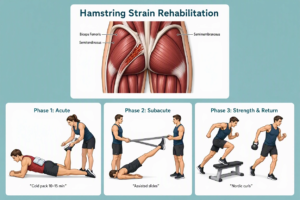
Stage 1: Early Management and Protection (Hamstring Strain Rehabilitation)
The first stage focuses on controlling symptoms and avoiding further injury. The appropriate approach depends on the severity of the strain.
Modify Activities That Cause Pain
Stop sprinting, jumping, heavy lower-body training, or other activities that reproduce sharp pain. Continuing to push through significant pain can aggravate the injury.
Complete bed rest is not generally necessary for every mild strain. Instead, the goal is to protect the injured area while maintaining safe movement.
If walking is painful, reduce the distance and speed. More severe injuries may require crutches or other support under professional guidance.
Use Cold Packs if Helpful
A cold pack wrapped in a towel may provide temporary comfort during the early phase. Apply it for a limited period, such as 15–20 minutes, and protect the skin from direct contact with ice.
Cold therapy is an option for symptom relief, not a requirement for healing. It should not replace appropriate assessment or rehabilitation.
Consider Compression
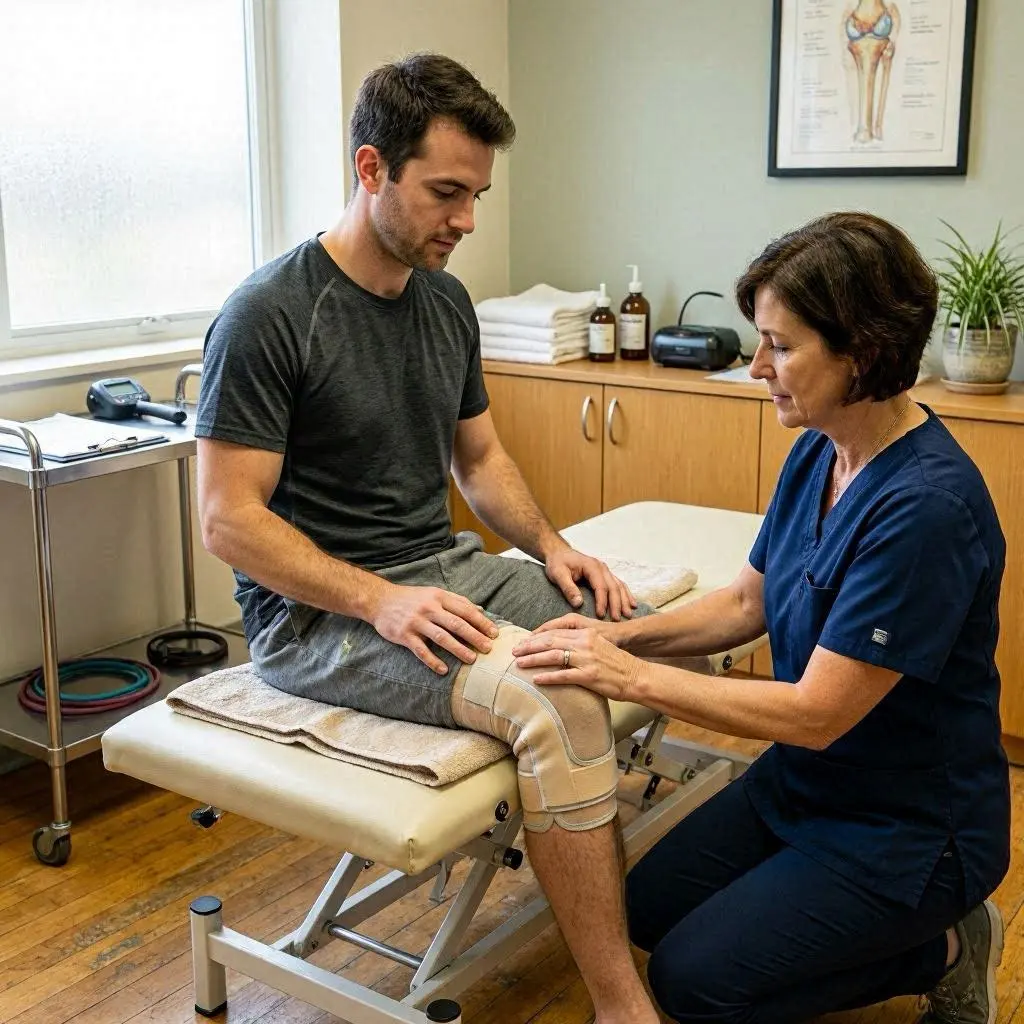
A suitable compression garment or bandage may help manage swelling in some cases. It should not be so tight that it causes numbness, tingling, colour changes, or increased pain.
People with circulation problems or other relevant medical conditions should seek advice before using compression.
Avoid Aggressive Stretching and Deep Massage Initially
Forceful stretching, vigorous massage, and intense strengthening may aggravate a recent injury. During the early phase, avoid trying to force the hamstring to become flexible.
The NHS advises protection, rest from aggravating activity, ice, compression, and elevation during the first two to three days after many hamstring injuries. The exact approach should be adapted to the severity of the injury and professional advice.
Begin Comfortable Movement When Appropriate
Once movement can be performed without significant pain, gentle activity may be introduced gradually. The aim is to avoid unnecessary stiffness without placing excessive stress on the injured tissue.
If pain is severe, bruising is extensive, or walking is difficult, obtain a clinical assessment before progressing exercises.
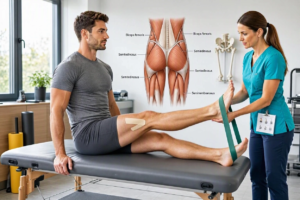
Stage 2: Restore Comfortable Movement
Once the initial symptoms begin to settle, rehabilitation can focus on restoring comfortable hip and knee movement and gradually reintroducing muscle activity.
The timing varies. Progression should be based on the injury and response to activity rather than a fixed number of days.
Gentle Knee Bending and Straightening
If comfortable, slowly bend and straighten the knee while lying or sitting in a supported position.
Perform a small number of controlled repetitions without forcing the movement or producing sharp pain.
Comfortable Walking (Hamstring Strain Rehabilitation)
Walking can help restore normal movement and maintain general activity. Start with short distances if needed and increase gradually when symptoms remain stable.
A pronounced limp is a sign that the current walking load may be too demanding or that the injury requires further assessment.
Gentle Isometric Hamstring Contractions
An isometric contraction involves activating the muscle without substantial joint movement.
For a mild injury, a clinician may recommend lying on your back with the knee bent and gently pressing the heel into a stable surface. Hold the contraction briefly, then relax.
Start with light effort and a small number of repetitions. Do not force this exercise if it causes sharp pain or if a significant tear has not been assessed.
Monitor the Response
Pay attention to how the hamstring feels during exercise and over the following hours. A meaningful increase in pain, swelling, or limping suggests that the activity may need to be reduced.
Some rehabilitation exercises may produce mild discomfort, depending on the injury and programme. However, sprinting and high-speed running should not be resumed while they remain painful.
Stage 3: Progressive Hamstring Strengthening (Hamstring Strain Rehabilitation)
Strengthening is a central part of hamstring strain rehabilitation. The aim is to rebuild the muscle’s ability to produce and control force, not simply to eliminate tenderness.
Exercise selection and intensity should reflect the injury severity, location, and response to previous sessions.
1. Glute Bridges
Glute bridges train the gluteal muscles and involve the hamstrings to varying degrees.
How to perform the exercise:
- Lie on your back with both knees bent and feet flat on the floor.
- Keep your feet comfortably positioned.
- Tighten your gluteal muscles and raise your hips.
- Pause briefly if comfortable.
- Lower slowly to the starting position.
Begin with a small range and a manageable number of repetitions. If the exercise causes hamstring pain, modify it or wait until it is appropriate for your stage of recovery.
2. Heel Presses
Heel presses can be used for gentle hamstring activation when suitable.
How to perform the exercise:
- Lie on your back with the knee bent.
- Press your heel gently into the floor or another stable surface.
- Keep the movement controlled and avoid lifting the hips unless instructed.
- Hold briefly, then relax.
Start with light effort. A physiotherapist can help determine the appropriate intensity and duration.
3. Standing Hamstring Curls
Standing hamstring curls involve bending the knee against gravity.
How to perform the exercise:
- Stand beside a stable support.
- Keep your trunk upright.
- Slowly bend the affected knee, bringing the heel toward the buttock.
- Lower the foot in a controlled manner.
Begin without added resistance. Increase repetitions or resistance only when the exercise can be performed without significant symptoms.
4. Resistance-Band Hamstring Curls
A resistance band can add load as strength improves.
How to perform the exercise:
- Secure the band safely according to its instructions.
- Position yourself so the band provides resistance as you bend the knee.
- Perform the movement slowly.
- Return to the starting position under control.
Use a resistance level that allows consistent technique. Stop if pain becomes sharp or increases significantly.
5. Hip Hinge Exercises
Hip hinge movements train control of the hips and trunk while the hamstrings contribute to the movement.
How to perform the exercise:
- Stand with your feet about hip-width apart.
- Keep your knees slightly bent.
- Move your hips backward while maintaining a comfortable trunk position.
- Return to standing by driving the hips forward.
- Begin with a small range and no external weight.
Hip hinges can place increasing demands on the hamstrings as the movement becomes deeper or resistance increases. They should be introduced at an appropriate stage rather than used immediately after every strain.
Why Progressive Loading Matters
A muscle needs to regain the capacity to tolerate the forces required by everyday activity and sport. Gradual loading allows rehabilitation to progress from basic contractions to more demanding strength exercises.
The correct amount of resistance varies. Increasing weight, repetitions, movement range, and speed all at once may overload the recovering tissue.
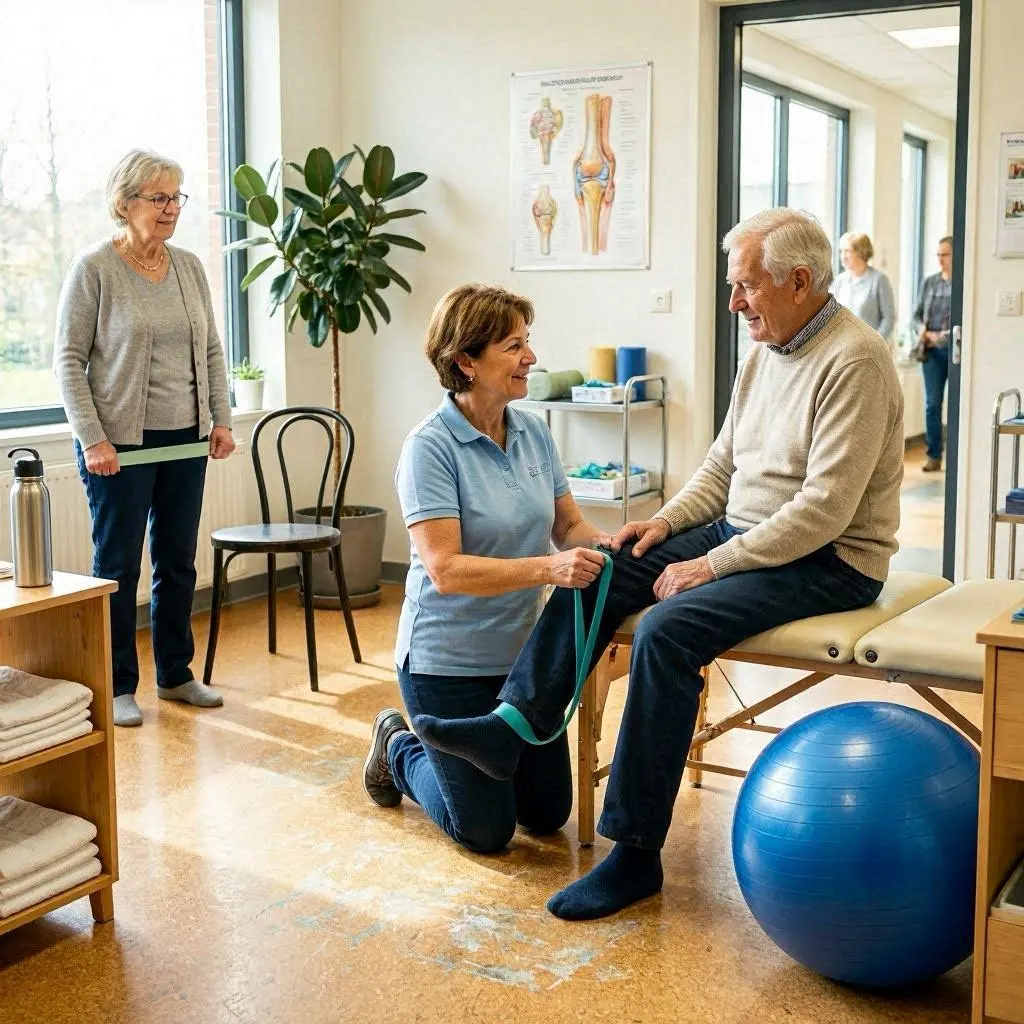
A physiotherapist can help choose the most appropriate progression and monitor whether strength is improving.
Stage 4: Strengthening at Longer Muscle Lengths
Many hamstring injuries occur during movements that expose the muscle to high forces while it is lengthening. Rehabilitation should eventually prepare the hamstring for these demands, when appropriate.
However, long-length loading is not suitable at every stage. Introducing it too early or too aggressively can aggravate symptoms.
Romanian Deadlift Progression
A Romanian deadlift involves hinging at the hips while keeping the knees slightly bent. The hamstrings are progressively loaded as the hips move backward.
Start with an unloaded hip hinge. Add light resistance only when movement is comfortable and previous exercises are well tolerated.
Slider Hamstring Curls (Hamstring Strain Rehabilitation)
Slider curls involve extending and bending the legs while the heels move over a low-friction surface.
These exercises can place substantial demands on the hamstrings, particularly when the legs move away from the body. They should be introduced by a qualified professional when the injury is ready for this level of loading.
Eccentric Strengthening
Eccentric exercise trains a muscle while it lengthens under tension. It can be important in later-stage hamstring rehabilitation.
Nordic hamstring exercises are one example, but they can be demanding and are not appropriate for an acute strain. They should be introduced gradually when the person has sufficient strength and tolerance.
Research and expert consensus support including progressive strengthening and sport-specific loading in rehabilitation. However, there is no single exercise or dosage that suits every hamstring injury.
Stage 5: Reintroducing Running
Running should be reintroduced gradually when walking, daily activities, and appropriate strength exercises are well tolerated.
The timing depends on the severity and location of the injury, the athlete’s current capacity, and clinical assessment.
Start With Controlled Running
When cleared to begin, a programme may start with easy jogging at a comfortable pace on a predictable surface.
The first sessions should be short enough to assess the response without creating excessive fatigue.
Increase One Demand at a Time
Running speed, duration, distance, and frequency each place different demands on the hamstrings.
Avoid increasing every variable in the same session. If a short easy run is tolerated, the next step may involve slightly longer running or a modest increase in speed, depending on the rehabilitation plan.
Progress Toward Faster Running
High-speed running places greater demands on the hamstrings than easy jogging. Athletes should build speed progressively rather than jumping directly from jogging to maximal sprinting.
A return-to-running plan should include monitoring of symptoms during the session and after it. Any significant worsening should lead to a review of the training load.
Include Acceleration and Deceleration
Many sports require sudden acceleration, slowing down, and changing direction. These demands should be introduced in a controlled progression once the athlete is ready.
Returning to straight-line jogging does not automatically mean that the hamstring is ready for competitive sport.
The London International Consensus on hamstring rehabilitation emphasises individualised loading, symptom monitoring, and progressive running and sprinting as key components of rehabilitation.
Stage 6: Return to Sport
Returning to sport is one of the most important decisions in hamstring strain rehabilitation.
Feeling better during everyday activities does not necessarily mean the muscle can tolerate maximal sprinting, repeated changes of direction, or competitive training.
A return-to-sport decision should consider several factors.
Pain and Tenderness (Hamstring Strain Rehabilitation)
Pain should not be present during key functional tests or high-speed activities used to assess readiness. A clinician may also check whether tenderness has resolved or substantially improved.
Strength and Movement Capacity
The injured leg should demonstrate appropriate strength and control for the individual’s needs. Assessment may include knee-flexion strength, hip-related movements, and more demanding functional tests.
No single strength measurement guarantees that reinjury will not occur. Findings should be interpreted alongside other clinical information.
Flexibility and Range of Motion
Comfortable range of motion should be restored sufficiently for the activities the person needs to perform. A comparison with the uninjured side may be useful, although natural differences between sides can occur.
Running and Sport-Specific Tests
Athletes should gradually demonstrate the ability to tolerate running at higher speeds, acceleration, deceleration, and movements specific to their sport.
For football, this may include controlled changes of direction and progressively demanding field drills. For runners, it may involve sustained running and faster intervals.
Psychological Readiness
Confidence matters. Some athletes hesitate to sprint or accelerate because they fear another injury.
Rehabilitation should address this concern through progressive exposure to relevant movements, clear feedback, and shared decision-making with the healthcare team.
The consensus statement on return to play after hamstring injuries highlights the importance of medical clearance, functional testing, pain-free performance, and psychological readiness.
There is no universal number of days that determines when everyone can return to sport. Clearance should be based on the injury, individual progress, and the demands of the intended activity.
How Long Does Hamstring Strain Rehabilitation Take?
Recovery time varies according to the severity of the strain, the injured tissue, the person’s general health, and the demands of daily life or sport.
A mild strain may improve within a few days to a few weeks. More substantial injuries may take several weeks or months. Severe tendon injuries can require specialist treatment and a much longer recovery.
Factors that can influence recovery include:
- The amount of tissue damage.
- Whether the tendon is involved.
- The location of the injury.
- Previous hamstring strains.
- The physical demands of work or sport.
- Consistency with an appropriate rehabilitation programme.
- Whether exercises are progressed too quickly.
- Other health conditions that affect recovery.
A fixed timeline should not replace assessment of strength, symptoms, running capacity, and functional readiness.
If pain is not improving as expected, or if the injury repeatedly returns, a physiotherapist or sports medicine professional can reassess the diagnosis and rehabilitation plan.
Common Mistakes During Hamstring Rehabilitation
Avoiding common mistakes may help make rehabilitation more consistent and reduce unnecessary setbacks.
Returning to Sport Too Early
Being able to walk without pain is not the same as being ready to sprint or compete. High-speed activity should be reintroduced progressively and assessed against relevant criteria.
Stretching Too Aggressively
Forceful stretching can aggravate an injured hamstring, especially during early recovery. Flexibility work should be introduced only when appropriate and should not involve forcing the muscle into pain.
Relying Only on Rest (Hamstring Strain Rehabilitation)
Rest from aggravating activity is important initially, but prolonged inactivity may leave the muscle insufficiently prepared for normal demands. Appropriate progressive loading is usually an important part of recovery.
Ignoring Strength Differences
Even when pain improves, the injured leg may remain weaker or less capable of tolerating repeated high-intensity efforts. Rehabilitation should address these deficits before full return to sport.
Increasing Training Load Too Quickly
Suddenly adding sprinting, heavy resistance exercises, and long training sessions can exceed the recovering muscle’s capacity.
A progressive plan should increase the demands in a controlled manner and account for the response to previous sessions.
Ignoring Recurrent Symptoms
Pain that repeatedly returns during running or strengthening may indicate that the programme needs adjustment or that the original diagnosis requires review.
Do not keep pushing through significant pain in the hope that the muscle will adapt.
How to Reduce the Risk of Another Hamstring Strain
No prevention programme eliminates all injuries, but several strategies can help prepare the hamstrings for physical demands.
Warm up before demanding activity. Use a progressive warm-up that includes movements relevant to the sport or exercise.
Build strength consistently. Include suitable hamstring, gluteal, and lower-limb strengthening in your training programme.
Prepare for sprinting gradually. Athletes who need high-speed running should build exposure to faster running progressively rather than relying only on easy jogging.
Manage training load. Increase training demands in a way that allows adequate recovery and adaptation.
Continue prevention exercises. Appropriate hamstring strengthening may be useful after returning to sport, especially for people with a previous injury.
Address the whole movement system. Hip, trunk, and lower-limb function may influence performance demands. Rehabilitation should consider the individual rather than focusing exclusively on one muscle.
A physiotherapist or sports rehabilitation professional can help design a programme suited to the athlete’s sport, injury history, and training level.
When Should You See a Physiotherapist?
Physiotherapy may be particularly useful when pain interferes with walking, running, work, or sport, or when recovery is slower than expected.
Consider professional assessment if:
- You have severe pain or significant bruising.
- You cannot walk normally.
- You felt a pop during the injury.
- Pain is close to the sitting bone and accompanied by marked weakness.
- Symptoms are not improving with appropriate initial care.
- You have had repeated hamstring injuries.
- You need to return safely to sprinting or competitive sport.
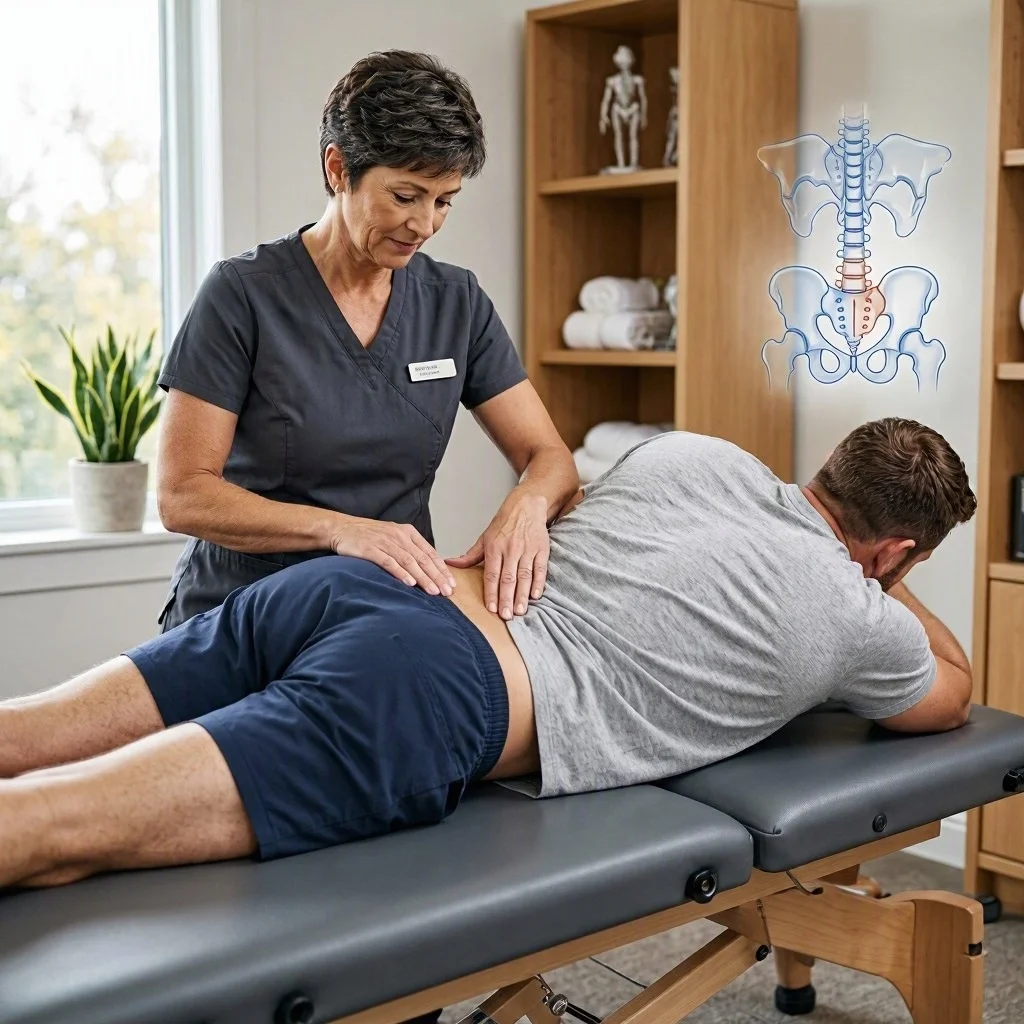
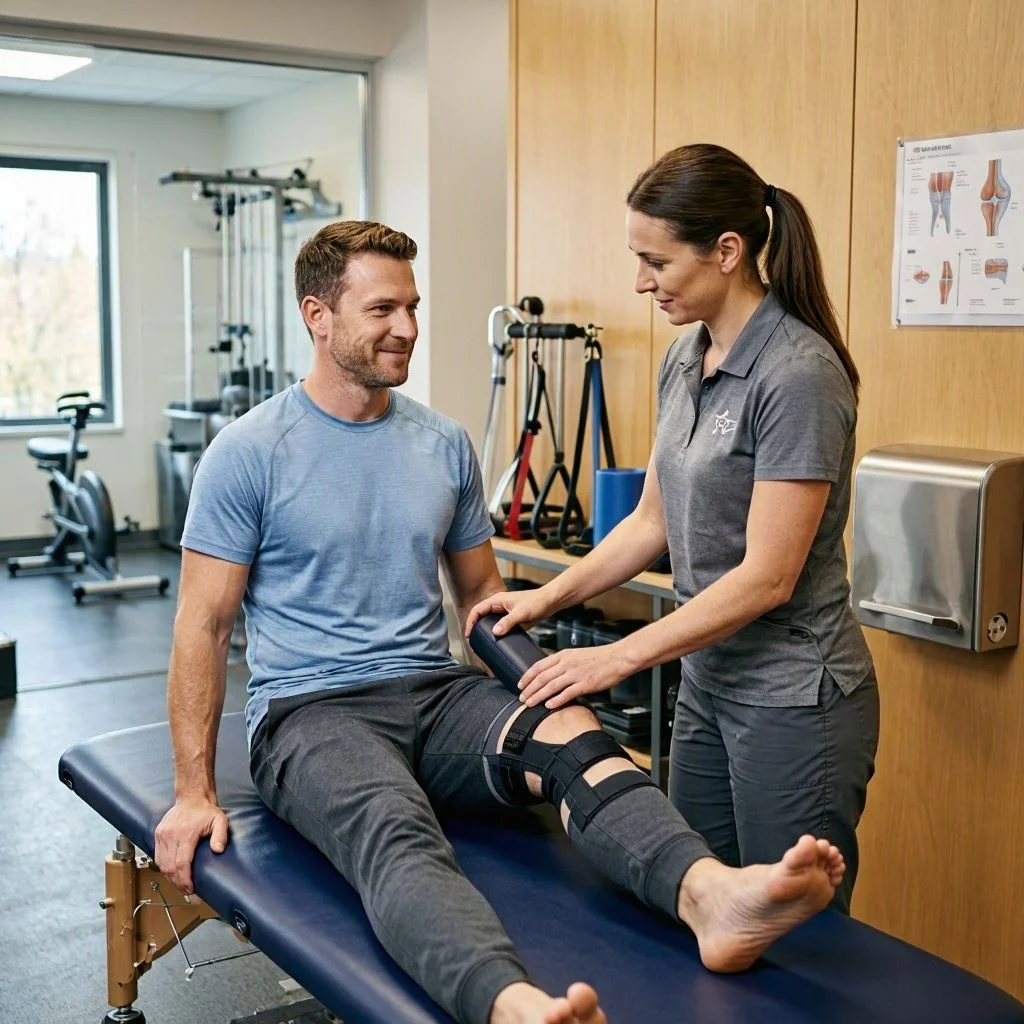
A physiotherapist can assess strength, movement, and functional capacity, then tailor the rehabilitation programme to the injury and the person’s goals.
For more information about movement-based treatment, visit Ritz Clinic Physiotherapy.
Frequently Asked Questions (Hamstring Strain Rehabilitation)
1. How long does a hamstring strain take to heal?
Mild strains may improve within days or a few weeks, while more severe injuries can take several weeks or months. Recovery depends on the severity, tissue involved, and physical demands placed on the leg.
2. Should I stretch a strained hamstring?
Avoid aggressive stretching during the early stages. Gentle movement may be appropriate when comfortable, but flexibility exercises should be introduced according to symptoms and professional guidance.
3. Can I walk with a hamstring strain?
Some mild strains allow comfortable walking, while more severe injuries make weight-bearing difficult. Avoid forcing a painful limp. Seek assessment if walking is difficult or pain is severe.
4. When can I run again after a hamstring strain?
Running can be introduced when the injury and functional capacity allow it. Begin with controlled, lower-intensity running under an appropriate plan, then progress toward faster running and sport-specific tasks.
5. Is massage helpful for a hamstring strain?
Massage may have a role in selected rehabilitation plans, but aggressive massage over a recent injury may aggravate symptoms. It should not replace appropriate assessment and progressive strengthening.
6. Are hamstring exercises necessary for recovery?
Progressive strengthening is an important part of rehabilitation for many hamstring strains. The exercises, intensity, and timing should reflect the injury and the individual’s response.
7. Why does my hamstring still feel tight after the pain improves?
A sensation of tightness may persist because strength, movement tolerance, and confidence have not fully recovered. It can also indicate that the injury needs reassessment. Do not assume that forceful stretching is the solution.
8. Can a hamstring strain happen again?
Yes. A previous hamstring strain is a recognised risk factor for another injury. Appropriate strengthening, progressive running exposure, and criteria-based return to sport can help prepare the muscle for future demands.
9. Do I need an MRI for a hamstring strain?
Not every strain requires MRI. A clinician may recommend imaging when a significant tear, tendon injury, or alternative diagnosis is suspected.
10. When should I return to football or another sport?
Return when you have met appropriate clinical and functional criteria, including sufficient strength, comfortable high-speed running, sport-specific movement tolerance, and psychological readiness. A calendar date alone is not enough to determine readiness.
Conclusion: Building a Safe Return After a Hamstring Strain
Hamstring strain rehabilitation requires a progressive approach that matches the injury and the demands of everyday activity or sport. Early management focuses on protecting the injured tissue and reducing aggravating activities. As symptoms settle, rehabilitation typically progresses toward comfortable movement, strengthening, longer-length loading, running, and sport-specific training.
The most important principle is to progress according to capacity rather than relying only on pain reduction or a fixed recovery timeline. Returning to sprinting and competition too early may leave the hamstring unprepared for high-speed demands.
If symptoms are severe, recovery is delayed, or the injury keeps returning, professional assessment can help clarify the diagnosis and guide the next steps. With an individualised plan and appropriate progression, many people can return to their usual activities while improving their readiness for future physical demands.
Medical disclaimer: This article is for educational purposes only and does not replace individual medical advice, diagnosis, or treatment. Seek professional assessment for severe pain, substantial bruising, difficulty walking, suspected tendon injury, or symptoms that fail to improve.
Clinical Practice Guideline: Hamstring Strain Injury in Athletes