Physiotherapy Post Injury Care: Complete Guide to Recovery and Rehabilitation
An injury can affect much more than the area where pain begins. A sprained ankle can change the way you walk, a shoulder injury can make reaching difficult, and a back injury can interfere with sitting, working, exercising, or sleeping. Even after the initial pain starts to improve, weakness, stiffness, reduced mobility, poor balance, and fear of movement can remain. This is where Physiotherapy Post Injury Care can play an important role.
Post-injury physiotherapy focuses on helping the body gradually regain movement, strength, coordination, balance, endurance, and confidence. Rather than simply waiting for symptoms to disappear, a structured rehabilitation program can help a person understand what their body can currently tolerate and how to safely progress toward normal activities.
Physiotherapy may use assessment, therapeutic exercise, manual therapy, movement training, education, and home exercises. The exact combination depends on the type of injury, its severity, the person’s health, current physical abilities, and recovery goals. The NHS describes physiotherapy as a treatment that can help improve movement and ease pain following injury, illness, or disability, with exercises and other techniques commonly used as part of care.
At Ritz Clinic, post-injury rehabilitation is individualized around the patient’s condition and goals. The clinic’s injury rehabilitation approach can include clinical assessment, therapeutic exercise, manual techniques, movement training, and progress monitoring.
What Is Physiotherapy Post Injury Care?
Physiotherapy Post Injury Care refers to physiotherapy and rehabilitation provided after an injury to help restore physical function and support a gradual return to normal activities.
An injury may temporarily affect several areas of physical performance, including:
- Joint mobility
- Muscle strength
- Balance
- Coordination
- Flexibility
- Endurance
- Walking
- Movement control
- Confidence
- Ability to perform daily activities
For example, after an ankle injury, a person may initially have difficulty putting weight through the affected leg. Later, they may regain normal walking but still have reduced balance or strength.
Similarly, someone recovering from a shoulder injury may regain basic movement but still struggle with lifting or reaching overhead.
Therefore, recovery is not always complete when pain decreases.
Post-injury physiotherapy helps address the remaining limitations and gradually prepares the body for the physical demands of everyday life, work, exercise, or sport.
Why Is Physiotherapy Important After an Injury?
The body can naturally begin recovering after many injuries. However, reduced activity during recovery can sometimes lead to secondary problems.
For example, avoiding movement because of pain may contribute to:
- Muscle weakness
- Joint stiffness
- Reduced endurance
- Loss of balance
- Reduced confidence
- Changes in movement patterns
This does not mean that every injury requires immediate intense exercise.
Instead, rehabilitation should match the stage of recovery.
Early treatment may focus on protecting the injured area, managing symptoms, and maintaining appropriate movement. Later, the focus can shift toward strengthening, balance, functional activities, and progressive loading.
The overall goal is to gradually restore the body’s ability to handle physical demands.
The First Step: Physiotherapy Assessment After an Injury
A good rehabilitation program begins with an assessment.
During an initial physiotherapy appointment, the therapist may ask about:
- How the injury happened
- When symptoms started
- Current pain
- Swelling
- Previous injuries
- Medical history
- Current medications when relevant
- Daily activities
- Work requirements
- Exercise habits
- Sports participation
- Recovery goals
The physical assessment may then examine:
- Joint range of motion
- Muscle strength
- Flexibility
- Balance
- Coordination
- Walking
- Movement patterns
- Functional ability
The NHS notes that a physiotherapy assessment can involve discussion of symptoms, medical history, and lifestyle, followed by assessment of areas such as strength and balance.
This information helps the physiotherapist determine where rehabilitation should begin.
Physiotherapy Post Injury Care for Pain and Symptoms
Pain is often one of the first concerns after an injury.
However, pain does not always tell the entire story.
Two people with similar injuries may experience very different levels of pain. Likewise, pain can improve before strength, mobility, or confidence fully returns.
Therefore, post-injury physiotherapy considers more than pain intensity.
A physiotherapist may look at:
- What movements increase symptoms
- What activities are tolerated
- Whether swelling is changing
- Whether mobility is improving
- Whether strength is returning
- Whether daily activities are becoming easier
This broader approach helps create a rehabilitation plan based on function rather than relying on pain alone.
Stage One: Protecting the Injured Area
The first stage of rehabilitation depends heavily on the type and severity of the injury.
Some injuries require medical treatment, immobilization, surgery, or specific restrictions. Others can begin gentle movement relatively early.
For this reason, there is no universal post-injury exercise routine.
A physiotherapist may initially focus on:
- Comfortable movement
- Appropriate activity levels
- Symptom management
- Reducing unnecessary strain
- Maintaining movement in unaffected areas
- Education about the injury
The objective is to avoid both extremes.
Doing too much too soon may aggravate an injury, while unnecessarily prolonged inactivity can contribute to stiffness and weakness.
A gradual approach is often more appropriate.
Stage Two: Restoring Mobility
Once movement is considered appropriate, physiotherapy may focus on restoring range of motion.
Injuries can cause stiffness because of:
- Swelling
- Pain
- Reduced activity
- Immobilization
- Protective movement patterns
Mobility exercises may be introduced gradually.
For example, ankle rehabilitation may include controlled ankle movements. Shoulder rehabilitation may involve gentle range-of-motion exercises. Knee rehabilitation may use controlled bending and straightening.
The exact exercises depend on the injury.
Importantly, forcing movement is not automatically better.
The goal is to restore useful movement while respecting the healing process and professional guidance.
Stage Three: Rebuilding Strength
Muscle weakness is common after injury.
If someone avoids using an injured leg for several weeks, the muscles around that leg may lose strength and endurance.
Therefore, strengthening is often an important part of Physiotherapy Post Injury Care.
Depending on the injury, exercises may include:
- Isometric exercises
- Bodyweight exercises
- Resistance bands
- Free weights
- Machines
- Controlled functional movements
Early strengthening may use low resistance.
As the person’s capacity improves, the exercises can gradually become more challenging.
Progression may involve increasing:
- Resistance
- Repetitions
- Sets
- Range of motion
- Exercise complexity
- Movement speed
- Functional demands
The purpose is to help the body tolerate increasingly greater loads.
Stage Four: Balance and Coordination Training
Strength is important, but it does not always restore complete function.
Balance and coordination can also be affected by injury.
This is particularly relevant after injuries involving the ankle, knee, hip, or lower limb.
Balance exercises may include:
- Weight shifting
- Supported single-leg standing
- Step-ups
- Controlled reaching
- Tandem standing
- Dynamic balance exercises
As control improves, the exercises can become progressively more demanding.
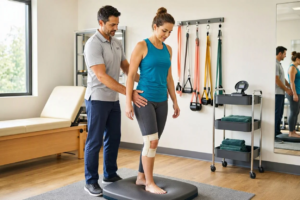
For example, someone recovering from an ankle injury may initially stand on both feet before progressing toward supported single-leg balance and eventually more dynamic movement.
The goal is to rebuild control rather than simply increase exercise difficulty.
Stage Five: Functional Rehabilitation
Functional rehabilitation connects basic exercises with real-life activities.
This is an important transition because people rarely want to recover simply so they can perform exercises.
They want to return to their lives.
Functional rehabilitation may include:
- Squatting
- Stepping
- Lifting
- Carrying
- Reaching
- Walking
- Stair climbing
- Pushing
- Pulling
- Running
- Jumping
The appropriate activities depend on the person’s goals.
Someone returning to office work may need sitting tolerance, walking, and basic lifting.
A warehouse worker may require repeated lifting, carrying, pushing, pulling, and prolonged standing.
An athlete may eventually need running, jumping, acceleration, deceleration, and changes of direction.
Ritz Clinic’s functional training approach similarly connects rehabilitation exercises with everyday activities, work, exercise, and sports.
Physiotherapy Post Injury Care for Sports Injuries
Sports injuries can range from relatively minor strains and sprains to significant ligament, tendon, muscle, or joint injuries.
Returning to sport requires more than simply feeling better.
An athlete may need to regain:
- Strength
- Balance
- Mobility
- Endurance
- Power
- Coordination
- Reaction
- Confidence
- Sport-specific movement skills
For example, returning to soccer may require:
- Running
- Sprinting
- Acceleration
- Deceleration
- Jumping
- Landing
- Cutting
- Direction changes
A tennis player may need:
- Rotational movement
- Lateral movement
- Reaching
- Sprinting
- Stopping
- Repeated arm activity
Therefore, the final stages of rehabilitation should reflect the actual demands of the sport.
Leeds Teaching Hospitals recommends a gradual return to sport after lower-limb injury, beginning with lighter activity and progressively increasing demands over time.
Physiotherapy After a Muscle Strain
Muscle strains can affect athletes, workers, and active individuals.
Depending on the severity, rehabilitation may include:
- Appropriate early activity
- Gradual mobility
- Controlled strengthening
- Progressive loading
- Functional movement
- Return to normal activity
The exact timeline depends on the injured muscle and severity of the strain.
As strength returns, rehabilitation can become more specific.
For an athlete, this might eventually include faster movements or sport-specific drills.
For a worker, the program may focus on lifting, carrying, bending, or repetitive tasks.
The objective is to rebuild the ability to tolerate the activities that caused the original physical demand.
Physiotherapy After an Ankle Injury
Ankle injuries can affect walking, balance, mobility, and confidence.
Early rehabilitation may focus on appropriate movement and managing symptoms.
Later stages may include:
- Ankle mobility
- Calf strengthening
- Foot strengthening
- Balance exercises
- Step-ups
- Walking exercises
- Functional loading
A person may feel comfortable walking but still have reduced balance.
That is why rehabilitation should not stop immediately after basic walking returns.
Leeds Teaching Hospitals includes range-of-motion exercises and progressive balance training as part of rehabilitation guidance following lower-limb injuries.
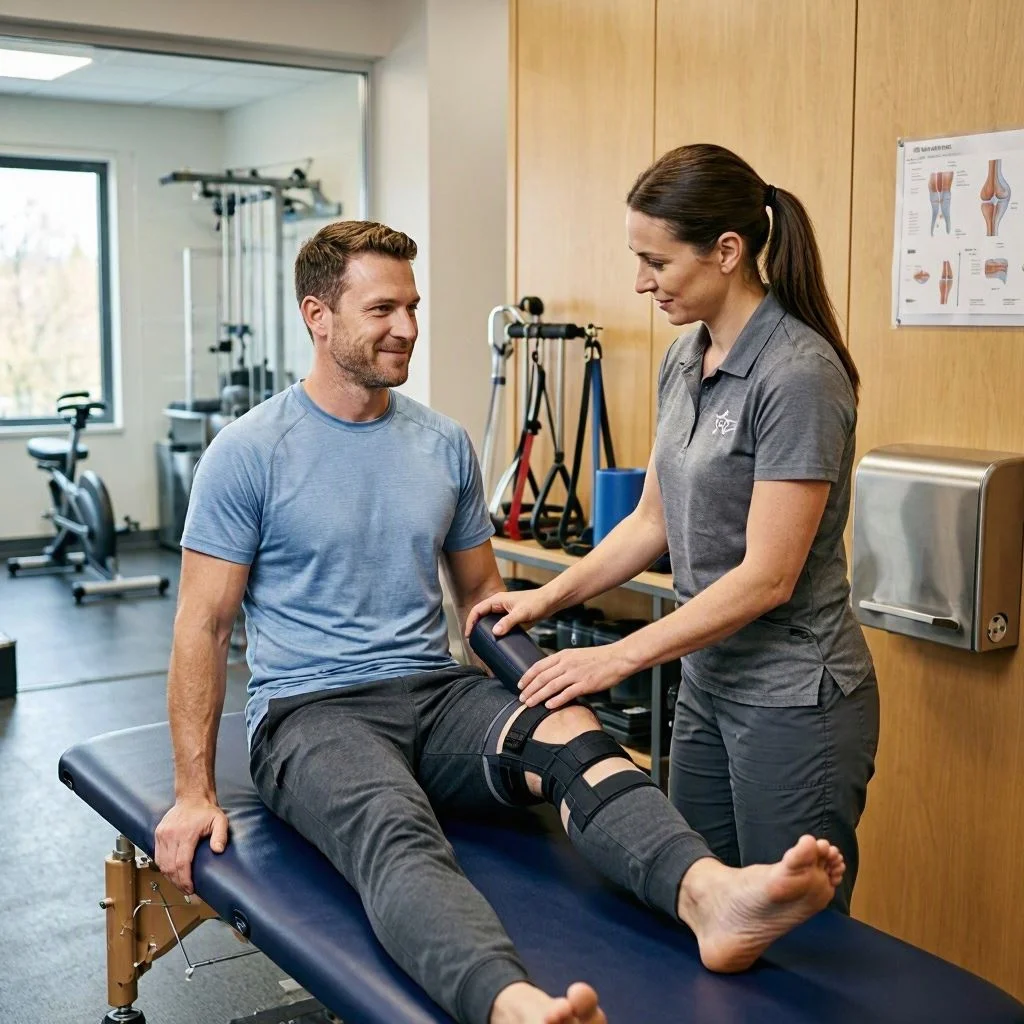
Physiotherapy After a Knee Injury
Knee injuries can interfere with:
- Walking
- Stairs
- Squatting
- Running
- Jumping
- Getting up from a chair
Physiotherapy may address:
- Quadriceps strength
- Hamstring strength
- Hip strength
- Knee mobility
- Ankle mobility
- Balance
- Movement control
Exercises may include:
- Sit-to-stand
- Squats
- Step-ups
- Leg strengthening
- Balance work
- Controlled lunges
For athletes, rehabilitation may eventually progress to running, jumping, landing, and direction changes.
The exact program should reflect the diagnosis and recovery stage.
Physiotherapy After a Shoulder Injury
Shoulder injuries can make reaching, lifting, pushing, pulling, dressing, and overhead activities difficult.
Rehabilitation may begin with controlled mobility.
As symptoms and physical capacity improve, strengthening can become more important.
Exercises may target:
- Rotator cuff muscles
- Shoulder blade control
- Upper back
- Shoulder mobility
- Functional reaching
Later stages may include:
- Lifting
- Carrying
- Pushing
- Pulling
- Overhead activity
The final goal should reflect what the person needs to do.
A construction worker, office employee, swimmer, and baseball player may all require very different shoulder rehabilitation.
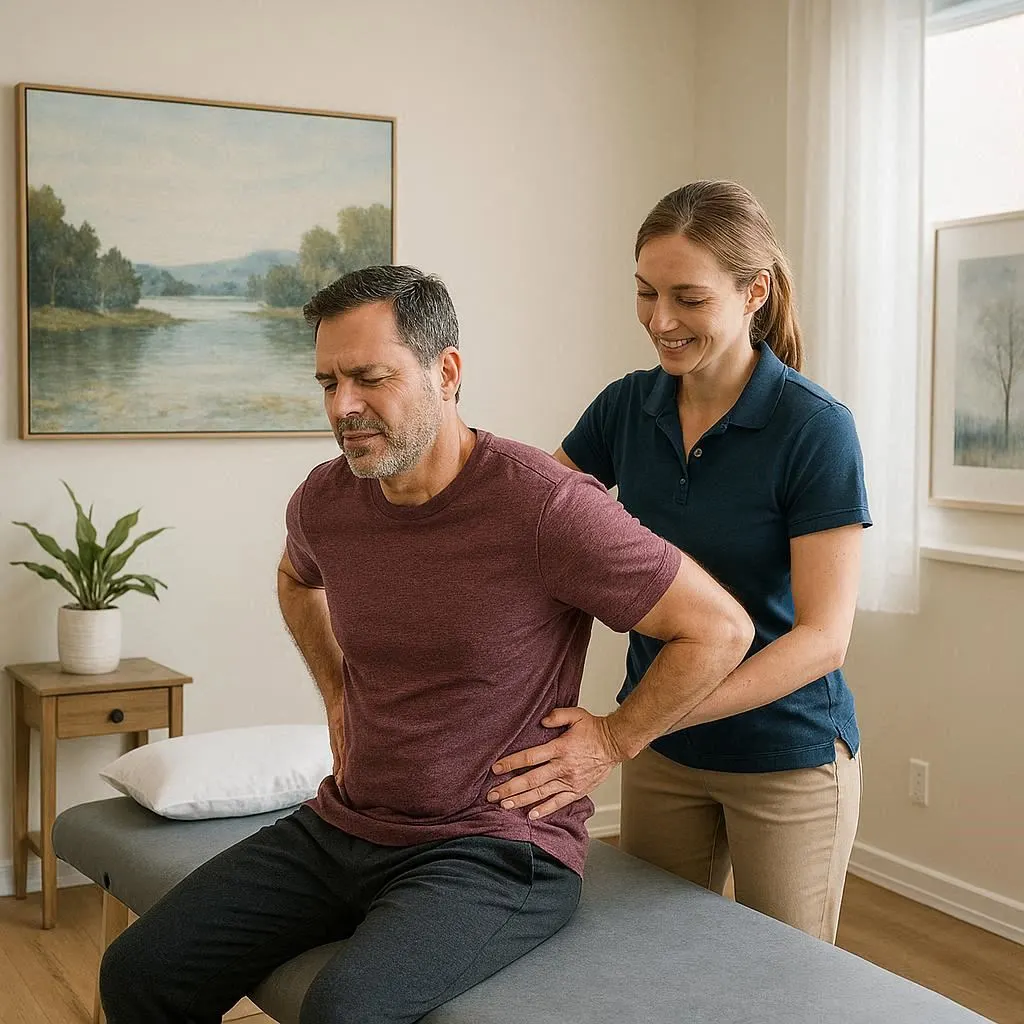
Physiotherapy After Back Injury
Back injuries and episodes of back pain can affect sitting, standing, bending, lifting, walking, and exercise.
Post-injury care may involve:
- Appropriate movement
- Mobility exercises
- Strengthening
- Walking
- Core and trunk exercises
- Hip strengthening
- Functional movement
- Gradual return to activity
The aim is not necessarily to keep the back completely still.
Instead, rehabilitation can help a person gradually rebuild their tolerance for normal movement.
However, severe or rapidly worsening back symptoms require appropriate medical assessment.
Symptoms such as significant neurological changes, major trauma, or loss of bladder or bowel control should not be managed with routine physiotherapy alone.
Physiotherapy After Surgery
Surgery can temporarily affect movement, strength, balance, endurance, and confidence.
Postoperative physiotherapy can help guide the transition from protected movement toward normal activity.
Depending on the procedure, rehabilitation may include:
- Range-of-motion exercises
- Strengthening
- Walking
- Transfers
- Balance training
- Functional activities
- Stair practice
- Progressive exercise
The timeline depends on the type of surgery and medical instructions.
Postoperative rehabilitation should therefore follow the specific guidance provided by the surgical and rehabilitation team.
The NHS notes that physiotherapy is commonly used to improve movement, strength, and stamina after surgery.
Physiotherapy and Progressive Loading
Progressive loading is one of the most important concepts in rehabilitation.
The body needs appropriate physical challenges to rebuild capacity.
However, increasing the workload too quickly may aggravate symptoms.
Progression can involve:
- More resistance
- More repetitions
- Longer exercise duration
- Greater range of motion
- Faster movement
- More complex exercises
- Less external support
- More sport-specific activity
For example:
Supported movement → Independent movement → Strengthening → Functional exercise → Sport or work-specific activity
The exact sequence varies.
The important principle is gradual progression based on the individual’s response.
Why Returning to Activity Too Quickly Can Be a Problem
Feeling better does not always mean the body is ready for high-demand activity.
Pain may improve before:
- Strength returns
- Endurance returns
- Balance improves
- Coordination normalizes
- Tissue capacity is restored
Returning to sport, heavy work, or intense exercise too quickly can therefore place excessive demands on the recovering body.
A gradual return allows physical capacity to catch up with the person’s activity goals.
This does not mean that everyone should avoid activity for a long period.
Instead, the objective is to find an appropriate level of activity and increase it progressively.
Why Staying Inactive for Too Long Can Also Be a Problem
The opposite extreme can also create difficulties.
Prolonged inactivity may contribute to:
- Muscle weakness
- Stiffness
- Reduced cardiovascular fitness
- Lower confidence
- Reduced tolerance for activity
For many injuries, appropriate movement can form an important part of rehabilitation.
The NHS describes exercise and movement as common components of physiotherapy, while specific injury guidance often recommends gradually increasing activity as symptoms and physical capacity allow.
The correct amount of activity depends on the injury.
The Role of Home Exercises
Rehabilitation does not stop when the physiotherapy appointment ends.
A home exercise program can help maintain progress between sessions.
Depending on the condition, a home program may include:
- Mobility exercises
- Strength exercises
- Balance training
- Stretching
- Walking
- Functional exercises
- Conditioning
The exercises should be appropriate for the person’s condition.
The NHS notes that patients may receive exercises to perform at home between physiotherapy appointments and emphasizes regular completion as part of recovery.
Consistency is generally more useful than an unnecessarily complicated routine.
How Long Does Physiotherapy Post Injury Care Take?
There is no universal recovery timeline.
The duration of rehabilitation depends on:
- Type of injury
- Severity
- Location
- Age
- General health
- Previous injuries
- Physical conditioning
- Work requirements
- Sports requirements
- Surgery
- Rehabilitation consistency
A minor injury may require a relatively short rehabilitation period.
A fracture, major ligament injury, tendon injury, or postoperative condition may require a much longer process.
Progress should therefore be evaluated according to function rather than a fixed calendar.
How Is Recovery Measured?
A good rehabilitation program should have measurable goals.
Progress may be assessed through:
- Range of motion
- Muscle strength
- Balance
- Walking
- Exercise tolerance
- Functional tasks
- Pain response
- Endurance
- Work capacity
- Sport-specific performance
Functional improvements can be particularly meaningful.
For example, progress might mean:
- Walking farther
- Climbing stairs
- Carrying groceries
- Returning to work
- Lifting safely
- Running
- Returning to sport
- Performing daily activities independently
These goals provide a practical way to measure recovery.
Returning to Work After an Injury
Workplaces place different demands on the body.
An office worker may need to tolerate prolonged sitting and computer work.
A physical worker may need to lift, carry, push, pull, climb, or stand for extended periods.
Therefore, post-injury physiotherapy should consider the actual requirements of the job.
Rehabilitation may gradually introduce:
- Lifting
- Carrying
- Reaching
- Bending
- Squatting
- Walking
- Stair climbing
- Repetitive movements
Temporary modifications may also be useful during the return-to-work period.
Leeds Teaching Hospitals recommends considering lighter or less strenuous duties during the early stages of returning to work after some injuries.
Physiotherapy Post Injury Care for Older Adults
Older adults may face additional challenges during recovery.
An injury can reduce:
- Strength
- Balance
- Walking ability
- Confidence
- Independence
For this reason, rehabilitation may place particular emphasis on:
- Strength training
- Balance
- Walking
- Functional movements
- Transfers
- Stair practice
The goal is not necessarily athletic performance.
Instead, the priority may be helping the person safely return to everyday independence.
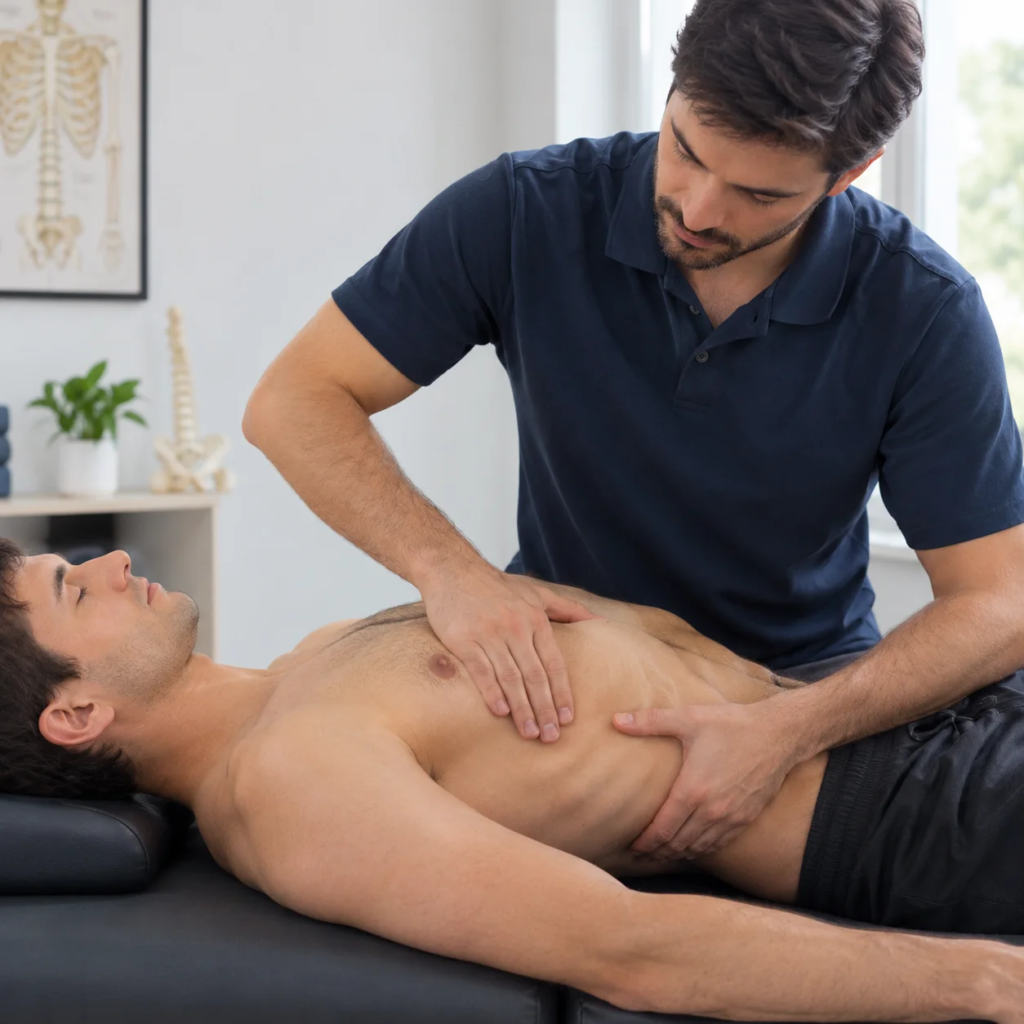
Manual Therapy During Post-Injury Rehabilitation
Physiotherapy can sometimes include manual therapy.
Depending on the condition, a physiotherapist may use hands-on techniques to help with:
- Joint mobility
- Soft tissue mobility
- Temporary symptom relief
- Comfortable movement
However, manual treatment is generally most useful when it complements active rehabilitation.
Exercise can help rebuild the physical capacity needed for everyday activity.
At Ritz Clinic, injury rehabilitation may combine therapeutic exercise, mobility training, progressive strengthening, balance exercises, functional training, manual therapy, and movement education according to the person’s needs.
Soft Tissue Therapy After an Injury
Some people also consider massage or soft tissue treatment after an injury.
It may have a role in certain rehabilitation plans, particularly when muscular tension or discomfort is affecting movement.
However, vigorous treatment is not appropriate for every injury or every stage of recovery.
NCCIH notes that massage generally has a low risk of harmful effects when performed appropriately, but rare serious complications have been reported, particularly with vigorous techniques or in people at higher risk. It also advises against using massage to delay appropriate medical care.
Therefore, the injury should be assessed before choosing aggressive hands-on treatment.
When Should You Not Rely on Physiotherapy Alone?
Physiotherapy is appropriate for many musculoskeletal injuries, but some situations require urgent medical assessment.
Seek appropriate medical care for symptoms such as:
- Major trauma
- Suspected fracture
- Severe or rapidly worsening pain
- Significant deformity
- Sudden major weakness
- Progressive numbness
- Loss of coordination
- Loss of bladder or bowel control
- Chest pain
- Severe difficulty breathing
- Loss of consciousness
- Significant unexplained symptoms
A physiotherapist may also recommend further medical assessment if the findings suggest that another healthcare professional should investigate the problem.
Rehabilitation should support safe recovery rather than delay necessary medical care.
How to Get Better Results From Physiotherapy Post Injury Care
Follow the Rehabilitation Plan
Consistency matters.
Complete the exercises recommended by your physiotherapist and communicate if something is difficult or causes unexpected symptoms.
Do Not Rush Progression
Feeling better is encouraging, but physical capacity still needs to be rebuilt.
Stay Active Within Appropriate Limits
Appropriate movement can help maintain conditioning while rehabilitation progresses.
Sleep and Recover
Recovery requires more than exercise.
Adequate sleep and appropriate rest can support your ability to participate in rehabilitation.
Communicate About Your Goals
Tell your physiotherapist what you want to return to.
Returning to walking, work, running, lifting, or competitive sport can require different rehabilitation strategies.
Track Functional Progress
Look beyond pain.
Ask whether you can do more than you could a few weeks ago.
Physiotherapy Post Injury Care at Ritz Clinic
Ritz Clinic provides individualized injury rehabilitation designed around the person’s condition, physical abilities, and goals.
The clinic’s current injury rehabilitation approach combines clinical assessment with therapeutic exercise, manual techniques, movement training, and progress monitoring. It can be used for different types of injuries, including sports injuries, workplace injuries, muscle strains, joint injuries, and postoperative rehabilitation.
The rehabilitation process can include:
- Mobility training
- Progressive strengthening
- Balance exercises
- Functional training
- Therapeutic exercise
- Movement education
- Activity modification
- Return-to-sport training
For patients who need a more functional approach, Physiotherapy Functional Training can connect rehabilitation exercises with everyday activities, work, exercise, and sport.
A structured Physiotherapy Exercise Program can also provide individualized exercises for strength, mobility, balance, endurance, and physical function.
The exact plan depends on the assessment.
Final Thoughts
Physiotherapy Post Injury Care is about much more than treating pain after an injury.
A successful recovery may require the gradual restoration of:
- Mobility
- Strength
- Balance
- Coordination
- Endurance
- Movement control
- Confidence
- Functional ability
The rehabilitation process often develops through stages.
First, the injury needs appropriate assessment and protection.
Next, movement can gradually return.
Then, strength and physical capacity can be rebuilt.
After that, balance, coordination, and functional movement can become more challenging.
Finally, rehabilitation can progress toward the specific demands of work, exercise, sport, or everyday life.
The correct timeline varies from person to person.
Most importantly, post-injury rehabilitation should avoid both extremes: doing too much too soon and remaining inactive for too long.
A personalized physiotherapy program can help determine what level of activity is appropriate and how to progress safely.
At Ritz Clinic, injury rehabilitation combines assessment, therapeutic exercise, movement training, manual techniques, and progress monitoring according to individual needs.
The ultimate goal is practical: to help people regain physical function and return to the activities that matter to them with greater confidence and appropriate physical capacity.
Frequently Asked Questions About Physiotherapy Post Injury Care
What is Physiotherapy Post Injury Care?
Physiotherapy Post Injury Care is a rehabilitation approach used after an injury to help restore movement, strength, balance, coordination, endurance, and functional ability.
When should I start physiotherapy after an injury?
The appropriate timing depends on the type and severity of the injury. Some injuries require immediate medical assessment or protection, while others may benefit from early controlled movement. A physiotherapist can help determine an appropriate starting point.
Can physiotherapy help after surgery?
Yes. Physiotherapy is commonly used after surgery to help restore movement, strength, stamina, and function. The rehabilitation program should follow the specific surgical and medical guidelines.
Can physiotherapy help sports injuries?
Yes. Sports rehabilitation can address strength, mobility, balance, coordination, endurance, and sport-specific movements. Return to sport should generally progress gradually.
How long does post-injury physiotherapy take?
There is no standard timeline. Recovery depends on the type and severity of the injury, medical history, physical condition, rehabilitation goals, and response to treatment.
Should I exercise after an injury?
Exercise can be an important part of rehabilitation, but the appropriate exercises depend on the injury and recovery stage. A physiotherapist can help determine suitable movements and progression.
Can physiotherapy prevent another injury?
A physiotherapy program may address factors such as weakness, reduced mobility, balance, movement control, and physical conditioning that could contribute to future problems. However, no treatment can guarantee that another injury will not occur.
Is pain normal during rehabilitation?
Some rehabilitation exercises may cause mild or temporary discomfort, depending on the condition. However, severe, unexpected, or progressively worsening pain should be discussed with your physiotherapist or healthcare provider.
Can I return to sport as soon as the pain disappears?
Not necessarily. Pain can improve before strength, balance, endurance, coordination, and tissue capacity fully recover. A gradual return is generally more appropriate.
Can physiotherapy help me return to work?
Yes. Rehabilitation can be adapted to the physical requirements of your job. This may include lifting, carrying, reaching, walking, standing, bending, or other work-specific activities.
What happens during the first physiotherapy appointment?
The physiotherapist usually discusses your symptoms, medical history, lifestyle, injury, and goals. They may assess movement, strength, flexibility, balance, and functional ability before developing a treatment plan.
Do I need to do exercises at home?
Often, yes. A physiotherapist may provide a home exercise program to help continue rehabilitation between appointments. Consistency can support progress.
Can massage be used after an injury?
Massage or soft tissue therapy may sometimes complement rehabilitation, but it is not appropriate for every injury or every stage of recovery. Vigorous treatment should be avoided when it may be unsafe.
What if my symptoms get worse during rehabilitation?
Tell your physiotherapist. The exercise intensity, volume, or movement may need to be adjusted. Severe or concerning symptoms may require medical assessment.
What are the warning signs that require medical attention?
Major trauma, suspected fracture, severe or rapidly worsening pain, significant weakness, progressive numbness, loss of coordination, loss of bladder or bowel control, chest pain, difficulty breathing, or loss of consciousness require appropriate medical evaluation rather than routine rehabilitation alone.
Where can I receive Physiotherapy Post Injury Care?
Ritz Clinic provides individualized injury rehabilitation and physiotherapy services designed around the patient’s condition, physical abilities, and recovery goals.