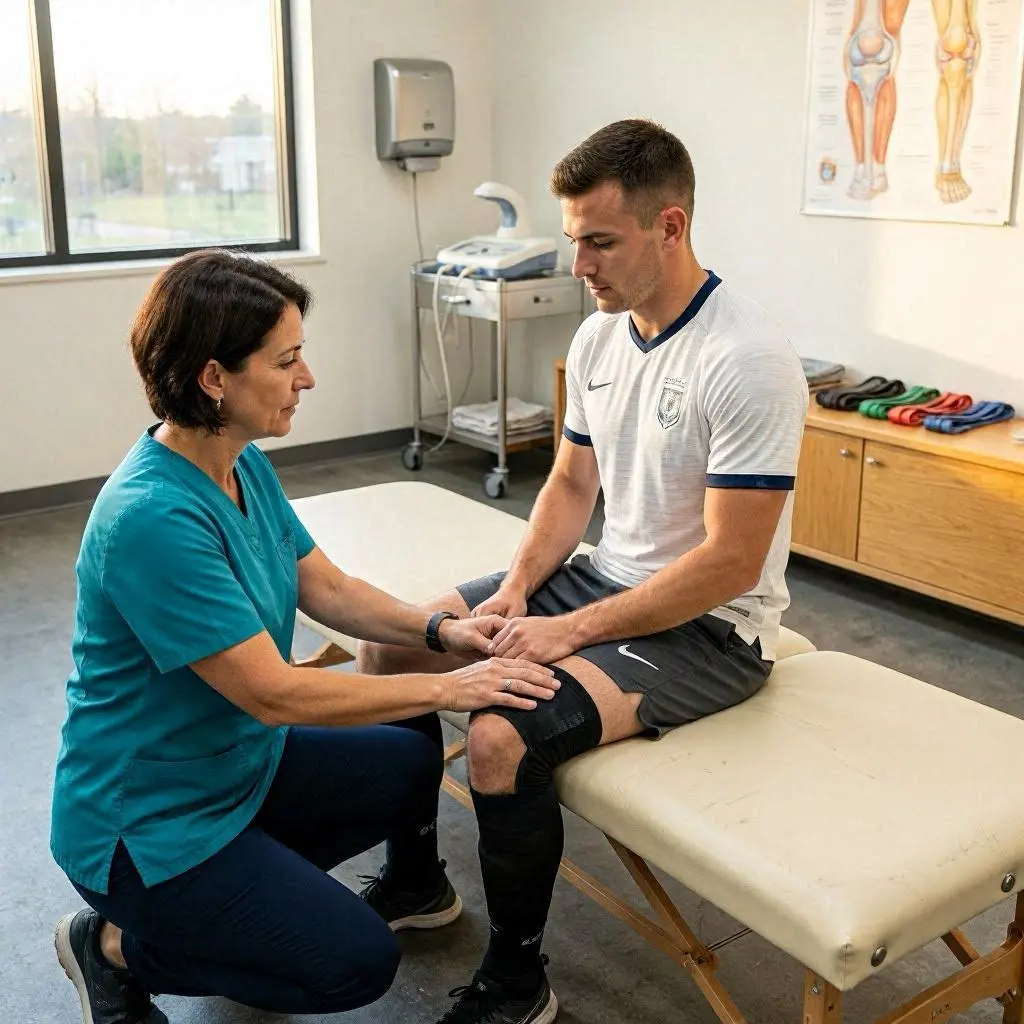
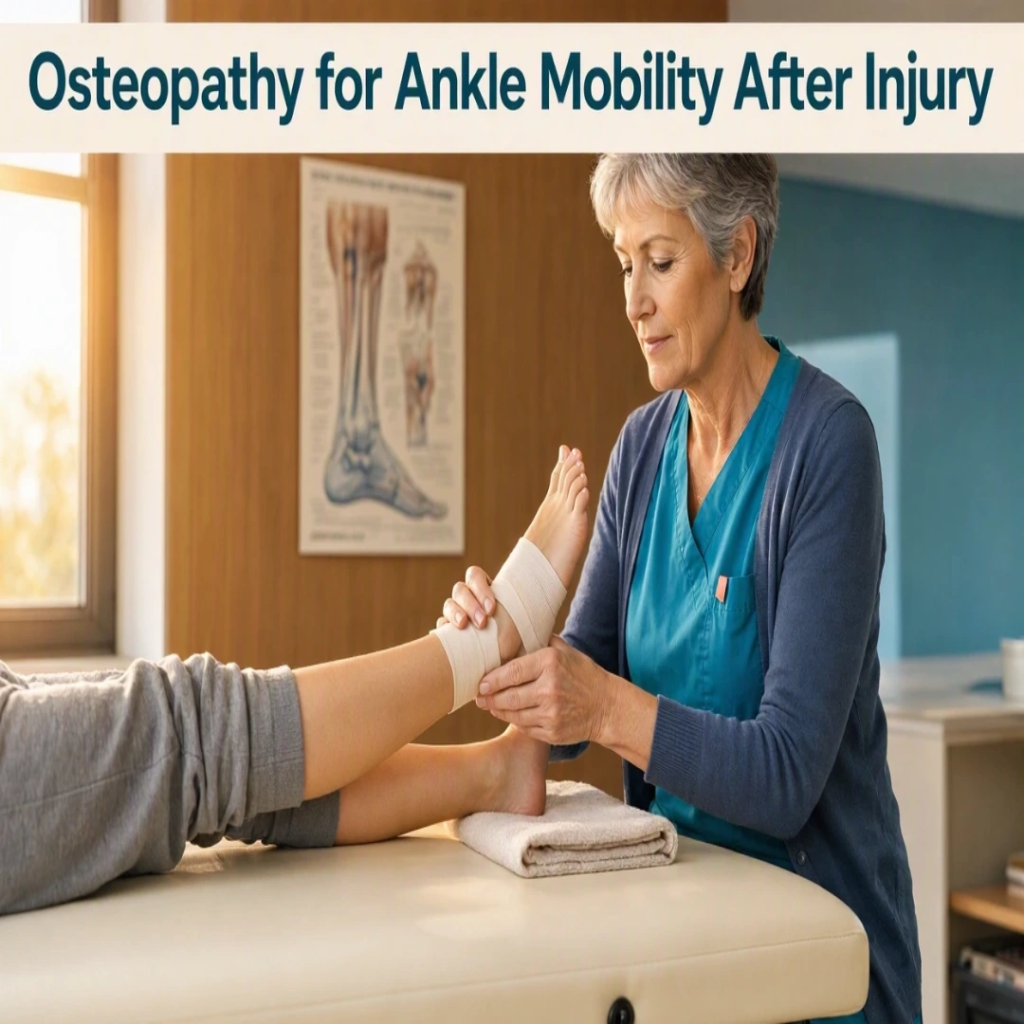
Osteopathy for Ankle Mobility After Injury: A Complete Guide
Osteopathy for Ankle Mobility After Injury is an approach that may help address certain movement restrictions as part of a broader rehabilitation plan. Osteopathic practitioners use hands-on assessment and treatment techniques to evaluate muscles, joints, and surrounding tissues. Depending on the injury, manual therapy may help improve short-term mobility and comfort. An ankle injury can affect much more than walking. It may make climbing stairs, exercising, standing at work, or enjoying everyday activities uncomfortable. Even after the initial pain and swelling improve, some people continue to experience stiffness, reduced flexibility, weakness, or a feeling of instability.
However, hands-on treatment is not a replacement for appropriate medical assessment or structured rehabilitation. Evidence-based ankle recovery usually combines progressive movement, strengthening, balance training, and activity modification. The right approach depends on the type and severity of the injury.
This guide explains how ankle injuries affect mobility, how osteopathy may support recovery, which techniques practitioners may use, and what patients should know before starting treatment.
1. Understanding Ankle Injuries and Reduced Mobility
The ankle is a complex structure that supports body weight and allows the foot to move during walking, running, jumping, and turning. It relies on bones, ligaments, tendons, muscles, and joint surfaces working together.
Because the ankle absorbs forces during everyday movement, it is vulnerable to injury. A sudden twist, an awkward landing, or a change in direction can damage its supporting tissues.
Common types of ankle injuries
Several conditions can affect ankle movement.
Ankle sprains: A sprain occurs when ligaments stretch beyond their normal limits or tear. Lateral ankle sprains, which affect ligaments on the outside of the ankle, are particularly common. They often occur when the foot rolls inward.
Ankle fractures: A fracture involves a break in one or more ankle bones. These injuries require appropriate medical assessment and may need immobilisation, surgery, or a period of restricted weight-bearing.
Tendon injuries: Tendons connect muscles to bones. Problems involving the Achilles or peroneal tendons can cause pain, stiffness, and difficulty pushing off during walking.
Joint stiffness after immobilisation: A cast, boot, or period of reduced movement may contribute to restricted ankle range of motion. Muscles can also lose strength during recovery.
Chronic ankle instability: Some people experience repeated ankle sprains or a persistent feeling that the ankle may give way. This condition can involve changes in strength, balance, coordination, and joint function.
Although these conditions can produce similar symptoms, they do not all require the same treatment. Therefore, identifying the cause of restricted movement is an important first step.
Why ankle mobility matters
Ankle mobility refers to the ability to move the ankle through the range needed for daily activities and sport. One particularly important movement is dorsiflexion, which occurs when the foot moves upward toward the shin.
Adequate dorsiflexion helps people walk, descend stairs, squat, and absorb forces during landing. When this movement becomes restricted, other joints may compensate.
For example, a person with limited ankle dorsiflexion may turn the foot outward or lift the heel early during a squat. These changes do not automatically cause another injury, but they may affect movement efficiency and comfort.
Reduced mobility can also influence balance and confidence. Consequently, rehabilitation should address more than pain alone. It should restore the movements and functional abilities that matter to each individual.
2. What Is Osteopathy?
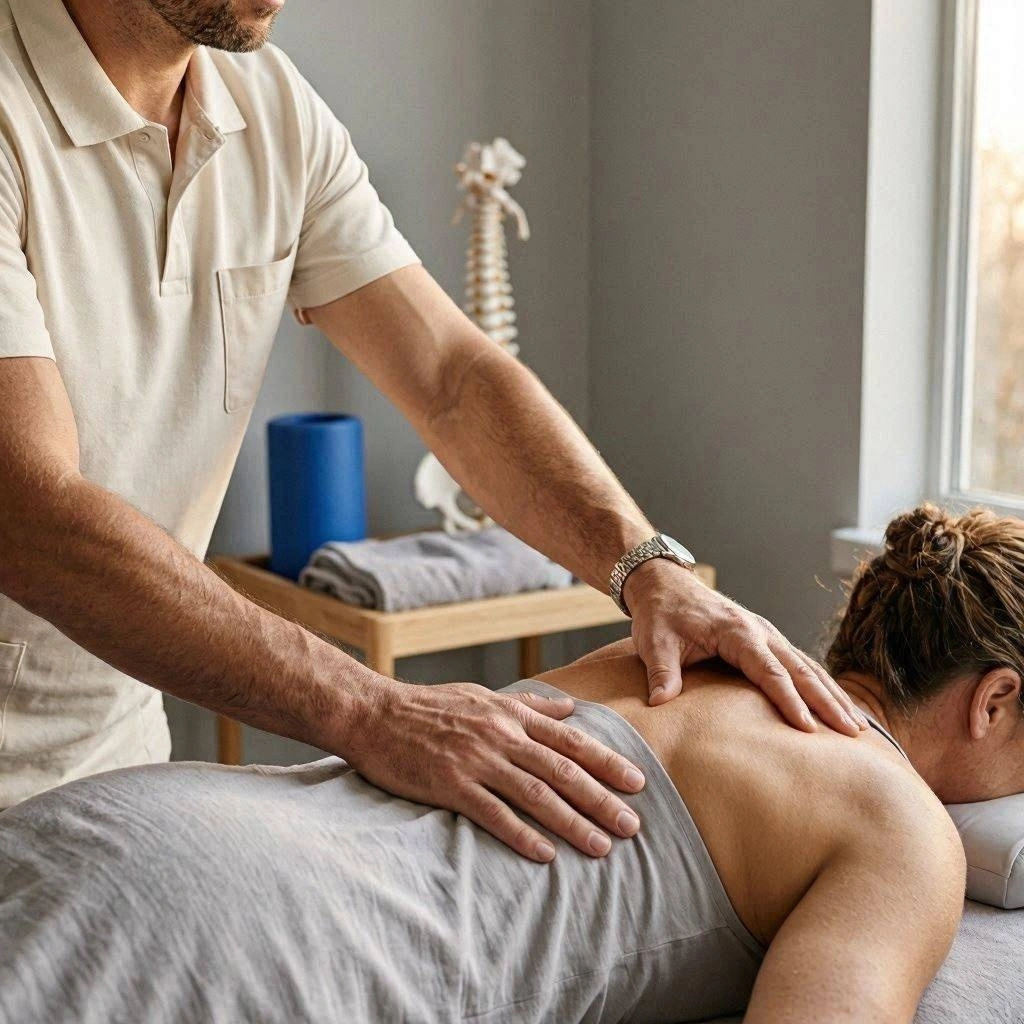
Osteopathy is a form of healthcare that uses clinical assessment and manual techniques to address problems involving the musculoskeletal system. Depending on local regulations and professional training, osteopaths may assess joint movement, muscle function, posture, and movement patterns.
Osteopathic treatment may include gentle joint mobilisation, soft-tissue techniques, stretching, movement advice, and exercise recommendations.
The exact approach varies according to the practitioner, the patient’s symptoms, and the suspected diagnosis.
The role of manual therapy
Manual therapy involves hands-on techniques intended to influence joint movement, soft tissues, pain, or physical function.
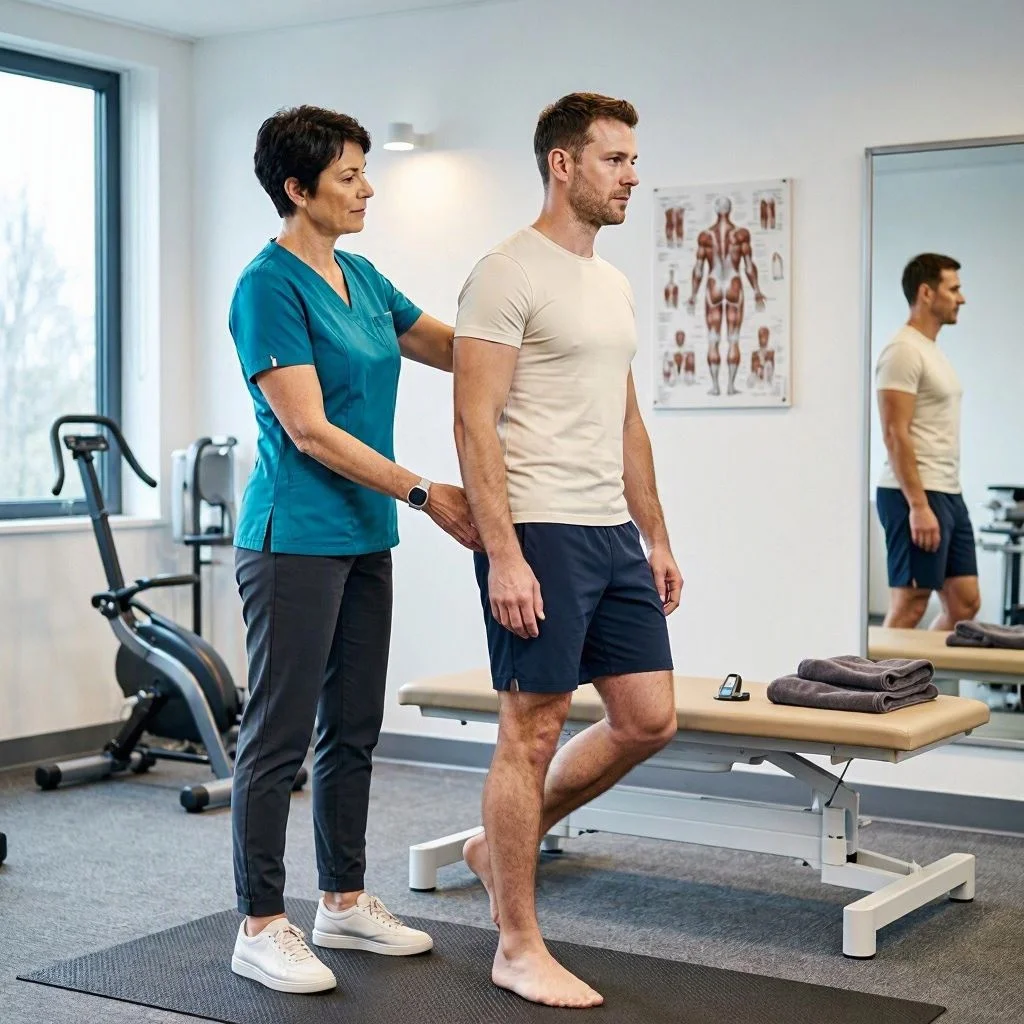
For ankle rehabilitation, a practitioner may assess how the ankle moves when the patient bends the knee, walks, or transfers weight onto the affected foot. The assessment may also include the calf muscles, foot, knee, and hip.
The purpose is to identify relevant limitations and choose suitable treatment options.
For instance, someone recovering from an ankle sprain may have reduced dorsiflexion because of swelling, pain, joint stiffness, or calf muscle tightness. Each factor may require a different combination of interventions.
Manual therapy may help some patients move more comfortably in the short term. However, it cannot guarantee tissue healing, correct every movement problem, or prevent all future injuries.
How osteopathy differs from exercise-based rehabilitation
Osteopathy commonly includes hands-on treatment, although some practitioners also prescribe exercises. Physiotherapy and other rehabilitation services may use manual therapy as well.
The distinction is not simply that one profession uses hands-on techniques and another uses exercise. Treatment methods can overlap considerably.
For ankle injuries, structured exercise has an important role in restoring strength, balance, coordination, and confidence. Manual therapy may complement this process when the assessment identifies a suitable reason to use it.
Ultimately, treatment should focus on measurable improvements in function rather than the name of the therapy.
3. How Osteopathy Improves Ankle Mobility After Injury
Osteopathy for ankle mobility after injury may be considered as a complementary approach to help address selected movement restrictions, alongside an appropriate rehabilitation programme.
The potential benefits of osteopathy for ankle mobility after injury should be considered alongside progressive exercises, strength training, and balance rehabilitation.
Restricted ankle movement can have several causes. An osteopathic assessment may help identify movement limitations and determine whether hands-on treatment is appropriate.
The potential benefits depend on the type of injury, the stage of recovery, and the individual’s needs.
Osteopathy may also be used to support people with other musculoskeletal complaints. Learn more in our guide to Osteopathy for Repetitive Strain Injuries.
Improving Ankle Dorsiflexion
Limited dorsiflexion is a common finding after ankle sprains and periods of immobilisation.
A practitioner may assess this movement during a weight-bearing lunge or another suitable clinical test. The results can help identify whether the affected ankle moves differently from the other side.
If the joint is safe to mobilise, gentle manual techniques may help improve dorsiflexion over the short term.
Nevertheless, improvements should be reassessed rather than assumed. Exercise, gradual loading, and repeated functional movement remain important parts of recovery.
Reducing movement-related discomfort
Pain can make people reluctant to move an injured ankle. This protective response is understandable, particularly during the early stages of recovery.
Appropriate manual therapy may help some people tolerate movement more comfortably. A practitioner can then introduce or progress suitable exercises according to symptoms and clinical findings.
However, pain relief does not necessarily mean the injured ligament or tendon has fully healed. Patients should follow advice about loading restrictions and avoid returning to demanding activities too early.
Addressing soft-tissue stiffness
The calf muscles, Achilles tendon, and surrounding tissues contribute to ankle movement.
After an injury, swelling and reduced activity may affect how these structures move and function. A practitioner may use gentle soft-tissue techniques when the examination suggests they are appropriate.
These techniques may improve comfort or make movement easier. However, they should not be presented as a way to break down scar tissue or repair damaged ligaments without supporting evidence.
Supporting walking mechanics
An ankle injury can change the way a person walks. They may shorten their stride, avoid loading the affected side, or push off less effectively.
An assessment can identify these changes and guide a suitable rehabilitation plan.
Manual therapy may help when restricted joint movement contributes to the problem. At the same time, walking practice, strengthening, and progressive weight-bearing help patients regain normal movement patterns.
The aim is not to achieve a particular movement measurement at all costs. Instead, treatment should improve comfortable, safe function.
Helping patients return to daily activities
Recovery goals vary from person to person. One patient may want to walk comfortably to work, while another may need to return to running or a physically demanding job.
A practitioner should consider these goals when planning care.
For example, someone who struggles with stairs may benefit from work on dorsiflexion, calf strength, balance, and controlled step-down movements. A recreational runner may also need a gradual running progression and sport-specific exercises.
Osteopathic treatment may form one part of this process, but meaningful recovery requires progress in the activities the patient wants to perform.
4.Osteopathic Techniques for Ankle Mobility Rehabilitation
Osteopathy for ankle mobility after injury may involve individualised manual techniques, depending on the type of injury, symptoms, and stage of recovery.
Practitioners may use different hands-on approaches when clinically appropriate. The choice of technique should be guided by an assessment of the injury, the healing process, and the patient’s individual needs, as not every technique is suitable for every ankle injury.
Joint Mobilisation for Ankle Mobility
Joint mobilisation involves controlled movements applied to a joint. The practitioner may use small, repeated movements within a comfortable range.
For some people with restricted ankle dorsiflexion, appropriate mobilisation may produce short-term improvements in movement.
The evidence is particularly relevant when manual therapy accompanies exercise rather than replacing it.
Forceful techniques should not be applied to an ankle with an undiagnosed fracture, an unstable injury, or another condition that makes mobilisation unsafe.
Soft-Tissue Techniques for Ankle Injury Recovery
Soft-tissue treatment involves hands-on techniques applied to muscles and other surrounding tissues.
Depending on the clinical findings, a practitioner may work with the calf muscles or tissues around the foot and ankle.
The aim may be to reduce discomfort, improve tolerance of movement, or prepare the patient for exercise.
These techniques should remain comfortable and appropriate for the healing stage. Aggressive pressure is not necessary to make treatment effective.
Active-assisted movement
Active-assisted movement combines the patient’s own movement with support from a practitioner.
For example, a patient may gently move the ankle upward while the practitioner provides guidance within a suitable range.
This approach allows the practitioner to monitor symptoms and help the patient explore movement safely.
As recovery progresses, independent active movement and strengthening exercises generally become increasingly important.
Mobilisation with movement
Mobilisation with movement combines a sustained manual glide with an active movement performed by the patient.
A trained clinician may consider this approach when examination findings indicate that it is suitable.
The technique aims to improve movement tolerance or range of motion. Its effect should be checked during and after treatment.
If it causes sharp pain, increased symptoms, or other concerning reactions, the practitioner should stop and reassess.
Addressing related movement limitations
The ankle does not work in isolation. The foot, knee, hip, and trunk contribute to walking and balance.
Therefore, a broader assessment may be useful when an ankle injury changes the way a person moves.
For example, reduced calf strength or poor single-leg balance may contribute to difficulty during walking or sport. These limitations usually require targeted exercises rather than hands-on treatment alone.
A whole-body assessment should support a clear clinical plan. It should not lead to unsupported claims that distant joint restrictions are necessarily the cause of ankle symptoms.
5. What Does the Research Say About Manual Therapy?
A responsible approach to ankle treatment should distinguish between evidence for manual therapy in general and evidence for osteopathy as a specific treatment system.
Clinical guidelines support selected manual therapy procedures for appropriate ankle sprains and chronic ankle instability. They also emphasise exercise, functional assessment, and progressive loading.
However, evidence for a particular technique does not prove that every osteopathic treatment package will produce the same results.
The role of osteopathy for ankle mobility after injury is best assessed within an evidence-informed plan tailored to the person’s symptoms and functional goals.
Manual Therapy for Ankle Mobility After Injury
The effectiveness of osteopathy for ankle mobility after injury depends on the patient’s condition, the techniques used, and how treatment is combined with exercise-based rehabilitation.
The clinical practice guideline published in the Journal of Orthopaedic & Sports Physical Therapy in 2021 discusses manual therapy for ankle sprains and chronic ankle instability.
Its recommendations include selected joint and soft-tissue mobilisation techniques to improve ankle and foot mobility, reduce swelling, and support walking when clinically appropriate.
The guideline also discusses manual therapy for short-term improvements in weight-bearing dorsiflexion and dynamic balance in people with chronic ankle instability.
These findings support the careful use of manual techniques as part of a wider rehabilitation programme.
They do not establish that osteopathy alone is superior to physiotherapy or exercise-based rehabilitation.
Why exercise remains essential
The same clinical guideline recommends structured therapeutic exercise for ankle sprains.
Depending on the patient’s needs, rehabilitation may include:
- Protected active range-of-motion exercises.
- Calf and ankle strengthening.
- Balance and coordination training.
- Progressive weight-bearing.
- Functional and sport-specific training.
These interventions target different aspects of recovery. For example, manual therapy may help address a mobility restriction, while strengthening improves the muscles’ ability to support movement.
Balance training can also help restore control during everyday activities and reduce the risk of recurrent sprains.
Therefore, a combined approach is often more appropriate than relying on one intervention.
Limitations of the evidence
Research findings must be interpreted carefully.
Studies may differ in the type of injury, the manual technique used, the number of treatment sessions, and the outcomes measured. Some studies assess short-term changes, while others examine longer-term function.
Furthermore, research on manual therapy does not always identify whether the practitioner used an osteopathic, physiotherapy, or another professional framework.
For this reason, patients should be cautious about claims that osteopathy guarantees faster healing, permanently corrects joint alignment, or prevents future ankle injuries.
A useful treatment plan should explain its goals, measure progress, and change when the expected improvements do not occur.
6. What to Expect During an Osteopathic Appointment
An initial appointment should begin with a clear discussion of the injury and the patient’s current limitations.
A responsible practitioner should establish whether the condition is suitable for manual treatment or requires further medical assessment.
Medical history and symptom review
The practitioner may ask when the injury occurred, how it happened, and whether swelling or pain has changed over time.
They may also ask about previous ankle sprains, existing medical conditions, medication, and any investigations already completed.
Information about weight-bearing is especially important. Difficulty taking several steps after an injury can indicate a need for further assessment.
Physical examination
The examination may include observation of swelling, gait, ankle range of motion, muscle strength, and balance.
A practitioner may compare the injured ankle with the other side. However, differences between sides must be interpreted in context because normal movement varies between individuals.
Depending on the injury, the practitioner may also examine the foot, knee, and hip.
If a fracture, tendon rupture, severe ligament injury, or other serious condition is suspected, the practitioner should arrange appropriate medical assessment instead of proceeding with routine manual therapy.
Treatment planning
After the assessment, the practitioner should explain the findings and discuss suitable options.
A plan may include manual therapy, home exercises, advice about activity, and a schedule for reviewing progress.
The patient should understand what the treatment aims to achieve and what symptoms require reassessment.
There is no universal number of sessions that suits everyone. The frequency and duration of care should depend on clinical need, progress, and the availability of other appropriate rehabilitation services.
Monitoring progress
Progress can be measured in practical ways.
For instance, the patient may track walking comfort, stair use, ankle dorsiflexion, calf strength, and balance. A clinician may also use validated functional questionnaires or standardised physical tests.
These measures help determine whether treatment is improving the activities that matter to the patient.
If symptoms remain unchanged or worsen, the plan should be reviewed.
7.Ankle Mobility Exercises After Injury
Exercise selection depends on the type of injury and the stage of healing. The following examples illustrate common rehabilitation options, not a personalised prescription.
Patients should follow medical advice about weight-bearing and movement restrictions, particularly after a fracture, surgery, or severe sprain.
Although osteopathy for ankle mobility after injury may complement rehabilitation, appropriate mobility exercises and strengthening are important parts of recovery.
Ankle range-of-motion exercises
Gentle ankle movements can help maintain or restore movement when they are permitted.
A clinician may recommend moving the foot up and down or making small circles while seated or lying down.
Movements should remain within a comfortable range. Do not force the ankle into a painful position.
Calf flexibility
Calf stretching may help address restricted movement when calf tightness contributes to the limitation.
The appropriate stretch depends on the injury and the patient’s ability to bear weight.
A practitioner can explain the correct position and whether the exercise is suitable. Stretching should not aggravate the injured area.
Calf strengthening
The calf muscles help control the ankle during walking and running.
Depending on recovery stage, rehabilitation may progress from seated heel raises to standing variations and eventually more demanding exercises.
The clinician should determine the starting level and progression. Patients should not attempt demanding heel raises if their injury or medical instructions prohibit them.
Balance training
Ankle sprains can affect balance and the body’s ability to respond to changes in position.
Rehabilitation may therefore include controlled weight shifts, supported single-leg standing, or more advanced balance exercises.
The difficulty should match the patient’s ability. Use a stable support when needed, and avoid challenging balance tasks in unsafe surroundings.
Gradual return to activity
Improved mobility alone does not mean that the ankle is ready for running, jumping, or competitive sport.
A return-to-activity plan should consider pain, swelling, strength, balance, confidence, and the demands of the intended activity.
Progression should be gradual. If symptoms increase significantly during exercise or remain worse afterward, the programme may need adjustment.
8. Recovery Timelines and Factors That Affect Progress
There is no single recovery timeline for every ankle injury.
A mild sprain may improve relatively quickly, while a severe ligament injury, fracture, or tendon problem may require a longer period of rehabilitation.
The time needed to regain full function also depends on the demands placed on the ankle. Walking comfortably and returning to competitive sport are different goals.
Factors that influence recovery
Recovery following osteopathy for ankle mobility after injury should be assessed through changes in movement, walking comfort, strength, balance, and everyday function.
Several factors may affect progress:
Injury severity: More extensive tissue damage generally requires greater protection and a longer recovery period.
Previous injuries: Repeated sprains may be associated with persistent instability or reduced confidence.
Strength and balance: Reduced muscle capacity and balance can limit functional recovery even after pain improves.
Treatment consistency: Following an appropriate rehabilitation plan helps patients progress toward their goals.
Other health considerations: General health, other injuries, and individual healing factors may influence the plan.
Activity demands: Work, daily responsibilities, and sport may place very different demands on the ankle.
Consequently, treatment should be adjusted to the individual rather than based on a fixed number of appointments.
Signs of progress
Positive changes may include more comfortable walking, improved ankle movement, better balance, and increased tolerance of everyday tasks.
Patients may also notice that they can stand longer or use stairs with greater confidence.
However, progress is not always linear. Some variation can occur as activity levels increase.
Persistent setbacks, new symptoms, or a lack of improvement warrant reassessment.
9. Safety Considerations: When to Seek Medical Assessment
Not every ankle injury is suitable for immediate osteopathic treatment.
Some injuries require imaging, immobilisation, surgery, or other medical care. Early identification can prevent an inappropriate treatment approach.
Seek urgent medical assessment after a significant injury if you cannot bear weight, have marked swelling, or experience substantial tenderness over the ankle bones.
An ankle that looks deformed, an open wound, or a foot that becomes cold, pale, numb, or unusually weak requires urgent medical attention.
Increasing redness or warmth accompanied by fever also warrants prompt assessment.
Do not attempt to treat a suspected fracture or severe tendon injury with manual therapy alone.
Even after a diagnosis, check with the treating clinician before starting hands-on treatment if the ankle remains highly painful, unstable, or swollen.
A qualified practitioner should explain any risks, obtain consent, and avoid techniques that are inappropriate for the condition.
10. Choosing a Qualified Osteopathic Practitioner
The quality of assessment and treatment matters as much as the technique itself.
Patients should look for a practitioner who has appropriate professional registration or recognised qualifications under the rules of their country.
They should also feel comfortable asking questions about the proposed treatment.
Questions to ask before treatment
Consider asking:
- What might be causing my reduced ankle mobility?
- Do I need a medical examination or imaging before treatment?
- What evidence supports the proposed technique?
- Will the plan include strengthening and balance exercises?
- How will we measure progress?
- What should I do if symptoms worsen?
- When should I return to my doctor or another healthcare professional?
A responsible practitioner should answer these questions clearly and avoid promising guaranteed results.
The importance of coordinated care
Depending on the injury, recovery may involve a doctor, physiotherapist, osteopath, or another appropriate healthcare professional.
Communication between providers can help ensure that treatment follows the diagnosis and any weight-bearing restrictions.
For example, someone recovering from an ankle fracture should follow the treating medical team’s instructions before progressing to exercises or manual techniques.
Coordinated care is particularly important when symptoms persist, the diagnosis is uncertain, or recovery is slower than expected.
11. Frequently Asked Questions About Osteopathy for Ankle Mobility After Injury
Can osteopathy improve ankle mobility after a sprain?
Osteopathy may help some patients improve short-term ankle mobility through appropriate manual techniques. However, results vary, and treatment should complement a rehabilitation programme that includes suitable exercise.
How many osteopathy sessions are needed?
There is no standard number of sessions. The answer depends on the injury, symptoms, treatment goals, and progress. A practitioner should review the response to treatment and adjust the plan when necessary.
Is osteopathy better than physiotherapy for ankle injuries?
There is no strong basis for claiming that osteopathy is universally better than physiotherapy. Both may involve manual techniques, assessment, and exercise. The most appropriate care depends on the injury, the practitioner’s qualifications, and the treatment plan.
Can osteopathy help with ankle stiffness after a cast?
It may help address certain movement restrictions after a cast has been removed, but only when the treating clinician confirms that manual treatment is appropriate. Bone healing and weight-bearing instructions must take priority.
Can osteopathy prevent another ankle sprain?
Osteopathy alone has not been established as a reliable way to prevent recurrent sprains. Balance training, strength exercises, appropriate external support when indicated, and sport-specific rehabilitation are important prevention strategies.
Is manual therapy painful?
Appropriate manual therapy should be tailored to the patient’s condition and tolerance. Some techniques may create mild pressure or stretching sensations, but sharp or increasing pain should be reported immediately.
Can I return to sport as soon as my ankle feels better?
Not necessarily. Pain relief does not guarantee that strength, balance, and functional control have recovered. Return to sport should follow an appropriate assessment and a gradual progression of activity.
Conclusion
Ankle injuries can leave people with reduced mobility, stiffness, weakness, and difficulty performing everyday activities. These problems may persist even after the initial pain begins to settle.
Osteopathy for Ankle Mobility After Injury may offer a useful complementary option for selected patients, particularly when a qualified practitioner identifies a specific movement limitation that could respond to manual therapy.
Nevertheless, hands-on treatment should not replace medical assessment, progressive strengthening, balance training, or a carefully planned return to activity.
The strongest approach is individualised and evidence-informed. It considers the type of injury, the stage of healing, the patient’s goals, and measurable changes in function.
If ankle stiffness or instability continues after an injury, consult an appropriate healthcare professional. With an accurate assessment and a suitable rehabilitation plan, many people can make meaningful progress toward comfortable movement and a confident return to daily life.
References
- Martin RL, Davenport TE, Paulseth S, Wukich DK, Godges JJ. Ankle Stability and Movement Coordination Impairments: Lateral Ankle Ligament Sprains Revision. Journal of Orthopaedic & Sports Physical Therapy. 2021;51(4)–CPG80. Read the clinical practice guideline.
- American Physical Therapy Association, Academy of Orthopaedic Physical Therapy. Clinical Practice Guideline: Ankle Stability and Movement Coordination Impairments—Lateral Ankle Ligament Sprains Revision. Read the guideline overview.
- Bsoul N, et al. Evidence-based clinical practice guidelines for the management of acute ankle injuries according to: a PRISMA systematic review and quality appraisal with AGREE II. BMC Musculoskeletal Disorders. 2024;25:523. Read the research paper.
Medical disclaimer: This article is for educational purposes only. It does not replace an individual medical assessment, diagnosis, or treatment plan.