
How to Relieve Neck Pain: Effective Ways to Reduce Pain and Improve Neck Health
How to relieve neck pain is a common question for people who spend long hours at a computer, use smartphones frequently, exercise regularly, drive for extended periods, or experience stiffness after sleeping. Neck pain can range from mild muscle tension to persistent discomfort that affects movement, work, sleep, and everyday activities.
The most appropriate approach depends on what is causing the symptoms. Mild muscular discomfort may improve with gentle movement, activity modification, and appropriate exercises. Persistent symptoms may require assessment from a physiotherapist or other healthcare professional.
Neck pain can involve the muscles, joints, nerves, or other structures around the cervical spine. It can also be influenced by factors such as stress, sleep, physical activity, work demands, and prolonged static positions.
This guide explains practical ways to manage neck pain, including exercises, stretching, ergonomics, physiotherapy, sleep strategies, and prevention.
What Causes Neck Pain?
Before considering how to relieve neck pain, it helps to understand why it may develop.
Common contributors include:
Muscle strain
Prolonged sitting
Computer use
Smartphone use
Repetitive movements
Poor workstation setup
Sleeping position
Exercise
Lifting
Sports injuries
Whiplash
Nerve irritation
Age-related changes
Stress and muscle tension
Reduced physical activity
In many cases, there is not one single cause. Several factors can interact.
For example, someone who works at a computer may sit for many hours, move very little, experience work-related stress, and have reduced upper-body strength. Together, these factors may contribute to neck discomfort.
Can Neck Pain Be Relieved at Home?
Many mild cases of uncomplicated neck pain can initially be managed with simple strategies.
These may include:
Staying gently active
Performing comfortable mobility exercises
Taking movement breaks
Applying heat for temporary comfort
Adjusting your workstation
Improving general physical activity
Gradually strengthening the neck and upper body
However, home treatment is not appropriate for every type of neck pain.
If symptoms are severe, persistent, worsening, or associated with neurological symptoms, professional assessment is important.
Keep Your Neck Moving (How to Relieve Neck Pain)
One of the most useful approaches to uncomplicated neck pain is maintaining comfortable movement.
When the neck hurts, it can be tempting to keep it completely still. However, prolonged inactivity can contribute to stiffness and reduced confidence in movement.
Gentle movements can include:
Turning the head from side to side
Looking slightly up and down
Gentle side bending
Shoulder movements
The goal is not to force the neck into a large range of motion.
Move slowly and stay within a comfortable range.
Take Regular Movement Breaks
Long periods of sitting can contribute to neck and shoulder discomfort.
If you work at a computer, try to avoid remaining in exactly the same position for several hours.
Movement breaks can involve:
Standing
Walking
Moving the shoulders
Performing gentle neck movements
Changing your sitting position
Even short breaks can interrupt prolonged static activity.
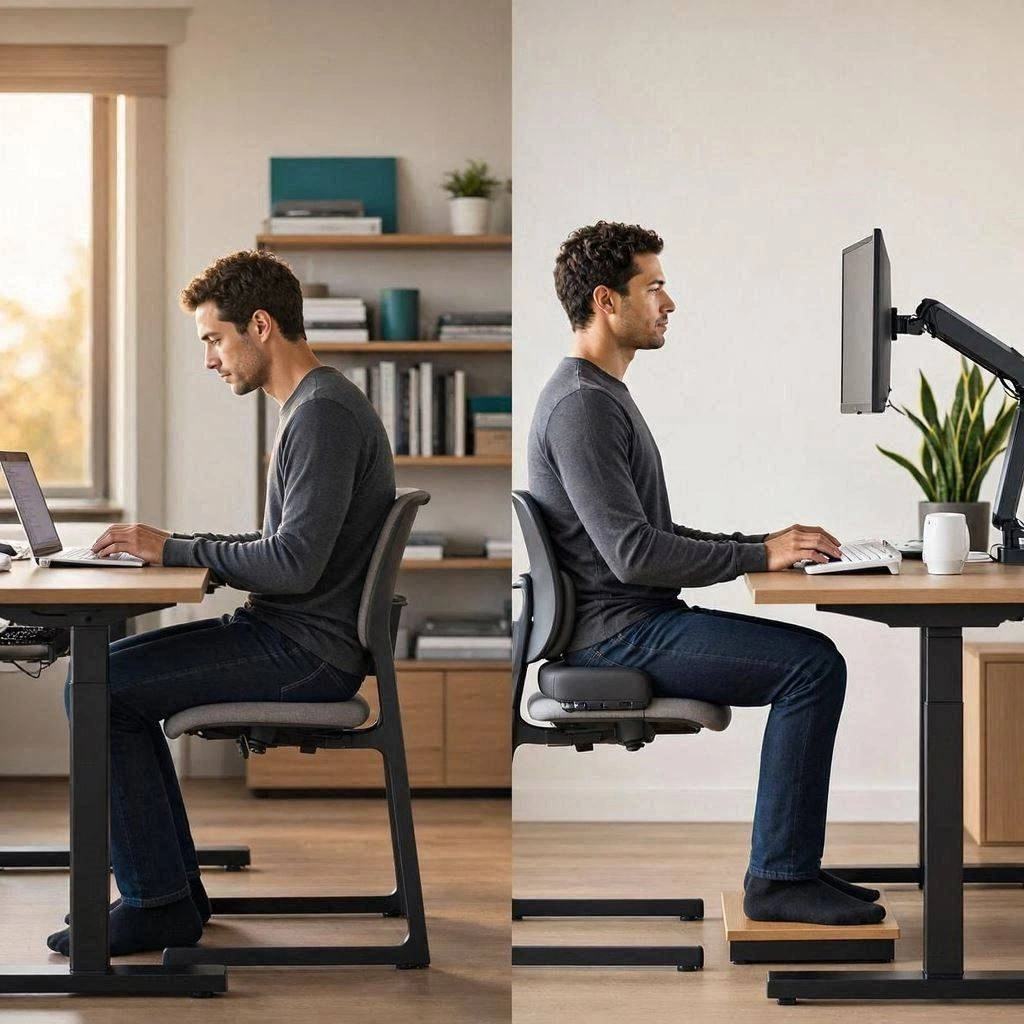
Improve Your Computer Setup
A workstation that does not fit your body can make prolonged computer work less comfortable.
Consider the position of:
Monitor
Keyboard
Mouse
Chair
Desk
Your monitor should be positioned so you can view it comfortably without repeatedly bending your neck downward.
Laptop users may find that an external keyboard and mouse make it easier to position the screen appropriately.
Avoid Trying to Maintain a Perfect Posture
Posture is frequently blamed for neck pain, but there is no single perfect posture that everyone needs to maintain throughout the day.
The body is designed to move between different positions.
Instead of trying to hold one rigid position, focus on:
Changing positions
Moving frequently
Building strength
Improving endurance
Creating a comfortable workstation
Movement variety can be more practical than attempting to maintain a fixed posture.
Use Heat for Neck Muscle Tension
Heat can provide temporary relief for some people with muscular stiffness or tension.
You may use:
A warm shower
A heating pad
A warm compress
Heat should be comfortably warm rather than excessively hot.
It is important to remember that heat primarily provides symptom relief. It does not necessarily address the underlying cause of neck pain.
Try Gentle Neck Rotation (How to Relieve Neck Pain)
Gentle neck rotation can help maintain comfortable movement.
To perform this exercise:
Sit or stand comfortably.
Keep your shoulders relaxed.
Slowly turn your head toward one side.
Stop before significant discomfort.
Return to the center.
Repeat on the opposite side.
Avoid bouncing or forcing the movement.
If rotation causes significant pain, dizziness, or unusual symptoms, stop the exercise.
Perform Gentle Side Bending
Side bending is another simple mobility exercise.
Start in a comfortable sitting or standing position.
Slowly move your head toward one shoulder while keeping the shoulders relaxed. Return to the center and repeat on the other side.
Do not pull your head downward with your hand.
The movement should be gentle and controlled.
Try Chin Tucks
Chin tucks are commonly used during neck rehabilitation.
To perform a basic chin tuck:
Sit or stand upright.
Look straight ahead.
Gently draw your chin backward.
Keep your head relatively level.
Hold briefly.
Relax.
The movement should resemble making a small double chin.
Avoid aggressively pushing your chin toward your chest.
Neck Isometric Exercises
Isometric exercises strengthen muscles without requiring significant movement.
They can be performed in several directions.
Neck Flexion
Place your hand against your forehead.
Gently press your head forward while using your hand to prevent movement.
Neck Extension
Place your hand behind your head.
Gently press backward while resisting the movement.
Side Bending
Place your hand against one side of your head and gently press toward it without allowing your head to move.
Repeat on the opposite side.
Rotation
Place your hand against the side of your head and gently attempt to rotate toward your hand while resisting the movement.
The resistance should be light and controlled.
Strengthen Your Upper Back (How to Relieve Neck Pain)
Neck pain does not always originate exclusively from the neck.
The shoulders and upper back contribute to upper-body movement and endurance.
Exercises such as resistance-band rows can help strengthen the upper back.
A basic row involves pulling the elbows backward while keeping the movement controlled.
Avoid excessively shrugging your shoulders.
Strengthen the Shoulders
Shoulder strength can complement a neck rehabilitation program.
Exercises may include:
Resistance-band rows
External rotation
Wall exercises
Scapular strengthening
Light resistance training
The appropriate exercises depend on your symptoms and physical capacity.
Improve Upper-Back Mobility
The thoracic spine works closely with the neck and shoulders.
Gentle upper-back exercises can include:
Thoracic rotations
Open-book movements
Controlled thoracic extension
Improving movement throughout the upper body can provide more options for daily activities and exercise.
Consider Core Exercises (How to Relieve Neck Pain)
The neck does not function independently from the rest of the body.
Core exercises can improve general physical conditioning.
Examples include:
Bird dogs
Bridges
Dead bugs
Planks
Core strengthening should complement rather than replace neck-specific exercises.
Walk More
Walking is a simple way to increase overall physical activity.
If your neck pain is associated with prolonged sitting or inactivity, regular walking can help break up sedentary periods.
Walking can also support:
General fitness
Mood
Physical confidence
Activity tolerance
Start with an amount that feels manageable and gradually increase your activity.
Reduce Prolonged Smartphone Use
Smartphone use can involve extended periods of looking downward.
You do not necessarily need to stop using your phone, but you can change how you use it.
Try:
Taking regular breaks
Raising the phone closer to eye level
Alternating activities
Avoiding long periods in one position
The goal is to increase movement variety.
Improve Your Sleeping Environment
If you regularly wake up with neck pain, consider whether your sleeping position or pillow is comfortable.
There is no universally perfect pillow.
Some people sleep comfortably on their back, while others prefer sleeping on their side.
The important factor is whether your sleeping arrangement allows your neck to remain comfortable without consistently aggravating symptoms.
Avoid Excessive Bed Rest
For uncomplicated neck pain, prolonged bed rest is generally not necessary unless specifically recommended by a healthcare professional.
Extended inactivity can contribute to:
Stiffness
Reduced muscle conditioning
Fear of movement
Reduced confidence
Maintaining comfortable daily activities can support recovery.
Manage Exercise Intensity (How to Relieve Neck Pain)
Exercise can be beneficial for neck health, but suddenly increasing your training load may aggravate symptoms.
If your neck hurts after exercise, consider whether you recently changed:
Weight
Repetitions
Training volume
Exercise selection
Training frequency
You may need to temporarily modify the activity rather than stop all exercise.
Warm Up Before Exercise
A gradual warm-up can prepare your body for physical activity.
A warm-up may include:
Walking
Shoulder movements
Gentle neck mobility
Light resistance exercises
There is no need for aggressive neck stretching before exercise.
Stretch Gently
Gentle stretching may help some people who experience muscular tightness.
Potential areas include:
Upper trapezius
Neck muscles
Chest muscles
Upper back
Stretching should feel controlled rather than painful.
Avoid forcing your neck into extreme positions.
If stretching causes sharp pain, tingling, numbness, dizziness, or worsening symptoms, stop and seek professional advice.
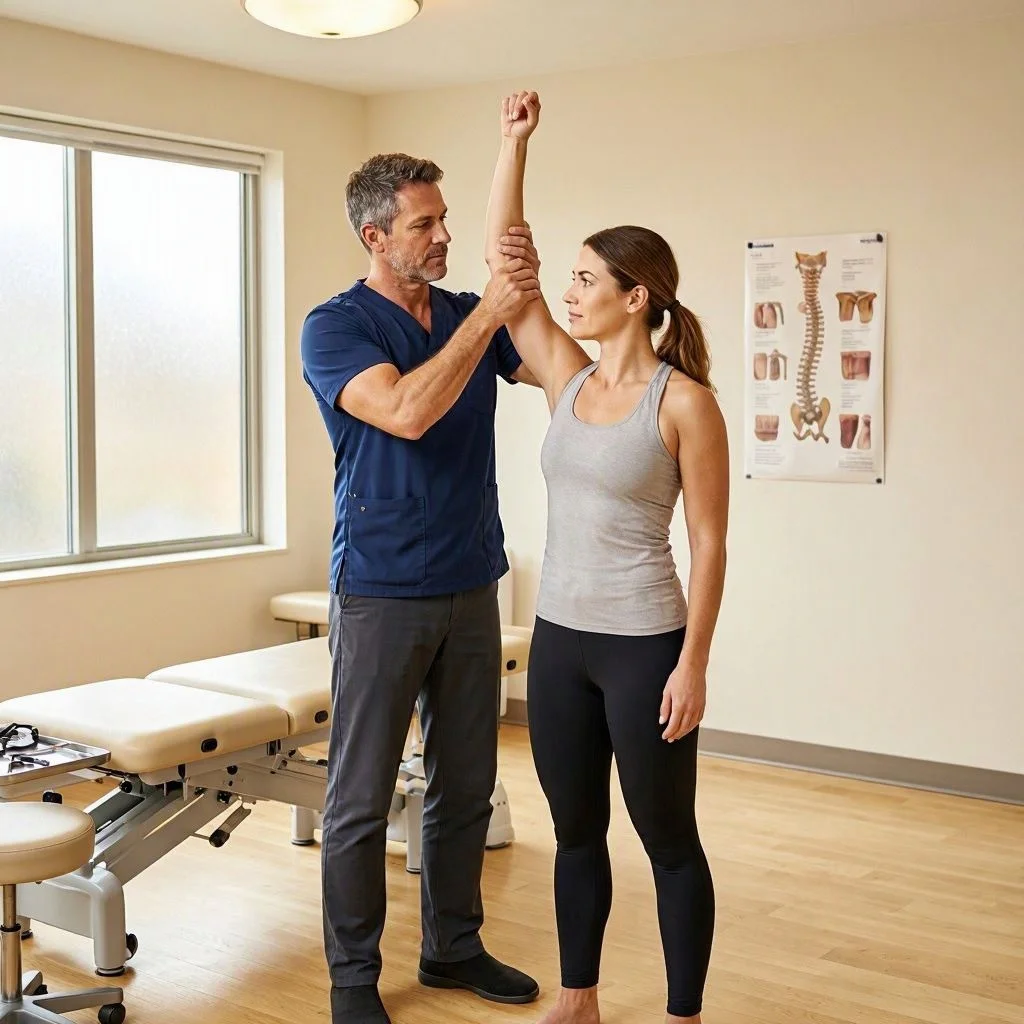
Consider Physiotherapy (How to Relieve Neck Pain)
Physiotherapy can be useful when neck pain persists or interferes with daily activities.
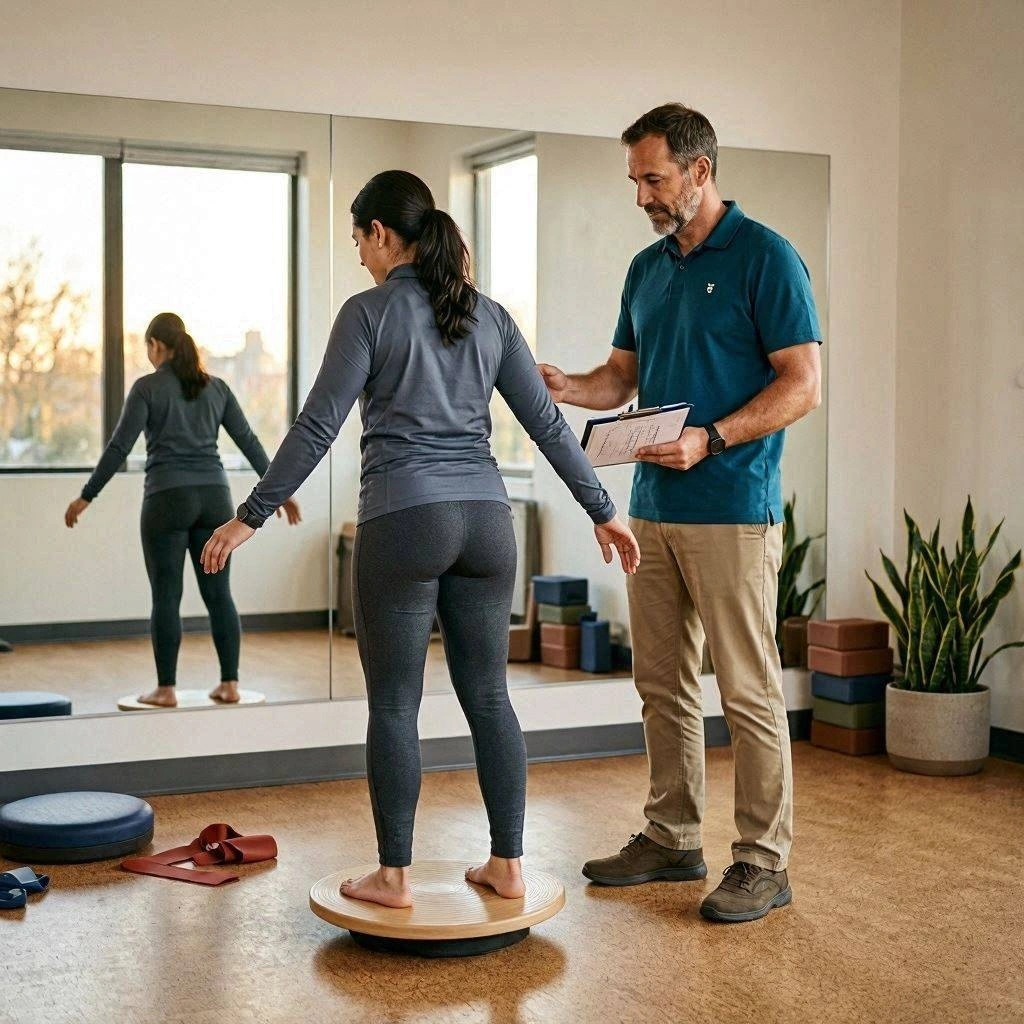
A physiotherapist may assess:
Neck mobility
Muscle strength
Muscle endurance
Shoulder function
Upper-back movement
Work activities
Exercise technique
Functional limitations
The results can be used to create an individualized rehabilitation program.
What Happens During a Physiotherapy Assessment?
A physiotherapist may ask questions about:
When the pain started
Whether there was an injury
Which activities make it worse
What makes it better
Whether symptoms travel into the arm
Whether you experience numbness
Whether you have weakness
How symptoms affect work and sleep
The physical assessment may include movement, strength, flexibility, and functional tests.
This information helps determine which treatment strategies may be appropriate.
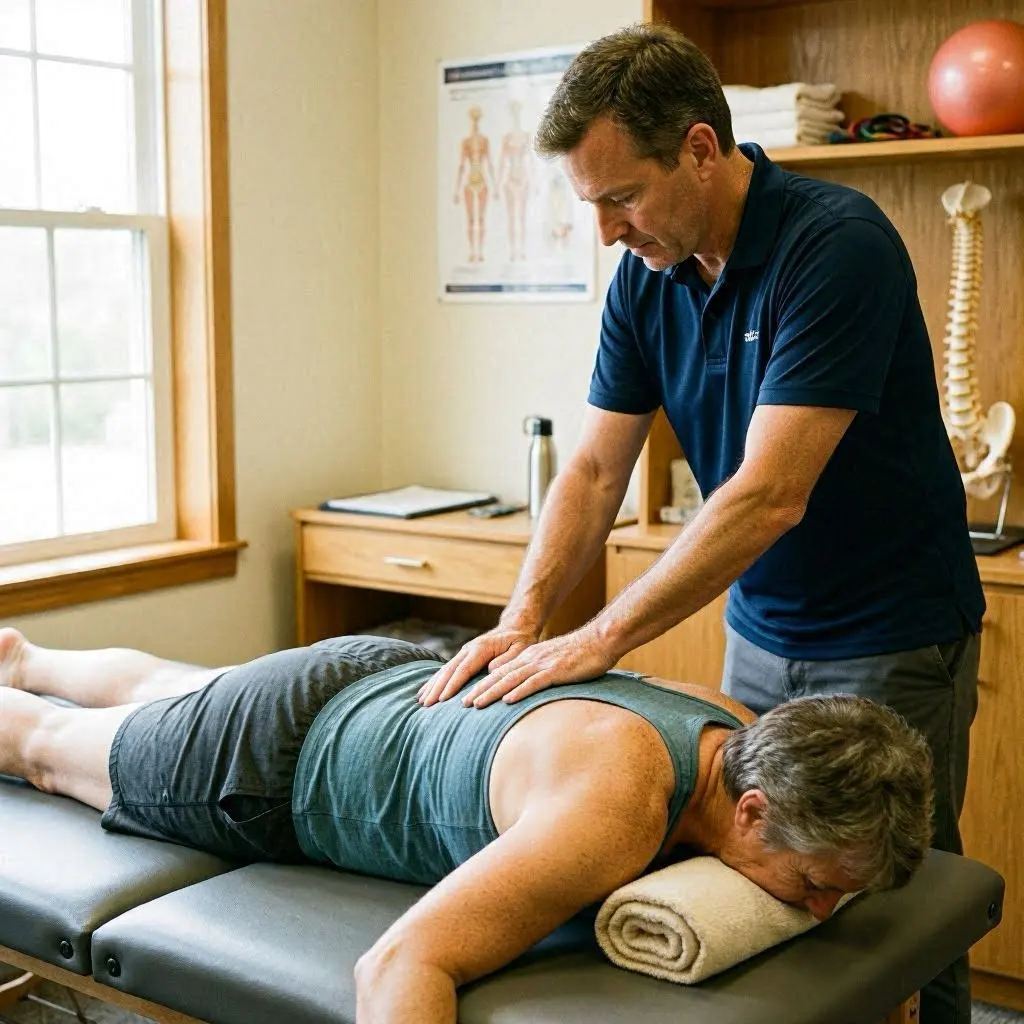
Manual Therapy
Manual therapy may sometimes be included as part of physiotherapy treatment.
Depending on the individual’s presentation, a physiotherapist may use techniques involving:
Muscles
Joints
Soft tissues
Manual therapy can sometimes provide short-term changes in pain or mobility.
However, active rehabilitation, exercise, education, and appropriate physical activity are important components of long-term management.
Massage for Neck Tension
Massage may temporarily reduce the feeling of muscle tension for some individuals.
It can be particularly comfortable when symptoms involve muscular tightness.
However, massage alone may not address factors such as:
Muscle weakness
Reduced endurance
Limited mobility
Workload
Physical inactivity
Repetitive movement
Combining passive treatment with active rehabilitation may provide a more comprehensive approach.
Improve Your Work Habits
If your work contributes to neck discomfort, consider changing how you organize your day.
You may benefit from:
Alternating sitting and standing
Walking during phone calls
Taking short movement breaks
Adjusting your monitor
Changing tasks when possible
Avoiding prolonged laptop use in uncomfortable positions
Small changes repeated throughout the day can be easier to maintain than occasional intensive stretching sessions.
Manage Driving-Related Neck Pain (How to Relieve Neck Pain)
Long periods of driving can contribute to neck stiffness because drivers often remain in one position.
Consider:
Adjusting your seat
Positioning the headrest appropriately
Setting the steering wheel comfortably
Taking breaks during long journeys
Walking when you stop
If neck pain significantly limits your ability to turn your head, driving may not be safe.
Reduce Repetitive Activities
Repeated movements can place additional demands on the neck and shoulders.
This can occur during:
Manual work
Reaching
Lifting
Overhead activities
Sports
Household tasks
If a particular activity consistently aggravates your symptoms, consider reducing its intensity or duration temporarily.
Gradually rebuilding tolerance can then help you return to the activity.
Manage Stress and Muscle Tension
Stress can influence muscle tension and how strongly people experience pain.
During stressful periods, people may unconsciously:
Raise their shoulders
Tighten their neck
Clench their jaw
Move less
Spend more time sitting
Strategies such as walking, exercise, relaxation techniques, adequate sleep, and regular breaks may help manage these factors.
Stress management does not mean that neck pain is imaginary. Physical and psychological factors can interact and influence pain.
Maintain General Fitness (How to Relieve Neck Pain)
Neck health is connected to overall physical conditioning.
A balanced exercise program can include:
Walking
Cycling
Swimming
Resistance training
Core exercises
Upper-body strengthening
Regular physical activity can improve strength, endurance, and confidence in movement.
Build Neck Strength Gradually
Strengthening should progress over time rather than immediately starting with demanding exercises.
A rehabilitation program may progress from:
Gentle mobility
Isometric exercises
Basic strengthening
Increased resistance
Functional exercises
Sport- or work-specific activities
The appropriate progression depends on the individual.
Why Neck Endurance Matters
Neck muscles do not only need to be strong. They also need to tolerate everyday activities.
Examples include:
Computer work
Driving
Reading
Studying
Working with tools
Exercise
Improving endurance can help the body tolerate longer periods of activity.
What If Neck Pain Keeps Coming Back?
Recurrent neck pain can be frustrating.
If symptoms repeatedly return, consider factors such as:
Workstation setup
Exercise routine
Physical conditioning
Sleep
Stress
Repetitive tasks
Training load
Recovery
Instead of treating every episode separately, identifying contributing factors may help reduce future problems.
How to Relieve Neck Pain From Computer Use (How to Relieve Neck Pain)
If computer use is a major contributor, combine several strategies.
Adjust your workstation so that the screen is comfortable to view.
Take regular movement breaks.
Change positions throughout the day.
Strengthen the neck, shoulders, and upper back.
Outside work, maintain regular physical activity.
The goal is not to eliminate computer use but to make your daily routine more physically sustainable.
How to Relieve Neck Pain After Sleeping
If you wake with neck discomfort, review your sleeping setup.
Consider whether:
Your pillow is too high
Your pillow is too low
You sleep in a position that aggravates symptoms
You remain in one position for long periods
Gentle mobility after waking may help reduce stiffness.
If morning pain occurs consistently, professional assessment may be useful.
How to Relieve Neck Pain After Exercise
If neck pain appears after exercise, consider reducing the activity that caused the symptoms.
Review:
Technique
Resistance
Training volume
Exercise selection
Recovery
Continue comfortable movement where appropriate.
Once symptoms settle, gradually rebuild the activity rather than immediately returning to the previous intensity.
How to Relieve Neck Pain From Stress (How to Relieve Neck Pain)
When stress contributes to neck tension, combine relaxation and physical strategies.
Try:
Gentle neck movement
Shoulder relaxation
Walking
Breathing exercises
Regular physical activity
Adequate sleep
Breaks from work
The objective is to reduce prolonged tension while maintaining normal movement.
Can Medication Help Neck Pain?
Some people may use over-the-counter pain medication for short-term relief.
However, medication is not appropriate for everyone.
Speak with a qualified healthcare professional or pharmacist before taking medication, particularly if you:
Take other medications
Have existing health conditions
Are pregnant
Have allergies
Have concerns about side effects
Medication can help manage symptoms but may not address the factors contributing to recurrent neck pain.
Avoid Aggressive Neck Manipulation
People searching for how to relieve neck pain may encounter videos recommending forceful self-manipulation.
Avoid aggressively twisting, cracking, or manipulating your own neck.
The cervical region contains important neurological and vascular structures.
If manual treatment is appropriate, it should be performed by an appropriately qualified professional after an appropriate assessment.
When Should You See a Physiotherapist?
Consider seeing a physiotherapist if your neck pain:
Lasts for several weeks
Keeps returning
Limits movement
Affects work
Interferes with exercise
Disturbs sleep
Makes everyday activities difficult
A physiotherapist can assess your movement and create an appropriate rehabilitation plan.
When Should You See a Doctor? (How to Relieve Neck Pain)
Medical assessment may be important when neck pain occurs with:
Significant weakness
Persistent numbness
Major trauma
Severe unexplained pain
Loss of coordination
Difficulty walking
Other neurological symptoms
A healthcare professional can determine whether further investigation is needed.
Neck Pain Warning Signs
Some symptoms require urgent medical attention.
Seek urgent care if neck pain is accompanied by:
Severe pain after significant trauma
Sudden weakness
Significant loss of sensation
Difficulty walking
Loss of coordination
Loss of bladder or bowel control
Severe headache with neurological symptoms
Difficulty speaking
Sudden vision changes
Loss of consciousness
These symptoms should not automatically be assumed to be caused by muscle tension.
Can Neck Pain Be Prevented?
There is no guaranteed way to prevent every episode of neck pain.
However, maintaining physical capacity can help reduce some risk factors.
Useful habits include:
Regular exercise
Strength training
Mobility exercises
Movement breaks
Comfortable ergonomics
Gradual exercise progression
Adequate sleep
Workload management
Prevention should focus on building a body that can tolerate everyday activities.
A Simple Daily Neck Health Routine (How to Relieve Neck Pain)
A basic routine can include several small habits.
Morning
Perform gentle neck and shoulder movements.
During Work
Change positions and take regular movement breaks.
During the Day
Walk regularly and avoid prolonged inactivity.
Exercise
Perform appropriate upper-back, shoulder, and neck strengthening.
Evening
Use gentle mobility exercises if they feel comfortable.
This is a general educational example rather than an individualized treatment plan.
How Long Does Neck Pain Take to Improve?
Recovery varies significantly between individuals.
Mild muscular neck pain may improve within days or weeks.
More complex injuries or persistent conditions can take longer.
Recovery may be influenced by:
The cause of pain
Severity
Previous injuries
Physical activity
Sleep
Stress
Work demands
Physical conditioning
There is no universal recovery timeline.
If symptoms are not improving or are getting worse, seek professional advice.
The Importance of Individualized Treatment
Two people can have similar neck pain but need completely different approaches.
One person may develop symptoms after prolonged computer work.
Another may experience pain after lifting.
Someone else may have symptoms related to nerve irritation.
An individualized assessment can help determine which factors are most relevant and which exercises or treatments are appropriate.
Conclusion (How to Relieve Neck Pain)
Learning how to relieve neck pain involves more than finding one quick exercise or treatment. Neck discomfort can develop for many reasons, including muscle tension, prolonged computer use, repetitive activities, stress, exercise, sleeping positions, injuries, and reduced physical activity.
For mild and uncomplicated symptoms, maintaining comfortable movement is often a useful starting point. Gentle neck mobility, chin tucks, strengthening exercises, walking, and regular movement breaks can help maintain physical capacity.
Workstation ergonomics can also make a difference, particularly for people who spend many hours using computers. However, there is no need to maintain one rigid posture throughout the day. Changing positions and moving regularly may be more practical.
Strengthening the neck, shoulders, and upper back can improve physical capacity and endurance. Exercise should be introduced gradually and adjusted according to symptoms.
If neck pain continues, repeatedly returns, affects your sleep or work, or limits everyday activities, physiotherapy can provide a more individualized approach. A physiotherapist can assess mobility, strength, movement patterns, work demands, and functional limitations before developing a suitable rehabilitation program.
Some symptoms should not be treated as ordinary muscle tension. Significant weakness, persistent numbness, major trauma, loss of coordination, difficulty walking, or other serious neurological symptoms require appropriate medical assessment.
Ultimately, the goal of neck pain management is not simply short-term relief. Building strength, mobility, endurance, physical activity, and healthy movement habits can help create a neck and upper body that are better prepared for everyday demands.
With an appropriate and gradual approach, many people can improve their neck function, return to normal activities, and develop long-term strategies for maintaining better neck health.