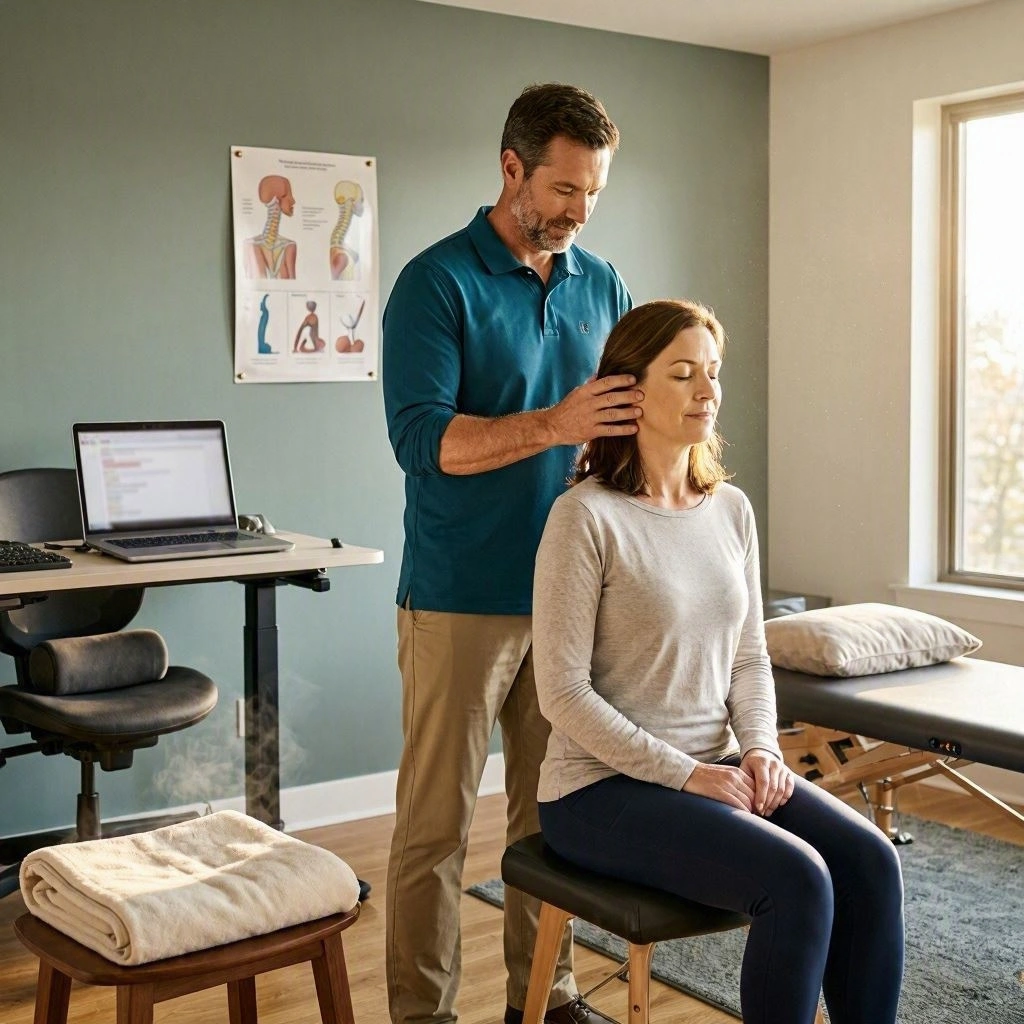
Chiropractic Movement Assessment: Complete Guide to Movement, Mobility, and Recovery
Chiropractic Movement Assessment is an important part of personalized chiropractic care because movement limitations can affect how a person walks, sits, bends, lifts, exercises, and performs everyday activities. Instead of focusing only on the location of pain, a movement assessment looks at how different parts of the body work together and whether restricted mobility, weakness, stiffness, balance problems, or altered movement patterns may be contributing to symptoms.
For example, a person with lower back discomfort may notice pain when bending forward, while another person may experience symptoms when standing, walking, lifting, or sitting for long periods. Therefore, the same symptom does not necessarily require the same treatment approach.
A comprehensive assessment can help a chiropractor understand the patient’s symptoms, medical history, physical abilities, activity level, previous injuries, and treatment goals. It may include an evaluation of posture, range of motion, joint mobility, muscle function, flexibility, balance, coordination, and functional movement.
At Ritz Clinic’s chiropractic service, chiropractic care is described as an individualized approach that considers symptoms, physical condition, lifestyle, and recovery goals. A movement-focused assessment can help provide useful information before developing an appropriate treatment plan.
What Is a Chiropractic Movement Assessment?
A Chiropractic Movement Assessment is a structured evaluation of how a person moves and functions during different activities.
The purpose is not simply to determine whether someone has “good” or “bad” movement. Human movement is complex and depends on many factors, including strength, mobility, coordination, previous injuries, pain, physical activity, work demands, and individual habits.
A chiropractor may therefore observe how the body moves during simple activities and compare movement on one side with the other when appropriate.
Depending on the individual’s symptoms and goals, an assessment may examine:
- Spinal movement
- Joint mobility
- Range of motion
- Muscle strength
- Flexibility
- Balance
- Coordination
- Posture
- Walking mechanics
- Squatting
- Lunging
- Reaching
- Bending
- Lifting mechanics
- Sit-to-stand movement
- Single-leg balance
- Functional limitations
The specific tests should depend on the person’s presentation. A movement assessment is not necessarily identical for every patient.
The American Physical Therapy Association also describes movement screening as a way to identify movement impairments during functional activities and help determine which additional tests and measurements may be appropriate.
Why Is Chiropractic Movement Assessment Important?
Pain is only one part of a musculoskeletal problem.
Two people can have similar pain but completely different movement patterns. One person may have limited hip mobility, while another may have reduced strength or difficulty controlling movement. Someone else may have symptoms related to a previous injury or a sudden increase in physical activity.
Consequently, treating everyone with the same technique may not address the individual’s actual needs.
A movement assessment provides additional information that can help a chiropractor create a more individualized approach.
Identifying Movement Limitations
Restricted movement can make everyday activities more difficult.
For example, limited hip mobility may affect squatting, while reduced ankle mobility may influence walking or lower-body exercises. Similarly, restricted spinal movement may make bending or rotating uncomfortable.
Identifying these limitations can help determine which areas may require further assessment or rehabilitation.
Understanding Functional Problems
Movement assessment connects symptoms with real-life activities.
Instead of simply asking whether your back hurts, a chiropractor may also want to understand whether you have difficulty:
- Getting out of a chair
- Walking
- Climbing stairs
- Bending
- Reaching
- Lifting
- Turning
- Exercising
- Working at a desk
- Sleeping comfortably
This information can make the treatment plan more relevant to your daily life.
Establishing a Baseline
An initial assessment can also provide a baseline.
For instance, a patient may initially have limited neck rotation or difficulty performing a controlled squat. After several weeks of appropriate care and exercise, the same movement can be reassessed.
Changes in movement, symptoms, strength, or functional ability may then provide useful information about progress.
What Happens During a Chiropractic Movement Assessment?
The assessment usually begins with a conversation.
Before physical testing, the chiropractor may ask about your symptoms and overall health.
Questions may include:
- When did the problem begin?
- Where do you feel discomfort?
- What activities make your symptoms worse?
- What makes them better?
- Have you had a previous injury?
- Have you had surgery?
- What type of work do you perform?
- How active are you?
- Do you participate in sports?
- What treatments have you already tried?
- What are your recovery goals?
Medical history is particularly important because certain health conditions may influence which treatments or physical tests are appropriate.
The National Center for Complementary and Integrative Health recommends that people considering spinal manipulation share relevant health information with their practitioner because pre-existing health problems can affect treatment risks.
After the discussion, the chiropractor may perform a physical assessment.
Posture Assessment
Posture may be evaluated as part of a broader movement assessment.
The chiropractor may observe how you stand, sit, walk, or perform specific movements.
However, posture should not be viewed as a simple measurement of whether a person is “straight” or “crooked.”
People naturally change position throughout the day. Therefore, a useful assessment considers how a person controls movement and responds to different positions rather than trying to force the body into one perfect posture.
A posture assessment may consider:
- Head and neck position
- Shoulder position
- Thoracic movement
- Pelvic position
- Spinal movement
- Hip position
- Lower-limb alignment
- Weight distribution
The findings can then be considered together with symptoms and functional limitations.
For example, a person who spends eight hours at a computer may have developed movement habits that contribute to neck or upper-back discomfort. In this situation, education, movement variety, strengthening, workstation adjustments, and appropriate treatment may all be considered.
You can also learn more about this topic through Chiropractic Posture Correction at Ritz Clinic.
Range of Motion Testing
Range of motion refers to how far a joint or body region can move in a particular direction.
During a Chiropractic Movement Assessment, range of motion may be evaluated in areas such as:
- Neck
- Shoulders
- Thoracic spine
- Lower back
- Hips
- Knees
- Ankles
The chiropractor may compare movement between sides when appropriate and consider whether movement produces discomfort.
For example, limited cervical rotation may be relevant for someone who has difficulty checking their blind spot while driving. Likewise, limited shoulder movement may affect reaching overhead.
Range of motion is therefore more meaningful when considered in relation to function.
A person does not necessarily need maximum flexibility in every joint. Instead, the goal is generally to understand whether available movement is sufficient and comfortable for the person’s activities.
Joint Mobility Assessment
Joint mobility and range of motion are related, but they are not exactly the same.
Range of motion describes the movement available at a joint or body region. Joint mobility can involve how a joint moves within its available range and how that movement contributes to overall function.
A chiropractor may assess specific joints when symptoms or movement findings suggest that additional evaluation is useful.
For example, joint mobility may be considered when someone has:
- Persistent stiffness
- Reduced movement
- Difficulty rotating
- Limited bending
- Reduced shoulder motion
- Hip stiffness
- Ankle movement limitations
The findings may influence whether joint mobilization, exercise, stretching, movement education, or another approach is appropriate.
Muscle Strength Assessment
Strength can influence movement quality and physical function.
A person may have adequate flexibility but still struggle with a movement because certain muscles cannot generate or control enough force.
Depending on the patient’s condition, a chiropractor may assess strength around the:
- Core
- Back
- Hips
- Shoulders
- Legs
- Neck
Strength testing can help identify differences between sides or weaknesses that may affect functional activities.
For example, someone returning to sport after an injury may need adequate strength before progressing to higher-demand activities.
Similarly, a person with recurring back discomfort may benefit from an assessment of trunk, hip, and lower-body strength as part of a broader rehabilitation strategy.
Flexibility Assessment
Flexibility refers to the ability of muscles and surrounding tissues to lengthen.
Limited flexibility may contribute to difficulty performing certain movements, although flexibility is only one factor involved in movement.
A chiropractor may assess flexibility in areas such as:
- Hamstrings
- Hip flexors
- Calves
- Shoulders
- Chest
- Neck
However, stretching is not automatically the answer to every movement limitation.
Sometimes a person needs strengthening, motor-control training, joint mobility work, or gradual exposure to an activity instead.
Therefore, flexibility findings should be interpreted together with the rest of the examination.
Balance and Coordination
Balance is another important component of physical function.
A chiropractor may evaluate balance when appropriate, particularly for people who report instability, previous falls, lower-limb injuries, or difficulty with certain activities.
Simple assessments may include:
- Standing on one leg
- Maintaining balance during movement
- Changing direction
- Walking
- Controlled stepping
Coordination can also be considered.
A movement may require several body regions to work together at the right time. If coordination is reduced, the movement may become less efficient or more difficult to control.
The assessment can help determine whether additional neurological, orthopedic, or functional evaluation is appropriate.
Functional Movement Assessment
Functional movement testing connects physical findings with everyday activities.
Rather than evaluating isolated body parts only, the chiropractor may observe movements such as:
Walking
Walking provides information about coordination, balance, stride, weight transfer, and lower-limb movement.
Changes in walking patterns can sometimes occur after injury or because of pain.
Squatting
A squat involves the ankles, knees, hips, pelvis, and trunk.
A chiropractor may observe:
- Depth
- Balance
- Knee control
- Hip movement
- Trunk position
- Symmetry
Lunging
Lunges can provide information about lower-body strength, balance, coordination, and control.
They may be particularly relevant for active people and athletes.
Sit-to-Stand
Standing from a chair is a simple everyday activity that requires coordinated movement from the hips, knees, ankles, and trunk.
Difficulty with this movement may provide useful information about strength, mobility, balance, or pain.
Reaching
Reaching can help evaluate shoulder, upper-back, and trunk movement.
For people with shoulder or neck symptoms, reaching tasks may also reproduce familiar symptoms.
Lifting
If lifting is relevant to the patient’s work or lifestyle, the chiropractor may observe lifting mechanics and discuss safe ways to gradually improve strength and tolerance.
The goal is not necessarily to identify one “perfect” lifting technique. Instead, the focus can be on capacity, control, load tolerance, and symptom response.
Chiropractic Movement Assessment for Back Pain
Back pain is one of the most common reasons people seek musculoskeletal care.
A movement assessment can help determine how back symptoms relate to activities such as:
- Sitting
- Standing
- Walking
- Bending
- Lifting
- Rotating
- Exercising
For example, one person may experience symptoms after prolonged sitting, while another may notice discomfort during lifting.
The assessment may therefore include spinal movement, hip mobility, lower-body strength, posture, functional movement, and other relevant tests.
Spinal manipulation is one of several non-drug approaches that may be considered for certain cases of low-back pain. NCCIH reports that research has found modest improvements in pain and function for some people, although the evidence is not strong enough to suggest that manipulation is the correct treatment for every person.
This is why an individualized assessment matters.
Chiropractic Movement Assessment for Neck Pain
Neck symptoms can affect movement in several directions.
A chiropractor may assess:
- Neck rotation
- Flexion
- Extension
- Side bending
- Shoulder movement
- Upper-back mobility
- Posture
- Muscle function
For someone who works at a desk, the assessment may also consider daily activities and prolonged computer use.
If symptoms include unusual neurological changes, significant weakness, severe headache, dizziness, recent major trauma, or other concerning features, further medical evaluation may be appropriate rather than proceeding directly with routine manual treatment.
Because cervical manipulation has specific safety considerations, a thorough history and appropriate clinical assessment are especially important. NCCIH notes that serious complications are very rare, but potential risks associated with neck manipulation should still be discussed when relevant.
Chiropractic Movement Assessment for Shoulder Problems
Shoulder movement depends on more than the shoulder joint itself.
The neck, thoracic spine, shoulder blade, and upper-limb muscles all contribute to functional arm movement.
Therefore, an assessment may include:
- Shoulder range of motion
- Shoulder strength
- Scapular movement
- Thoracic mobility
- Neck movement
- Posture
- Functional reaching
For example, difficulty reaching overhead may be influenced by shoulder mobility, strength, pain, thoracic movement, or coordination.
A complete assessment helps avoid focusing on only one area.
Chiropractic Movement Assessment After an Injury
After an injury, pain may improve before movement and physical capacity completely return.
Someone may feel better but still have:
- Reduced strength
- Limited mobility
- Poor balance
- Reduced confidence
- Altered movement patterns
- Lower exercise tolerance
A movement assessment can help identify these issues.
For example, after an ankle injury, a person may return to walking normally but still have difficulty with single-leg balance or higher-demand movements.
After a back injury, someone may return to work but remain hesitant with lifting.
In these situations, rehabilitation may focus on gradually rebuilding physical capacity rather than simply reducing symptoms.
For patients looking for a broader rehabilitation approach, Ritz Clinic’s Injury Rehabilitation service describes individualized rehabilitation that may include movement training, therapeutic exercise, and monitoring of functional limitations.
How Movement Assessment Influences Chiropractic Treatment
The findings from an assessment can help determine which treatment options are appropriate.
Depending on the individual, chiropractic care may include:
- Spinal manipulation
- Joint mobilization
- Soft tissue techniques
- Mobility exercises
- Strengthening exercises
- Stretching
- Postural education
- Functional movement training
- Balance exercises
- Home exercises
- Activity modification
Not every patient needs every technique.
For example, a patient with significant stiffness may benefit from mobility work, while another person may require more strengthening and functional rehabilitation.
Likewise, an athlete may need a progressive return-to-sport program rather than simply symptom-focused treatment.
This individualized approach is consistent with the idea that movement and physical function should be evaluated in context rather than treated as isolated measurements.

The Role of Exercise After a Chiropractic Assessment
Exercise is often an important part of long-term movement improvement.
Manual treatment can sometimes help a person move more comfortably, but exercise can help develop the physical capacity needed for everyday activities.
Depending on the assessment findings, exercises may target:
Mobility
Mobility exercises can help patients gradually work on restricted movement.
Strength
Strengthening can improve the ability to tolerate physical demands.
Core Control
Trunk exercises may be useful when appropriate for the individual’s goals and condition.
Balance
Balance exercises can help improve control during standing and movement.
Coordination
Movement drills can help patients practice controlled and efficient movement.
Functional Capacity
Functional exercises can reproduce activities that matter to the patient, such as lifting, walking, stairs, or sport-specific movements.
The program should progress according to the patient’s abilities and response.
How Progress Is Measured
A Chiropractic Movement Assessment can also be useful during follow-up appointments.
Progress may be evaluated through:
- Pain levels
- Range of motion
- Strength
- Balance
- Functional movement
- Exercise tolerance
- Daily activity
- Work capacity
- Sports performance
- Patient-reported function
Importantly, progress is not always linear.
Some people improve quickly, while others require more time because of chronic symptoms, previous injuries, reduced physical conditioning, or other factors.
If progress is slower than expected, reassessment may help determine whether the treatment plan needs modification or whether another type of healthcare evaluation is appropriate.
Chiropractic Movement Assessment and Injury Prevention
Movement assessment is sometimes used by active people who want to understand their physical limitations before returning to demanding activities.
However, an assessment should not be presented as a guarantee that an injury will be prevented.
Injury risk is influenced by many factors, including:
- Training volume
- Recovery
- Previous injury
- Strength
- Physical conditioning
- Technique
- Sleep
- Work demands
- Sudden changes in activity
- Environment
Instead, movement assessment can help identify areas that may deserve attention.
For example, an athlete with limited mobility or reduced strength may be able to address those findings through an appropriate training program.
Who May Benefit From a Chiropractic Movement Assessment?
A movement assessment may be useful for people experiencing:
- Back pain
- Neck pain
- Joint stiffness
- Reduced mobility
- Muscle tension
- Movement limitations
- Sports-related problems
- Recovery after injury
- Recurrent musculoskeletal discomfort
- Difficulty with everyday activities
It may also be useful for people who have noticed changes in movement but are not experiencing significant pain.
However, not every physical problem is appropriate for chiropractic treatment. If symptoms suggest a serious medical condition, neurological problem, fracture, infection, or another issue outside the scope of routine chiropractic care, referral to an appropriate healthcare professional may be necessary.
How to Prepare for a Chiropractic Movement Assessment
You usually do not need complicated preparation.
However, it can help to wear comfortable clothing that allows normal movement.
Before your appointment, consider writing down:
- When your symptoms started
- What activities aggravate them
- What makes them better
- Previous injuries
- Previous surgeries
- Current medications
- Relevant medical conditions
- Previous treatments
- Your physical activities
- Your work requirements
- Your main recovery goals
Being specific can make the assessment more useful.
For example, instead of saying “my back hurts,” explain whether it hurts after sitting for two hours, during lifting, when getting out of bed, or while exercising.
These details can help the chiropractor understand how your symptoms interact with movement.
How Long Does a Chiropractic Movement Assessment Take?
The duration can vary depending on the patient’s condition and the complexity of the assessment.
A straightforward appointment may involve a focused history and physical examination. A more complicated presentation may require additional testing or discussion.
The important point is that assessment should not be rushed simply to begin treatment.
The chiropractor needs enough information to determine whether chiropractic care is appropriate and which treatment approaches may be reasonable.
Is Chiropractic Movement Assessment Painful?
Most assessment procedures should be performed within an appropriate level of tolerance.
Some movements may reproduce familiar symptoms because the chiropractor is trying to understand which activities affect the patient’s condition.
However, you should communicate if a movement causes significant or unexpected pain.
The assessment can then be modified when appropriate.
A good clinical assessment is not about forcing a painful movement repeatedly. Instead, it is about collecting useful information while considering the patient’s safety and comfort.
When Should You Seek Medical Evaluation?
Chiropractic care can be appropriate for many musculoskeletal complaints, but some symptoms require prompt medical evaluation.
Seek urgent medical attention for concerning symptoms such as:
- New loss of bladder or bowel control
- Severe or rapidly progressing weakness
- Significant loss of sensation
- Major trauma
- Suspected fracture
- Loss of consciousness
- Severe unexplained pain
- Chest pain
- Difficulty breathing
- Sudden neurological changes
- Other symptoms that appear medically urgent
If symptoms are persistent, worsening, unexplained, or significantly interfering with daily life, discuss them with an appropriate healthcare professional.
Choosing a Chiropractic Clinic for Movement Assessment
When selecting a chiropractor, consider the practitioner’s qualifications, experience, and approach to assessment.
It can be useful to ask:
- Does the chiropractor perform an initial assessment?
- Will the treatment plan be individualized?
- How will progress be measured?
- What happens if symptoms do not improve?
- Are exercises included when appropriate?
- Will other healthcare professionals be involved if needed?
- How are treatment risks and benefits explained?
NCCIH also recommends asking about education, licensure, experience with your condition, expected number of visits, and costs before selecting a practitioner.
For people in Thornhill looking for chiropractic care, Ritz Clinic’s Chiropractor Thornhill page describes an assessment process that may consider spinal movement, joint mobility, muscle function, flexibility, balance, posture, functional movement, and range of motion.
What Makes a Good Chiropractic Movement Assessment?
A useful assessment should be:
Individualized
The assessment should reflect the person’s symptoms, activities, medical history, and goals.
Functional
Whenever appropriate, it should consider movements that matter in everyday life.
Comprehensive
Relevant areas such as mobility, strength, balance, posture, and movement control can be considered rather than focusing exclusively on pain.
Safe
Testing should account for medical history and potential contraindications.
Reassessable
Findings should provide information that can be compared later when appropriate.
Goal-Oriented
The assessment should ultimately help connect clinical findings with meaningful patient goals.

Common Misunderstandings About Chiropractic Movement Assessment
“The assessment only looks at the spine.”
Not necessarily.
Although the spine may be an important part of chiropractic care, movement can involve the hips, shoulders, muscles, joints, balance, and coordination.
“Everyone needs the same chiropractic treatment.”
No.
Treatment should depend on the individual’s presentation, examination findings, goals, and response to care.
“A cracking sound means the treatment worked.”
Not necessarily.
A popping or cracking sound can occur during some manual techniques, but the sound itself does not prove that a joint has been corrected or that the underlying problem has been resolved.
“If the pain disappears, rehabilitation is finished.”
Not always.
Pain reduction can be an important improvement, but strength, mobility, confidence, and functional capacity may still need attention.
“Movement assessment can predict every future injury.”
No assessment can guarantee that an injury will not occur.
Movement is only one part of a much larger picture involving training, recovery, environment, previous injuries, physical conditioning, and many other factors.
Final Thoughts
A Chiropractic Movement Assessment provides a structured way to understand how symptoms, mobility, strength, posture, balance, and functional movement interact.
Rather than focusing only on where pain occurs, the assessment can consider how the body performs meaningful activities such as walking, bending, lifting, reaching, squatting, or exercising.
The findings can then help guide an individualized chiropractic treatment plan. Depending on the patient’s needs, care may include manual techniques, joint mobilization, spinal manipulation when appropriate, soft tissue techniques, therapeutic exercise, mobility work, strengthening, posture education, and functional rehabilitation.
At the same time, chiropractic treatment should not be viewed as a universal solution for every type of pain. A proper assessment is important because symptoms can have different causes, and some conditions require medical evaluation or referral.
For people dealing with movement limitations, back or neck discomfort, joint stiffness, sports-related problems, or recovery after injury, a comprehensive assessment can be a useful starting point for understanding their physical function and discussing appropriate care.
Frequently Asked Questions About Chiropractic Movement Assessment
What is a Chiropractic Movement Assessment?
A Chiropractic Movement Assessment evaluates how a person moves and functions. Depending on the individual’s symptoms, it may include posture, range of motion, joint mobility, strength, flexibility, balance, coordination, and functional movement testing.
What does a chiropractor check during a movement assessment?
A chiropractor may evaluate spinal movement, joint mobility, muscle function, posture, flexibility, balance, range of motion, and functional activities. The exact assessment depends on the person’s symptoms and goals.
Is a Chiropractic Movement Assessment painful?
Most assessment techniques should be performed appropriately and within the patient’s tolerance. Some movements may reproduce familiar symptoms, but patients should communicate significant or unexpected pain so the assessment can be modified when appropriate.
Do I need a Chiropractic Movement Assessment if I have back pain?
An assessment can help determine how back pain affects movement and daily activities. It can also help identify relevant mobility, strength, or functional limitations and determine whether chiropractic care is appropriate.
Can a chiropractor assess posture?
Yes. Posture may be evaluated as part of a broader movement assessment. A chiropractor may observe standing, sitting, walking, spinal movement, shoulder movement, and other functional activities.
Does chiropractic movement assessment include exercise testing?
It can. Depending on the individual’s condition, a chiropractor may assess movements such as squatting, lunging, walking, reaching, or other activities relevant to the patient’s goals.
How long does a chiropractic movement assessment take?
The duration varies depending on the patient’s symptoms and the complexity of the examination. A simple assessment may be relatively focused, while a more complex presentation may require additional testing and discussion.
Can movement assessment help after an injury?
Yes. A movement assessment can help identify limitations in strength, mobility, balance, coordination, or functional capacity that may remain after an injury. These findings can help guide an appropriate rehabilitation strategy.
Is spinal manipulation part of every chiropractic assessment?
No. An assessment is used to understand the patient’s condition and determine whether particular treatments are appropriate. Spinal manipulation is only one possible treatment approach.
What should I wear to a chiropractic movement assessment?
Comfortable clothing that allows you to move freely is generally useful. Depending on the assessment, the chiropractor may need to observe movements involving the spine, shoulders, hips, or legs.
Can a Chiropractic Movement Assessment prevent injuries?
An assessment cannot guarantee injury prevention. However, it may identify movement or physical limitations that could be addressed through appropriate mobility, strengthening, conditioning, or movement training.
When should I see a chiropractor for movement problems?
Consider discussing your symptoms with a qualified chiropractor when movement limitations, musculoskeletal discomfort, stiffness, or functional problems are affecting your daily activities. However, urgent or unusual symptoms may require medical evaluation instead.