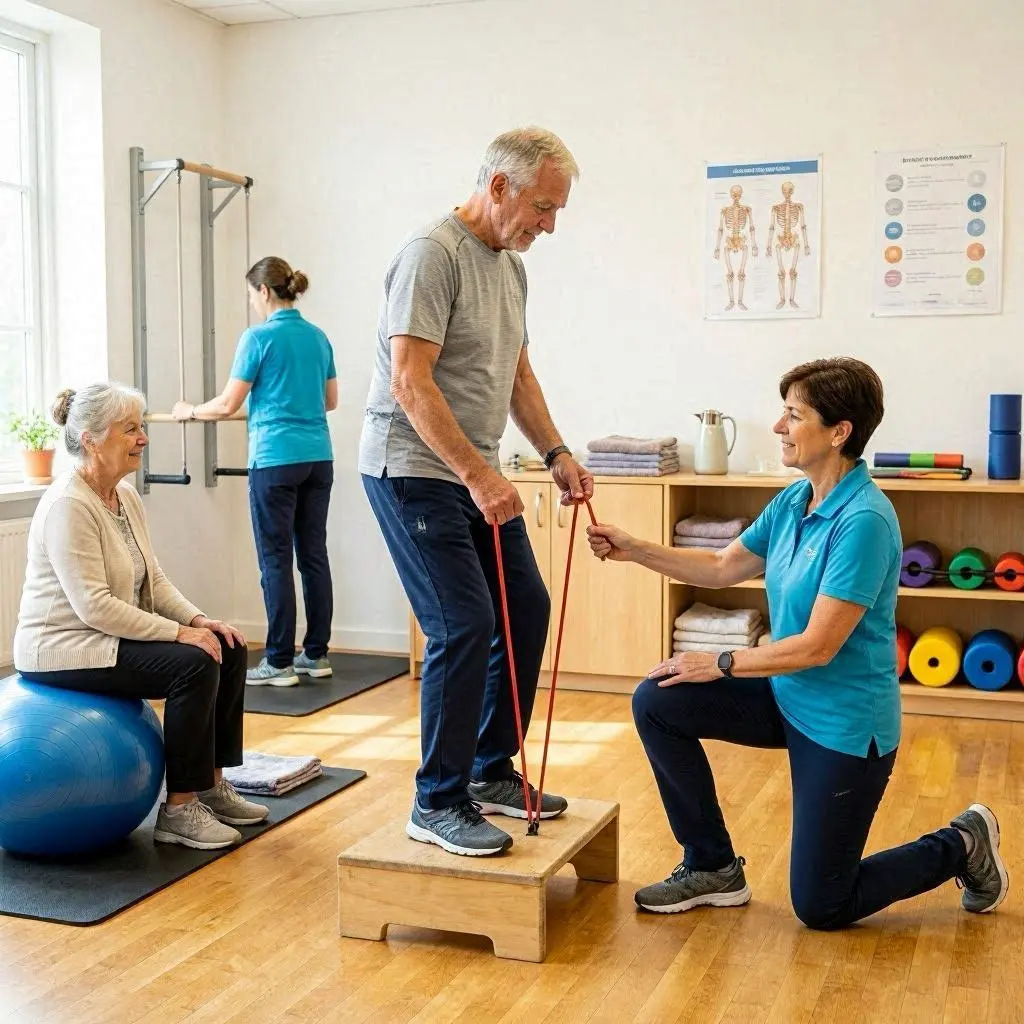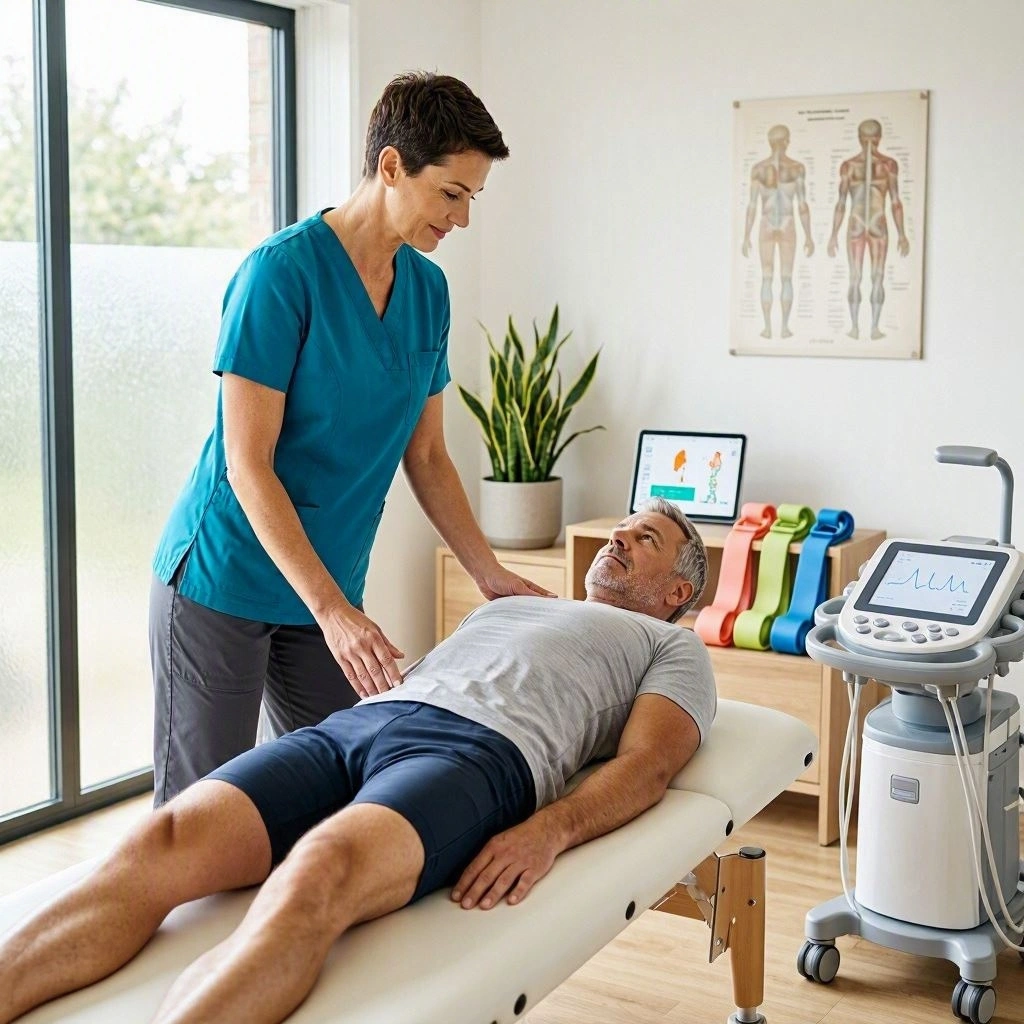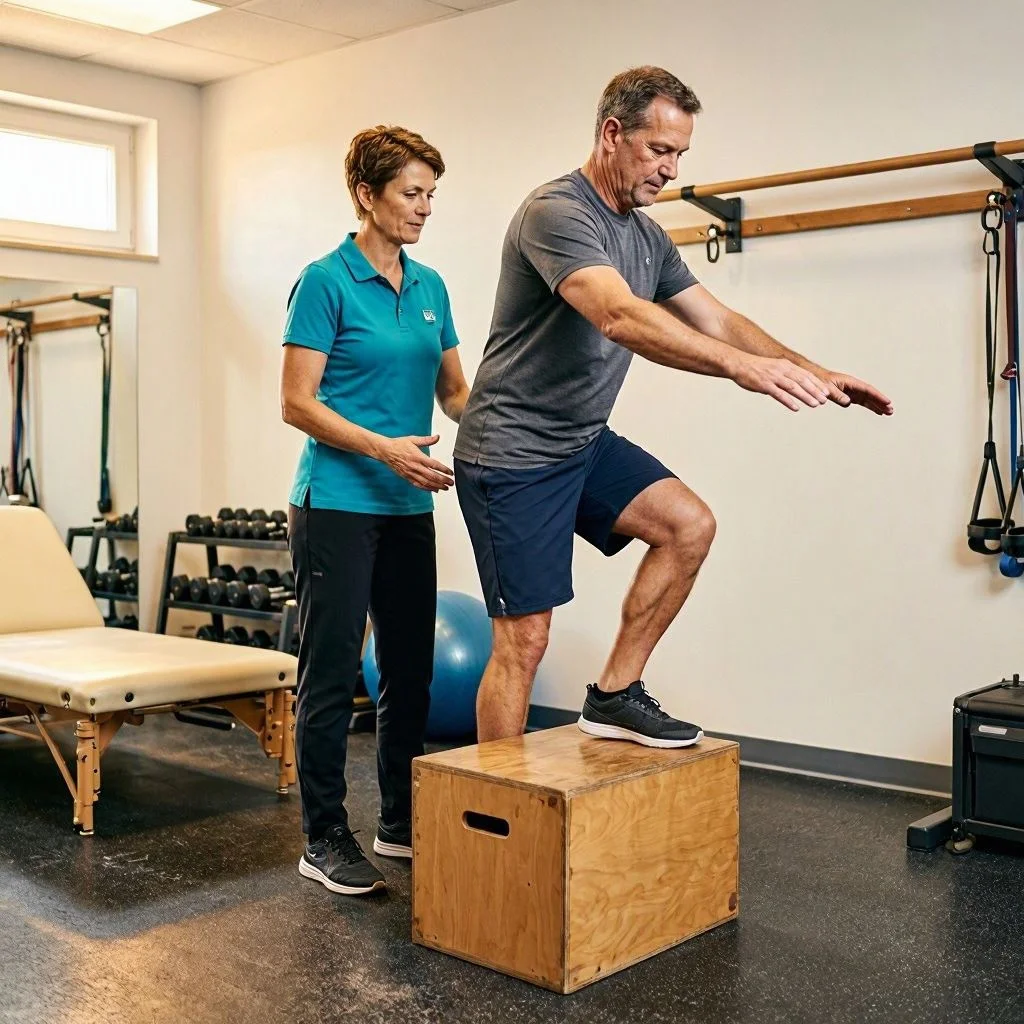
Physiotherapy Functional Training: Complete Guide to Functional Rehabilitation and Movement
Physiotherapy Functional Training is a rehabilitation approach designed to help people improve the physical abilities they need for everyday activities, work, exercise, and sports. Rather than focusing only on isolated muscles or individual joints, functional rehabilitation connects exercise with real-life movement.
Walking, climbing stairs, lifting, carrying, reaching, pushing, pulling, squatting, getting up from a chair, and returning to sport all require several parts of the body to work together. When an injury, surgery, pain, weakness, stiffness, or another physical problem changes the way someone moves, these activities can become difficult.
A physiotherapy program can help identify the physical limitations affecting those activities and then gradually rebuild strength, mobility, balance, coordination, endurance, and confidence.
The American Physical Therapy Association describes functional training as part of physical therapist practice and includes training related to self-care, domestic activities, work, community, social life, and other daily functions. APTA also describes motor function and movement training as structured activities designed to develop task-specific movement and improve movement control.
At Ritz Clinic’s Physiotherapy Movement Therapy service, movement-based rehabilitation can include strengthening, mobility exercises, balance training, coordination, functional movement, gait training, and progressive activity depending on the patient’s condition and goals.
This guide explains what functional training means in physiotherapy, how it works, who may benefit from it, which exercises may be used, and how a therapist can gradually connect rehabilitation exercises with real-life activities.
What Is Physiotherapy Functional Training?
Physiotherapy Functional Training is a type of rehabilitation that uses meaningful movements and activities to improve physical function.
Traditional strengthening exercises can be useful because they target specific muscles or physical capacities. However, people rarely use one muscle in isolation during daily activities.
For example, lifting a box involves:
- Leg strength
- Hip movement
- Trunk control
- Shoulder and arm function
- Balance
- Coordination
- Grip strength
- Movement planning
Functional rehabilitation considers how these abilities work together.
The exact exercises depend on the person’s condition and goals.
A program may include:
- Squatting
- Lunging
- Stepping
- Walking
- Stair climbing
- Lifting
- Carrying
- Pushing
- Pulling
- Reaching
- Getting up from a chair
- Balance exercises
- Gait training
- Sport-specific drills
The objective is not to make every patient perform the same exercises.
Instead, the exercises should reflect the person’s current abilities and the activities they want or need to perform.
Why Is Functional Training Important in Physiotherapy?
Pain reduction can be an important part of rehabilitation, but physical recovery often involves more than reducing symptoms.
Someone may have less pain but still experience:
- Muscle weakness
- Reduced endurance
- Poor balance
- Limited mobility
- Reduced coordination
- Fear of movement
- Difficulty lifting
- Difficulty climbing stairs
- Reduced exercise tolerance
These limitations can affect independence and quality of life.
For example, a person recovering from knee surgery may have reduced pain but still struggle to stand from a chair. Someone recovering from an ankle injury may walk comfortably but have difficulty running or balancing on one leg.
Functional training helps bridge this gap.
The NHS explains that physiotherapy can improve movement, strength, and stamina after injury, illness, disability, or surgery. Treatment may include exercise, manual therapy, and advice tailored to the person’s needs.
How Does Functional Rehabilitation Work?
Functional rehabilitation usually begins with an assessment.
A physiotherapist may ask about:
- Your symptoms
- Previous injuries
- Medical history
- Daily activities
- Work requirements
- Exercise habits
- Sports participation
- Physical limitations
- Recovery goals
The therapist may also examine:
- Strength
- Range of motion
- Balance
- Coordination
- Walking
- Posture
- Movement patterns
- Functional tasks
This information helps determine which areas require attention.
APTA explains that physical therapists select interventions based on examination findings, evaluation, diagnosis, prognosis, and individual goals.
Therefore, functional training is not simply a collection of exercises.
It is part of a broader clinical decision-making process.
The Difference Between Traditional Exercise and Functional Training
Traditional therapeutic exercise can focus on specific physical capacities.
For example:
- Knee extension can target quadriceps strength.
- Calf raises can develop calf strength.
- Shoulder exercises can improve upper-limb capacity.
- Hip exercises can strengthen the muscles around the pelvis.
These exercises can be extremely useful.
Functional training takes the next step by connecting physical capacity with activities.
For example, after developing leg strength, a patient may progress toward:
- Sit-to-stand exercises
- Step-ups
- Squats
- Stair practice
- Controlled lunges
The progression depends on the patient’s needs.
Both isolated strengthening and functional movements can have an important place in rehabilitation.
Functional Training for Everyday Activities
One of the main advantages of this approach is its connection to daily life.
Many people seek physiotherapy because an injury or physical limitation makes normal activities difficult.
Functional exercises can reproduce these activities in a controlled environment.
Getting Out of a Chair
Standing from a chair requires coordinated movement between the hips, knees, ankles, and trunk.
A therapist may begin with a higher chair or additional support if necessary.
As strength improves, the task can become more challenging.
Climbing Stairs
Stair climbing requires:
- Leg strength
- Balance
- Coordination
- Weight transfer
- Cardiovascular capacity
Step-up exercises can help develop some of these abilities before progressing toward actual stairs.
Lifting
Lifting may be important for work, home responsibilities, or exercise.
A therapist can gradually introduce lifting according to the individual’s ability.
The goal is not necessarily to teach one universal “perfect” lifting technique.
Instead, the focus can be on developing sufficient strength, control, confidence, and tolerance for the person’s specific demands.
Carrying
Carrying groceries, equipment, luggage, or workplace materials requires strength and stability.
Exercises may gradually introduce carrying tasks with appropriate resistance.
Reaching
Reaching overhead or in different directions can be important for work and household activities.
Functional reaching may involve the shoulder, upper back, trunk, and lower body.
Strength Training in Functional Rehabilitation
Strength is one of the foundations of physical function.
If muscles are not strong enough for a particular activity, everyday tasks may become difficult.
Strength exercises can involve:
- Bodyweight
- Resistance bands
- Dumbbells
- Machines
- Cables
- Weighted objects
- Isometric exercises
The appropriate resistance depends on the individual.
The NHS notes that strength exercises can increase muscle strength, size, power, and endurance, and recommends gradual progression rather than immediately starting with excessive loads.
In rehabilitation, progression may involve changing:
- Resistance
- Repetitions
- Sets
- Movement speed
- Range of motion
- Exercise complexity
- Stability requirements
The therapist can modify these variables according to the person’s response.
Mobility Training
Strength alone is not enough.
A person may have adequate strength but still have difficulty performing an activity because of restricted movement.
Mobility training may focus on:
- Hips
- Ankles
- Knees
- Spine
- Shoulders
- Wrists
For example, limited ankle movement may affect squatting or stair climbing.
Restricted shoulder movement may make reaching overhead difficult.
Reduced hip mobility may influence walking, squatting, or getting up from a chair.
Mobility exercises should be selected according to the individual’s limitations rather than performed simply because they are popular.
Balance Training
Balance is essential for many functional activities.
It helps people:
- Walk
- Turn
- Climb stairs
- Step over obstacles
- Stand from a chair
- Participate in sports
- Move safely in different environments
Balance exercises may begin with stable positions and gradually become more challenging.
Examples include:
- Double-leg standing
- Weight shifting
- Tandem stance
- Single-leg standing
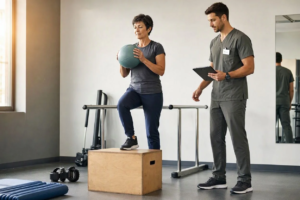
- Step-ups
- Reaching while standing
- Controlled direction changes
The difficulty should match the person’s current abilities.
For older adults, balance and leg-strength exercises can also support physical independence and help reduce fall risk. The NHS highlights strength, balance, and coordination activities as useful components of maintaining physical ability with age.
Coordination and Movement Control
Functional activities require different body parts to work together.
Coordination becomes especially important when movements become more complex.
For example, walking requires coordinated movement between:
- Feet
- Ankles
- Knees
- Hips
- Pelvis
- Trunk
- Arms
A person recovering from an injury may develop an altered movement strategy.
Movement training can provide an opportunity to practice controlled movement again.
Exercises may include:
- Stepping patterns
- Reaching
- Balance drills
- Walking exercises
- Direction changes
- Controlled lifting
- Sport-specific movements
The goal is to gradually improve control while maintaining appropriate safety.
Functional Training for Back Pain
Back pain can affect many activities.
Someone may have difficulty:
- Bending
- Sitting
- Standing
- Lifting
- Walking
- Exercising
- Getting out of bed
Functional rehabilitation can help connect strengthening and mobility exercises with these activities.
A program might begin with controlled exercises and gradually progress toward more demanding movements.
For example:
- Basic trunk exercises
- Hip strengthening
- Controlled bending
- Squatting
- Light lifting
- Carrying
- Activity-specific tasks
The progression depends on symptoms and physical capacity.
The goal is not to avoid movement permanently.
Instead, appropriate rehabilitation can help a person gradually develop the ability to tolerate meaningful activities.
Functional Training for Knee Problems
Knee problems can affect walking, stairs, squatting, running, and jumping.
A rehabilitation program may address:
- Quadriceps strength
- Hamstring strength
- Hip strength
- Ankle mobility
- Balance
- Movement control
- Functional loading
Exercises may include:
- Sit-to-stand
- Squats
- Step-ups
- Lunges
- Leg strengthening
- Balance exercises
- Walking drills
As the patient improves, exercises can become more demanding.
For athletes, the program may eventually include running, jumping, landing, and change-of-direction exercises when appropriate.
Functional Training for Shoulder Problems
Shoulder rehabilitation often needs to connect isolated strengthening with real-life movement.
A patient may initially perform controlled shoulder exercises.
Later, the program may progress toward:
- Reaching
- Lifting
- Carrying
- Pushing
- Pulling
- Overhead activities
The exact progression depends on the injury.
Someone returning to a desk job may need different exercises from a construction worker or overhead athlete.
This illustrates why functional rehabilitation should be individualized.
Functional Training After Surgery
Surgery can temporarily reduce strength, mobility, endurance, and confidence.
Physiotherapy may help people gradually rebuild physical function.
Depending on the surgery, rehabilitation can include:
- Mobility exercises
- Strength training
- Balance work
- Walking
- Transfers
- Stair training
- Functional activities
- Gradual return to exercise
The timeline depends on the surgical procedure, medical instructions, healing process, and individual response.
Functional exercises should follow appropriate postoperative guidelines.
Functional Training After Sports Injuries
Athletes often need a higher level of physical capacity than is required for normal daily activities.
For example, returning to soccer may require:
- Running
- Sprinting
- Acceleration
- Deceleration
- Jumping
- Landing
- Cutting
- Ball control
Returning to tennis may require:
- Reaching
- Rotating
- Sprinting
- Stopping
- Changing direction
- Repeated arm movements
A basic exercise program may not fully prepare an athlete for these demands.
Therefore, sports rehabilitation can gradually introduce sport-specific movements.
At Ritz Clinic, Injury Rehabilitation includes movement training and functional exercises that can be adapted to work, daily activities, recreational activity, and sports. The clinic also describes progressive strengthening, balance, coordination, and sport-specific rehabilitation as part of appropriate recovery programs.
Functional Training for Workplace Recovery
Work can place very specific demands on the body.
An office worker may need:
- Sitting tolerance
- Computer use
- Reaching
- Walking
- Occasional lifting
A warehouse worker may need:
- Carrying
- Lifting
- Pushing
- Pulling
- Repeated squatting
A healthcare worker may need:
- Standing
- Walking
- Patient transfers
- Pushing equipment
- Repeated bending
Functional rehabilitation can reproduce some of these activities in a controlled setting.
This can help identify whether the person has enough physical capacity to return to specific duties.
The goal is not to replicate every workplace environment perfectly.
Instead, exercises can be selected to develop relevant abilities.
Functional Training for Older Adults
Functional exercise can be especially valuable for older adults because everyday independence depends on physical capacity.
Important activities include:
- Walking
- Standing
- Sitting
- Climbing stairs
- Carrying objects
- Reaching
- Maintaining balance
Strength and balance exercises can help maintain physical abilities as people age.
The NHS notes that strength activities can help maintain the ability to perform everyday tasks, while balance and coordination exercises can help older adults maintain physical function and reduce fall risk.
A physiotherapist can adjust exercise difficulty according to the person’s current abilities.
Functional Training for Chronic Conditions
Functional rehabilitation is not limited to acute injuries.
It can also be incorporated into programs for people living with longer-term physical limitations.
Depending on the condition, therapy may address:
- Strength
- Mobility
- Balance
- Endurance
- Coordination
- Fatigue management
- Daily activities
The exact program should be based on the individual’s diagnosis, medical status, symptoms, and goals.
People with complex medical conditions may require coordinated care between physiotherapists, physicians, and other healthcare professionals.
How a Physiotherapist Builds a Functional Program
A functional program usually begins with assessment.
The therapist may identify:
Current Physical Capacity
How strong, mobile, stable, and coordinated is the person?
Functional Limitations
Which activities are difficult?
Personal Goals
What does the patient want to return to?
Environmental Demands
What physical requirements exist at home, work, or sport?
Recovery Stage
What level of exercise is currently appropriate?
The answers help determine where the program should begin.
The exercises can then progress as the person’s capacity improves.
The Importance of Progressive Loading
Progression is one of the most important principles in rehabilitation.
The body adapts to physical demands.
If an exercise remains too easy indefinitely, it may not provide enough stimulus for continued improvement.
However, increasing difficulty too quickly can also create unnecessary stress.
Progression can involve:
- More resistance
- More repetitions
- More sets
- Greater range of motion
- Increased speed
- More complex movements
- Reduced external support
- Greater endurance demands
- More activity-specific tasks
The appropriate progression depends on the individual.
Functional Training and Pain
Pain can affect movement.
When someone experiences pain, they may:
- Avoid certain movements
- Reduce activity
- Change how they walk
- Use different muscles
- Become hesitant with exercise
This can sometimes contribute to weakness or reduced confidence.
Functional rehabilitation can gradually reintroduce meaningful activities.
However, pain should not simply be ignored.
A physiotherapist should consider the nature, severity, duration, and behavior of symptoms when developing a program.
If pain is severe, rapidly worsening, unexplained, or associated with concerning neurological symptoms or major trauma, medical evaluation may be necessary.
Functional Training and Home Exercise
A rehabilitation program does not end when the appointment finishes.
Home exercises can help patients continue practicing movement between sessions.
The NHS notes that physiotherapy may include exercises to complete at home and emphasizes regular participation as part of recovery.
A home program might include:
- Mobility exercises
- Strength exercises
- Balance drills
- Walking
- Stretching
- Functional movements
The program should be realistic.
A complicated routine that the patient cannot maintain may be less useful than a simple program that fits consistently into daily life.
How Progress Is Measured
Functional improvement can be measured in several ways.
A physiotherapist may monitor:
- Pain
- Strength
- Range of motion
- Balance
- Walking
- Endurance
- Exercise tolerance
- Functional tasks
- Work ability
- Sports performance
- Patient-reported confidence
For example, progress may mean:
- Walking farther
- Climbing stairs more comfortably
- Lifting more weight
- Standing longer
- Performing a squat with better control
- Returning to running
- Completing work duties
Functional goals should be meaningful to the patient.
How Long Does Functional Rehabilitation Take?
There is no universal timeline.
Recovery depends on:
- Type of injury
- Severity
- Surgery
- Age
- General health
- Physical conditioning
- Previous injuries
- Work demands
- Sports demands
- Consistency with rehabilitation
- Individual response
Some people may improve within weeks, while others require a longer rehabilitation process.
The program can change as the person progresses.
The goal is not to rush through a fixed number of stages.
Instead, rehabilitation should progress according to physical capacity and functional goals.
What Should You Wear for Functional Physiotherapy?
Comfortable clothing is usually helpful.
The therapist may need to observe movements involving the:
- Legs
- Hips
- Back
- Shoulders
- Arms
Shoes may also matter if the session includes walking, balance, running, or sport-specific exercises.
If you have a specific work or sports requirement, bringing appropriate footwear or equipment may sometimes help make the assessment more relevant.
Who Can Benefit From Functional Training?
Functional rehabilitation may benefit people recovering from:
- Sports injuries
- Workplace injuries
- Joint problems
- Muscle strains
- Surgery
- Back pain
- Neck problems
- Knee injuries
- Shoulder injuries
- Ankle injuries
- Reduced physical conditioning
It may also be useful for people who want to improve physical capacity for specific activities.
However, the suitability of any exercise program depends on the person’s health and physical condition.
When Should You Seek Medical Assessment?
Physiotherapy can help with many musculoskeletal and movement-related problems, but not every symptom should be treated as a routine rehabilitation issue.
Seek appropriate medical care for symptoms such as:
- Major trauma
- Suspected fracture
- Severe or rapidly worsening pain
- Significant weakness
- New loss of sensation
- Loss of bladder or bowel control
- Chest pain
- Difficulty breathing
- Loss of consciousness
- Severe unexplained symptoms
A physiotherapist can also refer or recommend further medical evaluation when the findings suggest that another type of healthcare assessment is needed.
Functional Training at Ritz Clinic
At Ritz Clinic, functional rehabilitation is connected with broader physiotherapy and injury rehabilitation services.
The clinic describes its injury rehabilitation programs as combining clinical assessment, therapeutic exercise, manual techniques, movement training, and progress monitoring according to the patient’s condition and goals.
Functional exercises may help patients work toward:
- Everyday activities
- Work requirements
- Exercise
- Recreational activities
- Sports
- Improved physical independence
For example, someone returning to work after an injury may require lifting and carrying practice, while an athlete may need progressive running, jumping, balance, and sport-specific exercises.
The program can change as strength, mobility, coordination, and confidence improve.
You can also explore Ritz Clinic Physiotherapy Movement Therapy for more information about movement-focused rehabilitation and exercise-based physiotherapy.
How to Get the Most From Functional Rehabilitation
Patients can support their rehabilitation by staying involved in the process.
Follow the Recommended Exercise Program
Consistency matters.
Communicate About Symptoms
Tell your physiotherapist if an exercise causes unusual or significant symptoms.
Progress Gradually
Avoid suddenly increasing physical demands without appropriate guidance.
Maintain General Activity
Appropriate movement outside therapy can support physical conditioning.
Prioritize Recovery
Sleep and adequate recovery are important when physical demands increase.
Be Clear About Your Goals
Tell your therapist what you actually want to return to.
For example, “I want to return to running five kilometres” gives a different rehabilitation target from “I want to walk comfortably around the house.”
Final Thoughts
Physiotherapy Functional Training connects rehabilitation exercises with the real activities people need to perform.
Instead of focusing exclusively on isolated muscles, functional rehabilitation can combine strength, mobility, balance, coordination, endurance, and movement control in ways that relate to daily life, work, exercise, and sports.
Functional exercises may include squatting, stepping, lifting, carrying, reaching, walking, stair climbing, pushing, pulling, and sport-specific movements. The exact combination should depend on the individual’s condition and goals.
A successful rehabilitation program is not necessarily the hardest workout.
It is the program that provides an appropriate challenge while gradually building the physical capacity needed for meaningful activities.
For someone recovering from an injury, this may mean progressing from basic mobility to strengthening, then balance and coordination, followed by increasingly demanding functional tasks.
For an older adult, the focus may be walking, stairs, balance, carrying, and maintaining independence.
The key principle is individualization.
Human movement is complex and influenced by physical, personal, and environmental factors. APTA describes movement as a complex behavior that occurs within a specific context, which supports the importance of considering the person’s actual activities and environment during rehabilitation.
For an athlete, the final stages may involve running, jumping, changing direction, landing, or other sport-specific movements.
When appropriate, functional physiotherapy can therefore help people move from basic rehabilitation exercises toward the activities that matter most to them.
Frequently Asked Questions About Physiotherapy Functional Training
What is Physiotherapy Functional Training?
Physiotherapy Functional Training is a rehabilitation approach that uses meaningful movements and task-specific exercises to improve strength, mobility, balance, coordination, endurance, and physical function.
What exercises are used in functional physiotherapy?
Exercises may include squats, lunges, step-ups, walking, lifting, carrying, reaching, balance drills, resistance exercises, stair training, and sport-specific movements.
Is functional training only for athletes?
No. It can be used for people recovering from injuries, surgery, workplace problems, joint conditions, or reduced physical capacity. Exercises can be adapted for everyday activities as well as sports.
Can functional training help after surgery?
It can be part of rehabilitation after many types of surgery. The exercises and progression should follow the surgical guidelines and the individual’s healing stage.
Can functional physiotherapy help with back pain?
Functional rehabilitation may help people gradually rebuild strength, movement, and tolerance for activities that have become difficult because of back pain. The program should be individualized according to symptoms and clinical findings.
What is the difference between functional training and strength training?
Strength training focuses primarily on developing physical force or muscle capacity. Functional training connects that capacity with meaningful movements and activities such as lifting, walking, climbing stairs, reaching, or returning to sport. Both approaches can be used together.
Does functional training hurt?
Exercise should be appropriately challenging, but severe or unexpected pain should not be considered a requirement for effective rehabilitation. Patients should communicate significant symptoms to their physiotherapist.
How often should I do functional exercises?
Frequency depends on the person’s condition, goals, exercise program, and recovery stage. Your physiotherapist can recommend an appropriate schedule.
How long does functional physiotherapy take?
There is no standard duration. Recovery depends on the injury or condition, physical capacity, goals, medical history, and response to rehabilitation.
Can functional training help with balance?
Yes. Balance exercises can be incorporated into rehabilitation when balance is relevant to the person’s condition or goals. Exercises can progress from simple standing activities to more dynamic tasks.
Can functional training help me return to work?
It can help develop physical abilities relevant to work, such as lifting, carrying, pushing, pulling, walking, standing, or reaching. The specific program should reflect the demands of the person’s job.
Can functional training help athletes return to sport?
Yes. Sports rehabilitation can progressively introduce activities such as running, jumping, landing, acceleration, deceleration, and changes of direction when appropriate.
Do I need functional training if my pain is gone?
Not necessarily. However, pain reduction does not always mean that strength, endurance, balance, or movement capacity have completely recovered. A functional assessment can help determine whether additional rehabilitation is appropriate.
Is functional training safe?
When appropriately prescribed and progressed, exercise is an important component of physiotherapy. However, the correct exercises depend on the person’s medical condition, injury, recovery stage, and physical abilities.
What should I wear to a functional physiotherapy appointment?
Wear comfortable clothing that allows you to move freely. Athletic shoes may be useful if the session includes walking, running, balance, or sport-specific activities.