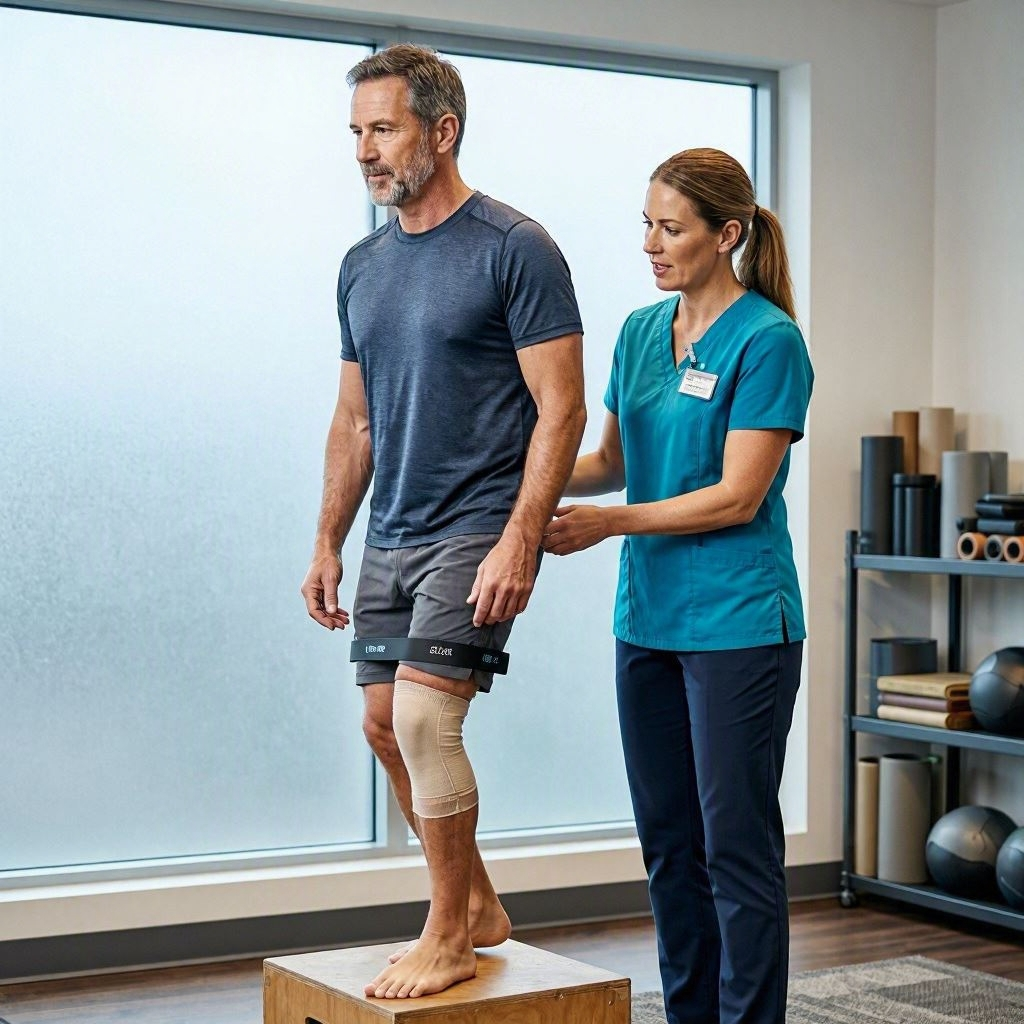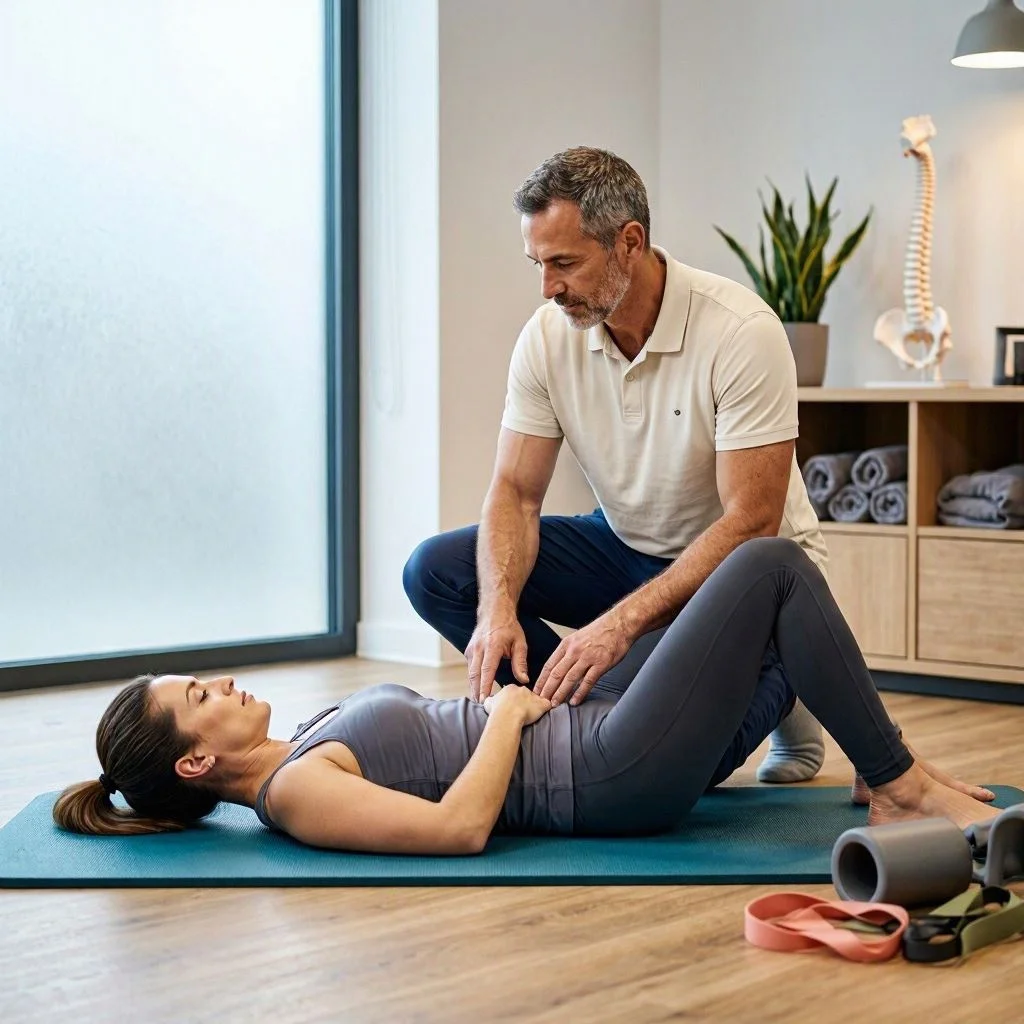
Physiotherapy Core Stability: Complete Guide to Core Strength, Balance, and Movement
Physiotherapy Core Stability is an important part of many rehabilitation and exercise programs. The muscles around the abdomen, lower back, pelvis, and hips work together to support the spine, control movement, transfer forces between the upper and lower body, and help the body perform everyday activities.
However, core stability is about much more than having strong abdominal muscles. A functional core needs to coordinate with the rest of the body during walking, lifting, bending, reaching, running, exercising, and sports. Therefore, physiotherapy core stability programs usually focus on strength, coordination, balance, movement control, and gradually increasing physical capacity.
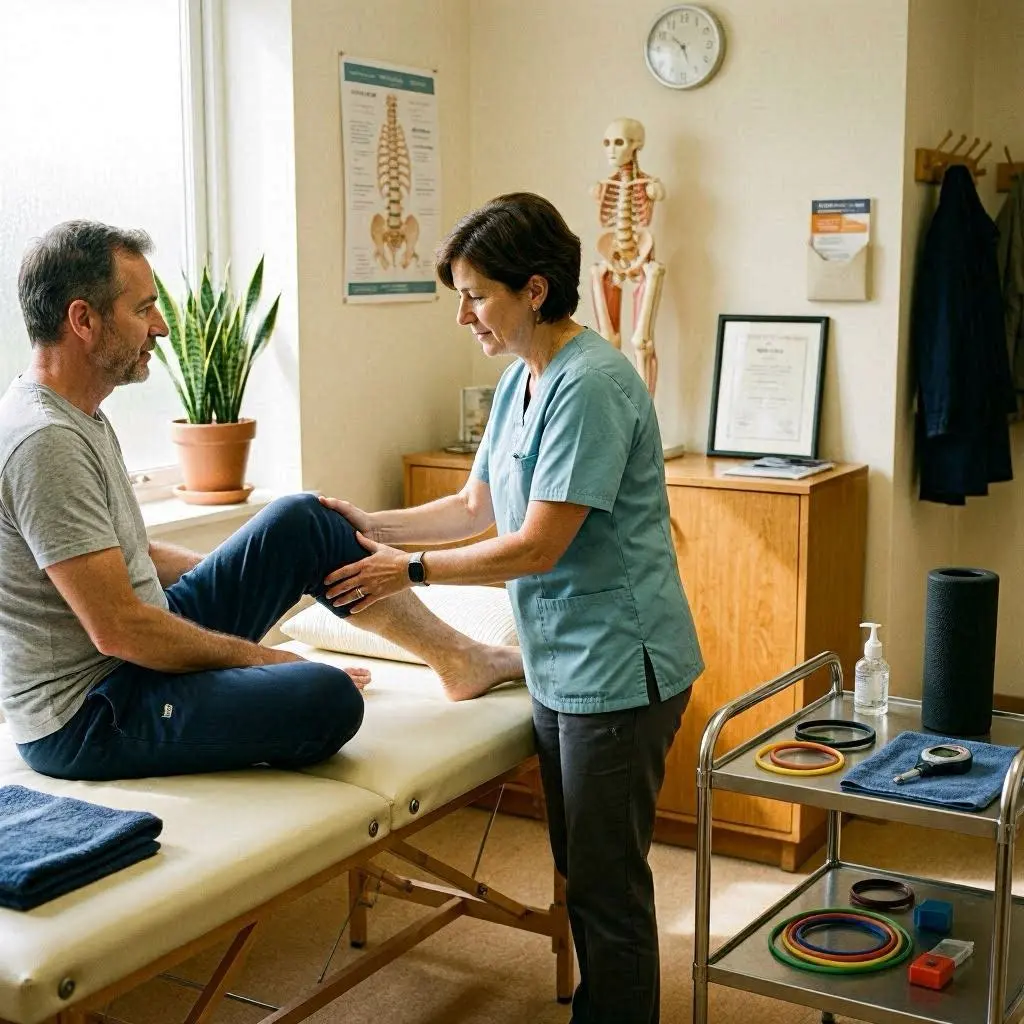
People may consider core stability exercises after an injury, during rehabilitation, when returning to exercise, or when they want to improve their physical function. A physiotherapist can assess the person’s current strength, mobility, movement patterns, symptoms, and goals before creating an appropriate exercise program.
At Ritz Clinic, physiotherapy programs can combine therapeutic exercise, movement training, strengthening, balance work, and functional rehabilitation according to individual needs. The clinic’s current Physiotherapy Movement Therapy service explains that movement-based rehabilitation may include strengthening, mobility, balance, coordination, functional movement, and progressive activity.
This guide explains what core stability means, how physiotherapy can improve it, which exercises may be used, how core stability relates to back pain and injury rehabilitation, and how to safely progress a program.
What Is Core Stability?
Core stability refers to the ability of the muscles around the trunk and pelvis to coordinate and control movement.
The core includes muscles around the:
- Abdomen
- Lower back
- Pelvis
- Hips
- Trunk
These muscles work together rather than functioning independently.
Therefore, core stability is better understood as movement control and load management rather than simply abdominal strength.
A person can have strong abdominal muscles but still have difficulty controlling movement.
Likewise, someone may have relatively modest abdominal strength but demonstrate excellent functional control.
This is why physiotherapy programs should consider the whole movement system.
What Is Physiotherapy Core Stability?
Physiotherapy Core Stability involves using assessment and progressive exercise to improve the strength, endurance, coordination, and control of the muscles involved in trunk and pelvic stability.
A physiotherapist may consider:
- Current symptoms
- Core strength
- Hip strength
- Lower-limb strength
- Mobility
- Balance
- Coordination
- Movement patterns
- Previous injuries
- Work demands
- Exercise demands
- Sports requirements
- Personal goals
The program can then progress according to the person’s current ability.
For example, someone beginning rehabilitation after an injury may start with simple controlled exercises. As strength and confidence improve, the program can progress toward more demanding movements.
This progression is important because the goal is not simply to perform a plank for a certain amount of time.
Instead, the goal may be to help the person control their body during the activities they actually need to perform.
Why Is Core Stability Important?
The trunk provides a central connection between the upper and lower body.
Many movements require the trunk to remain controlled while the limbs move.
Examples include:
- Walking
- Running
- Climbing stairs
- Squatting
- Lifting
- Reaching
- Carrying
- Throwing
- Jumping
- Changing direction
Core stability can contribute to efficient movement during these activities.
For example, when you lift a box from the floor, your hips and legs generate force while your trunk helps maintain control. When you reach overhead, your trunk and pelvis help provide a stable base for shoulder movement.
Therefore, core stability can be relevant to both everyday activities and athletic performance.
However, this does not mean that everyone needs the same core exercises.
A person recovering from an injury may need gentle control exercises, while an athlete may eventually require dynamic exercises involving running, rotation, jumping, or rapid changes of direction.
Core Stability and Posture
Core stability is sometimes associated with maintaining a perfect posture.
However, the human body does not need to remain in one fixed posture all day.
People naturally change positions when they sit, stand, walk, reach, and exercise.
Therefore, physiotherapy core stability is generally more useful when it focuses on movement capacity rather than trying to force the body into one ideal posture.
A person may benefit from developing the ability to:
- Change positions comfortably
- Maintain control while lifting
- Move through different ranges
- Rotate the trunk
- Bend and straighten
- Maintain balance
- Adapt to different physical demands
Movement variety is important.
For example, someone who sits at a desk for several hours may benefit from regular movement rather than simply trying to hold a rigid sitting position throughout the entire workday.
How Does a Physiotherapist Assess Core Stability?
Before prescribing exercises, a physiotherapist may assess several aspects of physical function.
The assessment can include:
Trunk Strength
The therapist may examine how well the person can activate and control the trunk muscles during different movements.
Hip Strength
Hip muscles play an important role in movement and stability.
Weakness around the hips can affect activities such as walking, running, squatting, and climbing stairs.
Mobility
Limited mobility can influence how the body compensates during movement.
A therapist may assess mobility around the:
- Hips
- Spine
- Shoulders
- Ankles
Balance
Balance is closely connected to trunk and pelvic control.
The therapist may assess how well the person maintains stability during standing or movement.
Coordination
Core stability requires coordination between the trunk and limbs.
Therefore, the therapist may observe how the body works together during functional movements.
Functional Movement
The assessment may also involve movements related to the person’s goals.
For example:
- Squatting
- Walking
- Lifting
- Reaching
- Running
- Jumping
- Changing direction
At Ritz Clinic, injury rehabilitation programs assess areas such as strength, mobility, flexibility, balance, movement patterns, and functional limitations before developing an individualized rehabilitation plan.
Common Physiotherapy Core Stability Exercises
There is no single exercise that works for everyone.
The appropriate exercises depend on the person’s condition and goals.
Common exercises may include:
- Abdominal bracing
- Dead bugs
- Bridges
- Bird dogs
- Planks
- Side planks
- Pelvic control exercises
- Controlled leg movements
- Squats
- Lunges
- Functional lifting exercises
The exercise should match the individual’s current physical capacity.
Abdominal Bracing
Abdominal bracing teaches a person to gently activate the trunk muscles while maintaining comfortable breathing.
The goal is not to tense the abdomen as strongly as possible.
Instead, the person learns controlled activation during movement.
This can provide a foundation for more challenging exercises.
Dead Bug Exercise
The dead bug is commonly used to develop trunk control while the arms and legs move.
It can be modified by changing:
- Range of movement
- Speed
- Number of limbs moving
- Resistance
The exercise should remain controlled.
If the lower back moves excessively or symptoms increase, the exercise may need modification.
Bird Dog
The bird dog involves extending an arm and opposite leg while maintaining trunk control.
It challenges:
- Balance
- Coordination
- Trunk stability
- Hip control
- Shoulder control
It can be particularly useful for developing coordination between the upper and lower body.
Glute Bridge
A bridge focuses on the hips and posterior chain while also requiring trunk control.
It can help develop:
- Hip strength
- Pelvic control
- Lower-body coordination
As the person becomes stronger, resistance or more challenging variations may be introduced.
Plank
The plank is a well-known core exercise.
However, holding a plank for a long time is not necessarily the goal.
A physiotherapist may instead focus on:
- Good control
- Appropriate breathing
- Comfortable positioning
- Gradual progression
A shorter, well-controlled plank may be more useful than a very long hold performed with poor technique.
Core Stability for Beginners
Beginners should not feel that they need to start with advanced exercises.
A basic program might begin with:
- Gentle trunk activation
- Controlled pelvic movements
- Bridges
- Basic balance exercises
- Modified dead bugs
- Simple functional movements
As control improves, the exercises can become more challenging.
This gradual approach helps the person develop physical capacity without introducing unnecessary difficulty too early.
The most appropriate starting point depends on the person’s health, symptoms, previous injuries, and current fitness.
Core Stability and Back Pain
Core stability is often discussed in relation to lower back pain.
However, back pain has many possible causes and contributing factors.
Therefore, it is inaccurate to assume that every person with back pain has a weak core.
Some people with back pain may benefit from strengthening and movement exercises. Others may need mobility work, education, activity modification, or a broader rehabilitation strategy.
Exercise can be an important component of physiotherapy for many people with back pain.
The key is choosing exercises that match the person’s condition and gradually progressing them.
For example, a person with significant pain may begin with simple movements before progressing to more demanding strengthening exercises.
As recovery continues, the program may include:
- Squats
- Hip strengthening
- Trunk exercises
- Walking
- Functional lifting
- Balance exercises
The goal is to improve physical capacity rather than simply keeping the abdominal muscles tense throughout the day.
Core Stability for Lower Back Rehabilitation
During lower back rehabilitation, a physiotherapist may use core exercises as part of a larger program.
The program may focus on:
- Trunk control
- Hip strength
- Mobility
- Functional movement
- Gradual loading
- Confidence with movement
For example, someone who avoids bending because of back discomfort may gradually practice controlled bending and lifting.
The objective is to help the person regain confidence in movement while progressively increasing physical capacity.
This approach can be more useful than focusing exclusively on one muscle group.
Core Stability After an Injury
An injury can change the way a person moves.
For example, after a lower-limb injury, a person may shift weight to the opposite side. After a shoulder injury, they may avoid using one arm.
These changes can affect trunk and pelvic movement.
Therefore, core stability exercises may sometimes be included during injury rehabilitation.
At Ritz Clinic, the current Injury Rehabilitation service describes rehabilitation programs that combine clinical assessment, therapeutic exercise, manual techniques, movement training, and progress monitoring.
Core exercises can be incorporated according to the individual’s stage of recovery.
For example:
Early Stage
The focus may be on comfortable movement and basic control.
Middle Stage
The program may introduce strengthening, balance, and more challenging coordination exercises.
Later Stage
Exercises may become more functional and specific to work, exercise, or sport.
Core Stability After Surgery
Surgery can temporarily affect strength, mobility, balance, and confidence.
However, rehabilitation after surgery must follow the specific requirements of the procedure.
A person should not begin advanced core exercises simply because they believe stronger abdominal muscles will speed recovery.
Instead, the rehabilitation plan should account for:
- Surgical restrictions
- Tissue healing
- Pain
- Mobility
- Strength
- Medical instructions
A physiotherapist can help determine which movements are appropriate at each stage.
As recovery progresses, core exercises may become part of a broader strengthening and functional program.
Core Stability for Athletes
Athletes often require a high level of trunk control because sports involve rapid and complex movements.
Sports may require:
- Sprinting
- Jumping
- Landing
- Rotation
- Throwing
- Kicking
- Cutting
- Deceleration
- Acceleration
Core stability can contribute to controlling these movements.
However, athletes should not rely only on traditional abdominal exercises.
A sports rehabilitation program may also include:
- Single-leg exercises
- Rotational movements
- Medicine-ball exercises
- Running drills
- Jumping
- Landing
- Change-of-direction training
The exercises should eventually reflect the actual demands of the sport.
Ritz Clinic’s Sports Injury Recovery service describes progressive rehabilitation that can address strength, mobility, stability, coordination, and sport-specific movement as athletes return to activity.
Core Stability for Runners
Running requires coordination between the trunk, pelvis, hips, and legs.
Core exercises may help runners develop better control during:
- Single-leg stance
- Running drills
- Hill running
- Acceleration
- Deceleration
However, running performance depends on many factors.
These include:
- Leg strength
- Running volume
- Conditioning
- Technique
- Recovery
- Mobility
- Training progression
Therefore, core training should be one component of a complete running program.
Core Stability for Office Workers
Office workers may spend many hours sitting.
Although sitting itself is not necessarily harmful, remaining in one position for long periods can contribute to stiffness or discomfort for some people.
A useful strategy may involve combining core strengthening with regular movement.
For example:
- Walk during breaks
- Change sitting positions
- Stand periodically
- Perform mobility exercises
- Strengthen the hips and trunk
- Maintain general physical activity
Core exercises may help build physical capacity, but they should not be used as a reason to remain stationary for longer periods.
Movement variety is still important.
Core Stability for Older Adults
Core stability can also be relevant for older adults.
A balanced program may help support:
- Strength
- Balance
- Coordination
- Functional movement
- Confidence
However, older adults may have different needs from athletes.
Exercises may focus on practical activities such as:
- Standing from a chair
- Walking
- Stair climbing
- Carrying objects
- Reaching
- Maintaining balance
A physiotherapist can modify exercises according to the person’s abilities.
The goal is to support independence and safe participation in daily activities.
Core Stability and Balance
Balance is not controlled by the core alone.
It depends on several systems, including:
- Vision
- The vestibular system
- Proprioception
- Strength
- Coordination
- Reaction speed
However, trunk control can contribute to maintaining balance.
Therefore, physiotherapy core stability programs may combine trunk exercises with balance activities.
For example, a person might progress from:
- Double-leg standing
- Single-leg standing
- Reaching while standing
- Step exercises
- Dynamic balance
The appropriate progression depends on the person’s abilities.
Core Stability and Functional Training
Functional training connects exercises with real-life activities.
For example, a person who wants to return to lifting at work may need more than traditional abdominal exercises.
Their program might eventually include:
- Squatting
- Carrying
- Lifting
- Reaching
- Rotating
- Walking with a load
Similarly, an athlete needs exercises that eventually resemble the demands of their sport.
Ritz Clinic’s Physiotherapy Functional Training service describes functional rehabilitation as a way to progressively rebuild strength, mobility, balance, coordination, endurance, and confidence for real-life activities.
Core Stability and Hip Strength
The hips and core work together during many movements.
Hip strength can influence:
- Walking
- Running
- Squatting
- Climbing stairs
- Jumping
- Single-leg balance
Therefore, a core stability program may include hip exercises such as:
- Bridges
- Side-lying leg raises
- Step-ups
- Lunges
- Squats
- Single-leg exercises
This broader approach helps avoid focusing on the abdomen alone.
How Often Should You Do Core Exercises?
There is no universal frequency that works for everyone.
The appropriate schedule depends on:
- Exercise intensity
- Current strength
- Recovery
- Injury status
- Training goals
- Other physical activities
A beginner may need a different schedule from an athlete who already performs regular strength training.
Consistency is generally more important than performing a large number of exercises occasionally.
A physiotherapist can help determine appropriate frequency and progression.
How Long Does It Take to Improve Core Stability?
Progress varies.
Factors that influence improvement can include:
- Starting fitness level
- Age
- Injury history
- Training consistency
- Exercise quality
- Recovery
- Medical conditions
- Program difficulty
Some people may notice improvements in movement control relatively quickly.
However, meaningful strength and endurance improvements generally require consistent training over time.
Therefore, people should avoid expecting major changes after only a few sessions.
Progress should be evaluated according to functional goals.
For example, progress might mean:
- Walking longer
- Lifting more comfortably
- Holding better balance
- Returning to exercise
- Performing daily activities with greater confidence
Common Mistakes During Core Exercises
Several mistakes can reduce the usefulness of core training.
Holding Your Breath
Breathing should generally remain controlled during exercise unless a specific technique requires otherwise.
Using Too Much Difficulty
Advanced exercises are not automatically better.
If control is lost, the exercise may be too difficult.
Focusing Only on the Abdomen
The hips, back, pelvis, and legs also contribute to functional stability.
Chasing Long Plank Times
A longer hold is not necessarily a better workout.
Quality matters.
Ignoring Pain
Exercise should be appropriate for the individual’s condition.
Sharp or significantly worsening pain should not simply be ignored.
Doing the Same Routine Forever
As strength improves, the program may need progression.
How to Progress Core Stability Exercises
Progression can occur in several ways.
A physiotherapist may increase:
- Resistance
- Repetitions
- Duration
- Movement range
- Balance challenge
- Speed
- Complexity
- Functional demands
For example, a person may progress from a basic bridge to a single-leg bridge.
Similarly, a person may progress from a standard plank to a plank variation involving controlled limb movement.
However, progression should remain appropriate.
Increasing difficulty too quickly may increase symptoms or compromise movement quality.
Can Core Stability Prevent Back Pain?
Core stability is often marketed as a way to prevent all back pain.
That claim is too broad.
Back pain has many possible causes and contributing factors.
Core strengthening may be useful for some people, particularly as part of an overall exercise program, but it cannot guarantee that someone will never experience back pain.
A better goal is to develop physical capacity and confidence while maintaining a healthy level of activity.
This approach recognizes that back health depends on many factors.
Core Stability and Breathing
Breathing and trunk control are connected.
The diaphragm, abdominal muscles, pelvic floor, and other trunk muscles contribute to pressure management within the trunk.
However, people do not need to consciously tense every core muscle during normal daily activity.
Instead, physiotherapy may teach people how to coordinate breathing and trunk activation during specific exercises.
This can be especially useful during strengthening or functional movements.
Core Stability and Weightlifting
Weightlifting places significant demands on the trunk.
Exercises such as:
- Squats
- Deadlifts
- Rows
- Presses
- Lunges
require coordination between the trunk and limbs.
Core training can support these movements, but the best preparation is not always traditional abdominal exercise.
For example, a person preparing for deadlifting may benefit from practicing appropriate lifting technique, hip strength, trunk control, and progressive loading.
The goal is to prepare the body for the actual task.
Core Stability for Return to Work
Physical work can require:
- Lifting
- Carrying
- Bending
- Reaching
- Standing
- Walking
- Repeated movement
After an injury, a person may need to rebuild their capacity gradually.
Core exercises can be combined with functional exercises that reproduce workplace demands.
For example, a rehabilitation program might progress from basic strengthening to:
- Light lifting
- Carrying
- Repeated lifting
- Bending
- Rotational movements
- Work-specific tasks
This can make rehabilitation more relevant to the person’s actual needs.
Core Stability and Injury Prevention
Strong and coordinated muscles can help the body tolerate physical loads.
However, no exercise program can eliminate injury risk.
Injury risk can also depend on:
- Training volume
- Fatigue
- Recovery
- Previous injuries
- Technique
- Equipment
- Environment
- Sudden changes in activity
Therefore, core training should be considered one component of an overall approach to physical preparation.
Why Personalized Physiotherapy Matters
There is no universal core stability program.
Two people may perform the same exercise but have completely different reasons for doing it.
For example, one person may want to recover from back pain.
Another may want to return to competitive soccer.
A third may want to improve balance after an injury.
Their programs should therefore be different.
A physiotherapist can adjust:
- Exercise selection
- Resistance
- Repetitions
- Duration
- Frequency
- Movement complexity
- Progression
This individualized approach can make the program more relevant and manageable.
Physiotherapy Core Stability at Ritz Clinic
At Ritz Clinic, physiotherapy can be used to address movement limitations, weakness, pain, and functional problems through individualized rehabilitation.
The clinic’s current Physiotherapy Exercise Program describes exercise-based rehabilitation that may include mobility, strengthening, balance, functional movement, and progressive activity according to the patient’s symptoms, physical assessment, lifestyle, and goals.
Core stability exercises can therefore be incorporated into a broader physiotherapy program when appropriate.
For someone recovering from an injury, core exercises may support the restoration of strength and movement control.
For someone with general weakness, they may contribute to a broader strengthening routine.
The exact exercises should be selected according to the person’s individual assessment.
For an athlete, they may form part of a progressive sports rehabilitation program.
When Should You See a Physiotherapist?
A physiotherapy assessment may be useful if:
- You have persistent pain.
- You experience weakness.
- An injury has changed your movement.
- You have difficulty exercising.
- You want to return to sport after an injury.
- You have difficulty performing daily activities.
- You are unsure which exercises are appropriate.
- Your symptoms repeatedly return.
A professional assessment can help identify whether core stability exercises are appropriate and how they should be progressed.
When Should You Seek Medical Assessment?
Not every symptom should be managed with exercise.
Seek appropriate medical assessment for concerning symptoms such as:
- Severe or rapidly worsening pain
- Major trauma
- Sudden significant weakness
- New neurological symptoms
- Loss of coordination
- Significant swelling
- Visible deformity
- Loss of function
- Difficulty walking
- New problems involving bladder or bowel control
These symptoms may require medical evaluation rather than routine exercise progression.
How to Get Better Results From Core Stability Training
There are several practical ways to improve your results.
Start at the Appropriate Level
Choose exercises that match your current abilities.
Focus on Quality
Controlled movement is generally more useful than simply completing a large number of repetitions.
Progress Gradually
Increase resistance or difficulty as your physical capacity improves.
Include the Whole Body
Train the hips, legs, back, shoulders, and core rather than focusing only on abdominal muscles.
Stay Consistent
Regular training is more useful than occasional intense workouts.
Connect Exercises With Your Goals
If your goal is to return to sport, eventually include sport-specific movements.
If your goal is daily function, include practical movements such as lifting, carrying, squatting, and reaching.
Listen to Your Symptoms
If an exercise causes significant or worsening symptoms, discuss it with a physiotherapist.
Final Thoughts
Physiotherapy Core Stability is not simply about strengthening the abdominal muscles.
Instead, it involves developing the ability of the trunk, pelvis, hips, and surrounding muscles to coordinate movement and manage physical demands.
A personalized physiotherapy program may include abdominal exercises, bridges, dead bugs, bird dogs, planks, hip strengthening, balance exercises, functional movements, and progressive resistance training.
However, the most appropriate exercises depend on the individual’s condition and goals.
Core stability can be relevant during rehabilitation after injuries, recovery following surgery, sports training, return to work, and general physical conditioning. It may also complement treatment for some people with back pain, although back pain has many possible causes and cannot automatically be attributed to poor core strength.
The most useful approach is usually progressive.
A person may begin with simple control exercises and gradually progress toward more demanding movements. As strength, balance, coordination, and confidence improve, exercises can become more functional and specific to the activities the person wants to perform.
At Ritz Clinic, core exercises can form part of a broader physiotherapy approach involving strengthening, mobility, balance, functional movement, and progressive rehabilitation. The current Physiotherapy Movement Therapy service highlights these areas as components of individualized movement-based rehabilitation.
Ultimately, the goal is not to achieve the longest plank or perform the most difficult abdominal exercise.
The goal is to build enough strength, control, coordination, and confidence to move effectively in everyday life, work, exercise, and sport.
Frequently Asked Questions
What is Physiotherapy Core Stability?
Physiotherapy Core Stability is an approach that uses targeted exercises and movement training to improve trunk strength, coordination, balance, and control.
Is core stability the same as having strong abs?
No. Core stability involves coordination between the abdomen, back, pelvis, hips, and other muscles involved in movement. Strong abdominal muscles alone do not guarantee good movement control.
Can physiotherapy core exercises help back pain?
Core exercises may be part of a rehabilitation program for some people with back pain. However, back pain has many possible causes, so exercises should be selected according to the individual’s symptoms and physical assessment.
What are the best core stability exercises?
There is no single best exercise for everyone. Depending on the person, exercises may include bridges, dead bugs, bird dogs, planks, side planks, squats, lunges, and functional strengthening.
How often should I perform core exercises?
The appropriate frequency depends on your fitness, exercise intensity, injury status, recovery, and goals. A physiotherapist can help determine an appropriate schedule.
Can core exercises prevent injuries?
Core training may contribute to physical conditioning, but it cannot guarantee injury prevention. Training load, recovery, strength, technique, previous injuries, and other factors also influence injury risk.
Can I do core exercises every day?
Some low-intensity exercises may be suitable for frequent practice, while more demanding strengthening exercises may require recovery time. The appropriate frequency depends on the program.
Are planks necessary for core stability?
No. Planks are one possible exercise, but they are not essential for everyone. Other exercises may better match a person’s condition or goals.
Can core stability help athletes?
Core training can contribute to strength, coordination, and movement control. Athletes may also need sport-specific strength, balance, power, running, jumping, and change-of-direction training.
Can core exercises help older adults?
Core exercises can be incorporated into programs designed to improve strength, balance, coordination, and functional movement in older adults. Exercises should be adapted to the person’s abilities.
Can core stability help after an injury?
Yes, core exercises may form part of injury rehabilitation when appropriate. The exercises should match the injury and recovery stage.
Should core exercises hurt?
Exercises should not be performed through severe or worsening pain. If an exercise consistently causes significant symptoms, discuss it with a physiotherapist.
How long does it take to improve core strength?
Progress varies depending on starting fitness, consistency, exercise difficulty, health, and other factors. Regular training over time is generally necessary for meaningful improvement.
Can core stability improve posture?
Core control can contribute to movement and postural endurance, but there is no single perfect posture that everyone needs to maintain all day. Movement variety and physical capacity are also important.
Can core training help with balance?
Core control can contribute to balance, but balance also depends on vision, the vestibular system, strength, coordination, and proprioception. A complete balance program may address several of these factors.
Should I see a physiotherapist before starting core exercises?
If you have persistent pain, an injury, weakness, recent surgery, or uncertainty about which exercises are appropriate, a physiotherapy assessment can help you choose a suitable starting point.
Can core stability exercises replace physiotherapy?
Not necessarily. Core exercises are one component of rehabilitation. Depending on the condition, physiotherapy may also include mobility work, strengthening, balance training, manual therapy, functional training, and education.