Massage Therapy for Athletes: Complete Guide to Recovery, Flexibility, and Performance
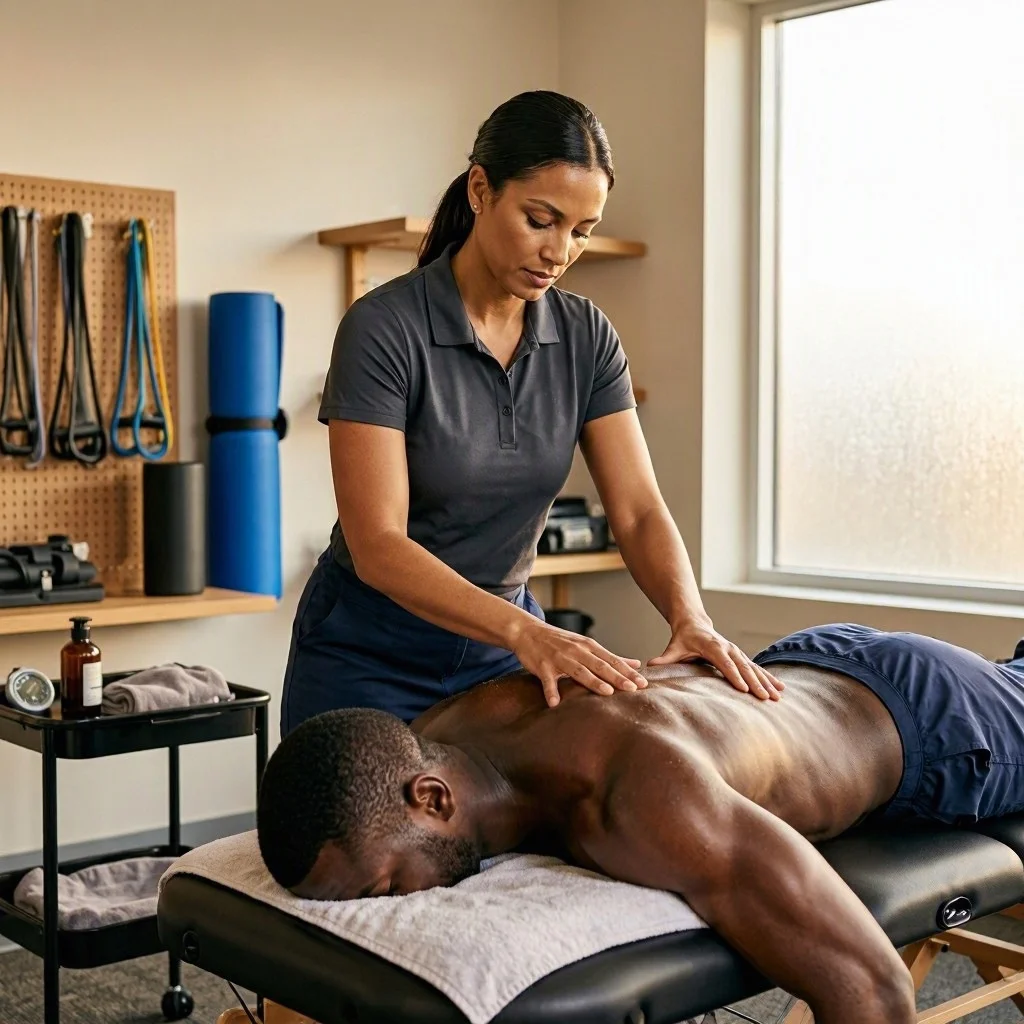
Athletes place repeated demands on their bodies. Training sessions, competitions, strength workouts, running, jumping, lifting, and repetitive movements can all create physical stress. Recovery is therefore an important part of maintaining consistent training and supporting long-term physical performance. Massage Therapy for Athletes can be incorporated into a broader recovery and wellness routine to address muscle tension, post-exercise discomfort, stiffness, and relaxation. Depending on the athlete’s needs, massage may also be used as part of preparation for physical activity or during periods of increased training.
However, massage should not be viewed as a replacement for proper training, sleep, nutrition, hydration, injury assessment, or rehabilitation. Research suggests that sports massage may provide benefits such as small improvements in flexibility and delayed-onset muscle soreness (DOMS), while evidence for directly improving strength, sprinting, jumping, endurance, or overall athletic performance is much less convincing.
For this reason, the most practical approach is to use massage as one component of a complete athlete recovery strategy.
At Ritz Clinic Massage Therapy, treatment can be adapted to the individual’s activity level, physical needs, areas of muscular tension, and recovery goals.
What Is Massage Therapy for Athletes?
Massage Therapy for Athletes is a specialized approach to massage that considers the physical demands of sports and exercise.
Unlike a general relaxation massage, sports-focused massage may take into account:
- Training intensity
- Exercise frequency
- Competition schedules
- Previous injuries
- Areas of recurring tension
- Sport-specific movement
- Recovery periods
- Current physical condition
- Individual goals
An athlete who trains five days a week may require a different treatment approach from someone who exercises recreationally twice a week.
Similarly, a marathon runner may have different needs from a hockey player, soccer player, weightlifter, swimmer, cyclist, or tennis player.
Massage techniques and treatment intensity should therefore be adjusted according to the individual.
A sports massage session may include techniques designed to work with muscles and other soft tissues. The therapist may focus on areas that experience repeated loading during training.
Common areas include:
- Quadriceps
- Hamstrings
- Calves
- Glutes
- Hip muscles
- Lower back
- Upper back
- Shoulders
- Arms
- Forearms
The exact areas treated depend on the athlete’s sport, training routine, symptoms, and goals.
Why Do Athletes Use Massage Therapy?
Athletes often use massage because training can produce muscular fatigue, stiffness, and temporary soreness.
A demanding workout may involve repeated muscle contractions and high physical loads. Afterward, an athlete may notice:
- Muscle soreness
- Tightness
- Stiffness
- Reduced flexibility
- General fatigue
- Physical discomfort
- A feeling of heavy legs
- Reduced relaxation
Massage can be used to help an athlete feel more comfortable during recovery.
However, it is important to distinguish between feeling better and performing better.
Research does not consistently show that massage directly improves athletic performance. A systematic review and meta-analysis found no clear evidence that sports massage improves strength, sprint, jump, endurance, or fatigue measures. However, the review found small improvements in flexibility and delayed-onset muscle soreness.
This means massage may be useful for recovery and comfort without being a performance-enhancing treatment by itself.
Massage Therapy and Athletic Recovery
Recovery is more than simply resting between workouts.
The body needs sufficient time and resources to adapt to training.
A complete recovery routine can include:
- Sleep
- Nutrition
- Hydration
- Appropriate rest
- Active recovery
- Mobility work
- Strength training
- Training-load management
- Injury prevention
- Stress management
Massage may complement these strategies.
For example, an athlete may schedule a massage after a demanding training block because the treatment helps them feel less tense and more comfortable.
However, massage should not replace sleep or proper nutrition.
It should also not be used to ignore pain that could indicate an injury.
The purpose is to support a broader recovery strategy.
Can Massage Therapy Reduce Muscle Soreness?
Delayed-onset muscle soreness, commonly called DOMS, can occur after unfamiliar or demanding physical activity.
Symptoms may include:
- Muscle tenderness
- Stiffness
- Temporary discomfort
- Reduced willingness to move
- Difficulty performing certain activities
Research has found that massage may provide a small reduction in DOMS.
A systematic review of sports massage found a statistically significant but small improvement in delayed-onset muscle soreness.
A later systematic review also reported that massage may contribute to pain reduction and reduced perception of fatigue while supporting relaxation and perceived recovery.
Therefore, massage may be useful when the primary goal is to help an athlete feel more comfortable after demanding exercise.
It should not, however, be presented as a method that eliminates the normal physiological effects of training.
Massage Therapy for Athletes and Flexibility
Flexibility can be important in many sports.
Athletes may need adequate range of motion for:
- Running
- Squatting
- Jumping
- Kicking
- Throwing
- Swimming
- Cycling
- Gymnastics
- Weightlifting
Massage may temporarily influence flexibility and range of motion.
Research has found small improvements in flexibility following sports massage.
However, flexibility is influenced by many factors.
These include:
- Joint structure
- Muscle properties
- Training history
- Warm-up
- Strength
- Neuromuscular control
- Individual anatomy
Massage should therefore be considered one potential tool rather than the only method for improving mobility.
A complete program may combine massage with active mobility exercises and strength training.
Massage Therapy Before Exercise
Some athletes use massage before training or competition.
However, timing matters.
A long or intense massage immediately before high-intensity activity may not be appropriate for every athlete.
Research examining pre-performance massage has not found strong evidence that massage improves maximal strength, sprint, or jump performance. In some studies, longer pre-performance massage was associated with poorer performance measures.
For this reason, pre-event massage should be carefully considered.
A shorter, lighter treatment may be more appropriate than a deep or aggressive session.
The athlete’s individual response also matters.
If an athlete has never tried a particular massage approach before competition, the competition day may not be the best time to experiment with it.
Massage Therapy After Training
Post-training massage is more commonly associated with recovery.
After a demanding workout, an athlete may experience muscle tension or soreness.
A recovery-focused massage may target muscles that received significant workload during training.
For example:
Runners
Treatment may focus on the calves, hamstrings, quadriceps, glutes, and hips.
Cyclists
The quadriceps, hamstrings, calves, hips, and lower back may receive attention.
Soccer Players
Treatment may focus on the legs, hips, calves, and lower back depending on training demands.
Weightlifters
The therapist may work on areas such as the shoulders, upper back, hips, glutes, and legs.
Swimmers
The shoulders, upper back, chest, arms, and surrounding muscles may require attention.
The goal is not to aggressively treat every muscle.
Instead, treatment should be appropriate for the athlete’s current condition.
Massage Therapy for Runners
Running creates repeated loading through the legs and feet.
Depending on mileage and training intensity, runners may experience muscular tightness in the:
- Calves
- Hamstrings
- Quadriceps
- Glutes
- Hip flexors
A massage therapist can adapt treatment according to the runner’s training schedule.
For example, treatment during a high-volume training period may differ from treatment during a recovery week.
Massage can be combined with:
- Strength training
- Mobility exercises
- Running drills
- Recovery days
- Appropriate footwear
- Gradual training progression
If a runner experiences persistent or worsening pain, massage should not be used simply to continue training through the symptoms.
An assessment may be necessary to determine whether an injury is present.
Massage Therapy for Weightlifters
Strength athletes place substantial loads on muscles and joints.
Weightlifting and resistance training can produce temporary muscle soreness, particularly after new exercises or changes in training volume.
Massage may be incorporated into a weightlifter’s recovery routine.
Potential treatment areas may include:
- Glutes
- Quadriceps
- Hamstrings
- Upper back
- Shoulders
- Arms
- Forearms
However, recovery should also include appropriate programming.
An athlete who continually increases training volume without adequate recovery may experience excessive fatigue regardless of massage frequency.
Massage can support comfort, but it cannot compensate for poor training management.
Massage Therapy for Soccer Players
Soccer involves repeated sprinting, acceleration, deceleration, jumping, kicking, and changes of direction.
These demands place considerable stress on the lower body.
A soccer player may therefore incorporate massage into recovery during:
- Regular training
- Tournament periods
- Competition weeks
- Recovery days
- High-volume training blocks
Treatment can be adjusted according to whether the player is preparing for a match or recovering afterward.
The therapist may focus on areas such as the calves, hamstrings, quadriceps, hips, and glutes.
However, persistent pain, swelling, instability, or loss of function should be assessed rather than managed only with massage.
Massage Therapy for Cyclists
Cyclists spend long periods in repetitive positions.
Depending on training volume, cyclists may experience tension around the:
- Quadriceps
- Hamstrings
- Calves
- Glutes
- Hips
- Lower back
- Neck
- Shoulders
Massage can be incorporated into a broader recovery routine.
At the same time, bike fit, training volume, posture, strength, mobility, and recovery should also be considered.
If discomfort repeatedly returns during cycling, identifying the underlying contributing factors may be more useful than repeatedly treating the same muscles.
Massage Therapy for Swimmers
Swimming requires repetitive upper-body and lower-body movement.
Swimmers may place significant demands on the:
- Shoulders
- Upper back
- Chest
- Arms
- Latissimus muscles
- Hips
- Legs
Massage may be used to address muscular tension and promote relaxation.
However, shoulder pain in swimmers deserves careful attention because repetitive overhead activity can involve several possible causes.
If pain persists or affects strength and movement, the athlete should receive an appropriate assessment.
Massage should not be used to mask symptoms while continuing unrestricted training.
Massage Therapy for Team-Sport Athletes
Team sports often involve unpredictable movement.
Basketball, hockey, soccer, volleyball, rugby, and other sports can require:
- Sprinting
- Jumping
- Landing
- Cutting
- Contact
- Acceleration
- Deceleration
- Repeated changes of direction
Massage may form part of the recovery strategy between training sessions and competitions.
For athletes playing multiple games within a short period, treatment timing becomes especially important.
The therapist may use different pressure and techniques depending on whether the athlete is:
- Preparing for competition
- Recovering from competition
- Between games
- In an off-season
- Returning from injury
This individualized approach can help avoid unnecessary treatment intensity.
Massage Therapy During Injury Rehabilitation
Massage can sometimes be used as an adjunct during rehabilitation.
However, the treatment approach should depend on the injury.
An acute injury may involve:
- Pain
- Swelling
- Bruising
- Reduced movement
- Loss of strength
Aggressive massage over an injured area may not be appropriate.
Instead, the athlete may require medical or rehabilitation assessment first.
As recovery progresses, massage may potentially be incorporated alongside:
- Mobility exercises
- Strengthening
- Balance training
- Functional exercises
- Sport-specific training
- Gradual return to activity
This is particularly important because successful return to sport requires more than simply reducing pain.
The athlete needs sufficient strength, control, confidence, and sport-specific capacity.
Massage Therapy and Return to Sport
Returning to sport after injury should generally be gradual.
An athlete may feel better before they have regained full strength or movement capacity.
For example, someone recovering from a knee injury may have reduced pain but still have differences in:
- Leg strength
- Balance
- Jumping ability
- Landing control
- Running tolerance
Massage may help with muscle comfort, but it cannot replace progressive rehabilitation.
A return-to-sport program may therefore involve:
- Restoring basic movement
- Building strength
- Improving balance
- Developing endurance
- Increasing running or activity tolerance
- Adding sport-specific movements
- Practicing higher-speed movements
- Returning to competition
Massage can be used as an additional recovery tool during this process when appropriate.
Massage Therapy and Muscle Tension
One of the most common reasons athletes seek massage is muscle tension.
Repeated training can leave certain muscles feeling tight or uncomfortable.
Massage may help an athlete feel more relaxed and comfortable.
Common areas include:
- Calves
- Hamstrings
- Quadriceps
- Glutes
- Hip flexors
- Shoulders
- Upper back
- Forearms
However, recurring tightness can sometimes indicate a broader issue.
Possible contributing factors include:
- Training overload
- Poor recovery
- Reduced mobility
- Weakness
- Poor movement mechanics
- Sudden training changes
- Inadequate rest
If the same problem keeps returning, it can be useful to investigate why.
How Often Should Athletes Get Massage Therapy?
There is no universal massage schedule for athletes.
The appropriate frequency depends on:
- Training volume
- Training intensity
- Competition schedule
- Sport
- Age
- Recovery capacity
- Previous injuries
- Current symptoms
- Personal preference
Some athletes may use massage occasionally after demanding training.
Others may include it as part of a regular recovery routine.
More frequent treatment is not automatically better.
An athlete should consider whether massage is helping their recovery goals without interfering with training.
The treatment schedule can also change during different phases of the season.
For example, a competitive athlete may have different massage needs during:
- Pre-season
- Heavy training
- Competition season
- Tournament periods
- Recovery weeks
- Off-season
Therapeutic Massage vs Sports Massage for Athletes
therapeutic massage and Sports massage can overlap, but the emphasis can differ.
Sports Massage
Sports massage is generally adapted around physical activity and athletic goals.
The therapist may consider:
- Training
- Competition
- Muscle workload
- Recovery
- Mobility
Therapeutic Massage
Therapeutic massage may focus more specifically on areas of muscular tension, discomfort, or movement limitation.
An athlete may benefit from either approach depending on their current needs.
At Ritz Clinic, massage treatment can be adapted rather than applying the same technique to every person.
What Happens During a Massage Therapy Session for Athletes?
An athlete-focused massage session generally begins with communication.
The therapist may ask about:
- Current training
- Recent workouts
- Upcoming competitions
- Areas of soreness
- Previous injuries
- Current discomfort
- Recovery goals
This information helps determine how the session should be structured.
The therapist may then select appropriate techniques and pressure.
For example, a recovery session may use a different intensity from a therapeutic session targeting muscular tension.
Communication is important throughout the session.
If pressure is uncomfortable or symptoms change, the athlete should tell the therapist.
After the treatment, the athlete may receive general recovery recommendations depending on their situation.
How Athletes Can Prepare for Massage Therapy
Preparation can help make the session more useful.
Communicate Your Training Schedule
Tell your therapist about recent workouts and upcoming competitions.
Explain Your Main Goal
Are you seeking relaxation, recovery, mobility, or help with muscular tension?
Mention Previous Injuries
Past injuries can affect treatment choices.
Report Current Symptoms
Tell the therapist if you have pain, swelling, bruising, numbness, or weakness.
Stay Hydrated
Maintaining normal hydration is part of general recovery, although athletes should not assume massage itself requires excessive water intake.
Avoid Trying a New Aggressive Treatment Immediately Before Competition
Competition preparation is usually not the ideal time to experiment with unfamiliar treatment intensity.
Massage Therapy for Athletes and Recovery Days
Recovery days are important because training adaptation requires adequate recovery.
Massage can be one optional component of a recovery day.
A recovery day might also include:
- Walking
- Light cycling
- Mobility exercises
- Stretching
- Adequate sleep
- Balanced nutrition
- Hydration
- Relaxation
The exact activities depend on the athlete’s training plan.
The objective is to allow the body to recover while maintaining appropriate movement.
Can Massage Therapy Improve Athletic Performance?
This is one of the most common questions athletes ask.
The evidence does not support describing massage as a direct performance enhancer.
A systematic review of 29 studies involving more than 1,000 participants found no evidence that massage directly improved strength, jumping, sprinting, endurance, or fatigue. Small improvements were observed in flexibility and DOMS.
A broader 2023 systematic review similarly concluded that massage does not generally improve motor abilities other than flexibility, although it may influence pain, soreness, relaxation, mood, and perceived recovery.
Therefore, massage may indirectly support an athlete’s training experience without directly increasing athletic performance.
For example, an athlete who feels less sore may find it easier to participate in normal recovery activities.
That is different from claiming that massage makes the athlete stronger or faster.
Can Massage Therapy Prevent Sports Injuries?
Massage should not be considered a guaranteed injury-prevention method.
Injury prevention involves many factors, including:
- Appropriate training progression
- Strength
- Mobility
- Technique
- Recovery
- Sleep
- Nutrition
- Equipment
- Warm-up
- Workload management
Massage may help athletes manage muscle tension and maintain comfort, but it cannot eliminate injury risk.
If an athlete repeatedly develops the same injury, the underlying cause should be assessed.
When Should Athletes Avoid Massage?
Massage is not appropriate in every situation.
An athlete should seek professional guidance before massage when they have:
- Significant swelling
- Severe unexplained pain
- Recent major trauma
- Suspected fracture
- Open wounds
- Active skin infection
- Significant bruising
- Unexplained neurological symptoms
- Severe illness
- Other medical concerns
An athlete with a suspected serious injury should receive appropriate medical assessment rather than relying on massage.
Massage should also not be used to delay evaluation of persistent or worsening symptoms.
Massage Therapy for Athletes at Ritz Clinic
Ritz Clinic provides massage therapy that can be adapted to active adults and athletes.
The clinic’s Massage Therapy service can be tailored according to individual goals, physical activity, areas of muscular tension, and recovery needs.
For athletes, treatment may consider:
- Training schedules
- Exercise intensity
- Competition dates
- Recovery periods
- Areas of recurring tension
- Previous injuries
- Individual goals
Ritz Clinic also offers a Massage Therapy Treatment Plan that specifically discusses sports massage treatment planning and the importance of adjusting treatment according to training and competition schedules.
Depending on the athlete’s needs, massage may also complement physiotherapy or chiropractic care.
For example, an athlete recovering from an injury may benefit from a combination of appropriate manual treatment and structured rehabilitation.
How Massage Can Fit Into a Complete Athletic Recovery Plan
Massage works best when it is considered part of a larger system.
A well-rounded recovery strategy can include:
1. Training
Training should provide an appropriate stimulus for improvement.
2. Recovery
Rest and recovery allow the body to adapt.
3. Nutrition
Adequate nutrition supports normal physiological processes and training demands.
4. Hydration
Appropriate fluid intake supports general health and exercise needs.
5. Sleep
Quality sleep is an important part of recovery.
6. Strength Training
Strength supports physical capacity and sports performance.
7. Mobility
Mobility work can help athletes maintain appropriate movement.
8. Injury Management
Persistent pain should be assessed appropriately.
9. Massage
Massage can be added when it supports the athlete’s comfort and recovery routine.
This approach avoids making massage responsible for every part of athletic recovery.
Final Thoughts on Massage Therapy for Athletes
Massage Therapy for Athletes can be a useful supportive treatment for active people when it is appropriately integrated into a broader recovery and training plan.
Research suggests that massage may provide small benefits for flexibility and delayed-onset muscle soreness, while evidence for directly improving strength, sprinting, jumping, endurance, or overall athletic performance remains limited.
Therefore, the most realistic reason to use massage is not to expect dramatic performance improvements.
Instead, athletes may use it to support:
- Muscle comfort
- Relaxation
- Perceived recovery
- Flexibility
- Management of post-exercise soreness
- General physical well-being
Treatment should also be individualized.
A runner, weightlifter, swimmer, soccer player, cyclist, and recreational athlete all place different demands on their bodies. Massage timing, pressure, technique, and treatment areas should reflect those differences.
Most importantly, massage should complement—not replace—proper training, recovery, nutrition, sleep, rehabilitation, and medical care when necessary.
If you are an athlete dealing with recurring muscular tension, post-exercise soreness, or recovery concerns, a personalized massage therapy assessment can help determine whether sports-focused massage is appropriate for your needs.
Frequently Asked Questions About Massage Therapy for Athletes
Is massage therapy good for athletes?
Massage may help athletes with relaxation, perceived recovery, flexibility, and post-exercise soreness. However, it should be part of a broader recovery strategy rather than a replacement for training and proper recovery.
Does sports massage improve athletic performance?
Current evidence does not strongly support a direct improvement in strength, sprinting, jumping, or endurance from massage. Some evidence supports small improvements in flexibility and DOMS.
Can massage help with muscle soreness after exercise?
Yes. Research suggests that massage may provide a small reduction in delayed-onset muscle soreness after exercise.
Should I get a massage before a competition?
It depends on the athlete and the treatment. Long or intense massage immediately before competition may not be appropriate. If you use pre-event massage, the approach should be familiar and carefully timed.
How often should athletes get massage therapy?
There is no universal schedule. Frequency depends on training volume, competition demands, recovery needs, symptoms, and individual preferences.
Is deep tissue massage good for athletes?
Deep tissue techniques may be useful for some athletes, but stronger pressure is not automatically better. Treatment should be adjusted according to the athlete’s current condition and training schedule.
Can massage help prevent sports injuries?
Massage cannot guarantee injury prevention. Appropriate training progression, strength, mobility, recovery, sleep, technique, and workload management are also important.
Can massage be used during injury rehabilitation?
Massage may sometimes complement rehabilitation, depending on the injury and stage of recovery. It should not replace appropriate assessment, strengthening, mobility work, or sport-specific rehabilitation.
What muscles are commonly treated during sports massage?
Common areas include the calves, hamstrings, quadriceps, glutes, hips, lower back, shoulders, upper back, and arms. Treatment depends on the athlete’s sport and individual needs.
Can recreational athletes get sports massage?
Yes. Sports-focused massage is not limited to professional athletes. Runners, gym users, cyclists, fitness enthusiasts, and recreational athletes may also use massage as part of their recovery routine.
Should I massage an injured muscle?
Not necessarily. Acute injuries involving significant pain, swelling, bruising, or suspected tissue damage should be assessed before massage is performed over the affected area.
Can massage replace stretching?
No. Massage and stretching are different approaches. An athlete may use both depending on their goals.
Can massage replace physiotherapy?
No. Massage can complement physiotherapy, but it does not replace assessment, therapeutic exercise, strengthening, functional rehabilitation, or other components of physiotherapy when those are required.
Is massage therapy safe for athletes?
Massage is generally well tolerated when appropriately selected, but it is not suitable for every condition. Athletes should communicate injuries, medical conditions, medications, and unusual symptoms to their therapist.
When should an athlete see a healthcare professional instead of getting massage?
Persistent or worsening pain, significant swelling, major trauma, weakness, numbness, suspected fracture, or other concerning symptoms should be medically assessed rather than treated only with massage.